
Add it to your home screen and it opens full screen: no browser bars, one tap away, and everything stays signed in. Free, nothing to download from an app store.
- Tap the Share button in your browser
- Scroll down and choose “Add to Home Screen”
- Open GrowSomeFood from your home screen
- Open your browser’s menu
- Choose “Add to Home screen” or “Install app”
- Open GrowSomeFood from your home screen
Southern Maidenhair Fern
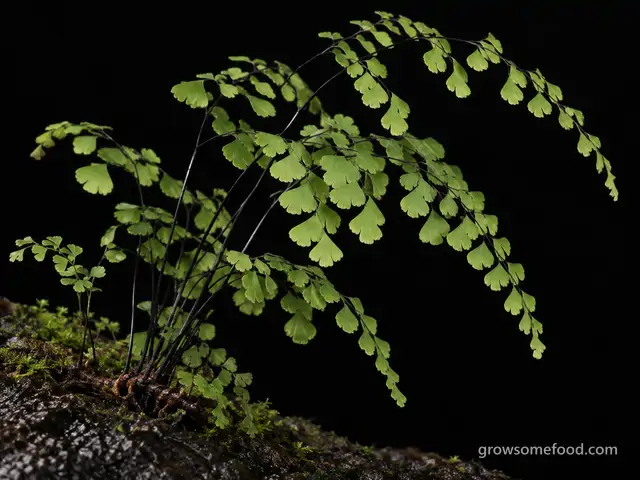
The most delicate and elegant of native ferns: airy fans of bright-green leaflets fluttering on shiny wiry black stems, native to shaded seeps and limestone ledges - a prized specimen for humid, moist shade or a container.
Safety notes Grown as an ornamental foliage plant, not a food. Ferns are not a general foraging crop - only a few species' fiddleheads are eaten, and many ferns are toxic or carcinogenic, so treat maidenhair fern as non-food and do not eat its fronds or fiddleheads. It has a minor folk-medicinal history as a soothing tea, but that is traditional lore, not a recommendation to consume it; grow it for its beauty. It is otherwise safe to handle.
Overview
Southern maidenhair (Adiantum capillus-veneris) is the most delicate and beautiful of the native ferns. Its airy, lacy fronds carry small fan-shaped bright-green leaflets on distinctive shiny, wiry black-to-purple stems so fine they seem to float, fluttering at the slightest breeze - the look that earned it the names Venus's-hair fern and maidenhair. New fronds often emerge with a soft pink tint.
Quick facts
- Height
- 14 inRange: 8–20 in
- Spread
- 15 inRange: 10–24 in
- Cold
- Takes light frostdamaged below 5°F
- Heat
- Struggles above 95°F
- Life cycle
- Perennial, lives about 15 years
- Soil
- Consistently moist
- Water
- High
- Plant spacing
- 14 inRange: 10–18 in
When to plant
Nothing is open today. Spring transplanting opens 6 months, Apr 10 to Jun 5.
- Transplant Apr 10 – Jun 5 Opens in 172 daysAbout at to 8 weeks after your last frost (Apr 10 here)Set out nursery plants or spring divisions after frost into consistently moist, humusy, neutral-to-alkaline soil in a shaded, humid, sheltered spot; keep them constantly moist and shielded from hot dry air.
Frost here: last around Apr 10 (Mar 27 to Apr 24 most years), first around Oct 25. Zone averages, your own yard may run a week or two either way.
Life stages
Establish, grow, repeat
Getting established and returning each season are different parts of the story.
Stage 1 of 4 · Getting established
Year 1 - rooting in
Day 0 to 75 after transplanting
Care at this stage
-
Keep constantly moist and humid
Southern maidenhair is a fern of seeps, spring-fed ledges, and shaded limestone - set a new plant into consistently moist, humusy, neutral-to-alkaline soil in shade and never let it dry out. High humidity and steady moisture are the whole secret to keeping it happy.
-
Give it neutral-to-alkaline soil
Unusually for a fern, maidenhair prefers neutral to slightly alkaline, often limestone-derived soil rather than acidic ground. A bit of crushed limestone or a near-neutral, humus-rich mix suits it - one reason it thrives in seeps over limy rock and along old mortared walls.
Months are typical seasonal windows; climate, variety, and plant age can shift them.
Watch out for
3 to know. 1 is high-risk: Frond Scorch (Dry Air & Drought). 1 is active in October.
Frond Scorch (Dry Air & Drought)Severity High DisorderSeason: May–SepBrowning, crisping, curling frond edges and tips, and whole fronds shriveling after a dry spell, a heat wave, a missed watering, or a stretch in dry indoor air.
This is maidenhair's defining problem - its low tolerance of dry air makes scorch far more serious here than on tougher ferns, and it is the usual reason an indoor plant crisps. Its delicate fronds go first, and fastest.
Browning, crisping, curling frond edges and tips, and whole fronds shriveling after a dry spell, a heat wave, a missed watering, or a stretch in dry indoor air.
Trim off the crisped fronds and restore moisture and humidity immediately; a badly browned fern often reflushes from the crown once steady moisture and humidity return.
Keep the soil evenly moist and the air humid (misting, pebble trays, terrariums, grouping plants), site the fern in shade sheltered from dry wind and hot sun, and mulch to hold soil moisture.
A moisture disorder rather than a disease: fern fronds crisp and brown from the edges and tips inward when the soil dries out, the surrounding air is too dry, or the plant catches hot direct sun. Thin-textured ferns show it first and worst, and heated indoor air in winter is a common trigger.
Scale & Sooty MoldSeverity Low PestnowSeason: year-roundRows of small brown, tan, black, white, or waxy bumps along stems, twigs, leaf midribs, and leaf undersides that do not brush off but can be scraped loose with a fingernail.
Scale and mealybugs (the white cottony masses) are mainly a problem on maidenhair grown indoors as a houseplant in dry conditions, rather than outdoors in its native range. The delicate fronds dislike harsh sprays, so dab with a cotton swab of rubbing alcohol or use a gentle soap or oil, treating lightly and repeatedly rather than aggressively.
Rows of small brown, tan, black, white, or waxy bumps along stems, twigs, leaf midribs, and leaf undersides that do not brush off but can be scraped loose with a fingernail. A sticky shine on the leaves - and on the floor, table, or path beneath the plant - that later turns black with sooty mold. Ants running steadily up and down the stems, since they farm and defend scale for that honeydew; often the first sign anything is wrong. Yellowing leaves, weak thin growth, and dieback of individual branches or canes that are heavily encrusted. On fruit crops, scale covers and sooty mold directly on the fruit. Check the leaf undersides and the shaded inner wood, which is where colonies build up unseen.
Horticultural oil is the main control: it works by smothering, so it has to coat the insects thoroughly - stems, twigs, and leaf undersides - and it usually needs repeating, because the waxy covering shields them and no single pass reaches everything. On deciduous woody plants a dormant-season oil smothers the overwintering stage while the leaves are out of the way, and timing a growing-season spray to the crawler stage, when the young are mobile and uncovered, is far more effective than spraying settled adults. On a small plant or a light infestation, scrub or wipe the scales off by hand, or dab them with a cotton swab of rubbing alcohol. Prune out and destroy badly encrusted wood rather than trying to save it. Wash off the sooty mold once the scale is gone - it lives on the honeydew, not on the plant, and stops once the supply does. Anything you spray must be labeled for the plant, and oils can burn delicate foliage, so test first.
Inspect. Look over leaf undersides and stems regularly - on a crop you pick, every harvest is a scouting chance - and check every new plant thoroughly before you buy it, plant it, or set it beside anything else, because scale almost always arrives on a plant rather than flying in. Quarantine new houseplants for a few weeks. Keep plants unstressed and not over-fertilized, since soft, forced growth is what populations build on. Prune for airflow and light to open up the shaded inner growth where scale hides, and prune out heavily infested wood as routine maintenance - on anything that gets a hard annual pruning, that alone removes most of any buildup. Leave the lady beetles, lacewings, and parasitic wasps alone, since they normally keep scale down to nothing, and keep ants off the plant where you can, because ants protect the colonies from those predators. Indoors, avoid hot, dry, still winter air.
Scale insects are sap-suckers that spend most of their lives immobile, fixed to a stem, twig, or leaf underside beneath a waxy or shell-like cover. They look far more like bumps, blisters, or crusty encrustations than like insects, which is why an infestation is usually well established before anyone notices it. Soft scales excrete large amounts of sticky honeydew that drips onto everything below and grows a black sooty mold - and those blackened leaves are often the first thing a gardener actually sees. Armored scales produce no honeydew but sit under a hard shield that protects them from most sprays. They spread as tiny mobile crawlers in the weeks after hatching, which is the only stage that moves and the only stage that is easy to kill. Populations build on stressed plants, on crowded shaded growth, and above all on plants kept indoors in dry, still air over winter.
Slugs & SnailsSeverity Low PestSeason: Apr–JunIrregular ragged holes chewed out of the middle of leaves and along the edges - not the clean-edged cuts a caterpillar leaves.
The constantly damp shade maidenhair needs outdoors is ideal slug habitat, but the grazing is usually only cosmetic on an established plant.
Irregular ragged holes chewed out of the middle of leaves and along the edges - not the clean-edged cuts a caterpillar leaves. Seedlings that vanish overnight, or that are cut off at soil level with nothing left behind. Silvery dried slime trails across leaves, soil, pots, and paving in the morning: this is the giveaway that tells you it was mollusks rather than an insect. Chewed pits in ripe fruit, especially where it rests on the ground. Damage that shows up on the lowest, dampest leaves first and gets worse after rain or evening watering. Turn over a board, an upturned pot, or a clump of dense mulch during the day and look for the animals themselves sheltering in the cool underneath.
Hand-picking works and costs nothing: go out an hour after dark with a headlamp, drop what you find into soapy water, and repeat nightly for a week or two - persistence is what wins, not any single product. Shallow beer traps sunk to soil level catch them too, but need emptying and refilling daily to be worth anything. Iron-phosphate bait is the standard control and is far lower-risk around pets and wildlife than the old metaldehyde products, but it is not harmless: many formulations include EDTA, and a dog that eats a quantity of pellets can develop iron toxicosis. Scatter it thinly per the label, never in piles, and keep dogs off a baited bed. Clear fallen foliage and debris in autumn, where the eggs are laid. In a wet climate this is a population you manage each season rather than one you eradicate - and on most established plants light grazing is cosmetic and needs nothing at all.
Take away the daytime shelter first: lift boards and upturned pots, clear piles of debris, keep dense mulch pulled back from crowns and stems, and give crowded plantings enough airflow to dry out. Water in the morning rather than the evening so the surface is dry by the time they come out. Copper tape around containers and raised beds gives them a shock they will not cross, and it is the one barrier that reliably works. Get plants past the vulnerable stage quickly - start seedlings in pots and set them out at a decent size rather than direct-sowing into a cold wet bed, since most plants stop being worth defending once the leaves toughen. Leave the ground beetles, frogs, toads, and ground-feeding birds alone, because they eat mollusks all night for free and broad-spectrum slug pellets kill them too. Where thick-leaved or resistant varieties exist for what you are growing, they take far less damage.
Slugs and snails are nocturnal mollusks that rasp ragged holes in soft leaves, shear off seedlings at ground level, and chew into ripe fruit that touches the soil. They feed at night and in the early morning and spend the day hidden under boards, pots, dense mulch, leaf litter, and low foliage, becoming active in exactly the cool, damp, shaded conditions that suit young plants. Damage is heaviest in wet spells and on tender spring growth: a single wet week can erase a row of seedlings while an established, tough-leaved plant of the same species is barely marked. They lay clusters of small pearly eggs in damp soil and under debris, so a garden with plenty of cover carries a resident population year after year rather than being invaded from outside.
Good & bad neighbors
Plant nearby
-
Moss and shade groundcoversIn its native seep-and-ledge habitat maidenhair grows amid moss on damp shaded rock; pairing it with moss and other humidity-loving shade plants recreates that cool, moist, sheltered niche.
- Traditional pairings, thin evidence
-
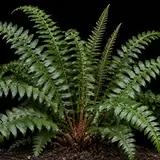
A fern pairing of contrasting texture: bold, leathery, drought-tolerant Christmas fern beside airy, delicate maidenhair, both in shade - though maidenhair needs far more constant moisture and humidity, so site it in the damper, more sheltered pocket.
-
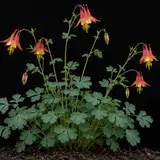
Native columbine tolerates the same shaded, humus-rich, near-neutral, rocky-ledge conditions maidenhair likes, its delicate flowers rising above the fern's lacy texture in a woodland or rock-garden setting.
-
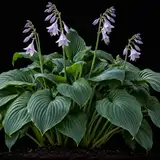
Hosta's broad leaves shelter and shade maidenhair and share its love of moist, humus-rich shade, the coarse foliage setting off the fern's fine lacy fronds in a container grouping or shaded bed.
-
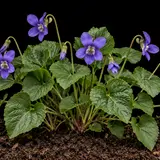
In a moist, shaded, near-neutral spot, low wild violets carpet the ground beneath maidenhair's airy fronds, both loving cool shade - though violets are more forgiving of acidity, so match the soil to the fern's neutral preference.
Varieties · 3
You pick one when you add Southern Maidenhair Fern to your garden. Its days to maturity set your harvest window.
Species (Adiantum capillus-veneris)
The straight native species, and how it is almost always grown: airy fronds of fan-shaped bright-green leaflets on shiny wiry black stems, from shaded seeps and limestone ledges.
Variety details for Species (Adiantum capillus-veneris)
Soft, lacy mound of small fan-shaped leaflets fluttering on fine, glossy black-to-purple stems.
speciesnativedelicatehumidity-lovingGrown as a humid-shade specimen in warm zones or a houseplant elsewhere; a few container selections exist but the species itself is the prize.
Northern Maidenhair (Adiantum pedatum) - relative
A hardier native cousin, not a cultivar: northern maidenhair has the same black wiry stems and delicate texture but a distinctive horseshoe- or fan-shaped whorl of leaflets, and it's far more cold-hardy (to zone 3) and acid-tolerant.
Variety details for Northern Maidenhair (Adiantum pedatum) - relative
Delicate leaflets arranged in a curving horseshoe/fan whorl atop black wiry stems; cold-hardy.
distinct-speciesnativehardyshadeThe better choice for cold-climate gardeners wanting the maidenhair look outdoors; noted here to distinguish the two.
Delta Maidenhair (Adiantum raddianum) - relative
The classic florist and houseplant maidenhair, not a form of the native: a tender tropical Adiantum sold everywhere as a potted fern, similar in delicacy and demands (constant humidity).
Variety details for Delta Maidenhair (Adiantum raddianum) - relative
Soft triangular fronds of many small overlapping leaflets on black stems; a common potted fern.
distinct-specieshouseplanttenderdelicateOften what people mean by 'maidenhair fern' indoors; included to help distinguish the native from the common houseplant.
Grower tips
Notes from growers, tagged with the zone they grow in. A person reads every post before it appears.
Nobody has posted about Southern Maidenhair Fern yet. The first one usually saves someone a season.
Free account. Your post shows your grower name and zone, never your email.