
Add it to your home screen and it opens full screen: no browser bars, one tap away, and everything stays signed in. Free, nothing to download from an app store.
- Tap the Share button in your browser
- Scroll down and choose “Add to Home Screen”
- Open GrowSomeFood from your home screen
- Open your browser’s menu
- Choose “Add to Home screen” or “Install app”
- Open GrowSomeFood from your home screen

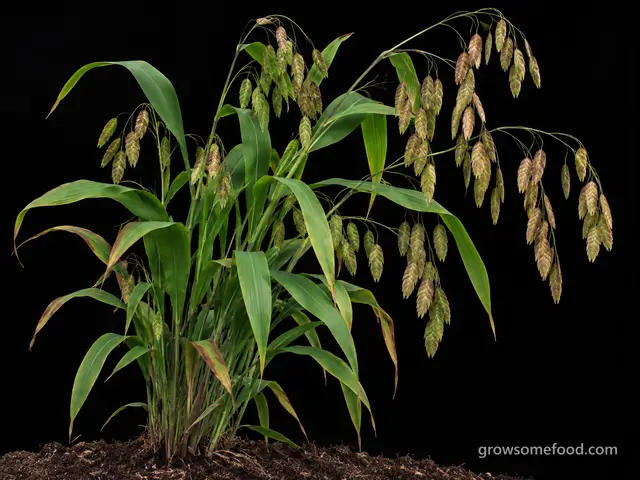
River Oats
The rare ornamental grass that thrives in shade, prized for flat, dangling, oat-like seedheads that dance in the breeze and dry beautifully. Tough and beautiful - but it self-sows so freely that you plant it on purpose, where its spreading is welcome.
Safety notes River oats is a safe, non-toxic native grass, not a food crop. Despite the 'oats' name, it isn't grown for grain - it's an ornamental and woodland-shade grass. The only real caution is horticultural rather than a hazard: it self-sows very freely and can spread beyond where you want it.
Overview
River oats (Chasmanthium latifolium) solves a real garden problem: it's one of the few ornamental grasses that genuinely thrives in shade. It forms arching, bamboo-like clumps of broad green leaves, and from midsummer it hangs its signature feature - flat, drooping, oat-like seed clusters ('spangles') that dangle and nod on wiry stems, catching the slightest breeze. They start green, ripen through bronze to coppery-tan in fall, and are one of the best grasses for dried arrangements.
The one thing to knowRiver oats (Chasmanthium latifolium) solves a real garden problem: it's one of the few ornamental grasses that genuinely thrives in shade.
Quick facts
- Sprouts in
- 28 daysRange: 14–45 days
- Soil temperature
- 70 °FRange: 60–80 °F
- Height
- 36 inRange: 24–48 in
- Spread
- 24 inRange: 18–30 in
- Cold
- Takes hard frostdamaged below -30°F
- Heat
- Struggles above 100°F
- Life cycle
- Perennial, lives about 12 years
- Save seeds
- About 120 days after plantingRange: 100–150 days
- Self-sows
- Yes, expect volunteers
- Soil
- Consistently moist
- Water
- Medium
- Plant spacing
- 24 inRange: 18–30 in
When to plant
Fall sowing is open for 36 more days. Next: spring, Mar 27 to May 22.
- Direct sow Oct 11 – Nov 24 Open now · 36 days leftAbout 2 weeks before to 4 weeks after your first frost (Oct 25 here)Fall-sow fresh seed so winter cold stratifies it for spring germination (it needs a cold, moist period) - though established plantings self-sow so freely that deliberate sowing is rarely necessary.
- Transplant Mar 27 – May 22 Opens in 159 daysAbout 2 weeks before to 6 weeks after your last frost (Apr 10 here)Set out plugs or divisions in spring into evenly moist soil in part shade to shade; river oats establishes quickly and tolerates conditions most ornamental grasses can't - shade and moisture.
- Transplant Aug 30 – Oct 4 Opens in 315 daysAbout 8 weeks before to 3 weeks before your first frost (Oct 25 here)Divisions can also be set out in early fall in mild areas so they root before winter; keep the soil evenly moist.
Frost here: last around Apr 10 (Mar 27 to Apr 24 most years), first around Oct 25. Zone averages, your own yard may run a week or two either way.
Life stages
Establish, grow, repeat
Getting established and returning each season are different parts of the story.
Stage 1 of 4 · Getting established
Year 1 - rooting in
Day 0 to 75 after transplanting
Care at this stage
-
Keep it evenly moist to establish
Unlike the drought-prairie grasses, river oats is a woodland plant that likes steady moisture. Water a new plug or division to keep the soil evenly moist while it roots in - it tolerates dry shade once established but is happiest with moisture.
-
Site it where its spreading is welcome
Plan for its habit from day one: river oats self-sows freely and also spreads by short rhizomes. Put it where a colony is an asset - a shady bank, woodland edge, or a spot you can contain - not in a tidy mixed border it will overrun.
Months are typical seasonal windows; climate, variety, and plant age can shift them.
Watch out for
3 to know. None are high-risk for River Oats. 1 is active in October.
Aggressive Self-Seeding & SpreadSeverity Medium DisordernowSeason: Apr, May, Sep, Oct, NovRipe seed heads or stalks shedding onto the ground, and a flush of volunteer seedlings coming up well beyond where the parent plant stood - most obvious in the first weeks of the plant's growing season.
River oats spreads two ways - it seeds around prolifically and it also creeps by rhizome, so it colonizes well beyond where you planted it. Cut the seedheads before they ripen each fall, and edge or divide the clump to limit the creep. The variegated 'River Mist' self-sows less.
Ripe seed heads or stalks shedding onto the ground, and a flush of volunteer seedlings coming up well beyond where the parent plant stood - most obvious in the first weeks of the plant's growing season.
Hoe or hand-pull volunteers while they are small and before they set seed - the existing seed bank will keep germinating for several seasons either way, so this is an ongoing job rather than a single fix. Where the volunteers are themselves edible, harvesting them is the easiest control, but only ever eat or grow on a seedling you can positively identify.
Cut, deadhead or harvest the seed heads before they ripen and shatter, which is far easier than dealing with what they drop. Where the plant is grown deliberately, keep it in defined rows or a contained bed so that volunteers are obvious, and site it only where naturalizing is welcome.
Not a pest but a management issue. This plant sets and sheds seed prolifically, so anything left to ripen builds a persistent seed bank in the soil and returns as a heavy flush of volunteers the following season. Much of that seed stays viable for years, which is why one season of letting it go can take several seasons to undo.
Leaf Scorch (sun & drought)Severity Low DisorderSeason: Jun–AugBrowning that starts at the leaf edges and tips and spreads inward, with a fairly sharp line between the crisp brown tissue and the green that is still healthy.
A woodland grass that browns at the leaf edges in too much sun with too little water, losing its fresh green look in summer heat. Grow it in part-to-full shade, or in sun only with consistently moist soil.
Browning that starts at the leaf edges and tips and spreads inward, with a fairly sharp line between the crisp brown tissue and the green that is still healthy. Leaves and fronds going dry, papery, and crisp rather than soft, yellow, or spotted - that is what separates this from a fungal problem. Damage worst on the side of the plant facing the sun or the prevailing wind and on the most exposed upper leaves, while the shaded interior stays fine. Symptoms appearing sharply after a heat wave, a dry spell, or a bright windy week in winter. Whole leaves or fronds shed early as the plant cuts its losses.
Water deeply, mulch, and improve the shade - that is the whole treatment, because there is nothing here to kill. Leaves that are already scorched will not recover, so trim off badly browned foliage or fronds for appearance if you want to; the crown and roots are usually unharmed and push out fresh growth once conditions improve. On a plant that scorches badly every year the answer is to move it rather than to keep watering harder, because the siting is what is wrong. Some plants respond well to being cut back hard, which brings a clean flush of new foliage. And on plants that naturally die back or brown off late in the season, scorching at the end of a dry summer is normal and needs nothing at all.
Site the plant where it actually wants to be. This is a placement problem far more often than a watering problem, and a shade plant in hot afternoon sun will scorch every summer however much you water it. Give shade and woodland plants part-to-full shade and shelter from hot afternoon sun and drying wind. Keep the root zone consistently moist and mulch it well with leaf litter or another organic mulch, which holds water and keeps the roots cool - the single most useful routine step. Water deeply and thoroughly during dry spells rather than little and often, so moisture reaches the whole root zone. Pay particular attention through the first year after planting, when the root system is small and cannot keep up with the leaves. On evergreens in cold regions, make sure the plant goes into winter well watered, and keep it out of bright, windy, exposed positions.
Leaf scorch is not a disease and there is nothing to spray for it. It is what happens when a leaf loses water faster than the roots can replace it: the tissue farthest from the veins - the margins and the tips - dries out first and turns brown and papery, and the browning works inward while the rest of the leaf stays green. Hot sun, dry soil, drying wind, heat reflected off paving or a wall, a small or damaged root system, and a plant sited somewhere sunnier or drier than it wants are the usual causes, singly or together. It also happens in winter on evergreens, when bright sun and wind pull water out of the leaves while the ground is frozen and the roots cannot resupply. Shade and woodland plants, shallow-rooted plants, and anything recently planted scorch most easily.
RustSeverity Low DiseaseSeason: Jul–SepOrange to rusty-brown flecks, spots or streaks on the leaves, often raised and powdery on the undersides, worst in muggy weather and on crowded, shaded or poorly ventilated plants.
River oats often grows in the part shade and moisture that suit rust, so it shows some in a muggy year - still cosmetic, and cutting the stand back cleans it up.
Orange to rusty-brown flecks, spots or streaks on the leaves, often raised and powdery on the undersides, worst in muggy weather and on crowded, shaded or poorly ventilated plants.
Remove affected foliage and improve airflow. This is almost always cosmetic and outgrown, so fungicide is rarely warranted.
Space plants for airflow, grow them in full sun, and avoid overhead watering. Remove the old foliage at the annual cut-back, since spores carry over on last year's leaves.
A minor fungal leaf disease that raises orange to rusty-brown pustules on the foliage in humid, crowded, poorly ventilated conditions. On a tough, well-sited plant it is cosmetic - it marks the leaves late in the season and the plant grows straight through it - and it is rarely worth treating.
Good & bad neighbors
Plant nearby
-
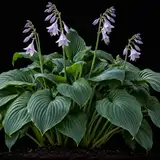
A natural shade pairing: bold hosta leaves and the fine arching texture and dangling seedheads of river oats fill a woodland or shady bed together, both thriving in part-to-full shade and moist soil.
-
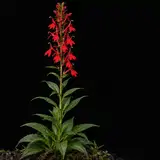
Along a shady stream or rain-garden edge, cardinal flower's red spikes rise among the arching grass - both take moisture and part shade and suit a wet woodland setting.
-
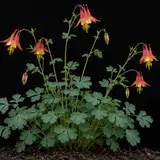
A woodland-edge combination: delicate columbine flowers in spring give way to the grass's summer-to-fall seedheads, both native shade-tolerant plants for dappled light.
-
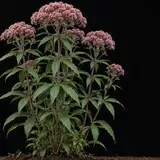
In a moist, partly shaded spot, tall joe-pye weed and river oats make a robust native combination for streamside or rain-garden edges with pollinator and wildlife value.
- Traditional pairings, thin evidence
-
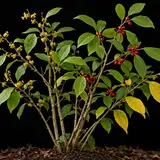
Under or beside a spicebush shrub in a woodland planting, river oats fills the shady ground layer, both native to moist eastern woodlands.
Varieties · 2
You pick one when you add River Oats to your garden. Its days to maturity set your harvest window.
River Oats (Chasmanthium latifolium)
The straight species and the form almost always grown: arching bamboo-like clumps of broad green leaves hung with flat, dangling oat-like seedheads that ripen bronze.
Variety details for River Oats (Chasmanthium latifolium)
Arching green clumps with flat, drooping, oat-like seed spangles ripening from green to coppery-bronze.
speciesnativeshade-tolerantdangling-seedheadsOne of the best ornamental grasses for shade and for drying - and a prolific self-sower.
River Mist
A striking variegated selection with white-and-green striped foliage that brightens shade, topped by the same dangling oat-like seedheads.
Variety details for River Mist
Crisp white-and-green variegated leaves with the characteristic dangling bronze seedheads.
variegatedwhite-stripedshadeselectionA bit less vigorous than the species and reportedly less prone to self-sowing - a good choice for a more controlled planting.
Grower tips
Notes from growers, tagged with the zone they grow in. A person reads every post before it appears.
Nobody has posted about River Oats yet. The first one usually saves someone a season.
Free account. Your post shows your grower name and zone, never your email.