Add it to your home screen and it opens full screen: no browser bars, one tap away, and everything stays signed in. Free, nothing to download from an app store.
- Tap the Share button in your browser
- Scroll down and choose “Add to Home Screen”
- Open GrowSomeFood from your home screen
- Open your browser’s menu
- Choose “Add to Home screen” or “Install app”
- Open GrowSomeFood from your home screen
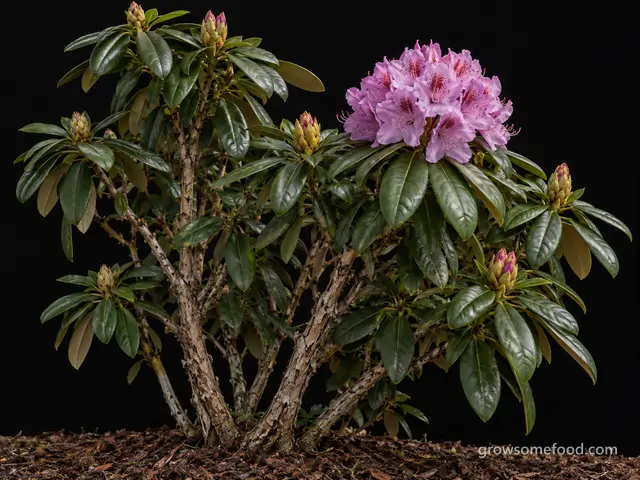
Rhododendron (Garden Hybrid)
The big evergreen flowering shrub of American front gardens - hybrids bred from Asian species crossed with eastern US natives, hardy to zone 4 in the ironclad group. Every part is toxic. Wrong soil pH and wrong drainage kill far more of them than winter does.
Every part of a rhododendron is toxic. Leaves, flowers, twigs, and even nectar and pollen contain grayanotoxins, and eating any part causes drooling, nausea, vomiting, weakness, low blood pressure, and heart-rhythm changes in people, dogs, cats, and livestock; honey made from the nectar ('mad honey') can sicken people too. The shrub is entirely safe to plant, prune, and enjoy - just never eat any part. Treat any ingestion as a poisoning and call Poison Control (1-800-222-1222) or a vet.
Overview
The one thing to knowThis entry covers the garden hybrids, which is what almost everyone means by the word: plants bred in Britain, Germany, the Netherlands, and the US from Asian species crossed with the eastern American natives R.
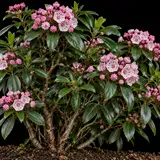
A rhododendron in full truss is one of the largest flower displays any hardy shrub produces - each head a dome of fifteen or twenty bells opening together, a mature plant carrying a hundred of them at once over big leathery evergreen leaves that hold the structure all winter. This entry covers the garden hybrids, which is what almost everyone means by the word: plants bred in Britain, Germany, the Netherlands, and the US from Asian species crossed with the eastern American natives R. catawbiense and R. maximum, and sold from Maine to Oregon.
They are not the same thing as the wild American species, which the catalog keeps separately and which want different climates: pacific rhododendron is a Northwest coastal native for zones 7-9, and flame azalea is a deciduous southern Appalachian native. If you are shopping at a garden centre in Ohio or Connecticut, this is your page. And azaleas? Every azalea is a rhododendron - the split is horticultural, not botanical. Rhododendrons carry big leathery leaves, bell-shaped flowers with ten or more stamens, and real bulk; azaleas have smaller thinner leaves, funnel flowers with about five stamens, and stay lower.
Two things govern how you use one. Every part is toxic - leaves, flowers, twigs, nectar, and pollen all carry grayanotoxins, the chemistry behind the old story of “mad honey.” That is a siting instruction rather than a reason to avoid the plant. And a rhododendron is an acid-soil, shallow-rooted woodland shrub: the ones that die in American gardens overwhelmingly die of alkaline soil or bad drainage, not of cold.
Quick facts
- Life cycle
- Perennial, lives about 50 years
- Height
- 6 ft3 to 12
- Spread
- 6 ft4 to 10
- Cold
- Takes hard frostdamaged below -25°F
- Heat
- Struggles above 90°F
Part sun or part shade · medium water · well-drained soil · 6 ft apart (4 to 10) · transplant or cuttings
When to plant
Fall transplanting is open for 6 more days. Next: spring, Mar 20 to May 22.
- Transplant Aug 2 – Sep 27 Closes in 6 daysAbout 12 weeks before to 4 weeks before your first frost (Oct 25 here)In milder zones early-fall planting lets roots run in warm soil before winter. Avoid it in zones 4-5, where a shallow-rooted evergreen planted late can be heaved and desiccated before it anchors.
- Transplant Mar 20 – May 22 Opens in 180 daysAbout 3 weeks before to 6 weeks after your last frost (Apr 10 here)Set out container plants in early spring into acidic, sharply drained soil with morning sun and afternoon shade. Plant the root ball high, mulch, and water it through the first two summers.
Frost here: last around Apr 10 (Mar 27 to Apr 24 most years), first around Oct 25. Zone averages, your own yard may run a week or two either way.
Life stages
One stage to settle in, then three that repeat each year. Windows are typical; your zone and weather move them.
Years 1-2 - rooting in
The first year after planting- DoPlant high in acidic, sharply drained soilRhododendrons want acidic soil (pH about 4.5-6.0) that holds moisture but drains fast. Dig a wide, shallow hole, work in composted pine bark, and set the top of the root ball an inch or two ABOVE the surrounding grade with soil tapered up to meet it. More rhododendrons are killed by being planted deep in heavy ground than by anything else. Loosen the outer roots on a pot-bound ball, or it will sit in its own knot and never reach out into the bed.
- WaterWater the root ball through the first two summersevery 4 daysThe roots are fine, fibrous, and almost entirely in the top few inches, so the ball dries out long before the bed around it looks dry. Soak it deeply twice a week in warm weather for the first two seasons, checking the ball itself rather than the surrounding soil, and keep going into autumn until the ground cools.
- MulchMulch with pine bark or pine straw, and never dig around itTwo to three inches of pine bark, pine straw, or shredded leaves keeps those surface roots cool and damp and holds the soil acidic. Keep it pulled back from the stems. Do not hoe, dig, or plant annuals around an established rhododendron - the feeding roots are right under the surface and a spade destroys them.
Watch for- A dry root ball sitting in a damp bed - water the ball itself
- Yellow leaves with green veins, meaning the soil is not acidic enough
- Wilting in soggy ground, which is root rot rather than drought
Spring trusses
Mar to Jun, every year- InspectRounded trusses, each one a bouquet of bellsA rhododendron flower head is a truss - a dome of fifteen or twenty bell-shaped flowers opening together, which is why one shrub can carry what looks like a hundred bouquets. Small-leaved PJM types open earliest, often in March or April; the big ironclads follow in May, and a few late hybrids run into June. Bumblebees work them, though the nectar carries grayanotoxins.
- PruneDeadhead by snapping the spent truss off sidewaysGrip the dead truss and bend it sideways until the stalk snaps, taking care not to break the fat pair of growth buds sitting right behind it. This puts the plant's energy into growth and next year's buds instead of seed, and it visibly improves the following spring on large-leaved types. Wear gloves and wash up - every part is toxic - and bin the trusses where pets and livestock cannot reach them.
Watch for- Fat growth buds immediately behind each spent truss - do not snap those off
- Flowers going limp and slimy brown in warm wet weather (petal blight, not frost)
- Bees working nectar that carries grayanotoxins
Summer growth & bud set
Jun to Aug, every year- PrunePrune within a few weeks of bloom, and no laterRhododendrons set next spring's flower buds in early-to-mid summer, so the pruning window shuts about a month after the flowers fade. Cut back to just above a whorl of leaves or a visible dormant bud on the stem, where new shoots will break. An old leggy shrub can be cut back hard into bare wood at this point - large-leaved hybrids resprout well from old stems, at the price of a season or two of flowers.
- FertilizeFeed lightly, if at all, with an acid formulaThese are light feeders and most established plants in decent soil need nothing at all. Where growth is weak and pale, apply a fertilizer labelled for rhododendrons, azaleas, and camellias at label rate once, just after bloom. Stop by midsummer so no soft growth is caught by frost. Never lime the bed, and keep wood ash and mushroom compost out of it.
- WaterKeep it watered through heat and droughtweeklyShallow roots plus heat plus dry soil produces thin bloom the following spring, scorched leaf margins, and lace bugs. Soak the root zone deeply during dry spells rather than sprinkling, water in the morning, and top the mulch up. A plant kept evenly moist through August sets far more flower buds than one that suffers.
Watch for- Notched leaf edges appearing overnight (root weevil adults - the larvae on the roots are the real problem)
- Pale stippled leaves with black specks underneath (lace bugs in too much sun)
- Flower buds forming - pruning season is over
Evergreen through winter
Sep to Feb, every year- WaterSend it into winter thoroughly wateredAn evergreen rhododendron keeps losing water through its leaves all winter while frozen ground gives the roots nothing to replace it with. That, not cold, is what browns the leaves by February. Water deeply through late autumn until the ground freezes, particularly after a dry fall, and keep the mulch topped up.
- ProtectScreen exposed plants from winter sun and windIn zones 4-6 a rhododendron standing in open winter sun and wind will scorch along the leaf margins. A burlap screen on the windward side, or planting on the north or east side of a building in the first place, prevents nearly all of it. Anti-desiccant sprays are a distant third. Do not wrap the plant tightly - it needs air.
- InspectCurled, drooping leaves in hard cold are normalBelow about 30F the leaves roll into tight cigars and hang straight down. This is the plant conserving moisture, not dying, and it unrolls when the temperature climbs - gardeners often use it as an outdoor thermometer. What is not normal is leaves that stay curled and go brown and brittle at the edges, which means the roots went into winter dry.
Watch for- Leaves rolled and drooping in cold (normal) versus brown crisp margins in February (winter desiccation)
- Deer stripping leaves and flower buds through late winter
- Next spring's flower buds already formed - no pruning
Watch out for
6 to know. 3 are high-risk: Deer (browse resistance), Root Rot, Iron Chlorosis (Alkaline Soil). 4 are active in September.
Deer (browse resistance)Severity High WildlifenowThe grayanotoxins do not protect it.
Evergreen rhododendrons are prime late-winter browse precisely because they are the only green leaves left, and a herd can strip a mature shrub to bare stems in a night. Protect from autumn onward, not in spring once the flower buds are already gone.
Growth cleanly missing overnight, with the plant browsed back to a level line about as high as a deer can comfortably reach. Ragged, torn stem ends rather than the clean angled cut a rabbit leaves - the single most reliable identifier. Buds and flowers gone while the foliage below is untouched, since deer often take the best part first. Hoof prints and droppings in soft ground near the damage. Repeat visits, with fresh damage each morning once a planting has been found. On young trees, shredded and stripped bark and broken low branches in autumn - that is antler rubbing rather than feeding.
There is no chemical fix, only exclusion and recovery. Get physical protection up immediately after the first damage, because deer return to a known meal, and reinforce or rotate whatever you were relying on before. Most plants regrow from browsing if the crown and roots are intact - feed and water a grazed plant and protect the regrowth while it comes back. What does not recover in the same season is anything whose buds or flowers have been taken, and a young tree whose bark has been rubbed right around the trunk is usually lost. Where deer pressure is genuinely heavy, the honest answer is to fence properly or to grow the plants deer leave alone, rather than to keep replacing losses.
Fencing is the only thing that reliably works. Eight feet is the standard for excluding deer, or two parallel four-foot fences a few feet apart, which they will not jump because they cannot judge the landing. Short of that, cage individual plants: a sturdy wire cage or trunk guard around every young tree, left on until the trunk is thick and the canopy is above browse height, prevents both browsing and antler rubbing and is the single highest-value thing you can do for a young tree. Repellent sprays do help at moderate pressure, but they wash off and deer habituate, so reapply after rain and rotate between different types through the season. Motion-activated sprinklers, scent deterrents, and noise devices work for a while and then stop. Siting matters too: plants close to the house, in daily traffic, and screened behind other planting get browsed less than the same plant out at the boundary.
Deer are the largest garden problem across much of the country, and where pressure is high they set the limit on what you can grow at all. They browse at night and around dawn and dusk, taking tender shoots, leaves, buds, flowers, and fruit within about five feet of the ground, and they come back night after night to anything they have found and liked. Because they have no upper incisors they tear rather than cut, leaving ragged stem ends - that is how you tell deer damage from a rabbit's clean angled cut. In fall, bucks rub their antlers on young trunks and can strip the bark right around a stem, which kills a young tree outright. Palatability varies enormously between plants and between seasons: a herd short of food in late winter eats things it ignores in June, and no plant is truly deer-proof.
Root RotSeverity High DiseasenowPhytophthora is the number-one killer of garden rhododendrons, whose fine surface roots suffocate quickly in saturated ground.
Almost every case traces to planting too deep or into unimproved clay: set the root ball an inch or two above grade, build a raised bed of composted pine bark, and never use a low spot.
Wilting in the middle of the day on a plant whose soil is damp - the classic tell, and the reason people water a rotting plant and finish it off. Leaves yellowing from the bottom up, dull off-color foliage, and growth that stalls for no visible reason. Whole shoots, or one side of the plant, collapsing while the rest still looks fine. Soft, dark, or mushy tissue at the base of the stem or at the crown, sometimes with a sour smell. Lift a failing plant and look at the roots: healthy ones are firm and pale, rotted ones are brown or black and slimy, and the outer layer slips off between your fingers leaving a thread of core behind. Seedlings that topple over at soil level are the same problem, called damping-off.
There is no cure for tissue that has already rotted, so act on the conditions rather than looking for a spray. Stop watering at once and fix the drainage - open up compacted soil, or move the plant to a raised, sharply drained position or a container. Lift a badly affected plant, cut away every soft dark root and rotted section with a clean blade back to firm pale tissue, and replant only the healthy parts into fresh free-draining soil or mix. Often the better move is to give up on the plant and save its offspring instead: cuttings, offsets, or divisions taken from firm healthy growth root readily and give you a clean start. Bin the rotted material rather than composting it, and correct the drainage before you replant, because the rot comes straight back in the same wet spot.
Drainage is the whole defense. Match the plant to the site first - something that wants sharp drainage will not survive heavy clay or a low, water-collecting spot however well you tend it. Where the ground is heavy, plant on a raised bed, berm, or slope, or grow in a container. Set plants at the depth they were already growing, since burying the crown or the root flare is a common cause of rot, and keep mulch pulled back a few inches from the stem base instead of piled against it. Water the soil rather than the calendar: check that the top inch or two is dry before watering again, cut back hard in cool weather and winter dormancy, and never leave a pot standing in a full saucer. Do not plant or dig in soggy ground, and go easy on rich amendments for plants that want it lean. Rotate annual crops, and start with clean healthy plants and fresh mix.
Root rot is not one organism but a group of soil fungi and water molds - Pythium, Phytophthora, Fusarium, Rhizoctonia and others - that sit harmlessly in most soils and only turn destructive when the ground stays saturated. Waterlogged soil drives the air out, the roots suffocate, and the weakened tissue is invaded and goes soft, brown, and stringy. Because the damage is underground you usually see it first as something that looks like drought: wilting, yellowing, stunting, a plant that does not respond to being watered. Overwatering, heavy compacted ground, a low spot that collects runoff, a pot with no drainage or a saucer left standing full, and cold wet soil in winter are the usual causes. Once roots have actually rotted there is no cure - this is a problem you prevent rather than treat.
Iron Chlorosis (Alkaline Soil)Severity High DisorderRhododendrons need a pH around 4.
5-6.0 and go chlorotic fast above it, which is why they fail so consistently in alkaline-soil regions and in beds tucked against a concrete foundation. Test before planting; on limy ground a raised bed of composted pine bark beats years of chelated iron.
Yellow leaves with a distinct network of green veins, worst on the NEWEST growth at the shoot tips - that vein pattern is what separates it from a nitrogen shortage, which yellows the oldest leaves uniformly. Whole plants going progressively paler over a season rather than suddenly. Brown scorched leaf margins and shoot-tip dieback in advanced cases. Symptoms concentrated on the side of a plant nearest a foundation, wall, path, driveway, or a stretch of limed lawn. One plant affected while a neighbor that does not need acid soil looks perfect.
Correct the soil, and use iron only to buy time. Chelated iron sprayed on the leaves or drenched into the root zone greens a plant up within a week or two, but it wears off in a season and has to be repeated indefinitely - it fixes nothing. The real fix is lowering pH with elemental sulfur applied to the surface and watered in, retesting each season until you are in range, then holding it there with acidic mulch and acid fertilizer. Expect one to two years; there is no fast route. Note that other shortages look identical - manganese deficiency produces the same yellow-with-green-veins pattern on some plants - so a plant that does not green up from iron should be tested rather than dosed again. Where the pH is high because of nearby concrete or genuinely calcareous subsoil, the plant is in the wrong place, and moving it into a properly built acidic bed or container will succeed where years of amendment will not.
Test the soil pH before you plant, not after, and match the plant to the ground - an acid-loving plant in limy soil will never be truly healthy however it is fed. Where the pH is too high, acidify with elemental sulfur worked in the season BEFORE planting, since sulfur takes months of soil biology to work and cannot be rushed, and retest before you commit plants. On genuinely alkaline ground the honest answer is often a raised bed of acidic mix, or a container, rather than fighting the native soil forever. Keep an acidic organic mulch topped up - pine bark, pine straw, sawdust - and site acid-lovers away from concrete foundations and mortared walls, which leach lime for decades. Never apply lime, wood ash or mushroom compost where the roots reach, use acid-forming fertilizers such as ammonium sulfate, and improve drainage, because cold waterlogged soil hurts uptake even at the right pH.
Not an infection but a nutrient lockout caused by soil chemistry. Iron is abundant in almost every soil, but as pH rises it converts to forms roots cannot take up, so a plant that needs acid ground slowly starves for iron while standing in soil full of it. The symptom is unmistakable: new leaves go pale yellow or cream while the veins stay green, giving a fine green net over a yellow leaf. It shows first and worst on the newest growth, because iron does not move around inside a plant to be recycled. It does not spread between plants, does not respond to fungicides, and does not resolve on its own - left uncorrected the plant grows less each year, leaves get smaller and paler, shoot tips die back, crops fall away, and it eventually dies. Worst near concrete, mortar, paths and limed ground, and in cold, wet, compacted soil.
Azalea Lace BugsSeverity Medium PestnowRhododendron lace bug is a sun-and-drought diagnosis on this shrub: plants in high shade with steady moisture rarely carry enough to matter, while the same cultivar out in open afternoon sun goes grey by August.
Check leaf undersides in late May, before the damage shows.
Pale stippling or fine white speckling across the upper leaf surface, worst on the leaves most exposed to sun. Hard shiny black specks and rusty cast skins on the leaf undersides - the confirming sign, and what separates lace bugs from spider mites, which leave fine webbing instead. Small flat insects with lacy transparent wings on the undersides when you turn a leaf over. Whole plants looking bleached, grey-green, and tired by midsummer, with the worst of it on the sunny, dry side. Early leaf drop and thin, weak growth on plants attacked hard several years running.
Treat early, and treat from below. Insecticidal soap or horticultural oil kills lace bugs on contact but only where it lands, so the spray has to reach the leaf undersides; go after the first generation in late spring rather than the bleached plant in August, and repeat after seven to ten days. A strong jet of water on the undersides knocks nymphs off and helps. Foliage that is already stippled will not recover its colour - it stays that way until it drops, so judge success on the new growth, not the old. Anything you spray must be labeled for the plant you are treating. Where a shrub is hit badly every single year, the honest fix is more shade and more water, or a different plant in that spot.
Siting does most of the work. Plants grown in cool part shade with steady moisture and a good mulch carry a fraction of the lace bugs that the same plants carry in hot afternoon sun and dry soil, so move a chronically infested shrub rather than spraying it every year. Keep the root zone mulched and evenly watered right through summer. Avoid broad-spectrum insecticides, which remove the lacewings, predatory bugs, and spiders that hold lace bug numbers down. And turn a few leaves over in late spring, when the first generation is small and easy to deal with, rather than waiting until the plant has gone pale.
Lace bugs are small flat sap-suckers with clear, intricately veined wings that sit on the undersides of leaves and drain them one cell at a time. You almost never notice the insect first - what you see is the leaf going pale and stippled from above, as though the colour had been lifted out of it in fine dots, while the underside carries scattered hard black specks of varnish-like excrement along with the shed skins of the nymphs. Several generations run through a single season, so damage accumulates from late spring onward and a badly attacked plant looks bleached and exhausted by August. Damaged leaves never re-green. Above all this is a pest of plants growing in more sun, heat, and drought than they want: the same shrub in cool part shade with steady moisture often carries almost none.
Root WeevilsSeverity Medium PestnowThe classic rhododendron pest, and the notched leaves are the early warning rather than the injury: black vine weevil larvae girdling the root crown are what kill young and container-grown plants.
Nematodes drenched into moist soil in late summer are the practical home control.
Neat crescent-shaped notches chewed into leaf margins, appearing overnight and building up through summer - unmistakable once you have seen it. Damage with no insect in sight during daylight; go out after dark with a flashlight and you will find the adults feeding. Wilting, dull foliage, or an unexplained slow decline in a plant whose leaves are also notched, which is the combination that points at larvae on the roots. Container plants that loosen in their mix or lift out with almost no fine roots left. Chewed, girdled bark at the root crown just below soil level on a young shrub that has collapsed.
The notching itself is cosmetic and needs no treatment on an established plant, and spraying for the adults is largely wasted effort since they feed at night and hide by day. The larvae are the target. Drench beneficial nematodes into moist soil in late summer or early autumn while the grubs are small and the soil is still warm - that is the single most effective home control and it works especially well in containers. Repeat the following year if damage continues. Hand-collect adults after dark from small collections of plants. Repot badly affected container plants into fresh mix, washing the roots and removing every grub you find, and cut your losses on a shrub whose root crown has already been girdled.
Check new plants before you buy, since weevils travel in nursery containers and that is how most gardens acquire them. Keep deep loose mulch and leaf litter pulled back from the base of vulnerable shrubs, because that is where the adults shelter through the day. Keep plants vigorous and steadily watered so root feeding is easier to shrug off. A sticky barrier band around the base of a container, or a smooth-sided pot, stops the flightless adults climbing back up. Encourage ground beetles, birds, and shrews by leaving some rough ground, and avoid broad-spectrum insecticides, which do nothing about the larvae underground and remove the predators that eat the adults.
Root weevils - black vine weevil and its relatives - do their obvious damage as adults and their serious damage underground. The adults are flightless, dull black or grey, about a quarter to a third of an inch long with a short snout; they feed only at night and hide in mulch and leaf litter by day, so most gardeners see notched leaves for weeks before ever seeing the insect. The larvae are small white legless grubs with tan heads that live in the soil, eat fine roots, and then strip the bark from the root crown itself, which is what actually kills plants. Males barely matter - the females reproduce without them, so one insect can start an infestation. Container plants and newly set shrubs suffer most, because a small root system has nothing to spare.
Leaf Scorch (sun & drought)Severity Medium DisorderOn rhododendrons this shows up mostly as WINTER burn: brown crisp leaf margins appearing in February on plants that went into winter with dry roots and stand in open sun and wind.
A deep late-autumn soak, a thick mulch, and a burlap screen on the windward side prevent nearly all of it.
Browning that starts at the leaf edges and tips and spreads inward, with a fairly sharp line between the crisp brown tissue and the green that is still healthy. Leaves and fronds going dry, papery, and crisp rather than soft, yellow, or spotted - that is what separates this from a fungal problem. Damage worst on the side of the plant facing the sun or the prevailing wind and on the most exposed upper leaves, while the shaded interior stays fine. Symptoms appearing sharply after a heat wave, a dry spell, or a bright windy week in winter. Whole leaves or fronds shed early as the plant cuts its losses.
Water deeply, mulch, and improve the shade - that is the whole treatment, because there is nothing here to kill. Leaves that are already scorched will not recover, so trim off badly browned foliage or fronds for appearance if you want to; the crown and roots are usually unharmed and push out fresh growth once conditions improve. On a plant that scorches badly every year the answer is to move it rather than to keep watering harder, because the siting is what is wrong. Some plants respond well to being cut back hard, which brings a clean flush of new foliage. And on plants that naturally die back or brown off late in the season, scorching at the end of a dry summer is normal and needs nothing at all.
Site the plant where it actually wants to be. This is a placement problem far more often than a watering problem, and a shade plant in hot afternoon sun will scorch every summer however much you water it. Give shade and woodland plants part-to-full shade and shelter from hot afternoon sun and drying wind. Keep the root zone consistently moist and mulch it well with leaf litter or another organic mulch, which holds water and keeps the roots cool - the single most useful routine step. Water deeply and thoroughly during dry spells rather than little and often, so moisture reaches the whole root zone. Pay particular attention through the first year after planting, when the root system is small and cannot keep up with the leaves. On evergreens in cold regions, make sure the plant goes into winter well watered, and keep it out of bright, windy, exposed positions.
Leaf scorch is not a disease and there is nothing to spray for it. It is what happens when a leaf loses water faster than the roots can replace it: the tissue farthest from the veins - the margins and the tips - dries out first and turns brown and papery, and the browning works inward while the rest of the leaf stays green. Hot sun, dry soil, drying wind, heat reflected off paving or a wall, a small or damaged root system, and a plant sited somewhere sunnier or drier than it wants are the usual causes, singly or together. It also happens in winter on evergreens, when bright sun and wind pull water out of the leaves while the ground is frozen and the roots cannot resupply. Shade and woodland plants, shallow-rooted plants, and anything recently planted scorch most easily.
Good & bad neighbors
Plant nearby
-
The same genus and identical culture, so they share one acidic, sharply drained, mulched bed with no compromise - and the low azalea mounds cover the bare legs that a mature rhododendron inevitably develops.
-
Evergreen fronds fill the ground beneath a rhododendron without competing for the surface roots, and both want the same cool, moist, humus-rich soil left undisturbed.
-
The standard underplanting for a shaded acid bed: bold hosta leaves cover the ground and the rhododendron's bare lower stems, and both thrive on the same moisture and mulch.
-
A high, light canopy that supplies exactly the afternoon shade rhododendrons want while still letting morning sun through, and an acid-soil plant with shallow roots that suits the same undug, mulched bed.
-
A native Ericaceae shrub with the same acid soil, drainage, and part-shade needs, flowering just after the rhododendrons finish to extend the season - and carrying the same grayanotoxin toxicity, so the whole bed follows one rule.
- Traditional pairings, thin evidence
-
A close acid-loving relative with matching soil and drainage requirements - worth grouping into the same amended bed if you are already maintaining one, though blueberries want considerably more sun to crop well.
Varieties · 8
You pick one when you add Rhododendron (Garden Hybrid) to your garden. Its days to maturity set your harvest window.
Ironclad (catawbiense hybrid) 3 varieties
Nova Zembla
Broad shrub with dark leathery leaves and full trusses of deep rose-red flowers marked with a darker blotch.
redvery-hardysun-tolerantThe standard hardy red: rounded trusses of deep rose-red with a dark blotch on a vigorous, broad 5-8 foot shrub. One of the toughest large-leaved hybrids in commerce, comfortable to about -25F, and more tolerant of sun than most ironclads. If you want a red rhododendron north of zone 6, this is usually the answer.
Roseum Elegans
Large spreading shrub with long dark leaves and abundant lavender-rose trusses.
heirloomlavender-pinkvery-hardyvigorousThe nineteenth-century ironclad that made rhododendrons a mainstream American shrub, and still one of the most reliable plants in the genus: vigorous, eventually 8-10 feet, with big lavender-rose trusses in May. Not the most refined colour in modern eyes, but it survives sites and winters that kill choicer hybrids, which is exactly what it was bred to do.
Small-leaved (PJM and lepidote) 2 varieties
PJM Elite
Dense twiggy shrub covered in vivid lavender-pink flowers before most shrubs have leafed out, with purple winter foliage.
pjmvery-hardysun-tolerantearly-bloomThe best-known small-leaved rhododendron in America, from Weston Nurseries in Massachusetts: bright lavender-pink flowers smothering a compact 4-6 foot shrub very early in spring, and small dark leaves that turn plum-mahogany through winter. Hardier, more sun-tolerant, and far more forgiving of ordinary soil and drainage than the big-leaved hybrids.
Olga Mezitt
Compact shrub with clear rose-pink early flowers and small leaves that bronze in winter.
pjmclear-pinkvery-hardywinter-foliageA clear pink small-leaved hybrid from the same Massachusetts program, without the blue cast that some people dislike in PJM: soft rose-pink flowers in early spring on a dense 4-5 foot shrub, with bronze-purple winter foliage. Every bit as tough, and a kinder colour to combine with spring bulbs and early perennials.
Yakushimanum hybrid 2 varieties
Ken Janeck
Neat rounded shrub with recurved leaves felted tan beneath, carrying pink-to-white trusses over silvery new shoots.
yakcompactindumentumpink-fading-whiteOne of the finest yakushimanum selections: a dense 3-4 foot dome of leaves with thick tan felt on the undersides, silver-white new growth in early summer, and trusses that open deep pink and fade to near-white so both shades show at once. Handsome for the eleven months it is not flowering, which is the point of the group.
Yaku Prince
Low dense mound of dark recurved leaves with rounded pink trusses flecked orange inside.
yakcompactpinksun-tolerantA compact 3-4 foot yak hybrid with pink trusses spotted orange in the throat, holding a tight natural dome without any pruning and taking more sun and wind than a large-leaved rhododendron will. A sensible choice where a foundation planting has to stay under a window forever.
Heat-tolerant (southern) hybrid 1 variety
Southgate series (Breezy, Radiance)
Upright shrub with glossy narrow leaves that stay flat in August heat, carrying full pink to lavender trusses.
southernhumidity-tolerantModern hybrids bred with R. hyperythrum specifically for the humid Southeast, where warm summer nights rather than hot days are what kill standard rhododendrons. Glossy heat-resistant foliage and full trusses in white, pink, or lavender on 4-6 foot shrubs, for zones 7-9. Still needs acidic soil, high shade, and sharp drainage - it is heat tolerance that was bred in, not soil tolerance.
Grower tips
Notes from growers, tagged with the zone they grow in. A person reads every post before it appears.
Nobody has posted about Rhododendron (Garden Hybrid) yet. The first one usually saves someone a season.
Free account. Your post shows your grower name and zone, never your email.