
Add it to your home screen and it opens full screen: no browser bars, one tap away, and everything stays signed in. Free, nothing to download from an app store.
- Tap the Share button in your browser
- Scroll down and choose “Add to Home Screen”
- Open GrowSomeFood from your home screen
- Open your browser’s menu
- Choose “Add to Home screen” or “Install app”
- Open GrowSomeFood from your home screen
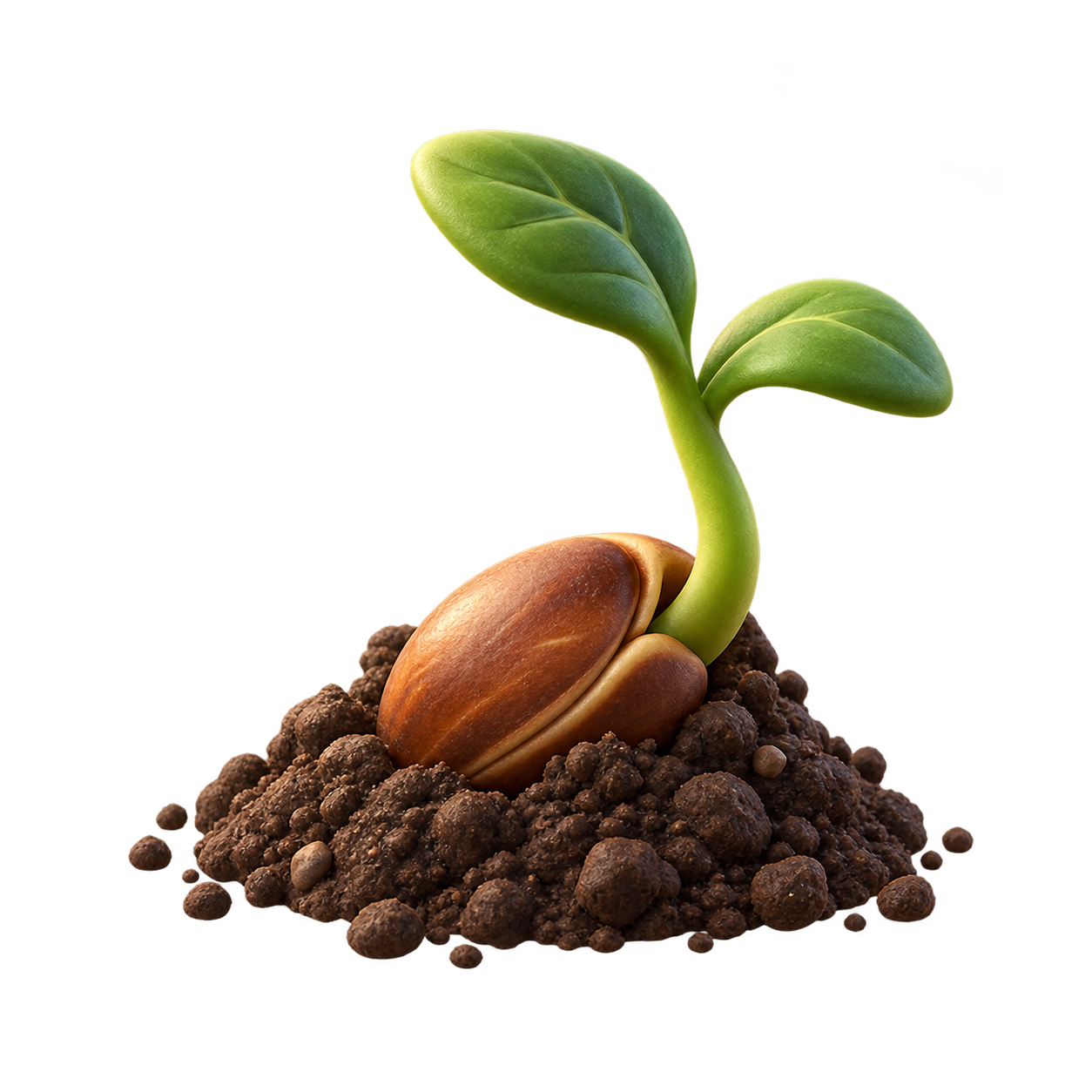
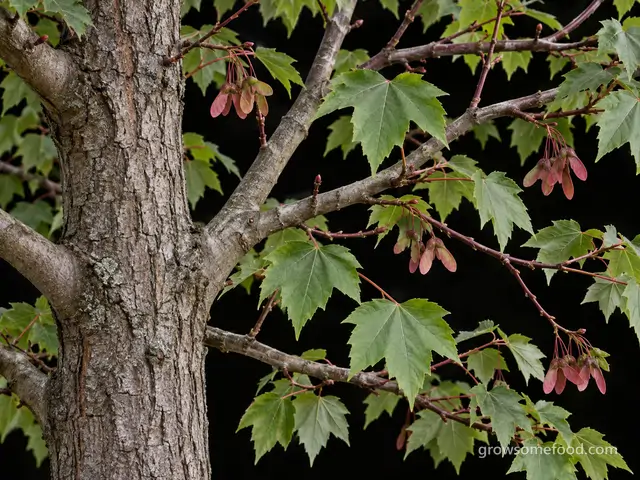
Red Maple
One of the most abundant, adaptable, and fastest-growing native shade trees in the East - red in spring flower, red in fall foliage, and easy almost anywhere from swamp to hillside.
Safety notes Red maple is safe for people, but its leaves are seriously TOXIC TO HORSES - especially wilted or dried leaves (from prunings or fall drop), which can cause fatal red-blood-cell damage. Never plant red maple where horses can reach it, and keep prunings and fallen leaves out of horse pasture. It's also mildly toxic to some other livestock. For people and pets in a normal yard it poses no ingestion risk; it's grown as a shade and ornamental tree, not a food.
Overview
Red maple (Acer rubrum) is one of the most common and widely planted native trees in eastern North America - and for good reason. It's red in every season it can be: tiny scarlet flowers wash the bare branches in earliest spring (among the first blooms of the year), red winged seeds follow, and in fall it's one of the earliest and most brilliant trees to turn, glowing scarlet and orange. In between it's a handsome, medium-to-large (40-70 foot) shade tree.
Quick facts
- Sprouts in
- 20 daysRange: 10–35 days
- Soil temperature
- 68 °FRange: 60–75 °F
- Height
- 60 ftRange: 40–80 ft
- Spread
- 40 ftRange: 30–50 ft
- Cold
- Takes hard frostdamaged below -40°F
- Heat
- Struggles above 100°F
- Life cycle
- Perennial, lives about 100 years
- Save seeds
- About 55 days after plantingRange: 40–75 days
- Self-sows
- Yes, expect volunteers
- Soil
- Consistently moist
- Water
- Medium
- Plant spacing
- 35 ftRange: 25–50 ft
When to plant
Nothing is open today. Spring transplanting opens 5 months, Mar 27 to May 22.
- Transplant Mar 27 – May 22 Opens in 158 daysAbout 2 weeks before to 6 weeks after your last frost (Apr 10 here)Plant container or B&B trees in early spring into moist, well-drained-to-moist soil in full sun to part shade; red maple is easy, fast, and adaptable.
- Transplant Aug 16 – Sep 27 Opens in 300 daysAbout 10 weeks before to 4 weeks before your first frost (Oct 25 here)Fall planting works well; buy the tree in fall color to pick a good red form, since seedling color varies.
Frost here: last around Apr 10 (Mar 27 to Apr 24 most years), first around Oct 25. Zone averages, your own yard may run a week or two either way.
Life stages
Establish, grow, repeat
Getting established and returning each season are different parts of the story.
Stage 1 of 4 · Getting established
Years 1-2 - young tree
About the first 1.5 years after planting
Care at this stage
-
Water regularly while establishing
Water a young red maple deeply and regularly for its first year or two; it's adaptable but establishes best with steady moisture. It's a fast grower once settled in.
-
Mulch the shallow roots
Red maple has shallow, wide-spreading roots (that can lift pavement and compete with lawns nearby) - a wide mulch ring helps, kept off the trunk. Site it with room and away from sidewalks and foundations.
Months are typical seasonal windows; climate, variety, and plant age can shift them.
Watch out for
3 to know. None are high-risk for Red Maple. None are active in October.
Iron Chlorosis (Alkaline Soil)Severity Medium DisorderSeason: May–AugYellow leaves with a distinct network of green veins, worst on the NEWEST growth at the shoot tips - that vein pattern is what separates it from a nitrogen shortage, which yellows the oldest leaves uniformly.
Red maple is notably intolerant of alkaline ground - but on this species the high-pH chlorosis is often a MANGANESE deficiency rather than an iron one, and the two look identical in the field. A soil or foliar test tells them apart, and a manganese-deficient tree will not green up from chelated iron no matter how much you apply.
Yellow leaves with a distinct network of green veins, worst on the NEWEST growth at the shoot tips - that vein pattern is what separates it from a nitrogen shortage, which yellows the oldest leaves uniformly. Whole plants going progressively paler over a season rather than suddenly. Brown scorched leaf margins and shoot-tip dieback in advanced cases. Symptoms concentrated on the side of a plant nearest a foundation, wall, path, driveway, or a stretch of limed lawn. One plant affected while a neighbor that does not need acid soil looks perfect.
Correct the soil, and use iron only to buy time. Chelated iron sprayed on the leaves or drenched into the root zone greens a plant up within a week or two, but it wears off in a season and has to be repeated indefinitely - it fixes nothing. The real fix is lowering pH with elemental sulfur applied to the surface and watered in, retesting each season until you are in range, then holding it there with acidic mulch and acid fertilizer. Expect one to two years; there is no fast route. Note that other shortages look identical - manganese deficiency produces the same yellow-with-green-veins pattern on some plants - so a plant that does not green up from iron should be tested rather than dosed again. Where the pH is high because of nearby concrete or genuinely calcareous subsoil, the plant is in the wrong place, and moving it into a properly built acidic bed or container will succeed where years of amendment will not.
Test the soil pH before you plant, not after, and match the plant to the ground - an acid-loving plant in limy soil will never be truly healthy however it is fed. Where the pH is too high, acidify with elemental sulfur worked in the season BEFORE planting, since sulfur takes months of soil biology to work and cannot be rushed, and retest before you commit plants. On genuinely alkaline ground the honest answer is often a raised bed of acidic mix, or a container, rather than fighting the native soil forever. Keep an acidic organic mulch topped up - pine bark, pine straw, sawdust - and site acid-lovers away from concrete foundations and mortared walls, which leach lime for decades. Never apply lime, wood ash or mushroom compost where the roots reach, use acid-forming fertilizers such as ammonium sulfate, and improve drainage, because cold waterlogged soil hurts uptake even at the right pH.
Not an infection but a nutrient lockout caused by soil chemistry. Iron is abundant in almost every soil, but as pH rises it converts to forms roots cannot take up, so a plant that needs acid ground slowly starves for iron while standing in soil full of it. The symptom is unmistakable: new leaves go pale yellow or cream while the veins stay green, giving a fine green net over a yellow leaf. It shows first and worst on the newest growth, because iron does not move around inside a plant to be recycled. It does not spread between plants, does not respond to fungicides, and does not resolve on its own - left uncorrected the plant grows less each year, leaves get smaller and paler, shoot tips die back, crops fall away, and it eventually dies. Worst near concrete, mortar, paths and limed ground, and in cold, wet, compacted soil.
Storm Breakage (Weak Wood)Severity Medium DisorderSeason: May–SepNarrow V-shaped branch unions with bark pinched inside, co-dominant leaders, and cracks - all breakage risks; sudden limb loss in storms.
Narrow V-shaped branch unions with bark pinched inside, co-dominant leaders, and cracks - all breakage risks; sudden limb loss in storms.
Prune out damaged and weak limbs (in summer); a well-structured young tree is far less prone to breakage.
Train a single strong central leader and remove narrow, weak crotches while the tree is young; avoid topping.
Not a pest but a structural weakness: red maple's soft, fast-grown wood and tendency to narrow, included-bark branch crotches make it prone to limb and trunk breakage in storms, ice, and wind.
Verticillium WiltSeverity Medium DiseaseSeason: May–AugOne branch, one limb or one side of a plant wilting, yellowing and browning in summer while the rest carries on normally - the lopsided pattern is the tell - and leaves that wilt and then hang on rather than dropping cleanly.
Maples are among the most commonly affected landscape trees. Red maple usually walls the fungus off and lives for years, so a single dying limb is worth pruning out properly rather than writing the tree off.
One branch, one limb or one side of a plant wilting, yellowing and browning in summer while the rest carries on normally - the lopsided pattern is the tell - and leaves that wilt and then hang on rather than dropping cleanly. Cut into affected wood and look for olive-green, grey or brown streaking along the grain; in a cut vegetable stem it shows as a ring of discolored dots. On vegetables, lower leaves yellow in a wedge from the margin inward, and the plant wilts at midday but recovers overnight in the early stages.
There is no cure and nothing to spray. On a tree or shrub the aim is to keep it alive long enough to compartmentalize the fungus, which many plants manage for years: prune out dead and wilting branches well below the discolored wood, sanitize the pruners between cuts, water deeply through dry spells, mulch, and feed lightly rather than pushing it with a heavy feed. On vegetables, pull and bin affected plants rather than composting them, and move that crop to clean ground or to containers of fresh mix. Do not replant the same species where one has died.
There is no way to sterilize garden soil of it, so prevention is plant choice and plant vigor. Do not replant a susceptible species where one has already died of it. Grasses, conifers, ginkgo, hawthorn, hornbeam, honeylocust, oak and beech do not get it, and many vegetable varieties carry bred-in resistance - the V in a VFN code on the seed packet. Rotate susceptible vegetables on a long cycle and keep them off ground where the disease has shown. Buy clean stock, avoid wounding roots with spades and machinery, and keep woody plants steadily watered, mulched and only lightly fed, because a vigorous plant walls the fungus off far better than a stressed one.
A soil fungus (Verticillium dahliae and relatives) that enters through the roots and grows upward inside the water-conducting tissue, plugging it from within. The plant is not being eaten or rotted, it is being cut off from its own water supply, which is why the signature symptom is one branch or one side wilting and browning while the rest looks perfectly healthy. Cut into affected wood or stem and the tissue is streaked olive-green, grey or brown. The host range is enormous - maples, redbud, olive, tomato, potato, pepper, eggplant, strawberry and many more - and the fungus survives in soil for years as tough resting structures, so infected ground stays infected. Grasses and conifers do not get it.
Good & bad neighbors
Plant nearby
-
In the moist, part-shaded conditions red maple often creates (or shares in wet sites), cardinal flower thrives and adds hummingbird value beneath the tree.
-
Native ferns and moisture-loving woodland plantsRed maple's often-moist, part-shaded root zone suits native ferns and wetland-edge wildflowers, completing a naturalistic damp-woodland underplanting.
-
A native understory small tree that flowers and fruits at the edge of a red maple's canopy, layering the planting and adding wildlife value.
-
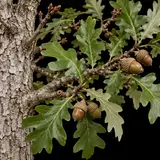
Red maple's fast early shade alongside the slow, long-lived oak makes a classic mixed-canopy planting - the maple fills in while the oak matures, and both anchor an eastern woodland.
Varieties · 3
You pick one when you add Red Maple to your garden. Its days to maturity set your harvest window.
October Glory (Acer rubrum)
One of the most popular red maple cultivars: a vigorous shade tree with dependable, long-lasting brilliant crimson-red fall color that holds late into the season.
Variety details for October Glory (Acer rubrum)
Rounded shade tree turning uniform brilliant crimson-red late in fall.
cultivarbrilliant-red-falllate-colorreliableAn excellent uniform street and yard tree.
Red Sunset (Acer rubrum)
A top-rated red maple with early, brilliant orange-red fall color and better branch structure than average - one of the best all-around selections for reliable color and a sturdy shade tree.
Variety details for Red Sunset (Acer rubrum)
Upright-oval shade tree with early, vivid orange-red fall foliage.
cultivarorange-red-fallearly-colorstrong-structureAutumn Blaze (Acer x freemanii)
A vigorous, extremely popular red-x-silver maple hybrid combining red maple's brilliant orange-red fall color with silver maple's fast growth and adaptability, in a tidy oval form.
Variety details for Autumn Blaze (Acer x freemanii)
Fast-growing oval tree with brilliant long-lasting orange-red fall color.
hybridfast-growingorange-red-falldrought-tolerantFast shade with great color, though the fast soft wood still needs good structural pruning. As a red-maple hybrid it carries the same equine toxicity as the species: do not plant Autumn Blaze, any other Freeman maple, or silver maple where horses can reach the leaves or the fallen litter.
Grower tips
Notes from growers, tagged with the zone they grow in. A person reads every post before it appears.
Nobody has posted about Red Maple yet. The first one usually saves someone a season.
Free account. Your post shows your grower name and zone, never your email.