Add it to your home screen and it opens full screen: no browser bars, one tap away, and everything stays signed in. Free, nothing to download from an app store.
- Tap the Share button in your browser
- Scroll down and choose “Add to Home Screen”
- Open GrowSomeFood from your home screen
- Open your browser’s menu
- Choose “Add to Home screen” or “Install app”
- Open GrowSomeFood from your home screen
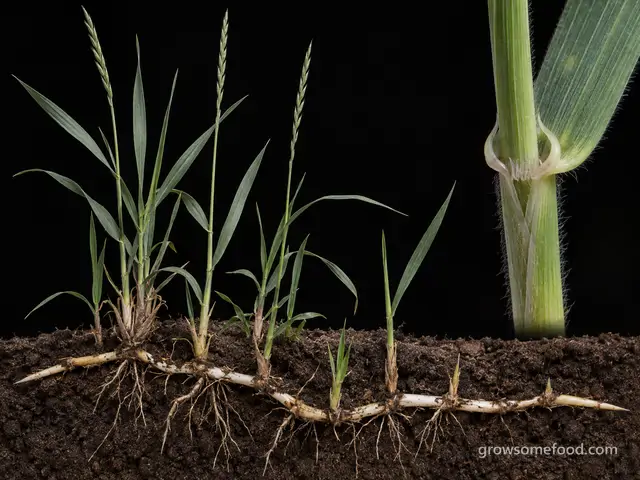
Quackgrass
The coarse grass in the flower bed that grows back from white underground stems no matter what you pull. Quackgrass is identified by claw-like auricles at the leaf collar and sharp jointed rhizomes, and its defining trick is that cutting the rhizome wakes up every bud on it - which is why tilling multiplies it.
Quackgrass is not poisonous - a nuisance, not a hazard; its rhizomes were historically dug for fodder and dried as 'couch grass root'. The rhizome tips are genuinely sharp and drive straight through potato tubers, carrots and the occasional bare hand, so wear gloves when you are pulling them out of soil. And because nothing takes it selectively out of a cool-season lawn, people reach for non-selective products in the wrong place: use one whose label lists the site, and follow it.
Overview
The one thing to knowIt is a cool-season perennial grass, it is one of the most widespread agricultural weeds in the northern half of the country, and it is beaten by understanding a single piece of biology.
Quackgrass is the coarse, dull blue-green grass that comes up through the perennials, across the vegetable bed and out of the middle of the strawberry row, and comes back a fortnight after you have weeded it. It is a cool-season perennial grass, it is one of the most widespread agricultural weeds in the northern half of the country, and it is beaten by understanding a single piece of biology.
The plant lives underground. Quackgrass spreads on rhizomes - whitish, jointed underground stems, wrapped in papery brown scales, with a hard sharp point at the tip that will drive straight through a potato tuber. They sit shallow, mostly in the top two to eight inches, and they run: a single plant can put out several feet of rhizome in a season, with a dormant bud at every node.
And here is the trick. Those buds are held in check by the growing tip of the rhizome. Break the rhizome and you release them - every single one. So a rototiller does not destroy quackgrass, it propagates it: one pass turns a patch into a bed of cuttings, evenly spaced and well planted. This is the reason most people's quackgrass problem gets worse the harder they work at it.
Identifying it takes two seconds once you know where to look. At the collar where the leaf blade meets the sheath, quackgrass has auricles: two small pale claw-like flaps that reach round and clasp the stem. Kentucky bluegrass has none. Then dig a shoot and look for the sharp white jointed rhizome. Auricles plus rhizomes is quackgrass, and the wheat-like seed spike in early summer confirms it.
Nobody plants it. This entry exists because getting rid of it is a real project with a real method - and because the two things most gardeners try first, pulling and tilling, are the two that make it worse.
Quick facts
For identification. Not a growing guide.
- Life cycle
- Perennial, lives about 15 years
- Where it grows
- Full sun · Part sun · Part shade, well-drained soil
- Height
- 30 in12 to 48
- Spread
- 72 in12 to 240
- Cold
- Takes hard frostdamaged below -40°F
- Heat
- Struggles above 95°F
- Self-sows
- Yes. Never let it set seed.
Through the year
How to recognize it in each season.
Spring flush (cool weather is its season)
Mar to Jun, every year- Two features settle it: claw-like auricles, and sharp white rhizomesPull a leaf gently away from the stem and look at the collar where blade meets sheath. Quackgrass has AURICLES - two small, pale, claw-like flaps that reach round and clasp the stem. Kentucky bluegrass has none. Then dig a shoot: it should be attached to a whitish or straw-yellow underground stem, jointed, wrapped in brown papery scales, with a hard sharp point at the tip. Auricles plus sharp white rhizomes is quackgrass and nothing else in a northern lawn.
- Fork it out - and keep the tiller awayIn moist, loose soil a small patch can be forked out: lift rather than chop, follow the rhizomes sideways well past the visible shoots, and sift the loosened soil by hand for every pale fragment. A piece with one node makes a plant. Never rototill quackgrass ground. Each rhizome tip suppresses the buds behind it, so cutting the rhizome releases every one of them - a tiller does not kill this weed, it wakes it up and plants it evenly across the bed.
- Check what you are bringing inQuackgrass arrives in gardens as rhizome pieces in nursery container stock, in bulk topsoil and fill, in unscreened compost, and in straw or hay used as mulch. Knock new plants out of the pot and look at the root ball for pale jointed runners and grass shoots that do not belong to the plant you bought. Stage soil and mulch deliveries on a tarp rather than on bare ground, and knock the mud off tiller tines before they leave an infested patch.
Key signs- Claw-like auricles clasping the stem at the leaf collar
- Whitish jointed rhizomes with hard sharp tips
- Coarse blue-green patches outgrowing the lawn around them in cool weather
Wheat-like seed spikes, then the summer slowdown
Jun to Aug, every year- A thin wheat head, not a finger headThe seed head is a slender erect SPIKE, 3 to 8 inches, with the spikelets sitting flat against the stem in two alternating rows - it looks like a thin, sparse head of wheat or rye. That is a useful confirmation, because crabgrass and bermudagrass both make finger-like heads of several spikes radiating from one point, and tall fescue makes a branched open panicle. If it looks like wheat, think quackgrass.
- Cut the heads before the seed ripensSeed is a secondary route for this weed - it travels mostly by rhizome - but it is not nothing, and quackgrass seed stays viable in soil for a few years. Mow or cut the spikes off before they colour and shed, particularly along fence lines and bed edges where nobody mows. It costs one pass and removes one of its two ways of moving.
- In hot dry weather, shallow cultivation actually helpsThis is the one time tillage is on your side, and it comes with conditions. Quackgrass slows in summer heat, and rhizomes dragged to the surface in genuinely hot, dry weather dry out and die. Shallow-cultivate every two to three weeks through a dry spell to keep bringing them up. In moist soil the same pass simply chops and replants them, so if the weather turns wet, stop.
Key signs- Slender wheat-like spikes with spikelets flat against the stem
- Seed heads along unmown fence lines and bed edges
- Growth stalling in midsummer heat - a pause, not a defeat
Fall regrowth - when the rhizomes fill (the control window)
Sep to Nov, every year- Autumn is when anything systemic reaches the rhizomesAs soon as the weather cools, quackgrass surges again and starts moving sugars DOWN to load its rhizomes for winter. Anything systemic applied to actively growing autumn foliage travels down with them, which is why a fall treatment beats a spring one so decisively. If you are going to treat this weed once, treat it now - and expect to repeat on the regrowth.
- Map the patch while it is still greenQuackgrass stays green and growing after the garden has stopped, so late autumn is the easiest time of year to see exactly how far it has run. Walk the edges and mark them - the rhizome front is usually a foot or two beyond the last shoot you can see, which is the distance every cover, dig or treatment needs to allow for.
Key signs- A fresh flush of growth as nights cool
- Green quackgrass showing up against a dormant garden
- Shoots appearing well outside last season's patch line
Winter: the rhizomes are the plant
Dec to Feb, every year- Get the cover down now for a full-season smotherThe rhizome mat sits shallow, mostly in the top two to eight inches, which is exactly why occultation works on quackgrass. Cut the top growth off, lay an opaque tarp or heavy overlapped cardboard extending two to three feet past the marked edge, weight it down thoroughly, and leave it for a full growing season. Starting in late winter gets the whole year in one go, and one uninterrupted season under cover clears most beds.
- Winter does nothing to it - plan accordinglyQuackgrass is hardy to about -40°F and its rhizomes come through northern winters untouched; in mild spells it will green up under snow-free ground. There is no cold that solves this for you, so treat winter as planning time: mark patches, keep them out of the spring tillage plan, and order the tarp.
Key signs- Tarps blown loose or edges left uncovered
- Green shoots in winter thaws
- Patches marked but not excluded from the spring tillage plan
Watch out for
4 to know. 1 is high-risk: Regrowth from Cut Rhizomes. 4 are active in September.
Regrowth from Cut RhizomesSeverity High DisordernowA patch that multiplied the season after the bed was rotovated; shoots coming up in an even scatter rather than a clump; pale jointed runners found a foot or two beyond the last visible shoot.
A patch that multiplied the season after the bed was rotovated; shoots coming up in an even scatter rather than a clump; pale jointed runners found a foot or two beyond the last visible shoot.
Cover: cut the top growth, lay an opaque tarp or heavy overlapped cardboard extending two to three feet past the visible edge, weight it, and leave it a full growing season while patrolling the perimeter. Or fork small patches out in moist soil, lifting rather than slicing, sifting the soil for fragments, then removing every resprout for the rest of the season. Repeated shallow cultivation works only in genuinely hot dry weather. A non-selective systemic works best in autumn on actively growing plants - use a product whose label lists the site and follow that label, including the replanting interval.
Keep tillers and rotovators out of quackgrass ground and mark the patches. Do not move soil, mulch or compost from an infested area to a clean one, do not compost the rhizomes, and clean tiller tines and boots. Replant cleared ground densely so nothing is left bare.
The mechanism that defeats most gardeners. Quackgrass spreads on shallow jointed rhizomes in the top two to eight inches of soil, each node carrying a dormant bud held in check by the growing tip. Break the rhizome and every one of those buds is released, so cultivation does not destroy the plant - it propagates it, and a rototiller distributes the cuttings evenly across the bed. Pulling snaps the shoot off the rhizome and prunes it. The gardener's one advantage is that the mat is shallow, which is what makes a full-season light-proof cover genuinely effective.
No Selective Control in Cool-Season LawnsSeverity Medium DisordernowCoarse blue-green patches outgrowing the lawn in cool weather; a lawn treatment that made no difference whatsoever; the patch expanding outward year on year rather than reappearing from seed.
Coarse blue-green patches outgrowing the lawn in cool weather; a lawn treatment that made no difference whatsoever; the patch expanding outward year on year rather than reappearing from seed.
The real options are to spot-kill the patches with a non-selective product and reseed or patch with sod, to renovate the whole area, or to accept it and mow. Some products do remove cool-season grasses selectively from warm-season turf such as bermudagrass or zoysia - the label will say so. Whatever you use, use a product whose label lists the site and follow that label.
Keep turf dense and mown high so the stand is less able to expand, and stop it arriving with topsoil, sod, straw mulch and nursery stock in the first place.
An honest limitation worth knowing before spending money. Quackgrass is a grass growing in a lawn of grasses, and in cool-season turf - Kentucky bluegrass, fescue, perennial ryegrass - there is no selective product that removes it without killing the turf as well. People buy crabgrass products for it, which do nothing at all, since crabgrass is a warm-season annual controlled by pre-emergent timing that is irrelevant to a perennial rhizome mat.
Green Bridge for Cereal Pests & DiseasesSeverity Medium DiseasenowGreen quackgrass margins and headlands surviving between cereal crops; virus symptoms appearing first at the edge of a field or plot nearest an infested margin; wireworm damage in a bed broken out of long-standing quackgrass sod.
Green quackgrass margins and headlands surviving between cereal crops; virus symptoms appearing first at the edge of a field or plot nearest an infested margin; wireworm damage in a bed broken out of long-standing quackgrass sod.
Remove the bridge rather than treating the crop: clear the margin, and where a bed has been broken out of quackgrass sod, allow a fallow or cover-crop interval before planting a susceptible crop and expect wireworm pressure in the first season.
Keep field edges, headlands and garden margins clear of living quackgrass through the gap between cereal crops, and avoid planting a cereal or corn directly into freshly killed quackgrass sod.
Quackgrass is a close relative of wheat, barley and rye, and a perennial one, so it keeps cereal problems alive between crops in a way an annual weed cannot. It hosts wheat curl mite and the wheat streak mosaic virus that mite transmits, take-all, and cereal cyst and root-lesion nematodes, and its dense cover shelters wireworms and slugs. It is also allelopathic to several crops including corn, so its effect on yield is more than competition for light and water.
Rhizomes Pierce Tubers & RootsSeverity Medium DisordernowNeat holes or embedded pale stems in lifted potatoes and root crops; forked or rotting carrots in a bed with quackgrass in it; storage losses appearing in a crop that looked sound when lifted.
Neat holes or embedded pale stems in lifted potatoes and root crops; forked or rotting carrots in a bed with quackgrass in it; storage losses appearing in a crop that looked sound when lifted.
There is no treatment for a pierced crop; use damaged roots promptly and keep them out of store. Deal with the rhizome mat before the next planting rather than working around it.
Clear quackgrass from ground intended for root crops a full season ahead, preferably by covering rather than digging. Grade pierced tubers out at harvest rather than storing them with the rest of the crop. Wear gloves when handling rhizomes - the tips will pierce skin too.
Quackgrass rhizome tips are hard and sharply pointed - the plant navigates by pushing through rather than around. They grow straight through potato tubers, carrots, parsnips and beets, and through the roots of young trees, shrubs and perennials. The holes are small but they let rot in, so pierced potatoes fail in storage rather than in the ground, and the damage is often discovered weeks after harvest.
Good & bad neighbors
First rule: keep Potato apart. A physical conflict, not folklore.
Keep apart
-
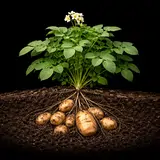
A physical conflict, not folklore. Quackgrass rhizome tips are hard and sharp and grow straight through developing potato tubers, leaving holes that rot in storage and downgrade the whole crop. On top of that, potato ground gets hilled and cultivated repeatedly, and every one of those passes chops rhizomes into new plants. Clear quackgrass from a bed a full season before you plant potatoes in it - ideally by covering the ground rather than by digging it.
-
The worst combination in the garden. A matted strawberry row and a quackgrass rhizome mat occupy the same few inches of soil, and once quackgrass is inside the row there is no way to dig it out without destroying the planting and no selective product that removes a grass from a bed you can safely treat. Clear the ground completely, cover it for a season, and only then plant strawberries.
-
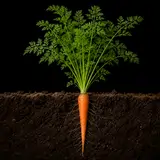
Same mechanism as potatoes, plus a weeding problem. Rhizomes pierce carrot and parsnip roots and cause forking and rot, and carrots are slow to germinate and hopeless at competing, so a quackgrass bed produces a crop you cannot weed without disturbing the seedlings. Root beds are the ones worth clearing properly first.
-
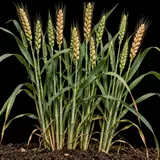
A disease bridge rather than a competition problem. Quackgrass is a close relative of wheat and hosts wheat curl mite and the wheat streak mosaic virus it carries, along with take-all and cereal nematodes, so a green quackgrass margin keeps cereal problems alive between crops. Keep field edges and headlands clean if you grow any small grain.

Grower tips
Notes from growers, tagged with the zone they grow in. A person reads every post before it appears.
Nobody has posted about Quackgrass yet.
Free account. Your post shows your grower name and zone, never your email.