
Add it to your home screen and it opens full screen: no browser bars, one tap away, and everything stays signed in. Free, nothing to download from an app store.
- Tap the Share button in your browser
- Scroll down and choose “Add to Home Screen”
- Open GrowSomeFood from your home screen
- Open your browser’s menu
- Choose “Add to Home screen” or “Install app”
- Open GrowSomeFood from your home screen
Prairie Dropseed
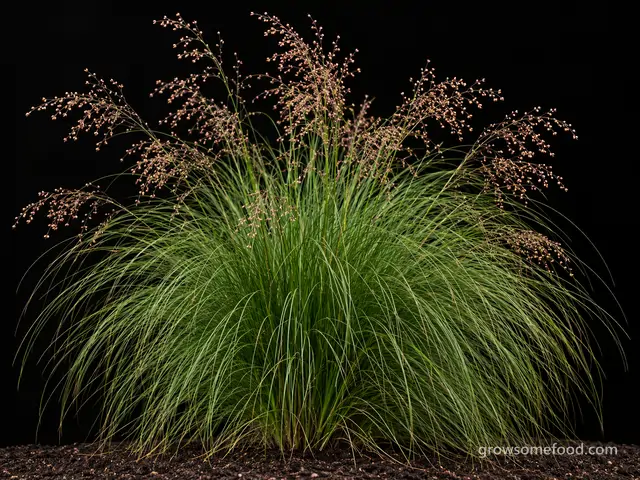
The most refined native prairie grass: a fine emerald-green fountain-like mound, fragrant airy flowers in late summer (coriander to buttered popcorn), and glowing golden-bronze fall color - elegant, tough, and impeccably well-behaved.
Safety notes Prairie dropseed is a safe, non-toxic native bunchgrass grown as a fine-textured ornamental and prairie plant, not a food crop. Native peoples ground its small seeds into flour historically, but that is not a practical modern food use. No handling precautions - the foliage has no irritants, and its late-summer flowers carry a distinctive fragrance that some find pleasant and others strong.
Overview
Prairie dropseed (Sporobolus heterolepis) is widely considered the most refined and elegant of the native prairie grasses. It forms a tidy, symmetrical fountain-like mound of exceptionally fine, thread-like emerald-green leaves, usually 15-18 inches high, that arch gracefully outward - a soft, hair-like texture unmatched by coarser grasses. In late summer it raises airy, open flower and seed heads a foot or so above the foliage, and these carry a famous fragrance - described variously as coriander, buttered popcorn, or warm wax - that drifts on the late-summer air.
The one thing to knowPrairie dropseed (Sporobolus heterolepis) is widely considered the most refined and elegant of the native prairie grasses.
Quick facts
- Sprouts in
- 25 daysRange: 14–40 days
- Soil temperature
- 72 °FRange: 60–82 °F
- Height
- 30 inRange: 18–36 in
- Spread
- 24 inRange: 18–30 in
- Cold
- Takes hard frostdamaged below -40°F
- Heat
- Struggles above 100°F
- Life cycle
- Perennial, lives about 25 years
- Save seeds
- About 120 days after plantingRange: 100–150 days
- Self-sows
- Yes, expect volunteers
- Soil
- Well-drained
- Water
- Low
- Plant spacing
- 24 inRange: 18–30 in
When to plant
Fall sowing is open for 35 more days. Next: spring, Apr 10 to Jun 5.
- Direct sow Oct 11 – Nov 24 Open now · 35 days leftAbout 2 weeks before to 4 weeks after your first frost (Oct 25 here)Dormant-sow in late fall so winter cold naturally conditions the seed for spring germination - a common approach for prairie and conservation seedings.
- Transplant Apr 10 – Jun 5 Opens in 172 daysAbout at to 8 weeks after your last frost (Apr 10 here)Set out plugs or divisions from last frost onward as the soil warms - a warm-season grass, prairie dropseed establishes through summer into lean, well-drained soil. It is slow to settle in but very long-lived once it does.
- Direct sow Apr 10 – Jun 5 Opens in 172 daysAbout at to 8 weeks after your last frost (Apr 10 here)Sow seed on warm spring soil into a clean, firmed seedbed - workable for prairie plantings and restorations, though germination can be slow and seedlings take several years to reach mature size.
Frost here: last around Apr 10 (Mar 27 to Apr 24 most years), first around Oct 25. Zone averages, your own yard may run a week or two either way.
Life stages
Establish, grow, repeat
Getting established and returning each season are different parts of the story.
Stage 1 of 4 · Getting established
Years 1-2 - rooting in slowly
Day 0 to 200 after transplanting
Care at this stage
-
Water to establish, then let it run dry
Water a new plug or division through its first season or two while it roots in - prairie dropseed is famously slow to establish. Once settled it is deeply drought-tolerant and wants little to no extra water.
-
Never fertilize this prairie grass
Prairie dropseed is adapted to lean prairie soil. Rich soil and fertilizer make it looser and floppier - grow it in average-to-lean, well-drained ground and feed it nothing.
Months are typical seasonal windows; climate, variety, and plant age can shift them.
Watch out for
3 to know. None are high-risk for seedheads. 1 is active in October.
Flopping in Rich SoilSeverity Low DisordernowSeason: Aug–OctA clump that opens and sprawls from the middle, tall stems leaning or splaying outward, and soft floppy growth - worst in fertile or moist soil, in shadier sites, and after heavy rain or wind.
Prairie dropseed loosens into a flattened mound rather than lodging outright, losing its crisp fountain shape. Grown lean and in full sun the mound stays dense and self-supporting.
A clump that opens and sprawls from the middle, tall stems leaning or splaying outward, and soft floppy growth - worst in fertile or moist soil, in shadier sites, and after heavy rain or wind.
The fix is cultural, not chemical. Stop feeding, cut back on water, move the plant into more sun, and divide and replant it into leaner soil. A grass that flops every year in the same spot is in the wrong place or the wrong soil.
Grow it lean and in full sun: no fertilizer, average-to-poor well-drained soil, and enough light for firm, dense, upright growth. Where a sturdy upright cultivar exists for the species, choose it. Siting a tall grass among supportive prairie companions also helps keep it standing.
Not a pest but a cultural problem, and the commonest ornamental complaint about tall grasses. Rich or fertilized soil, too much water, or too much shade all produce soft, leggy growth, and the clump then opens and splays outward from the center, or the tall stems lean and lodge after a storm. The upright form - the whole reason you planted it - is lost for the season.
Crown RotSeverity Low DiseaseSeason: Nov–MarA plant that fails to green up or emerge in spring when everything around it does - the most common way this gets discovered, and by then it is already too late.
Uncommon in this drought-adapted grass - it only happens in heavy, soggy, poorly drained ground, and mainly over winter.
A plant that fails to green up or emerge in spring when everything around it does - the most common way this gets discovered, and by then it is already too late. Stems that wilt, blacken, and collapse in wet weather while the soil is clearly damp rather than dry. A crown that is soft, dark, brown, or mushy when you press or lift it, sometimes with a foul smell, instead of firm and pale. New growth that pulls away from the crown with almost no resistance. Clumps browning and going hollow in the middle while the outer growth stays alive. In stands and cover crops, patches wilting, yellowing, and thinning out after wet spells or over a mild wet winter.
There is usually no cure once the crown itself has rotted: the plant is lost, and the job is to save what you can and fix the site. Lift it, cut away every soft, dark, rotted part with a clean blade back to firm tissue, and replant only healthy divisions or firm outer growth into fresh, sharply drained soil or medium. On potted and specialist plants, repotting into fresh airy medium and keeping them drier with better airflow gives the best chance, though a badly rotted crown is usually beyond saving. Bin the rotted material rather than composting it. Replant somewhere better drained rather than back into the same wet spot - or start again from seed, cuttings, or self-sown seedlings, which is the realistic option for anything that resents being moved at all.
Drainage and airflow at the crown are everything. Match the plant to the site first: a dry-adapted perennial planted in heavy or enriched ground is on borrowed time whatever else you do. In wet or clay soil, plant on a slope, berm, raised bed, or gritty rock-garden site so water drains away from the crown rather than standing over it. Set plants at the right depth - never bury the crown - and keep mulch, dead leaves, and debris pulled back from it rather than piled against it, since damp material resting on the crown is a common trigger. Do not overwater, and ease right off during dormancy, when a resting plant wants to be barely damp rather than wet. Give crowded plantings enough space and airflow to dry out, and do not sow a stand too thickly. In cold, wet climates, divide in spring rather than fall, so plants are not recovering from surgery through the wettest months.
Crown rot is the rotting of a plant at the crown - the growing point where the stems meet the roots, right at or just below soil level. Soil fungi and water molds that live in most ground attack that tissue whenever it sits wet, cold, and airless, and because the crown is the one part a perennial cannot regrow from, losing it usually means losing the plant. It is above all a winter problem: a plant that survives hard frost perfectly well in dry ground rots out in a wet one, and the classic story is a perennial that simply never comes back in spring. Dry-adapted plants growing in heavy or over-improved soil are the most vulnerable, along with anything that has mulch, wet leaves, or piled debris sitting against the crown, and anything planted too deep.
RustSeverity Low DiseaseSeason: Jul–SepOrange to rusty-brown flecks, spots or streaks on the leaves, often raised and powdery on the undersides, worst in muggy weather and on crowded, shaded or poorly ventilated plants.
The fine foliage shows flecking readily but the plant is unbothered. Clean the old growth out at the annual cut-back and it does not carry over.
Orange to rusty-brown flecks, spots or streaks on the leaves, often raised and powdery on the undersides, worst in muggy weather and on crowded, shaded or poorly ventilated plants.
Remove affected foliage and improve airflow. This is almost always cosmetic and outgrown, so fungicide is rarely warranted.
Space plants for airflow, grow them in full sun, and avoid overhead watering. Remove the old foliage at the annual cut-back, since spores carry over on last year's leaves.
A minor fungal leaf disease that raises orange to rusty-brown pustules on the foliage in humid, crowded, poorly ventilated conditions. On a tough, well-sited plant it is cosmetic - it marks the leaves late in the season and the plant grows straight through it - and it is rarely worth treating.
Good & bad neighbors
Plant nearby
-
Two refined clumping prairie grasses that layer beautifully - little bluestem's blue-to-red uprights above prairie dropseed's low fine mound, sharing sun, lean soil, and drought tolerance.
-
The fine emerald mound of prairie dropseed is a perfect foil for coneflowers' bold blooms and cones; both love full sun, lean soil, and drought, a classic prairie-garden pairing.
-
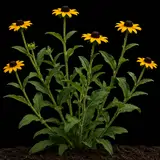
Golden black-eyed Susans scattered through a fine prairie-dropseed carpet make a bright, easy meadow planting; matched sun, lean soil, and drought tolerance.
-
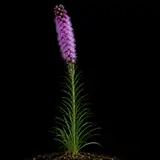
Blazing star's vertical purple spikes rise cleanly from a matrix of fine prairie-dropseed foliage in an elegant tallgrass-prairie combination that layers bloom into the grass.
-
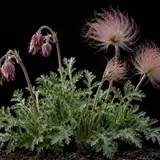
Low, early prairie smoke blooms in spring at the front of a dropseed planting and finishes with its pink smoky seed heads before the grass takes over - complementary heights and seasons.
Varieties · 2
You pick one when you add Prairie Dropseed to your garden. Its days to maturity set your harvest window.
Prairie Dropseed (Sporobolus heterolepis)
The wild prairie species: a refined, fountain-like mound of very fine emerald-green foliage 15-18 inches high, with airy, coriander-scented flowers in late summer and glowing golden-bronze fall color fading to soft light bronze in winter.
Variety details for Prairie Dropseed (Sporobolus heterolepis)
A neat fountain-like mound of thread-fine emerald leaves with airy fragrant seed heads, turning golden-orange to bronze in fall.
speciesnativefine-texturedfragrantSlow to establish but exceptionally long-lived, drought-tough, and tidy - the standard for prairie and ornamental plantings.
Tara
A more compact, upright selection of prairie dropseed with a tidier, denser mound and strong golden-orange fall color - a good choice for smaller gardens and formal massed plantings where a neat, uniform habit matters.
Variety details for Tara
A compact, more upright fine-textured mound with vivid golden-orange fall color.
compactuprightselectionfall-color
Grower tips
Notes from growers, tagged with the zone they grow in. A person reads every post before it appears.
Nobody has posted about Prairie Dropseed yet. The first one usually saves someone a season.
Free account. Your post shows your grower name and zone, never your email.