Add it to your home screen and it opens full screen — no browser bars, one tap away, and everything stays signed in. Free, nothing to download from an app store.
- Tap the Share button in your browser
- Scroll down and choose “Add to Home Screen”
- Open GrowSomeFood from your home screen
- Open your browser’s menu
- Choose “Add to Home screen” or “Install app”
- Open GrowSomeFood from your home screen
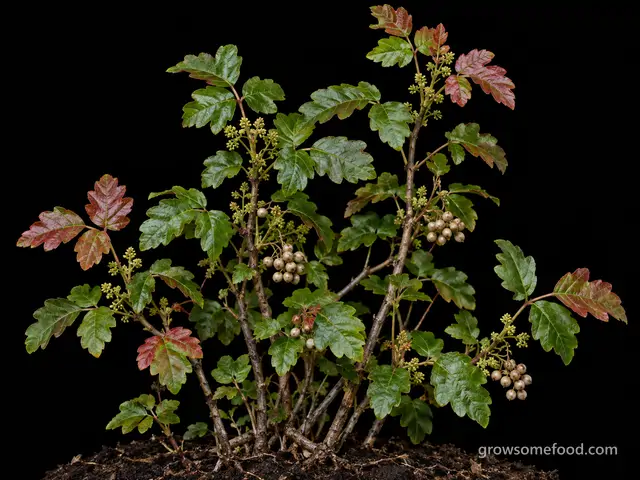
Poison Oak
DO NOT TOUCH. Poison oak carries the same URUSHIOL allergen as poison ivy in every part - leaves, stems, roots, berries, and bare winter branches - and causes the same itchy, blistering rash, often 12-72 hours after contact. The oil is active year-round, even on leafless plants, and spreads from tools, clothing, and pet fur. NEVER BURN it - the smoke carries urushiol into the airways. If exposed, wash skin and anything it touched with soap and cool water. Learn its oak-like 'leaves of three.'
Overview
Poison ivy's western and southeastern cousin - the same urushiol, the same 'leaves of three' rule, but with rounded, oak-like leaflets. Learn it, and never touch it.
Poison oak is the close relative of poison ivy that dominates where poison ivy proper leaves off - Pacific poison oak (Toxicodendron diversilobum) blankets the West Coast, and Atlantic poison oak (T. pubescens) grows in the sandy Southeast. It carries the exact same allergen, urushiol, in every part, causing the same fierce, blistering allergic rash in most people who touch it. On the West Coast especially, it's the single most important hazardous plant for hikers and gardeners to recognize.
Its name comes from its oak-like leaflets - the same 'leaves of three' warning as poison ivy, but with more rounded, lobed leaflets that resemble small oak leaves. It grows mainly as a shrub (and can climb in the West), turns brilliant colors in fall, and bears pale berries that feed birds. Like poison ivy, this entry is purely an identification and safety guide: poison oak is a real native plant with wildlife value, not something to plant - the goal is simply to know it on sight and avoid it. If you live or hike in the West or Southeast, learning poison oak is essential.
At a glance
- Sun
- Full sun · Part sun · Part shade · Shade
- Water
- Low
- Spacing
- 12–240 in (typ. 48)
- Mature height
- 24–240 in (typ. 72)
- Start by
- Direct sow
- Frost
- Hardy
When to plant
No planting window on record for this zone.
Life stages
- Oak-like leaves of three (identify & avoid) Mar, Apr, May, Jun, Jul, Aug (yearly)
-
'Leaves of three' with oak-like lobesLike poison ivy, poison oak has compound leaves of THREE leaflets - but the leaflets are more rounded and LOBED, resembling small oak leaves (hence the name), often fuzzy and glossy, and reddish when new. It grows mostly as a shrub, and can climb in the West. Leaves of three - do not touch.
-
Know it from true oaks and look-alikesTrue oaks have single (simple) leaves, not leaflets in threes. Distinguish poison oak from harmless oak-leaved shrubs by its three-leaflet compound leaves, alternate arrangement, and (later) whitish berries. When unsure, avoid it.
Oak-like 'leaves of three' - do not touchReddish glossy new growthEspecially common on West Coast trails and Southeast woods -
'Leaves of three' with oak-like lobes
- Flowers & whitish berries Apr, May, Jun, Jul, Aug (yearly)
-
Small greenish flowers, then pale berriesInconspicuous greenish-white flowers give way to clusters of small, waxy, greenish-white to tan berries. Birds eat them and spread the seed; every part, including berries, carries urushiol.
Clusters of pale greenish-white berries (an ID sign)Birds spreading seed -
Small greenish flowers, then pale berries
- Fall color & bare branches (still toxic) Jan, Feb, Sep, Oct, Nov, Dec (yearly)
-
Bare stems still cause rashesPoison oak turns brilliant red and orange in fall (striking, but never gather it) and in the dry season or winter it may drop its leaves entirely - but the bare stems STILL contain urushiol and cause rashes. In the West it can be a leafless tangle much of the dry summer and still hazardous. Never burn it.
Brilliant red/orange fall color (do not touch)Bare leafless stems - still toxic, especially in the dry West -
Bare stems still cause rashes
Watch out for
Urushiol Exposure (to people) Disorder Highyear-round
The hazard is to you: every part of poison sumac contains urushiol, causing an intensely itchy, blistering allergic rash that is often more severe than poison ivy's. The oil is active year-round (even on bare winter stems) and spreads readily from tools, clothing, and pet fur.
Watch for: Any skin contact with the plant; a red, itchy, blistering rash appearing 12-72 hours later, often in streaks, and sometimes markedly severe.
Prevent: Learn to identify it (smooth compound leaves, red stalks, white drooping berries, wet habitat), don't touch it, cover up fully near it, keep pets clear, and NEVER burn it (the smoke is dangerous to inhale).
Treat: Wash skin and everything it touched promptly with soap and cool water or a urushiol remover; treat rash with cool compresses, calamine, and antihistamines; seek medical care for severe, facial, widespread, or breathing-related reactions.
Spread by Birds & Roots Disorder MediumApr, May, Jun, Jul, Aug, Sep
Why it reappears: birds eat the white berries and spread the seed through wetlands, and established plants resprout from roots after cutting, so poison sumac returns in new wet spots and after removal.
Watch for: New seedlings in wet ground and near bird perches, and regrowth from roots after cutting.
Prevent: Remove plants (safely, with full protection) before they berry to limit bird-spread seed, and dig out roots as completely as possible.
Treat: Repeated safe removal or a suitable, water-safe herbicide over time; monitor wetland edges where new plants establish.
Varieties · 2
The southeastern poison oak: a low shrub of sandy soils and pine woods from Texas to the mid-Atlantic, with fuzzy oak-like 'leaves of three' and the same urushiol rash. Identify and avoid.
The West Coast poison oak: a shrub or climbing vine of California and Pacific woodlands and chaparral, with oak-like 'leaves of three,' brilliant fall color, and pale berries. Often leafless (but still toxic) in the dry summer. The top plant hazard for western hikers - identify and avoid.
Grow
How to recognize it: 'leaves of three' with rounded, oak-like, lobed leaflets, alternate arrangement, and pale berries - a shrub (climbing in the West), not to be confused with true oaks.
You'll never plant poison oak - the point is recognizing it. Like poison ivy, it has compound leaves of three leaflets, but the leaflets are more rounded and lobed, looking like small oak leaves (hence 'poison oak'), often glossy or fuzzy and reddish when young. It grows mostly as a dense shrub, though Pacific poison oak can also climb as a vine in shadier or wetter spots.
Key ID points: the leaflets come in threes, arranged alternately on the stem; it bears clusters of small greenish-white to tan berries; and it turns brilliant red and orange in fall. Don't confuse it with true oaks, which have single (simple) leaves rather than three-leaflet compound leaves. In the dry-summer West it may drop its leaves and stand as a bare, tangled, brownish shrub that's easy to blunder into on a trail - and still fully toxic. When in doubt, apply the universal rule: leaves of three, let it be.
Care
If you must remove it: never touch it bare-handed, NEVER burn it, cover up completely, dig or cut it out (it resprouts from roots) or use targeted herbicide, bag everything, and wash thoroughly - or hire a pro.
As with poison ivy, the only 'care' is safe removal, and the rules are identical and critical. Never burn poison oak - the smoke aerosolizes urushiol and can cause a dangerous rash in your lungs and airways. To remove it, cover every inch of skin (long sleeves and pants, waterproof gloves, closed shoes, eye protection), and either dig out the roots (it resprouts vigorously from roots and rhizomes, so remove as much as possible) or apply a targeted herbicide to actively growing plants.
Bag and dispose of all material - never compost or burn it - and treat everything it touched (tools, gloves, boots, clothes, pet fur) as contaminated, since urushiol persists for months. Wash tools and clothing separately and wash skin promptly with soap and cool water or a urushiol remover. For large stands, or if you're highly sensitive, hire a professional. In wild areas where it's not in anyone's way, the safest 'management' is often to simply learn it and leave it - it's a native part of the ecosystem.
Nutrition
Not a food - it's hazardous to touch and never eaten. Ecologically it's a genuine native: its berries feed birds and its foliage is browsed by deer and other animals without harm.
Poison oak is not food and is dangerous even to touch. But like poison ivy, it's a legitimate native plant with real ecological value, not an invader. Its berries feed many birds (which spread the seed), and its foliage and twigs are browsed by deer and other mammals that are unaffected by the urushiol - the allergy is essentially a human (and primate) problem. It provides cover and helps stabilize soil on slopes and chaparral.
So while poison oak offers people nothing but a rash and belongs firmly in 'identify and avoid,' it's a natural part of western and southeastern ecosystems rather than something to eradicate wherever it grows. The practical message is about people: never touch, eat, or burn it, and remove it only where it genuinely threatens human use of a space - while recognizing that in the wild chaparral or a sandy pine wood it's quietly feeding wildlife.
Troubleshooting
Confirm the oak-like 'leaves of three,' know what to do if exposed (wash promptly, treat the rash), and remove it only safely - never by burning, always covered, treating everything as contaminated.
Is this poison oak? Look for leaves of THREE rounded, lobed, oak-like leaflets, arranged alternately, often glossy/reddish when young, with pale greenish-white berries; remember true oaks have single leaves, not leaflets in threes. In the dry West, watch for bare, tangled, leafless stems on trails - still toxic. When unsure, avoid it. I touched it - now what? Wash the skin promptly (within an hour or two if possible) with soap and cool water or a urushiol remover, and wash everything else it touched (clothes, gear, pet fur). A red, itchy, blistering rash may appear 12-72 hours later; treat mild cases with cool compresses, calamine, and antihistamines, and seek medical care for severe, facial, or widespread reactions. Is the rash contagious? No - it doesn't spread from blister fluid; new patches come from residual oil not yet washed off. How do I remove it? Never burn it; cover up, dig/cut it out or use herbicide, bag all material, wash everything - or hire a pro. It grew back: it resprouts from roots and reseeds via birds - repeated removal is needed.
Growing across climates
Pacific poison oak dominates the West Coast (zones 7-10, thriving in dry chaparral and oak woodland); Atlantic poison oak covers the sandy Southeast - both hazardous year-round, even leafless.
Poison oak's two species cover different regions. Pacific poison oak (T. diversilobum) is abundant along the entire West Coast, roughly zones 7-10, and is exceptionally at home in California's chaparral, oak woodland, and coastal scrub - it's the number-one plant hazard for West Coast hikers, growing as a shrub or a climbing vine and often dropping its leaves in the dry summer to stand as a deceptively bare, still-toxic tangle. Atlantic poison oak (T. pubescens) grows across the sandy soils of the Southeast, from Texas to the mid-Atlantic, as a low shrub in pine woods and disturbed ground.
Between them, and with poison ivy covering the East and Midwest, some urushiol-bearing Toxicodendron grows in nearly every state - so wherever you are, the lesson is the same: know your regional species (poison oak in the West and Southeast, poison ivy elsewhere), recognize the 'leaves of three,' remember that the plants are hazardous year-round even when leafless, and give them a wide berth.
No grower tips for Poison Oak yet — yours could be the first.
Sign in to share what works in your garden.