Add it to your home screen and it opens full screen — no browser bars, one tap away, and everything stays signed in. Free, nothing to download from an app store.
- Tap the Share button in your browser
- Scroll down and choose “Add to Home Screen”
- Open GrowSomeFood from your home screen
- Open your browser’s menu
- Choose “Add to Home screen” or “Install app”
- Open GrowSomeFood from your home screen
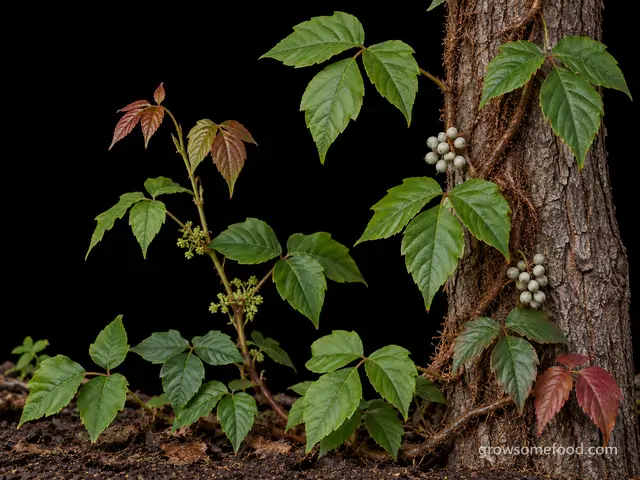
Poison Ivy
DO NOT TOUCH. Every part of poison ivy - leaves, stems, roots, berries, and bare winter vines - contains URUSHIOL, an oily allergen that causes an intensely itchy, blistering rash on contact, often 12-72 hours later. The oil is active year-round, even on dead plants, and spreads from tools, clothing, and pet fur. NEVER BURN it - the smoke carries urushiol into the lungs and airways. If exposed, wash skin and anything it touched with soap and cool water. Remember 'leaves of three, let it be.'
Overview
The most important plant in North America to be able to recognize - and to never touch. 'Leaves of three, let it be': every part carries urushiol, an oil that causes a fierce, blistering rash.
Poison ivy (Toxicodendron radicans) is a plant everyone should be able to identify - and no one should ever plant or touch. It's a common native throughout eastern and central North America, growing as a ground creeper, a low shrub, or a climbing vine along woodland edges, fencerows, trails, and backyards. Its infamy comes from urushiol, an oily allergen present in every part of the plant that causes an intensely itchy, blistering allergic rash in most people who touch it - often appearing a day or more after contact.
This entry exists purely as an identification and safety guide: the classic rule is 'leaves of three, let it be.' Poison ivy is genuinely a native plant with real ecological value - its white berries are important winter bird food, and it's part of the natural landscape - so it's not 'evil,' just hazardous to people. The goal isn't to grow it (you never would) but to know it on sight, understand where it grows and how it spreads, and know what to do if you're exposed. Learning to recognize poison ivy is one of the most useful pieces of plant knowledge there is.
At a glance
- Sun
- Full sun · Part sun · Part shade · Shade
- Water
- Medium
- Spacing
- 12–240 in (typ. 36)
- Mature height
- 12–600 in (typ. 60)
- Start by
- Direct sow
- Frost
- Hardy
When to plant
No planting window on record for this zone.
Life stages
- Leaves of three (identify & avoid) Apr, May, Jun, Jul, Aug (yearly)
-
'Leaves of three, let it be'The key ID: compound leaves of THREE leaflets, the middle one on a longer stalk. Leaflets may be smooth, toothed, or lobed (variable), often glossy, and reddish when new. It grows as a ground plant, a low shrub, or a climbing vine. If you see leaves of three - do not touch it.
-
Never touch it (and know the look-alikes)Distinguish it from safe look-alikes: Virginia creeper has FIVE leaflets; box elder seedlings have three but grow OPPOSITE (poison ivy leaves alternate); fragrant sumac resembles it but its middle leaflet has no stalk. When unsure, treat it as poison ivy and avoid it.
Any 'leaves of three' - do not touchReddish glossy new leaves in springClimbing vines with a 'hairy rope' look (aerial rootlets) -
'Leaves of three, let it be'
- Flowers & white berries May, Jun, Jul, Aug, Sep (yearly)
-
Small greenish flowers, then WHITE berriesInconspicuous greenish flowers give way to clusters of small, waxy, dull WHITE (or cream) berries - a distinctive ID feature (most harmless berries are colored, not white). Birds eat them and spread the seed; every part, including the berries, carries urushiol.
Clusters of dull white/cream berries (a key ID sign)Birds spreading seed to new spots -
Small greenish flowers, then WHITE berries
- Fall color & bare winter vines (still toxic) Jan, Feb, Mar, Sep, Oct, Nov, Dec (yearly)
-
Bare winter vines still cause rashesIn fall the leaves turn brilliant red and orange (pretty, but do not gather them!). In winter the plant is a bare vine or stem - and the leafless vines, especially the hairy climbing 'ropes' on tree trunks, STILL contain urushiol and cause rashes. Never grab a hairy vine on a tree, and never burn brush containing them.
Brilliant red/orange fall foliage (do not touch or collect)Hairy 'ropey' vines on tree trunks in winter - still toxic -
Bare winter vines still cause rashes
Watch out for
Urushiol Exposure (to people) Disorder Highyear-round
The hazard is to you: every part of poison sumac contains urushiol, causing an intensely itchy, blistering allergic rash that is often more severe than poison ivy's. The oil is active year-round (even on bare winter stems) and spreads readily from tools, clothing, and pet fur.
Watch for: Any skin contact with the plant; a red, itchy, blistering rash appearing 12-72 hours later, often in streaks, and sometimes markedly severe.
Prevent: Learn to identify it (smooth compound leaves, red stalks, white drooping berries, wet habitat), don't touch it, cover up fully near it, keep pets clear, and NEVER burn it (the smoke is dangerous to inhale).
Treat: Wash skin and everything it touched promptly with soap and cool water or a urushiol remover; treat rash with cool compresses, calamine, and antihistamines; seek medical care for severe, facial, widespread, or breathing-related reactions.
Spread by Birds & Roots Disorder MediumApr, May, Jun, Jul, Aug, Sep, Oct
Why it reappears: birds eat the white berries and spread the seed through wetlands, and established plants resprout from roots after cutting, so poison sumac returns in new wet spots and after removal.
Watch for: New seedlings in wet ground and near bird perches, and regrowth from roots after cutting.
Prevent: Remove plants (safely, with full protection) before they berry to limit bird-spread seed, and dig out roots as completely as possible.
Treat: Repeated safe removal or a suitable, water-safe herbicide over time; monitor wetland edges where new plants establish.
Varieties · 3
The classic poison ivy of the East and Midwest: grows as a ground plant, low shrub, or climbing vine (with hairy aerial rootlets), with variable 'leaves of three,' white berries, and red fall color. All parts cause an allergic rash - identify and avoid.
Close relatives (Atlantic poison oak in the Southeast, Pacific poison oak on the West Coast) with the same urushiol and 'leaves of three,' but with more lobed, oak-like leaflets. Same warning: identify and avoid.
A closely related, non-climbing shrub form found across the northern and western interior - same 'leaves of three' and same urushiol rash, but growing as a low upright shrub rather than a vine. Identify and avoid.
Grow
How to recognize it: 'leaves of three,' variable leaflets, alternate arrangement, white berries, and hairy climbing vines - and how to tell it from harmless look-alikes.
You'll never grow poison ivy on purpose - so what matters is recognizing it wherever it grows. The defining feature is compound leaves of three leaflets ('leaves of three, let it be'), the central leaflet on a longer stalk than the two side ones. The leaflets are variable - smooth-edged, toothed, or lobed, glossy or dull - which is what makes it tricky, but they're always in threes, arranged alternately along the stem, and often reddish and glossy when new in spring.
Other clues: it produces clusters of dull white or cream berries (colored berries are usually something else), turns brilliant red and orange in fall, and, as a climbing vine, clings to trees with dense reddish-brown aerial rootlets that give the vine a distinctive 'hairy rope' look. Learn its harmless look-alikes too: Virginia creeper has five leaflets, not three; box elder seedlings have three leaflets but arranged opposite each other (poison ivy is always alternate); and fragrant sumac looks similar but its middle leaflet lacks a stalk. When in doubt, treat it as poison ivy and keep away.
Care
If you must remove it: never touch it bare-handed and NEVER burn it; cover up fully, dig or cut it (or use targeted herbicide), bag everything, and wash thoroughly - or hire a professional.
The only 'care' most people want is safe removal - and it must be done carefully, because urushiol is potent and persistent. Never burn poison ivy: the smoke carries urushiol and can cause a dangerous rash in your lungs and airways. To remove it, choose a cool day, cover every inch of skin (long sleeves, long pants, waterproof gloves, closed shoes, eye protection), and either dig out the roots (it regrows from any root left behind), cut and carefully pull the vines, or apply a targeted herbicide to the growing plant. Cutting a climbing vine near the base and letting the top die can work, but the cut vine is still toxic.
Bag and dispose of all plant material (never compost or burn it), and treat everything that touched it - tools, gloves, boots, clothing - as contaminated: urushiol can linger on surfaces for months. Wash tools and clothing separately, and wash your skin promptly with soap and cool water or a urushiol-removal product. For large infestations, or if you're highly sensitive, hire a professional. Pets can carry urushiol on their fur, so keep them clear too. This is one plant where the safest 'care' is often to leave it be (if it's not in your way) or call in help.
Nutrition
Not a food - it's toxic to humans by touch and never eaten. Ecologically, though, it's a genuine native whose white berries are valuable winter food for many birds.
Poison ivy is emphatically not food - it's dangerous even to touch, let alone eat, and no part is edible. But it's worth understanding its real ecological role, because it is a native plant, not an invader. Its clusters of white berries are an important winter food for dozens of bird species (woodpeckers, thrushes, warblers, and many more) when other food is scarce, and birds are the main way its seed spreads. Deer and other animals browse the foliage without harm (the urushiol allergy is largely a human and primate problem), and it provides cover and stabilizes soil on banks and dunes.
So while poison ivy offers people nothing but a rash and belongs firmly in the 'identify and avoid' category, it's a legitimate part of native ecosystems rather than something to eradicate on sight in wild areas. The practical takeaway is simply about people: don't touch it, don't eat it, don't burn it, and remove it only where it poses a real hazard to humans - while recognizing that in a wild hedgerow it's quietly feeding the birds.
History
Known and feared since the earliest colonial encounters, poison ivy's rash-causing urushiol is the same allergen found in its relatives mango, cashew, and lacquer trees.
Poison ivy has been notorious since the earliest days of European settlement in North America - Captain John Smith is credited with coining the name 'poison ivy' in the 1600s after colonists' painful encounters with it. Indigenous peoples knew it well and, remarkably, sometimes used it in tiny, careful ways (as a black dye and in folk medicine), understanding its dangers far better than the newcomers.
Its active compound, urushiol, ties it to a surprising family. Poison ivy belongs to the Anacardiaceae - the cashew and sumac family - and urushiol (or close relatives of it) is the same allergen found in the sap of mango skin, cashew shells, and the Asian lacquer tree (whose urushiol-based lacquer has been prized for millennia and which can give lacquer artisans the same rash). This is why some people sensitive to poison ivy also react to mango skin or raw cashews. Understanding poison ivy, then, is also a window into a whole family of urushiol-bearing plants - and a reminder that the same chemistry can be both a fearsome irritant and, in the lacquer tree, a treasured material.
Troubleshooting
The key questions: how to be sure it's poison ivy, what to do if you're exposed, and how to remove it safely - never by burning, always covered up, treating everything it touched as contaminated.
Is this poison ivy? Check for leaves of THREE leaflets (middle one longer-stalked), arranged alternately, often glossy/reddish when young, with dull white berries and, on vines, hairy aerial rootlets - and rule out five-leafleted Virginia creeper and opposite-leaved box elder. When unsure, treat it as poison ivy. I touched it - what now? Wash the skin promptly (ideally within an hour or two) with soap and cool water or a urushiol-removal product; also wash anything that touched it (clothes, tools, pet fur), since the oil spreads. A rash (redness, itching, blisters) may appear 12-72 hours later; treat mild cases with cool compresses, calamine, and antihistamines, and see a doctor for severe reactions, or rashes on the face, eyes, or large areas. The rash is spreading - is it contagious? The rash itself isn't contagious and doesn't spread from blister fluid; new patches come from residual oil you hadn't washed off. How do I get rid of it safely? Never burn it (toxic smoke); cover up fully, dig/cut it out or use herbicide, bag all material, and wash everything - or hire a pro. It came back: it regrows from roots and reseeds via birds - persistent removal is needed.
Growing across climates
Widespread and adaptable across nearly all of the U.S. (zones 3-10) in almost any light or soil; a related western poison ivy and the poison oaks cover the areas the eastern species doesn't.
Poison ivy is remarkably adaptable and widespread, found across nearly the entire country. Eastern poison ivy (T. radicans) covers the eastern and central U.S., zones 3-10, growing in sun or deep shade, wet or dry soil, and in habitats from deep woods to city lots, roadsides, dunes, and backyards - it's one of the most situation-flexible of all native plants, which is exactly why it turns up almost everywhere people go. A close relative, western poison ivy (T. rydbergii), covers the northern and western interior as a non-climbing shrub form.
Where poison ivy proper thins out, its equally hazardous cousins take over: Atlantic poison oak in the Southeast and Pacific poison oak along the West Coast fill similar roles with the same urushiol and the same 'leaves of three' warning. Because some urushiol-bearing Toxicodendron grows in nearly every state, the core lesson - recognize 'leaves of three,' know your regional species, and avoid contact - applies essentially everywhere in North America. A warming climate and higher CO2, incidentally, appear to be making poison ivy grow larger and more potent, so this is knowledge worth having no matter where you live.
No grower tips for Poison Ivy yet — yours could be the first.
Sign in to share what works in your garden.