
Add it to your home screen and it opens full screen: no browser bars, one tap away, and everything stays signed in. Free, nothing to download from an app store.
- Tap the Share button in your browser
- Scroll down and choose “Add to Home Screen”
- Open GrowSomeFood from your home screen
- Open your browser’s menu
- Choose “Add to Home screen” or “Install app”
- Open GrowSomeFood from your home screen
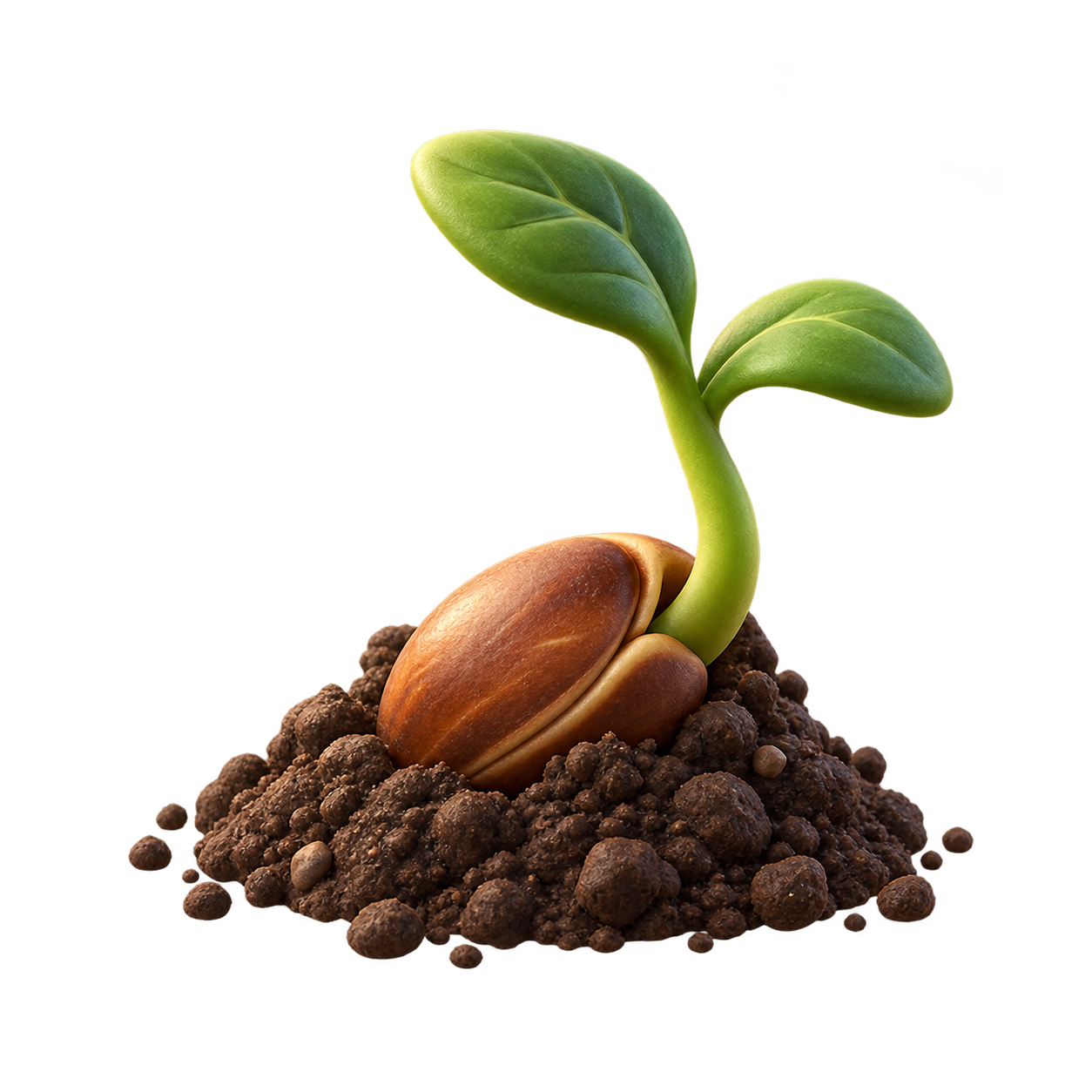
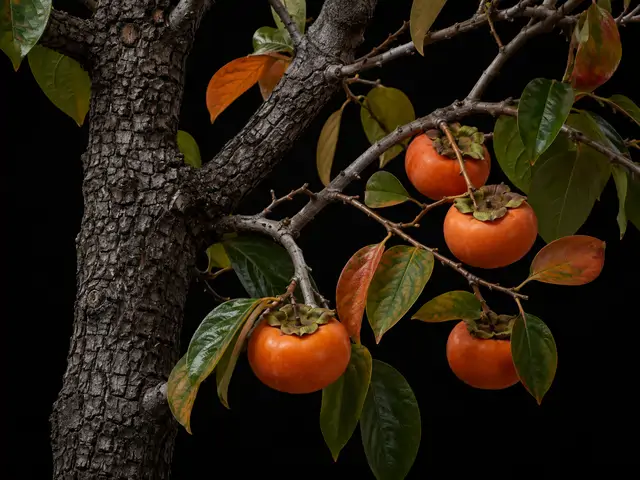
Persimmon
A gorgeous, nearly pest-free fall fruit tree that thrives where apples struggle - low chill, late bloom, and glowing orange fruit on bare winter branches. Just learn the one rule: astringent vs. non-astringent.
Safety notes The ripe fruit is the food. Astringent varieties are unpleasantly mouth-puckering until fully ripe/soft; eating a lot of very unripe astringent persimmon on an empty stomach can, rarely, form a hard stomach mass (bezoar) - wait for ripeness.
Overview
The persimmon is one of the most underrated fruit trees for the home garden, and especially for the South: it's beautiful (spectacular fall foliage, then fruit that hangs like orange ornaments on bare branches into winter), it's remarkably free of pests and diseases, it needs little chill so it fruits where apples and cherries fail, and it blooms late, dodging the spring frosts that plague apricots and peaches. A mature tree is productive and long-lived.
Quick facts
- Winter chill
- 200 hours below 45°FRange: 100–400 hours
- Height
- 22 ftRange: 12–40 ft
- Spread
- 18 ftRange: 10–25 ft
- Cold
- Takes hard frostdamaged below 0°F
- Heat
- Struggles above 105°F
- Life cycle
- Perennial, lives about 50 years
- Soil
- Well-drained
- Water
- Medium
- Plant spacing
- 18 ftRange: 12–30 ft
When to plant
Nothing is open today. Spring transplanting opens 5 months, Mar 27 to May 10.
- Transplant Mar 27 – May 10 Opens in 159 daysAbout 2 weeks before to 4 weeks after your last frost (Apr 10 here)Prime persimmon country - Asian (Fuyu, Jiro, Hachiya) and American types both thrive. Plant in early spring; fall planting works in the milder end.
Frost here: last around Apr 10 (Mar 27 to Apr 24 most years), first around Oct 25. Zone averages, your own yard may run a week or two either way.
Life stages
Establish, grow, repeat
Getting established and returning each season are different parts of the story.
Stage 1 of 5 · Getting established
First-year establishment
The first year after planting
Care at this stage
-
Water carefully and handle the taproot gently
Persimmons grow a deep, brittle taproot and resent transplanting - plant a young tree, disturb the roots as little as possible, and water steadily but never soggy the first year.
-
Mulch a wide ring, off the trunk
Wood-chip mulch conserves moisture and suppresses grass while the slow-starting tree finds its feet. Keep it off the bark.
-
Guard the trunk and be patient with slow early growth
Young persimmons grow slowly the first year or two as they invest in roots - this is normal, not failure. Protect the thin bark from sunscald and rodents.
Months are typical seasonal windows; climate, variety, and plant age can shift them.
Harvest
- Non-astringent types: deep uniform orange, still firm (ready to eat)
- Astringent types: full orange color on the tree, then softened to jelly-like ripeness before eating
- Fruit hangs late, often glowing on bare branches after leaf drop
- Calyx (the leafy cap) is dry and the skin is glossy
- Match harvest to your persimmon TYPE · every 4 days
- Cut, don't pull - leave the calyx on
Per plant 25 to 400 persimmons, 6.3 to 125 lbPicking pick as they ripen
Cook with persimmons
Watch out for
4 to know. None are high-risk for persimmons. 2 are active in October.
Deer (browse resistance)Severity Medium WildlifenowSeason: year-roundGrowth cleanly missing overnight, with the plant browsed back to a level line about as high as a deer can comfortably reach.
Persimmons are a favorite deer fruit - wild persimmons are a major deer food - and young trees are the vulnerable stage. On a mature tree the fruit that hangs high is usually safe.
Growth cleanly missing overnight, with the plant browsed back to a level line about as high as a deer can comfortably reach. Ragged, torn stem ends rather than the clean angled cut a rabbit leaves - the single most reliable identifier. Buds and flowers gone while the foliage below is untouched, since deer often take the best part first. Hoof prints and droppings in soft ground near the damage. Repeat visits, with fresh damage each morning once a planting has been found. On young trees, shredded and stripped bark and broken low branches in autumn - that is antler rubbing rather than feeding.
There is no chemical fix, only exclusion and recovery. Get physical protection up immediately after the first damage, because deer return to a known meal, and reinforce or rotate whatever you were relying on before. Most plants regrow from browsing if the crown and roots are intact - feed and water a grazed plant and protect the regrowth while it comes back. What does not recover in the same season is anything whose buds or flowers have been taken, and a young tree whose bark has been rubbed right around the trunk is usually lost. Where deer pressure is genuinely heavy, the honest answer is to fence properly or to grow the plants deer leave alone, rather than to keep replacing losses.
Fencing is the only thing that reliably works. Eight feet is the standard for excluding deer, or two parallel four-foot fences a few feet apart, which they will not jump because they cannot judge the landing. Short of that, cage individual plants: a sturdy wire cage or trunk guard around every young tree, left on until the trunk is thick and the canopy is above browse height, prevents both browsing and antler rubbing and is the single highest-value thing you can do for a young tree. Repellent sprays do help at moderate pressure, but they wash off and deer habituate, so reapply after rain and rotate between different types through the season. Motion-activated sprinklers, scent deterrents, and noise devices work for a while and then stop. Siting matters too: plants close to the house, in daily traffic, and screened behind other planting get browsed less than the same plant out at the boundary.
Deer are the largest garden problem across much of the country, and where pressure is high they set the limit on what you can grow at all. They browse at night and around dawn and dusk, taking tender shoots, leaves, buds, flowers, and fruit within about five feet of the ground, and they come back night after night to anything they have found and liked. Because they have no upper incisors they tear rather than cut, leaving ragged stem ends - that is how you tell deer damage from a rabbit's clean angled cut. In fall, bucks rub their antlers on young trunks and can strip the bark right around a stem, which kills a young tree outright. Palatability varies enormously between plants and between seasons: a herd short of food in late winter eats things it ignores in June, and no plant is truly deer-proof.
Birds & WildlifeSeverity Medium WildlifenowSeason: Sep–DecFruit disappearing from the outermost, most exposed parts of the plant first, and from the top of a tree where you cannot reach anyway.
Late-hanging fruit is exposed to birds and squirrels for a long window. Harvest firm non-astringent fruit promptly and ripen it indoors to beat them; astringent types can also be picked full-colored and finished inside.
Fruit disappearing from the outermost, most exposed parts of the plant first, and from the top of a tree where you cannot reach anyway. Single neat pecks and gouges in ripening fruit, with several fruits sampled rather than one eaten through - the classic sign that it was birds rather than an animal. Heads of grain or seed going visibly lighter and emptier as they ripen, with hulls and chaff scattered underneath. Freshly sown seed vanishing off the surface of a bed before it germinates. Bird traffic in and out of the plant picking up as the crop colors, and birds waiting on nearby wires and branches. Wasps arriving at the pecked and split fruit shortly afterward.
There is no treatment once a crop is being taken - only protection and timing, so the answer is to get netting on and to pick what is ready. Reflective tape, flash ribbon, spinners, and decoy predators do work, but only for a few days at a time: birds habituate fast, so move and rotate them and never rely on them as the main defense for a crop you care about. Cut and gather grain or seed heads a little early, at firm dough, and finish drying them under cover instead of leaving them standing for the flocks. Plant a little extra, or a decoy crop the birds prefer, and accept sharing anything that crops heavily. On a wild or foraged patch, fruit going to birds and small mammals is the point of the plant rather than a problem to solve.
Net, and net early. Bird netting draped over a frame or hoops so it stands off the fruit, with the edges closed at ground level, is the only thing that reliably works at harvest scale - and it has to go on before the crop starts to color, because once birds have found the food they are far harder to displace. Keep fruit trees small enough that netting them is actually feasible; that decision gets made years earlier, at planting. Bags of mesh, organza, or paper slipped over individual heads, clusters, or prize fruit protect a small crop without netting the whole plant. Then shorten the exposure: pick promptly and completely rather than leaving ripe fruit hanging as a lure, clear split and dropped fruit that draws birds and wasps alike, and where a crop can finish off the plant, harvest a little early and ripen or dry it under cover. Rake in or cover broadcast seed so it is not lying in plain view.
Birds find ripening fruit and seed before you do. Robins, waxwings, starlings, catbirds, jays, sparrows, finches, blackbirds, and doves all work a garden, and the pressure arrives in a narrow window - the last days before harvest, when sugar rises, color changes, and the crop softens or the grain hardens. A flock can strip a small planting in a day or two, and birds that only peck rather than take whole fruit still leave wounds that rot or draw wasps. Squirrels, chipmunks, and other wildlife usually turn up on the same crop at the same time. This is competition rather than disease: the birds are not harming the plant, and a big tree or a heavy-cropping bush often has enough for everyone - but on a small planting it can be the difference between a harvest and none.
Scale & Sooty MoldSeverity Low PestSeason: Apr–AugRows of small brown, tan, black, white, or waxy bumps along stems, twigs, leaf midribs, and leaf undersides that do not brush off but can be scraped loose with a fingernail.
One of the few pests that touch the otherwise trouble-free persimmon, and even then rarely serious - natural predators usually keep it in check without help.
Rows of small brown, tan, black, white, or waxy bumps along stems, twigs, leaf midribs, and leaf undersides that do not brush off but can be scraped loose with a fingernail. A sticky shine on the leaves - and on the floor, table, or path beneath the plant - that later turns black with sooty mold. Ants running steadily up and down the stems, since they farm and defend scale for that honeydew; often the first sign anything is wrong. Yellowing leaves, weak thin growth, and dieback of individual branches or canes that are heavily encrusted. On fruit crops, scale covers and sooty mold directly on the fruit. Check the leaf undersides and the shaded inner wood, which is where colonies build up unseen.
Horticultural oil is the main control: it works by smothering, so it has to coat the insects thoroughly - stems, twigs, and leaf undersides - and it usually needs repeating, because the waxy covering shields them and no single pass reaches everything. On deciduous woody plants a dormant-season oil smothers the overwintering stage while the leaves are out of the way, and timing a growing-season spray to the crawler stage, when the young are mobile and uncovered, is far more effective than spraying settled adults. On a small plant or a light infestation, scrub or wipe the scales off by hand, or dab them with a cotton swab of rubbing alcohol. Prune out and destroy badly encrusted wood rather than trying to save it. Wash off the sooty mold once the scale is gone - it lives on the honeydew, not on the plant, and stops once the supply does. Anything you spray must be labeled for the plant, and oils can burn delicate foliage, so test first.
Inspect. Look over leaf undersides and stems regularly - on a crop you pick, every harvest is a scouting chance - and check every new plant thoroughly before you buy it, plant it, or set it beside anything else, because scale almost always arrives on a plant rather than flying in. Quarantine new houseplants for a few weeks. Keep plants unstressed and not over-fertilized, since soft, forced growth is what populations build on. Prune for airflow and light to open up the shaded inner growth where scale hides, and prune out heavily infested wood as routine maintenance - on anything that gets a hard annual pruning, that alone removes most of any buildup. Leave the lady beetles, lacewings, and parasitic wasps alone, since they normally keep scale down to nothing, and keep ants off the plant where you can, because ants protect the colonies from those predators. Indoors, avoid hot, dry, still winter air.
Scale insects are sap-suckers that spend most of their lives immobile, fixed to a stem, twig, or leaf underside beneath a waxy or shell-like cover. They look far more like bumps, blisters, or crusty encrustations than like insects, which is why an infestation is usually well established before anyone notices it. Soft scales excrete large amounts of sticky honeydew that drips onto everything below and grows a black sooty mold - and those blackened leaves are often the first thing a gardener actually sees. Armored scales produce no honeydew but sit under a hard shield that protects them from most sprays. They spread as tiny mobile crawlers in the weeks after hatching, which is the only stage that moves and the only stage that is easy to kill. Populations build on stressed plants, on crowded shaded growth, and above all on plants kept indoors in dry, still air over winter.
Persimmon Anthracnose & Leaf SpotSeverity Low DiseaseSeason: May–AugSmall dark spots or sunken lesions on leaves, and occasionally on fruit, worst in humid, rainy spells.
Persimmons are among the most disease-free fruit trees - this is a minor, occasional issue, not a routine threat.
Small dark spots or sunken lesions on leaves, and occasionally on fruit, worst in humid, rainy spells.
Rarely warrants spraying; remove badly affected leaves and improve airflow. A copper fungicide is an option only under heavy pressure.
Rake up and destroy fallen leaves, prune for airflow, and avoid overhead watering; persimmons shrug off most leaf disease when kept open and healthy.
Fungal leaf-spot and anthracnose diseases that cause dark spots and lesions on leaves (and occasionally fruit) in warm, wet weather, sometimes leading to premature leaf drop, but rarely serious on healthy trees.
Good & bad neighbors
Plant nearby
-
A clover understory fixes nitrogen and outcompetes grass, benefiting the slow-establishing persimmon while feeding pollinators.
-
Planted around the trunk, daffodils deter voles and rabbits from gnawing the bark of young trees, and bloom before the persimmon leafs out.
- Traditional pairings, thin evidence
-
Aromatic alliums are traditionally credited with discouraging some pests; harmless space-sharers under a persimmon at minimum.
-
Two native fruit trees with similar soil and site needs; often paired in native-fruit plantings and edible landscapes.

Keep apart
-
WalnutBlack walnut releases juglone; keep persimmons clear of the walnut's root zone, though persimmons tolerate it better than many fruit trees.
Varieties · 5
You pick one when you add Persimmon to your garden. Its days to maturity set your harvest window.
Non-astringent (eat firm) 2 varieties
Fuyu
The most popular persimmon and the gateway variety: a non-astringent Asian kaki you eat firm and crisp like a sweet, mild apple - no waiting for softness.
Variety details for Fuyu
Medium-to-large, round-flattened, deep orange, tomato-shaped fruit.
asianself-fruitfuleat-firmResists Common persimmon diseases (good)
Round, flattened, deep orange fruit; heavy, reliable crops; self-fruitful (sets seedless fruit alone). The best first persimmon for most people.
Jiro
A non-astringent Asian persimmon very similar to Fuyu (the two are often confused) - eaten firm and crisp, sweet and mild.
Variety details for Jiro
Medium-to-large, round, slightly flattened, bright orange fruit.
asianself-fruitfuleat-firmcold-hardy-kakiResists Common persimmon diseases (good)
Slightly more cold-hardy than Fuyu and reliably productive. An excellent eat-firm choice.
Astringent (eat soft) 3 varieties
Hachiya
The classic astringent Asian persimmon and the one for baking and drying: large, acorn-shaped fruit that is mouth-puckering until it ripens to a soft, jelly-like custard of extraordinary sweetness.
Variety details for Hachiya
Large, elongated acorn-shaped, deep glossy orange fruit.
asianeat-softdryingbakingThe go-to for persimmon pulp, puddings, and hoshigaki - just never eat it firm.
Nikita's Gift
An American x Asian hybrid combining kaki-quality larger fruit with much of the American persimmon's cold hardiness (to about zone 5-6) - a way to grow bigger, richer persimmons farther north than Asian kaki can survive.
Variety details for Nikita's Gift
Medium, round-flattened, orange-red fruit, larger than pure American types.
hybridcold-hardylarge-fruitAstringent; eat fully ripe and soft.
Rosseyanka
The other well-known American x Asian hybrid (a Ukrainian selection, sometimes sold as 'Russian Beauty'): kaki-like fruit on a tree considerably hardier than pure kaki, which is why it and Nikita's Gift are the two persimmons worth trying in zones 5-6.
Variety details for Rosseyanka
Medium, round, orange fruit, larger than a native persimmon and smaller than a Fuyu.
hybridcold-hardyeat-softAstringent - eat only when fully soft. Fruit is smaller than Nikita's Gift but the tree is vigorous and productive.
Grower tips
Notes from growers, tagged with the zone they grow in. A person reads every post before it appears.
Nobody has posted about Persimmon yet. The first one usually saves someone a season.
Free account. Your post shows your grower name and zone, never your email.