Add it to your home screen and it opens full screen: no browser bars, one tap away, and everything stays signed in. Free, nothing to download from an app store.
- Tap the Share button in your browser
- Scroll down and choose “Add to Home Screen”
- Open GrowSomeFood from your home screen
- Open your browser’s menu
- Choose “Add to Home screen” or “Install app”
- Open GrowSomeFood from your home screen
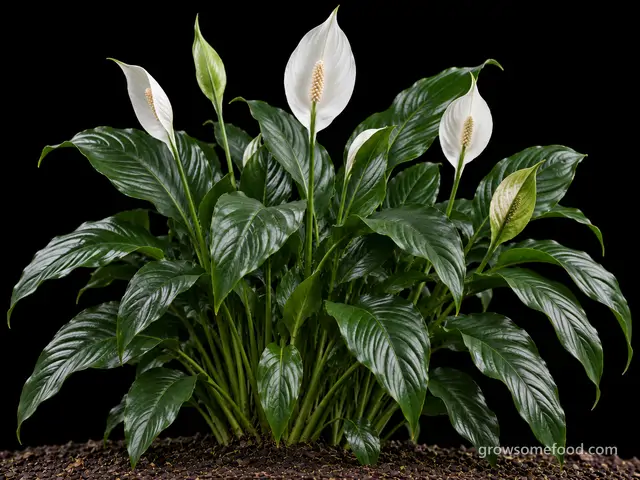
Peace Lily
The office plant with the white sail - and the most misidentified plant in any conversation about cats. A peace lily is not a lily at all. It burns a chewed mouth, and that is where it ends; the plant that kills cats is Lilium, and it is a different thing entirely.
NOT a true lily. This is an aroid (Spathiphyllum), not a Lilium, and it does NOT cause the kidney failure true lilies cause in cats. What it does carry is calcium oxalate raphides: a chewed leaf burns the mouth at once, with drooling, pawing at the face and swelling. Painful, sometimes serious, not organ damage. Call your vet or poison control anyway rather than waiting, and go in at once if drooling will not stop or breathing changes. See the lily entry for the ones truly lethal to cats.
Overview
The one thing to knowStart with the thing you probably came here to ask.
Start with the thing you probably came here to ask. If you own a cat and you have just learned that lilies are dangerous, the peace lily on your windowsill is almost certainly not the problem. It is not a lily. It is Spathiphyllum, an aroid - the same family as pothos, philodendron and monstera - and it has nothing to do with Lilium beyond a marketing name someone chose a century ago.
The difference is not a technicality, it is the difference between two completely unrelated injuries. A true lily destroys a cat's kidneys. Every part does it, pollen and vase water included, and it does it without any warning pain to stop the animal, which is why cats die of it. A peace lily carries calcium oxalate raphides: microscopic needle-shaped crystals that fire into the mouth of anything that bites a leaf. The result is instant burning pain, drooling, pawing at the face and some swelling. It is genuinely unpleasant and worth a call to your vet - and it is over, usually within hours, with no organ damage at all. The pain is so immediate that most cats take one bite and never touch the plant again.
So: still call the vet or a poison line if your animal has chewed one. Still keep it out of easy reach. But if you are standing in the kitchen deciding whether this is an emergency, the honest answer is that this plant is at the mild end of the houseplant range, and the entry you want for the genuinely lethal ones is lily.
With that settled, it is a lovely plant. Glossy dark green leaves in a fountain from the base, and white spathes - sail-like bracts, not petals - held above them for weeks. It tolerates darker corners than almost anything else, it tells you when it is thirsty by fainting theatrically, and it will do all that for fifteen years in the same corner if you let it.
Quick facts
- Life cycle
- Perennial, lives about 15 years
- Height
- 24 in12 to 60
- Spread
- 24 in12 to 60
- Cold
- Killed by frostdamaged below 55°F
- Heat
- Struggles above 90°F
Part sun or part shade or shade · medium water · consistently moist soil · 16 in apart (10 to 30) · transplant or division
When to plant
Nothing is open today. Spring transplanting opens 6 months, Mar 15 to Sep 15.
- Transplant Mar 15 – Sep 15 Opens in 175 daysIndoors year-round; divide and repot in the warm half of the year, when the plant recovers fastest. Outdoors it is only possible in zone 10b and warmer, in deep shade with steady moisture - anywhere else it is a container plant that comes indoors before the first cold night.
Frost here: last around Apr 10 (Mar 27 to Apr 24 most years), first around Oct 25. Zone averages, your own yard may run a week or two either way.
Life stages
One stage to settle in, then three that repeat each year. Windows are typical; your zone and weather move them.
Settling a new plant or a fresh division
Day 0 to 45- WaterPot in ordinary mix, water it in, then keep it evenly moistStandard peat or coir potting mix in a pot with drainage holes is exactly right - a peace lily wants more consistent moisture than most houseplants and no exotic ingredients. Water it in thoroughly once, let the excess drain, empty the saucer, and then keep the mix lightly moist rather than wet. A fresh division sulks for a couple of weeks; that is normal.
- InspectLow to moderate indirect light - never a sunny windowThis is a rainforest floor plant. A north window, a few feet back from an east one, or a windowless office under fluorescent light all suit it. Direct sun scorches pale patches into the leaves within days. It survives in genuinely dim corners, which is why it turned up in every 1980s office - but it needs moderate light to flower.
- ProtectPut it where a cat cannot graze itA peace lily sits at floor level in a wide pot with soft arching leaves at exactly cat height, and cats chew it. The bite is painful rather than dangerous, but it is worth avoiding: a plant stand, a sideboard or a shelf solves it. If you have arrived here worried because you own a cat, read the note at the top - this is not a Lilium, and this plant is not what kills cats.
Watch for- Scorched pale patches from direct sun
- A pot standing in a full cachepot or saucer
- Soft arching leaves within a grazing cat's reach
Leaf growth
year-round, every year- WaterWater when the top inch is dry - and read the droopweeklyWater thoroughly when the top inch of mix is dry, then empty the saucer. The peace lily is the one houseplant that asks out loud: it collapses dramatically when thirsty and stands back up within a few hours of a drink. Use that as a signal, not a schedule - but do not make a habit of waiting for it, because repeated hard wilting kills fine roots and shows up later as brown leaf tips.
- InspectWatch the leaf tips - they report on your waterBrown, crisp tips on an otherwise healthy peace lily are usually the water rather than the air. Spathiphyllum is unusually sensitive to fluoride, chlorine and accumulated fertilizer salts. Let tap water stand overnight, or use rainwater or distilled water, feed at half strength or less, and flush the pot through with plenty of plain water two or three times a year.
- PruneCut spent flowers and tired leaves right down at the baseA white spathe greens over as it ages, then browns. That is the normal end of a flower, not a problem - follow its stalk down to the soil and cut it off there rather than snipping the top. Do the same with yellowed outer leaves. Wear gloves; the cut stems weep sap that stings skin and is genuinely bad in an eye.
- FertilizeFeed sparingly, and not at all in winterA balanced liquid houseplant fertilizer at quarter to half the label strength, every six weeks or so from spring to early autumn, is plenty. Peace lilies are more often damaged by too much feed than too little - excess salts burn the leaf tips and edges. Stop entirely from November to February.
Watch for- Brown crisp leaf tips (fluoride, salts, or repeated hard wilting)
- Yellowing lower leaves from soggy mix
- White cottony mealybugs where the leaf stalks meet the crown
- Fine webbing and stippled leaves in dry heated air
Spathes
Mar to Sep, every year- InspectThe white sail is a leaf, not a petalWhat looks like a flower is a spathe - a modified white bract - wrapped around a knobbly cream spike called the spadix, and the spadix is where the actual tiny flowers are. As the spathe ages it turns green, then brown; that is the flower finishing normally rather than anything going wrong.
- ProtectDust the spadix off surfaces if pollen bothers youA mature spadix sheds a fine cream pollen that settles on the leaves and the floor below. It is harmless, and it is worth knowing that this is nothing like lily pollen - a Lilium's pollen is lethal to cats, a peace lily's is only untidy. Wipe it up, or snip the spadix out if the dust is a nuisance.
- FertilizeIf it will not bloom, give it more light before more fertilizerA peace lily that has stopped flowering is nearly always short of light rather than short of feed, and extra fertilizer only burns the leaf tips. Move it to a brighter indirect spot - near a north window or a few feet back from an east one - and give it a season. Commercially forced plants also bloom far more heavily in the shop than they ever will at home.
Watch for- Spathes greening then browning (normal ageing)
- Cream pollen dust on leaves and floor (harmless)
- No flowers at all for a year (too little light)
Winter slowdown
Nov to Feb, every year- WaterWater less, but never let it go bone dryGrowth slows in short cool days and the plant uses much less water, so stretch the interval and let the top inch or two dry first. Unlike a pothos or a ZZ plant, though, a peace lily should not be dried out hard - it has no water storage of its own, and a winter of repeated collapse shows up as brown tips in spring.
- ProtectKeep it off cold glass and away from draftsPeace lilies sulk below about 55°F. Leaves touching a freezing windowpane blacken in patches, and a spot beside a door in January will do the same more slowly. Move the pot a few feet inward for the winter, and keep it away from radiators and heating vents, which dry the air and brown the leaf edges.
Watch for- Blackened patches where leaves touch cold glass
- Yellowing lower leaves from winter overwatering
- Brown edges from a nearby radiator or heating vent
Watch out for
6 to know. 1 is high-risk: Root Rot from Overwatering. 6 are active in September.
Root Rot from OverwateringSeverity High DiseasenowThe trap on a peace lily is that a rotting plant and a thirsty plant both collapse in exactly the same way.
Feel the mix before reaching for the watering can - watering a wet, wilting peace lily is what finishes it.
Lower leaves yellowing while the mix stays damp, a sour smell from the pot, stems going soft, brown or black at the soil line, and a plant that wilts even though the soil is wet.
Tip the plant out, cut away every soft brown root, and repot the healthy remainder in fresh mix in a clean pot, watering sparingly until it recovers. If most of the root system has gone, take clean cuttings from the healthy top growth and start the plant again - that usually works better than nursing the original.
Water by checking the mix rather than the calendar - only when the top inch or two is dry - use a pot with drainage holes, empty the saucer after every watering, and cut back sharply on water from November to February.
The single most common way an indoor plant dies. Soil-borne fungi rot the roots and stem base in potting mix that is kept wet, in a pot without drainage, or in a saucer that is never emptied - and it is worst in winter, when short days and cool rooms mean the plant uses a fraction of the water it did in summer while the watering schedule stays the same.
Brown Leaf Tips (fluoride and salt burn)Severity Medium DisordernowCrisp dark-brown tips and margins, sharply separated from healthy green tissue and often with a thin yellow band between, appearing first on the oldest leaves; a white crust on the surface of the mix or around the drainage holes points at salts.
Crisp dark-brown tips and margins, sharply separated from healthy green tissue and often with a thin yellow band between, appearing first on the oldest leaves; a white crust on the surface of the mix or around the drainage holes points at salts.
Leach the pot thoroughly - run several pot volumes of clean water through it and let it drain - then correct the water source and the feeding. Damaged tips never turn green again: trim them to shape with clean scissors, cutting just inside the brown, and judge whether the fix worked by the leaves that come next.
Water with rainwater, filtered or distilled water, or with tap water left standing overnight; feed at quarter to half strength no more than every six weeks in the growing season and not at all in winter; flush the pot through with plenty of plain water two or three times a year; keep the plant away from radiators and heating vents; and water before the plant collapses rather than using the wilt as a schedule.
The universal peace lily complaint, and a real physiological injury rather than a cosmetic one. Spathiphyllum is unusually sensitive to fluoride and chlorine in treated tap water, and to fertilizer salts accumulating in the pot; both are carried to the leaf margins by transpiration and kill the tissue there. Repeated hard wilting and very dry heated air produce the same symptom by damaging the fine roots and drawing water from the leaf edges.
MealybugsSeverity Medium PestnowOn a peace lily they pack into the tight crown where all the leaf stalks meet the soil.
Part the stalks and look right down at the base before deciding a plant is clean.
White cottony specks where a leaf stalk meets the stem, sticky patches on leaves or the surface beneath the plant, black sooty film, and new growth that comes out puckered or stunted.
Dab each colony with a cotton swab dipped in rubbing alcohol, then spray the whole plant with insecticidal soap or horticultural oil, covering leaf undersides and joints. Repeat weekly for at least a month, because eggs keep hatching. Cut off badly infested growth rather than trying to save it.
Inspect any new plant carefully and keep it apart from the others for a few weeks, check leaf joints whenever you water, and wipe the leaves occasionally - most indoor infestations arrive on a new purchase and spread from there.
Small sap-sucking insects that hide as white cottony tufts tucked into leaf joints, along stems and under leaves. Indoors there is nothing to eat them, so a small infestation becomes a permanent one - they weaken growth, deform new leaves and coat everything below in sticky honeydew that turns sooty black.
Oxalate Burn from ChewingSeverity Medium DisordernowCalibration is the whole point of this row: peace lily is at the mild end of the houseplant range and is constantly confused with the lethal true lilies by frightened cat owners.
Say so before saying anything else.
Pawing at the mouth, drooling, refusal to eat, retching, or swollen lips and tongue in a pet; a crying child near a chewed leaf; and any change in breathing or in the voice, which is the sign that matters most.
Call a veterinarian, an animal poison line, or poison control - do not simply wait and watch. Rinse the mouth with water and follow the advice you are given. Go to an emergency clinic or emergency room at once if drooling will not stop, if swallowing is difficult, or if breathing or the voice changes. For sap in an eye, flush with running water for 15 minutes and be seen the same day.
Stand the plant on a table, sideboard or plant stand rather than the floor, where its soft arching leaves sit at exactly cat height. Keep trimmings and spent flower stalks off counters, and wear gloves when cutting so the sap never reaches your eyes. A pot of cat grass diverts most animals that chew houseplants out of boredom.
Every part of a peace lily contains calcium oxalate raphides - needle-shaped crystals held under pressure in specialised cells that fire on contact. Chewing a leaf drives them into the lips, tongue and throat, producing immediate burning pain, heavy drooling, swelling and often vomiting. Recovery within a few hours is the normal outcome and serious cases are rare. This is emphatically NOT the injury a true lily causes: Lilium and Hemerocallis destroy a cat's kidneys with no warning pain at all, while a peace lily causes pain that stops the animal after one bite and does no organ damage. Sap on skin causes irritation, and sap in an eye is a genuine injury.
Fungus GnatsSeverity Low PestnowPeace lilies are the likeliest houseplant to carry gnats, because they are the one that genuinely wants steadily moist mix.
Let only the top inch dry - going further to beat the gnats risks a hard wilt and brown tips.
Little black flies around the pot and at nearby windows, and larvae - tiny translucent maggots with black heads - in the surface of mix that never dries out.
Dry the mix out further, hang yellow sticky traps to catch the adults, and for a persistent population water in a Bacillus thuringiensis subsp. israelensis product, which kills the larvae without harming the plant. Repeat until the traps come up empty.
Let the top inch or two of mix dry out between waterings, which breaks the life cycle on its own, avoid standing water in saucers, and top-dress with a layer of coarse grit or sand so adults cannot lay eggs at the surface.
Small dark flies that drift up from the pot when it is disturbed. The adults are harmless; their larvae live in the top inch of permanently damp potting mix and feed on organic matter and, when numerous, on fine roots. They are less a pest in their own right than a symptom that the mix is being kept too wet.
Spider MitesSeverity Low PestnowFine pale speckling across the upper leaf surface, a dull bronzed cast to the foliage, and gossamer webbing in the leaf joints - hold a sheet of white paper under a leaf and tap it to see the mites drop.
Fine pale speckling across the upper leaf surface, a dull bronzed cast to the foliage, and gossamer webbing in the leaf joints - hold a sheet of white paper under a leaf and tap it to see the mites drop.
Rinse the whole plant thoroughly under a shower, paying attention to leaf undersides, then treat with insecticidal soap or horticultural oil and repeat every five to seven days for three or four rounds to catch newly hatched mites.
Raise the humidity around the plant, keep it away from heating vents and radiators, and rinse or wipe the leaves regularly - spider mites struggle on foliage that is clean and not baking in dry air.
Nearly invisible mites that thrive in the hot, dry air of a heated house, feeding on the undersides of leaves and leaving a fine pale stippling that spreads until the whole leaf looks dusty and bronzed. Severe infestations spin fine webbing between leaves and stems.
Good & bad neighbors
First rule: keep True Lily (Lilium) apart. The most important cross-reference in this file, and not a growing rule.
Plant nearby
-
Identical culture and identical toxicity - low to moderate indirect light, ordinary mix, water when the top inch dries - so they share a corner happily. The peace lily wants slightly steadier moisture than the philodendron and neither one will take direct sun.
-
Same family, same indirect light, same calcium oxalate crystals, and a natural shelf partner. The peace lily is the useful one of the pair: it faints visibly the moment it is thirsty and stands back up within hours of a drink, so it tells you the whole group needs water while the pothos is still showing nothing at all.
- Traditional pairings, thin evidence
-
A good neighbour for the same dim corner, on a completely different watering schedule - keep them in separate pots and water each on its own timetable. Worth pairing in your head too: both are mild by houseplant standards, the snake plant through saponins that cause a day of stomach upset, the peace lily through oxalate crystals that burn a mouth for a few hours.
Keep apart
-
The most important cross-reference in this file, and not a growing rule. Peace lily is not a Lilium and is not in the lily family at all - a chewed leaf burns a cat's mouth for a few hours. A true lily destroys a cat's kidneys, from pollen or vase water alone, with no warning pain to stop the animal. If you searched peace lily because you own a cat, read the lily entry: that is the plant that must not come into the house, cut flowers included.
-
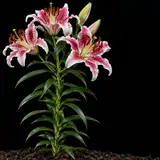
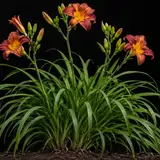
The second plant in the naming trap. Daylily is Hemerocallis, not a true lily either - but unlike the peace lily it IS lethal to cats, causing the same acute kidney failure as Lilium. Two plants called lilies that are not lilies, with completely opposite risks. When toxicity is the question, go by the botanical name rather than the label.
-
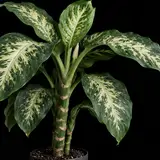
Not a growing conflict - a reasoning one. Dieffenbachia sits on the same garden-centre bench and looks like more of the same easy shade foliage, but it carries a far heavier crystal load plus enzymes that deepen the injury, and a mouthful swells the tongue and throat for days rather than hours. If this file has reassured you about peace lilies, do not extend that reassurance to dumb cane.
Varieties · 6
You pick one when you add Peace Lily to your garden. Its days to maturity set your harvest window.
Mauna Loa
Broad glossy dark-green leaves in a fountain to 3 ft, with large white sail-shaped spathes on tall stalks.
classiclargefree-floweringThe peace lily most people picture and the cultivar that made the plant a commercial staple: a substantial clump to about three feet with broad dark leaves and large white spathes held well above the foliage. Free-flowering by peace lily standards given moderate indirect light, and robust enough to survive years of office-grade neglect.
Sensation
Very large strongly ribbed dark-green leaves forming a clump 4-6 ft tall and wide, with proportionally large white spathes.
very-largefloor-plantarchitecturalThe giant of the group, reaching four to six feet tall and as much across, with enormous deeply ribbed leaves. It is a floor-standing architectural plant for a big shaded room rather than a shelf plant, and its size is worth thinking about twice in a house with a cat or a toddler - it puts a lot of chewable leaf at exactly their height.
Domino
Dark green leaves splashed and streaked irregularly with white, to about 2 ft.
variegatedmediumneeds-brighter-lightA variegated peace lily with leaves irregularly streaked and speckled in white on dark green, growing to about two feet. It needs noticeably brighter indirect light than the plain green kinds to keep the variegation, and it grows more slowly because there is less chlorophyll to work with. In a dim corner it drifts back toward plain green.
Piccolino
Compact rosette of small very dark glossy leaves, 10-12 inches tall, with short-stalked white spathes.
dwarfcompactdesk-plantA true dwarf at around ten to twelve inches, with small dark glossy leaves and correspondingly small spathes. The one to use where a full-sized peace lily will not fit - a desk, a bathroom shelf, a bedside table - and, usefully, small enough to keep on a high surface out of reach rather than on the floor.
Sweet Chico
Upright clump of narrow slightly wavy mid-green leaves to about 2 ft, with slim white spathes.
mediumuprightfree-floweringA tidy mid-sized commercial cultivar around two feet tall with an upright habit and narrow, slightly wavy leaves. Reliable, quick to fill a pot, and among the more willing to rebloom at home rather than only in the greenhouse, which makes it a good choice if the flowers are the reason you want one.
Jetty
Dense clump of thick deeply veined near-black-green leaves to about 18 inches, with clean white spathes.
compactdark-foliagetoughA compact modern cultivar with unusually dark, thick, deeply veined leaves that holds its shape well and copes with low light and dry indoor air better than most. Slower growing than 'Mauna Loa' and less prone to brown tips, which makes it a sensible pick for anyone whose tap water is heavily treated.
Grower tips
Notes from growers, tagged with the zone they grow in. A person reads every post before it appears.
Nobody has posted about Peace Lily yet. The first one usually saves someone a season.
Free account. Your post shows your grower name and zone, never your email.