
Add it to your home screen and it opens full screen: no browser bars, one tap away, and everything stays signed in. Free, nothing to download from an app store.
- Tap the Share button in your browser
- Scroll down and choose “Add to Home Screen”
- Open GrowSomeFood from your home screen
- Open your browser’s menu
- Choose “Add to Home screen” or “Install app”
- Open GrowSomeFood from your home screen
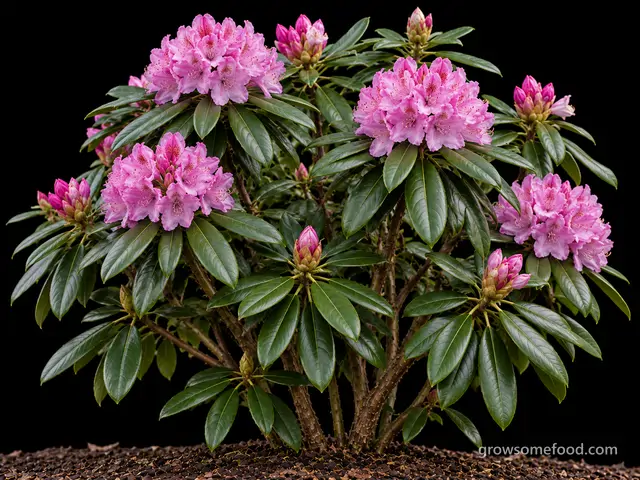
Pacific Rhododendron
Washington's state flower - a magnificent native evergreen shrub with spectacular late-spring trusses of rose-pink bells - and a beautiful plant to grow, but one whose every part is toxic, so it is strictly an ornamental to enjoy, never to eat.
Safety notes TOXIC - do NOT eat any part. Like all rhododendrons and azaleas, every part (leaves, flowers, nectar, pollen, twigs) contains grayanotoxins, which cause vomiting, weakness, low blood pressure, and heart-rhythm problems in people, pets, and livestock; large doses can be dangerous. Even honey from its nectar ('mad honey') can poison people. It is safe to grow, touch, and enjoy - just never ingest any part, and keep grazing animals and pets from browsing it.
Overview
Pacific rhododendron (Rhododendron macrophyllum) is the showiest native shrub of the Pacific Northwest and the state flower of Washington. A large, handsome evergreen shrub of coastal and mountain forests from British Columbia to California, it carries big, leathery, dark-green leaves year-round and, in late spring, erupts into spectacular rounded clusters ('trusses') of bell-shaped flowers in glowing shades of rose-pink - a display so beautiful it made the plant a regional icon. In the garden it is the native cousin of the countless hybrid rhododendrons, and just as easy where its soil needs are met.
The one thing to knowPacific rhododendron (Rhododendron macrophyllum) is the showiest native shrub of the Pacific Northwest and the state flower of Washington.
Quick facts
- Height
- 10 ftRange: 4–25 ft
- Spread
- 8 ftRange: 4–15 ft
- Cold
- Takes hard frostdamaged below 0°F
- Heat
- Struggles above 90°F
- Life cycle
- Perennial, lives about 50 years
- Self-sows
- Yes, expect volunteers
- Soil
- Well-drained
- Water
- Medium
- Plant spacing
- 6 ftRange: 4–10 ft
When to plant
Nothing is open today. Spring transplanting opens 5 months, Mar 27 to May 22.
- Transplant Mar 27 – May 22 Opens in 159 daysAbout 2 weeks before to 6 weeks after your last frost (Apr 10 here)Spring planting also works well; keep the shallow roots evenly moist through the first dry summer, which is the main hurdle to establishment. Site out of hot afternoon sun.
- Transplant Aug 16 – Oct 11 Opens in 301 daysAbout 10 weeks before to 2 weeks before your first frost (Oct 25 here)In its mild maritime range, fall planting lets the shallow roots establish through the wet winter. Set out container plants into acidic, well-drained, humus-rich soil in part shade, root ball slightly high, and water in.
Frost here: last around Apr 10 (Mar 27 to Apr 24 most years), first around Oct 25. Zone averages, your own yard may run a week or two either way.
Life stages
Establish, grow, repeat
Getting established and returning each season are different parts of the story.
Stage 1 of 4 · Getting established
Years 1-2 - rooting in
About the first 1.5 years after planting
Care at this stage
-
Plant in acidic, well-drained, humus-rich soil
Like all rhododendrons, this native wants acidic (pH ~4.5-6), humus-rich, well-drained soil - never heavy, wet, or alkaline ground. Amend with bark, peat, or leaf mold and plant the shallow root ball slightly high. Good drainage plus acidity is the key to success.
-
Keep evenly moist while establishing
Water a new plant regularly through its first two years, especially in summer, to settle the shallow fibrous roots. It wants steady moisture but hates waterlogging; the balance is moist-but-well-drained, woodsy soil in shade.
-
Mulch with an acidic, woodsy mulch
A layer of bark, pine needles, or leaf mold keeps the shallow roots cool and moist and maintains the acidity rhododendrons need. Keep mulch off the stem. This mimics its native conifer-forest home.
Months are typical seasonal windows; climate, variety, and plant age can shift them.
Watch out for
3 to know. 1 is high-risk: Root Rot. None are active in October.
Root RotSeverity High DiseaseSeason: Apr–SepWilting in the middle of the day on a plant whose soil is damp - the classic tell, and the reason people water a rotting plant and finish it off.
The number-one killer of rhododendrons, whose fine surface roots are especially vulnerable to soggy ground. Plant in well-drained, acidic, humus-rich soil or a raised bed, set the root ball slightly high, and never site it in a wet low spot.
Wilting in the middle of the day on a plant whose soil is damp - the classic tell, and the reason people water a rotting plant and finish it off. Leaves yellowing from the bottom up, dull off-color foliage, and growth that stalls for no visible reason. Whole shoots, or one side of the plant, collapsing while the rest still looks fine. Soft, dark, or mushy tissue at the base of the stem or at the crown, sometimes with a sour smell. Lift a failing plant and look at the roots: healthy ones are firm and pale, rotted ones are brown or black and slimy, and the outer layer slips off between your fingers leaving a thread of core behind. Seedlings that topple over at soil level are the same problem, called damping-off.
There is no cure for tissue that has already rotted, so act on the conditions rather than looking for a spray. Stop watering at once and fix the drainage - open up compacted soil, or move the plant to a raised, sharply drained position or a container. Lift a badly affected plant, cut away every soft dark root and rotted section with a clean blade back to firm pale tissue, and replant only the healthy parts into fresh free-draining soil or mix. Often the better move is to give up on the plant and save its offspring instead: cuttings, offsets, or divisions taken from firm healthy growth root readily and give you a clean start. Bin the rotted material rather than composting it, and correct the drainage before you replant, because the rot comes straight back in the same wet spot.
Drainage is the whole defense. Match the plant to the site first - something that wants sharp drainage will not survive heavy clay or a low, water-collecting spot however well you tend it. Where the ground is heavy, plant on a raised bed, berm, or slope, or grow in a container. Set plants at the depth they were already growing, since burying the crown or the root flare is a common cause of rot, and keep mulch pulled back a few inches from the stem base instead of piled against it. Water the soil rather than the calendar: check that the top inch or two is dry before watering again, cut back hard in cool weather and winter dormancy, and never leave a pot standing in a full saucer. Do not plant or dig in soggy ground, and go easy on rich amendments for plants that want it lean. Rotate annual crops, and start with clean healthy plants and fresh mix.
Root rot is not one organism but a group of soil fungi and water molds - Pythium, Phytophthora, Fusarium, Rhizoctonia and others - that sit harmlessly in most soils and only turn destructive when the ground stays saturated. Waterlogged soil drives the air out, the roots suffocate, and the weakened tissue is invaded and goes soft, brown, and stringy. Because the damage is underground you usually see it first as something that looks like drought: wilting, yellowing, stunting, a plant that does not respond to being watered. Overwatering, heavy compacted ground, a low spot that collects runoff, a pot with no drainage or a saucer left standing full, and cold wet soil in winter are the usual causes. Once roots have actually rotted there is no cure - this is a problem you prevent rather than treat.
Iron Chlorosis (Alkaline Soil)Severity Medium DisorderSeason: Apr–AugYellow leaves with a distinct network of green veins, worst on the NEWEST growth at the shoot tips - that vein pattern is what separates it from a nitrogen shortage, which yellows the oldest leaves uniformly.
Like all rhododendrons this native needs acidic soil, roughly pH 4.5 to 6, and shows chlorosis, thin growth and poor bloom in alkaline ground.
Yellow leaves with a distinct network of green veins, worst on the NEWEST growth at the shoot tips - that vein pattern is what separates it from a nitrogen shortage, which yellows the oldest leaves uniformly. Whole plants going progressively paler over a season rather than suddenly. Brown scorched leaf margins and shoot-tip dieback in advanced cases. Symptoms concentrated on the side of a plant nearest a foundation, wall, path, driveway, or a stretch of limed lawn. One plant affected while a neighbor that does not need acid soil looks perfect.
Correct the soil, and use iron only to buy time. Chelated iron sprayed on the leaves or drenched into the root zone greens a plant up within a week or two, but it wears off in a season and has to be repeated indefinitely - it fixes nothing. The real fix is lowering pH with elemental sulfur applied to the surface and watered in, retesting each season until you are in range, then holding it there with acidic mulch and acid fertilizer. Expect one to two years; there is no fast route. Note that other shortages look identical - manganese deficiency produces the same yellow-with-green-veins pattern on some plants - so a plant that does not green up from iron should be tested rather than dosed again. Where the pH is high because of nearby concrete or genuinely calcareous subsoil, the plant is in the wrong place, and moving it into a properly built acidic bed or container will succeed where years of amendment will not.
Test the soil pH before you plant, not after, and match the plant to the ground - an acid-loving plant in limy soil will never be truly healthy however it is fed. Where the pH is too high, acidify with elemental sulfur worked in the season BEFORE planting, since sulfur takes months of soil biology to work and cannot be rushed, and retest before you commit plants. On genuinely alkaline ground the honest answer is often a raised bed of acidic mix, or a container, rather than fighting the native soil forever. Keep an acidic organic mulch topped up - pine bark, pine straw, sawdust - and site acid-lovers away from concrete foundations and mortared walls, which leach lime for decades. Never apply lime, wood ash or mushroom compost where the roots reach, use acid-forming fertilizers such as ammonium sulfate, and improve drainage, because cold waterlogged soil hurts uptake even at the right pH.
Not an infection but a nutrient lockout caused by soil chemistry. Iron is abundant in almost every soil, but as pH rises it converts to forms roots cannot take up, so a plant that needs acid ground slowly starves for iron while standing in soil full of it. The symptom is unmistakable: new leaves go pale yellow or cream while the veins stay green, giving a fine green net over a yellow leaf. It shows first and worst on the newest growth, because iron does not move around inside a plant to be recycled. It does not spread between plants, does not respond to fungicides, and does not resolve on its own - left uncorrected the plant grows less each year, leaves get smaller and paler, shoot tips die back, crops fall away, and it eventually dies. Worst near concrete, mortar, paths and limed ground, and in cold, wet, compacted soil.
Root WeevilsSeverity Medium PestSeason: May–AugNeat crescent-shaped notches chewed into leaf margins, appearing overnight and building up through summer - unmistakable once you have seen it.
Neat crescent-shaped notches chewed into leaf margins, appearing overnight and building up through summer - unmistakable once you have seen it. Damage with no insect in sight during daylight; go out after dark with a flashlight and you will find the adults feeding. Wilting, dull foliage, or an unexplained slow decline in a plant whose leaves are also notched, which is the combination that points at larvae on the roots. Container plants that loosen in their mix or lift out with almost no fine roots left. Chewed, girdled bark at the root crown just below soil level on a young shrub that has collapsed.
The notching itself is cosmetic and needs no treatment on an established plant, and spraying for the adults is largely wasted effort since they feed at night and hide by day. The larvae are the target. Drench beneficial nematodes into moist soil in late summer or early autumn while the grubs are small and the soil is still warm - that is the single most effective home control and it works especially well in containers. Repeat the following year if damage continues. Hand-collect adults after dark from small collections of plants. Repot badly affected container plants into fresh mix, washing the roots and removing every grub you find, and cut your losses on a shrub whose root crown has already been girdled.
Check new plants before you buy, since weevils travel in nursery containers and that is how most gardens acquire them. Keep deep loose mulch and leaf litter pulled back from the base of vulnerable shrubs, because that is where the adults shelter through the day. Keep plants vigorous and steadily watered so root feeding is easier to shrug off. A sticky barrier band around the base of a container, or a smooth-sided pot, stops the flightless adults climbing back up. Encourage ground beetles, birds, and shrews by leaving some rough ground, and avoid broad-spectrum insecticides, which do nothing about the larvae underground and remove the predators that eat the adults.
Root weevils - black vine weevil and its relatives - do their obvious damage as adults and their serious damage underground. The adults are flightless, dull black or grey, about a quarter to a third of an inch long with a short snout; they feed only at night and hide in mulch and leaf litter by day, so most gardeners see notched leaves for weeks before ever seeing the insect. The larvae are small white legless grubs with tan heads that live in the soil, eat fine roots, and then strip the bark from the root crown itself, which is what actually kills plants. Males barely matter - the females reproduce without them, so one insect can start an infestation. Container plants and newly set shrubs suffer most, because a small root system has nothing to spare.
Good & bad neighbors
Plant nearby
-
In the wild salal often carpets the ground beneath Pacific rhododendron; both are acid-loving Ericaceae, so they share soil and shade needs and make a naturally layered native woodland planting - rhododendron flowers above, salal groundcover below.
-
Sword fern's evergreen fronds around the base of a Pacific rhododendron is a classic Northwest woodland combination, both loving cool, moist, acidic, part-shaded conditions and giving year-round evergreen structure.
-
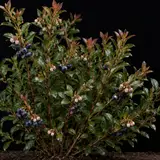
Two acid-loving evergreen Northwest shrubs that layer well and share identical culture; the huckleberry adds edible berries and dense foliage beneath or beside the rhododendron's showy bloom.
-
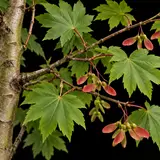
Vine maple's light, arching understory canopy provides exactly the dappled part-shade Pacific rhododendron likes, and its fall color follows the rhododendron's spring bloom for a longer season of interest.
- Traditional pairings, thin evidence
-
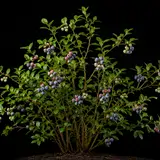
A close acid-loving Ericaceae relative with the same soil and moisture needs; grouping rhododendron with blueberries lets you build and maintain one acidic bed, though blueberry wants more sun.
Varieties · 2
You pick one when you add Pacific Rhododendron to your garden. Its days to maturity set your harvest window.
Species (Rhododendron macrophyllum)
The wild Pacific rhododendron - a large evergreen shrub, commonly 6-12 feet (more in ideal forest conditions), with big leathery dark-green leaves and, in late spring, rounded trusses of bell-shaped rose-pink flowers.
Variety details for Species (Rhododendron macrophyllum)
Large evergreen shrub with big leathery leaves and rounded trusses of rose-pink bell flowers in late spring.
speciesnativeevergreenstate-flowerWashington's state flower and the region's showiest native shrub. Grown from the species or cuttings; all parts are toxic.
White and pale-pink forms
Wild Pacific rhododendron varies in flower color from deep rose-pink through pale pink to nearly white, and paler-flowered or white forms are sometimes selected and grown for their softer coloring.
Variety details for White and pale-pink forms
As the species, with trusses in pale pink to white rather than deep rose.
formnativecolor-variantpale-pinkIdentical in habit, culture, and toxicity to the typical rose-pink species.
Grower tips
Notes from growers, tagged with the zone they grow in. A person reads every post before it appears.
Nobody has posted about Pacific Rhododendron yet. The first one usually saves someone a season.
Free account. Your post shows your grower name and zone, never your email.