
Add it to your home screen and it opens full screen: no browser bars, one tap away, and everything stays signed in. Free, nothing to download from an app store.
- Tap the Share button in your browser
- Scroll down and choose “Add to Home Screen”
- Open GrowSomeFood from your home screen
- Open your browser’s menu
- Choose “Add to Home screen” or “Install app”
- Open GrowSomeFood from your home screen

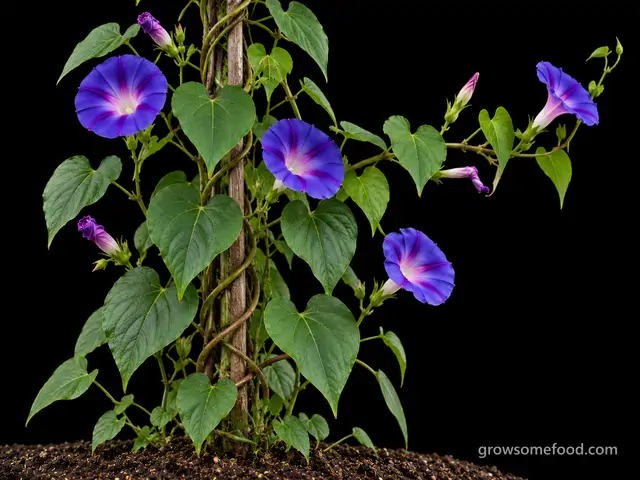
Morning Glory
The fast, easy climbing annual vine with heart-shaped leaves and trumpet blooms that open each morning - a quick screen and pollinator plant, with toxic seeds and a weedy streak to respect.
Safety notes TOXIC - the seeds are poisonous. They contain LSA (lysergic acid amide, related to LSD); eaten in quantity they cause nausea, hallucinations, and serious poisoning, and commercial seeds are often coated with a toxic fungicide. Keep seeds from children and pets, and do NOT eat any part of the plant. Some species are also legally restricted as noxious weeds in certain states - check local rules and grow non-invasively (see History/ClimateAdaptation).
Overview
Morning glories are the classic fast-growing annual vine: from a soaked seed to a ten-foot curtain of heart-shaped leaves and glowing trumpet flowers in a single summer. Each bloom opens fresh at dawn, glows blue, purple, pink, red, or white through the cool morning, and furls closed by afternoon - but the vine opens a new set every day for months, drawing bees and hummingbirds all season. They're one of the easiest and cheapest ways to cover a fence, arbor, or trellis in a hurry.
The one thing to knowFirst, the seeds are toxic - they contain an LSD-related compound (LSA) and are dangerous if eaten, so keep them from children and pets.
Quick facts
- Sprouts in
- 8 daysRange: 5–14 days
- Soil temperature
- 75 °FRange: 65–85 °F
- Start indoors
- 4 weeks before transplantRange: 3–5 weeks
- Height
- 10 ftRange: 6–15 ft
- Spread
- 18 inRange: 12–36 in
- Support
- Grows better on a trellis or stake
- Cold
- Killed by frostdamaged below 32°F
- Heat
- Struggles above 100°F
- Life cycle
- Annual
- Save seeds
- About 110 days after plantingRange: 90–130 days
- Self-sows
- Yes, expect volunteers
- Soil
- Well-drained
- Water
- Medium
- Plant spacing
- 9 inRange: 6–12 in
When to plant
Nothing is open today. Spring sowing opens 6 months, Apr 10 to May 8.
- Direct sow Apr 10 – May 8 Opens in 173 daysAbout at to 4 weeks after your last frost (Apr 10 here)Sow after the last frost once soil warms to 65°F; soak or nick the hard seed first. Blooms in about 8-12 weeks and climbs fast.
Frost here: last around Apr 10 (Mar 27 to Apr 24 most years), first around Oct 25. Zone averages, your own yard may run a week or two either way.
Life stages
From the first start to harvest
Follow the growing sequence. Choose a stage to see its care and signs to watch for.
Stage 1 of 5 · The growing sequence
Germination
Day 0 to 8 from sowing
Care at this stage
-
Soak or nick the hard seeds
Morning glory seeds have a hard coat. Soak them 12-24 hours or nick the coat with a nail file before sowing 1/2 inch deep - this speeds up an otherwise slow, uneven germination.
-
Keep warm and moist until sprouts show
Sow after frost once soil has warmed to 65°F+. Keep the seedbed evenly moist; sprouts appear in about a week in warm soil.
Stages can overlap; weather, variety, and growing conditions change the pace.
Watch out for
4 to know. None are high-risk for Morning Glory. None are active in October.
Japanese BeetlesSeverity Medium PestSeason: Jun–AugClusters of shiny metallic beetles massed together on the upper, sunniest foliage and down inside open blooms, heaviest on warm sunny afternoons from around late June.
They skeletonize the leaves and chew the flowers in midsummer, but a vigorous vine keeps producing new growth right through the wave.
Clusters of shiny metallic beetles massed together on the upper, sunniest foliage and down inside open blooms, heaviest on warm sunny afternoons from around late June. Leaves reduced to lace, with the veins left intact and the tissue between them gone - unmistakable, and quite different from the ragged chewing of a caterpillar. Ragged, chewed petals and blooms that never open properly. Beetles that let go and drop straight to the ground when you disturb the plant. Feeding damage on ripening fruit, on the plants they also take fruit from. Whole branches going brown and lacy at the top of a plant while the shaded lower growth stays untouched.
Persistent morning hand-picking into soapy water is the most effective home control there is, and on a vigorous established plant the damage is usually cosmetic and needs nothing else. Neem deters feeding rather than killing, and has to be reapplied. For heavy pressure, spinosad or a targeted insecticide labeled for the plant will work - but time any spray away from bloom and apply it at dusk to protect bees, and observe the pre-harvest interval on anything you eat. On flowering plants, some gardeners simply shear the blooms off for a couple of weeks and let the plant rebloom once the wave has passed, which removes the lure as well as the damage. Young plants and young trees are the ones worth defending: a mature tree or an established vine tolerates several weeks of leaf loss without lasting harm.
Hand-picking is genuinely the main defense in a home garden. Go out in the cool of the morning while the beetles are sluggish, hold a tub of soapy water underneath, and knock them in - they drop when disturbed, so most fall straight into it. Do it daily through the flight: because the beetles call each other in, taking them off early stops a plant becoming a beacon. Do not put pheromone or lure traps anywhere near the garden - they demonstrably pull in far more beetles than they catch. And do not count on lawn grub control: milky spore has performed poorly and inconsistently in field trials across most of the US, and treating your own turf does not reduce the adults feeding on your plants, because they fly in from surrounding properties. Where it is practical, row cover or netting through the peak flight excludes them outright. Otherwise riding out the six-to-eight-week wave is a legitimate strategy, since most established plants absorb the damage.
Japanese beetles are metallic green-and-copper beetles about half an inch long that emerge in early summer and feed for six to eight weeks. They feed in aggregating masses - one beetle's feeding releases a scent that draws in more - so a plant goes from untouched to covered in a couple of days. They chew the soft tissue between the leaf veins and leave the veins standing, so the leaf ends up as a brown lace skeleton, and they shred open flowers and sometimes ripening fruit as well. They work the sunniest upper parts of a plant on warm afternoons. The white C-shaped grubs spend the rest of the year in turf and pasture soil eating grass roots, and the adults then fly in from wherever they hatched, which can be some distance away.
Spider MitesSeverity Medium PestSeason: Jul–SepFine pale stippling or speckling across the upper leaf surface, as though the color had been sandblasted out of it, and later a dull bronze or rusty cast over the whole leaf.
A common late-summer pest of morning glory. Keep the vines watered in heat and maintain airflow.
Fine pale stippling or speckling across the upper leaf surface, as though the color had been sandblasted out of it, and later a dull bronze or rusty cast over the whole leaf. Delicate webbing across leaf joints, shoot tips, and undersides - that comes with a heavy infestation and means you caught it late. Leaves that dry, curl, and drop early while the plant looks thirsty no matter how much you water it. Hold a leaf over a sheet of white paper and tap it: the specks that fall and then start walking are mites. With a hand lens, look on the undersides for the mites themselves, pale or reddish, and their round translucent eggs. Damage that shows up first on the hottest, dustiest, most sheltered side of a plant, or on a pot sitting near a radiator indoors.
Start with water. A strong jet aimed at the leaf undersides, repeated every few days for a couple of weeks, knocks populations down and breaks the cycle - on many plants that alone ends it. On anything that regrows quickly, shearing back badly infested growth resets the plant to clean foliage. If it keeps building, spray insecticidal soap or horticultural oil directly onto the undersides where the mites actually live, and repeat every five to seven days for three rounds: contact sprays do not kill the eggs, so a single application always fails. Anything you spray must be labeled for the plant you are treating - follow the label and observe its pre-harvest interval on anything you eat. Predatory mites are an effective release in a greenhouse or on an indoor plant. Above all, correct the heat, dust, and drought stress that caused it, or the mites simply come back.
Do not let plants get drought-stressed - that is the single strongest trigger, and a plant watered steadily through heat is far less likely to have a mite problem at all. Hose the foliage down, undersides included, during hot dry spells: it knocks mites off, washes away the dust they thrive in, and raises the humidity around the plant for a while. Indoors and under cover, keep the air from going hot, dry, and stagnant, wipe or rinse the leaves occasionally, and keep pots away from radiators and heating vents. Inspect any plant carefully before you bring it indoors for winter or set it among others, since mites almost always arrive on something else. Avoid broad-spectrum insecticides: they wipe out the predatory mites, lacewings, and lady beetles that do most of this work for you, and reliably leave you with a worse outbreak than you started with.
Spider mites are not insects but tiny sap-feeding arachnids, smaller than a grain of salt, and you almost always notice the damage before you notice them. They live on the undersides of leaves and drain the cells one at a time, which is why the leaf goes finely stippled with pale dots before it bronzes and dries. They breed explosively in hot, dry, dusty, still air - a generation can pass in a week at high temperature - so a barely visible population becomes a webbed, bronzed plant within a fortnight. Drought-stressed plants and plants wintered indoors in dry heated air are the classic hosts. Broad-spectrum insecticides make matters worse rather than better, because they kill the predatory mites and lady beetles that normally hold mites in check.
AphidsSeverity Low PestSeason: Jun–AugDense clusters of tiny insects packed onto shoot tips, flower buds, and the undersides of young leaves.
Dense clusters of tiny insects packed onto shoot tips, flower buds, and the undersides of young leaves. Curled, cupped, or distorted new growth that never opens properly. A sticky shine on the leaves - and on whatever sits under the plant - that later goes black with sooty mold. Tiny white cast skins left behind where a colony has been feeding. Ants running steadily up and down the stems, which is often the first thing you notice. Mottled, streaked, or misshapen leaves that do not grow out can mean a virus the aphids brought with them rather than the feeding itself.
Knock the colonies off with a hard jet of water and repeat every few days - on most plants that alone ends it. Pinch out or prune off the worst-infested tips rather than treating the whole plant. If colonies keep rebuilding, spray insecticidal soap or horticultural oil directly onto the insects, covering leaf undersides, and repeat weekly until they are gone; treat early or late in the day, and never spray a wilted or heat-stressed plant. Avoid broad-spectrum insecticides - they kill the ladybugs, lacewings, and parasitic wasps that were about to solve the problem for you, and aphid numbers usually come back worse afterward. Anything you spray must be labeled for the plant you are treating; follow that label and observe its pre-harvest interval. On anything you eat, wash leaves, heads, and buds well before use, since aphids hide down in crowns, folds, and tight growth.
Go easy on nitrogen: the soft, lush growth that heavy feeding produces is exactly what aphids breed on. Check new growth once a week through spring and early summer so you catch colonies while they are still small, and rub the first few out with your fingers. Leave flowering plants nearby and skip broad-spectrum sprays - ladybugs, lacewings, hoverflies, and parasitic wasps do most of this work for free, and they only stay if there is something for them to eat. Keep ants off the plant where you can, since they protect aphids from those predators. Water steadily so plants are not stressed, and check any new plant over before you bring it home or move it indoors, since aphids usually arrive on something else.
Aphids are small soft-bodied sap-suckers - green, black, gray, pink, or waxy white, and mostly wingless - that gather in dense colonies on the tenderest new growth: shoot tips, buds, and the undersides of young leaves. They breed extremely fast in mild weather, so a few can become hundreds inside a week. Their feeding curls and distorts soft growth, and the sticky honeydew they excrete coats everything below and turns black with sooty mold. Ants often farm and defend the colonies for that honeydew. A few aphids are normal on almost any plant and a healthy plant shrugs them off; only dense, persistent colonies do real damage, and some aphids also spread plant viruses as they feed.
Holly Leaf MinerSeverity Low PestSeason: Jun–AugSquiggly white or tan tunnels and translucent blister patches inside the leaves, sometimes with a tiny maggot visible when a leaf is held up to the light, and small clusters of white eggs lined up on the leaf undersides.
Cosmetic on a vine this vigorous - morning glory grows past the damage faster than the miners can spread.
Squiggly white or tan tunnels and translucent blister patches inside the leaves, sometimes with a tiny maggot visible when a leaf is held up to the light, and small clusters of white eggs lined up on the leaf undersides.
Pick off and destroy mined leaves before the larvae mature, and do not compost them - the larva is inside the mine, so removing the leaf removes the insect. Sprays rarely reach it. On a plant that regrows fast, a hard cutback forces clean new growth, and row cover then protects the fresh flush.
Float row cover or fine mesh over the crop from sowing so the adult flies cannot reach the leaves to lay, crush egg clusters on the undersides when you find them, and clear the weed hosts nearby - lambsquarters, chickweed and wild dock are the usual reservoirs. Avoid broad-spectrum sprays, which kill the parasitic wasps that do most of the real control.
The larvae of small flies that tunnel between the upper and lower surfaces of a leaf, leaving winding pale trails and translucent blister-like blotches. Because the larva lives inside the leaf, sprays rarely reach it. On an ornamental or an established plant the damage is cosmetic; on a leafy crop it is a direct hit on the part you eat.
Good & bad neighbors
All of these are traditional pairings. The evidence is thin, so treat them as a nudge, not a rule.
Plant nearby
-
Both are heat-loving, lean-soil-loving pollinator annuals; grow the vine on a support behind the airy cosmos for a layered cottage look.
-
Sturdy sunflower stalks are sometimes used as a living support for morning glory, and both draw pollinators - but let the sunflower establish first so the vine doesn't overwhelm it.
-
A warm-season pollinator-bed pairing: morning glory climbs the fence behind while zinnias fill the border, both feeding bees and butterflies. Keep the vine off the zinnias.


Keep apart
-
Morning glory readily twines up corn stalks and can smother and pull them down, and volunteer morning glory is a known weed in corn fields - keep it off food crops and on its own support.

Varieties · 8
You pick one when you add Morning Glory to your garden. Its days to maturity set your harvest window.
Common morning glory (Ipomoea purpurea) 4 varieties
Grandpa Ott's
A deep royal-purple heirloom with a rosy-red star in the throat, and a piece of garden history: one of the founding seeds of the Seed Savers Exchange, handed down from a Bavarian immigrant family.
Variety details for Grandpa Ott's
Rich royal-purple trumpets with a magenta star radiating from the throat.
ipomoea-purpureapurpleheirloomself-seedingVigorous, early, and a reliable self-sower.
Star of Yelta
A deep purple-blue heirloom with a distinct five-pointed reddish star and a small size that suits containers and shorter supports.
Variety details for Star of Yelta
Deep royal purple-blue trumpets with a red star and pale throat.
ipomoea-purpureapurpleheirloomearlyEarly, floriferous, and a dependable self-sower.
Grandpa Ott's Mix / Purpurea types
The vigorous Ipomoea purpurea (common morning glory) group in mixed purples, magentas, pinks, and whites - fast, early, hardy self-sowers that are the easiest morning glories to grow from seed.
Variety details for Grandpa Ott's Mix / Purpurea types
ipomoea-purpureamixself-seeding
Large-flowered morning glory (Ipomoea tricolor) 2 varieties
Heavenly Blue
The iconic sky-blue morning glory (Ipomoea tricolor): large 4-5 inch clear azure-blue trumpets with white-and-gold throats on a vigorous 10-12 foot vine.
Variety details for Heavenly Blue
Large clear sky-blue trumpets with pale-gold throats on a vigorous vine.
ipomoea-tricolorbluelate-bloomingclassicThe most famous of all - but a late bloomer that can hold off until short fall days, so start it early in cold zones.
Flying Saucers
A striking Ipomoea tricolor whose large blooms are streaked and swirled in blue and white like a pinwheel - no two flowers quite alike.
Variety details for Flying Saucers
Large blooms marbled and striped blue-and-white in a pinwheel pattern.
ipomoea-tricolorbicolorstripedVigorous and showy, and a later bloomer like its Heavenly Blue relative.
Japanese morning glory (Ipomoea nil) 2 varieties
Scarlett O'Hara
A rich wine-red to scarlet morning glory with a white throat on a strong-climbing vine - a bold, warm-colored heirloom that hummingbirds work eagerly.
Variety details for Scarlett O'Hara
Deep scarlet-red trumpets with a pale throat on a vigorous vine.
ipomoea-nilredlarge-floweredhummingbirdSplit Personality / Feather types
Japanese Ipomoea nil novelty types with fringed, split, or feathered petals in blues, purples, and reds - the ornate 'Imperial Japanese' morning glory tradition, grown for unusual flower forms.
Variety details for Split Personality / Feather types
ipomoea-nilnoveltyfringed
Grower tips
Notes from growers, tagged with the zone they grow in. A person reads every post before it appears.
Nobody has posted about Morning Glory yet. The first one usually saves someone a season.
Free account. Your post shows your grower name and zone, never your email.