Add it to your home screen and it opens full screen: no browser bars, one tap away, and everything stays signed in. Free, nothing to download from an app store.
- Tap the Share button in your browser
- Scroll down and choose “Add to Home Screen”
- Open GrowSomeFood from your home screen
- Open your browser’s menu
- Choose “Add to Home screen” or “Install app”
- Open GrowSomeFood from your home screen
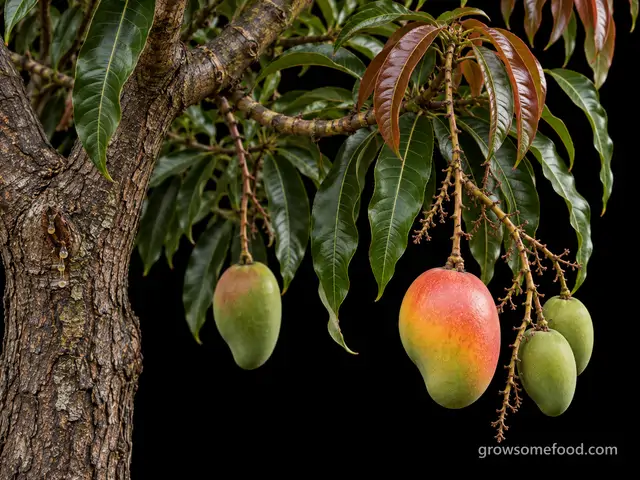
Mango
The most-eaten fruit on earth, and a genuinely easy backyard tree in zones 10-11 - if you understand two things: it needs a dry, cool winter rest to flower, and its sap is in the poison ivy family. Dwarf condo varieties bring it within reach of pots and small yards.
The flesh is food; the sap, peel and leaves are not. Mango belongs to the same family as poison ivy and cashew, and its sap carries urushiol relatives that cause an itchy, blistering rash in sensitive people - often around the mouth after eating an unpeeled fruit. Wear gloves to prune and pick, snap fruit with a short stem stub and let it drain away from the fruit and your skin, never burn the wood or leaves, and have someone else peel it if poison ivy affects you.
Overview
Mango is the most widely eaten fruit in the world, and in the small band of the United States that can grow it - south Florida, Hawaii, the warmest edges of southern California and south Texas - it is one of the most rewarding trees you can plant. A grafted tree fruits in three to five years, needs no pollinator, tolerates poor sandy and limestone soil, and once established is drought-tolerant. A mature tree can hand you hundreds of fruit in a season, in flavors - coconut, citrus, spice, resin - that no supermarket variety carries.
Two things decide whether it works for you. The first is the winter rest: mango flowers in response to a few cool, dry weeks, so a tree kept watered by a lawn sprinkler all winter grows beautifully and never blooms, and a tree that blooms into a rainy, foggy spring loses its panicles to anthracnose. Warm-and-dry at bloom is the whole game, which is why California mangoes crop more reliably than Florida ones even though Florida grows better trees.
The second is the sap. Mango is in the Anacardiaceae, the family of poison ivy, cashew, and pistachio, and the sap, peel, and leaves carry urushiol-relative compounds. Most people eat mango happily for a lifetime; people who react badly to poison ivy can get an itchy, blistering rash from handling the fruit or a swollen mouth from eating an unpeeled one. It is a manageable hazard - gloves, peeling, and letting picked fruit drain stem-down - but it is a real one, and it surprises people.
If you have no room for a 40 ft tree, the condo mangoes (Cogshall, Ice Cream, Carrie, Pickering, Nam Doc Mai and others) are naturally small, precocious, and productive in a 20-25 gallon pot - which is how gardeners well outside the mango zone grow one and move it under cover for winter.
Quick facts
- Life cycle
- Perennial, lives about 60 years
- Height
- 20 ft8 to 40
- Spread
- 20 ft8 to 35
- Cold
- Killed by frostdamaged below 30°F
- Heat
- Struggles above 110°F
- Self-sows
- Yes, expect volunteers
Full sun · medium water · well-drained soil · 25 ft apart (10 to 40) · transplant
When to plant
No planting window on record for this zone. Nearest zone with one: 8a.
Frost here: last around Apr 10 (Mar 27 to Apr 24 most years), first around Oct 25. Zone averages, your own yard may run a week or two either way.
Life stages
One stage to settle in, then five that repeat each year. Windows are typical; your zone and weather move them.
First years
The first year after planting- WaterWater regularly for the first two or three yearsevery 4 daysA young mango needs steady moisture to establish - deep watering two or three times a week in warm weather, easing off in cool weather. Once established, a mango is drought-tolerant and actually crops better with a dry spell before bloom, but the first years are not the time to test that.
- ProtectProtect from cold until the trunk hardensA young mango is killed at temperatures a mature tree survives - a first-year tree can die in the low 30s°F while an old tree takes brief cold in the upper 20s with only leaf burn. Wrap the trunk, bank mulch over the roots, and drape frost cloth on cold nights for the first several winters.
- PruneSet the shape and the height in year oneHead the young tree at 3-4 ft to force low branching, then select three or four well-spaced scaffolds. Deciding now to keep the tree at 10-15 ft is the difference between a mango you can pick, bag, and prune, and a 40 ft tree that drops fruit on the roof.
- FertilizeFeed lightly and often while it growsYoung mangoes respond to light feedings every couple of months through the warm season - a balanced fertilizer, with micronutrients on the alkaline sands and limestone of south Florida, where iron and manganese deficiency is routine. Keep fertilizer off the trunk.
Watch for- Cold damage on young wood in the first winters
- Yellowing between leaf veins on alkaline soil (micronutrients, not disease)
- Seedlings sprouting from fallen fruit
- Anthracnose spotting on new leaves in wet weather
Bloom
Dec to Mar, every year- WaterHold water back before and during bloomMango flowers in response to a cool, dry rest - a few weeks of dry weather and cool (but frost-free) nights is what triggers the panicles. Keep irrigation off from late fall until fruit has set; watering a mango through its winter rest is one of the commonest reasons a healthy tree never flowers.
- InspectWatch the bloom for anthracnose in wet weatherevery 2 weeksRain, fog, or heavy dew during bloom lets anthracnose blacken the flower panicles, and a blackened panicle sets no fruit - this is the single biggest cause of crop failure in humid climates. Copper sprays labeled for the crop, applied protectively from bud break through fruit set, are the standard answer where bloom-season rain is normal.
- PollinateOne tree is enough - the pollinators are fliesMango is self-fruitful, so a single tree crops. The flowers are pollinated mostly by flies and other small insects rather than bees, which is why insecticide sprays during bloom are especially costly. Only a tiny fraction of the thousands of flowers on a panicle will ever set fruit, and that is normal.
Watch for- Large branching panicles of tiny flowers at the branch tips
- Black, shrivelled panicles after rain (anthracnose)
- White powdery coating on panicles (powdery mildew)
- Heavy bloom one year and almost none the next - normal alternate bearing
Fruit set and drop
Feb to May, every year- WaterResume watering once fruit has setevery 5 daysStart watering again when the young fruit is pea to marble sized, and keep it steady from then until harvest. Consistent moisture through fruit development is what sizes the crop; drought now causes heavy drop, and a soaking after drought splits and cracks fruit later.
- ThinThin heavy clusters and expect natural dropA mango sheds most of the fruit it sets, in two or three waves, and that is normal rather than a problem. Where a cluster still carries several fruit at golf-ball size, thin to one or two - you get larger fruit, less limb breakage, and a better crop the following year.
- SupportProp or thin branches carrying heavy fruitA full-sized mango weighs a pound or more and hangs on a long stem at the branch tip. Loaded limbs break, especially on young trees carrying their first real crop - prop them, or thin the fruit.
Watch for- Several waves of natural fruit drop - normal, not a failure
- Fruit dropping heavily after a dry spell
- Limbs bending dangerously under a first heavy crop
- Fruit fly stings as fruit begins to size up
Fruit development
Apr to Aug, every year- WaterKeep moisture even while fruit fillsweeklyMangoes take roughly 100-150 days from fruit set to maturity, and they size during that window. Even watering through it gives full-sized fruit; the drought-then-flood pattern is what causes splitting and internal breakdown.
- ProtectBag fruit where fruit flies are establishedevery 3 weeksIn Florida, Hawaii, and quarantine areas elsewhere, fruit flies sting mangoes as they begin to mature. A paper or fine mesh bag over individual fruit once they size up is the reliable home control, and it stops birds and squirrels at the same time.
Watch for- The shoulders of the fruit filling out and rising above the stem attachment
- Color break on varieties that color up - many do not
- Sunken dark spots on fruit (anthracnose)
- Squirrels and rats taking fruit just before you would
Harvest
May to Sep, every year- HarvestPick mature-but-firm and ripen indoorsevery 3 daysMango is picked mature and firm, not soft: look for the shoulders filling out and lifting above the stem, a fuller shape, and a faint fruity smell at the stem end. Color is unreliable - Keitt and Carrie stay green when perfectly ripe. Snap or cut the stem leaving a short stub, then stand the fruit stem-down for a few minutes so the sap drains away from the skin.
- ProtectWear gloves and long sleeves to pickThe sap that spurts when a stem breaks is the part of a mango that causes rashes, and it burns dark streaks into the fruit skin as well. Gloves, sleeves, and draining the fruit stem-down handle both problems at once. Anyone who reacts to poison ivy should treat mango sap as the same hazard.
- PrunePrune straight after harvestThe post-harvest window is the only safe time to prune a mango hard - it lets the tree push the new growth that will carry next year's flowers and still harden it off before winter. This is how a mango is kept at a pickable 10-15 ft. Pruning later risks cutting off the flowering wood.
Watch for- Fruit ripening over several weeks rather than all at once
- Dark sap streaks burned into the skin of picked fruit
- Windfalls attracting fruit flies and rats
- A heavy crop this year meaning a light one next - normal alternate bearing
Cool-season rest
Oct to Dec, every year- WaterLet the tree go dry - this is what makes it flowerA mango needs a cool, dry rest to bloom. Stop irrigating from mid-autumn until fruit set, apart from a young tree that would actually suffer. Lawn sprinklers hitting a mango all winter are a common reason a beautiful tree never fruits.
- ProtectCover or move the tree on freezing nightsA mature mango takes brief cold in the upper 20s°F with leaf and twig burn; anything colder or longer kills wood, and young trees die far sooner. Bank mulch, wrap the trunk, and drape frost cloth - or move a container tree into a garage or bright room.
Watch for- Flower panicles beginning to push at the branch tips
- Leaf burn after a cold night
- Growth flushing instead of resting - usually too much water or nitrogen
Harvest
- The shoulders of the fruit fill out and rise above the point where the stem attaches
- The fruit takes on a fuller, rounder shape and feels heavy for its size
- A faint sweet, fruity smell at the stem end
- Color is NOT a reliable sign - Keitt, Carrie and other green varieties are fully ripe while still green
- A sample fruit picked and left indoors softens evenly in 3-8 days rather than shrivelling
- Pick mature-but-firm and ripen indoors · every 3 days
- Wear gloves and long sleeves to pick
- Prune straight after harvest
Per plant 10 to 500 mangoes, 10 to 400 lbPicking pick as they ripen
Cook with mangoes
Watch out for
6 to know. 2 are high-risk: Mango Anthracnose, Fruit Flies (Caribbean, Mediterranean & Oriental). 5 are active in September.
Mango AnthracnoseSeverity High DiseasenowThis is why a Florida mango tree can look magnificent and produce nothing: a wet January and February blackens the bloom before the crop ever exists.
It is also the reason mangoes bought at a market rot so suddenly - the infection was already in the fruit when it was picked.
Flower panicles turning black from the tips inward during or after wet weather, then shrivelling without setting fruit. Small dark spots on young leaves that enlarge into angular black lesions, and leaves that tear where the dead tissue falls out. Black, sunken, spreading spots on ripening or ripened fruit, often starting at the stem end and often appearing only after picking. Blackened shoot tips and dieback. Tear-stain streaks of black running down the fruit where spores wash from the stem.
Nothing recovers a blackened panicle or cures an infected fruit; this is a disease you prevent. Cut out infected shoots into clean wood, bin infected and mummified fruit rather than composting it, and get the canopy open. On the fruit side, picking at proper maturity and refrigerating promptly slows the latent infections that show up after harvest, and a brief hot-water dip is the commercial post-harvest treatment. Plan the following season around protective sprays at bloom if your springs are wet.
Choose tolerant varieties in humid climates - Carrie, Keitt, and Glenn are the usual recommendations. Prune every year immediately after harvest to open the canopy so flowers and foliage dry fast, and site the tree in full sun and moving air. Never water overhead, and clear fallen leaves, mummified fruit, and dead twigs, which is where the fungus overwinters. Where rain at bloom is normal, protective fungicide sprays labeled for mango - copper is the usual home option - applied from bud break through fruit set are the standard practice, and they must go on before infection rather than after.
The single most destructive disease of mango, caused by Colletotrichum fungi, and the reason mango crops fail in humid climates. It infects flower panicles, young fruit, leaves, and shoots whenever they are wet, so its severity is decided almost entirely by rain, fog, and dew during bloom. Blackened panicles set no fruit at all. Infection of young fruit often stays latent and invisible until the fruit ripens, which is why apparently perfect mangoes develop spreading black rot on the counter days after picking. Florida and the Gulf lose crops to it in wet springs; dry-spring California sees far less.
Fruit Flies (Caribbean, Mediterranean & Oriental)Severity High PestnowMango is a preferred host of the Oriental fruit fly in Hawaii and of the Caribbean fruit fly in Florida, which is exactly why mango is one of the fruits most often named in quarantine and interstate movement rules.
Keeping the tree small enough to bag the fruit is the decision that makes this manageable, and it gets made years earlier at planting.
Tiny puncture or sting marks on the skin of ripening fruit, sometimes with a weeping drop or a small sunken dimple around them. Fruit that softens, browns, or collapses on one side well before it should. Small white maggots in the flesh when the fruit is cut, and fruit that falls early and rots fast. Adult flies - larger than a housefly, with patterned wings - hovering around ripening fruit and resting on foliage in the morning. Windfalls under the tree squirming with larvae, which is where the next generation comes from.
There is no cure for fruit already infested - bin it sealed, and never leave it lying. Protein bait sprays are the standard commercial control and are what agriculture departments use in outbreaks; in a home garden, sanitation plus bagging does most of the work. If you find a fruit fly outside its normal range, or receive a quarantine notice, report it to your state agriculture department rather than dealing with it privately: several of these species are regulated, and it is illegal to move host fruit out of a declared quarantine area, including to friends and family in another county or state.
Bag the fruit. A paper, mesh, or organza bag slipped over each fruit once it reaches golf-ball size physically excludes the females and is the only home control that reliably works. Pick fruit at color break and finish ripening it indoors rather than letting it soften on the plant, which removes the window the flies need. Clear every fallen fruit at least weekly and dispose of it by bagging, deep burial, or solarizing in a sealed bag in the sun - never in an open compost heap, which just breeds more. Keep trees pruned small enough that you can actually reach and bag the crop. Hanging traps tell you when flies are active but will not protect a crop on their own.
Tephritid fruit flies lay their eggs under the skin of ripening fruit, and the maggots feed inside it, so the first sign is usually a fruit that looks fine and is full of larvae when cut. The Caribbean fruit fly is established across peninsular Florida and the Caribbean; Mediterranean and Oriental fruit flies are established in Hawaii and turn up in California, Texas and Florida as quarantine outbreaks. They prefer fruit that is beginning to soften and color, they build up on any fallen fruit left rotting on the ground, and populations run from late spring through fall. Because several of these species are regulated pests, an infestation is not only a garden problem - moving infested fruit is how quarantines start.
Scale & Sooty MoldSeverity Medium PestnowMango carries several scales, and the sign most gardeners notice first is black sooty mold coating the leaves and fruit under an ant highway.
The annual post-harvest pruning a mango needs anyway removes most of a buildup; a horticultural oil spray afterward reaches what is left.
Rows of small brown, tan, black, white, or waxy bumps along stems, twigs, leaf midribs, and leaf undersides that do not brush off but can be scraped loose with a fingernail. A sticky shine on the leaves - and on the floor, table, or path beneath the plant - that later turns black with sooty mold. Ants running steadily up and down the stems, since they farm and defend scale for that honeydew; often the first sign anything is wrong. Yellowing leaves, weak thin growth, and dieback of individual branches or canes that are heavily encrusted. On fruit crops, scale covers and sooty mold directly on the fruit. Check the leaf undersides and the shaded inner wood, which is where colonies build up unseen.
Horticultural oil is the main control: it works by smothering, so it has to coat the insects thoroughly - stems, twigs, and leaf undersides - and it usually needs repeating, because the waxy covering shields them and no single pass reaches everything. On deciduous woody plants a dormant-season oil smothers the overwintering stage while the leaves are out of the way, and timing a growing-season spray to the crawler stage, when the young are mobile and uncovered, is far more effective than spraying settled adults. On a small plant or a light infestation, scrub or wipe the scales off by hand, or dab them with a cotton swab of rubbing alcohol. Prune out and destroy badly encrusted wood rather than trying to save it. Wash off the sooty mold once the scale is gone - it lives on the honeydew, not on the plant, and stops once the supply does. Anything you spray must be labeled for the plant, and oils can burn delicate foliage, so test first.
Inspect. Look over leaf undersides and stems regularly - on a crop you pick, every harvest is a scouting chance - and check every new plant thoroughly before you buy it, plant it, or set it beside anything else, because scale almost always arrives on a plant rather than flying in. Quarantine new houseplants for a few weeks. Keep plants unstressed and not over-fertilized, since soft, forced growth is what populations build on. Prune for airflow and light to open up the shaded inner growth where scale hides, and prune out heavily infested wood as routine maintenance - on anything that gets a hard annual pruning, that alone removes most of any buildup. Leave the lady beetles, lacewings, and parasitic wasps alone, since they normally keep scale down to nothing, and keep ants off the plant where you can, because ants protect the colonies from those predators. Indoors, avoid hot, dry, still winter air.
Scale insects are sap-suckers that spend most of their lives immobile, fixed to a stem, twig, or leaf underside beneath a waxy or shell-like cover. They look far more like bumps, blisters, or crusty encrustations than like insects, which is why an infestation is usually well established before anyone notices it. Soft scales excrete large amounts of sticky honeydew that drips onto everything below and grows a black sooty mold - and those blackened leaves are often the first thing a gardener actually sees. Armored scales produce no honeydew but sit under a hard shield that protects them from most sprays. They spread as tiny mobile crawlers in the weeks after hatching, which is the only stage that moves and the only stage that is easy to kill. Populations build on stressed plants, on crowded shaded growth, and above all on plants kept indoors in dry, still air over winter.
Mango Sap Burn & Contact DermatitisSeverity Medium DisordernowBoth halves of this hazard are entirely manageable with the same harvesting habit - gloves, a stem stub, and draining the fruit stem-down.
The part people do not expect is the family relationship to poison ivy, and the fact that a reaction shows up a day or two later, long after they have forgotten handling the fruit.
Dark brown or black streaks and hardened patches burned into the skin of fruit shortly after picking, usually running from the stem end. On skin: itching, redness, small blisters, and swelling appearing 12-72 hours after handling fruit or pruning, most often on the hands, forearms, and around the lips and eyes. Swelling of the lips and mouth after eating unpeeled fruit. A rash that keeps recurring each harvest season is the sign of established sensitization rather than an unlucky accident.
Sap burn on fruit is cosmetic and does not affect the flesh underneath - cut the blemish away and eat the fruit. For a skin reaction, wash the area promptly with soap and water or an alcohol wipe, since removing the residue early limits the rash; then treat as you would poison ivy, with cool compresses, calamine, and an over-the-counter hydrocortisone or oral antihistamine. See a doctor for a widespread rash, for facial or eye involvement, for any swelling of the lips, mouth, or throat, or for any difficulty breathing, which is an emergency. Anyone with a serious reaction should discuss mango, cashew, and pistachio with an allergist rather than experimenting.
Wear gloves and long sleeves to prune and to harvest, and keep the sap off your face. Cut or snap fruit leaving a short stem stub rather than pulling it off flush, then stand picked fruit stem-down for several minutes so the sap drains away from the skin before it burns. Wash fruit, hands, and tools afterward. Always peel a mango before eating it, and have someone else peel it if you are sensitive to poison ivy. Never burn mango prunings, wood, or leaves - inhaling the smoke can cause a severe reaction affecting the airway. People with cashew or pistachio allergy should be cautious, since the family relationship makes cross-reaction possible.
When a mango is pulled from the tree the stem spurts a caustic latex sap under pressure. On the fruit it burns dark, hard, streaky blemishes into the skin within minutes - the defect packers call sap burn. On people it does something more serious: mango is in the poison ivy and cashew family, and the sap, peel, and leaves carry urushiol-related compounds that cause a delayed itchy, blistering contact dermatitis in sensitized individuals, typically appearing a day or two after handling and lasting one to two weeks. Reactions around the mouth after eating an unpeeled mango are common, and people who react to poison ivy are the most likely to react here.
Birds & WildlifeSeverity Medium WildlifenowOn mango the mammals do more damage than the birds: squirrels, rats, and raccoons take fruit just before it is mature, working at night and from above.
Since mango is picked firm rather than soft, the best defense is simply to harvest at maturity rather than waiting - plus bagging individual fruit on a tree small enough to reach.
Fruit disappearing from the outermost, most exposed parts of the plant first, and from the top of a tree where you cannot reach anyway. Single neat pecks and gouges in ripening fruit, with several fruits sampled rather than one eaten through - the classic sign that it was birds rather than an animal. Heads of grain or seed going visibly lighter and emptier as they ripen, with hulls and chaff scattered underneath. Freshly sown seed vanishing off the surface of a bed before it germinates. Bird traffic in and out of the plant picking up as the crop colors, and birds waiting on nearby wires and branches. Wasps arriving at the pecked and split fruit shortly afterward.
There is no treatment once a crop is being taken - only protection and timing, so the answer is to get netting on and to pick what is ready. Reflective tape, flash ribbon, spinners, and decoy predators do work, but only for a few days at a time: birds habituate fast, so move and rotate them and never rely on them as the main defense for a crop you care about. Cut and gather grain or seed heads a little early, at firm dough, and finish drying them under cover instead of leaving them standing for the flocks. Plant a little extra, or a decoy crop the birds prefer, and accept sharing anything that crops heavily. On a wild or foraged patch, fruit going to birds and small mammals is the point of the plant rather than a problem to solve.
Net, and net early. Bird netting draped over a frame or hoops so it stands off the fruit, with the edges closed at ground level, is the only thing that reliably works at harvest scale - and it has to go on before the crop starts to color, because once birds have found the food they are far harder to displace. Keep fruit trees small enough that netting them is actually feasible; that decision gets made years earlier, at planting. Bags of mesh, organza, or paper slipped over individual heads, clusters, or prize fruit protect a small crop without netting the whole plant. Then shorten the exposure: pick promptly and completely rather than leaving ripe fruit hanging as a lure, clear split and dropped fruit that draws birds and wasps alike, and where a crop can finish off the plant, harvest a little early and ripen or dry it under cover. Rake in or cover broadcast seed so it is not lying in plain view.
Birds find ripening fruit and seed before you do. Robins, waxwings, starlings, catbirds, jays, sparrows, finches, blackbirds, and doves all work a garden, and the pressure arrives in a narrow window - the last days before harvest, when sugar rises, color changes, and the crop softens or the grain hardens. A flock can strip a small planting in a day or two, and birds that only peck rather than take whole fruit still leave wounds that rot or draw wasps. Squirrels, chipmunks, and other wildlife usually turn up on the same crop at the same time. This is competition rather than disease: the birds are not harming the plant, and a big tree or a heavy-cropping bush often has enough for everyone - but on a small planting it can be the difference between a harvest and none.
Powdery MildewSeverity Medium DiseaseOn mango this is a bloom-season disease rather than a leaf-season one: it coats the flower panicles and young fruit in cool, dry nights with humid mornings, and infected panicles and fruitlets simply drop.
That makes it the main flowering disease in dry-winter California, where anthracnose is much less of a problem, and it is timed and treated with the same bloom sprays.
Round white powdery spots on the upper leaf surfaces that spread and merge until whole leaves look dusted. It usually starts on the oldest, lowest, most shaded leaves and works upward, so check there first. Look at the undersides too, and at stems, buds, and flower stalks, which get coated as it advances. Leaves that yellow, brown, curl, or go crisp and drop early under the coating. New growth that opens small, crumpled, or twisted where the fungus has reached the shoot tips. On plants where it gets onto the fruit, a dull gray film, russeted or scarred skin, and cracking. Late in the season, tiny dark specks scattered through the white felt - that is the fungus setting up to overwinter on the debris.
Start early: sprays protect healthy tissue, they do not clean up leaves that are already coated. Pick off and bin the worst leaves as soon as you see them, and open the plant up by thinning or pruning so air moves through. On anything that regrows quickly, shearing the whole plant back forces a clean flush and beats spraying. If it keeps spreading, potassium bicarbonate, horticultural oil, or neem applied weekly will hold it - cover both leaf surfaces. Sulfur also works, but it burns the foliage of some plants, should never go on in heat, and must not be mixed with or applied close behind an oil spray. Whatever you use must be labeled for the plant you are treating: follow that label and observe its pre-harvest interval on anything you eat. Do not compost badly infected material. Late-season mildew on a plant that is finishing anyway is usually cosmetic; on a crop still filling out it is worth acting on.
Give plants room. Crowding and still air are the biggest single driver, so space at the full recommended distance, thin seedlings properly, and divide or prune out congested growth until air moves through the plant. Full sun and an open position help; deep shade and a still corner against a wall are where it always starts. Water at the base rather than overhead, and water early in the day so nothing stays damp overnight. Keep plants evenly watered - drought stress at the roots leaves them far more susceptible, even though the fungus itself likes dry air. Go easy on nitrogen, since soft lush growth is the most vulnerable. Where resistant varieties exist for what you are growing, choosing one is the single most effective thing you can do on a plant that mildews every year. Clear infected leaves and stems away at the end of the season rather than composting them.
Powdery mildew is a fungal disease that coats leaves - and often stems, buds, and fruit - in a white-to-gray powder that looks like spilled talcum. It is not one fungus but a large family of them, each fairly specialised to its own group of plants, which is why mildew on one crop rarely jumps to an unrelated one beside it. Unlike most leaf diseases it does not need wet leaves: it thrives on warm dry days followed by humid nights, and it takes hold fastest where plants stand crowded in still air or in shade. The coating blocks light, so heavily covered leaves yellow, brown, and drop early. On many plants that is mostly disfiguring and arrives late enough not to matter; where it strips away the leaves a crop still needed to finish, it costs you size, sweetness, and quality.
Good & bad neighbors
Plant nearby
- Traditional pairings, thin evidence
-
A tough clumping edge plant for the same climate that keeps mowers and string trimmers away from the trunk - trunk damage is a real problem on young mangoes - without competing for the tree's feeder roots.
-
Draws hoverflies and other small pollinators, which matter more than usual here because mango is pollinated chiefly by flies rather than bees. Harmless around a young tree.
-
A living mulch under a young mango that shades and cools the root zone and suppresses weeds. Pull it back from the trunk, and keep the drop zone clear enough that you can still collect windfalls.
-
An aromatic annual that fits the sunny edge of a young mango's mulch ring and flowers for beneficial insects. Traditional rather than evidenced, and it will need more water than the tree does once the tree is established.

Keep apart
-
Turf grass and lawnNot the grass itself but the sprinkler that comes with it: irrigation running through late fall and winter keeps a mango growing instead of resting, and a mango that never gets a cool dry rest never flowers. Keep a mango out of an irrigated lawn zone, or turn that zone off from autumn until fruit set.
Varieties · 10
You pick one when you add Mango to your garden. Its days to maturity set your harvest window.
Condo (dwarf) mango 7 varieties
Glenn
Medium oval fruit, yellow with a pink-orange blush, orange fiberless flesh.
semi-dwarfbeginner-friendlydisease-tolerantfiberlessResists Anthracnose (good)
The usual first recommendation for a home mango, and especially in humid climates: a semi-dwarf, dependable tree with good anthracnose tolerance, bearing mild, sweet, fiberless, peach-flavored fruit early in the season. Not the most dramatic flavor in the collection, but the most forgiving tree.
Cogshall
Medium oval fruit, yellow with a red blush, deep orange fiberless flesh.
dwarfcontainer-friendlyfiberlessrich-flavorA genuine dwarf and one of the best container mangoes: a naturally compact tree that stays 6-10 ft yet produces sweet, rich, fiberless fruit. The standard choice for a pot, a small yard, or a zone 9 grower who needs to move the tree under cover in winter.
Ice Cream
Small-to-medium fruit staying green-yellow when ripe, with very smooth orange flesh.
dwarfcontainer-friendlyfiberlessdessertA true dwarf, often kept under 8 ft, with sweet, fiberless flesh so smooth it is routinely described as mango sorbet. The fruit stays greenish-yellow even when fully ripe, so judge it by shoulder fill and smell rather than color. One of the best mangoes for a large pot.
Standard (full-size) mango 3 varieties
Keitt
Very large oval fruit, staying green with a slight blush even when ripe, with firm, sweet, nearly fiberless flesh.
late-seasonvery-large-fruitgreen-when-ripelow-fiberResists Anthracnose (good)
A very late, very large green mango with sweet, nearly fiberless flesh and good tolerance of humid conditions - which makes it a mainstay in Florida and a good choice where a wet spring wrecks other varieties. It is fully ripe while still green, and its late season extends the harvest well past the main crop.
Valencia Pride
Very large, elongated fruit with yellow skin and a heavy red-purple blush; fiberless orange flesh.
large-fruitvigorousexcellent-flavorfiberlessA large, vigorous Florida seedling that has become a favorite in southern California: very large elongated fruit with sweet, fiberless, richly flavored flesh. The tree grows fast and big, so it needs annual pruning to stay pickable, but the eating quality is among the best of the full-size varieties.
Tommy Atkins
Large oval fruit with thick, brilliant red-and-orange skin and firm, fibrous yellow flesh.
shipping-varietyfibrousdisease-tolerantproductiveResists Anthracnose (good), Handling and shipping damage
The mango in almost every American supermarket, and a variety worth understanding rather than planting: it was selected for its thick skin, long shelf life, disease tolerance, and brilliant red color, not for flavor, and its flesh is noticeably fibrous. If your only experience of mango is disappointing, this is probably why. Tough and productive, but nearly every other variety here tastes better.
Grower tips
Notes from growers, tagged with the zone they grow in. A person reads every post before it appears.
Nobody has posted about Mango yet. The first one usually saves someone a season.
Free account. Your post shows your grower name and zone, never your email.