Add it to your home screen and it opens full screen: no browser bars, one tap away, and everything stays signed in. Free, nothing to download from an app store.
- Tap the Share button in your browser
- Scroll down and choose “Add to Home Screen”
- Open GrowSomeFood from your home screen
- Open your browser’s menu
- Choose “Add to Home screen” or “Install app”
- Open GrowSomeFood from your home screen
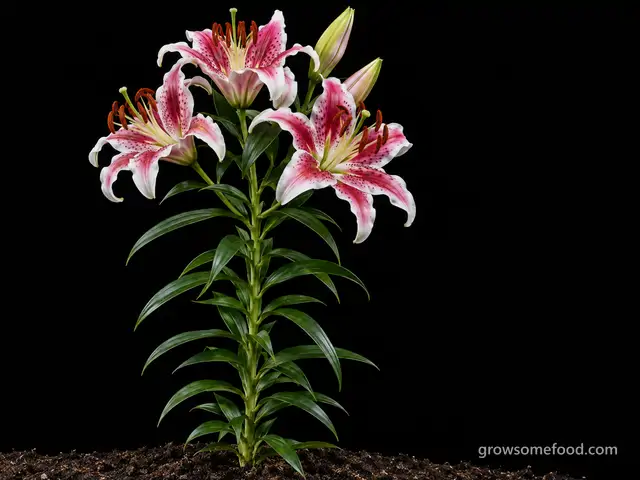
Lily
One of the great summer bulbs - tall, fragrant and long-lived - and the most dangerous common garden flower there is for cats.
LETHAL TO CATS - the single most important fact about lilies. All parts of a true lily (Lilium), including pollen and vase water, cause acute kidney failure in cats; a cat that gets pollen on its coat and grooms it off can die. There is no safe amount. Suspected exposure is an emergency - call a vet immediately, as treatment must start within hours. Daylilies (Hemerocallis) are equally dangerous to cats. Far less toxic to dogs. Do not eat the bulbs - they have been mistaken for onions.
Overview
The one thing to knowThe rule that governs everything else: true lilies are lethal to cats.
True lilies (Lilium) are the tall, trumpet- or bowl-flowered summer bulbs that carry some of the strongest fragrance in the garden. They are genuinely easy: plant a bulb in free-draining soil in sun, and it returns and multiplies for years, throwing 4- to 6-foot stems topped with several large flowers.
The rule that governs everything else: true lilies are lethal to cats. Every part - petals, leaves, stem, bulb, pollen, and the water a cut stem has stood in - causes acute kidney failure. A cat does not need to eat the plant; brushing against the flower and grooming pollen off its fur is enough to kill it. If you have a cat, or your cut flowers go to someone who does, choose something else. This is why the catalog gates lilies as a plant to grow deliberately, with your household in mind.
Note also that several very different plants are called “lily” and are not Lilium at all - daylily (Hemerocallis), rain lily, calla, peace lily. Daylilies happen to be just as dangerous to cats; the others differ. When toxicity matters, go by the botanical name.
Quick facts
- Life cycle
- Perennial, lives about 10 years
- Height
- 48 in24 to 84
- Spread
- 12 in8 to 18
- Cold
- Takes hard frostdamaged below -30°F
- Heat
- Struggles above 95°F
Full sun or part sun · medium water · well-drained soil · 12 in apart (8 to 18) · bulbs/cloves
When to plant
Fall planting is open for 34 more days. Next: spring, Mar 13 to Apr 24.
- Plant tubers Sep 13 – Oct 25 Open now · 34 days leftAbout 6 weeks before to at your first frost (Oct 25 here)Fall planting is best - the bulb roots before winter. Plant as soon as bulbs arrive; they must not dry out.
- Plant tubers Mar 13 – Apr 24 Opens in 173 daysAbout 4 weeks before to 2 weeks after your last frost (Apr 10 here)Spring planting works for bulbs bought in spring; expect bloom a little later in the first year.
Frost here: last around Apr 10 (Mar 27 to Apr 24 most years), first around Oct 25. Zone averages, your own yard may run a week or two either way.
Life stages
One stage to settle in, then three that repeat each year. Windows are typical; your zone and weather move them.
Bulb planting & rooting
Day 0 to 60 from planting- ProtectPlant deep, and never let the bulb dry outUnlike tulips and daffodils, lily bulbs have no papery tunic and dry out fast - plant them as soon as you get them. Set them 3 times their own height deep (usually 6-8 inches) in soil that drains freely; a lily bulb sitting in winter wet will rot.
- MulchCool roots, sunny headsLilies want their heads in sun and their roots cool. Mulch 2-3 inches, or plant among low perennials that shade the ground without crowding the stems.
Watch for- Soft or moldy bulbs at planting (discard them)
- Standing winter wet where you planted
Stem growth
Mar to Jun, every year- InspectScout for red lily beetleevery 4 daysBright scarlet beetles on the leaves are lily leaf beetle - the one pest that can strip a lily to bare stems. Hand-pick adults into soapy water and crush the slimy larvae on leaf undersides. Check twice a week from first growth; they are easiest to beat early.
- SupportStake the tall ones before they need itOriental and trumpet types can reach 6 feet and topple in summer storms once the heads are heavy. Put a stake in early, well clear of the bulb, rather than driving one through it later.
Watch for- Scarlet lily leaf beetles and their larvae
- Aphids on shoot tips (virus vectors)
Bloom
Jun to Aug, every year- HarvestCut for the vase - but not into a home with a catCut when the lowest bud is colored and just opening, leaving at least two-thirds of the stem and its leaves on the plant to feed the bulb. Before bringing lilies indoors, be certain there is no cat in the house: pollen, petals and vase water are all lethal to cats.
- DoRemove the anthersSnip the pollen-bearing anthers out of opened flowers with scissors. It keeps the rust-colored pollen off clothes and furniture, extends the bloom, and removes one of the routes by which pollen reaches an animal's coat.
- PruneDeadhead, but never cut the stem downSnap off spent flowers so the plant doesn't set seed, but leave the full leafy stem standing. Those leaves are what rebuild the bulb for next year.
Watch for- Botrytis blight in wet summers (brown-spotted leaves)
- Streaked or mottled foliage (lily virus - remove the plant)
Dieback & winter rest
Sep to Feb, every year- PruneCut back only after the stem yellowsWait until the stem has yellowed completely in autumn, then cut it to the ground. Cutting green stems early starves the bulb and costs you next year's flowers.
- ProtectDivide congested clumps every 3-4 yearsWhen flowers get smaller and stems crowd together, lift the clump in autumn, separate the bulbs and replant immediately - lily bulbs must not be stored dry.
Watch for- Rodents digging bulbs over winter
- Waterlogged ground during dormancy (bulb rot)
Watch out for
5 to know. 1 is high-risk: Red Lily Leaf Beetle. None are active in September.
Red Lily Leaf BeetleSeverity High PestVivid red beetles on leaves and stems from first spring growth, chewed leaf margins, and slimy brown lumps beneath the leaves.
Vivid red beetles on leaves and stems from first spring growth, chewed leaf margins, and slimy brown lumps beneath the leaves.
Hand-pick adults into soapy water (they drop when disturbed, so cup a hand underneath) and wipe larvae off leaves. Neem gives some control on larvae; heavy infestations may need repeated attention through the season.
Check plants twice a week from the moment shoots appear - early interception is far more effective than any treatment once numbers build. Clear debris around plants in autumn where adults overwinter.
A bright scarlet beetle (Lilioceris lilii) whose adults and larvae feed on lily foliage and can strip a plant to bare stems within days. The larvae cover themselves in their own excrement, appearing as slimy brown blobs on leaf undersides.
Bulb Rot (Summer Waterlogging)Severity Medium DiseaseA planting that fails to reappear at all in its season - the commonest symptom and the last one noticed.
A planting that fails to reappear at all in its season - the commonest symptom and the last one noticed. Shoots that emerge thin, yellow and stunted, or start up and then collapse. Clumps thinning year on year in the low, wet corner of a bed while the same bulbs thrive on higher ground. Lift a suspect bulb and look: a healthy one is firm and heavy with clean pale scales, a rotting one is soft, brown or blackened, often slimy between the scales, and smells sour. Roots gone brown and stringy rather than firm and pale. Standing water, or a dark permanently damp patch of soil, over the planting after rain.
Nothing brings rotted tissue back, so the work is triage and drainage. Lift the planting, sort the bulbs, and bin every one that is soft, discoloured or foul-smelling rather than composting it. Keep only bulbs that are firm all through, trim any small damaged patch back to clean tissue, let the cut surfaces dry in the air for a day, and replant into free-draining ground or fresh mix somewhere the water moves away. If the same spot rots bulbs every year, do not replant it - raise the bed, open up the soil, or move the planting and grow something else there.
Drainage does nearly all the work. Plant bulbs in ground that drains freely and never stands in water, and where the soil is heavy plant on a raised bed, a berm or a slope, or grow them in containers - a pot needs an open hole and must never be left standing in a full saucer. Set bulbs at the depth the plant actually wants rather than deeper, and keep mulch pulled back from the neck. Water the soil rather than the calendar, and cut watering right back through dormancy when the bulb is not drawing. Never plant a bulb that is already soft, bruised or mouldy, and do not dig or plant in soggy ground.
Bulb rot is not one organism but a group of soil fungi and water molds - Fusarium, Rhizoctonia, Pythium, Phytophthora and others - that live harmlessly in most soils and turn destructive only when the ground stays saturated. A bulb is a swollen food store with no way to shed water, so once the soil around it is airless the scales suffocate, soften and are invaded, and the whole bulb goes brown, mushy and sour-smelling. Dormancy is the dangerous season: a resting bulb draws almost nothing, so it can sit in cold or hot wet ground for weeks with nothing drying it out. The damage is underground and invisible, so the first sign is usually a clump that simply never comes up.
Squirrels & RodentsSeverity Medium WildlifeLily bulbs lack the protective papery tunic other bulbs have, which makes them particularly attractive.
Plant in wire baskets or hardware-cloth cages with sharp grit around each bulb, and trap where vole runs are active.
Chewed husks, shells or hulls scattered under the plant, fruit and nuts vanishing as they ripen, and gnawed or half-eaten windfalls. On new plantings: freshly dug holes and scattered soil, bulbs missing or gnawed, dug-up seed rows, vole runways under the mulch, and gaps in spring where you know you planted.
There is no rescue for what has already been eaten, so this is a prevention problem. Re-cover disturbed plantings with mesh promptly, replant losses inside cages, and trap or exclude persistent diggers where that is legal locally. On a large tree, accept that you will share the crop and concentrate on gathering promptly.
For a crop on the plant, timely and frequent harvest is the real defense - gather daily through the ripening window rather than leaving anything to hang, and pick slightly early to finish indoors where the crop allows it. Net or bag what you can reach. For bulbs and sown seed, lay wire mesh or hardware cloth over the planting, plant deeper, use buried wire baskets, and clear away the papery tunics and debris that advertise a fresh planting. Trunk baffles slow climbers on isolated trees, clearing jumping routes from nearby trees and roofs helps, and removing brush cover reduces the rodents sheltering nearby.
Squirrels, chipmunks, voles and mice are the wildlife that competes with you most directly for a crop. They take ripening nuts, seed and fruit off the plant, usually before you judge it ready, and cache what they do not eat. They also dig up freshly planted bulbs and sown seed, and voles tunnel in to gnaw bulbs and roots underground through winter. They climb anything, they know exactly when a crop is ripe, and a determined pair can clear a small tree or a new planting in a few days.
Botrytis BlightSeverity Medium DiseaseRound to oval tan-brown spots on lower leaves after wet weather, spreading upward; grey fuzz in prolonged damp.
Round to oval tan-brown spots on lower leaves after wet weather, spreading upward; grey fuzz in prolonged damp.
Remove affected leaves promptly and improve air movement; in persistently wet seasons a garden fungicide applied early can slow spread.
Space plants for airflow, water at the base rather than overhead, and remove all dead stems and fallen foliage at the end of the season.
A fungal disease of wet, crowded conditions producing oval brown or orange spots on leaves that merge until the foliage collapses, sometimes taking the flower buds with it.
Lily Mosaic VirusSeverity Medium DiseaseYellow mottling or pale streaks along the leaves, twisted growth, and flowers that break colour or deform.
Yellow mottling or pale streaks along the leaves, twisted growth, and flowers that break colour or deform.
There is no cure - remove and bin affected plants (never compost them) so they do not act as a reservoir for the rest of the bed.
Control aphids, buy virus-free bulbs from reputable suppliers, and keep tiger lilies well away from prized hybrids.
Aphid-transmitted viruses that cause mottled, streaked or twisted foliage and progressively weaker, distorted flowers. Tiger lilies are often symptomless carriers that infect neighbouring hybrids.
Good & bad neighbors
First rule: keep Daylily apart. Not a growing conflict - a naming one.
Plant nearby
-
Hosta foliage shades the ground and keeps lily roots cool while the flower stems rise clear above it - the classic 'heads in sun, feet in shade' pairing.
-
Peony foliage stays handsome after its own bloom and covers the bare lower stems of lilies, which flower later in the same border.
- Traditional pairings, thin evidence
-
A traditional border pairing - lilies rise through roses and extend the season, with similar sun and feeding needs.


Keep apart
-
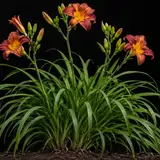
Not a growing conflict - a naming one. Daylily is Hemerocallis, not a true lily, but it is equally lethal to cats. Planting them together makes it harder to tell people which plant is which, and doubles the hazard in one bed.
Varieties · 5
You pick one when you add Lily to your garden. Its days to maturity set your harvest window.
Asiatic 2 varieties
Tiger Lily
Bright orange strongly recurved petals covered in dark spots.
bulbilsvigorousheirloomOrange, black-spotted, downward-facing recurved flowers on tall stems, spreading readily from stem bulbils. Vigorous and very hardy - but often a symptomless carrier of lily virus, so keep it away from choice hybrids.
Enchantment
Upward-facing bright orange flowers with fine dark spotting.
earlycut flowerThe benchmark Asiatic: dense heads of upward-facing nasturtium-orange flowers on tidy 2-3 ft stems, early and utterly dependable.
Oriental 2 varieties
Stargazer
Deep pink recurved petals with white margins and dark speckling.
fragrantcut flowerThe lily that made Orientals famous: huge upward-facing crimson-pink flowers edged in white, with overwhelming fragrance on 3-4 ft stems.
Casa Blanca
Very large pure white recurved flowers with pale green throats.
fragrantcut flowerwhiteEnormous pure-white Oriental with heavy perfume, a florist staple and a strong garden performer on 3-4 ft stems.
Trumpet & Aurelian 1 variety
Regale (Regal Lily)
White trumpets with purple-flushed reverse and yellow throats on 4-6 ft stems.
fragrantheirloomheat-tolerantThe classic regal lily: white trumpets flushed wine-purple outside, intensely fragrant, and one of the most reliable and long-lived lilies you can plant.
Grower tips
Notes from growers, tagged with the zone they grow in. A person reads every post before it appears.
Nobody has posted about Lily yet. The first one usually saves someone a season.
Free account. Your post shows your grower name and zone, never your email.