Add it to your home screen and it opens full screen: no browser bars, one tap away, and everything stays signed in. Free, nothing to download from an app store.
- Tap the Share button in your browser
- Scroll down and choose “Add to Home Screen”
- Open GrowSomeFood from your home screen
- Open your browser’s menu
- Choose “Add to Home screen” or “Install app”
- Open GrowSomeFood from your home screen
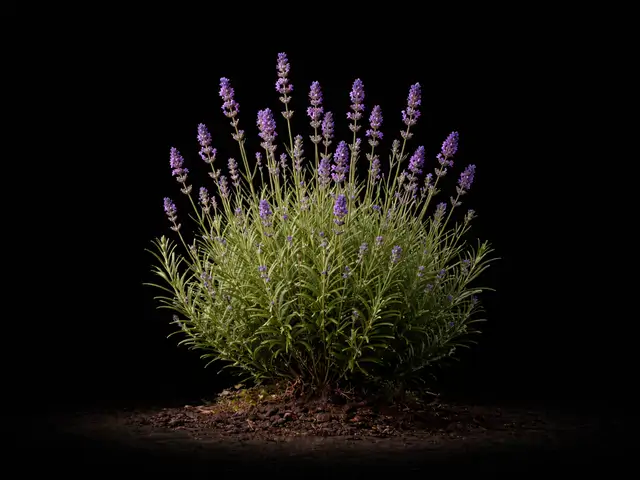
Lavender
The flowers are edible in small culinary amounts, but only from English lavender (L. angustifolia); lavandins and Spanish lavender are camphorous and are not for the kitchen. Concentrated lavender essential oil is for topical/aromatic use, not internal, and can irritate sensitive skin. Lavender is listed as toxic to dogs, cats and horses if eaten in quantity, and lavender oil should never be applied to or diffused around cats, which cannot metabolize its constituents well.
Overview
The fragrant purple shrub of dry, sunny gardens - grown for scent, flowers, bees, and crafts, with edible culinary blooms as a bonus.
Lavender is the aromatic silver-and-purple shrub that defines a hot, dry, Mediterranean-style garden. Grown mostly as an ornamental and fragrance plant — for its scent, its long-lasting purple flower spikes, its dried buds for sachets and wands, and its unrivaled draw for bees and butterflies — it's also lightly culinary: the buds of English lavender flavor baking, tea, and blends when used with a light hand. It's a long-lived perennial that can anchor a border for a decade or more.
Growing it well comes down to one thing above all others: sharp drainage and dry, lean, sunny conditions. Lavender is killed by wet, rich, acidic soil and by humidity far more than by cold. Give it grit, sun, and restraint — no fertilizer, little water — and match the type to your climate (hardy English for cold, heat-tolerant French/Spanish for humid heat).
At a glance
- Sun
- Full sun
- Water
- Low
- Spacing
- 18–36 in (typ. 24)
- Mature height
- 18–36 in (typ. 30)
- Start by
- Transplant · Cuttings
- Frost
- Hardy
- Germination
- 14–42 days (typ. 28) @ 65–75 °F (typ. 70)
- Spread
- 18–36 in (typ. 24)
- Soil
- Well-drained
- Temperature
- Damaged below -20°F · struggles above 100°F
- Seed ready
- 100–150 days (typ. 120) (for saving)
When to plant
Zone 7a typical frost: last Apr 10 · first Oct 25 (spring frost runs Mar 27–Apr 24 in a typical spread of years)
Life stages
- Establishing (year 1) day 0–200 from transplant
-
Water to root in, then keep it dryevery 6 dWater a new plant enough to establish over its first weeks, then back off sharply - lavender is drought-tolerant and rots in wet soil.
-
Expect little or no bloom the first yearA first-year plant puts its energy into roots; real flowering comes in year two. Pinch off any early buds to build a stronger plant.
Root rot in heavy, rich, or wet soil (the main killer)Poor drainage and acidic soil - lavender wants lean, alkaline, gritty ground -
Water to root in, then keep it dryevery 6 d
- Spring growth & pruning Mar, Apr, May (yearly)
-
Prune in spring to shape - never into old woodTrim lightly in spring to shape the plant, cutting into green growth only; cutting back into the bare woody base rarely resprouts and can kill it.
-
Do NOT fertilizeLavender wants lean soil; rich soil and nitrogen give lush leaves, weak flowers, and floppy plants. Skip the feed.
Leggy, woody, open growth (the plant was cut too hard or fed too much) -
Prune in spring to shape - never into old wood
- Bloom & harvest Jun, Jul, Aug (yearly)
-
Cut flower stalks when the first buds openFor the best fragrance and color, cut long stems when the first one or two florets on each spike open, before full bloom. Cut in the morning after the dew dries.
-
Leave some bloom for the beesLavender in flower is one of the best pollinator plants there is. Leave a portion unharvested to feed bees and butterflies.
Full open bloom (still usable, but past peak for drying)Bees everywhere (a feature, not a problem) -
Cut flower stalks when the first buds open
- Post-bloom shaping Aug, Sep (yearly)
-
Shear back by about a third after floweringA tidy post-bloom trim into green growth keeps the plant compact and mounded and can prompt a light second bloom in warm zones. Never cut into old wood.
-
Dry the harvested stalksBundle cut stems and hang them upside down in a warm, dark, airy spot to dry for sachets, wands, and culinary buds.
Woody, splayed-open center over the years (the sign it needs replacing from cuttings) -
Shear back by about a third after flowering
- Winter Jan, Feb, Nov, Dec (yearly)
-
Keep it dry; light gravel mulch, not organicEnglish lavender is hardy to about zone 5, but wet winter soil kills it. Use a gravel or grit mulch (not moisture-holding bark) and ensure sharp drainage; in the coldest zones a light cover helps.
-
Leave old growth until springDon't prune hard in fall; leave the plant intact over winter and shape it in spring once new growth shows.
Winter wet and 'wet feet' - the real killer, far more than coldHeaving in freeze-thaw cycles in cold zones -
Keep it dry; light gravel mulch, not organic
Harvest
- Style
- Repeated picking
- Typical yield
- 50–500 flower stalks (typ. 200)
- First production
- 1–2 yrs (typ. 2)
- Established plant (year two or later) with abundant flower spikes
- Cut when the first one or two florets on each spike open, before full bloom, for best fragrance and color
- Long stems cut in the morning after the dew dries
Watch out for
Root Rot High
Root rot is not one organism but a group of soil fungi and water molds - Pythium, Phytophthora, Fusarium, Rhizoctonia and others - that sit harmlessly in most soils and only turn destructive when the ground stays saturated. Waterlogged soil drives the air out, the roots suffocate, and the weakened tissue is invaded and goes soft, brown, and stringy. Because the damage is underground you usually see it first as something that looks like drought: wilting, yellowing, stunting, a plant that does not respond to being watered. Overwatering, heavy compacted ground, a low spot that collects runoff, a pot with no drainage or a saucer left standing full, and cold wet soil in winter are the usual causes. Once roots have actually rotted there is no cure - this is a problem you prevent rather than treat.
Watch for: Wilting in the middle of the day on a plant whose soil is damp - the classic tell, and the reason people water a rotting plant and finish it off. Leaves yellowing from the bottom up, dull off-color foliage, and growth that stalls for no visible reason. Whole shoots, or one side of the plant, collapsing while the rest still looks fine. Soft, dark, or mushy tissue at the base of the stem or at the crown, sometimes with a sour smell. Lift a failing plant and look at the roots: healthy ones are firm and pale, rotted ones are brown or black and slimy, and the outer layer slips off between your fingers leaving a thread of core behind. Seedlings that topple over at soil level are the same problem, called damping-off.
Prevent: Drainage is the whole defense. Match the plant to the site first - something that wants sharp drainage will not survive heavy clay or a low, water-collecting spot however well you tend it. Where the ground is heavy, plant on a raised bed, berm, or slope, or grow in a container. Set plants at the depth they were already growing, since burying the crown or the root flare is a common cause of rot, and keep mulch pulled back a few inches from the stem base instead of piled against it. Water the soil rather than the calendar: check that the top inch or two is dry before watering again, cut back hard in cool weather and winter dormancy, and never leave a pot standing in a full saucer. Do not plant or dig in soggy ground, and go easy on rich amendments for plants that want it lean. Rotate annual crops, and start with clean healthy plants and fresh mix.
Treat: There is no cure for tissue that has already rotted, so act on the conditions rather than looking for a spray. Stop watering at once and fix the drainage - open up compacted soil, or move the plant to a raised, sharply drained position or a container. Lift a badly affected plant, cut away every soft dark root and rotted section with a clean blade back to firm pale tissue, and replant only the healthy parts into fresh free-draining soil or mix. Often the better move is to give up on the plant and save its offspring instead: cuttings, offsets, or divisions taken from firm healthy growth root readily and give you a clean start. Bin the rotted material rather than composting it, and correct the drainage before you replant, because the rot comes straight back in the same wet spot.
Wet feet kill far more lavender than cold does. Lean gritty soil, raised beds or mounds, gravel mulch rather than moisture-holding bark, full sun and airflow, and minimal water. In muggy climates choose humidity-tolerant types such as Phenomenal or the Spanish lavenders.
Powdery Mildew Medium
Powdery mildew is a fungal disease that coats leaves - and often stems, buds, and fruit - in a white-to-gray powder that looks like spilled talcum. It is not one fungus but a large family of them, each fairly specialised to its own group of plants, which is why mildew on one crop rarely jumps to an unrelated one beside it. Unlike most leaf diseases it does not need wet leaves: it thrives on warm dry days followed by humid nights, and it takes hold fastest where plants stand crowded in still air or in shade. The coating blocks light, so heavily covered leaves yellow, brown, and drop early. On many plants that is mostly disfiguring and arrives late enough not to matter; where it strips away the leaves a crop still needed to finish, it costs you size, sweetness, and quality.
Watch for: Round white powdery spots on the upper leaf surfaces that spread and merge until whole leaves look dusted. It usually starts on the oldest, lowest, most shaded leaves and works upward, so check there first. Look at the undersides too, and at stems, buds, and flower stalks, which get coated as it advances. Leaves that yellow, brown, curl, or go crisp and drop early under the coating. New growth that opens small, crumpled, or twisted where the fungus has reached the shoot tips. On plants where it gets onto the fruit, a dull gray film, russeted or scarred skin, and cracking. Late in the season, tiny dark specks scattered through the white felt - that is the fungus setting up to overwinter on the debris.
Prevent: Give plants room. Crowding and still air are the biggest single driver, so space at the full recommended distance, thin seedlings properly, and divide or prune out congested growth until air moves through the plant. Full sun and an open position help; deep shade and a still corner against a wall are where it always starts. Water at the base rather than overhead, and water early in the day so nothing stays damp overnight. Keep plants evenly watered - drought stress at the roots leaves them far more susceptible, even though the fungus itself likes dry air. Go easy on nitrogen, since soft lush growth is the most vulnerable. Where resistant varieties exist for what you are growing, choosing one is the single most effective thing you can do on a plant that mildews every year. Clear infected leaves and stems away at the end of the season rather than composting them.
Treat: Start early: sprays protect healthy tissue, they do not clean up leaves that are already coated. Pick off and bin the worst leaves as soon as you see them, and open the plant up by thinning or pruning so air moves through. On anything that regrows quickly, shearing the whole plant back forces a clean flush and beats spraying. If it keeps spreading, potassium bicarbonate, horticultural oil, or neem applied weekly will hold it - cover both leaf surfaces. Sulfur also works, but it burns the foliage of some plants, should never go on in heat, and must not be mixed with or applied close behind an oil spray. Whatever you use must be labeled for the plant you are treating: follow that label and observe its pre-harvest interval on anything you eat. Do not compost badly infected material. Late-season mildew on a plant that is finishing anyway is usually cosmetic; on a crop still filling out it is worth acting on.
Most troublesome in muggy climates and overcrowded plantings. Lavender wants wide spacing, sharp drainage and full sun far more than it wants a spray, and humidity-tolerant varieties are worth seeking out in the humid South.
Aphids Low
Aphids are small soft-bodied sap-suckers - green, black, gray, pink, or waxy white, and mostly wingless - that gather in dense colonies on the tenderest new growth: shoot tips, buds, and the undersides of young leaves. They breed extremely fast in mild weather, so a few can become hundreds inside a week. Their feeding curls and distorts soft growth, and the sticky honeydew they excrete coats everything below and turns black with sooty mold. Ants often farm and defend the colonies for that honeydew. A few aphids are normal on almost any plant and a healthy plant shrugs them off; only dense, persistent colonies do real damage, and some aphids also spread plant viruses as they feed.
Watch for: Dense clusters of tiny insects packed onto shoot tips, flower buds, and the undersides of young leaves. Curled, cupped, or distorted new growth that never opens properly. A sticky shine on the leaves - and on whatever sits under the plant - that later goes black with sooty mold. Tiny white cast skins left behind where a colony has been feeding. Ants running steadily up and down the stems, which is often the first thing you notice. Mottled, streaked, or misshapen leaves that do not grow out can mean a virus the aphids brought with them rather than the feeding itself.
Prevent: Go easy on nitrogen: the soft, lush growth that heavy feeding produces is exactly what aphids breed on. Check new growth once a week through spring and early summer so you catch colonies while they are still small, and rub the first few out with your fingers. Leave flowering plants nearby and skip broad-spectrum sprays - ladybugs, lacewings, hoverflies, and parasitic wasps do most of this work for free, and they only stay if there is something for them to eat. Keep ants off the plant where you can, since they protect aphids from those predators. Water steadily so plants are not stressed, and check any new plant over before you bring it home or move it indoors, since aphids usually arrive on something else.
Treat: Knock the colonies off with a hard jet of water and repeat every few days - on most plants that alone ends it. Pinch out or prune off the worst-infested tips rather than treating the whole plant. If colonies keep rebuilding, spray insecticidal soap or horticultural oil directly onto the insects, covering leaf undersides, and repeat weekly until they are gone; treat early or late in the day, and never spray a wilted or heat-stressed plant. Avoid broad-spectrum insecticides - they kill the ladybugs, lacewings, and parasitic wasps that were about to solve the problem for you, and aphid numbers usually come back worse afterward. Anything you spray must be labeled for the plant you are treating; follow that label and observe its pre-harvest interval. On anything you eat, wash leaves, heads, and buds well before use, since aphids hide down in crowns, folds, and tight growth.
Lavender's aromatic oils make it a poor host, so infestations stay light and rarely need anything done.
Whiteflies Low
Tiny white sap-sucking insects that cluster on leaf undersides and lift off in a cloud when the foliage is brushed. They weaken growth, and the honeydew they excrete coats the leaves below in a sticky film that blackens with sooty mold. Some species also transmit plant viruses. They breed fast in warm, still, sheltered air, which is why they are far more trouble under cover and on plants overwintered indoors than on the same plant outside.
Watch for: Clouds of tiny white insects rising when you shake the plant, flat scale-like nymphs stuck to the leaf undersides, a sticky shine on the leaves below them, black sooty mold over that, and yellowing, weakened growth.
Prevent: Inspect the undersides of any new plant before it joins the others, and quarantine anything you are bringing under cover or indoors for winter. Avoid crowding and heavy nitrogen feeding, which produce the soft growth they prefer. Hang yellow sticky traps early to catch the build-up while it is still small, and encourage lacewings, ladybugs and parasitic wasps outdoors.
Treat: Hose off light infestations, then spray insecticidal soap or horticultural oil onto the leaf undersides where they actually sit. Sprays do not kill the eggs, so repeat every few days for two or three weeks or the population simply rebuilds. Yellow sticky traps knock back the adults, and outdoors natural enemies usually finish the job.
Essentially a greenhouse and indoor problem on lavender. Healthy plants in open sun and moving air rarely see it.
Spittlebugs (Froghoppers) Low
The nymphs of froghoppers, which hide inside a blob of white frothy 'spit' on stems and leaf axils while they suck sap - conspicuous but rarely damaging on a healthy sage.
Watch for: Blobs of white foam on stems and in leaf joints in late spring, occasionally with slight leaf distortion where they feed.
Prevent: Little needed - healthy plants shrug them off; a spring cleanup of debris reduces overwintering sites.
Treat: Simply hose the foam and nymphs off with a strong jet of water; no other control is usually warranted.
Common on lavender and cosmetic only; introduced as the realistic minor lavender pest in place of the draft's generic list.
Good & bad neighbors
Varieties · 6
Neat mound of gray-green foliage with dense, deep-purple flower spikes.
The other benchmark English lavender: a touch more compact than Munstead with deep, rich purple flowers and strong fragrance - the go-to for the classic deep-purple lavender look, culinary use, and low hedges in cold zones.
Compact mound of silver-green foliage with violet-blue flower spikes.
A classic compact English lavender (L. angustifolia), among the hardiest (reliable to about zone 5), with early, lighter violet-blue flowers and sweet fragrance. Excellent for culinary use, low hedges, and cold gardens. Named for Gertrude Jekyll's garden.
Tall stems topped with long, dense deep purple-blue flower spikes.
The world's leading commercial lavandin (L. x intermedia), grown across Provence for its heavy yield of fragrant oil. Tall slender stems, dense deep purple-blue flowers, and intense fragrance - vigorous and more humidity-tolerant than English types, but not culinary (lavandins can taste camphorous).
Large, vigorous silver-green mound with long, fragrant purple-blue flower spikes.
A modern hybrid lavandin (L. x intermedia) bred to be exceptionally tough - cold-hardy, humidity- and heat-tolerant, and resistant to the root and foliar diseases that plague lavender in tough climates. A large, uniform, high-oil plant and one of the most forgiving to grow.
Long stems with dense clusters of pale violet flowers over gray-green foliage.
A popular lavandin (L. x intermedia) prized for long stems and abundant, sweetly fragrant pale-violet flowers - a favorite for drying, wands, and bouquets, and more heat- and humidity-tolerant than English lavender. Best for fragrance and crafts rather than the kitchen.
Dense gray-green foliage with plump purple flower heads crowned by upright bracts.
A distinct species (L. stoechas) with unmistakable flower heads topped by showy petal-like 'rabbit ear' bracts, and the most heat- and humidity-tolerant lavender - the best choice for hot, muggy Southern gardens. Ornamental rather than culinary; blooms early and long, but less cold-hardy.
Grow
Start from a transplant or cutting in full sun and gritty, lean, alkaline, sharply drained soil; do not enrich or overwater.
Start lavender from a transplant or a rooted cutting of a named variety — seed is slow, erratic, and won't come true for cultivars. Set plants out after frost, in full sun, spaced 18-36 inches apart for the airflow they need. The soil is everything: lavender demands lean, gritty, sharply drained, ideally slightly alkaline ground. Amend heavy or acidic soil with grit, sand, and a little lime, or grow in raised beds or pots — a mound or slope helps too.
Water a new plant to establish it, then back off hard: mature lavender is drought-tolerant and rots in wet soil. Crucially, do not fertilize — rich soil produces floppy, leafy, weak-flowering plants. Choose the type for your climate: English lavender (Munstead, Hidcote) for cold-hardiness and culinary use; French/Provence and Spanish types where summers are hot and humid.
Care
Prune each year into green growth (never old wood), water little, feed never, and replace from cuttings when it goes woody.
Lavender's care is disciplined restraint. The key annual job is pruning: shape it in spring and shear it back by about a third after flowering, always cutting into soft green growth — never into the bare woody base, which usually won't resprout and can kill the plant. Regular light pruning is what keeps lavender compact and long-lived instead of a splayed-open woody wreck.
Otherwise, do little. Water only in real drought once established, and never fertilize — lean soil is the secret to strong scent and abundant flowers. In cold zones, protect against winter wet more than cold: use gravel mulch (not moisture-holding bark), ensure sharp drainage, and leave the plant intact until spring. After many years a plant inevitably gets woody at the base; rather than trying to rejuvenate it, raise a replacement from cuttings.
Harvest
Cut long stems when the first florets open, before full bloom, for the strongest scent and color - then dry them hanging.
Harvest lavender for the strongest fragrance and best color by cutting long flower stems when the first one or two florets on each spike have just opened, before the whole spike reaches full bloom — the oils and color are at their peak then, and the stems dry beautifully. Cut in the morning after the dew has dried, gathering a handful of stems and snipping just above the leafy growth. Leave part of the planting unharvested for the bees.
To dry, bundle the stems with a rubber band and hang them upside down in a warm, dark, airy place for a couple of weeks until the buds are crisp; then strip the buds for sachets, blends, and culinary use, or keep whole stems for wands and bouquets. For the culinary buds, use English lavender and only a small amount — a little is floral and lovely, too much turns soapy and perfumey.
Storage
Dried lavender keeps its scent for a year or more; store buds airtight and dark, and hang wands and bouquets as they are.
Lavender is made for storage — drying is the whole point of the harvest. Once the hung bundles are fully dry, strip the buds into airtight jars kept out of light, where they hold their fragrance and lavender-blue color for a year or more (and can be refreshed with a rub between the fingers). Whole dried stems keep as wands, bouquets, and sachets, scenting drawers and linens for months.
For culinary buds, the same dried, airtight, dark storage applies — use them sparingly in baking, sugar, tea, and herbes-de-Provence-style blends. Fresh flower stems also last well in a vase and dry in place. Because lavender's value is in its dried and preserved forms, there's little need to refrigerate anything; harvest, hang, and store.
Propagation & seed saving
Cuttings are the reliable route - root softwood or semi-hardwood tips and clone a good plant; seed is slow and doesn't come true.
Propagate lavender from cuttings, not seed. Named lavender varieties don't come true from seed, and seed is famously slow and erratic to germinate — so to reproduce a plant you like, take cuttings. Softwood cuttings in late spring or semi-hardwood cuttings in summer both root well: take 3-4 inch non-flowering shoots, strip the lower leaves, dip in rooting hormone, and set them in a gritty, sharply drained rooting mix kept lightly moist. Roots form in a few weeks.
This is how you get an exact copy of a proven plant, raise replacements before an old woody one declines, and multiply a single lavender into a whole hedge or border — the never-buy-it-again route for a plant that's otherwise expensive to buy in quantity. If you do want to try seed, chill (stratify) it first and expect patience and variability.
Nutrition
Not a nutritional food - lavender's value is aromatic and ornamental; the edible flowers are a flavoring used by the pinch.
Lavender isn't a food crop, so it has no meaningful nutritional profile in the way a leafy herb does — you don't eat it in quantity. Its edible part is the flower bud of English lavender, used purely as a fragrant flavoring: a small pinch in sugar, shortbread, tea, or a spice blend, where the point is aroma, not nutrition.
What lavender genuinely offers instead is pollinator value and aromatic use. A lavender in bloom is one of the finest bee and butterfly plants you can grow, humming with pollinators all summer, and its oils carry the fragrance and calming reputation that make it a mainstay of sachets, teas, and aromatherapy. Grow it for scent, beauty, and bees; treat the culinary flowers as a flavoring accent, used sparingly.
In the kitchen
A flavoring, not an ingredient: English lavender buds in sugar, shortbread, tea, and herbes de Provence - always by the pinch.
Lavender in the kitchen is a delicate, floral accent used with real restraint — the difference between lovely and soapy is a matter of a pinch. Use only English lavender (L. angustifolia), the culinary type, and only its dried buds in small amounts. It shines in lavender sugar and shortbread, honey, lemonade, and tea, in ice creams and custards, and as one of the flowers in a classic herbes de Provence blend, where it lifts roasted meats and vegetables.
The golden rule: less is more. Start with a fraction of what seems right, since lavender's perfume compounds are intense and easily overwhelming. Steep buds and strain them out of infusions, or grind a few into sugar. Beyond the plate, its main 'consumption' is aromatic — sachets, wands, potpourri, and scented crafts — which is really where lavender earns its keep.
Traditional & historical uses
The classic calming herb, with a deep tradition and genuine modern evidence for lavender aroma easing anxiety and improving sleep.
This section records how people have traditionally used this plant, and what is known about the risks. It is history and general information — not medical advice, and not a recommendation to treat anything. Plants are not dosed like medicines, some interact with prescriptions, and some are harmful in ways that are not obvious. Talk to a clinician before using any plant medicinally.
Lavender has one of the strongest and best-supported traditions of any aromatic herb, centered on calm, relaxation, and sleep. For centuries it has been used in baths, sachets, pillows, and infusions to soothe nerves, ease headaches, and invite rest, and to freshen and disinfect linens (the Romans used it in bathing — the name comes from Latin lavare, 'to wash'). Topically, lavender oil has a long folk use for minor burns, insect bites, and skin irritation.
Unusually, the modern evidence broadly supports the tradition. Lavender aromatherapy has been studied fairly extensively for reducing anxiety and improving sleep quality, with generally positive (if modest) results, and a standardized oral lavender-oil preparation is licensed in some countries for anxiety. Honest caveats: the aroma and topical, properly diluted oil are the well-supported uses; concentrated lavender essential oil should not be taken internally except as a regulated product, and it can irritate sensitive skin. As calming herbs go, lavender's folklore is unusually well earned.
History
From Roman baths to Provençal fields to English cottage gardens - lavender has scented, cleaned, and calmed for over two thousand years.
Lavender has been woven through Mediterranean and European life for more than two thousand years. Native to the dry hills of the Mediterranean, it took its name from the Latin lavare, 'to wash,' for its use in Roman baths and laundry — a scent of cleanliness and purification from the start. The Egyptians used it in perfume and embalming; medieval monasteries grew it for medicine; and it was strewn on floors and tucked into linens to freshen and ward off pests and disease.
By the Renaissance it was a staple of European stillrooms and cottage gardens, and the fields of Provence became — and remain — the heart of the world's lavender oil and perfume trade. English lavender (the hardy, sweet-scented L. angustifolia) became the beloved garden and culinary type, while the lavender fields of France supply fragrance and aromatherapy worldwide. Few plants carry such a continuous thread of scent, cleanliness, and calm through history.
Growing across climates
Match the type to the climate: hardy English lavender for the cold north, heat-and-humidity-tolerant French and Spanish types for the warm, muggy south.
Lavender's success is really about choosing the right species for your climate and giving it sharp drainage everywhere. Zones 5-8: the domain of English lavender (Munstead, Hidcote) — the hardy, sweet, culinary type; grow it lean and dry with gravel mulch and it thrives, with winter wet the only real threat. Zones 3-4: grow it in a container overwintered in a cold-but-sheltered spot — that is the route that actually works; in zone 4 you can also push the hardy English types in the ground with excellent drainage and grit mulch, but expect losses in an open winter, and in zone 3 the open ground is out of reach. Zones 8-10: humidity, not cold, is the enemy — reach for heat- and humidity-tolerant types like Provence and Grosso (lavandins) and Spanish lavender (L. stoechas), prioritize airflow, and plant on mounds or in pots. Zones 11+: Spanish and French types in the coolest, driest months and in containers; persistent humidity and wet soil are what defeat lavender, so drainage and airflow rule everywhere.
Troubleshooting
Wilting or dying is almost always wet soil or winter wet; woody and floppy means too rich or cut too hard; no flowers means shade or fertilizer.
Wilting, browning, or dying despite watering: root rot from wet, heavy, or poorly drained soil — by far the most common lavender problem; improve drainage drastically and water far less. Died over winter: usually winter wet ('wet feet') rather than cold, or the wrong species for your zone — use hardy English types, gravel mulch, and sharp drainage. Floppy, leafy, few flowers: soil too rich or too much nitrogen — stop fertilizing entirely and grow it lean. Woody, open, splayed center: the plant was never pruned or was cut into old wood — shape yearly into green growth only, and replace old plants from cuttings. Sparse bloom: not enough sun (it needs full sun) or an over-fed, over-watered plant. Soapy-tasting cooking: too much, or the wrong (non-culinary) type — use English lavender by the pinch.
Grower tips
No grower tips for Lavender yet. Yours could be the first.
Sign in to share what works in your garden.