Add it to your home screen and it opens full screen: no browser bars, one tap away, and everything stays signed in. Free, nothing to download from an app store.
- Tap the Share button in your browser
- Scroll down and choose “Add to Home Screen”
- Open GrowSomeFood from your home screen
- Open your browser’s menu
- Choose “Add to Home screen” or “Install app”
- Open GrowSomeFood from your home screen
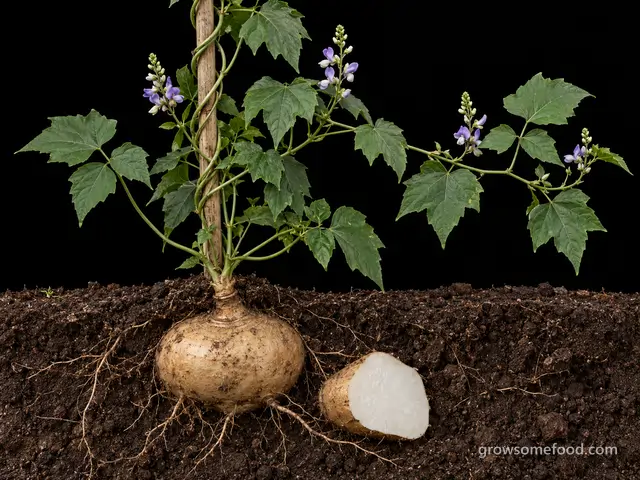
Jicama
A tropical bean vine grown for one big crisp sweet root you eat raw like an apple - and a plant where everything above ground, the seeds most of all, is poisonous.
Only the peeled storage root is food. The seeds, pods, leaves, flowers and vines contain ROTENONE - the seeds most of all, long used as a fish poison and insecticide. Poisonings happen when young pods are mistaken for green beans, so never eat jicama pods at any stage, cooked or raw, and keep them from children and animals. Peel the fibrous brown skin off generously before eating; the white flesh beneath is safe raw or cooked. Label any saved seed as poisonous and store it away from food.
Overview
The one thing to knowJicama belongs to a genus that makes rotenone - the botanical insecticide - and stores it in the leaves, vines, flowers, pods, and above all the seeds.
Jicama is a vigorous tropical bean vine grown for a single swollen taproot at its base: a squat, tan-skinned globe with snow-white flesh that is crisp, juicy, faintly sweet, and famously refreshing raw. It goes into Mexican street snacks with lime and chili, into slaws and fruit salads, and into stir-fries where it stays crunchy the way a water chestnut does. Because the cut flesh does not brown, it is one of the few vegetables that looks as good an hour after slicing as it did at the knife.
It is a legume, and that is the catch. Jicama belongs to a genus that makes rotenone - the botanical insecticide - and stores it in the leaves, vines, flowers, pods, and above all the seeds. The root is food; nothing else on the plant is. People have been poisoned eating young jicama pods in the belief that any bean pod is a green bean, so if you grow it where children pick things, the pods are the thing to know about.
Growing it takes patience and heat: five to nine frost-free months on a tall trellis, with the root only really swelling once the days shorten in late summer. That makes it a straightforward crop in zones 9 and warmer, and an experiment anywhere colder.
Quick facts
- Sprouts in
- 14 days7 to 21
- Soil to sprout
- 80 °F70 to 95
- Start indoors
- 7 weeks before transplant6 to 8
- Life cycle
- Perennial, grown as an annual
- Seed to save
- About 240 days after planting210 to 300
- Height
- 15 ft8 to 20
- Spread
- 36 in24 to 48
- Support
- Grows better on a trellis or stake
- Cold
- Killed by frostdamaged below 32°F
- Heat
- Struggles above 105°F
Full sun · medium water · well-drained soil · 12 in apart (8 to 18) · direct sow or transplant
When to plant
Nothing is open today. Spring indoor sowing opens 5 months, Feb 13 to Mar 6.
- Start indoors Feb 13 – Mar 6 Opens in 145 daysAbout 8 weeks before to 5 weeks before your last frost (Apr 10 here)North of zone 8 jicama rarely makes a full-size root. Start seed indoors 6-8 weeks before last frost in deep pots, grow it in a large container in the hottest spot you have, and treat any root at all as a win.
Frost here: last around Apr 10 (Mar 27 to Apr 24 most years), first around Oct 25. Zone averages, your own yard may run a week or two either way.
Life stages
Five stages, about 7 months from sowing to the first pull. Windows are typical; your zone and weather move them.
Germination
Day 0 to 14 from sowing- WaterKeep the bed warm and evenly moistevery 3 daysJicama seed is large and slow, taking one to three weeks up. Soaking it overnight before sowing speeds emergence. Sow only into soil that is genuinely warm - 70°F or better - or it simply sits and rots.
- ProtectWait for real warmth before sowingThere is no advantage to sowing early: jicama does nothing until the soil is warm, and cold wet ground kills the seed. Two to three weeks after last frost is soon enough.
Watch for- Seed rotting in cool, damp soil
- Nothing up after three weeks (soil too cold, or sown too deep)
Seedling
Day 14 to 38 from sowing- ThinThin to 8-12 inches apartEach plant makes one dominant taproot, so crowding them costs you size rather than number. Thin early, while the seedlings pull cleanly.
- SupportGet the trellis up before it needs itThe vines run 15 to 20 feet and get heavy. A fence, cattle panel, or stout tripod set at planting time saves an awkward job later - jicama does not train well once it has tangled itself.
Watch for- Slugs and cutworms on the first leaves
- Seedlings sulking in a cold spell (they resume with heat)
Vine growth
Day 40 to 130 from sowing- PrunePinch off EVERY flower bud, all seasonThe single decision that makes the crop. Left to bloom, the vine spends the season on pods and seed and you dig a stringy root. Shear or pinch flower buds off as they appear and the plant sends everything downward - growers who do this get roots several times larger. It also stops the poisonous pods forming.
- WaterWater steadily through summerweeklyAbout an inch a week at the base. Even moisture through the long vine-building months sets up a smooth, well-filled root; drought stress in midsummer shows up as a small one in November.
- FertilizeFeed lightly - it fixes its own nitrogenJicama is a legume and makes most of its own nitrogen. Extra nitrogen just grows more vine at the root's expense; a little potassium and phosphorus is all it wants.
Watch for- Flower buds forming (pinch them off)
- Aphids on shoot tips
- Spider mite stippling in hot dry spells
- A vine outgrowing a flimsy trellis
Root bulking
Day 120 to 220 from sowing- InspectKeep pinching flowers as the days shortenweeklyLate summer is when jicama flowers hardest and also when the root finally begins to swell. Every bud you remove now goes straight into the crop, so this is the least optional weeding job in the garden.
- WaterKeep moisture even while the root swellsThe taproot does nearly all its bulking in the last two to three months as daylength drops. Steady water now builds size; a drought-then-soak cycle cracks the root.
- WeedWeed by hand near the crownThe root sits shallow around the base of the stem. Keep hoes away from it - a nicked root is a route for rot and it will not store.
Watch for- Pods forming despite pinching (remove and discard them safely)
- The crown lifting and cracking the soil - the root is sizing
- Vines yellowing early from drought rather than maturity
Harvest
Day 150 to 240 to the first pull from sowing- HarvestDig after the vines yellow and before frostCut the vines away, loosen a wide circle with a fork, and lift the crown. Most plants make one dominant round root; sometimes you find a small cluster. Brush the soil off rather than washing, and handle gently - the tan skin bruises underneath.
- ProtectNever let frost reach the rootA frosted jicama goes soft and off-flavored and will not store. Whatever the vine looks like, dig before the first frost date rather than after it.
- DoClear the vines and pods out of reachThe tops, pods and seeds are the poisonous part of the plant. Pull them well away rather than leaving a heap where children, pets, or livestock can get at them, and never feed jicama tops or trimmings to animals.
Watch for- Frost in the forecast (dig now)
- Dry pods left on the vine or dropped in the bed
- Roots nicked by the fork (use those first, they will not keep)
Harvest
- Days have shortened and the vines are yellowing and dying back
- A test scrape at the crown shows a round tan root at least 3-4 inches across
- Roughly 5-9 months from sowing - and always before the first frost, which ruins the root
- Dig after the vines yellow and before frost
- Never let frost reach the root
- Clear the vines and pods out of reach
Per plant 1 to 4 roots, 1 to 10 lbPicking pull once
Cook with Jicama
Watch out for
6 to know. 2 are high-risk: All Vine, No Root, Rotenone in Pods, Seeds and Vines. 5 are active in September.
All Vine, No RootSeverity High DisordernowWorth reading before you plant rather than after you dig.
Most disappointed jicama growers did everything right except take the flowers off.
A magnificent 15-foot vine covered in blue-white or violet pea flowers - that is the crop going into seed. Pods forming along the vine through August and September. A test scrape at the crown in autumn that turns up a thin taproot rather than a swelling globe. Vines still lush and green in late autumn with no sign of yellowing, meaning the plant has not begun to finish. A sowing date later than mid-May, or a first frost less than five months after sowing.
There is no rescue late in the season: a plant that has already podded has spent the crop. Strip every flower and pod off as soon as you notice and the plant will put what season remains into the root, which is worth doing but will not fully make up the difference. Otherwise dig what you have, eat the small roots - they are perfectly good, just modest - and fix the sowing date and the flower-pinching next year.
Pinch or shear off every flower bud as it appears, right through the season - this one habit is the difference between a five-pound root and a stringy one. Sow as early as warm soil allows, and start seed indoors in zone 8 and colder so the plant gets a head start. Feed lightly, keep it in full sun, and grow it up a trellis rather than letting it sprawl. At the cool edge of its range choose the faster water-type (agua) jicama over the milk type.
The commonest way a jicama crop fails is that it never makes a root worth digging, and two causes account for nearly all of it. First, flowering: left to bloom, the vine puts its energy into pods and seed rather than the taproot, and a heavily flowering plant can finish the season with a root no bigger than a radish. Second, season length: jicama needs five to nine warm months and the root bulks in earnest only once daylength shortens in late summer, so a late sowing or a short northern season simply runs out of time. Excess nitrogen and shade push the plant the same way, building vine at the root's expense.
Rotenone in Pods, Seeds and VinesSeverity High DisordernowThe root is genuinely safe food and none of this applies to it.
The point is that nothing else on the plant is, and the pods are the part people actually eat by mistake.
Green pods forming along the vine from late summer, looking exactly like immature green beans. Children or visitors picking and tasting pods from a plant that is obviously a bean. Dried pods left hanging on the vine or dropped into a compost heap, where the seed stays potent. Saved seed kept in an unlabelled jar near food, or beside edible bean seed. Livestock or poultry offered jicama tops and trimmings after harvest.
There is no home remedy. If someone has eaten pods, seeds, leaves, or vine, call Poison Control (1-800-222-1222 in the United States) or emergency services immediately and say the plant was jicama or yam bean and contains rotenone; for a pet or livestock, call a veterinarian the same way. Do not wait for symptoms, and do not try to induce vomiting unless you are told to. Rinse the mouth with water. Sap on skin can irritate, so wash it off.
Pinch the flowers off through the season - it is what makes a big root anyway, and it stops pods forming at all. Where you do let plants flower for seed, do it at the back of the row and tell anyone who picks in the garden that those pods are not food. Pull the vines well out of reach at harvest rather than leaving them in a heap, and never feed tops, pods, or trimmings to animals. Label saved seed clearly as poisonous, store it away from the kitchen and out of children's reach, and never keep it next to edible bean seed.
Jicama defends itself chemically. The leaves, vines, flowers, pods and seeds contain rotenone and related rotenoids - the same compounds once sold as a botanical insecticide and long used as a fish poison across the Americas. The seeds are by far the most concentrated, and green pods are concentrated enough to poison someone who eats them. The swollen root is the exception: it holds no meaningful amount and is a normal food. Poisonings happen when a young pod is mistaken for a green bean or a snow pea, which is an easy mistake on a plant that is visibly a bean vine. Symptoms include burning in the mouth and throat, nausea, vomiting, abdominal pain and, in serious cases, difficulty breathing and collapse.
Root RotSeverity Medium DiseasenowA jicama root sits in the ground for the better part of a year, so a low spot that holds water after summer storms will rot the crop before you ever dig it.
Grow it on a ridge or a raised bed in loose, freely drained ground, and use any fork-damaged roots first rather than storing them.
Wilting in the middle of the day on a plant whose soil is damp - the classic tell, and the reason people water a rotting plant and finish it off. Leaves yellowing from the bottom up, dull off-color foliage, and growth that stalls for no visible reason. Whole shoots, or one side of the plant, collapsing while the rest still looks fine. Soft, dark, or mushy tissue at the base of the stem or at the crown, sometimes with a sour smell. Lift a failing plant and look at the roots: healthy ones are firm and pale, rotted ones are brown or black and slimy, and the outer layer slips off between your fingers leaving a thread of core behind. Seedlings that topple over at soil level are the same problem, called damping-off.
There is no cure for tissue that has already rotted, so act on the conditions rather than looking for a spray. Stop watering at once and fix the drainage - open up compacted soil, or move the plant to a raised, sharply drained position or a container. Lift a badly affected plant, cut away every soft dark root and rotted section with a clean blade back to firm pale tissue, and replant only the healthy parts into fresh free-draining soil or mix. Often the better move is to give up on the plant and save its offspring instead: cuttings, offsets, or divisions taken from firm healthy growth root readily and give you a clean start. Bin the rotted material rather than composting it, and correct the drainage before you replant, because the rot comes straight back in the same wet spot.
Drainage is the whole defense. Match the plant to the site first - something that wants sharp drainage will not survive heavy clay or a low, water-collecting spot however well you tend it. Where the ground is heavy, plant on a raised bed, berm, or slope, or grow in a container. Set plants at the depth they were already growing, since burying the crown or the root flare is a common cause of rot, and keep mulch pulled back a few inches from the stem base instead of piled against it. Water the soil rather than the calendar: check that the top inch or two is dry before watering again, cut back hard in cool weather and winter dormancy, and never leave a pot standing in a full saucer. Do not plant or dig in soggy ground, and go easy on rich amendments for plants that want it lean. Rotate annual crops, and start with clean healthy plants and fresh mix.
Root rot is not one organism but a group of soil fungi and water molds - Pythium, Phytophthora, Fusarium, Rhizoctonia and others - that sit harmlessly in most soils and only turn destructive when the ground stays saturated. Waterlogged soil drives the air out, the roots suffocate, and the weakened tissue is invaded and goes soft, brown, and stringy. Because the damage is underground you usually see it first as something that looks like drought: wilting, yellowing, stunting, a plant that does not respond to being watered. Overwatering, heavy compacted ground, a low spot that collects runoff, a pot with no drainage or a saucer left standing full, and cold wet soil in winter are the usual causes. Once roots have actually rotted there is no cure - this is a problem you prevent rather than treat.
Spider MitesSeverity Medium PestnowWorst in the hot dry midsummer weeks when jicama is building the canopy that will fill the root.
Heavy defoliation then costs you size in November, so hose the undersides through heat waves and keep the vine watered.
Fine pale stippling or speckling across the upper leaf surface, as though the color had been sandblasted out of it, and later a dull bronze or rusty cast over the whole leaf. Delicate webbing across leaf joints, shoot tips, and undersides - that comes with a heavy infestation and means you caught it late. Leaves that dry, curl, and drop early while the plant looks thirsty no matter how much you water it. Hold a leaf over a sheet of white paper and tap it: the specks that fall and then start walking are mites. With a hand lens, look on the undersides for the mites themselves, pale or reddish, and their round translucent eggs. Damage that shows up first on the hottest, dustiest, most sheltered side of a plant, or on a pot sitting near a radiator indoors.
Start with water. A strong jet aimed at the leaf undersides, repeated every few days for a couple of weeks, knocks populations down and breaks the cycle - on many plants that alone ends it. On anything that regrows quickly, shearing back badly infested growth resets the plant to clean foliage. If it keeps building, spray insecticidal soap or horticultural oil directly onto the undersides where the mites actually live, and repeat every five to seven days for three rounds: contact sprays do not kill the eggs, so a single application always fails. Anything you spray must be labeled for the plant you are treating - follow the label and observe its pre-harvest interval on anything you eat. Predatory mites are an effective release in a greenhouse or on an indoor plant. Above all, correct the heat, dust, and drought stress that caused it, or the mites simply come back.
Do not let plants get drought-stressed - that is the single strongest trigger, and a plant watered steadily through heat is far less likely to have a mite problem at all. Hose the foliage down, undersides included, during hot dry spells: it knocks mites off, washes away the dust they thrive in, and raises the humidity around the plant for a while. Indoors and under cover, keep the air from going hot, dry, and stagnant, wipe or rinse the leaves occasionally, and keep pots away from radiators and heating vents. Inspect any plant carefully before you bring it indoors for winter or set it among others, since mites almost always arrive on something else. Avoid broad-spectrum insecticides: they wipe out the predatory mites, lacewings, and lady beetles that do most of this work for you, and reliably leave you with a worse outbreak than you started with.
Spider mites are not insects but tiny sap-feeding arachnids, smaller than a grain of salt, and you almost always notice the damage before you notice them. They live on the undersides of leaves and drain the cells one at a time, which is why the leaf goes finely stippled with pale dots before it bronzes and dries. They breed explosively in hot, dry, dusty, still air - a generation can pass in a week at high temperature - so a barely visible population becomes a webbed, bronzed plant within a fortnight. Drought-stressed plants and plants wintered indoors in dry heated air are the classic hosts. Broad-spectrum insecticides make matters worse rather than better, because they kill the predatory mites and lady beetles that normally hold mites in check.
WhitefliesSeverity Low PestnowA late-summer nuisance on the dense vine canopy in warm zones rather than a real threat to the crop; the harvested root is unaffected.
Clouds of tiny white insects rising when you shake the plant, flat scale-like nymphs stuck to the leaf undersides, a sticky shine on the leaves below them, black sooty mold over that, and yellowing, weakened growth.
Hose off light infestations, then spray insecticidal soap or horticultural oil onto the leaf undersides where they actually sit. Sprays do not kill the eggs, so repeat every few days for two or three weeks or the population simply rebuilds. Yellow sticky traps knock back the adults, and outdoors natural enemies usually finish the job.
Inspect the undersides of any new plant before it joins the others, and quarantine anything you are bringing under cover or indoors for winter. Avoid crowding and heavy nitrogen feeding, which produce the soft growth they prefer. Hang yellow sticky traps early to catch the build-up while it is still small, and encourage lacewings, ladybugs and parasitic wasps outdoors.
Tiny white sap-sucking insects that cluster on leaf undersides and lift off in a cloud when the foliage is brushed. They weaken growth, and the honeydew they excrete coats the leaves below in a sticky film that blackens with sooty mold. Some species also transmit plant viruses. They breed fast in warm, still, sheltered air, which is why they are far more trouble under cover and on plants overwintered indoors than on the same plant outside.
AphidsSeverity Low PestRarely serious on a vine this vigorous, and the harvested part is underground, so tolerate light colonies and let beneficials work.
Watch the shoot tips in early summer while the plant is still small.
Dense clusters of tiny insects packed onto shoot tips, flower buds, and the undersides of young leaves. Curled, cupped, or distorted new growth that never opens properly. A sticky shine on the leaves - and on whatever sits under the plant - that later goes black with sooty mold. Tiny white cast skins left behind where a colony has been feeding. Ants running steadily up and down the stems, which is often the first thing you notice. Mottled, streaked, or misshapen leaves that do not grow out can mean a virus the aphids brought with them rather than the feeding itself.
Knock the colonies off with a hard jet of water and repeat every few days - on most plants that alone ends it. Pinch out or prune off the worst-infested tips rather than treating the whole plant. If colonies keep rebuilding, spray insecticidal soap or horticultural oil directly onto the insects, covering leaf undersides, and repeat weekly until they are gone; treat early or late in the day, and never spray a wilted or heat-stressed plant. Avoid broad-spectrum insecticides - they kill the ladybugs, lacewings, and parasitic wasps that were about to solve the problem for you, and aphid numbers usually come back worse afterward. Anything you spray must be labeled for the plant you are treating; follow that label and observe its pre-harvest interval. On anything you eat, wash leaves, heads, and buds well before use, since aphids hide down in crowns, folds, and tight growth.
Go easy on nitrogen: the soft, lush growth that heavy feeding produces is exactly what aphids breed on. Check new growth once a week through spring and early summer so you catch colonies while they are still small, and rub the first few out with your fingers. Leave flowering plants nearby and skip broad-spectrum sprays - ladybugs, lacewings, hoverflies, and parasitic wasps do most of this work for free, and they only stay if there is something for them to eat. Keep ants off the plant where you can, since they protect aphids from those predators. Water steadily so plants are not stressed, and check any new plant over before you bring it home or move it indoors, since aphids usually arrive on something else.
Aphids are small soft-bodied sap-suckers - green, black, gray, pink, or waxy white, and mostly wingless - that gather in dense colonies on the tenderest new growth: shoot tips, buds, and the undersides of young leaves. They breed extremely fast in mild weather, so a few can become hundreds inside a week. Their feeding curls and distorts soft growth, and the sticky honeydew they excrete coats everything below and turns black with sooty mold. Ants often farm and defend the colonies for that honeydew. A few aphids are normal on almost any plant and a healthy plant shrugs them off; only dense, persistent colonies do real damage, and some aphids also spread plant viruses as they feed.
Good & bad neighbors
Plant nearby
-
French marigolds suppress root-knot nematodes, which deform and stunt a jicama taproot in the warm sandy soils the crop likes - one of the few companion claims here with a real mechanism behind it.
- Traditional pairings, thin evidence
-
Traditionally interplanted, and jicama fixes nitrogen the corn can use. Keep the corn thin and to the north side - a jicama vine shaded through summer builds less root, and corn stalks are no substitute for a real trellis.
Keep apart
- Traditional pairings, thin evidence
-
Two long-season root crops wanting the same loose ground on the same schedule, and digging one damages the other. Sweet potato's dense ground-covering vines also crowd the base of a young jicama plant.
-
A sprawling squash and a 15-foot bean vine simply tangle. Jicama needs its trellis and full sun for months on end, and squash foliage smothering the base costs you root size.
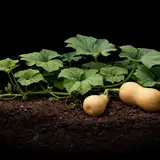
Varieties · 3
You pick one when you add Jicama to your garden. Its days to maturity set your harvest window.
Jicama de agua (water type) 2 varieties
Agua
Round, slightly flattened tan roots with clear watery sap and crisp translucent white flesh.
aguasweetjuicyraw-eatingThe water jicama, and the type almost everyone means by the name: squat round roots with thin tan skin over sweet, translucent, extremely juicy white flesh. It is the standard market type in Mexico, the one usually behind seed sold simply as jicama, and the best choice for eating raw with lime and chili. Slightly quicker to size up than the milk type, which makes it the safer bet where the season is short.
Cristalina
Large, smooth, round tan roots with notably glassy, crisp white flesh.
agualargecrispmarketA Mexican water-type selection grown for large, very crisp, glassy-white roots with smooth skin and uniform shape - the name refers to the crystalline look of the cut flesh. Grown commercially for the fresh market and worth seeking out if you want size, though it wants the full season to get there. Handle it like any agua-type jicama: pinch the flowers, dig before frost, and store it cool but never cold.
Jicama de leche (milk type) 1 variety
Leche
Longer, tapering tan roots with milky sap and firm, drier white flesh.
lechefirmcookinglong-seasonThe milk jicama, named for the milky sap that runs when you cut it. Roots are more elongated and the flesh is firmer, drier, and less sweet than the water type - which makes it the better one for cooking, where it holds its crunch through a stir-fry or a long-simmered soup. It needs a slightly longer season, so it is not the type to choose at the cool edge of jicama's range.
Grower tips
Notes from growers, tagged with the zone they grow in. A person reads every post before it appears.
Nobody has posted about Jicama yet. The first one usually saves someone a season.
Free account. Your post shows your grower name and zone, never your email.