
Add it to your home screen and it opens full screen: no browser bars, one tap away, and everything stays signed in. Free, nothing to download from an app store.
- Tap the Share button in your browser
- Scroll down and choose “Add to Home Screen”
- Open GrowSomeFood from your home screen
- Open your browser’s menu
- Choose “Add to Home screen” or “Install app”
- Open GrowSomeFood from your home screen

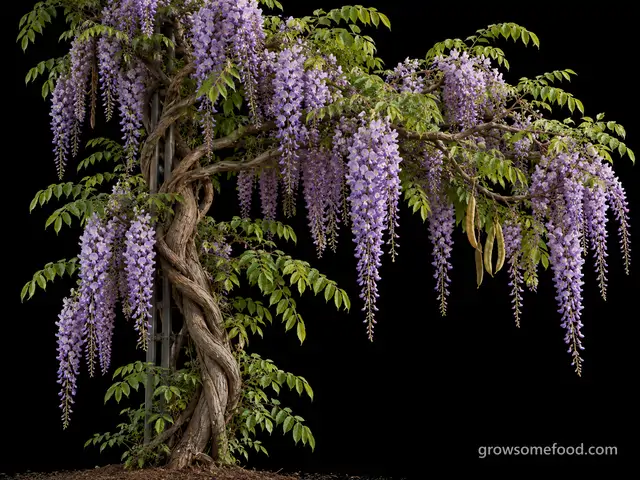
Japanese Wisteria
The long-clustered Asian wisteria - just as smothering and tree-girdling as its Chinese cousin, and the two hybridize. Never plant it - grow the native American wisteria instead; this entry is for identifying and controlling it.
Safety notes Japanese wisteria is grown for its flowers, not food, and its seeds and pods are toxic - eating even a couple of the bean-like seeds causes severe stomach pain, vomiting, and diarrhea in people, and they poison pets and livestock, so keep the pods away from children and animals. The bigger problem is structural and ecological: its heavy twining stems girdle and strangle trees and can pull down limbs and whole canopies. Do not plant it - grow native American wisteria instead.
Overview
Japanese wisteria (Wisteria floribunda) is the other beloved-but-invasive Asian wisteria, famous for its extraordinarily long, dripping purple flower clusters. Like Chinese wisteria, it's a serious invasive vine you should never plant. Introduced from Japan for its spectacular bloom, it has escaped across the Southeast and eastern US, where its massive woody stems twine around and girdle trees, its weight pulls down limbs and whole canopies, and it blankets both the forest floor and the treetops, shading out and killing native plants.
It behaves almost identically to Chinese wisteria - resprouting from roots and runners, rooting as it runs along the ground, and setting toxic bean-like seeds in velvety pods - and to complicate matters, the two Asian species hybridize, blurring the lines in the wild. The happy solution is the same: plant the well-behaved native American wisteria (Wisteria frutescens) instead and keep the flowers without the invasion. This entry is here to help you recognize and control Japanese wisteria (and tell it from its Chinese cousin and the native), and to point you to what to plant instead.
The one thing to knowJapanese wisteria (Wisteria floribunda) is the other beloved-but-invasive Asian wisteria, famous for its extraordinarily long, dripping purple flower clusters.
Quick facts
For identification. Not a growing guide.
- Height
- 30 ftRange: 10–75 ft
- Spread
- 30 ftRange: 10–100 ft
- Cold
- Takes hard frostdamaged below -20°F
- Heat
- Struggles above 105°F
- Life cycle
- Perennial, lives about 50 years
- Self-sows
- Yes. Never let it set seed.
- Habitat
- Full sun · Part sun · Part shade, well-drained soil
Through the year
A field guide through time
Explore the stages to recognize this plant throughout its life.
Stage 1 of 3 · The recurring year
Twining, girdling growth (identify & control)
Apr to Oct, every year
Know this stage
-
Recognize it: 13-19 leaflets, racemes with the leaves
Japanese wisteria is a large, woody, deciduous vine with compound leaves of 13-19 leaflets - more than Chinese wisteria's 7-13 (commonly 9-11) - and very long racemes that open with the leaves. Trust those two first. Twining direction is a secondary check and only works if you fix the viewpoint: viewed from above, Japanese stems twine clockwise and Chinese counterclockwise. Old stems can be as thick as your arm, wrapping and girdling trunks.
-
Cut vines off trees, cut-stump-treat, dig runners
Cut the climbing stems at the base to relieve the trees (removing a section so regrowth is obvious), then treat cut stumps with herbicide - cutting alone triggers vigorous resprouting from roots and runners. Dig or grub out roots and runners where feasible, and pull seedlings. Wear gloves, bag pods, and follow up for several seasons; it is persistent.
Months are typical seasonal windows; climate, variety, and plant age can shift them.
Hazards
Rooting Runners, Seed & ResproutingSeverity High DisordernowSeason: Apr–NovVines running and rooting along the ground, clones expanding outward from old plantings, and vigorous resprouting after cutting.
Vines running and rooting along the ground, clones expanding outward from old plantings, and vigorous resprouting after cutting.
Cut-stump herbicide plus foliar treatment of regrowth, grub out runners and roots, and persist for several seasons against resprouts.
Remove fruiting vines to cut off seed; kill roots and rooted runners rather than just cutting; don't let cut stems root.
Why it's hard to remove and keeps expanding: Japanese wisteria roots wherever stems touch soil, runs along the ground to spread a clone outward, and resprouts aggressively from roots, runners, and cut stumps, so cutting alone rebuilds it; it also hybridizes with Chinese wisteria.
Tree Girdling & Canopy Smothering (ecological/structural harm)Severity High DisordernowSeason: Apr–OctThick woody vines wrapping and girdling trunks, vines flowering high in the canopy, and dense vine mats smothering the ground and pulling down limbs.
Thick woody vines wrapping and girdling trunks, vines flowering high in the canopy, and dense vine mats smothering the ground and pulling down limbs.
Cut climbing stems off trees, cut-stump-treat with herbicide (it resprouts if only cut), dig runners, treat regrowth, and follow up for several seasons.
Never plant it (grow native American wisteria); cut vines off valuable trees early; control small infestations before they climb.
The core hazard is ecological and structural: Japanese wisteria's heavy twining stems girdle and strangle trees, its weight pulls down limbs and whole canopies, and it blankets the forest floor and treetops, killing or suppressing native trees, shrubs, and wildflowers.
Toxic Seeds, Pods & FoliageSeverity Medium DisordernowSeason: Aug–JanChildren, pets, or livestock near the velvety bean-like pods and hard seeds, which persist into winter and split open to scatter seeds.
Children, pets, or livestock near the velvety bean-like pods and hard seeds, which persist into winter and split open to scatter seeds.
For any ingestion, contact poison control or a veterinarian; remove pods to reduce the hazard.
Keep pods and seeds away from children and animals; bag and dispose of fallen pods rather than composting them, and don't let seeds spread - on the invasive Asian wisterias that matters twice over. Discourage pets and livestock from chewing bark or stems on a trained vine.
A direct hazard to people and animals: every part of a wisteria is toxic and the seeds and pods are the worst of it - eating even a couple of the bean-like seeds can cause severe stomach pain, vomiting, and diarrhea in people, and they poison pets and livestock. Bark, stems and leaves carry the same compounds more weakly, so no part of any wisteria is a food, a tea, or a browse for animals. This holds for the native American wisteria as much as for the Asian ones.
Grower tips
Notes from growers, tagged with the zone they grow in. A person reads every post before it appears.
Nobody has posted about Japanese Wisteria yet.
Free account. Your post shows your grower name and zone, never your email.