Add it to your home screen and it opens full screen: no browser bars, one tap away, and everything stays signed in. Free, nothing to download from an app store.
- Tap the Share button in your browser
- Scroll down and choose “Add to Home Screen”
- Open GrowSomeFood from your home screen
- Open your browser’s menu
- Choose “Add to Home screen” or “Install app”
- Open GrowSomeFood from your home screen
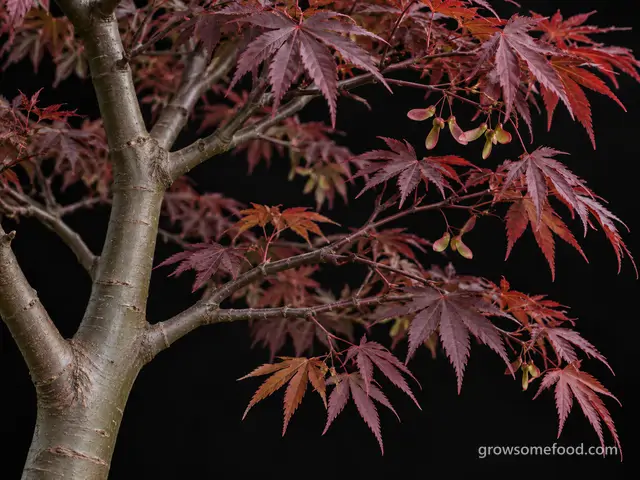
Japanese Maple
The most-planted small ornamental tree in America and the most-misplaced: a cool-woodland understory maple grown for its silhouette, its cut leaves, and its autumn colour. Nearly every one that struggles is standing in too much afternoon sun with too little water.
Japanese maple is not a poisonous plant - no part of it is toxic to people, dogs, or cats, and it is safe to handle and prune. One cross-check matters near livestock: the maple leaves that cause fatal red-cell damage in horses come from red, silver, and Freeman maple, not from Acer palmatum, and that toxicity has not been shown for Japanese maple - but the safe practice around a paddock is to keep the leaves and prunings of any maple out of it. This is a landscape tree, not a food plant.
Overview
The one thing to knowAcer palmatum evolved as a cool, humid woodland understory tree in Japan, Korea, and eastern China, and it is planted in the middle of hot, sunny, unirrigated lawns from Georgia to Kansas.
The Japanese maple is the tree people plant when a space deserves one thing done beautifully. It is small - anything from a 6-foot weeping mound to a 25-foot layered tree - and it earns its keep in four seasons: an intense scarlet or chartreuse leaf-out in spring, deeply cut foliage all summer, weeks of crimson and gold in autumn, and, once the leaves are down, a branch structure that looks deliberate rather than accidental. Some cultivars add coral-red or lime-green winter bark. There are more than a thousand named forms, which is why two trees sold under the same species name can look almost nothing alike.
It is also, in American gardens, the most misplaced tree there is. Acer palmatum evolved as a cool, humid woodland understory tree in Japan, Korea, and eastern China, and it is planted in the middle of hot, sunny, unirrigated lawns from Georgia to Kansas. Almost every complaint about Japanese maples - brown crisp leaf edges by July, thin growth, dieback - traces back to that single mismatch. Give it morning sun, afternoon shade, shelter from wind, soil that drains, and steady water, and you have an easy, essentially permanent tree. It is not toxic, it is not fussy about feeding, and it does not want to be pruned much. It wants the right place.
Quick facts
- Sprouts in
- 60 days30 to 120
- Soil to sprout
- 65 °F55 to 75
- Life cycle
- Perennial, lives about 100 years
- Seed to save
- About 150 days after planting120 to 180
- Height
- 15 ft6 to 25
- Spread
- 14 ft6 to 25
- Cold
- Takes hard frostdamaged below -20°F
- Heat
- Struggles above 95°F
- Self-sows
- Yes, expect volunteers
Part sun or part shade · medium water · well-drained soil · 15 ft apart (8 to 25) · direct sow or transplant
When to plant
Fall sowing is open for 48 more days. Next: spring, Mar 20 to May 22.
- Direct sow Sep 13 – Nov 8 Open now · 48 days leftAbout 6 weeks before to 2 weeks after your first frost (Oct 25 here)Sow fresh seed outdoors in autumn and let winter provide the cold period. Seedlings vary widely from the parent and take years to show their form, so this route is for growing rootstock or a naturalistic group, not for reproducing a named cultivar.
- Transplant Aug 2 – Sep 27 Closes in 6 daysAbout 12 weeks before to 4 weeks before your first frost (Oct 25 here)Early-fall planting into warm soil establishes roots before winter and is often the better window in the South. Avoid late planting in zones 5-6, where a young tree can be heaved before it anchors.
- Transplant Mar 20 – May 22 Opens in 180 daysAbout 3 weeks before to 6 weeks after your last frost (Apr 10 here)Plant container trees in early spring into well-drained soil with morning sun and afternoon shade. Set the root flare at grade, mulch wide, and water deeply for the first three years.
Frost here: last around Apr 10 (Mar 27 to Apr 24 most years), first around Oct 25. Zone averages, your own yard may run a week or two either way.
Life stages
One stage to settle in, then three that repeat each year. Windows are typical; your zone and weather move them.
Years 1-3 - settling in
The first year after planting- DoPlant at grade in soil that drains, out of afternoon sunDig a hole two to three times as wide as the root ball and no deeper, and set the tree so the root flare - the point where the trunk widens into the roots - sits at or just above the surrounding grade. Japanese maple wants soil that holds moisture but never stays wet, and it will not tolerate a low spot. Do not amend the backfill heavily; use the soil you dug out. Site it where it gets morning sun and afternoon shade, sheltered from drying wind.
- WaterWater deeply and regularly for the first three yearsevery 5 daysA newly planted Japanese maple has a small root system carrying a full canopy, and that mismatch is exactly what causes scorched leaves in its first summers. Soak the root zone deeply once or twice a week through the growing season rather than sprinkling daily, checking the root ball itself, and keep watering into autumn until the ground cools.
- MulchMulch two to three inches wide, and keep it off the trunkA wide ring of shredded bark or leaf mulch keeps the shallow roots cool and moist and is the single most useful thing you can do for a young Japanese maple. Spread it out to the branch tips if you can, and pull it back a few inches from the trunk - mulch piled against bark holds moisture there and invites rot and voles.
- InspectWatch for suckers coming from below the graftNearly every named cultivar is grafted onto a seedling rootstock, and the graft union is the swollen knuckle low on the trunk. Any shoot appearing BELOW that union is rootstock, with plainer, usually greener leaves, and it will outgrow and eventually replace the tree you paid for. Rub or cut those off flush at their point of origin as soon as you see them.
Watch for- Leaf edges browning in the first summers (a small root system, not a disease)
- Rootstock shoots below the graft knuckle
- Mulch or soil piled against the trunk
Spring leaf-out & flowers
Mar to May, every year- InspectThe other season people forget aboutJapanese maples leaf out in an intense flush - scarlet on the red cultivars, chartreuse on the greens - and carry small dangling clusters of tiny purple-red flowers at the same time, followed by winged seeds that redden through summer. Coral bark types are worth a look now too, when the young stems are at their most vivid before the leaves hide them.
- ProtectCover new growth if a hard late frost is comingJapanese maples break bud early, and the soft new leaves are the vulnerable part of the tree - a late freeze blackens them and kills back the shoot tips, though the tree itself recovers and pushes a second flush. If a hard frost is forecast after leaf-out, throw a light sheet over a small tree in the evening. Do not fertilize now to force the tree out of it.
- PruneDo not prune while the sap is runningCuts made from late winter through spring bleed sap heavily. It is more alarming than harmful, but it wastes reserves and makes clean work impossible, so leave the pruners alone from bud swell until the leaves have fully hardened. Structural pruning belongs in the dead of winter; fine thinning belongs in late summer.
Watch for- Late-frost blackening of new leaves and shoot tips
- Heavy sap bleeding from any cut made now
- Aphids clustering on the soft new shoots
Summer canopy
Jun to Aug, every year- WaterKeep water on it through heat - scorch is the main summer riskevery 5 daysBrown crisp leaf margins in July are a Japanese maple's default complaint, and they mean the leaves are losing water faster than the roots can supply it. Deep, thorough soaks during dry spells, a wide mulch ring, and shelter from hot wind prevent most of it. Containers dry out several times faster than open ground and need checking daily in heat.
- PruneFine thinning once the leaves have hardenedFrom about midsummer, when the season's growth has firmed, you can thin the canopy without heavy bleeding. Take out dead, crossing, and inward-growing twigs and open small windows so light and air reach the interior and the branch structure shows. Never shear a Japanese maple and never top one - the tree is grown for its silhouette, and shearing destroys it and forces a mess of weak shoots.
- FertilizeFeed almost neverJapanese maples grow best lean. Heavy nitrogen produces long soft shoots that scorch, break, and do not harden before winter, and it dulls the leaf colour on red cultivars. An established tree in mulched soil needs nothing at all. If growth is genuinely feeble, use a light slow-release feed once in early spring and nothing after midsummer.
Watch for- Brown crisp leaf margins after a heat wave or a dry week of wind
- A single branch or one side wilting while the rest looks fine (verticillium wilt)
- Bumps and sticky honeydew on twigs and leaf undersides (scale)
Fall colour & winter
Sep to Feb, every year- InspectAutumn colour, then the winter silhouetteThe payoff season: scarlet, crimson, orange, and gold, held for weeks where autumn nights are cool and days are bright. Colour is strongest on trees that have had steady moisture and no late feeding. Once the leaves drop, the branch structure and the bark - coral, green, or near-black depending on cultivar - carry the tree through winter.
- PruneStructural pruning in the dead of winterMidwinter, when the tree is fully dormant and leafless, is the time to work on structure: you can see every branch, and cuts made now bleed far less than cuts made as the sap rises in late winter. Remove dead, damaged, crossing, and rubbing branches, and take out whole twigs at their origin rather than shortening them. Step back constantly - the aim is to reveal the tree's layered form, not to reduce its size.
- ProtectShelter thin bark from winter sun and windJapanese maple bark is thin, and a young trunk standing alone in open winter sun can be sunscalded on its southwest side when warm afternoons are followed by hard freezes. Keep the lower branches on a young tree so they shade the trunk, mulch the root zone, water well into autumn, and where the trunk is exposed use a light-coloured wrap or white latex trunk paint over winter, removing wraps in spring.
Watch for- Vertical splits or loose bark on the southwest side of the trunk in late winter
- Seedlings coming up under the tree - pull them while small
- Voles working under mulch piled against the trunk
Watch out for
6 to know. 2 are high-risk: Verticillium Wilt, Leaf Scorch (sun & drought). 3 are active in September.
Verticillium WiltSeverity High DiseasenowThe disease that kills established Japanese maples, and the reason a single branch dying back is worth investigating rather than just pruning off.
Many trees compartmentalize it and live for years - prune well below the streaked wood, sanitize between cuts, water and mulch, and resist the urge to feed heavily. Never replant a maple in the same spot.
One branch, one limb or one side of a plant wilting, yellowing and browning in summer while the rest carries on normally - the lopsided pattern is the tell - and leaves that wilt and then hang on rather than dropping cleanly. Cut into affected wood and look for olive-green, grey or brown streaking along the grain; in a cut vegetable stem it shows as a ring of discolored dots. On vegetables, lower leaves yellow in a wedge from the margin inward, and the plant wilts at midday but recovers overnight in the early stages.
There is no cure and nothing to spray. On a tree or shrub the aim is to keep it alive long enough to compartmentalize the fungus, which many plants manage for years: prune out dead and wilting branches well below the discolored wood, sanitize the pruners between cuts, water deeply through dry spells, mulch, and feed lightly rather than pushing it with a heavy feed. On vegetables, pull and bin affected plants rather than composting them, and move that crop to clean ground or to containers of fresh mix. Do not replant the same species where one has died.
There is no way to sterilize garden soil of it, so prevention is plant choice and plant vigor. Do not replant a susceptible species where one has already died of it. Grasses, conifers, ginkgo, hawthorn, hornbeam, honeylocust, oak and beech do not get it, and many vegetable varieties carry bred-in resistance - the V in a VFN code on the seed packet. Rotate susceptible vegetables on a long cycle and keep them off ground where the disease has shown. Buy clean stock, avoid wounding roots with spades and machinery, and keep woody plants steadily watered, mulched and only lightly fed, because a vigorous plant walls the fungus off far better than a stressed one.
A soil fungus (Verticillium dahliae and relatives) that enters through the roots and grows upward inside the water-conducting tissue, plugging it from within. The plant is not being eaten or rotted, it is being cut off from its own water supply, which is why the signature symptom is one branch or one side wilting and browning while the rest looks perfectly healthy. Cut into affected wood or stem and the tissue is streaked olive-green, grey or brown. The host range is enormous - maples, redbud, olive, tomato, potato, pepper, eggplant, strawberry and many more - and the fungus survives in soil for years as tough resting structures, so infected ground stays infected. Grasses and conifers do not get it.
Leaf Scorch (sun & drought)Severity High DisordernowThe defining Japanese maple complaint, and effectively a siting diagnosis.
The finely cut laceleaf, variegated, and gold-leaved cultivars burn first; green-leaved uprights take the most sun. Newly planted trees scorch in their first summers simply because the root system has not caught up with the canopy - deep watering and a wide mulch ring carry them through it.
Browning that starts at the leaf edges and tips and spreads inward, with a fairly sharp line between the crisp brown tissue and the green that is still healthy. Leaves and fronds going dry, papery, and crisp rather than soft, yellow, or spotted - that is what separates this from a fungal problem. Damage worst on the side of the plant facing the sun or the prevailing wind and on the most exposed upper leaves, while the shaded interior stays fine. Symptoms appearing sharply after a heat wave, a dry spell, or a bright windy week in winter. Whole leaves or fronds shed early as the plant cuts its losses.
Water deeply, mulch, and improve the shade - that is the whole treatment, because there is nothing here to kill. Leaves that are already scorched will not recover, so trim off badly browned foliage or fronds for appearance if you want to; the crown and roots are usually unharmed and push out fresh growth once conditions improve. On a plant that scorches badly every year the answer is to move it rather than to keep watering harder, because the siting is what is wrong. Some plants respond well to being cut back hard, which brings a clean flush of new foliage. And on plants that naturally die back or brown off late in the season, scorching at the end of a dry summer is normal and needs nothing at all.
Site the plant where it actually wants to be. This is a placement problem far more often than a watering problem, and a shade plant in hot afternoon sun will scorch every summer however much you water it. Give shade and woodland plants part-to-full shade and shelter from hot afternoon sun and drying wind. Keep the root zone consistently moist and mulch it well with leaf litter or another organic mulch, which holds water and keeps the roots cool - the single most useful routine step. Water deeply and thoroughly during dry spells rather than little and often, so moisture reaches the whole root zone. Pay particular attention through the first year after planting, when the root system is small and cannot keep up with the leaves. On evergreens in cold regions, make sure the plant goes into winter well watered, and keep it out of bright, windy, exposed positions.
Leaf scorch is not a disease and there is nothing to spray for it. It is what happens when a leaf loses water faster than the roots can replace it: the tissue farthest from the veins - the margins and the tips - dries out first and turns brown and papery, and the browning works inward while the rest of the leaf stays green. Hot sun, dry soil, drying wind, heat reflected off paving or a wall, a small or damaged root system, and a plant sited somewhere sunnier or drier than it wants are the usual causes, singly or together. It also happens in winter on evergreens, when bright sun and wind pull water out of the leaves while the ground is frozen and the roots cannot resupply. Shade and woodland plants, shallow-rooted plants, and anything recently planted scorch most easily.
Scale & Sooty MoldSeverity Medium PestnowJapanese maple scale and cottony maple scale both turn up on Acer palmatum, and the sticky leaves and black sooty film underneath are usually noticed before the insects.
Being deciduous, this tree takes a dormant-season horticultural oil well - a thorough winter application on bare twigs is the easiest control there is. Test any oil on delicate cultivars first.
Rows of small brown, tan, black, white, or waxy bumps along stems, twigs, leaf midribs, and leaf undersides that do not brush off but can be scraped loose with a fingernail. A sticky shine on the leaves - and on the floor, table, or path beneath the plant - that later turns black with sooty mold. Ants running steadily up and down the stems, since they farm and defend scale for that honeydew; often the first sign anything is wrong. Yellowing leaves, weak thin growth, and dieback of individual branches or canes that are heavily encrusted. On fruit crops, scale covers and sooty mold directly on the fruit. Check the leaf undersides and the shaded inner wood, which is where colonies build up unseen.
Horticultural oil is the main control: it works by smothering, so it has to coat the insects thoroughly - stems, twigs, and leaf undersides - and it usually needs repeating, because the waxy covering shields them and no single pass reaches everything. On deciduous woody plants a dormant-season oil smothers the overwintering stage while the leaves are out of the way, and timing a growing-season spray to the crawler stage, when the young are mobile and uncovered, is far more effective than spraying settled adults. On a small plant or a light infestation, scrub or wipe the scales off by hand, or dab them with a cotton swab of rubbing alcohol. Prune out and destroy badly encrusted wood rather than trying to save it. Wash off the sooty mold once the scale is gone - it lives on the honeydew, not on the plant, and stops once the supply does. Anything you spray must be labeled for the plant, and oils can burn delicate foliage, so test first.
Inspect. Look over leaf undersides and stems regularly - on a crop you pick, every harvest is a scouting chance - and check every new plant thoroughly before you buy it, plant it, or set it beside anything else, because scale almost always arrives on a plant rather than flying in. Quarantine new houseplants for a few weeks. Keep plants unstressed and not over-fertilized, since soft, forced growth is what populations build on. Prune for airflow and light to open up the shaded inner growth where scale hides, and prune out heavily infested wood as routine maintenance - on anything that gets a hard annual pruning, that alone removes most of any buildup. Leave the lady beetles, lacewings, and parasitic wasps alone, since they normally keep scale down to nothing, and keep ants off the plant where you can, because ants protect the colonies from those predators. Indoors, avoid hot, dry, still winter air.
Scale insects are sap-suckers that spend most of their lives immobile, fixed to a stem, twig, or leaf underside beneath a waxy or shell-like cover. They look far more like bumps, blisters, or crusty encrustations than like insects, which is why an infestation is usually well established before anyone notices it. Soft scales excrete large amounts of sticky honeydew that drips onto everything below and grows a black sooty mold - and those blackened leaves are often the first thing a gardener actually sees. Armored scales produce no honeydew but sit under a hard shield that protects them from most sprays. They spread as tiny mobile crawlers in the weeks after hatching, which is the only stage that moves and the only stage that is easy to kill. Populations build on stressed plants, on crowded shaded growth, and above all on plants kept indoors in dry, still air over winter.
Bark Split & Frost CrackSeverity Medium DisorderWorth checking every late winter on a young tree, because the damage is easy to miss until dieback shows up above it the following summer.
Mower and string-trimmer wounds at the base do the same job in summer, which is the other reason to keep a wide mulch ring instead of turf right up to the trunk.
Long vertical splits in the trunk or a main limb, usually on the south or southwest side, most often noticed in late winter. Sunken, discoloured, or loose strips of bark that peel away to show dead tissue underneath. A wound that reopens in the same place each winter, with rolled callus ridges building along both edges. New shoots and leaves blackening after a late spring freeze and then dying back to older wood. Dieback in one part of the canopy the following summer, directly above a damaged strip of trunk.
Leave the wound alone. Do not paint, seal, or tar it - wound dressings trap moisture and make decay worse, and a tree closes its own wounds far better than any product does. Trim away only the loose dead bark hanging from the edges, using a clean knife and cutting back to bark that is still firmly attached, then let callus roll in from both sides over the following seasons. Keep the tree watered, mulched, and unstressed so it can do that work. Prune out shoots killed by a late freeze once you can see clearly what is dead. A crack that reopens every winter means the exposure was never fixed, so shade and shelter for that trunk are the real remedy.
Siting matters most: a Japanese maple with afternoon shade and shelter from winter wind suffers far less trunk injury than one standing alone in an open lawn. Keep the lower branches on a young tree rather than limbing it up, because their shade protects the trunk. Where the trunk is exposed, a light-coloured trunk wrap or white latex trunk paint through winter reflects the low sun that causes sunscald - remove wraps in spring so nothing girdles the trunk or harbours pests. Mulch the root zone to even out soil temperature, water well into autumn so the tree does not enter winter dry, and stop feeding by midsummer so no soft growth is pushed late in the season.
Japanese maples carry thin, smooth bark on a trunk that is often fully exposed on a small, low-branched tree, and that combination invites two cold-weather injuries. Sunscald happens on bright winter days when low sun warms the south or southwest face of the trunk, that tissue comes out of dormancy, and the temperature then crashes after sunset, killing a strip of bark that later sinks, cracks, and peels. Frost cracks are long vertical splits that open on very cold nights, sometimes audibly, as the outer wood contracts faster than the wood inside. A late spring freeze after leaf-out does the same sort of damage to young shoots. None of it is an infection, but an open wound is a doorway for borers and canker fungi.
Japanese BeetlesSeverity Medium PestJapanese maple is a favoured host, and the skeletonized upper canopy of an ornamental specimen is disfiguring in a way it would not be on a shade tree.
Damage is cosmetic on an established tree and the leaves are replaced the following spring; a small or newly planted one is worth hand-picking or netting through the flight.
Clusters of shiny metallic beetles massed together on the upper, sunniest foliage and down inside open blooms, heaviest on warm sunny afternoons from around late June. Leaves reduced to lace, with the veins left intact and the tissue between them gone - unmistakable, and quite different from the ragged chewing of a caterpillar. Ragged, chewed petals and blooms that never open properly. Beetles that let go and drop straight to the ground when you disturb the plant. Feeding damage on ripening fruit, on the plants they also take fruit from. Whole branches going brown and lacy at the top of a plant while the shaded lower growth stays untouched.
Persistent morning hand-picking into soapy water is the most effective home control there is, and on a vigorous established plant the damage is usually cosmetic and needs nothing else. Neem deters feeding rather than killing, and has to be reapplied. For heavy pressure, spinosad or a targeted insecticide labeled for the plant will work - but time any spray away from bloom and apply it at dusk to protect bees, and observe the pre-harvest interval on anything you eat. On flowering plants, some gardeners simply shear the blooms off for a couple of weeks and let the plant rebloom once the wave has passed, which removes the lure as well as the damage. Young plants and young trees are the ones worth defending: a mature tree or an established vine tolerates several weeks of leaf loss without lasting harm.
Hand-picking is genuinely the main defense in a home garden. Go out in the cool of the morning while the beetles are sluggish, hold a tub of soapy water underneath, and knock them in - they drop when disturbed, so most fall straight into it. Do it daily through the flight: because the beetles call each other in, taking them off early stops a plant becoming a beacon. Do not put pheromone or lure traps anywhere near the garden - they demonstrably pull in far more beetles than they catch. And do not count on lawn grub control: milky spore has performed poorly and inconsistently in field trials across most of the US, and treating your own turf does not reduce the adults feeding on your plants, because they fly in from surrounding properties. Where it is practical, row cover or netting through the peak flight excludes them outright. Otherwise riding out the six-to-eight-week wave is a legitimate strategy, since most established plants absorb the damage.
Japanese beetles are metallic green-and-copper beetles about half an inch long that emerge in early summer and feed for six to eight weeks. They feed in aggregating masses - one beetle's feeding releases a scent that draws in more - so a plant goes from untouched to covered in a couple of days. They chew the soft tissue between the leaf veins and leave the veins standing, so the leaf ends up as a brown lace skeleton, and they shred open flowers and sometimes ripening fruit as well. They work the sunniest upper parts of a plant on warm afternoons. The white C-shaped grubs spend the rest of the year in turf and pasture soil eating grass roots, and the adults then fly in from wherever they hatched, which can be some distance away.
AphidsSeverity Low PestAlmost always a brief spring event on the soft new shoots, and the honeydew dripping onto a patio or a parked car is usually the real complaint rather than any harm to the tree.
A hard jet of water and a little patience is the whole response on an established maple - avoid feeding it, since soft nitrogen-fed growth is what draws them.
Dense clusters of tiny insects packed onto shoot tips, flower buds, and the undersides of young leaves. Curled, cupped, or distorted new growth that never opens properly. A sticky shine on the leaves - and on whatever sits under the plant - that later goes black with sooty mold. Tiny white cast skins left behind where a colony has been feeding. Ants running steadily up and down the stems, which is often the first thing you notice. Mottled, streaked, or misshapen leaves that do not grow out can mean a virus the aphids brought with them rather than the feeding itself.
Knock the colonies off with a hard jet of water and repeat every few days - on most plants that alone ends it. Pinch out or prune off the worst-infested tips rather than treating the whole plant. If colonies keep rebuilding, spray insecticidal soap or horticultural oil directly onto the insects, covering leaf undersides, and repeat weekly until they are gone; treat early or late in the day, and never spray a wilted or heat-stressed plant. Avoid broad-spectrum insecticides - they kill the ladybugs, lacewings, and parasitic wasps that were about to solve the problem for you, and aphid numbers usually come back worse afterward. Anything you spray must be labeled for the plant you are treating; follow that label and observe its pre-harvest interval. On anything you eat, wash leaves, heads, and buds well before use, since aphids hide down in crowns, folds, and tight growth.
Go easy on nitrogen: the soft, lush growth that heavy feeding produces is exactly what aphids breed on. Check new growth once a week through spring and early summer so you catch colonies while they are still small, and rub the first few out with your fingers. Leave flowering plants nearby and skip broad-spectrum sprays - ladybugs, lacewings, hoverflies, and parasitic wasps do most of this work for free, and they only stay if there is something for them to eat. Keep ants off the plant where you can, since they protect aphids from those predators. Water steadily so plants are not stressed, and check any new plant over before you bring it home or move it indoors, since aphids usually arrive on something else.
Aphids are small soft-bodied sap-suckers - green, black, gray, pink, or waxy white, and mostly wingless - that gather in dense colonies on the tenderest new growth: shoot tips, buds, and the undersides of young leaves. They breed extremely fast in mild weather, so a few can become hundreds inside a week. Their feeding curls and distorts soft growth, and the sticky honeydew they excrete coats everything below and turns black with sooty mold. Ants often farm and defend the colonies for that honeydew. A few aphids are normal on almost any plant and a healthy plant shrugs them off; only dense, persistent colonies do real damage, and some aphids also spread plant viruses as they feed.
Good & bad neighbors
Plant nearby
-
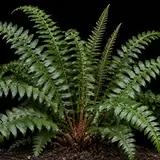
Evergreen fronds hold the ground beneath a Japanese maple all winter once the canopy is bare, without competing hard for the shallow surface roots.
-
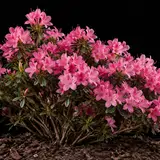
The classic pairing under a Japanese maple: the maple's high light canopy gives exactly the afternoon shade azaleas want, and both are shallow-rooted acid-soil plants that want the bed mulched and left undug.
-
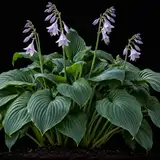
Bold horizontal leaves directly under the fine cut foliage of the maple is the standard shade-garden contrast, and both want the same moist, mulched, part-shaded ground.
-
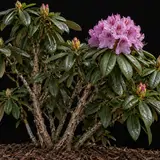
Same shaded, acidic, well-drained bed and the same dislike of cultivation around the roots - and the rhododendron's evergreen bulk fills the space under the maple through the months it stands bare.
- Traditional pairings, thin evidence
-
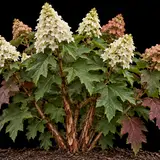
A native shrub for the same part-shade, well-drained conditions, flowering in summer between the maple's spring leaf-out and its autumn colour, then colouring alongside it in fall.
Keep apart
-
Lawn grassTurf pushed right up to the trunk is a slow problem: grass competes with the shallow surface roots for water, and mower and string-trimmer damage to thin Japanese maple bark is a leading cause of decline. Keep a wide mulch ring instead.
Varieties · 10
You pick one when you add Japanese Maple to your garden. Its days to maturity set your harvest window.
Upright Japanese maple 4 varieties
Bloodgood
Upright vase-shaped tree with deep purple-red palmate leaves that hold colour through summer and turn crimson in fall.
redreliablesun-tolerantThe benchmark red upright, and the Japanese maple most Americans picture: 15-20 feet, vase-shaped, holding a deep purple-red through summer better than most red cultivars and turning bright crimson in autumn. More heat- and sun-tolerant than average and widely available at sensible prices, which is why it is planted everywhere - deservedly.
Emperor One (Emperor I)
Upright tree with very dark red-purple leaves and near-black stems, leafing out noticeably later than other red uprights.
redlate-leafingfrost-avoidingA Bloodgood alternative with two genuine advantages: it leafs out one to two weeks later, which often carries it past the late frosts that blacken early-breaking maples, and it holds its dark red colour through summer heat slightly better. Same size and shape, same easy temperament. The sensible choice in a garden with a history of late-spring freezes.
Laceleaf (dissectum) 3 varieties
Crimson Queen
Weeping cascading mound of feathery deep red dissected leaves, wider than tall.
weepingredscorch-proneThe standard red laceleaf: a cascading mound of 8-10 feet, wider than tall, in finely dissected purple-red foliage that holds its colour better through summer than most dissectums, then turns scarlet. Needs afternoon shade and steady moisture - the fine leaves are the first thing in the garden to scorch - and needs no pruning beyond removing deadwood.
Tamukeyama
Strongly weeping mound of finely cut crimson-purple foliage that holds colour through summer heat.
weepingredheat-tolerantvigorousThe laceleaf to plant where summers are hot: an old Japanese cultivar with the best heat and sun tolerance of the red dissectums, holding deep crimson-purple through August where others go bronze and crisp. Vigorous, eventually 8-10 feet with a strongly cascading habit. If you garden in zone 7-8 and want a weeping red laceleaf, start here.
Dwarf Japanese maple 1 variety
Shaina
Dense compact globe of tightly packed small leaves, bright red when new and deep maroon later.
redcontainercompactA tight, congested dwarf sport of Bloodgood reaching only about 4-6 feet in many years, with short internodes and clustered bright red new growth deepening to maroon. Naturally forms a dense globe with no pruning at all, which makes it a good container and small-bed plant, and a workable bonsai subject.
Full moon maple (japonicum / shirasawanum) 2 varieties
Aconitifolium (Acer japonicum)
Broad rounded tree with deeply cut fan-shaped green leaves turning crimson, orange, and gold together in fall.
full-moongreenfall-colorshade-preferringA full moon maple with deeply cut, almost fern-like rounded leaves on a broad 10-15 foot tree, and an autumn display many growers rate the finest of any maple - crimson, orange, and gold all present at once. Wants more shade and steadier moisture than Acer palmatum, and rewards it. Slow, long-lived, and worth waiting for.
Autumn Moon (Acer shirasawanum)
Small upright tree with rounded fan-shaped leaves in chartreuse flushed apricot, turning orange-red in fall.
full-moongoldshade-requiredspecimenA slow, upright full moon maple with nearly circular chartreuse-to-apricot leaves that look backlit even in shade, deepening to orange and red in autumn. The gold foliage burns in any real afternoon sun, so this is a shade specimen - superb where a dark corner needs lifting, and unhappy anywhere bright and hot.
Grower tips
Notes from growers, tagged with the zone they grow in. A person reads every post before it appears.
Nobody has posted about Japanese Maple yet. The first one usually saves someone a season.
Free account. Your post shows your grower name and zone, never your email.