Add it to your home screen and it opens full screen: no browser bars, one tap away, and everything stays signed in. Free, nothing to download from an app store.
- Tap the Share button in your browser
- Scroll down and choose “Add to Home Screen”
- Open GrowSomeFood from your home screen
- Open your browser’s menu
- Choose “Add to Home screen” or “Install app”
- Open GrowSomeFood from your home screen
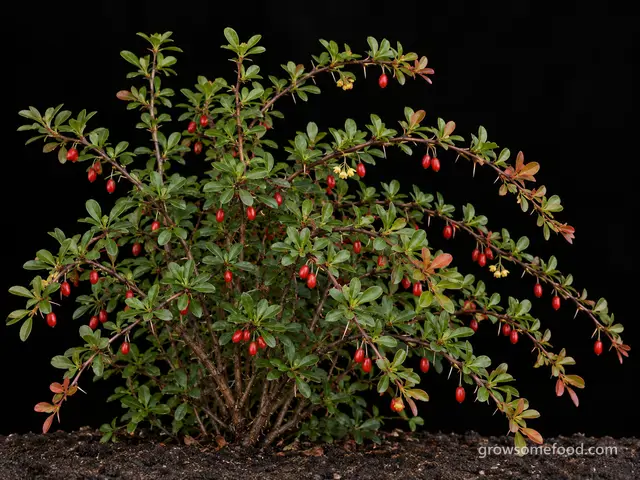
Japanese Barberry
The default thorny foundation shrub of American landscaping, now banned from sale in a growing list of states - it takes over woodlands, changes the soil under it, and harbors markedly more Lyme-infected ticks than the forest around it. The good news: it is the easiest invasive shrub to pull.
The thorns are the immediate hazard - one stiff spine at every node - so wear leather gloves, long sleeves, and eye protection whenever you cut or pull barberry. The subtler hazard is what lives in it: barberry thickets hold humidity at ground level and shelter mice, and repeated studies in New England woods have found far higher densities of blacklegged ticks carrying Lyme disease inside barberry stands than outside. Check yourself for ticks after working in one. The berries are not a food.
Overview
The one thing to know’ Barberry stands change the soil beneath them, raising pH and speeding nitrogen cycling in ways that favor more invaders.
Japanese barberry (Berberis thunbergii) was for decades the safe choice: a tidy, drought-proof, deer-proof, thorny little shrub that came in burgundy and gold, needed nothing, and went in front of half the ranch houses in America. Every one of those qualities turned out to be part of the problem. Deer will not touch it, so in browsed woodlands it inherits the understory. Birds eat the red winter berries and plant it everywhere. It leafs out weeks before anything native and holds its leaves late, so it shades out spring wildflowers and tree seedlings at both ends of the season. Across the Northeast and Midwest it now forms thickets so dense you cannot walk through them.
Two consequences have moved it from ‘aggressive shrub’ to ‘actively removed.’ Barberry stands change the soil beneath them, raising pH and speeding nitrogen cycling in ways that favor more invaders. And repeated field work in New England has found that barberry thickets hold humidity at ground level and shelter white-footed mice, producing substantially higher densities of blacklegged ticks infected with the Lyme bacterium inside barberry than in barberry-free forest. That is an unusual thing to be able to say about a landscape shrub, and it is why removal is now a public-health recommendation as well as an ecological one.
Regulation has followed. Sale is banned in Massachusetts, New Hampshire and Maine, Pennsylvania completed a Class B noxious-weed phase-out of sales in 2023, and several other New England and mid-Atlantic states restrict it - Minnesota permits only a short list of approved low-seed cultivars. Check your own state before you buy anything labeled barberry. And there is one piece of genuinely good news on this page: unlike privet, bush honeysuckle, or autumn olive, barberry has a shallow, compact root system and pulls out.
Quick facts
For identification. Not a growing guide.
- Life cycle
- Perennial, lives about 30 years
- Where it grows
- Full sun · Part sun · Part shade · Shade, well-drained soil
- Height
- 48 in24 to 96
- Spread
- 60 in24 to 96
- Cold
- Takes hard frostdamaged below -30°F
- Heat
- Struggles above 100°F
- Self-sows
- Yes. Never let it set seed.
Through the year
How to recognize it in each season.
Very early leaf-out (the ID and removal window)
Mar to May, every year- Recognize it: one spine per node, spoon-shaped leaves, bright yellow inner woodA dense, arching, thorny shrub 2-6 feet tall with a SINGLE unbranched spine at each node and small, smooth-edged, spoon- or paddle-shaped leaves in tight rosettes just above the spine. The clincher is inside: scratch a stem or a root and the wood underneath is bright chrome yellow (berberine). It is also the first shrub to leaf out in a northeastern woodland, often weeks ahead of anything native, so a green haze low in the understory in late March is usually barberry.
- Pull it now - this is the easy invasive shrubBarberry is the rare invasive shrub with a shallow, compact, fibrous root system: small plants come out by hand in moist soil and mid-sized ones lift with a weed wrench, which is not true of privet, bush honeysuckle, or autumn olive. Work while the barberry is in leaf and the natives still are not, so you can see every plant. Get the whole crown - root left in the ground resprouts - and shake the soil off before you carry it out.
Key signs- A low green haze in the woods weeks before anything native leafs out
- Dense knee- to chest-high thickets along trails, stone walls, and woodland edges
- Seedlings scattered under bird perches, fences, and mature trees
Spring flowers
Apr to May, every year- Small pale-yellow flowers hanging beneath the stemsClusters of two to five small, pale-yellow, six-petaled flowers dangle from the undersides of the arching stems, easy to miss unless you lift a branch. The scent is faint and slightly unpleasant. Every one of these becomes a berry, and a mature shrub can carry thousands, so flowering is the last quiet moment before the plant reloads the seed bank.
- If you cannot remove it yet, at least stop it fruitingCutting a barberry down does not kill it - it resprouts vigorously from the crown - but a shrub cut in late spring will not set that year's berry crop, and that alone keeps birds from carrying it deeper into the woods. Treat this as a holding action while you plan real removal, not as control.
Key signs- Pale-yellow flowers dangling under the arching stems
- Bees working the flowers - each one becomes a bird-spread berry
Red berries and bird dispersal
Sep to Mar, every year- Bright red oblong berries that hang on all winterBarberry fruit is a small, glossy, bright-red oblong berry that ripens in late summer and clings to the bare thorny stems right through winter - which is exactly the point. Birds strip them through fall and winter and drop the seed under every perch, fence line, and forest edge for a mile around. That winter-persistent fruit is how a single hedge becomes a woodland problem.
- Take out the fruiting shrubs firstWhen you can only do part of the job, prioritize the biggest fruiting plants, because they are the seed factories. Bag the cut material with fruit on it rather than dragging it across the property or piling it at the wood's edge, and expect to return for seedlings for several years - barberry seed germinates readily and the bank does not clear in one season.
Key signs- Glossy red oblong berries persisting on bare stems into midwinter
- Flocks stripping fruit in late winter, then seeding it elsewhere
- New seedling flushes each spring under perches and along fences
Winter (the safest working season)
Dec to Feb, every year- Do the heavy clearing in winter, before tick seasonBarberry thickets are the last place you want to be crawling around in June. In cold winters the ticks are inactive, the plant is bare, the red fruit makes it obvious, and the ground is firm - so late fall and winter is the sensible season for cutting, digging, and cut-stump work. Dress for the thorns regardless: leather gloves, long sleeves, and eye protection.
- Winter ID: arching thorny stems with brown-grooved barkWith the leaves gone, look for slender, deeply grooved, brown-to-reddish arching stems, a single sharp spine at each node, red fruit still hanging, and bright yellow wood when you scratch the bark. Native brambles have prickles scattered along the stem rather than one spine per node, and no yellow wood.
Key signs- Red fruit on bare thorny stems - the easiest winter ID there is
- Resprouts from stumps cut in previous seasons
- Deer trails threading through barberry thickets they will not eat
Watch out for
4 to know. 2 are high-risk: Woodland Thicket Invasion (ecological harm), Tick Habitat & Lyme Risk. 4 are active in September.
Woodland Thicket Invasion (ecological harm)Severity High DisordernowA low green haze in a leafless woodland in late March.
A low green haze in a leafless woodland in late March. Dense thorny thickets along trails, stone walls, and edges, thickening year by year. Bare ground and no tree seedlings under the thicket. Scattered seedlings appearing deep in the woods, far from any hedge.
Pull small and mid-sized plants outright (barberry is shallow-rooted and comes out). Cut-stump-treat larger shrubs in late summer to fall, or treat foliage in very early spring while natives are dormant, using a product whose label lists the site; follow that label. Directed flaming of exposed root crowns after cutting is an effective non-chemical option where conditions and local burn rules allow. Then walk the site each spring for several years for the seedling flush.
Do not plant it, including the colored-leaf cultivars, and remove any that is already on the property before it fruits. Pull seedlings while ankle-high - a spring walk with a bag costs an hour and saves a decade.
Barberry does what few invasive shrubs manage: it invades intact forest interior, not just edges and roadsides. It leafs out weeks before native plants and holds its leaves late, capturing light at both ends of the season; it tolerates deep shade; deer will not eat it, so in browsed woodlands it inherits the understory by default; and birds carry its winter-persistent berries far from any planting. The result is a dense, impenetrable, knee-to-chest-high thicket that shades out spring ephemerals, native shrubs, and tree seedlings and stops forest regeneration.
Tick Habitat & Lyme RiskSeverity High DisordernowWorth stating plainly to anyone who keeps a barberry hedge for privacy: this is the one common garden shrub with a documented public-health argument against it.
Dense, humid, shaded barberry thickets along trails, stone walls, and yard edges. Mouse runs and nests in the litter under them. Ticks on yourself, children, or dogs after working in or walking through a stand.
Clear the thicket and follow up on regrowth and seedlings so it does not rebuild. For an actual tick bite, standard advice applies: remove it promptly with fine-tipped tweezers, pulling steadily upward, and see a clinician about symptoms or an engorged tick. This entry is about the habitat, not the medicine.
Remove barberry, which is the intervention the research actually supports, and keep it out of the parts of a property people and pets use. Do the clearing in late fall and winter, when ticks are inactive and the plant is easiest to see. Dress for it - long sleeves, tucked trousers, permethrin-treated clothing if you use it - and check yourself, children, and dogs afterward.
An unusual hazard for a landscape shrub, and a well-documented one. Dense barberry thickets hold humidity high at ground level - which is the limiting factor for blacklegged ticks - and shelter white-footed mice, the main reservoir of the Lyme bacterium. Repeated field studies in New England woodlands have found several times more Borrelia-infected blacklegged ticks inside barberry stands than in barberry-free forest nearby, and fewer after barberry is removed. The shrub does not cause Lyme disease; it builds the microclimate and the mouse habitat that concentrate infected ticks where people and pets walk.
Soil Chemistry Change Under ThicketsSeverity Medium DisordernowThin, bare, compacted litter under a thicket with few spring wildflowers.
Thin, bare, compacted litter under a thicket with few spring wildflowers. Sites that come back to more invasives - garlic mustard, stiltgrass, bush honeysuckle - rather than natives after barberry is cleared.
Remove the barberry and then actively replant. Do not assume natural regeneration: seed or plant native shrubs, grasses, and woodland perennials into the cleared ground and keep pulling the invaders that try to take the opening, for several seasons.
Get barberry out while stands are young and small; the soil effects build with the age and density of the thicket.
Barberry does not merely occupy ground, it edits it. Soils under established barberry stands have consistently been measured with higher pH, faster nitrogen cycling and higher nitrate availability, and altered earthworm and litter communities compared with adjacent native forest floor. Those conditions favor further invasion rather than recovery, so a cleared patch does not automatically bounce back to what it was, and the effects can persist for years after the shrubs are gone.
Deer (browse resistance)Severity Low WildlifenowInverted here: deer barely touch barberry, and that is the problem rather than a selling point.
In heavily browsed woodlands the deer eat every native seedling and shrub around it and leave the barberry standing, so the thicket wins by default. A property with high deer pressure and barberry in the woods will get more barberry every year without anything else changing.
Growth cleanly missing overnight, with the plant browsed back to a level line about as high as a deer can comfortably reach. Ragged, torn stem ends rather than the clean angled cut a rabbit leaves - the single most reliable identifier. Buds and flowers gone while the foliage below is untouched, since deer often take the best part first. Hoof prints and droppings in soft ground near the damage. Repeat visits, with fresh damage each morning once a planting has been found. On young trees, shredded and stripped bark and broken low branches in autumn - that is antler rubbing rather than feeding.
There is no chemical fix, only exclusion and recovery. Get physical protection up immediately after the first damage, because deer return to a known meal, and reinforce or rotate whatever you were relying on before. Most plants regrow from browsing if the crown and roots are intact - feed and water a grazed plant and protect the regrowth while it comes back. What does not recover in the same season is anything whose buds or flowers have been taken, and a young tree whose bark has been rubbed right around the trunk is usually lost. Where deer pressure is genuinely heavy, the honest answer is to fence properly or to grow the plants deer leave alone, rather than to keep replacing losses.
Fencing is the only thing that reliably works. Eight feet is the standard for excluding deer, or two parallel four-foot fences a few feet apart, which they will not jump because they cannot judge the landing. Short of that, cage individual plants: a sturdy wire cage or trunk guard around every young tree, left on until the trunk is thick and the canopy is above browse height, prevents both browsing and antler rubbing and is the single highest-value thing you can do for a young tree. Repellent sprays do help at moderate pressure, but they wash off and deer habituate, so reapply after rain and rotate between different types through the season. Motion-activated sprinklers, scent deterrents, and noise devices work for a while and then stop. Siting matters too: plants close to the house, in daily traffic, and screened behind other planting get browsed less than the same plant out at the boundary.
Deer are the largest garden problem across much of the country, and where pressure is high they set the limit on what you can grow at all. They browse at night and around dawn and dusk, taking tender shoots, leaves, buds, flowers, and fruit within about five feet of the ground, and they come back night after night to anything they have found and liked. Because they have no upper incisors they tear rather than cut, leaving ragged stem ends - that is how you tell deer damage from a rabbit's clean angled cut. In fall, bucks rub their antlers on young trunks and can strip the bark right around a stem, which kills a young tree outright. Palatability varies enormously between plants and between seasons: a herd short of food in late winter eats things it ignores in June, and no plant is truly deer-proof.
Grower tips
Notes from growers, tagged with the zone they grow in. A person reads every post before it appears.
Nobody has posted about Japanese Barberry yet.
Free account. Your post shows your grower name and zone, never your email.