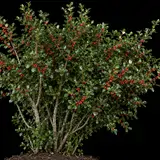
Inkberry

Ilex glabra · Aquifoliaceae
Other Perennial Shrub Ornamental
Native to the eastern and southeastern United States (coastal plain)

Inkberry is a native evergreen hedge and foundation shrub - a boxwood alternative - not a food or drink plant. Its black berries (on females) feed birds but, like other holly berries, are mildly toxic to people and to dogs, cats and horses; eating them causes vomiting and diarrhea. Plant it freely, but site berrying females with pets and small children in mind. The historic 'Appalachian tea' from the leaves is folk practice - holly foliage is not recommended as a beverage. Nothing here is food.

Overview

A tough native evergreen holly with small, smooth, spineless, boxwood-like leaves - the leading native alternative to boxwood for hedges and foundations - that tolerates wet soil, feeds birds with black winter berries, and yields prized 'gallberry' honey.

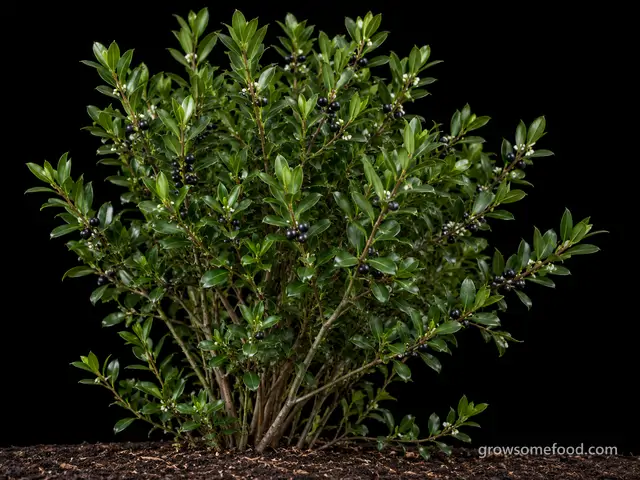
Inkberry (Ilex glabra) is a native evergreen holly increasingly planted as the go-to native alternative to boxwood. Unlike most hollies it has small, smooth, glossy, spineless dark-green leaves that give a fine, neat, boxwood-like texture year-round, and it shears well into hedges, foundation plantings, and edging - a handsome, adaptable evergreen for structure in the garden.

It brings advantages boxwood lacks. It is a true native of the Eastern and Southeastern coastal plain, it tolerates moist to wet, acidic soils (thriving where boxwood would rot), and it is wildlife-friendly: female plants bear small black berries (hence 'inkberry') that feed songbirds and turkeys through winter, while its late-spring flowers are a famous nectar source for the prized light 'gallberry' honey of the Southeast. It is cold-hardy across a wide range (roughly zones 5-9) and largely trouble-free. The one caveat is that older plants can get leggy at the base, so choosing compact cultivars and pruning to renew keeps it dense. As a native, wet-tolerant, wildlife-supporting evergreen hedge, inkberry is hard to beat.

At a glance

Sun
Full sun · Part sun · Part shade
Water
Medium
Spacing
36–72 in (typ. 48)
Mature height
48–96 in (typ. 72)
Start by
Direct sow · Transplant · Cuttings
Frost
Hardy
Germination
60–540 days (typ. 180) @ 60–78 °F (typ. 70)
Spread
48–96 in (typ. 72)
Soil
Tolerates wet soil
Temperature
Damaged below -25°F · struggles above 95°F
Seed ready
150–210 days (typ. 180) (for saving)
Self-sows
Yes — expect volunteers

When to plant

Mar 27 – May 29
Primary TransplantSpring
Plant container inkberry in spring into moist, acidic, well-drained-to-wet soil in full sun to part shade; it makes a fine native evergreen hedge. Plant a female with a male nearby for berries.
Aug 16 – Sep 27
Secondary TransplantFall
Fall planting works well in milder zones; keep the soil moist and mulch the roots until dormancy.
Oct 11 – Nov 8
Possible Direct sowFall
Holly seed is slow and erratic (double dormancy, up to a year or more), so cuttings and transplants are far more practical than seed for this evergreen.

Zone 7a typical frost: last Apr 10 · first Oct 25 (spring frost runs Mar 27–Apr 24 in a typical spread of years)

Life stages

  1. Years 1-2 - rooting in day 0–300 from transplant
    • Keep evenly moist while establishingevery 6 d
      Inkberry is a wetland-edge holly that likes moist, acidic soil - keep a new plant evenly watered through its first two years and never let it dry out badly. It tolerates wet ground and is more moisture-loving than boxwood, the shrub it often replaces.
    • Mulch and pick your form and sex
      Mulch to conserve moisture and keep the roots cool. For the black berries (bird food), plant a female with a male nearby; for a pure evergreen hedge, sex does not matter. Named cultivars are nearly all female selections, so ask the nursery for a male by sex rather than by cultivar name. Inkberry suckers modestly and can get leggy at the base over time - choose compact cultivars for tidy hedges.
    Dry or alkaline soil (it wants moist, acidic ground)Legginess at the base over time (choose compact cultivars, prune to renew)
  2. Late-spring flowers (honey plant) May, Jun (yearly)
    • Small greenish-white flowers feed bees
      Small greenish-white flowers open along the stems in late spring - inconspicuous but a valuable bee plant, and famously the source of prized light 'gallberry' honey in the Southeast. Inkberry is dioecious, so only female plants (with a male nearby) go on to set the black berries.
    Bees working the flowers (a noted honey plant)Only female plants setting berries
  3. Evergreen growth & shearing Apr, May, Jun, Jul, Aug (yearly)
    • Shear as a hedge or foundation shrub
      Inkberry takes shearing well and is a leading native evergreen alternative to boxwood for hedges, foundations, and edging - clip in the growing season to keep it dense. Prune the base and interior to prevent the legginess older plants can develop, or start with a compact cultivar.
    • Neat evergreen foliage
      The small, smooth, glossy, spineless (unlike most hollies) dark-green leaves give a fine, boxwood-like evergreen texture year-round. Growth is moderate; few pests trouble it in the acidic, moist soils it prefers.
    Legginess and bare bases on older plants (prune to renew or choose compact forms)Chlorosis in alkaline soil
  4. Winter - evergreen with black berries Jan, Feb, Nov, Dec (yearly)
    • Small black berries feed winter birds
      Female plants carry small black (rarely white) berries that persist into winter, giving the plant its name ('inkberry') and feeding songbirds, turkeys, and other wildlife through the cold. The plant stays glossy and evergreen all winter for reliable structure.
    • Main hard-pruning and renewal window
      Late winter is the time for heavier shaping or renewal pruning of a leggy or overgrown plant; inkberry resprouts from old wood, so it renews and refills reasonably well.
    Birds taking the black berries through winterOvergrown or leggy plants needing renewal pruning

Watch out for

Legginess & Bare Base Medium DisorderApr, May, Jun, Jul

Inkberry's most common shortcoming: with age, plants naturally lose their lower leaves and become open and leggy at the base, especially the straight species, detracting from its use as a full hedge.

Watch for: Bare, twiggy lower stems and an open, thin base on older plants, with foliage concentrated at the top.

Prevent: Choose naturally compact cultivars (Shamrock, Gem Box, Densa), and prune the interior and lower growth to encourage density from an early age.

Treat: Prune to renew - cut back harder in late winter to force fuller regrowth from the base; the plant resprouts from old wood.

No Berries (Dioecious / No Pollinator) Low DisorderJan, Nov, Dec

American persimmon is usually dioecious - trees are male or female, and only females bear fruit, generally needing a male within a few hundred feet to pollinate them. A lone male, or a female with no pollinator, produces no crop, a common surprise for new growers.

Watch for: A healthy, flowering tree that never sets fruit year after year - either a male tree, or a female with no male nearby.

Prevent: Plant both a male and a female (or a self-fruitful cultivar like 'Meader'); when buying seedlings, expect roughly half to be non-fruiting males, and site a known male within pollination range of females.

Treat: Add a male pollinator (or graft a male branch onto a female tree, or plant a self-fruitful cultivar); nothing else will make a lone female or a male tree fruit.

The named inkberry cultivars in the trade are nearly all female selections, so the male usually has to be sourced separately - nurseries often sell males unnamed or simply as 'male inkberry', and a seedling-grown species plant can be either sex. Ask for a male Ilex glabra by sex rather than by cultivar name, buy one in flower if you can, and plant it close enough that the same bees work both. One male serves several females.

Chlorosis (Alkaline or Dry Soil) Low DisorderMay, Jun, Jul

Yellowing between the leaf veins can appear in very alkaline soils, where the plant struggles to take up iron; wax myrtle prefers acidic to neutral ground and rarely needs feeding since it fixes nitrogen.

Watch for: Fronds paling to yellow-green while veins stay greener, weak stunted growth, especially in limy or high-pH soils.

Prevent: Plant in naturally acidic soil, amend generously with organic matter, and mulch with acidifying materials like pine straw and leaf mold.

Treat: Acidify the root zone with organic matter and appropriate soil amendments over time; in strongly alkaline ground, relocate the fern to a more acidic, wet spot.

Good & bad neighbors

Plant nearby
Yaupon HollyTwo native evergreen hollies - inkberry with black berries and yaupon with red - blend well in an evergreen native hedge or border with staggered berry color for birds.
Virginia SweetspireBoth tolerate moist to wet acidic soil, pairing inkberry's evergreen structure with sweetspire's fragrant flowers and fall color in a rain garden or damp native border.
ButtonbushBoth thrive in wet sites, combining inkberry's evergreen hedge and honey-plant flowers with buttonbush's pollinator blooms around a pond edge or rain garden.
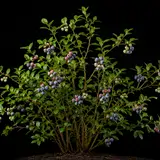
BlueberryBoth love moist, acidic soil, so they pair naturally - inkberry's evergreen structure alongside blueberry's fruit and fall color in an acidic native planting.
Keep apart

Varieties · 4

Densa / CompactaZones 5a–9b

Dense, compact evergreen shrub with dark foliage and black berries on female plants.

cultivarcompactfemaleberriesdensehedge

Compact female selections (such as 'Densa' and 'Compacta') that stay denser and lower than the species and bear black berries with a male nearby. Reliable, well-behaved choices for berrying native evergreen hedges and masses with less legginess.

Gem BoxZones 5a–9b

Small, dense, rounded evergreen shrub closely resembling a boxwood ball, with fine dark leaves and small black berries when pollinated.

cultivardwarfboxwood-lookdensesmall-leavesfemaleberries

A dwarf cultivar bred specifically as a boxwood look-alike: small dark leaves, a naturally dense, rounded, compact habit under 3 feet, and good density to the base - ideal for low hedges, edging, and foundation plantings replacing boxwood. It is sold as a FEMALE selection, so it sets its small black berries only when a male inkberry grows nearby, and it will not pollinate anything itself. Holly sexes are easy to mislabel - if berries are the point, confirm the sex on the tag at purchase rather than assuming it.

Inkberry (Ilex glabra)Zones 5a–9b

Rounded evergreen shrub with small smooth dark-green spineless leaves and, on females, small black berries.

speciesnativeevergreenboxwood-alternativewet-tolerantdioeciousbird-planthoney-plant

The wild species: a native evergreen holly 5-8 feet tall with small, smooth, spineless glossy leaves, tolerant of wet acidic soil, dioecious (female plants bear black berries). The standard for native evergreen hedging and a famed gallberry honey plant; can get leggy at the base with age, so compact cultivars are often preferred.

ShamrockZones 5a–9b

Compact, dense, rounded evergreen shrub with neat dark foliage, fuller at the base than the species.

cultivarcompactdenseslower-legginesshedgefemale

A popular compact cultivar with a denser, more uniform, slower-growing habit that resists the legginess of the species better, staying full to the base longer. A female clone that bears black berries with a pollinator nearby; a top choice for tidy native evergreen hedges.

Grow

Adaptable and easy in full sun to part shade and moist, acidic soil - it tolerates wet ground where boxwood fails. Plant a female with a male for berries, and choose compact cultivars for tidy, dense hedges.

Inkberry is an adaptable, easygoing native evergreen. It grows in full sun to part shade and prefers moist, acidic, humusy soil, tolerating wet and periodically boggy ground that would kill boxwood - one of its key advantages - while also handling average garden soil that does not dry out badly. It does dislike dry, alkaline conditions, where it can become chlorotic. It is cold-hardy across a wide range, roughly zones 5-9.

Two things to plan for. First, for the black berries (bird food and winter interest), plant a female with a male nearby, since it is dioecious - for a pure green hedge, sex does not matter. Second, be aware inkberry can get leggy and open at the base as it ages and suckers modestly; choosing a compact cultivar (like 'Shamrock' or 'Gem Box') and pruning to keep it dense avoids the bare-legged look older plants can develop. Plant it in spring or fall in moist, acidic soil, water while establishing, mulch the roots, and it settles into a dependable, low-maintenance native evergreen for hedging and structure.

Care

Low-maintenance and shear-tolerant: keep it moist and acidic, shear or prune to maintain density (older plants can go leggy), and enjoy a trouble-free native evergreen. Manage modest suckering as needed.

Inkberry needs little care once established in the right soil. Keep it moist and acidic - water in dry spells (it dislikes drought), mulch to conserve moisture and keep the roots cool, and avoid alkaline conditions that cause yellowing. It rarely needs much feeding, and pests and diseases are few in its preferred acidic, moist soils.

Its main care is pruning for density. Inkberry takes shearing well, so clip hedges and foundation plants to keep them tight; more importantly, because plants can become leggy and bare at the base over time, prune the interior and lower growth to encourage fullness, or renew an overgrown plant with a harder late-winter cutback (it resprouts from old wood). Starting with a naturally compact cultivar reduces this maintenance considerably. Manage its modest suckering to control spread. That is essentially the whole routine - keep it moist and acidic, prune to keep it dense, and otherwise enjoy a native evergreen that asks little and gives year-round structure, winter berries, and honey-plant flowers.

Propagation & seed saving

Easiest from cuttings, suckers, or a nursery transplant (which also lets you choose a berry-bearing female or a compact cultivar); the seed is slow and erratic like other hollies.

Inkberry is propagated most practically from cuttings, its rooted suckers, or a nursery transplant. Semi-hardwood cuttings taken in summer root reasonably well and give plants of known sex identical to the parent - the way named cultivars like 'Shamrock' and 'Gem Box' are reproduced - which matters when you want a berry-bearing female or a specific compact form. Digging rooted suckers is another easy route to identical plants.

From seed, inkberry is slow and stubborn like other hollies: the seed has a deep double dormancy and can take a year or more to germinate, with unknown sex until the plants mature. Seed is therefore mainly for growing many plants for naturalizing rather than for the garden. For most gardeners, a nursery plant or a rooted cutting - chosen female for berries and a compact cultivar for a tidy hedge - is the sensible way to add inkberry. Buying blooming-size plants also lets you match a female to an available male for pollination.

Nutrition

Not a food plant (its berries are mildly toxic to people); grown for structure and ecology. It is a strong wildlife shrub - black berries feed winter birds, and its flowers are the source of prized 'gallberry' honey.

Inkberry is not a food plant - its black berries are mildly toxic to people (like other holly berries) and are for the birds, not the table, and the plant is grown for evergreen structure rather than food. Its value beyond the landscape is ecological, and notable.

Its black winter berries (on female plants) are an important cold-season food for songbirds, turkeys, and other wildlife, arriving when other food is scarce, and the dense evergreen provides cover and nesting habitat. Uniquely, inkberry is also a celebrated honey plant: its late-spring flowers are the source of light, mild, slow-to-granulate 'gallberry' honey (from the plant's old name 'gallberry'), a prized specialty honey of the Southeastern coastal plain that beekeepers value highly. So while inkberry feeds no one at the dinner table, it feeds winter birds, shelters wildlife, and supports honeybees and beekeepers - an ecologically generous native that doubles as a refined evergreen hedge. Few boxwood substitutes offer anywhere near this wildlife and pollinator value.

History

A coastal-plain native long known as 'gallberry' for its bitter berries and famous as a honey plant; its leaves saw folk use as a tea substitute (history, not a recommendation), and it has recently risen as the leading native evergreen alternative to boxwood.

Inkberry has been a familiar shrub of the Eastern and Southeastern coastal plain for a long time, growing in wet pine flatwoods, bogs, and sandy woods. Its old common name 'gallberry' refers to the bitter black berries, and the plant has long been prized by beekeepers for the light, high-quality gallberry honey its flowers yield - historically an important honey crop in the Southeast. Its leaves were also used in folk practice as a tea substitute ('Appalachian tea'), though it is a lesser relative of its caffeine-bearing cousin yaupon in that regard. Treat that as history rather than a recipe: holly foliage carries saponins, it is not recommended as a beverage, and nothing on this shrub is a food or drink.

In modern horticulture, inkberry has risen to prominence for a very contemporary reason: the search for a native alternative to boxwood, especially as boxwood blight has threatened that classic hedge plant. With its small, smooth, spineless, boxwood-like evergreen leaves, its shear tolerance, and its native status and wildlife value, inkberry has become a leading recommendation for native evergreen hedges and foundations, and breeders have introduced compact, dense cultivars to address its tendency toward legginess - securing its place as a modern landscape staple with deep regional roots.

Troubleshooting

The main issues are legginess and bare bases on older plants (prune to renew or start compact), chlorosis in alkaline or dry soil, no berries without a male pollinator, and stress in drought - it wants moist, acidic ground.

Leggy, bare at the base, thin: the classic inkberry complaint - older plants naturally lose lower leaves and open up; prune the interior and lower growth to force density, renew an overgrown plant with a harder cutback, or start with a naturally compact cultivar ('Shamrock,' 'Gem Box,' 'Densa'). Yellowing leaves (interveinal): chlorosis, usually from alkaline soil (it needs acidic ground) or dry, stressed conditions - lower the pH and keep it moist. No black berries: only female plants fruit, and only with a male nearby; a berryless plant may be male or lack a pollinator. Leaf drop, stress, scorch: often drought - inkberry is moisture-loving and suffers in dry soil; water and mulch. Sparse growth in deep shade: give more sun for a denser plant. Pests and diseases are generally few in its preferred acidic, moist soils. Nearly every 'problem' comes down to legginess (manage by pruning or cultivar choice), soil pH and moisture, or the need for a male pollinator for berries.

Growing across climates

Cold-hardy and adaptable across zones 5-9, tolerant of wet soil, cold, and Southeastern heat and humidity; its main limits are dry and alkaline soils rather than climate - it wants moist, acidic ground.

Inkberry is hardy and adaptable across a wide range, roughly zones 5-9, spanning the Eastern and Southeastern coastal plain and beyond. Zones 6-9 (much of its heartland): it thrives in the heat, humidity, and wet acidic soils of the Southeast, making a dependable native evergreen hedge and a valued honey plant; in the warm South it is fully evergreen and reliable. Zones 5 and cooler areas: it is notably more cold-hardy than boxwood or many broadleaf evergreens, holding up in Northern winters (though foliage may bronze in cold, exposed sites), which is part of its appeal as a native boxwood substitute across the East.

Its tolerance of wet soil and cold sets it apart, letting it succeed in low, damp, acidic sites and cold gardens where other evergreen hedges fail. Its real limits are cultural rather than climatic: it dislikes dry and alkaline soils, becoming chlorotic and stressed, so it needs moist, acidic ground. Given those conditions, inkberry is one of the most climate-resilient native evergreen shrubs for hedging and structure across a broad swath of the country.

Grower tips

No grower tips for Inkberry yet. Yours could be the first.

Connection interrupted

Reconnecting to GrowSomeFood

Keep this page open. We are trying to restore your garden session.

Attempt of . Retrying automatically.

Still offline

Could not reconnect

Your phone may have switched networks or gone to sleep. Try again when the signal is steady.

Session expired

Reload to continue

This garden session is no longer available on the server. Reloading will start a fresh session.