
Add it to your home screen and it opens full screen: no browser bars, one tap away, and everything stays signed in. Free, nothing to download from an app store.
- Tap the Share button in your browser
- Scroll down and choose “Add to Home Screen”
- Open GrowSomeFood from your home screen
- Open your browser’s menu
- Choose “Add to Home screen” or “Install app”
- Open GrowSomeFood from your home screen

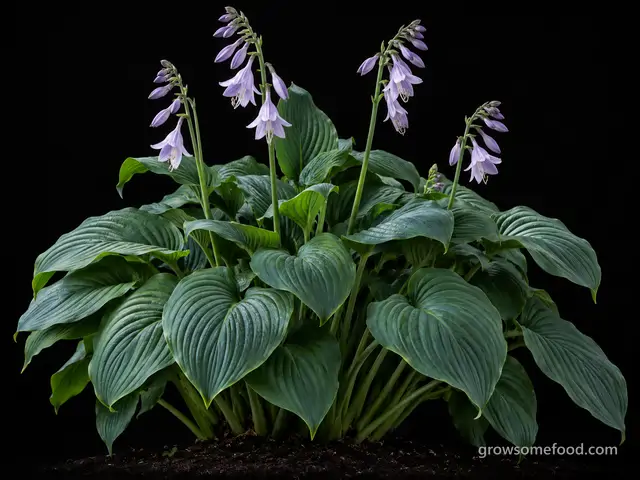
Hosta
The king of the shade garden: bold, sculptural mounds of blue, gold, green, or variegated leaves that thrive where flowers won't, live for decades, and ask almost nothing - as long as you can outwit the slugs and (especially) the deer.
Safety notes Grown purely as an ornamental foliage plant. Handling is safe, but hostas contain saponins, are treated here as non-edible, and are toxic to cats, dogs, and horses (vomiting, diarrhea). The young furled shoots ('urui') are eaten in Japan - where every spring they are confused with false hellebore (Veratrum), whose alkaloids cause violent vomiting, a dangerously slow heart rate, and low blood pressure within hours. Eat no furled shoot you did not plant. Grow hosta for its leaves, not your plate.
Overview
The hosta is the defining plant of the shade garden - and the answer to the eternal question 'what can I grow where nothing flowers?' Grown almost entirely for its foliage, a hosta builds a bold, sculptural mound of leaves in an astonishing range of blues, chartreuse and gold, deep greens, and crisp variegations, in sizes from teacup miniatures to shoulder-high giants five feet across. It thrives in the part-to-full shade where sun-lovers sulk, tolerates deep cold (zone 3), lives for decades, and demands so little care it's a favorite of beginners and collectors alike (there are thousands of registered varieties and a devoted society).
Quick facts
- Height
- 18 inRange: 6–36 in
- Spread
- 30 inRange: 10–72 in
- Cold
- Takes hard frostdamaged below -40°F
- Heat
- Struggles above 90°F
- Life cycle
- Perennial, lives about 30 years
- Soil
- Consistently moist
- Water
- Medium
- Plant spacing
- 24 inRange: 12–48 in
When to plant
Nothing is open today. Spring transplanting opens 5 months, Mar 27 to May 22.
- Transplant Mar 27 – May 22 Opens in 159 daysAbout 2 weeks before to 6 weeks after your last frost (Apr 10 here)Plant divisions or containers in spring into part-to-full shade and rich, moist, humusy soil. Spring planting lets the crown settle before summer heat; keep evenly moist to establish.
- Transplant Aug 23 – Sep 27 Opens in 308 daysAbout 9 weeks before to 4 weeks before your first frost (Oct 25 here)Early fall planting or division works well - several weeks before hard freeze so roots establish. Hostas are among the most forgiving perennials to move.
Frost here: last around Apr 10 (Mar 27 to Apr 24 most years), first around Oct 25. Zone averages, your own yard may run a week or two either way.
Life stages
Establish, grow, repeat
Getting established and returning each season are different parts of the story.
Stage 1 of 4 · Getting established
Year 1 - rooting in
Day 0 to 75 after transplanting
Care at this stage
-
Keep the soil evenly moist to establish
Hostas want consistently moist (never waterlogged) humus-rich soil, especially the first season and in any dry spell. Big blue and gold varieties in more sun need the most water.
-
Mulch with compost or leaf mold
A 2-inch mulch of compost or shredded leaves conserves moisture, feeds the soil, and mimics the woodland floor hostas evolved on. Keep it just off the crown.
Months are typical seasonal windows; climate, variety, and plant age can shift them.
Watch out for
5 to know. 2 are high-risk: Deer (browse resistance), Slugs & Snails. None are active in October.
Deer (browse resistance)Severity High WildlifeSeason: Apr–SepGrowth cleanly missing overnight, with the plant browsed back to a level line about as high as a deer can comfortably reach.
Hostas are among deer's absolute favorite plants - deer candy - and a herd can graze a whole bed to bare stubs in a single night, then return nightly for the regrowth. This is the single biggest obstacle to growing hostas in rural and suburban gardens. Grazed plants usually regrow that season if the crown is intact, but protect the regrowth immediately.
Growth cleanly missing overnight, with the plant browsed back to a level line about as high as a deer can comfortably reach. Ragged, torn stem ends rather than the clean angled cut a rabbit leaves - the single most reliable identifier. Buds and flowers gone while the foliage below is untouched, since deer often take the best part first. Hoof prints and droppings in soft ground near the damage. Repeat visits, with fresh damage each morning once a planting has been found. On young trees, shredded and stripped bark and broken low branches in autumn - that is antler rubbing rather than feeding.
There is no chemical fix, only exclusion and recovery. Get physical protection up immediately after the first damage, because deer return to a known meal, and reinforce or rotate whatever you were relying on before. Most plants regrow from browsing if the crown and roots are intact - feed and water a grazed plant and protect the regrowth while it comes back. What does not recover in the same season is anything whose buds or flowers have been taken, and a young tree whose bark has been rubbed right around the trunk is usually lost. Where deer pressure is genuinely heavy, the honest answer is to fence properly or to grow the plants deer leave alone, rather than to keep replacing losses.
Fencing is the only thing that reliably works. Eight feet is the standard for excluding deer, or two parallel four-foot fences a few feet apart, which they will not jump because they cannot judge the landing. Short of that, cage individual plants: a sturdy wire cage or trunk guard around every young tree, left on until the trunk is thick and the canopy is above browse height, prevents both browsing and antler rubbing and is the single highest-value thing you can do for a young tree. Repellent sprays do help at moderate pressure, but they wash off and deer habituate, so reapply after rain and rotate between different types through the season. Motion-activated sprinklers, scent deterrents, and noise devices work for a while and then stop. Siting matters too: plants close to the house, in daily traffic, and screened behind other planting get browsed less than the same plant out at the boundary.
Deer are the largest garden problem across much of the country, and where pressure is high they set the limit on what you can grow at all. They browse at night and around dawn and dusk, taking tender shoots, leaves, buds, flowers, and fruit within about five feet of the ground, and they come back night after night to anything they have found and liked. Because they have no upper incisors they tear rather than cut, leaving ragged stem ends - that is how you tell deer damage from a rabbit's clean angled cut. In fall, bucks rub their antlers on young trunks and can strip the bark right around a stem, which kills a young tree outright. Palatability varies enormously between plants and between seasons: a herd short of food in late winter eats things it ignores in June, and no plant is truly deer-proof.
Slugs & SnailsSeverity High PestSeason: Apr–SepIrregular ragged holes chewed out of the middle of leaves and along the edges - not the clean-edged cuts a caterpillar leaves.
The defining hosta pest: they rasp ragged holes between the leaf veins, worst on thin-leaved varieties, and a bad infestation can lace an entire mound. Variety choice is the strongest lever here - thick-substanced blues and heavy-textured golds are markedly slug-resistant. Clear the fall foliage where the eggs are laid, and in a wet climate expect to manage rather than eradicate.
Irregular ragged holes chewed out of the middle of leaves and along the edges - not the clean-edged cuts a caterpillar leaves. Seedlings that vanish overnight, or that are cut off at soil level with nothing left behind. Silvery dried slime trails across leaves, soil, pots, and paving in the morning: this is the giveaway that tells you it was mollusks rather than an insect. Chewed pits in ripe fruit, especially where it rests on the ground. Damage that shows up on the lowest, dampest leaves first and gets worse after rain or evening watering. Turn over a board, an upturned pot, or a clump of dense mulch during the day and look for the animals themselves sheltering in the cool underneath.
Hand-picking works and costs nothing: go out an hour after dark with a headlamp, drop what you find into soapy water, and repeat nightly for a week or two - persistence is what wins, not any single product. Shallow beer traps sunk to soil level catch them too, but need emptying and refilling daily to be worth anything. Iron-phosphate bait is the standard control and is far lower-risk around pets and wildlife than the old metaldehyde products, but it is not harmless: many formulations include EDTA, and a dog that eats a quantity of pellets can develop iron toxicosis. Scatter it thinly per the label, never in piles, and keep dogs off a baited bed. Clear fallen foliage and debris in autumn, where the eggs are laid. In a wet climate this is a population you manage each season rather than one you eradicate - and on most established plants light grazing is cosmetic and needs nothing at all.
Take away the daytime shelter first: lift boards and upturned pots, clear piles of debris, keep dense mulch pulled back from crowns and stems, and give crowded plantings enough airflow to dry out. Water in the morning rather than the evening so the surface is dry by the time they come out. Copper tape around containers and raised beds gives them a shock they will not cross, and it is the one barrier that reliably works. Get plants past the vulnerable stage quickly - start seedlings in pots and set them out at a decent size rather than direct-sowing into a cold wet bed, since most plants stop being worth defending once the leaves toughen. Leave the ground beetles, frogs, toads, and ground-feeding birds alone, because they eat mollusks all night for free and broad-spectrum slug pellets kill them too. Where thick-leaved or resistant varieties exist for what you are growing, they take far less damage.
Slugs and snails are nocturnal mollusks that rasp ragged holes in soft leaves, shear off seedlings at ground level, and chew into ripe fruit that touches the soil. They feed at night and in the early morning and spend the day hidden under boards, pots, dense mulch, leaf litter, and low foliage, becoming active in exactly the cool, damp, shaded conditions that suit young plants. Damage is heaviest in wet spells and on tender spring growth: a single wet week can erase a row of seedlings while an established, tough-leaved plant of the same species is barely marked. They lay clusters of small pearly eggs in damp soil and under debris, so a garden with plenty of cover carries a resident population year after year rather than being invaded from outside.
Hosta Virus XSeverity Medium DiseaseSeason: May–AugInk-bled or mottled color following the veins, tissue collapse, lumpy or puckered leaves, and 'variegation' that looks off or asymmetric for the named variety.
Ink-bled or mottled color following the veins, tissue collapse, lumpy or puckered leaves, and 'variegation' that looks off or asymmetric for the named variety.
None - dig out and destroy infected plants (don't compost), and sterilize any tools used on them. The virus doesn't spread by insects or casual contact, so removal plus tool hygiene contains it.
Buy from reputable sources, inspect before buying, and disinfect knives and spades between plants when dividing (sap on tools is the main spread route).
A hosta-specific virus (HVX) spread through infected sap, often on cutting tools and during division. It causes mottled, lumpy, bleeding, or oddly-patterned coloration that doesn't match the variety - sometimes mistaken for attractive variegation. There is no cure, and it spread widely through the nursery trade.
Foliar NematodesSeverity Medium PestSeason: Jul–SepBrown or tan streaks and angular blotches bounded by the leaf veins (creating a banded, wedge pattern), worsening as summer goes on; distinct from the chewed holes of slugs.
On hosta the damage reads as brown wedges sharply bounded by the veins, appearing mid-to-late summer and worst on collected, closely planted clumps. An infected hosta is a common source for neighbouring hostas and ferns, so never divide or pass one along.
Brown or tan streaks and angular blotches bounded by the leaf veins (creating a banded, wedge pattern), worsening as summer goes on; distinct from the chewed holes of slugs.
No cure once inside the leaf - remove affected foliage, cut back and dispose of all leaves in fall, and in severe cases discard the plant. Buy from clean sources to avoid introducing it.
Avoid overhead watering (nematodes swim in water films), remove and destroy infected leaves, clean up all foliage in fall, and don't split or share infected plants.
Microscopic worms (Aphelenchoides) that live and feed inside leaf tissue, producing brown streaks and wedges trapped BETWEEN the leaf veins from mid-to-late summer and spreading plant to plant in films of water. Common on hostas, ferns, and other shade perennials, and hard to eradicate once present.
Voles & RodentsSeverity Low WildlifeSeason: Nov–MarA hosta that fails to sprout in spring, a crown that lifts easily because roots are gone, surface runways and holes under the mulch.
A hosta that fails to sprout in spring, a crown that lifts easily because roots are gone, surface runways and holes under the mulch.
Dig tubers before heavy winter rodent activity; the vigorous, tuber-chaining plant usually shrugs off modest losses and regrows from remaining tubers.
Harvest the larger tubers in fall rather than leaving a full crop over winter; a contained bed or hardware-cloth barrier protects tubers where rodent pressure is high.
The nutritious underground tubers are food for voles, mice, and other rodents (as well as some larger wildlife), which dig and gnaw them, especially over winter - a mark of the plant's food value as much as a nuisance.
Good & bad neighbors
Plant nearby
-
FernsThe classic shade-garden marriage: fine fern fronds against bold hosta leaves, both loving moist shade and rich soil - texture contrast at its best.
-
AstilbeFeathery astilbe plumes rise above hosta mounds in the same moist part shade, giving the shade bed the vertical flower the hosta doesn't.
-
Airy columbine flowers weave through and above hosta mounds in the same part shade and humusy soil, adding spring color the foliage hosta lacks.
-
A favorite designer trick: hostas leaf out just as daffodil foliage fades, hiding the dying-back leaves you're not allowed to cut - and the daffodils flower before the hostas emerge.
-
The definitive shade-border pairing - hostas carpet the ground below hydrangeas, both wanting rich, moist soil and dappled light, with bold leaf contrast doing the design work.
- Traditional pairings, thin evidence
-
Low woodland violets fill the ground around hosta clumps in the same moist shade, though give a vigorous hosta room and keep the violets from overrunning young plants.


Varieties · 8
You pick one when you add Hosta to your garden. Its days to maturity set your harvest window.
Sum and Substance
A giant golden hosta that can reach 5-6 feet across: huge, thick, chartreuse-to-gold heart-shaped leaves that take more sun than most and resist slugs thanks to their heavy substance.
Variety details for Sum and Substance
Enormous thick gold-green leaves forming a mound several feet across.
giantgoldchartreusesun-tolerantA landscape anchor and one of the most popular hostas ever.
Blue Angel
The benchmark big blue hosta: massive, corrugated, powder-blue leaves on a plant 3 feet tall and wider, with white flowers.
Variety details for Blue Angel
Large heavily-textured powder-blue leaves in a broad upright mound.
giantblueshadeclassicWants shade to keep its blue (sun melts the waxy bloom to green); a bold, cooling presence in a shady bed.
Patriot
A hugely popular variegated hosta: dark green leaves with wide, crisp, pure-white margins on a vigorous medium mound.
Variety details for Patriot
Dark green leaves boldly edged in clean white, about 2 feet across.
variegatedwhite-marginmediumvigorousBright and dependable, one of the best white-edged varieties for lighting up shade.
Francee
A classic, tough white-margined green hosta (Patriot's parent): heart-shaped green leaves with narrow white edges, forming a neat reliable mound.
Variety details for Francee
Green leaves with thin white margins in a tidy 20-inch mound.
variegatedwhite-marginmediumreliableA longtime landscape standard for variegated shade plantings.
Guacamole
A fragrant, sun-tolerant favorite: large apple-green to gold leaves with darker margins and big, very fragrant white flowers (from its H.
Variety details for Guacamole
Broad chartreuse leaves with green edges; large fragrant white summer flowers.
fragrantgold-greensun-tolerantlargeplantaginea heritage) that need some sun and warmth to perform. Both handsome foliage and genuine perfume.
June
A perennial favorite and past Hosta of the Year: gold-centered leaves with blue-green margins that shift through the season with the light.
Variety details for June
Gold-centered leaves framed in blue-green, changing tone with light and season.
variegatedblue-goldmediumcolor-shiftingMedium-sized, richly colored, and one of the most beloved modern variegated hostas.
Grower tips
Notes from growers, tagged with the zone they grow in. A person reads every post before it appears.
Nobody has posted about Hosta yet. The first one usually saves someone a season.
Free account. Your post shows your grower name and zone, never your email.