Add it to your home screen and it opens full screen: no browser bars, one tap away, and everything stays signed in. Free, nothing to download from an app store.
- Tap the Share button in your browser
- Scroll down and choose “Add to Home Screen”
- Open GrowSomeFood from your home screen
- Open your browser’s menu
- Choose “Add to Home screen” or “Install app”
- Open GrowSomeFood from your home screen
Horse Chestnut
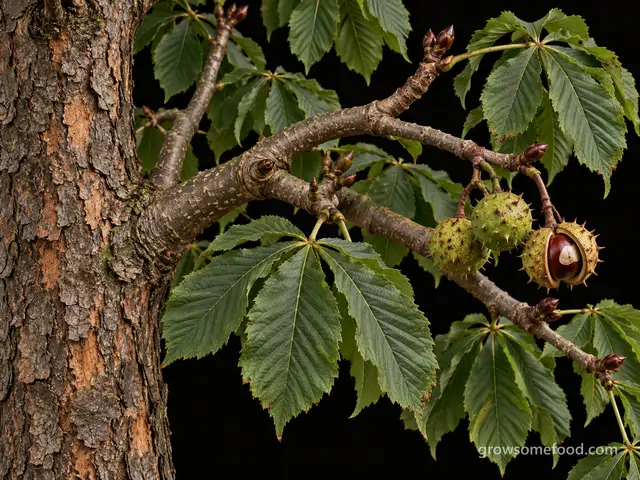
The great white-candled park tree of European avenues - and the source of one of the most reliable poisonings of the year, because its glossy conkers are mistaken for sweet chestnuts. The husk settles it in one second: thick sparse spikes and one round seed means poison.
Not food, and NOT a sweet chestnut. Seeds (conkers), leaves, flowers and bark contain aesculin and saponins: eating them brings throat burning, vomiting, cramps and diarrhea, and in quantity weakness, dilated pupils and collapse. Dogs are the usual casualty, and a swallowed conker can also block the gut. Handling is safe; eating is not. Field test: thick sparse spikes on the husk and one round glossy seed means horse chestnut, poisonous. Any ingestion - call poison control or a vet at once.
Overview
The one thing to knowIts seeds are not chestnuts, and they are poisonous.
Horse chestnut (Aesculus hippocastanum) is the broad, heavy-limbed tree that lifts upright white flower “candles” above dinner-plate leaves in May and drops glossy brown conkers in September. It is one of the most widely planted ornamental trees in the temperate world, and it is genuinely magnificent - 60 to 80 feet tall, nearly as wide, casting the densest shade of any common tree.
Its seeds are not chestnuts, and they are poisonous. This is the single reason this page exists. Conkers contain aesculin and saponins; eaten raw they burn the mouth and throat and bring vomiting, cramping and diarrhea, and in quantity weakness, dilated pupils and collapse. Sweet chestnut (Castanea) is an unrelated tree in a different family whose nuts are a real and excellent food. Every autumn people get these two confused - and dogs get them confused far more often than people do.
Standing under a tree with nuts on the ground, here is how to tell:
- The husk. Horse chestnut: a thick, leathery green case with short, thick, widely spaced spikes you can press flat with a thumb. Sweet chestnut: a dense hedgehog burr of fine, needle-sharp spines, packed so tightly you cannot pick it up bare-handed.
- What is inside. Horse chestnut: usually ONE large, round, very glossy seed with a pale rough patch on one side. Sweet chestnut: two or three smaller nuts, flattened where they pressed against each other, each drawn up to a point with a small tassel at the tip.
- The leaves. Horse chestnut: palmately compound - five to seven big leaflets radiating from the end of one stalk like fingers from a palm, carried in opposite pairs. Sweet chestnut: simple single leaves, long and lance-shaped with sharp saw teeth, arranged alternately along the twig.
- The flowers. Horse chestnut: upright white candles in May. Sweet chestnut: long drooping cream catkins in late June and July, with a heavy, unmistakable smell.
If you can only check one thing, check the husk. Thick sparse spikes and one round shiny seed: do not eat, and do not let the dog carry it home.
The second thing to know is the size. This is a tree for a park, a village green or a long drive - not a suburban lot. It is planted fifteen feet from a house constantly, and twenty years later it is lifting the paving, filling the gutters, shading the whole garden and dropping heavy limbs over the roof. Give it 35 feet of clear room in every direction or plant something else.
Quick facts
- Sprouts in
- 150 days90 to 210
- Soil to sprout
- 55 °F40 to 70
- Life cycle
- Perennial, lives about 200 years
- Seed to save
- About 145 days after planting120 to 170
- Height
- 70 ft50 to 100
- Spread
- 55 ft40 to 70
- Cold
- Takes hard frostdamaged below -35°F
- Heat
- Struggles above 95°F
- Self-sows
- Yes, expect volunteers
Full sun or part sun · medium water · well-drained soil · 50 ft apart (30 to 70) · direct sow or transplant
When to plant
Fall transplanting is open for 13 more days. Next: fall, Sep 25 to Nov 15.
- Transplant Aug 16 – Oct 4 Open now · 13 days leftAbout 10 weeks before to 3 weeks before your first frost (Oct 25 here)Fall planting works in milder zones - the roots keep growing after the leaves drop. Water through the first dry spells of the following summer.
- Direct sow Sep 25 – Nov 15 Opens in 4 daysAbout 4 weeks before to 3 weeks after your first frost (Oct 25 here)Sow a fresh conker 2 inches deep where the tree will stand; it needs winter cold and cannot be dried out first. Protect from squirrels, and keep spare conkers out of reach of children and pets.
- Transplant Mar 20 – May 22 Opens in 180 daysAbout 3 weeks before to 6 weeks after your last frost (Apr 10 here)Plant a container or balled-and-burlapped tree in early spring into deep, moist, well-drained soil in full sun. Measure first: it needs 35 feet of clear space in every direction.
Frost here: last around Apr 10 (Mar 27 to Apr 24 most years), first around Oct 25. Zone averages, your own yard may run a week or two either way.
Life stages
One stage to settle in, then four that repeat each year. Windows are typical; your zone and weather move them.
Years 1-5 - young tree
The first year after planting- ProtectMeasure the distance before you dig the holeThis is the decision that cannot be undone. A horse chestnut reaches 60-80 feet tall and 50-70 feet wide, with heavy low branches and shallow spreading roots. Give it at least 35 feet of clear space in every direction - from the house, the drive, the sidewalk, the septic field and the property line. Almost every unhappy horse chestnut in a garden was planted too close to something, and the only remedy at that point is removal.
- WaterWater deeply through the first three summersweeklySoak the root zone weekly in dry weather for the first three years, then taper off. Horse chestnut has no drought tolerance to speak of: a young tree that dries out browns at the leaf edges within days, and a mature one on a hot dry site scorches every August for the rest of its life. Choose a spot that stays evenly moist and it will need nothing.
- MulchMulch wide, and keep it off the trunkSpread 3 inches of wood chips over as much of the root zone as you can manage, pulled back a hand's width from the bark. The roots run shallow and wide, and mulch does far more for them than watering does. Grass right up to the trunk competes hard and invites mower damage at the base.
- PruneSet the branch structure in the first few yearsHorse chestnut naturally builds low, heavy limbs. While the tree is small, in late winter, remove crossing shoots and shorten anything that will become a low branch over a path or drive - it is a two-minute job now and a tree surgeon's invoice in twenty years. Never top the tree; it responds with weak, crowded regrowth.
Watch for- Planted closer than 35 feet to a building, drive or paving
- Leaf edges browning in the first dry spell
- Mower and string-trimmer damage at the base of the trunk
The candles - spring bloom
Apr to Jun, every year- InspectWatch the flowers change colour as the bees work themEach upright white panicle - a candle - carries dozens of flowers with a yellow blotch at the base of the petals. Once a flower has been visited and its nectar taken, that blotch turns pink then deep red, and bumblebees stop landing on it. You are watching a tree tell pollinators which flowers are still worth the trip. Bloom runs one to two weeks in May, earlier in the South.
- ProtectDo not add flowers to anything edibleHorse chestnut flowers are toxic like the rest of the tree. They are not an edible flower, not a tea, and not a garnish - keep fallen candles off food-preparation surfaces and out of children's play kitchens. There is no traditional culinary use of any part of this plant anywhere.
Watch for- Late frost browning the opening candles (cosmetic; the tree recovers)
- Bumblebees and honeybees working the flowers
- Rusty-red weeping patches appearing on the trunk in spring (bleeding canker)
Full leaf, then the annual browning
Apr to Aug, every year- InspectExpect brown leaves by August - and know which cause it isAlmost every mature horse chestnut looks scorched by late summer, and it is nearly always cosmetic. Three causes look similar: leaf blotch (reddish-brown patches with a yellow halo, spreading from the leaflet edge in humid weather), simple drought scorch (crisp brown edges, worst in a dry August on a hot site), and Japanese beetle feeding in the eastern US (leaves skeletonized to lace between the veins). None of them kills the tree. See Threats for the differences.
- WeedRake and remove the fallen leaves in autumnLeaf blotch overwinters in the fallen leaves and re-infects next year's canopy from the ground up. Raking them up and binning or hot-composting them is the only control that does anything on a large tree - spraying a 70-foot canopy is neither practical nor worth it. It also removes an enormous slippery leaf litter from paths.
- WaterSoak it in a long drought, even when matureA mature horse chestnut on a lawn or a street verge in a dry summer sheds leaves early and looks half-dead by September. A few long, slow soakings through July and August - hours with a hose trickling, moved around the root zone - keep it in leaf. This matters more on shallow or compacted soil, and more in the South.
Watch for- Reddish-brown blotches with yellow margins spreading in from leaflet edges (leaf blotch)
- Pale wandering tunnels turning brown between the veins (leaf miner - Europe, not established in North America)
- Lacy skeletonized leaves with beetles present (Japanese beetle)
- Dark rusty ooze staining the trunk bark (bleeding canker)
Conker drop - the season that needs supervision
Sep to Nov, every year- ProtectTeach the difference before the first conker fallsSay it out loud to every child and dog owner who uses the space: this tree's nuts are POISON and are not the chestnuts you roast. Show them the husk - thick, leathery, with short widely spaced spikes you can flatten with a thumb - and the single round glossy seed inside. A sweet chestnut burr is a dense hedgehog of fine needles holding two or three flattened, pointed nuts. Handling conkers is completely safe. Eating one is not.
- ProtectKeep dogs away from the drop zoneDogs are the animals that actually get poisoned by this tree, every autumn, and they do it by picking up fallen conkers on a walk. A conker causes vomiting, drooling, tremors and abdominal pain - and because it is big and hard, it can also lodge in the gut and need surgery. Leash dogs under the tree during the drop, and if one swallows a conker, call the vet immediately rather than waiting for symptoms.
- DoRake up the conkers where people and animals goA mature tree drops thousands. Rake them weekly through the drop and bin them - not into compost that animals visit, and not into a hedge bottom where a dog will find them in November. Clearing them also removes a genuine slip hazard on paths and drives, and cuts down the crop of seedlings you would otherwise be pulling out of the borders next June.
Watch for- Fallen conkers within reach of dogs, toddlers or livestock
- Whole conkers piling up on paths and drives (slip hazard)
- Split husks on the tree signalling the drop is starting
- Seedlings germinating wherever conkers were left over winter
Winter - sticky buds and the pruning window
Nov to Mar, every year- PrunePrune in late winter, and only what needs itDo structural pruning in the dormant season: dead, damaged, crossing or dangerously low limbs. Horse chestnut wood is not strong, and a heavy limb over a drive or a play area is worth removing before a storm removes it for you. Anything larger than a few inches across, or over a building, is a job for an arborist - not a ladder.
- InspectCheck the trunk for bleeding cankers while the bark is bareWinter is the easiest time to see dark rusty or black weeping patches on the trunk and main limbs, the sign of bleeding canker. Note where they are and how big; a canker that stays the same size for years is common and survivable, while one girdling the trunk alongside dieback in the crown means the tree needs an arborist's judgement about whether it is still safe.
- InspectThe sticky buds are the winter ID featureIn winter horse chestnut is unmistakable: fat brown terminal buds up to an inch long, coated in a sticky varnish that waterproofs them, held in opposite pairs. Below each bud sits a horseshoe-shaped leaf scar with small dots arranged like nail holes - one of the two stories behind the tree's name.
Watch for- Dark rusty ooze staining the bark (bleeding canker)
- Dieback in the upper crown
- Heavy low limbs over paths, drives or parking
- Squirrels caching conkers into lawns and borders
Watch out for
5 to know. 1 is high-risk: Conker Poisoning (Aesculin & Saponins). 5 are active in September.
Conker Poisoning (Aesculin & Saponins)Severity High DisordernowFallen conkers within reach of toddlers, dogs or livestock; a bowl of conkers kept indoors for the tradition on a low table; anyone gathering nuts under the tree in the belief they are chestnuts.
Fallen conkers within reach of toddlers, dogs or livestock; a bowl of conkers kept indoors for the tradition on a low table; anyone gathering nuts under the tree in the belief they are chestnuts. In a dog: drooling, retching, repeated vomiting, tremors, wobbliness and a tense painful abdomen. In a person: mouth and throat burning, vomiting, cramps and diarrhea.
Any suspected ingestion is urgent - call poison control, or your veterinarian or an animal poison line for an animal, IMMEDIATELY and do not wait for symptoms. Take a conker or a leaf with you. Do not try to induce vomiting unless you are told to. For a dog, mention that a whole conker may also be a physical obstruction, since that changes what the vet looks for. There is no home method - boiling, roasting or soaking - that makes conkers safe to eat.
Teach the husk test to everyone who uses the space - thick leathery case with short widely spaced spikes and usually ONE round glossy seed is horse chestnut and poisonous; a dense hedgehog burr of fine spines holding two or three flattened pointed nuts is sweet chestnut and edible cooked. Rake fallen conkers up weekly through the drop and bin them, not into compost or a hedge bottom. Leash dogs under the tree in autumn. For a garden where children or animals play, plant the sterile cultivar 'Baumannii', which sets no fruit at all.
The defining hazard of the tree, and not a disease. Seeds, leaves, flowers, bark and twigs all contain aesculin - a hydroxycoumarin glycoside - together with saponins. Eating them causes burning of the mouth and throat, vomiting, abdominal pain and diarrhea, and in larger amounts weakness, incoordination, dilated pupils, twitching and collapse. The risk peaks in September to November, when the conkers fall and are mistaken for sweet chestnuts. Dogs are by far the commonest casualty: they pick fallen conkers up on walks, and beyond the toxins, a whole conker is a large hard object that can obstruct the intestine and require surgery. Grazing livestock are poisoned by fallen seeds and by wilted foliage. Handling conkers is entirely safe - the danger is only in eating them.
Outgrowing Its Site (Shade, Roots & Litter)Severity Medium DisordernowPaving, kerbs or a drive beginning to lift; grass thinning to bare soil under the canopy; nearby beds drying out unusually fast; heavy limbs extending over a roof, a drive or a play area; a trunk closer than 35 feet to a building or a septic field.
Paving, kerbs or a drive beginning to lift; grass thinning to bare soil under the canopy; nearby beds drying out unusually fast; heavy limbs extending over a roof, a drive or a play area; a trunk closer than 35 feet to a building or a septic field.
There is no good late fix. Cutting major surface roots to save paving destabilises a very large tree, and topping it produces weak crowded regrowth that is more dangerous than what it replaced. Have an arborist reduce or thin the crown to manage limb risk, mulch or plant shade-tolerant woodlanders instead of fighting for lawn, and accept that removal is sometimes the honest answer for a tree planted in the wrong place.
This one is solved entirely before planting: pace 35 feet from the spot in every direction and check what is inside that circle - house, drive, sidewalk, septic field, power lines, boundary. If anything is, choose a different tree, or a red horsechestnut hybrid at 30-40 feet, or plant the horse chestnut where a park-sized tree genuinely belongs. Prune low limbs while the tree is young and easy to reach.
The commonest real problem with this tree is not a pest but arithmetic. Horse chestnut is routinely planted on a suburban lot at the size of a broom handle and reaches 60-80 feet tall and 50-70 feet wide, on shallow roots that spread well past the canopy. Twenty years on it casts the deepest shade of any common garden tree so nothing grows beneath it, its surface roots lift paving and drives and take all the water from nearby beds, it fills gutters with very large leaves, it drops thousands of poisonous conkers onto paths, and its brittle wood sheds heavy limbs in storms. Shallow-rooted and top-heavy, it is also among the trees most likely to blow over in saturated ground.
Bleeding CankerSeverity Medium DiseasenowRusty or black weeping patches on the bark, most visible in spring and easiest to spot in winter when the tree is bare; cracked or sunken bark around them; and above all whether the crown directly above a canker is thinning, dying back or dropping limbs.
Rusty or black weeping patches on the bark, most visible in spring and easiest to spot in winter when the tree is bare; cracked or sunken bark around them; and above all whether the crown directly above a canker is thinning, dying back or dropping limbs.
No cure exists. Do not cut into or scrape a canker to see how deep it goes - that spreads it and injures the tree. Record the size of the patches with a photograph and compare year to year. Get an arborist to assess the tree if the cankers are enlarging, girdling the trunk, or accompanied by crown dieback; that assessment is about whether a large tree near a building or a path is still safe to keep.
There is nothing to spray and no resistant stock to buy. Reduce stress instead: water in drought, mulch the root zone, avoid compacting or excavating the soil over the roots, and never wound the trunk with mowers or trimmers. Clean pruning tools between trees, and prune in dry weather in the dormant season.
Dark rusty-brown or black liquid weeping from patches on the trunk and main limbs, drying to a tarry stain. Two causes are involved: a bacterium (Pseudomonas syringae pv. aesculi), which drove a serious epidemic across Britain from the mid-2000s, and Phytophthora species, which cause a similar bleeding at the stem base. Many affected trees live with small stable cankers for decades and are in no danger. The cases that matter are those where cankers expand and girdle the trunk, with the crown thinning and dying back above them - and the practical risk there is structural failure of a very large tree, not the disease itself.
Horse Chestnut Leaf MinerSeverity Medium PestnowSmall pale blotch-shaped mines between the leaf veins from late spring, each turning reddish-brown and eventually merging so the leaflet looks scorched; hold a leaf to the light and the mine is a hollow blister with the larva or its frass visible inside.
Small pale blotch-shaped mines between the leaf veins from late spring, each turning reddish-brown and eventually merging so the leaflet looks scorched; hold a leaf to the light and the mine is a hollow blister with the larva or its frass visible inside. Mines are inside the leaf - surface fungal blotches with yellow halos are a different problem.
No practical treatment for a mature tree, and none warranted: the damage is cosmetic and the tree recovers each spring. Keep it watered so miner damage is not compounded by drought stress. Injected treatments exist for high-value specimens in Europe and are an arborist's decision, not a garden one.
Rake up and destroy fallen leaves in autumn, where the pupae overwinter; this is the only measure that helps a garden tree, and it works better if neighbouring trees are cleared too. Pheromone traps monitor the moth but do not control it. In North America there is nothing to prevent - the insect is not present.
A tiny moth (Cameraria ohridella) whose larvae tunnel inside the leaf tissue, producing pale wandering mines that turn brown and merge until the whole canopy looks burnt by midsummer. Several generations run through a season, so damage builds year on year. IMPORTANT GEOGRAPHY: this insect is a European problem. First described near Lake Ohrid in North Macedonia in 1985, it has swept across Europe and disfigures most horse chestnuts there - but it is NOT established in North America. If you are in the US and your tree is browning, the cause is almost certainly leaf blotch, drought scorch or Japanese beetle, not this moth. Even in Europe it is disfiguring rather than lethal; trees leaf out normally the next spring.
Horse Chestnut Leaf BlotchSeverity Medium DiseasenowIrregular reddish-brown patches ringed with yellow, appearing from June and spreading in from the leaflet margins; whole leaflets going papery brown and falling from July onward, with the tree substantially bare by early September.
Irregular reddish-brown patches ringed with yellow, appearing from June and spreading in from the leaflet margins; whole leaflets going papery brown and falling from July onward, with the tree substantially bare by early September.
None is needed or practical. Spraying a 70-foot canopy is not feasible and the damage is cosmetic. Keep the tree watered in drought so blotch is not compounded by scorch, and clear the fallen leaves to reduce next year's starting inoculum.
Rake up and remove the fallen leaves every autumn - the fungus overwinters in them and re-infects the canopy from the ground, so leaf sanitation is the one control that works on a large tree. Plant with generous spacing for airflow, and if you are choosing a tree now, the red horsechestnut hybrids ('Fort McNair' especially) are markedly more resistant.
A fungal disease (Guignardia aesculi) that is the usual reason a horse chestnut looks scorched by August. Reddish-brown blotches with a yellow halo appear from midsummer, usually starting at the leaflet edges and spreading inward until whole leaves look burnt and drop early. It is disfiguring and almost entirely cosmetic: the tree has already done most of its growing for the year by the time symptoms are heavy, and it leafs out normally the following spring. Wet, humid summers make it worse, and it is severe most years in the humid eastern United States, which is one reason horse chestnut is a poor choice south of zone 7.
Good & bad neighbors
First rule: keep Sweet Chestnut apart. Do not plant these where their crops mix on the ground.
Plant nearby
-
Spring bulbs are the classic answer to the ground under a big deciduous tree: they flower and feed before the canopy closes, then go dormant through the dry shaded summer when nothing else copes. Daffodils also naturalize into rough grass under an avenue tree, and deer and rodents leave them alone.
-
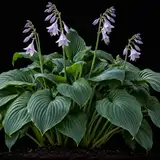
One of the few things that will actually grow in the dense shade and dry root competition under a mature horse chestnut. Plant hostas in generous pockets of improved soil rather than trying to establish lawn, and water them through the first couple of seasons while they find their footing among the tree's surface roots.
- Traditional pairings, thin evidence
-
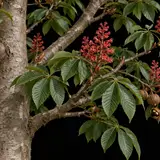
The small native American cousin, and the better choice in the South where horse chestnut cooks. Red buckeye is a 12-20 foot understory tree with red hummingbird flowers, one parent of the red horsechestnut hybrids, and carries the same aesculin and saponins - so the same rule applies to its shiny seeds. Useful as a cross-reference: if the buckeye seeds are not food, neither are conkers.
-
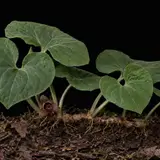
A low native groundcover that tolerates deep shade and the dry, root-filled soil beneath a large tree, giving an even carpet where grass gives up. It also makes the autumn conker rake easier than a shrub layer would - fallen seeds sit on the surface where you can see and collect them.

Keep apart
-
Sweet ChestnutDo not plant these where their crops mix on the ground. Sweet chestnut (Castanea) nuts are a real food and horse chestnut conkers are poisonous, and every autumn somebody confuses the two. Two trees dropping husks into one lawn removes the forager's most reliable check - which tree it fell from. Keep them well apart, and learn the husk: fine dense spines holding two or three pointed nuts is the food; thick sparse spikes holding one round glossy seed is not.
Varieties · 5
You pick one when you add Horse Chestnut to your garden. Its days to maturity set your harvest window.
'Baumannii' (Baumann's Horse Chestnut)
Dense upright candles of fully double, pure white flowers in May on a large spreading tree; no fruit follows.
sterileno-fruitdouble-floweredrecommended-for-gardensThe form to plant if you want this tree in a place people use. 'Baumannii' carries fully double white flowers that last noticeably longer than the species', and it is completely STERILE - it sets no fruit at all. No conkers means no poisoning risk for children, dogs or livestock, no thousands of seeds to rake, no slip hazard on paths and drives, and no seedlings in the borders. It is the same 60-80 foot tree in every other respect, so the space rule still applies, and the leaves still brown in late summer. Grafted, so it cannot be raised from seed.
Horse Chestnut (species, Aesculus hippocastanum)
Broad, heavy-limbed tree with large palmate leaves, upright white flower candles, and thick leathery spiny husks holding one glossy brown conker.
specieslarge-treetoxic-seedswhite-flowersThe wild species and the standard park and avenue tree: 60-80 feet tall and nearly as wide, with palmately compound leaves of five to seven leaflets, upright white flower candles blotched yellow turning red in May, and heavy crops of thick-spiked husks each holding one large glossy poisonous seed. Superb where it has room; a long-running problem where it does not.
Red Horsechestnut (Aesculus x carnea) - a DIFFERENT plant
Rounded 30-40 foot tree with dark green palmate leaves and upright rose-red flower candles in late spring.
related-specieshybridred-flowerssmaller-treeA different plant, listed for comparison: a hybrid of horse chestnut with the American red buckeye. It is much smaller - roughly 30-40 feet - with deep pink to red flower candles, better resistance to leaf blotch and scorch, and far fewer fruit. The seeds it does set are just as poisonous. Its size, spacing and disease behaviour all differ from this page's, so use a red horsechestnut guide rather than running one off the horse chestnut timeline. Often the better choice for a large garden that cannot take an 80-foot tree.
'Briotii' (Aesculus x carnea) - a DIFFERENT plant
Compact rounded tree with glossy dark palmate leaves and vivid scarlet-red flower candles.
related-specieshybridred-flowerssmaller-treeA selected form of the red horsechestnut hybrid above, not of horse chestnut itself, listed for comparison: deeper, brighter scarlet-red candles than the ordinary hybrid, a tidy rounded 30-40 foot habit, and very little fruit. Widely sold as a street and garden tree. Still toxic in all parts, and still a different plant from the tree this page describes.
'Fort McNair' (Aesculus x carnea) - a DIFFERENT plant
Medium rounded tree with clean dark foliage and pink flower candles marked with yellow throats.
related-specieshybridpink-flowersdisease-resistantAnother selection of the red horsechestnut hybrid, listed for comparison: rich pink candles with yellow throats, notably good resistance to the leaf blotch and scorch that disfigure the species, and a manageable 30-40 foot size. A common recommendation where someone wants the horse chestnut look on a street or a suburban lot. All parts remain toxic.
Grower tips
Notes from growers, tagged with the zone they grow in. A person reads every post before it appears.
Nobody has posted about Horse Chestnut yet. The first one usually saves someone a season.
Free account. Your post shows your grower name and zone, never your email.