Add it to your home screen and it opens full screen: no browser bars, one tap away, and everything stays signed in. Free, nothing to download from an app store.
- Tap the Share button in your browser
- Scroll down and choose “Add to Home Screen”
- Open GrowSomeFood from your home screen
- Open your browser’s menu
- Choose “Add to Home screen” or “Install app”
- Open GrowSomeFood from your home screen
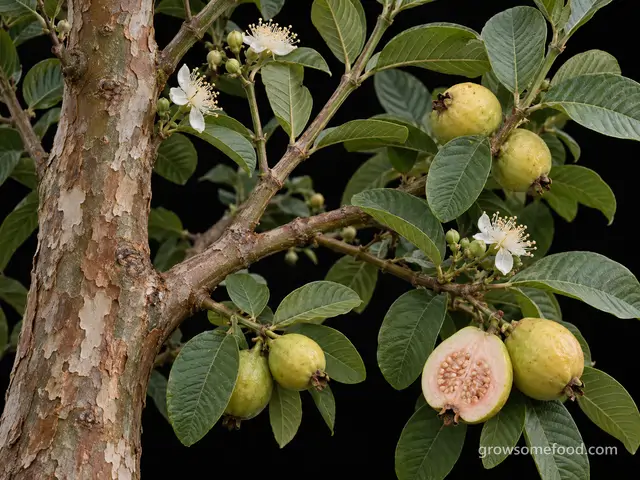
Guava
A fast, tough, heavy-bearing tropical fruit tree that crops within two or three years and takes almost any soil - which is exactly why it has become invasive in Florida, Hawaii, and Puerto Rico. Grow it, but grow it responsibly and pick up the windfalls.
The fruit is food, skin and seeds included - the seeds are hard enough to crack a tooth, so strain or blend them for small children and anyone with fragile dental work. Guava leaf tea is a widely used traditional remedy and behaves like an active substance rather than a beverage: it can add to the effect of diabetes and blood-pressure medication. No part of the plant is toxic.
Overview
The one thing to knowFlorida’s invasive plant council lists common guava as a Category I invasive, and in Hawaii and Puerto Rico it has taken over enormous areas of pasture and disturbed forest.
Guava is one of the fastest and most generous fruit trees a warm-climate gardener can plant. It bears within two or three years of a grafted or air-layered plant, tolerates sand, limestone, clay, drought, and brief flooding, needs no pollinator, and produces so heavily that a single small tree keeps a household in fruit, juice, and jelly. The fruit’s perfume when it ripens is unmistakable from across a yard, and there is nothing in a supermarket that resembles a properly ripened homegrown guava.
That same toughness is the problem. Every fruit carries hundreds of hard, viable seeds, birds and mammals eat the fruit and drop the seeds everywhere, and seedlings establish in pasture, hammock, and forest with no help at all. Florida’s invasive plant council lists common guava as a Category I invasive, and in Hawaii and Puerto Rico it has taken over enormous areas of pasture and disturbed forest. None of that means you cannot grow one - it means grow it in a mowed yard or a container, clear the fallen fruit, pull volunteers, and do not plant one on the edge of natural land. In California and the drier Gulf it behaves far better; the invasion risk is highest where summers are wet.
Two plants get confused with this one, and both are genuinely different. Pineapple guava (feijoa, Acca sellowiana) is a cold-hardy shrub for zones 8-10 with a completely different fruit - if you are in a cool climate and want a “guava,” that is the one you want. Strawberry guava (Psidium cattleianum) is a smaller-fruited relative that is hardier, and far worse as an invader - it is one of the most destructive plants in Hawaii and should not be planted at all.
Quick facts
- Life cycle
- Perennial, lives about 30 years
- Height
- 15 ft8 to 25
- Spread
- 14 ft8 to 25
- Cold
- Killed by frostdamaged below 27°F
- Heat
- Struggles above 105°F
- Self-sows
- Yes, expect volunteers
Full sun · medium water · well-drained soil · 15 ft apart (8 to 25) · transplant or cuttings
When to plant
No planting window on record for this zone. Nearest zone with one: 8a.
Frost here: last around Apr 10 (Mar 27 to Apr 24 most years), first around Oct 25. Zone averages, your own yard may run a week or two either way.
Life stages
One stage to settle in, then five that repeat each year. Windows are typical; your zone and weather move them.
First-year establishment
The first year after planting- WaterWater regularly through the first yearevery 4 daysA young guava needs steady moisture to build its root system - deep watering two or three times a week in warm weather, easing off in winter. Established trees are notably drought-tolerant, but the first year decides how well the tree carries fruit later.
- MulchMulch the root zone, not the trunkA few inches of coarse mulch spread to the drip line holds moisture, feeds the shallow feeder roots, and keeps the mower away from the trunk. Keep it several inches clear of the bark.
- ProtectPlan frost protection before the first winterYoung guavas are killed at temperatures a mature tree shrugs off - a tree in its first year or two can die outright in the upper 20s°F. In zone 9, wrap the trunk, mound mulch over the root zone, and have frost cloth ready; in colder areas, keep it in a pot you can move.
- PruneDecide the tree's height nowA guava left alone reaches 20-25 ft and puts most of its fruit where you cannot reach it. Head the leader at 4-5 ft in the first year and keep the tree at 8-10 ft with annual pruning - it fruits just as well small, and everything about harvesting, netting, and fruit-fly bagging gets easier.
Watch for- Cold damage on young wood in the first two winters
- Suckers from the base and from surface roots
- Volunteer seedlings from any dropped fruit
- Root-knot nematode stunting on sandy soil
Spring flush
Feb to May, every year- PrunePrune to force new growth - that is where the fruit comes fromGuava flowers on the current season's new shoots, so pruning is how you make a crop rather than just a shape. Cut back the previous season's growth after harvest or in late winter, remove suckers, crossing wood, and anything below knee height, and keep the canopy open enough to reach into.
- FertilizeFeed several times a year, lightlyevery 90 daysGuavas are moderately hungry and respond to three to four light feedings a year with a balanced fertilizer through the growing season. On Florida's alkaline sand, add micronutrients - iron and zinc especially - because guava yellows badly without them.
- WeedPull volunteer seedlings while they are smallAny fruit that drops and rots leaves hundreds of viable seeds, and birds carry them much further. Pull seedlings from beds and fence lines while they are still seedlings; an established guava sapling has a taproot and does not come out easily.
Watch for- New shoots emerging - the flowers form on these
- Bright orange-yellow pustules on new growth (guava rust)
- Aphids and whiteflies on soft new leaves
- Yellowing between leaf veins on alkaline soil (micronutrient deficiency)
Bloom
Mar, Apr, May, Aug, Sep, every year- PollinateNo second tree needed, but bees make a real differenceGuava is self-fruitful, so one tree crops on its own. Cross-pollination by bees still raises fruit set and size noticeably, so avoid spraying anything during bloom and keep flowering plants nearby.
- WaterKeep water steady from bloom through fruit setDrought at bloom drops flowers and young fruit; a soaking after a dry spell splits fruit later. Even moisture from flowering to harvest is the single biggest lever on fruit size.
Watch for- White, fluffy-stamened flowers on the current season's shoots
- Two bloom waves in warm climates - a main spring crop and a lighter late-summer one
- Flower and fruit drop after a dry spell
Fruit development
May to Sep, every year- ThinThin clusters to size up the fruitGuava sets far more fruit than it can fill. Thin to one or two fruit per cluster while they are marble-sized - you will pick fewer, much larger, better-flavored guavas, and the tree is less likely to break a limb.
- ProtectBag developing fruit against fruit fliesevery 2 weeksIn Florida, Hawaii, and quarantine areas of Texas and California, fruit flies sting guava as it starts to soften and the larvae ruin it from inside. Slipping a paper, mesh, or organza bag over each fruit at about golf-ball size is the one reliable home control, and it also stops birds.
- WaterWater evenly while fruit fillsevery 5 daysSteady moisture through fruit development gives full-sized fruit and prevents the splitting that follows a downpour after drought. Guava tolerates dry spells, but the fruit does not.
Watch for- Small dimpled sting marks on fruit (fruit fly egg-laying)
- Sunken dark spots on fruit (anthracnose)
- Fruit splitting after heavy rain
- Fallen fruit under the tree - clear it, it breeds fruit flies and seedlings
Harvest
Jun to Nov, every year- HarvestPick at color break, when the perfume startsevery 3 daysPick when the deep green skin lightens toward yellow-green and the tree starts to smell of guava - the fruit gives very slightly then. Guava is one of the few tropical fruits that genuinely ripens off the tree, so picking at color break and finishing it on the counter beats leaving it out for birds, flies, and rot.
- PrunePrune straight after the cropCutting the tree back once the main harvest is off pushes the new growth that carries the next crop, keeps the tree at a pickable height, and removes the wood where scale and disease build up. This is the single most useful annual job on a guava.
- WeedClear every fallen fruitWindfalls are the fruit-fly nursery and the seedling nursery both. Pick up and dispose of dropped fruit at least weekly through the season - bag it or bury it deep rather than leaving it in a compost heap.
Watch for- Strong guava perfume around the tree - the reliable ripeness cue
- Two crops a year in the warmest zones
- Fallen fruit accumulating and breeding fruit flies
- Birds, rats, raccoons, and possums working ripe fruit
Cool season
Dec to Feb, every year- ProtectCover or move the tree below about 30°FA mature guava takes a light frost with leaf burn and regrows; sustained cold in the mid-20s°F kills it to the ground, and young trees die outright much sooner. Mound mulch over the root zone, wrap the trunk, and drape frost cloth on cold nights - or move a container into a garage or bright room.
- WaterCut water back in cool weatherGrowth stops when it turns cool, and a guava sitting in cold wet soil is far more likely to rot at the roots. Water sparingly until warmth returns.
Watch for- Leaf burn and twig dieback after a frost - often not fatal
- Regrowth from the base after a hard freeze
- Root rot in cold, wet soil
Harvest
- Skin lightens from deep green toward yellow-green or pale yellow
- The tree and the fruit smell strongly and unmistakably of guava
- The fruit gives very slightly under gentle pressure and detaches with a small twist
- Fruit that has fully softened on the tree is usually already claimed by birds or fruit flies
- Pick at color break, when the perfume starts · every 3 days
- Prune straight after the crop
- Clear every fallen fruit
Per plant 30 to 400 guavas, 10 to 150 lbPicking pick as they ripen
Cook with guavas
Watch out for
7 to know. 4 are high-risk: Guava Root-Knot Nematode, Guava Rust (Myrtle Rust), Fruit Flies (Caribbean, Mediterranean & Oriental), Birds & Wildlife. 6 are active in September.
Guava Root-Knot NematodeSeverity High PestnowA distinct and far more aggressive species than the common root-knot nematodes that trouble figs and vegetables, and it is named after this host for good reason - guava is one of its preferred plants.
On sandy Florida soil with a bad history, a large container is the realistic answer.
A tree that stays stunted and unthrifty despite feeding and watering, with small pale leaves and dieback at the tips. Wilting on hot afternoons in soil that is plainly moist. Poor response to fertilizer. Dig gently at the root zone and look for heavily knotted, swollen, distorted roots - the galls of this species are large and unmistakable. Trouble is concentrated on sandy soils and on ground that has grown susceptible crops before.
There is no home cure once a tree is infested. Heavy mulching and organic top-dressing keep pushing new feeder roots and can carry a declining tree for years, but they do not eliminate the nematode. Severely affected trees are best removed and replaced in fresh ground or a large container. Where this species is regulated, report suspected finds to your state agriculture department rather than moving plants or soil off the property.
Buy nursery stock from a reputable source and inspect the roots before planting - this nematode moves in infested plants and soil, which is why it is regulated. Do not plant guava into ground where nematode-stunted plants have already failed, and do not move soil or plants from an infested area. Add heavy organic matter and mulch, which builds the soil life that suppresses nematodes, and interplant French marigolds. Growing in a large container of clean mix avoids the problem completely and is a sensible choice on sandy soil with a known history.
Meloidogyne enterolobii, commonly called the guava root-knot nematode, is a microscopic soil roundworm that is far more damaging than the common root-knot species and is a regulated pest in parts of the southeastern United States. It invades guava roots and forms large knotted galls that block water and nutrient uptake, and infested trees decline steadily - stunted, yellow, wilting in heat, and eventually dying. It has destroyed guava plantings in Florida and elsewhere, and it also attacks tomato, pepper, sweet potato, and other crops, including varieties bred to resist ordinary root-knot nematodes.
Guava Rust (Myrtle Rust)Severity High DiseasenowThe most serious disease of guava in humid US climates, and unusual in that it attacks only the young growth guava needs to produce a crop - repeated infection of every flush is what stops a tree bearing.
Its wider significance in Hawaii, where it threatens native ohia, is the reason plant-movement rules exist there.
Vivid yellow to orange powdery pustules on new leaves, shoot tips, flower buds, and young fruit - the color is unmistakable and unlike any other guava problem. Purple-rimmed spots on young leaves before the spores appear. Twisted, stunted, or blackened shoot tips, defoliation of new growth, and repeated dieback that leaves a tree pushing flush after flush and never getting anywhere. Damage is concentrated entirely on young tissue; mature leaves are not attacked.
Prune out infected shoots and buds well below the damage, bag the prunings rather than composting them, and disinfect tools afterward. Protective fungicides labeled for the crop and applied to new flushes give real control in a wet season, but they protect new growth rather than curing infected tissue, and repeat applications are needed while the tree is flushing. Report suspected finds in areas where the rust is regulated, particularly in Hawaii.
Avoid pushing soft new growth into warm wet weather - time nitrogen feeding so flushes come in drier periods, and prune to open the canopy so foliage dries quickly. Space plants and do not water overhead. Buy clean nursery stock and inspect it, since the rust moves most often on plants. In Hawaii, do not move myrtle-family plants or cuttings between islands or into the state, and follow state quarantine guidance - the rust is a documented threat to native ohia forest there. Some guava selections are less susceptible than others, but no cultivar is immune.
A fungal rust (Austropuccinia psidii, formerly Puccinia psidii) that attacks the young growth of guava and its relatives in the myrtle family - eucalyptus, bottlebrush, allspice, rose apple, and the Hawaiian native ohia. It infects new leaves, shoot tips, flowers, and young fruit, producing brilliant yellow-orange powdery spore masses, then distorting and killing the tissue. It thrives in warm humid weather and spreads on wind, clothing, tools, and nursery plants. It is present in Florida, Hawaii, California, and the Gulf, and in Hawaii it is a serious threat to native forest, which is why moving myrtle-family plant material there is restricted.
Fruit Flies (Caribbean, Mediterranean & Oriental)Severity High PestnowGuava is one of the most preferred hosts of the Caribbean fruit fly in Florida, and unbagged dooryard guava there is routinely close to a total loss.
Bagging and weekly windfall collection are not optional for a usable crop; picking firm at color break also helps, since the flies favor softening fruit.
Tiny puncture or sting marks on the skin of ripening fruit, sometimes with a weeping drop or a small sunken dimple around them. Fruit that softens, browns, or collapses on one side well before it should. Small white maggots in the flesh when the fruit is cut, and fruit that falls early and rots fast. Adult flies - larger than a housefly, with patterned wings - hovering around ripening fruit and resting on foliage in the morning. Windfalls under the tree squirming with larvae, which is where the next generation comes from.
There is no cure for fruit already infested - bin it sealed, and never leave it lying. Protein bait sprays are the standard commercial control and are what agriculture departments use in outbreaks; in a home garden, sanitation plus bagging does most of the work. If you find a fruit fly outside its normal range, or receive a quarantine notice, report it to your state agriculture department rather than dealing with it privately: several of these species are regulated, and it is illegal to move host fruit out of a declared quarantine area, including to friends and family in another county or state.
Bag the fruit. A paper, mesh, or organza bag slipped over each fruit once it reaches golf-ball size physically excludes the females and is the only home control that reliably works. Pick fruit at color break and finish ripening it indoors rather than letting it soften on the plant, which removes the window the flies need. Clear every fallen fruit at least weekly and dispose of it by bagging, deep burial, or solarizing in a sealed bag in the sun - never in an open compost heap, which just breeds more. Keep trees pruned small enough that you can actually reach and bag the crop. Hanging traps tell you when flies are active but will not protect a crop on their own.
Tephritid fruit flies lay their eggs under the skin of ripening fruit, and the maggots feed inside it, so the first sign is usually a fruit that looks fine and is full of larvae when cut. The Caribbean fruit fly is established across peninsular Florida and the Caribbean; Mediterranean and Oriental fruit flies are established in Hawaii and turn up in California, Texas and Florida as quarantine outbreaks. They prefer fruit that is beginning to soften and color, they build up on any fallen fruit left rotting on the ground, and populations run from late spring through fall. Because several of these species are regulated pests, an infestation is not only a garden problem - moving infested fruit is how quarantines start.
Birds & WildlifeSeverity High WildlifenowOn guava the birds are not only a harvest problem - they are the dispersal mechanism that makes this tree invasive, carrying seed into pasture and forest well beyond your yard.
Bagging fruit and picking at color break protects the crop and cuts the seed birds carry away. Rats, raccoons, and possums work the same fruit at night.
Fruit disappearing from the outermost, most exposed parts of the plant first, and from the top of a tree where you cannot reach anyway. Single neat pecks and gouges in ripening fruit, with several fruits sampled rather than one eaten through - the classic sign that it was birds rather than an animal. Heads of grain or seed going visibly lighter and emptier as they ripen, with hulls and chaff scattered underneath. Freshly sown seed vanishing off the surface of a bed before it germinates. Bird traffic in and out of the plant picking up as the crop colors, and birds waiting on nearby wires and branches. Wasps arriving at the pecked and split fruit shortly afterward.
There is no treatment once a crop is being taken - only protection and timing, so the answer is to get netting on and to pick what is ready. Reflective tape, flash ribbon, spinners, and decoy predators do work, but only for a few days at a time: birds habituate fast, so move and rotate them and never rely on them as the main defense for a crop you care about. Cut and gather grain or seed heads a little early, at firm dough, and finish drying them under cover instead of leaving them standing for the flocks. Plant a little extra, or a decoy crop the birds prefer, and accept sharing anything that crops heavily. On a wild or foraged patch, fruit going to birds and small mammals is the point of the plant rather than a problem to solve.
Net, and net early. Bird netting draped over a frame or hoops so it stands off the fruit, with the edges closed at ground level, is the only thing that reliably works at harvest scale - and it has to go on before the crop starts to color, because once birds have found the food they are far harder to displace. Keep fruit trees small enough that netting them is actually feasible; that decision gets made years earlier, at planting. Bags of mesh, organza, or paper slipped over individual heads, clusters, or prize fruit protect a small crop without netting the whole plant. Then shorten the exposure: pick promptly and completely rather than leaving ripe fruit hanging as a lure, clear split and dropped fruit that draws birds and wasps alike, and where a crop can finish off the plant, harvest a little early and ripen or dry it under cover. Rake in or cover broadcast seed so it is not lying in plain view.
Birds find ripening fruit and seed before you do. Robins, waxwings, starlings, catbirds, jays, sparrows, finches, blackbirds, and doves all work a garden, and the pressure arrives in a narrow window - the last days before harvest, when sugar rises, color changes, and the crop softens or the grain hardens. A flock can strip a small planting in a day or two, and birds that only peck rather than take whole fruit still leave wounds that rot or draw wasps. Squirrels, chipmunks, and other wildlife usually turn up on the same crop at the same time. This is competition rather than disease: the birds are not harming the plant, and a big tree or a heavy-cropping bush often has enough for everyone - but on a small planting it can be the difference between a harvest and none.
Scale & Sooty MoldSeverity Medium PestnowGuava collects several scales and mealybugs, usually with ants farming them and sooty mold blackening the leaves and fruit underneath.
The annual after-harvest pruning that a guava needs anyway removes most of a buildup, which is why scale rarely gets serious on a properly managed tree.
Rows of small brown, tan, black, white, or waxy bumps along stems, twigs, leaf midribs, and leaf undersides that do not brush off but can be scraped loose with a fingernail. A sticky shine on the leaves - and on the floor, table, or path beneath the plant - that later turns black with sooty mold. Ants running steadily up and down the stems, since they farm and defend scale for that honeydew; often the first sign anything is wrong. Yellowing leaves, weak thin growth, and dieback of individual branches or canes that are heavily encrusted. On fruit crops, scale covers and sooty mold directly on the fruit. Check the leaf undersides and the shaded inner wood, which is where colonies build up unseen.
Horticultural oil is the main control: it works by smothering, so it has to coat the insects thoroughly - stems, twigs, and leaf undersides - and it usually needs repeating, because the waxy covering shields them and no single pass reaches everything. On deciduous woody plants a dormant-season oil smothers the overwintering stage while the leaves are out of the way, and timing a growing-season spray to the crawler stage, when the young are mobile and uncovered, is far more effective than spraying settled adults. On a small plant or a light infestation, scrub or wipe the scales off by hand, or dab them with a cotton swab of rubbing alcohol. Prune out and destroy badly encrusted wood rather than trying to save it. Wash off the sooty mold once the scale is gone - it lives on the honeydew, not on the plant, and stops once the supply does. Anything you spray must be labeled for the plant, and oils can burn delicate foliage, so test first.
Inspect. Look over leaf undersides and stems regularly - on a crop you pick, every harvest is a scouting chance - and check every new plant thoroughly before you buy it, plant it, or set it beside anything else, because scale almost always arrives on a plant rather than flying in. Quarantine new houseplants for a few weeks. Keep plants unstressed and not over-fertilized, since soft, forced growth is what populations build on. Prune for airflow and light to open up the shaded inner growth where scale hides, and prune out heavily infested wood as routine maintenance - on anything that gets a hard annual pruning, that alone removes most of any buildup. Leave the lady beetles, lacewings, and parasitic wasps alone, since they normally keep scale down to nothing, and keep ants off the plant where you can, because ants protect the colonies from those predators. Indoors, avoid hot, dry, still winter air.
Scale insects are sap-suckers that spend most of their lives immobile, fixed to a stem, twig, or leaf underside beneath a waxy or shell-like cover. They look far more like bumps, blisters, or crusty encrustations than like insects, which is why an infestation is usually well established before anyone notices it. Soft scales excrete large amounts of sticky honeydew that drips onto everything below and grows a black sooty mold - and those blackened leaves are often the first thing a gardener actually sees. Armored scales produce no honeydew but sit under a hard shield that protects them from most sprays. They spread as tiny mobile crawlers in the weeks after hatching, which is the only stage that moves and the only stage that is easy to kill. Populations build on stressed plants, on crowded shaded growth, and above all on plants kept indoors in dry, still air over winter.
Guava Anthracnose & Fruit RotSeverity Medium DiseasenowThe classic pattern on guava is fruit that looks clean at picking and rots on the counter, because the infection was already there and latent.
Annual pruning and clearing windfalls do most of the work; wet-summer climates see far more of it than dry ones.
Small dark sunken spots on ripening or ripened fruit that spread into soft, dark, circular lesions, sometimes with pinkish spore masses in the center in humid weather. Fruit that develops rot after picking rather than on the tree. Blackened, dying shoot tips and dark irregular leaf spots. Damage concentrated on the shaded, crowded inside of an unpruned tree and in the wettest part of the season.
Copper or other fungicides labeled for the crop, applied protectively through a wet season, reduce infection of developing fruit, but nothing cures fruit that is already infected. Cut out affected shoots into clean wood, bin infected fruit rather than composting it, and rely on pruning, sanitation, and prompt picking as the real controls.
Prune annually after harvest to open the canopy so foliage and fruit dry quickly - the single most effective measure. Remove and dispose of mummified fruit, fallen fruit, and dead tips, which is where the fungus overwinters. Do not water overhead, and avoid handling or harvesting while the tree is wet. Bagging fruit reduces infection as well as excluding fruit flies. Pick at color break and refrigerate promptly rather than letting fruit soften in warm humid air.
Colletotrichum fungi infect guava leaves, shoot tips, and above all the fruit, and they are the main reason a wet summer ruins a crop that otherwise looked fine. Infection often happens on young fruit and stays latent, only appearing as the fruit ripens - which is why guavas can look perfect on the tree and develop sunken dark spots on the counter two days later. It also causes tip dieback on shoots and dark spots on leaves. Warm, humid, rainy weather and dense unpruned canopies are what turn a minor presence into a serious loss.
1 more, low risk
AphidsSeverity Low PestAphids ride the spring flush on guava, curling exactly the new shoots that would have carried flowers.
Because guava fruits on new growth, that makes them worth knocking off with water early, even though they do no lasting harm to the tree.
Dense clusters of tiny insects packed onto shoot tips, flower buds, and the undersides of young leaves. Curled, cupped, or distorted new growth that never opens properly. A sticky shine on the leaves - and on whatever sits under the plant - that later goes black with sooty mold. Tiny white cast skins left behind where a colony has been feeding. Ants running steadily up and down the stems, which is often the first thing you notice. Mottled, streaked, or misshapen leaves that do not grow out can mean a virus the aphids brought with them rather than the feeding itself.
Knock the colonies off with a hard jet of water and repeat every few days - on most plants that alone ends it. Pinch out or prune off the worst-infested tips rather than treating the whole plant. If colonies keep rebuilding, spray insecticidal soap or horticultural oil directly onto the insects, covering leaf undersides, and repeat weekly until they are gone; treat early or late in the day, and never spray a wilted or heat-stressed plant. Avoid broad-spectrum insecticides - they kill the ladybugs, lacewings, and parasitic wasps that were about to solve the problem for you, and aphid numbers usually come back worse afterward. Anything you spray must be labeled for the plant you are treating; follow that label and observe its pre-harvest interval. On anything you eat, wash leaves, heads, and buds well before use, since aphids hide down in crowns, folds, and tight growth.
Go easy on nitrogen: the soft, lush growth that heavy feeding produces is exactly what aphids breed on. Check new growth once a week through spring and early summer so you catch colonies while they are still small, and rub the first few out with your fingers. Leave flowering plants nearby and skip broad-spectrum sprays - ladybugs, lacewings, hoverflies, and parasitic wasps do most of this work for free, and they only stay if there is something for them to eat. Keep ants off the plant where you can, since they protect aphids from those predators. Water steadily so plants are not stressed, and check any new plant over before you bring it home or move it indoors, since aphids usually arrive on something else.
Aphids are small soft-bodied sap-suckers - green, black, gray, pink, or waxy white, and mostly wingless - that gather in dense colonies on the tenderest new growth: shoot tips, buds, and the undersides of young leaves. They breed extremely fast in mild weather, so a few can become hundreds inside a week. Their feeding curls and distorts soft growth, and the sticky honeydew they excrete coats everything below and turns black with sooty mold. Ants often farm and defend the colonies for that honeydew. A few aphids are normal on almost any plant and a healthy plant shrugs them off; only dense, persistent colonies do real damage, and some aphids also spread plant viruses as they feed.
Good & bad neighbors
Plant nearby
-
French marigolds suppress root-knot nematodes, which are a genuine problem for guava on sandy southern soils - one of the better-evidenced companion pairings, and worth interplanting before you plant the tree rather than after.
- Traditional pairings, thin evidence
-
A living clover understory fixes some nitrogen, holds soil moisture, and gives bees a reason to be nearby during guava bloom, which measurably improves fruit set. Keep it mown so windfalls stay findable.
-
A tough clumping edge planting for the same climate and soil that keeps mowers away from the trunk and does not compete for the guava's shallow feeder roots.
-
A sprawling groundcover that shades and cools the root zone in a hot climate and suppresses weeds under a young tree. Pull it back from the trunk and keep the drop zone clear enough to collect fallen fruit.
Varieties · 8
You pick one when you add Guava to your garden. Its days to maturity set your harvest window.
Pink- and red-fleshed guava 4 varieties
Ruby Supreme
Large round fruit, yellow-green skin, deep pink flesh.
pink-fleshlarge-fruitproductiveflorida-standardThe most widely planted pink guava in Florida dooryards: large, round fruit with sweet, deeply perfumed rose-pink flesh, on a vigorous, heavy-bearing tree. The default recommendation for a first guava in a warm climate, and an excellent juice and jelly fruit.
Homestead (Ruby x Supreme)
Large, slightly pear-shaped fruit with pale yellow skin and rich pink flesh.
pink-fleshlarge-fruitsweetreliableA Florida selection combining large size with reliably sweet, low-acid pink flesh and comparatively few seeds. Consistent and productive; often preferred over Ruby Supreme for eating fresh rather than juicing.
Barbie Pink
Medium round fruit, yellow skin, bright pink aromatic flesh.
pink-fleshvery-aromaticsweetpopularA widely sold pink guava with an intense classic guava perfume and sweet, soft flesh - the flavor most people picture when they think of guava. Bears young and heavily; the softness that makes it delicious also makes it a fruit-fly magnet, so bag or pick early.
White-fleshed guava 4 varieties
Crystal
Round, pale green-yellow fruit with crisp white flesh and very few soft seeds.
white-fleshfew-seedscrispproductiveA popular white-fleshed variety valued for crisp, sweet, remarkably seedless flesh - one of the best guavas for eating out of hand, and the usual answer for anyone put off by stony guava seeds. Productive and reliable in south Florida.
Mexican Cream
Small-to-medium yellow fruit with creamy white, very sweet flesh.
white-fleshvery-sweetdessertcreamyAlso sold as Tropical Yellow: small to medium fruit with creamy, sweet, low-acid white flesh and a mild, custard-like character that makes it a dessert guava rather than a jelly one. A favorite for fresh eating on a compact, manageable tree.
Allahabad Safeda
Round, smooth, pale yellow fruit with firm white flesh.
white-fleshindian-standardcrispstorageThe classic North Indian guava and one of the most-grown cultivars in the world: firm, crisp white flesh, strong flavor, and better keeping than most. The variety to look for if you want the guava of South Asian markets and want to eat it firm with salt and chili.
Grower tips
Notes from growers, tagged with the zone they grow in. A person reads every post before it appears.
Nobody has posted about Guava yet. The first one usually saves someone a season.
Free account. Your post shows your grower name and zone, never your email.