American Groundnut

American Groundnut

Apios americana · Fabaceae
Vegetable Perennial Vine Food
Native to eastern and central North America - a twining nitrogen-fixing legume vine of moist woods, thickets, and stream banks
Plant with care. A superb native perennial food, but it regrows from any tuber left in the ground and twines over neighboring plants - give it a dedicated damp bed, a contained spot, or a place it can freely fill.

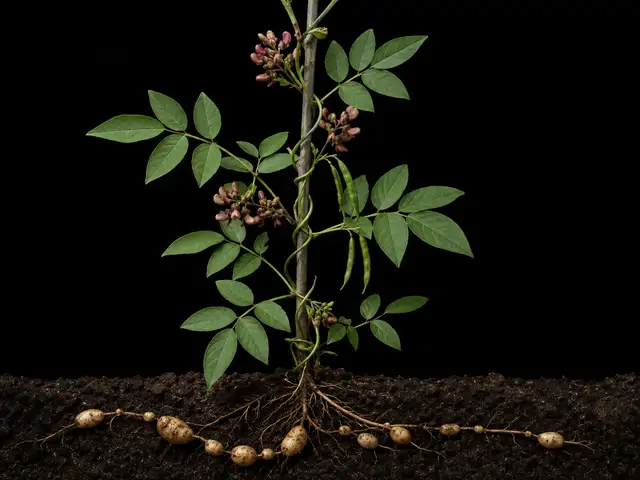
Groundnut tubers are a nutritious native food, but ALWAYS COOK THEM - never raw; try a small amount first, as a minority react mildly. Identify it before eating: a slender NON-WOODY twining vine, pinnate leaves of 5-7 leaflets, fragrant MAROON pea flowers, and beaded chains of tubers underground. Wisteria shares these damp thickets and hangs bean-like pods but is WOODY with lilac-blue flowers, and its pods and seeds are toxic - never collect pods from a woody vine. Forage herbicide-free ground.

Overview

A native twining legume vine that grows strings of protein-rich edible tubers underground - the wild 'potato bean' that fed Indigenous peoples and helped the Pilgrims survive, crowned with fragrant maroon flowers.

American groundnut (Apios americana), also called hopniss or the potato bean, is one of North America's most remarkable native food plants: a twining legume vine that climbs over shrubs and thickets to 3-10 feet, blooms with dense clusters of fragrant maroon flowers, and - the real prize - grows a string of protein-rich edible tubers underground, threaded like beads along its roots. Cooked, the tubers are nutty, dense, and potato-like, but with far more protein than a true potato (as you'd expect from a legume), making them an unusually nourishing wild root. It is not the peanut, which is called groundnut through much of Britain, Africa, and Asia - that is Arachis hypogaea, an unrelated annual with its own guide here. Nor is it the cinnamon vine or Chinese yam (Dioscorea polystachya), an unrelated invasive twiner of the same damp thickets that carries little aerial bulbils groundnut never has.

This is a plant with deep roots in American history. Its tubers were a staple food for many Indigenous peoples across the East, who gathered and cultivated it, and they famously helped the Pilgrims survive their first hard winters. As a nitrogen-fixing native perennial of moist woods, thickets, and stream banks, groundnut enriches the soil, feeds pollinators and wildlife, and - once you find or plant a patch - returns and renews itself year after year from its chains of tubers. The one firm rule: groundnut is a legume, so always cook the tubers (never raw), and try a small amount first, as a minority of people react to it.

At a glance

Sun
Full sun · Part sun · Part shade
Water
Medium
Spacing
12–30 in (typ. 18)
Mature height
36–120 in (typ. 84)
Start by
Direct sow · Tubers
Frost
Hardy
Germination
14–60 days (typ. 30) @ 60–80 °F (typ. 70)
Spread
12–48 in (typ. 24)
Soil
Consistently moist
Temperature
Damaged below -30°F · struggles above 95°F
Seed ready
120–180 days (typ. 150) (for saving)
Self-sows
Yes — expect volunteers
Support
Trellis-friendly

When to plant

Mar 27 – May 22
Primary Plant tubersSpring
Plant tubers in spring in moist, rich soil with support to climb; groundnut establishes and forms tuber chains over a season or two. A slow but permanent, self-renewing perennial patch.
Apr 10 – May 8
Secondary Direct sowSpring
Where seed is available (mostly from southern, pod-setting plants), sow scarified seed in warm, moist soil; growth from seed is slower than from tubers. Far more often it is grown from tubers or foraged where it grows wild.

Zone 7a typical frost: last Apr 10 · first Oct 25 (spring frost runs Mar 27–Apr 24 in a typical spread of years)

Life stages

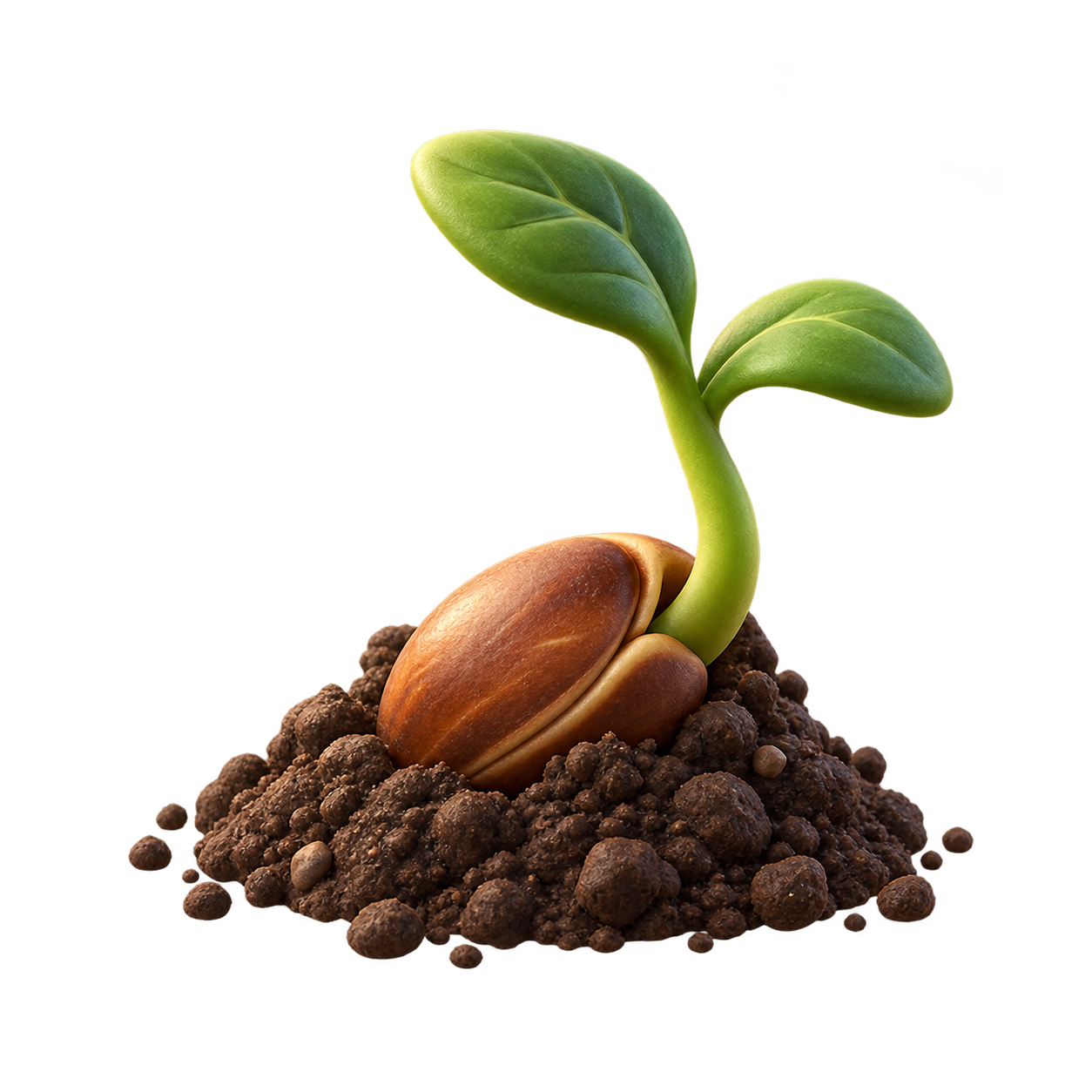
  1. Tubers sprouting / vining up day 0–70 from sowing
    • Give the twining vine something to climb
      Groundnut is a twining legume VINE - it climbs by wrapping around stems, shrubs, fences, or a trellis, reaching 3-10 feet. Provide support at planting; in the wild it scrambles over shrubs and thickets. As a legume it also fixes nitrogen, enriching the soil.
    • Keep moist - it loves damp ground
      Groundnut thrives in moist to wet, rich soil along stream banks, thickets, and damp woods. Keep new tubers watered to establish; steady moisture builds the string of edible tubers along its underground runners.
    Vine twining up its support (or over nearby shrubs)Underground runners forming a chain of tubers
  2. Maroon fragrant flowers (summer) Jul, Aug, Sep (yearly)
    • Enjoy the maroon, fragrant pea flowers
      In summer groundnut produces dense clusters of maroon-brown, pea-like flowers with a distinctive sweet, spicy fragrance - a beautiful and unmistakable ID feature. Bee-pollinated; in the North it often sets few or no seed pods (northern plants are frequently seed-sterile), spreading instead by its tubers.
    • Collect seed pods where they form (South)
      Where pods do set (more often in the South), the bean-like seeds inside are edible COOKED, like a small legume. Gather ripe pods for cooking or for growing new plants from seed - but collect pods only from a vine you have already confirmed as groundnut by its fragrant maroon flowers or its tuber chain, since toxic wisteria pods hang in the same thickets.
    Fragrant maroon flower clusters (the key ID)Few or no seed pods in northern plants (normal - they spread by tubers)
  3. Tubers (harvest) Mar, Apr, Sep, Oct, Nov (yearly)
    • Dig the tuber chains in fall (and cook them)every 14 d
      Follow an underground runner and dig the string of tubers - they grow like a beaded necklace along the roots, from marble- to egg-sized, best after a season or two of growth (fall through early spring). Scrub and ALWAYS COOK them - boil, roast, or fry for a nutty, protein-rich, potato-like food. Replant small tubers to keep the patch going.
    • A perennial patch you harvest and replant
      Because tubers grow in chains and any left behind regrow, groundnut is a near-permanent, self-renewing patch: harvest the larger tubers and leave or replant the small ones, and it returns year after year.
    Tubers largest and best after a season or two (a slow but generous crop)Left tubers regrowing (a feature for a permanent patch, a spread issue in beds)
  4. Winter dormancy Jan, Feb, Dec (yearly)
    • Dies back to hardy tubers
      The top growth dies back with frost while the tubers overwinter underground, very cold-hardy, and resprout to vine again in late spring. Tubers can be dug through the dormant season (when the tops have died back, so mark the patch). No winter care needed.
    Dormant tubers underground (dig through winter if you marked the patch)Late-spring resprouting from the tubers

Harvest

Style
Repeated picking
First production
1–2 yrs (typ. 2)
It's ready when
  • Tuber chains along the runners, largest and best after a season or two - dig fall through early spring
  • Cook before eating; where pods set, ripe bean-like seeds are edible cooked
What you harvest
Tubermain crop
Boiled · Roasted · Fried · Cooked (like a nutty potato)
Protein-rich tubers strung like beads along the runners - ALWAYS cooked (boiled, roasted, or fried), never raw; nutty and potato-like. A minority report a mild allergy, so try a small amount first. Replant small tubers to renew the patch.
Seed
Cooked (like a small bean/legume)
Where seed pods set (more often in the South), the bean-like seeds are edible cooked; northern plants often set little or none. Collect pods only from a vine confirmed by its maroon flowers or tuber chain - toxic wisteria pods hang in the same thickets.

Watch out for

Cook-Before-Eating & Mild Allergy Medium DisorderMar, Apr, Sep, Oct, Nov

A food-safety note rather than a plant problem: groundnut tubers are a legume and must be COOKED (never eaten raw), and a minority of people report a mild allergic reaction, sometimes only after eating it repeatedly.

Watch for: N/A as a plant condition - the caution is dietary: raw tubers, and rare mild allergic reactions in sensitive people (sometimes on repeated eating).

Prevent: Always cook the tubers (boil, roast, or fry) - never eat them raw; try a small amount the first time and watch for any reaction before eating more.

Treat: Cook thoroughly; if a mild reaction occurs, discontinue eating it. Otherwise no action needed - cooked groundnut is a wholesome, nourishing food for most people.

Voles & Rodents Low WildlifeJan, Feb, Sep, Oct, Nov, Dec

The nutritious underground tubers are food for voles, mice, and other rodents (as well as some larger wildlife), which dig and gnaw them, especially over winter - a mark of the plant's food value as much as a nuisance.

Watch for: A hosta that fails to sprout in spring, a crown that lifts easily because roots are gone, surface runways and holes under the mulch.

Prevent: Harvest the larger tubers in fall rather than leaving a full crop over winter; a contained bed or hardware-cloth barrier protects tubers where rodent pressure is high.

Treat: Dig tubers before heavy winter rodent activity; the vigorous, tuber-chaining plant usually shrugs off modest losses and regrows from remaining tubers.

Aggressive Tuber Spread Low DisorderJun, Jul, Aug, Sep

Not a pest but groundnut's spreading habit: it multiplies by chains of tubers and runners (and any tuber left behind regrows), so it forms an expanding, near-permanent patch that can wander into beds or climb over desirable plants.

Watch for: Vines twining over and smothering neighboring plants, and new shoots emerging from tubers well beyond where it was planted.

Prevent: Site it where its spread is welcome (a damp thicket, a dedicated bed, or a large container), give it strong support, and keep it from climbing over prized plants.

Treat: Dig out wandering tubers (get the runners) and cut back smothering vines; a contained bed or a spot it can freely fill keeps it productive without taking over.

Good & bad neighbors

Plant nearby
CornA traditional native pairing in spirit: as a twining nitrogen-fixing legume vine, groundnut climbs tall stalks like corn (echoing the bean of the Three Sisters) and enriches the soil with nitrogen - though it is vigorous, so give it room and strong support and keep it from smothering the crop.Traditional pairing — evidence is thin.
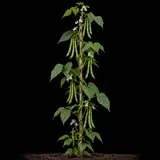
Pole BeanA fellow twining, nitrogen-fixing legume with the same climbing habit and soil-enriching benefit; growing pole beans is a good way to understand groundnut's vine and legume nature (and both want support to climb).Traditional pairing — evidence is thin.
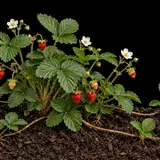
Wild StrawberryA low native groundcover that suits the same moist, part-shaded edges where groundnut vines up shrubs; the strawberry carpets the ground while groundnut climbs above, a layered native edible planting.Traditional pairing — evidence is thin.
DandelionA common companion of the damp thickets and edges where groundnut grows; its early flowers feed pollinators and its taproot mines minerals, a soft, traditional benefit in a diverse native food patch.Traditional pairing — evidence is thin.
Keep apart

Varieties · 3

American Groundnut (Apios americana)Zones 4a–9b

Twining vine with pinnate compound leaves, dense clusters of maroon pea-like flowers, and beaded chains of tubers underground.

speciesnativeedible-tubersvinenitrogen-fixerprotein-rich

The wild American groundnut (hopniss): a hardy native twining legume vine of moist woods and stream banks, with fragrant maroon flowers and strings of protein-rich edible tubers along its roots. Cooked as a nutty, nourishing potato-like food; the staple wild root that fed Indigenous peoples and early settlers.

Improved / Selected Groundnut (LSU and other selections)Zones 5a–9b

Vigorous twining vine as the wild type, with larger, heavier tuber chains.

selectedlarger-tubersfastercropedible-tubers

Groundnut lines selected and bred (notably in Louisiana State University research) for larger, faster-bulking tubers and better yields as a potential sustainable food crop - the same nutritious native, chosen for more productive, kitchen-friendly tubers. Grown from tubers like the wild plant.

Price's Groundnut (Apios priceana)

Twining vine with pinkish-maroon flowers and a single large tuber; rare in the wild.

speciesnativeraresingle-tuberprotected

A rare related native groundnut of the Southeast that forms one large tuber rather than a chain, with pinkish flowers. It is federally listed as THREATENED under the Endangered Species Act and protected by several states (AL, KY, MS, TN): collecting, digging, transporting, or trading wild plants is illegal. Listed here only so you can recognize it and leave it alone - not as a plant to grow or harvest.

Grow

A hardy native twining vine for moist, rich soil; give it support to climb, plant tubers, and let it form a slow but permanent, self-renewing patch that also fixes nitrogen.

Groundnut is a hardy, easygoing native perennial vine once it has the conditions it likes: moist to wet, rich soil in full sun to part shade, along stream banks, thickets, damp woods, and low ground. It climbs by twining, so it needs something to wrap around - a trellis, fence, shrubs, or a corn stalk - and reaches several feet in a season. As a legume, it fixes its own nitrogen, enriching the soil around it, and it needs no feeding.

Grow it by planting tubers in spring in moist, rich ground with support to climb; it establishes and builds its underground chains of tubers over a season or two (it's a patient crop - the tubers are best after the plant has grown a while). Because any tubers left behind regrow, groundnut forms a near-permanent, self-renewing patch: harvest the larger tubers and leave or replant the small ones. That same trait means it can spread where it's not wanted, so site it somewhere its wandering roots are welcome, or contain it. Far more often, groundnut is foraged where it grows wild along damp thickets and stream banks - in which case the vining and tuber-building are already done for you.

Harvest

Dig the strings of tubers in fall through early spring, always cook them (never raw), and replant the small ones to renew the patch; where pods set, the seeds are edible cooked too.

Harvesting groundnut is a treasure hunt along the roots. Follow an underground runner and dig the string of tubers strung along it like a beaded necklace - from marble- to egg-sized (occasionally larger), and best after a season or two of growth. The prime digging season is fall through early spring, when the tops have died back (so mark the patch first) and the tubers are fat with stored energy. Scrub them, then cook them: boil, roast, or fry them for a nutty, protein-rich, potato-like food that takes well to butter, salt, or frying like home fries.

The one firm rule is to always cook the tubers - never eat them raw (like most legumes, they need cooking to be wholesome), and to try a small amount first, since a minority of people report a mild allergic reaction, sometimes only after eating it repeatedly. Where the plant sets seed pods (more often in the South), the bean-like seeds are also edible cooked, like a small legume. To keep a patch going, replant the small tubers as you harvest the larger ones - groundnut renews itself indefinitely this way. As always, forage only from ground free of herbicides.

Storage

The best storage is in the ground - mark the patch and dig through the dormant season. Dug tubers keep only a few weeks cool and damp in the fridge and shrivel fast if left warm and dry; cooked tubers freeze well.

Groundnut does not store like a potato. The tubers have thin skins and no corky cured layer, so they shrivel quickly in a warm, dry room - within a week or two they go soft and rubbery. Keep them cool and damp instead: unwashed, in a perforated bag or in barely moist sand in the fridge, where they hold for a few weeks. Wash them only just before cooking, since washed tubers spoil far faster.

By far the best storage is to leave them in the ground. The tubers are very cold-hardy, so mark the patch before the tops die back and dig through the dormant season - fall through early spring - taking only what you need for a few meals at a time. The crop keeps itself, and the small tubers you leave behind restart the patch. For longer keeping, cook then freeze: boil or roast the tubers, cool them, and bag them for months.

Nutrition

An unusually protein-rich wild tuber for a root crop - a nourishing, potato-like legume food - plus edible cooked seeds and the soil-enriching benefit of a nitrogen fixer.

Groundnut is nutritionally remarkable for a wild root. Because it is a legume, its tubers carry far more protein than a true potato or most other root vegetables (studies have measured roughly three times the protein of a potato), along with carbohydrates, fiber, and minerals - making them a genuinely nourishing staple food rather than a mere trail snack. Cooked, they are dense, nutty, and satisfying, and they were valued precisely as a reliable, filling source of calories and protein. The bean-like seeds, where they form, add a small edible legume, cooked like any bean.

Ecologically, groundnut earns its keep several ways. As a nitrogen-fixing legume it enriches the soil for its neighbors, its fragrant maroon flowers feed bees and other pollinators, and it is a larval host and food plant for some native insects and wildlife. The essential nutritional caveat is simple and important: the tubers must be cooked (never eaten raw), and a small minority of people report a mild allergic reaction, so a cautious first taste is wise. Eaten cooked and sensibly, groundnut is one of the most nourishing native wild foods on the continent - a protein-rich root that once helped sustain whole communities.

History

A staple of Indigenous foodways across the East and a plant that helped the Pilgrims survive, later studied as a promising domestic crop - one of North America's great underused native foods.

Few native plants carry as much history as groundnut. Its tubers were a staple food for many Indigenous peoples across eastern and central North America, who gathered, managed, and in places cultivated it, and it appears throughout the ethnobotanical record as 'hopniss,' 'Indian potato,' and by many tribal names. When European colonists arrived, groundnut helped keep them alive: the Pilgrims and other early settlers relied on it through their first hard winters, learning of it from Native neighbors, and it sustained travelers and the hungry for generations afterward.

Despite this pedigree, groundnut was never fully domesticated as a mainstream crop. In the modern era it has drawn renewed interest: agricultural researchers (notably at Louisiana State University and elsewhere) have studied and bred it for larger, faster-growing tubers, seeing in this protein-rich, nitrogen-fixing native perennial a promising sustainable food crop - a plant that feeds people, enriches the soil, and returns on its own year after year. Rediscovered by foragers and permaculture gardeners, groundnut is valued again for exactly what made it important for millennia: a nourishing, dependable, uniquely American wild food hiding in the damp thickets and stream banks of half the continent.

Troubleshooting

Always cook the tubers (never raw) and try a little first, give the vine support, expect a slow first crop, and mark the patch to dig dormant tubers - and contain its spread if needed.

Can I eat the tubers raw? No - always cook groundnut tubers (boil, roast, or fry); like most legumes they are not eaten raw. And try a small amount first: a minority of people report a mild allergic reaction, sometimes only after eating it repeatedly. How do I know it's groundnut? Look for the twining vine, compound (pinnate) leaves, and unmistakable clusters of fragrant maroon pea-like flowers in summer, then the string of tubers along the underground runner. Wisteria is the vine to rule out: same damp habitat and bean-like pods, but woody with gray bark and lilac-to-violet flowers, and its pods and seeds are toxic - never collect pods from a woody vine. My tubers are tiny: groundnut is a patient crop - tubers are best after a season or two, so let the patch mature. It made no seed pods: normal in the North, where plants are often seed-sterile and spread by tubers instead; southern plants set more pods. The vine has nothing to climb: give it support (trellis, fence, shrubs) - it's a twiner. It's spreading into my beds: tubers left in the ground regrow, so contain it or site it where it can wander. I can't find the tubers in winter: the tops die back, so mark the patch before frost to dig dormant tubers. Pests and diseases: few of note on this tough native.

Growing across climates

A hardy native vine across the eastern and central US (zones 4-9) wherever ground is moist; it dies back to cold-hardy tubers each winter, with southern plants more likely to set seed.

Groundnut is hardy and adaptable across the eastern and central US, roughly zones 4-9, wherever it finds the moist, rich ground it loves - stream banks, damp thickets, wet woods, ditches, and low meadows - in full sun to part shade. It is very cold-hardy, dying back to its tubers each winter and resprouting in late spring, so it survives hard northern winters underground. Cold and temperate zones (4-7): a reliable perennial that vines and flowers through summer and builds its tuber chains for a fall-through-spring harvest, though plants here often set little or no seed (spreading by tubers). Warm southern zones (7-9): vigorous in the long, warm, moist season, and more likely to set seed pods whose bean-like seeds are also edible cooked.

Everywhere, moisture is the key requirement - groundnut is a plant of damp ground and struggles in dry, lean sites - and the harvest constant is the same: dig the tuber chains in the cooler part of the year (fall through early spring), and always cook them. Because a suitable native population grows across most of the eastern half of the continent, groundnut is available as a foraged (or easily grown) protein-rich native food across that broad, well-watered range, returning and renewing itself from its hardy underground tubers year after year.

Grower tips

No grower tips for American Groundnut yet. Yours could be the first.

Connection interrupted

Reconnecting to GrowSomeFood

Keep this page open. We are trying to restore your garden session.

Attempt of . Retrying automatically.

Still offline

Could not reconnect

Your phone may have switched networks or gone to sleep. Try again when the signal is steady.

Session expired

Reload to continue

This garden session is no longer available on the server. Reloading will start a fresh session.