Add it to your home screen and it opens full screen: no browser bars, one tap away, and everything stays signed in. Free, nothing to download from an app store.
- Tap the Share button in your browser
- Scroll down and choose “Add to Home Screen”
- Open GrowSomeFood from your home screen
- Open your browser’s menu
- Choose “Add to Home screen” or “Install app”
- Open GrowSomeFood from your home screen
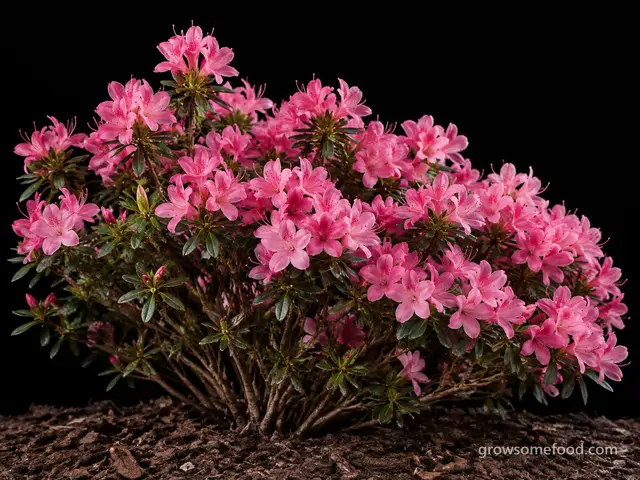
Garden Azalea
The shrub American front yards are built on: a low mound that disappears into the background for eleven months and then buries itself in bloom for two weeks in spring. Every azalea is a Rhododendron, every part is toxic, and almost every failure is soil pH or drainage rather than cold.
Every part of an azalea is toxic. Leaves, flowers, twigs, and even nectar and pollen contain grayanotoxins, and eating any part causes drooling, nausea, vomiting, weakness, low blood pressure, and heart-rhythm changes in people, dogs, cats, and livestock; honey made from the nectar ('mad honey') can sicken people too. The shrub is entirely safe to plant, prune, and enjoy - just never eat any part. Treat any ingestion as a poisoning and call Poison Control (1-800-222-1222) or a vet.
Overview
The one thing to knowEvery azalea is a Rhododendron; gardeners keep the two names because the plants behave differently.
Azaleas are the flowering shrub the American landscape is built on - low mounded plants that sit quietly in the foundation bed eleven months of the year and then, for two or three weeks in spring, cover themselves so completely that the leaves vanish behind the flowers. They are not a separate genus. Every azalea is a Rhododendron; gardeners keep the two names because the plants behave differently. Azaleas have smaller, thinner leaves, funnel-shaped flowers usually carrying five stamens, and modest size; rhododendrons have big leathery evergreen leaves, bell-shaped flowers with ten or more stamens, and far more bulk. This entry covers the garden hybrids sold across the US - the evergreen Kurume, Indica, Glenn Dale, Satsuki, and Encore groups, and the taller deciduous Exbury, Knap Hill, and Northern Lights types.
Two things are worth knowing before you plant one. First, every part is toxic: leaves, flowers, twigs, and even nectar and pollen carry grayanotoxins, the compounds behind the ancient story of “mad honey.” That is not a reason to avoid azaleas, which remain among the most planted shrubs in the country - it is a reason to keep them away from a paddock and to make sure nobody treats the flowers as a garnish. Second, an azalea is an acid-soil, shallow-rooted woodland plant wearing a foundation-shrub costume. Nearly every dead azalea in America died of soil pH or drainage, not of winter. Get those right and it will outlive the people who planted it.
Quick facts
- Life cycle
- Perennial, lives about 40 years
- Height
- 48 in24 to 96
- Spread
- 54 in30 to 84
- Cold
- Takes hard frostdamaged below -10°F
- Heat
- Struggles above 95°F
Part sun or part shade · medium water · well-drained soil · 48 in apart (30 to 72) · transplant or cuttings
When to plant
Fall transplanting is open for 6 more days. Next: spring, Mar 20 to May 22.
- Transplant Aug 2 – Sep 27 Closes in 6 daysAbout 12 weeks before to 4 weeks before your first frost (Oct 25 here)In the South this is the better window: roots run in warm soil through autumn and the shrub faces its first summer already established. Mulch and keep watering until the ground cools.
- Transplant Mar 20 – May 22 Opens in 180 daysAbout 3 weeks before to 6 weeks after your last frost (Apr 10 here)Set out container plants in early spring into acidic, sharply drained soil in morning sun and afternoon shade. Plant high, mulch, and water through the first two summers.
Frost here: last around Apr 10 (Mar 27 to Apr 24 most years), first around Oct 25. Zone averages, your own yard may run a week or two either way.
Life stages
One stage to settle in, then three that repeat each year. Windows are typical; your zone and weather move them.
Years 1-2 - rooting in
The first year after planting- DoPlant high, in acidic soil - this is where azaleas are won or lostAzaleas want acidic soil (pH about 4.5-6.0) that is moist but sharply drained. Dig a wide, shallow hole, work in composted pine bark, and set the root ball so its top sits an inch or two ABOVE the surrounding grade, tapering soil up to it. Planting too deep in heavy ground is the single commonest way to kill one. Tease the outer roots loose if the ball is tight - nursery azaleas are often pot-bound and will otherwise sit in their own knot and dry out.
- WaterWater steadily through the first two summersevery 4 daysThe root system is fine, fibrous, and almost entirely in the top few inches of soil, so it dries out long before the ground around it looks dry. Water deeply twice a week through the first two growing seasons in warm weather, checking the root ball itself rather than the surrounding bed, and keep watering into autumn until the ground cools.
- MulchMulch with pine bark or pine straw, and never cultivateTwo to three inches of pine bark, pine straw, or shredded leaves keeps those surface roots cool and damp and holds the soil acidic. Keep the mulch pulled back from the stems. Do not dig, hoe, or plant annuals around an established azalea - you will cut the feeding roots that live right under the surface.
Watch for- A root ball that stays dry while the surrounding bed is damp (water the ball itself)
- Yellow leaves with green veins - the soil is not acidic enough
- Wilting in soggy ground, which means root rot rather than drought
Spring bloom
Mar to Jun, every year- InspectTwo to three weeks of complete bloomAt peak, a well-grown azalea hides its own foliage - funnel-shaped flowers open all along the stems in white, pink, coral, magenta, scarlet, or lavender. Evergreen types run early-to-mid spring; deciduous hybrids follow, often fragrant, in late spring. Bumblebees and swallowtails work the flowers, though the nectar carries grayanotoxins and honeybees can be harmed by it.
- PruneDeadhead by hand while the flowers are fadingSnap the spent trusses off sideways with your fingers, taking care not to break the fat growth buds sitting immediately behind them. It tidies the shrub and puts energy into growth rather than seed. On a large planting it is optional and purely cosmetic. Wear gloves and wash up afterwards - all parts are toxic - and keep the prunings away from pets and livestock.
- ProtectCover open flowers if a hard late frost is comingOpen azalea flowers turn brown and mushy at about 28F, and in cold springs a single late freeze can take the whole display. The plant itself is unharmed. If frost is forecast during bloom, throw a light sheet over a small shrub in the evening and take it off in the morning; in cold zones, siting away from an east-facing wall stops flowers thawing too fast at sunrise.
Watch for- Flowers going limp and slimy brown in warm wet weather - petal blight, not frost
- Bees working flowers whose nectar is toxic
- Frost damage to open blooms after a warm spell
Summer growth & bud set
Jun to Aug, every year- PrunePrune only in the few weeks right after bloomAzaleas set next spring's flower buds in early-to-mid summer, so the pruning window closes about a month after the flowers fade. Anything cut after that is next year's display. Shorten wayward shoots back to a side branch rather than shearing the outside of the shrub, which builds a dense shell and a hollow, twiggy interior. An overgrown evergreen azalea can be cut back hard into bare wood at this point and will resprout.
- FertilizeFeed lightly, if at all, with an acid formulaAzaleas are light feeders and most established shrubs in decent soil need nothing. If growth is weak and pale, apply a fertilizer labelled for azaleas, rhododendrons, and camellias at the label rate once, just after bloom. Never feed after midsummer - late soft growth does not harden before winter. Do not lime the bed, and keep wood ash and mushroom compost well away from it.
- WaterKeep water on through heat and droughtweeklyShallow roots plus heat plus dry soil is the combination that produces lace bugs, scorched leaves, and thin bloom the following spring. Soak the root zone deeply during dry spells, water in the morning rather than over the flowers, and top up the mulch. A shrub kept evenly moist through August sets far more flower buds.
Watch for- Pale stippled leaves with black specks underneath (lace bugs - almost always a too-sunny, too-dry site)
- Scorched leaf margins after a heat wave
- Growth buds forming - stop pruning now
Fall & winter
Sep to Feb, every year- WaterSend it into winter well wateredEvergreen azaleas keep transpiring through winter while the ground is frozen, and most winter browning is drought rather than cold. Water deeply in late autumn until the ground freezes, especially in a dry fall, and keep the mulch layer topped up over the shallow roots.
- ProtectScreen exposed shrubs from winter sun and windIn zones 5 and 6, an evergreen azalea standing in open winter sun and wind will brown along the leaf edges by February. A burlap screen on the windward side, or simply planting on the north or east side of the house, prevents almost all of it. Deciduous hybrids need none of this.
- InspectClean up fallen flowers and old mulch after a blighted springWhere petal blight ruined the bloom, the fungus overwinters in the fallen petals and the top of the mulch beneath the shrub. Rake the litter out, bin it rather than composting it, and lay fresh mulch. Doing this once usually breaks the cycle for the following spring.
Watch for- Leaf edges browning in winter sun and wind (dry roots, not cold damage)
- Deer browsing buds and shoots through winter
- Flower buds already set - no pruning until after next spring's bloom
Watch out for
6 to know. 4 are high-risk: Deer (browse resistance), Root Rot, Azalea Lace Bugs, Iron Chlorosis (Alkaline Soil). 3 are active in September.
Deer (browse resistance)Severity High WildlifenowDo not count on the grayanotoxins to protect it - evergreen azaleas are among the most heavily browsed shrubs in suburbia, and a hungry herd in late winter will strip a foundation planting of leaves and flower buds in a night.
Fence, cage, or rotate repellents from autumn onward, not in spring when the buds are already gone.
Growth cleanly missing overnight, with the plant browsed back to a level line about as high as a deer can comfortably reach. Ragged, torn stem ends rather than the clean angled cut a rabbit leaves - the single most reliable identifier. Buds and flowers gone while the foliage below is untouched, since deer often take the best part first. Hoof prints and droppings in soft ground near the damage. Repeat visits, with fresh damage each morning once a planting has been found. On young trees, shredded and stripped bark and broken low branches in autumn - that is antler rubbing rather than feeding.
There is no chemical fix, only exclusion and recovery. Get physical protection up immediately after the first damage, because deer return to a known meal, and reinforce or rotate whatever you were relying on before. Most plants regrow from browsing if the crown and roots are intact - feed and water a grazed plant and protect the regrowth while it comes back. What does not recover in the same season is anything whose buds or flowers have been taken, and a young tree whose bark has been rubbed right around the trunk is usually lost. Where deer pressure is genuinely heavy, the honest answer is to fence properly or to grow the plants deer leave alone, rather than to keep replacing losses.
Fencing is the only thing that reliably works. Eight feet is the standard for excluding deer, or two parallel four-foot fences a few feet apart, which they will not jump because they cannot judge the landing. Short of that, cage individual plants: a sturdy wire cage or trunk guard around every young tree, left on until the trunk is thick and the canopy is above browse height, prevents both browsing and antler rubbing and is the single highest-value thing you can do for a young tree. Repellent sprays do help at moderate pressure, but they wash off and deer habituate, so reapply after rain and rotate between different types through the season. Motion-activated sprinklers, scent deterrents, and noise devices work for a while and then stop. Siting matters too: plants close to the house, in daily traffic, and screened behind other planting get browsed less than the same plant out at the boundary.
Deer are the largest garden problem across much of the country, and where pressure is high they set the limit on what you can grow at all. They browse at night and around dawn and dusk, taking tender shoots, leaves, buds, flowers, and fruit within about five feet of the ground, and they come back night after night to anything they have found and liked. Because they have no upper incisors they tear rather than cut, leaving ragged stem ends - that is how you tell deer damage from a rabbit's clean angled cut. In fall, bucks rub their antlers on young trunks and can strip the bark right around a stem, which kills a young tree outright. Palatability varies enormously between plants and between seasons: a herd short of food in late winter eats things it ignores in June, and no plant is truly deer-proof.
Root RotSeverity High DiseasenowPhytophthora is the specific killer of azaleas and the commonest cause of a shrub that simply dies for no visible reason.
Almost every case traces back to planting too deep or in ground that does not drain: set the root ball an inch or two above grade, build a raised bed on clay, and never plant one in a low spot.
Wilting in the middle of the day on a plant whose soil is damp - the classic tell, and the reason people water a rotting plant and finish it off. Leaves yellowing from the bottom up, dull off-color foliage, and growth that stalls for no visible reason. Whole shoots, or one side of the plant, collapsing while the rest still looks fine. Soft, dark, or mushy tissue at the base of the stem or at the crown, sometimes with a sour smell. Lift a failing plant and look at the roots: healthy ones are firm and pale, rotted ones are brown or black and slimy, and the outer layer slips off between your fingers leaving a thread of core behind. Seedlings that topple over at soil level are the same problem, called damping-off.
There is no cure for tissue that has already rotted, so act on the conditions rather than looking for a spray. Stop watering at once and fix the drainage - open up compacted soil, or move the plant to a raised, sharply drained position or a container. Lift a badly affected plant, cut away every soft dark root and rotted section with a clean blade back to firm pale tissue, and replant only the healthy parts into fresh free-draining soil or mix. Often the better move is to give up on the plant and save its offspring instead: cuttings, offsets, or divisions taken from firm healthy growth root readily and give you a clean start. Bin the rotted material rather than composting it, and correct the drainage before you replant, because the rot comes straight back in the same wet spot.
Drainage is the whole defense. Match the plant to the site first - something that wants sharp drainage will not survive heavy clay or a low, water-collecting spot however well you tend it. Where the ground is heavy, plant on a raised bed, berm, or slope, or grow in a container. Set plants at the depth they were already growing, since burying the crown or the root flare is a common cause of rot, and keep mulch pulled back a few inches from the stem base instead of piled against it. Water the soil rather than the calendar: check that the top inch or two is dry before watering again, cut back hard in cool weather and winter dormancy, and never leave a pot standing in a full saucer. Do not plant or dig in soggy ground, and go easy on rich amendments for plants that want it lean. Rotate annual crops, and start with clean healthy plants and fresh mix.
Root rot is not one organism but a group of soil fungi and water molds - Pythium, Phytophthora, Fusarium, Rhizoctonia and others - that sit harmlessly in most soils and only turn destructive when the ground stays saturated. Waterlogged soil drives the air out, the roots suffocate, and the weakened tissue is invaded and goes soft, brown, and stringy. Because the damage is underground you usually see it first as something that looks like drought: wilting, yellowing, stunting, a plant that does not respond to being watered. Overwatering, heavy compacted ground, a low spot that collects runoff, a pot with no drainage or a saucer left standing full, and cold wet soil in winter are the usual causes. Once roots have actually rotted there is no cure - this is a problem you prevent rather than treat.
Azalea Lace BugsSeverity High PestnowThe defining azalea pest, and effectively a siting diagnosis: azalea lace bug populations explode on shrubs planted in full afternoon sun and dry soil, and collapse on the same cultivar grown in moist part shade.
Check the undersides in late May before the plant goes pale.
Pale stippling or fine white speckling across the upper leaf surface, worst on the leaves most exposed to sun. Hard shiny black specks and rusty cast skins on the leaf undersides - the confirming sign, and what separates lace bugs from spider mites, which leave fine webbing instead. Small flat insects with lacy transparent wings on the undersides when you turn a leaf over. Whole plants looking bleached, grey-green, and tired by midsummer, with the worst of it on the sunny, dry side. Early leaf drop and thin, weak growth on plants attacked hard several years running.
Treat early, and treat from below. Insecticidal soap or horticultural oil kills lace bugs on contact but only where it lands, so the spray has to reach the leaf undersides; go after the first generation in late spring rather than the bleached plant in August, and repeat after seven to ten days. A strong jet of water on the undersides knocks nymphs off and helps. Foliage that is already stippled will not recover its colour - it stays that way until it drops, so judge success on the new growth, not the old. Anything you spray must be labeled for the plant you are treating. Where a shrub is hit badly every single year, the honest fix is more shade and more water, or a different plant in that spot.
Siting does most of the work. Plants grown in cool part shade with steady moisture and a good mulch carry a fraction of the lace bugs that the same plants carry in hot afternoon sun and dry soil, so move a chronically infested shrub rather than spraying it every year. Keep the root zone mulched and evenly watered right through summer. Avoid broad-spectrum insecticides, which remove the lacewings, predatory bugs, and spiders that hold lace bug numbers down. And turn a few leaves over in late spring, when the first generation is small and easy to deal with, rather than waiting until the plant has gone pale.
Lace bugs are small flat sap-suckers with clear, intricately veined wings that sit on the undersides of leaves and drain them one cell at a time. You almost never notice the insect first - what you see is the leaf going pale and stippled from above, as though the colour had been lifted out of it in fine dots, while the underside carries scattered hard black specks of varnish-like excrement along with the shed skins of the nymphs. Several generations run through a single season, so damage accumulates from late spring onward and a badly attacked plant looks bleached and exhausted by August. Damaged leaves never re-green. Above all this is a pest of plants growing in more sun, heat, and drought than they want: the same shrub in cool part shade with steady moisture often carries almost none.
Iron Chlorosis (Alkaline Soil)Severity High DisorderAzaleas need a pH around 4.
5-6.0 and go chlorotic quickly above it - which is why they fail so consistently in alkaline-soil regions and next to concrete foundations and paths that leach lime. Test before planting; a raised bed of composted pine bark is a better answer than years of chelated iron.
Yellow leaves with a distinct network of green veins, worst on the NEWEST growth at the shoot tips - that vein pattern is what separates it from a nitrogen shortage, which yellows the oldest leaves uniformly. Whole plants going progressively paler over a season rather than suddenly. Brown scorched leaf margins and shoot-tip dieback in advanced cases. Symptoms concentrated on the side of a plant nearest a foundation, wall, path, driveway, or a stretch of limed lawn. One plant affected while a neighbor that does not need acid soil looks perfect.
Correct the soil, and use iron only to buy time. Chelated iron sprayed on the leaves or drenched into the root zone greens a plant up within a week or two, but it wears off in a season and has to be repeated indefinitely - it fixes nothing. The real fix is lowering pH with elemental sulfur applied to the surface and watered in, retesting each season until you are in range, then holding it there with acidic mulch and acid fertilizer. Expect one to two years; there is no fast route. Note that other shortages look identical - manganese deficiency produces the same yellow-with-green-veins pattern on some plants - so a plant that does not green up from iron should be tested rather than dosed again. Where the pH is high because of nearby concrete or genuinely calcareous subsoil, the plant is in the wrong place, and moving it into a properly built acidic bed or container will succeed where years of amendment will not.
Test the soil pH before you plant, not after, and match the plant to the ground - an acid-loving plant in limy soil will never be truly healthy however it is fed. Where the pH is too high, acidify with elemental sulfur worked in the season BEFORE planting, since sulfur takes months of soil biology to work and cannot be rushed, and retest before you commit plants. On genuinely alkaline ground the honest answer is often a raised bed of acidic mix, or a container, rather than fighting the native soil forever. Keep an acidic organic mulch topped up - pine bark, pine straw, sawdust - and site acid-lovers away from concrete foundations and mortared walls, which leach lime for decades. Never apply lime, wood ash or mushroom compost where the roots reach, use acid-forming fertilizers such as ammonium sulfate, and improve drainage, because cold waterlogged soil hurts uptake even at the right pH.
Not an infection but a nutrient lockout caused by soil chemistry. Iron is abundant in almost every soil, but as pH rises it converts to forms roots cannot take up, so a plant that needs acid ground slowly starves for iron while standing in soil full of it. The symptom is unmistakable: new leaves go pale yellow or cream while the veins stay green, giving a fine green net over a yellow leaf. It shows first and worst on the newest growth, because iron does not move around inside a plant to be recycled. It does not spread between plants, does not respond to fungicides, and does not resolve on its own - left uncorrected the plant grows less each year, leaves get smaller and paler, shoot tips die back, crops fall away, and it eventually dies. Worst near concrete, mortar, paths and limed ground, and in cold, wet, compacted soil.
Petal BlightSeverity Medium DiseaseOvulinia azaleae is the azalea specialist, and it is worst in the humid Southeast where a warm wet spell lands on peak bloom.
The single most effective home measure is stripping the fallen petals and the old mulch out from under the shrub after flowering.
Small pale or watery spots on open petals - white spots on coloured flowers, rust-brown on white ones - appearing during a warm wet spell at peak bloom. Flowers going limp, brown, and slimy within a day or two rather than drying papery at the edges the way frost or age leaves them. Collapsed trusses clinging to the shrub instead of dropping. Leaves and shoots completely unaffected while the flowers are ruined: that contrast is the identifying feature. A plant that does the same thing at the same point every spring, especially in a still, shaded, crowded corner.
Nothing sprayed onto a blighted flower will bring it back, so treatment is really about next spring. Pick off collapsed trusses as they appear and bin them rather than composting them, then strip and replace the mulch once bloom is over. Where a valued plant is ruined annually, protective fungicides do work, but only preventively - they have to go onto the flower buds as colour first shows and be repeated through bloom, which is a demanding schedule for an ornamental. Follow the label for the plant you are treating. For most gardens the honest answer is sanitation, better airflow, watering at the base, and accepting that a warm wet spring will cost you some flowers.
Clean up the litter. The fungus survives in fallen petals and the surface of the mulch, so rake out and bin every blighted flower and the old mulch beneath affected plants after bloom and lay a fresh layer - that alone breaks most of the cycle in a home garden. Water at the base rather than over the flowers and keep sprinklers off anything in bloom. Thin crowded plantings so air moves through, and avoid planting new shrubs tight against an old, chronically affected one. Where the disease shows up every year, planting later-blooming varieties that flower after the wettest weather has passed is a genuine fix rather than a workaround.
Petal blight is a fungal disease of the flowers alone - leaves, stems, and roots are untouched - which makes it particularly galling on a shrub grown for two weeks of bloom. Spores landing on open petals during warm, wet, humid spring weather produce small pale spots that within a day or two swell into limp brown blotches, and the whole truss collapses into a slimy brown mass that then hangs on the plant for weeks instead of dropping cleanly. A blighted petal rubbed between the fingers feels slippery and tissue-like, quite unlike the dry papery brown of frost damage or ordinary fading. The fungus overwinters as hard black resting bodies in the fallen flowers and the top of the mulch beneath the plant, which is why it returns to the same shrub year after year - and why the litter under the plant is the whole story.
Spider MitesSeverity Low PestSouthern red mite is the azalea species, and unusually it peaks in the cool of spring and autumn rather than midsummer.
The stippling looks much like lace bug damage - check the undersides, because lace bugs leave hard black specks and mites leave fine webbing.
Fine pale stippling or speckling across the upper leaf surface, as though the color had been sandblasted out of it, and later a dull bronze or rusty cast over the whole leaf. Delicate webbing across leaf joints, shoot tips, and undersides - that comes with a heavy infestation and means you caught it late. Leaves that dry, curl, and drop early while the plant looks thirsty no matter how much you water it. Hold a leaf over a sheet of white paper and tap it: the specks that fall and then start walking are mites. With a hand lens, look on the undersides for the mites themselves, pale or reddish, and their round translucent eggs. Damage that shows up first on the hottest, dustiest, most sheltered side of a plant, or on a pot sitting near a radiator indoors.
Start with water. A strong jet aimed at the leaf undersides, repeated every few days for a couple of weeks, knocks populations down and breaks the cycle - on many plants that alone ends it. On anything that regrows quickly, shearing back badly infested growth resets the plant to clean foliage. If it keeps building, spray insecticidal soap or horticultural oil directly onto the undersides where the mites actually live, and repeat every five to seven days for three rounds: contact sprays do not kill the eggs, so a single application always fails. Anything you spray must be labeled for the plant you are treating - follow the label and observe its pre-harvest interval on anything you eat. Predatory mites are an effective release in a greenhouse or on an indoor plant. Above all, correct the heat, dust, and drought stress that caused it, or the mites simply come back.
Do not let plants get drought-stressed - that is the single strongest trigger, and a plant watered steadily through heat is far less likely to have a mite problem at all. Hose the foliage down, undersides included, during hot dry spells: it knocks mites off, washes away the dust they thrive in, and raises the humidity around the plant for a while. Indoors and under cover, keep the air from going hot, dry, and stagnant, wipe or rinse the leaves occasionally, and keep pots away from radiators and heating vents. Inspect any plant carefully before you bring it indoors for winter or set it among others, since mites almost always arrive on something else. Avoid broad-spectrum insecticides: they wipe out the predatory mites, lacewings, and lady beetles that do most of this work for you, and reliably leave you with a worse outbreak than you started with.
Spider mites are not insects but tiny sap-feeding arachnids, smaller than a grain of salt, and you almost always notice the damage before you notice them. They live on the undersides of leaves and drain the cells one at a time, which is why the leaf goes finely stippled with pale dots before it bronzes and dries. They breed explosively in hot, dry, dusty, still air - a generation can pass in a week at high temperature - so a barely visible population becomes a webbed, bronzed plant within a fortnight. Drought-stressed plants and plants wintered indoors in dry heated air are the classic hosts. Broad-spectrum insecticides make matters worse rather than better, because they kill the predatory mites and lady beetles that normally hold mites in check.
Good & bad neighbors
Plant nearby
-
Identical soil, drainage, and light needs, so they share one acidic bed with no compromise - and the rhododendron's bulk and big evergreen leaves give the low azalea mounds something to sit against.
-
Evergreen fronds fill the ground around azalea mounds without competing for the surface roots, and both want the same cool, moist, humus-rich, undisturbed soil.
-
The classic pairing: the maple's high, light canopy supplies exactly the afternoon shade azaleas want, and both are acid-soil plants with shallow roots that resent cultivation, so one mulched, undug bed suits them both.
-
A native acid-loving shrub that takes over the display in summer once the azaleas have finished, then colours in autumn - the two together keep a shaded border going for three seasons.
- Traditional pairings, thin evidence
-
A close Ericaceae relative with the same acid-soil and drainage requirements - if you are already building and maintaining an acidic bed, blueberries can share it, though they want considerably more sun.
-
Bulbs flower around the feet of an azalea before and during its bloom and then die back under the shrub's summer shade; they are also planted deeper than the azalea's surface roots, so nothing gets disturbed.



Varieties · 7
You pick one when you add Garden Azalea to your garden. Its days to maturity set your harvest window.
Evergreen azalea 5 varieties
Hershey's Red (Kurume)
Low spreading mound covered in small double scarlet-red funnel flowers.
evergreen-azaleakurumeredcompactThe ubiquitous red Kurume of American foundation beds: a dense, wide, 3-4 foot mound that disappears under double scarlet-red flowers in early-to-mid spring. Tough, cheap, everywhere, and genuinely reliable in zones 6-9. Like all Kurumes it flowers on the outside of a shell of growth, so thin it rather than shear it if you want blooms deeper in.
Delaware Valley White (Indica)
Spreading shrub with clean single white funnel flowers over glossy foliage.
evergreen-azaleawhitevigorousold-woodThe standard white evergreen azalea for the mid-Atlantic and South: vigorous, 3-4 feet, with pure white single flowers in mid spring and better cold tolerance than most Indica types. Reads as light in a shaded bed the way no coloured azalea does, and mixes with anything.
Gumpo White (Satsuki)
Low flat mound of small dark leaves carrying big ruffled white flowers late in the season.
evergreen-azaleasatsukidwarflate-bloomA true dwarf Satsuki: 12-18 inches tall, twice as wide, with unusually large white flowers opening in late spring - weeks after the Kurumes, which is the point of the group. Perfect at the front of a bed, along a path, or in a container, and a classic bonsai subject.
Deciduous azalea 2 varieties
Northern Lights series (Rosy Lights, Lemon Lights)
Upright open shrub bare in winter, carrying fragrant rounded trusses in late spring.
deciduous-azaleavery-hardyfragrantfall-colorBred at the University of Minnesota for flower-bud hardiness near -40F, this is the series that made azaleas possible in the far North. Upright 4-6 foot deciduous shrubs with fragrant trusses in rose, yellow, orange, or white in late spring, and good autumn colour. Where no evergreen azalea will bloom, these do.
Exbury hybrids (Gibraltar, Klondyke)
Tall open shrub with large honeysuckle-shaped flowers in blazing orange and gold, fragrant, before or with the leaves.
deciduous-azaleafragrantflame-colorfall-colorThe classic English deciduous hybrids, raised at Exbury from Knap Hill stock with North American native azaleas in the background. Big rounded trusses of flame-orange, gold, or scarlet in late spring on 5-8 foot shrubs, most of them fragrant, with orange-bronze autumn foliage. Wants more sun than an evergreen azalea and just as much acidity.
Grower tips
Notes from growers, tagged with the zone they grow in. A person reads every post before it appears.
Nobody has posted about Garden Azalea yet. The first one usually saves someone a season.
Free account. Your post shows your grower name and zone, never your email.