Add it to your home screen and it opens full screen — no browser bars, one tap away, and everything stays signed in. Free, nothing to download from an app store.
- Tap the Share button in your browser
- Scroll down and choose “Add to Home Screen”
- Open GrowSomeFood from your home screen
- Open your browser’s menu
- Choose “Add to Home screen” or “Install app”
- Open GrowSomeFood from your home screen
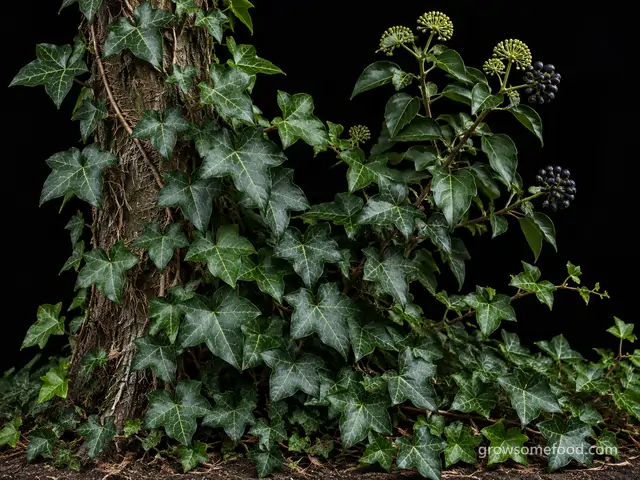
English Ivy
English ivy is mildly toxic and not edible - its berries and leaves contain saponins that cause stomach upset and vomiting if eaten (keep berries from children and pets), and its sap causes an allergic skin rash in many people, so wear gloves when handling or removing it. The bigger problem is ecological: it's an invasive that smothers native plants and trees. Don't plant it; protect your skin when removing it, and never let cuttings root. Choose native groundcovers instead.
Overview
A popular evergreen groundcover that's actually a serious invasive - it smothers and topples native trees and carpets forests in lifeless 'ivy deserts.' Don't plant it; learn to control it and choose natives.
English ivy (Hedera helix) is one of the most widely sold ornamental groundcovers - and one of the most damaging invasive plants where it escapes, which it readily does. This tough, shade-tolerant, evergreen vine carpets the ground and climbs trees, walls, and fences by clinging rootlets, and once loose in the landscape it becomes a serious problem: it smothers and kills native wildflowers and shrubs beneath dense evergreen mats ('ivy deserts'), and it climbs and eventually topples and kills mature trees by weighing them down and shading their leaves.
Because it's so common in gardens (and still sold), many people don't realize English ivy is a listed invasive across much of North America - notably the Pacific Northwest and Southeast - and even banned or restricted in some areas. This entry is here to help you identify and control it, understand why not to plant it, and choose better alternatives. It's also mildly toxic (berries and leaves) and a skin irritant, so it's a plant to handle with care as well as to keep out of the wild.
At a glance
- Sun
- Part sun · Part shade · Shade
- Water
- Medium
- Spacing
- 12–1200 in (typ. 48)
- Mature height
- 6–1080 in (typ. 360)
- Start by
- Direct sow · Cuttings
- Frost
- Hardy
When to plant
No planting window on record for this zone.
Life stages
- Evergreen creeping/climbing growth (identify & control) year-round (yearly)
-
Recognize the two leaf formsEnglish ivy is an evergreen vine with glossy, dark green, usually 3-5-lobed leaves in its juvenile creeping/climbing stage. It carpets the ground and climbs trees and walls by clinging rootlets. Where it climbs into good light and matures, the leaves become unlobed (oval) and it flowers - so juvenile lobed leaves and adult oval leaves can appear on the same plant.
-
Cut it off trees and pull the groundcoverTo control it, cut the climbing vines at the base (and again a few feet up, removing the section) to save the tree - don't rip the vines down and damage the bark; the upper growth dies. On the ground, pull or dig the mats (it roots as it goes). Wear gloves - the sap irritates skin. Bag the material; don't let cuttings re-root.
Vines climbing and thickening on tree trunks (they topple and kill trees)Dense evergreen mats smothering the ground ('ivy deserts')Rooting wherever stems touch soil -
Recognize the two leaf forms
- Mature flowers & black berries Sep, Oct, Nov (yearly)
-
Only mature (climbing) ivy flowers and fruitsOnce ivy climbs into the light and matures, it produces rounded clusters of greenish flowers in fall, then dark purple-black berries in late winter. Birds eat the berries and spread the seed to new areas - which is how ivy jumps into wild forests. The berries are toxic to people; remove mature climbing ivy to stop seed spread.
-
Stop it before it fruitsSince only mature climbing ivy fruits, keeping ivy from climbing (and removing what has climbed) prevents most seed spread. Prioritize removing the fruiting vines high in trees.
Greenish flower clusters and black berries on mature climbing ivyBirds spreading seed to new areas -
Only mature (climbing) ivy flowers and fruits
Watch out for
Smothering & Killing Trees / Understory Disorder Highyear-round
The core hazard is ecological: English ivy climbs and weighs down trees (toppling and killing them) and carpets the ground in dense evergreen mats that smother native wildflowers and shrubs, degrading habitat into 'ivy deserts.'
Watch for: Ivy thickening on tree trunks and into canopies, and dense evergreen ground mats replacing native understory.
Prevent: Never plant it; cut climbing vines off trees early; remove ground mats and replant with natives.
Treat: Cut vines at the base to save trees, pull/dig ground mats, prioritize removing fruiting ivy to stop seed spread, and follow up persistently.
Toxic Berries & Irritant Sap Disorder Mediumyear-round
A direct hazard to people and pets: the berries and leaves are mildly toxic (saponins) and cause vomiting and stomach upset if eaten, and the sap causes an allergic skin rash in many people.
Watch for: Children or pets near the black berries; skin rash after handling or removing ivy bare-handed.
Prevent: Keep berries away from children and pets; wear gloves and cover skin when handling or removing it.
Treat: For ingestion, contact poison control; for skin contact, wash the area and treat the rash as contact dermatitis.
Varieties · 2
The invasive evergreen ivy: glossy lobed juvenile leaves and oval adult leaves, climbing trees and walls by rootlets and carpeting the ground, with black berries spread by birds. Smothers and kills native plants and trees - identify, control, and replace with natives; not to be planted.
Instead of English ivy, plant regional native groundcovers - such as wild ginger, native ferns, sedges (Carex), Allegheny spurge (Pachysandra procumbens), or partridgeberry - which provide evergreen or seasonal cover and shade tolerance without the invasive damage. Ask a local native-plant source for the best options for your area.
Grow
How to recognize it and why not to plant it: an evergreen clinging vine with glossy lobed (juvenile) and oval (mature) leaves that smothers ground and trees, spreading by rooting stems and bird-dropped seed.
Despite being sold as an easy groundcover, English ivy should not be planted in North America - so recognizing it is what matters. It's an evergreen vine with glossy, dark green leaves in two forms: the familiar 3-5-lobed 'juvenile' leaves on creeping and climbing stems, and unlobed oval 'adult' leaves on mature growth that has climbed into good light (where it flowers and fruits). It clings to trees, walls, and fences with masses of small rootlets and carpets the ground in dense evergreen mats.
It spreads two ways: by rooting stems that creep and root wherever they touch soil (so a groundcover patch expands relentlessly), and by seed from its late-winter black berries, which birds eat and carry into wild forests - the main way it jumps beyond gardens. It tolerates deep shade, a wide range of soils, and considerable neglect, which is exactly what makes it such a successful invader. Understanding this - and that even a 'contained' garden planting seeds itself into the wild via birds - is why the recommendation is simply not to grow it, and to remove it where it's established.
Care
Control, not care: cut climbing vines at the base to save trees, pull ground mats (wearing gloves for the irritant sap), remove before it fruits, bag the material, and replant with natives.
For English ivy, 'care' means removal. To save a tree it's climbing, cut the vines at the base and remove a section a foot or two up (creating a gap) so the upper growth dies in place - don't rip established vines down, which can strip bark; let the dead ivy decay and fall over time. On the ground, pull or dig up the mats, getting the rooted stems, ideally when soil is moist. Work in patches and follow up, since bits regrow.
Always wear gloves and cover skin - ivy sap causes an allergic rash in many people - and keep the toxic berries away from children and pets. Bag and dispose of the material (don't compost stems that can re-root, and don't let cuttings spread). Prioritize removing mature, fruiting ivy high in trees to stop bird-spread seed. Then replant with native alternatives - native evergreen groundcovers, ferns, sedges, or wild ginger give the same cover without the invasion. For large infestations, enlist a local invasive-removal group or professional; ivy pulls are common community volunteer events for exactly this reason.
Nutrition
Not a food - it's mildly toxic to people and pets, and grown for looks, not eating. Its ecological 'contribution' is negative: it degrades native habitat, so replacing it with natives is the real goal.
English ivy is not food - its berries and leaves are mildly toxic (saponins) and cause stomach upset and worse if eaten, so it's a plant to keep away from children and pets, not to harvest. It's grown purely as an ornamental groundcover, and its sap is a skin irritant besides.
Ecologically, unlike a native plant, English ivy's impact is largely negative: it creates monoculture 'ivy deserts' that support little native wildlife, smothers the native wildflowers and shrubs that do feed pollinators and birds, and kills the trees that are keystones of habitat. Its late berries feed some birds (which is exactly how it spreads), but that's far outweighed by the diverse native food and shelter it destroys. So the meaningful 'nutrition' story here is about what it displaces: removing English ivy and replacing it with native groundcovers, shrubs, and trees restores food and habitat for the whole native food web. The best thing you can do with ivy, ecologically, is take it out and plant natives in its place.
History
An ancient European symbol and garden favorite for centuries, English ivy was brought to North America by colonists and remains widely sold - even as it's now recognized as a damaging invasive.
English ivy has been woven through European culture for millennia - sacred to the Roman god Bacchus, a symbol of fidelity and eternal life, a fixture of holiday greenery ('The Holly and the Ivy'), and a classic clothing for the walls of old buildings and universities (the 'Ivy League' takes its name from it). Long cultivated across Europe and western Asia, it was carried to North America by early colonists as a beloved ornamental and has been planted here ever since.
Its status has flipped in recent decades. As it escaped gardens and its damage to native forests - especially in the Pacific Northwest and Southeast - became clear, English ivy was reclassified as an invasive weed, banned or restricted in some jurisdictions, and targeted by 'ivy pull' restoration efforts. Yet it's still widely sold, creating a disconnect between its cozy cultural image and its ecological reality. That tension makes it a useful example: a plant can be beloved, historic, and useful in its homeland and still be the wrong choice - even a harmful one - in a new landscape, which is exactly why 'is it native / is it invasive here' is worth asking of any plant.
Troubleshooting
Confirm it (evergreen clinging vine, lobed juvenile leaves), don't plant it, save trees by cutting vines at the base, pull ground mats with gloves, remove fruiting ivy to stop seed, and replant natives.
Is this English ivy? An evergreen vine with glossy dark-green, 3-5-lobed juvenile leaves (and oval adult leaves on mature climbing growth), clinging to trees/walls by rootlets and carpeting the ground - with black berries in late winter on mature vines. It's climbing my tree - will it kill it? It can: cut the vines at the base and remove a section a foot or two up so the top dies (don't rip it down and strip bark); prioritize this before it topples or fruits in the canopy. How do I clear the groundcover? Pull or dig the mats (get the rooted stems), work in patches, follow up on regrowth, and replant natives so bare soil doesn't re-invade. Do I need to protect myself? Yes - wear gloves and cover skin (the sap causes a rash), and keep the toxic berries from children and pets. Should I compost it? No - stems re-root; bag and dispose of it. What should I plant instead? Native evergreen groundcovers, ferns, sedges, wild ginger, or other regional natives that cover ground without invading. It grew back: expected - ivy regrows from stems and roots; persistent follow-up is needed.
Growing across climates
Most invasive in the mild, moist Pacific Northwest and the Southeast (zones 6-9); it grows across much of the temperate US but is more contained where winters are harsh or summers very dry.
English ivy thrives in mild, moist temperate climates, and its invasiveness maps onto that. It's most aggressively invasive in the Pacific Northwest (where the cool, wet, mild climate is ideal and it blankets forests) and in the Southeast, roughly zones 6-9. Across much of the rest of the temperate US it grows and can escape, but is somewhat more contained where winters are harsh (cold limits it in the far north, zones 5 and below) or where summers are hot and dry (it's not a plant for arid climates without irrigation and shade).
Because it tolerates deep shade and evergreen persistence, ivy is especially damaging in forested regions, where it can climb and kill trees and carpet the understory year-round. Wherever you garden, the guidance is the same: don't plant English ivy, recognize it, and remove it from natural areas - and check local regulations, since it's banned or listed in a number of states and municipalities. It's a plant whose garden manners depend entirely on climate and, crucially, on the birds that carry its seed into wild land regardless of how tidy your own planting looks.
No grower tips for English Ivy yet — yours could be the first.
Sign in to share what works in your garden.