Add it to your home screen and it opens full screen: no browser bars, one tap away, and everything stays signed in. Free, nothing to download from an app store.
- Tap the Share button in your browser
- Scroll down and choose “Add to Home Screen”
- Open GrowSomeFood from your home screen
- Open your browser’s menu
- Choose “Add to Home screen” or “Install app”
- Open GrowSomeFood from your home screen
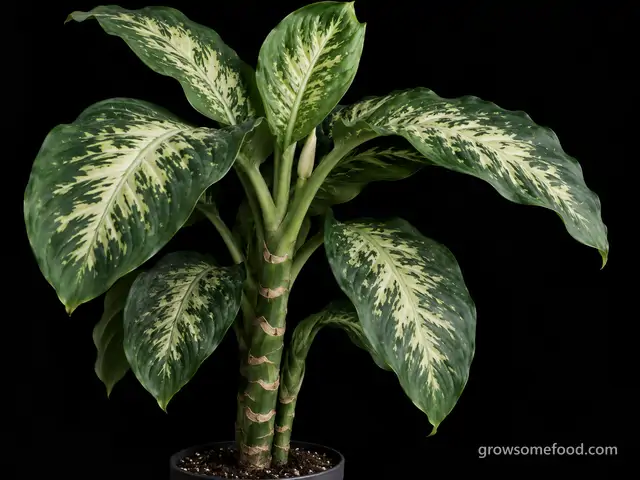
Dieffenbachia
Handsome, easy, and the one common houseplant that genuinely earns a warning: dumb cane swells the mouth and throat for days, not hours, and it is usually kept at exactly the height a toddler meets it.
Not food, and the harshest common houseplant. The sap carries a heavy load of calcium oxalate raphides plus protein-digesting enzymes: a chewed leaf causes searing pain, heavy drooling and swelling of the lips, tongue and throat lasting days - hence dumb cane. Airway swelling is rare but real. For any ingestion by a child or pet, call poison control or a vet at once, and go to an emergency room for trouble breathing, swallowing or speaking. Gloves when pruning; the sap can injure eyes.
Overview
The one thing to knowIt is also the one plant in this family that deserves a real warning, and the common name says why.
Dieffenbachia is the big-leaved, cream-splashed plant that fills a shaded corner of an office or a living room without asking for much: indirect light, warmth, and water when the top inch dries. Grown well it makes a broad clump of paddle-shaped leaves marbled in white and green on thick upright canes, four or five feet tall.
It is also the one plant in this family that deserves a real warning, and the common name says why. Chewing a dieffenbachia leaf does not just sting - it can leave a person unable to speak. That is where dumb cane comes from, and it is not folklore.
The mechanism is the same calcium oxalate raphides that make a pothos or a philodendron painful to bite: microscopic needle-shaped crystals held under pressure that fire into whatever chews the leaf. Dieffenbachia differs in two ways that matter. It carries far more of them, in sap that runs freely from a broken leaf; and the sap also contains protein-digesting enzymes that appear to deepen the injury the needles start. The result is not a few hours of burning. It is searing pain, heavy drooling, and a tongue and throat that swell for days, sometimes with a hoarse voice or difficulty speaking, and in rare cases enough swelling to compromise the airway.
Calibrate that against the rest of the shelf and against the genuinely lethal plants. This is still not an organ poison: it does not do what a true lily (Lilium) does to a cat's kidneys, or a sago palm to a dog's liver. Deaths are extremely rare. But it is the one arum in the house where a single bite can put someone in an emergency room, and the honest advice is that if you have a toddler or an animal that chews leaves, this is the plant to leave at the garden centre. A pothos or a snake plant gives you the same look with a fraction of the consequence.
Quick facts
- Life cycle
- Perennial, lives about 10 years
- Height
- 42 in18 to 72
- Spread
- 24 in12 to 36
- Cold
- Killed by frostdamaged below 60°F
- Heat
- Struggles above 90°F
Part sun or part shade or shade · medium water · well-drained soil · 18 in apart (12 to 30) · transplant or cuttings or division
When to plant
Nothing is open today. Spring transplanting opens 6 months, Mar 15 to Sep 15.
- Transplant Mar 15 – Sep 15 Opens in 175 daysIndoors year-round; pot up cuttings and repot in the warm half of the year, when roots move fastest and a cut cane heals quickly. Do not plant it outdoors where children play, and note that it has escaped into disturbed woodland in south Florida and Puerto Rico.
Frost here: last around Apr 10 (Mar 27 to Apr 24 most years), first around Oct 25. Zone averages, your own yard may run a week or two either way.
Life stages
One stage to settle in, then two that repeat each year. Windows are typical; your zone and weather move them.
Settling a new plant or rooting a cane
Day 0 to 45- ProtectChoose the spot for safety before you choose it for looksThis is the first decision, not the last one. A dieffenbachia at floor level in a wide pot puts a big soft chewable leaf exactly at toddler and dog height, and it is the plant in this family most likely to send someone to an emergency room. Put it on a plant stand or a high surface, in a room small children and animals are not left alone in - or choose a pothos instead.
- WaterPot in a chunky mix and keep it evenly moist, not wetUse ordinary potting mix opened up with a couple of handfuls of perlite or orchid bark, in a pot with drainage holes barely wider than the root ball. Water it in thoroughly once, let the excess drain, and then keep the mix lightly moist rather than either soggy or bone dry. New plants are lost far more often to a full saucer than to neglect.
- InspectBright indirect light, and warmth above 60°FA few feet back from an east or north window suits it. Direct sun bleaches and burns the pale variegation within days, and deep shade makes the leaves come out plainer and further apart. Dieffenbachia is also the least cold-tolerant plant on the shelf: below about 60°F it stalls, and a cold draft from a door in January can collapse a whole side of the plant.
Watch for- A pot at floor level within reach of toddlers or pets
- Scorched bleached patches from direct sun
- A cold draft from a door or a single-glazed window
Leaf and cane growth
Mar to Oct, every year- WaterWater when the top inch is dryweeklyPush a finger into the mix; water thoroughly when the top inch is dry and empty the saucer afterwards. Dieffenbachia wants more consistent moisture than a pothos or a ZZ plant and still rots if it sits wet. In winter the plant nearly stops and the gap between waterings roughly doubles - check the mix, not the calendar.
- PruneGloves, eye protection and a covered surface before any cutCutting a dieffenbachia releases more sap than anything else on the shelf, and that sap is the dangerous part. Wear gloves and, honestly, glasses; work over newspaper rather than a kitchen counter; wipe the blade afterwards; wash your hands before touching your face. Bag the cuttings straight away rather than leaving them where a curious animal can find them.
- InspectWipe the leaves and turn the potThose broad flat leaves collect dust that noticeably dulls them and cuts the light the plant can use. Wipe both sides with a damp cloth every month or two, wearing gloves, and give the pot a quarter turn each time you water so it grows upright instead of leaning toward the window.
- FertilizeFeed lightly through the growing seasonA balanced liquid houseplant fertilizer at half the label strength, roughly monthly from spring to early autumn. Stop entirely in winter - growth slows to nothing and leftover fertilizer salts build up in the pot and scorch the leaf edges. Flush the pot through with plain water once or twice a year to clear them.
Watch for- Lower leaves yellowing and dropping, leaving a bare cane
- Pale washed-out variegation from too much direct sun
- Brown leaf edges from dry air or fertilizer salts
- White cottony mealybugs where the leaf sheath wraps the cane
Winter slowdown
Nov to Feb, every year- WaterWater much less in winterShort days and cool rooms slow the plant almost to a stop. Keep to the summer schedule and the roots rot; expect the gap between waterings to roughly double from November to February, and let the top inch or two dry before each one.
- ProtectKeep it warm - this is the coldest-sensitive plant on the shelfDieffenbachia is damaged below about 55°F, well before frost. Leaves against a freezing windowpane blacken overnight, and a spot beside a door that keeps opening in January will collapse whole leaves. Move the pot into the room for the winter, away from glass and away from the cold draft at floor level.
Watch for- Blackened or water-soaked patches after a cold night
- Sudden collapse of several leaves at once (cold, not disease)
- Fungus gnats in mix kept too damp
Watch out for
6 to know. 2 are high-risk: Dumb Cane Poisoning (mouth and throat swelling), Root Rot from Overwatering. 6 are active in September.
Dumb Cane Poisoning (mouth and throat swelling)Severity High DisordernowIn a person: crying, refusing to speak or swallow, a swollen tongue or lips, heavy drooling, a hoarse or changed voice, and any difficulty breathing.
In a person: crying, refusing to speak or swallow, a swollen tongue or lips, heavy drooling, a hoarse or changed voice, and any difficulty breathing. In a pet: pawing at the mouth, drooling, retching, refusal to eat, and a swollen muzzle. Swelling can build over the first few hours, so mild initial symptoms do not mean it is over.
Call poison control or a veterinarian immediately - do not wait for symptoms to develop. Rinse the mouth with water and offer cold water, milk or ice to anyone who can swallow safely. Go to an emergency room or emergency clinic at once for any difficulty breathing, any voice change, drooling that will not stop, or inability to swallow. For sap in an eye, flush with running water for a full 15 minutes and be examined the same day. Take a piece of the plant with you.
Keep the plant off the floor - a stand, a shelf or a room children and animals are not left alone in - because most exposures are simply a matter of height. Wear gloves and eye protection for every cut, work over newspaper rather than a food surface, wipe the blade, wash your hands, and bag offcuts immediately instead of leaving a weeping cane on a counter. If a household has a toddler or an animal that chews leaves, choose a pothos or a snake plant instead.
Dieffenbachia sap carries a heavy load of calcium oxalate raphides - needle-shaped crystals fired under pressure from specialised cells - together with protein-digesting enzymes that appear to deepen the wound they make. Chewing a leaf causes immediate searing pain, profuse drooling, and swelling of the lips, tongue and throat that commonly lasts several days, sometimes with hoarseness or an inability to speak clearly, which is where the name dumb cane comes from. Airway compromise is rare but documented. Sap in an eye causes intense pain, swelling and occasionally lasting corneal damage. This is the most severe of the common houseplant oxalate injuries, and it is among the plant exposures most often reported to US poison centres in young children.
Root Rot from OverwateringSeverity High DiseasenowOn a dieffenbachia, rot at the base and bacterial soft rot look identical from above.
Either way the answer is the same: take a clean tip cutting from well above the damage and start again.
Lower leaves yellowing while the mix stays damp, a sour smell from the pot, stems going soft, brown or black at the soil line, and a plant that wilts even though the soil is wet.
Tip the plant out, cut away every soft brown root, and repot the healthy remainder in fresh mix in a clean pot, watering sparingly until it recovers. If most of the root system has gone, take clean cuttings from the healthy top growth and start the plant again - that usually works better than nursing the original.
Water by checking the mix rather than the calendar - only when the top inch or two is dry - use a pot with drainage holes, empty the saucer after every watering, and cut back sharply on water from November to February.
The single most common way an indoor plant dies. Soil-borne fungi rot the roots and stem base in potting mix that is kept wet, in a pot without drainage, or in a saucer that is never emptied - and it is worst in winter, when short days and cool rooms mean the plant uses a fraction of the water it did in summer while the watering schedule stays the same.
Bacterial Leaf SpotSeverity Medium DiseasenowWater-soaked dark spots ringed in yellow that enlarge over a few days, slimy patches on the leaf, and a cane that goes soft, brown and smells sour at or above the soil line.
Water-soaked dark spots ringed in yellow that enlarge over a few days, slimy patches on the leaf, and a cane that goes soft, brown and smells sour at or above the soil line.
Remove affected leaves promptly with a clean blade and bin them, cut watering back, and improve airflow. There is no home cure once the cane itself is soft - take a clean tip cutting from well above the damage, root it separately, and discard the rest along with the old mix.
Water the mix, never the foliage, and stop misting this plant - it is the single biggest contributor. Give it space and air movement rather than crowding it among other plants, avoid working on wet leaves, and quarantine new purchases, since infections usually arrive from a nursery.
Bacterial infections (Erwinia and Xanthomonas among them) that dieffenbachia is unusually prone to, especially in warm damp air with poor circulation and on plants that are misted or watered over the leaves. Dark water-soaked spots with yellow haloes appear on the foliage and spread quickly, and an Erwinia soft rot can move into the cane and collapse it within days, often with a foul smell.
MealybugsSeverity Medium PestnowThe commonest dieffenbachia pest, because the sheath where each leaf stalk wraps the cane is a perfect hiding place.
Peel those back and check - wearing gloves - before deciding a plant is clean.
White cottony specks where a leaf stalk meets the stem, sticky patches on leaves or the surface beneath the plant, black sooty film, and new growth that comes out puckered or stunted.
Dab each colony with a cotton swab dipped in rubbing alcohol, then spray the whole plant with insecticidal soap or horticultural oil, covering leaf undersides and joints. Repeat weekly for at least a month, because eggs keep hatching. Cut off badly infested growth rather than trying to save it.
Inspect any new plant carefully and keep it apart from the others for a few weeks, check leaf joints whenever you water, and wipe the leaves occasionally - most indoor infestations arrive on a new purchase and spread from there.
Small sap-sucking insects that hide as white cottony tufts tucked into leaf joints, along stems and under leaves. Indoors there is nothing to eat them, so a small infestation becomes a permanent one - they weaken growth, deform new leaves and coat everything below in sticky honeydew that turns sooty black.
Fungus GnatsSeverity Low PestnowLittle black flies around the pot and at nearby windows, and larvae - tiny translucent maggots with black heads - in the surface of mix that never dries out.
Little black flies around the pot and at nearby windows, and larvae - tiny translucent maggots with black heads - in the surface of mix that never dries out.
Dry the mix out further, hang yellow sticky traps to catch the adults, and for a persistent population water in a Bacillus thuringiensis subsp. israelensis product, which kills the larvae without harming the plant. Repeat until the traps come up empty.
Let the top inch or two of mix dry out between waterings, which breaks the life cycle on its own, avoid standing water in saucers, and top-dress with a layer of coarse grit or sand so adults cannot lay eggs at the surface.
Small dark flies that drift up from the pot when it is disturbed. The adults are harmless; their larvae live in the top inch of permanently damp potting mix and feed on organic matter and, when numerous, on fine roots. They are less a pest in their own right than a symptom that the mix is being kept too wet.
Spider MitesSeverity Low PestnowFine pale speckling across the upper leaf surface, a dull bronzed cast to the foliage, and gossamer webbing in the leaf joints - hold a sheet of white paper under a leaf and tap it to see the mites drop.
Fine pale speckling across the upper leaf surface, a dull bronzed cast to the foliage, and gossamer webbing in the leaf joints - hold a sheet of white paper under a leaf and tap it to see the mites drop.
Rinse the whole plant thoroughly under a shower, paying attention to leaf undersides, then treat with insecticidal soap or horticultural oil and repeat every five to seven days for three or four rounds to catch newly hatched mites.
Raise the humidity around the plant, keep it away from heating vents and radiators, and rinse or wipe the leaves regularly - spider mites struggle on foliage that is clean and not baking in dry air.
Nearly invisible mites that thrive in the hot, dry air of a heated house, feeding on the undersides of leaves and leaving a fine pale stippling that spreads until the whole leaf looks dusty and bronzed. Severe infestations spin fine webbing between leaves and stems.
Good & bad neighbors
First rule: keep Sago Palm apart. Named as a correction, not a planting rule.
Plant nearby
-
Identical culture - bright indirect light, chunky mix, water when the top inch dries - so they share a corner happily. The difference is one of degree, and it is large: philodendron is a painful mouthful that is usually over in hours, dieffenbachia is a swollen tongue and throat for days. Handle the dieffenbachia with more care than its neighbour, especially when cutting.
-
Same family, same light and warmth, and the plant to reach for instead if this one is a bad fit for your household. Pothos carries the same crystals at a much lower load: a chewed pothos leaf burns for a few hours, a chewed dieffenbachia leaf swells the mouth for days. If you want the look of easy variegated foliage in a house with a toddler or a leaf-chewing cat, grow the pothos.
- Traditional pairings, thin evidence
-
A useful neighbour and a naming correction. Snake plant is the plant properly called mother-in-law's tongue, but that name gets attached to dieffenbachia too, and the two are not remotely comparable: snake plant causes a day of stomach upset from saponins, dieffenbachia swells the mouth and throat. If a label or an article uses that name, check the botanical name before deciding how careful to be.
-
Another glossy low-light plant for the same corner, on a drier watering schedule. Both carry calcium oxalate, but ZZ is at the mild end of the range and dieffenbachia at the severe end - a chewed ZZ leaf is a painful mouth and a phone call, a chewed dieffenbachia leaf can be an emergency-room visit.


Keep apart
-
Named as a correction, not a planting rule. If you are shopping for houseplants with a dog in the house, dieffenbachia is the one that hurts and sago palm is the one that kills - one or two of its seeds cause fatal liver failure in dogs, and it is sold as an ordinary indoor palm with no warning at all.
-
Not a growing conflict - a cross-reference that runs the other way for once. Dieffenbachia is the harshest houseplant on this shelf and it still is not an organ poison: the injury is confined to the mouth and throat and almost everyone recovers fully. A true lily gives a cat no warning pain at all and destroys its kidneys, from pollen alone. Severity of pain and severity of danger are not the same axis.
Varieties · 6
You pick one when you add Dieffenbachia to your garden. Its days to maturity set your harvest window.
Compacta
Good first pickDense low clump of mid-green leaves with cream speckling along the midrib, under 2 ft.
compactbushyA dwarf, densely branching form that stays under two feet and holds its lower leaves far longer than the tall kinds, so it goes bare-caned much more slowly. The easiest dieffenbachia to keep looking good with no intervention, and small enough to sit safely on a high shelf rather than the floor.
Camille
Broad leaves with a wide creamy-white centre and a narrow deep-green margin, on a bushy plant to about 3 ft.
compactpale-centrecommonThe dieffenbachia most garden centres sell: compact and bushy at two or three feet, with broad leaves that are almost entirely creamy-white in the centre and edged in mid green. The pale centre means less chlorophyll, so it grows a little slower and scorches faster in direct sun than the darker kinds. Same sap, same rules - compact does not mean mild.
Tropic Snow
Very large dark green paddle leaves marbled and feathered with cream along the side veins, on stout canes.
largevariegatedvigorousA big, vigorous old cultivar reaching five or six feet indoors, with large dark green leaves heavily feathered in cream along the veins. This is the one that becomes a floor-standing specimen, and therefore the one most often kept at exactly the height a toddler meets it - give it a plant stand or a room where it is out of the way.
Reflector
Dark green leaves mottled all over with irregular chartreuse and cream blotches, to about 2 ft.
patternedcompactneeds-brighter-lightA striking modern cultivar with dark green leaves dappled in irregular pale-green and cream blotches like camouflage, on a compact plant. It wants brighter indirect light than the plainer types to hold the pattern, and it is a little more sensitive to cold and to being kept wet.
Tropic Marianne
Pale creamy-yellow leaves with fine green veins and a thin green edge, on a compact plant.
palecompactlight-sensitiveAlmost the reverse of the usual pattern: leaves that are predominantly pale yellow-cream with only a thin green margin and green veining. Very little chlorophyll means slow growth, a real need for good indirect light, and rapid scorching in any direct sun - the least forgiving of the common cultivars.
Amoena / Tropic Rain
Large deep-green leaves with bold irregular cream striping along the veins, on thick upright canes to 5 ft.
largeclassicvigorousThe classic large-leaved dieffenbachia of mid-century offices and lobbies, with deep green leaves striped irregularly in cream and a thick upright cane that eventually leans under its own weight. Robust and long-lived, and the type that most needs beheading every few years once the lower cane goes bare.
Grower tips
Notes from growers, tagged with the zone they grow in. A person reads every post before it appears.
Nobody has posted about Dieffenbachia yet. The first one usually saves someone a season.
Free account. Your post shows your grower name and zone, never your email.