Add it to your home screen and it opens full screen: no browser bars, one tap away, and everything stays signed in. Free, nothing to download from an app store.
- Tap the Share button in your browser
- Scroll down and choose “Add to Home Screen”
- Open GrowSomeFood from your home screen
- Open your browser’s menu
- Choose “Add to Home screen” or “Install app”
- Open GrowSomeFood from your home screen
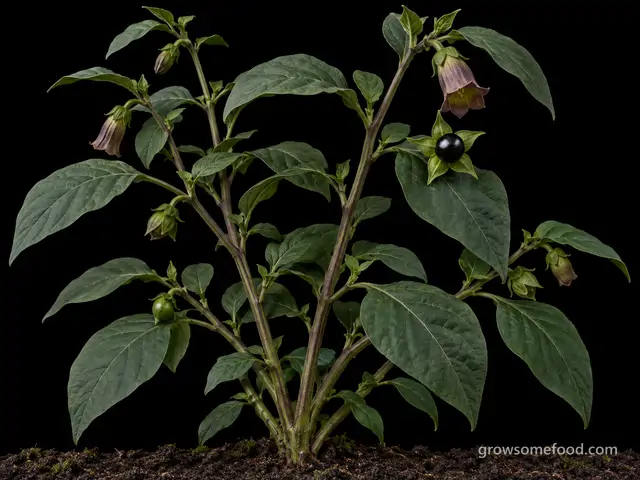
Deadly Nightshade
The most-misnamed plant in America. Genuinely deadly, genuinely rare here - and the berry in your hand is almost certainly one of three other nightshades. Learn the single bell flower and the single glossy berry in its flat green star.
DEADLY POISON - never eat, taste or plant any part. All parts carry tropane alkaloids (atropine, hyoscyamine, scopolamine); the root is strongest, but the sweet glossy BLACK berries are what kill children. Wear gloves - sap rubbed into an eye blurs vision for days. KEY ID: ONE glossy berry sitting in a flat green five-pointed star, under ONE nodding dull-purple BELL flower - never clusters, never star flowers. Suspected ingestion is an emergency: call poison control at once, before symptoms.
Overview
The one thing to knowIt is a real killer: every part carries the tropane alkaloids atropine, hyoscyamine and scopolamine, the root most of all, and its faintly sweet, glossy black berries have poisoned children for centuries.
Deadly nightshade (Atropa belladonna) is the plant behind one of the most-asked plant questions in America, and almost always the wrong answer to it. It is a real killer: every part carries the tropane alkaloids atropine, hyoscyamine and scopolamine, the root most of all, and its faintly sweet, glossy black berries have poisoned children for centuries.
But it is not a common wild plant in North America. It is a European species that appears here only as a scattered escape from gardens and herb collections. The berry someone is holding when they ask “is this deadly nightshade?” is nearly always bittersweet nightshade (bright red berries in drooping clusters on a climbing vine), black nightshade (small dull-black berries in little clusters on a low weed), or pokeweed (a thick magenta stalk hung with a long spike of purple-black fruit).
That correction matters less than it sounds, because the practical rule is identical for all of them: no wild black or red berry goes in a mouth, and any berry a child has actually swallowed earns a call to poison control regardless of which nightshade it turned out to be. What this entry gives you is the ability to recognise the real thing - the solitary nodding bell, the solitary glossy berry seated in a flat green five-pointed star - and to stop fearing the plants that are not it.
Quick facts
For identification. Not a growing guide.
- Life cycle
- Perennial, lives about 6 years
- Where it grows
- Part sun · Part shade · Shade, well-drained soil
- Height
- 48 in24 to 72
- Spread
- 36 in18 to 48
- Cold
- Takes hard frostdamaged below -20°F
- Heat
- Struggles above 90°F
- Self-sows
- Yes. Never let it set seed.
Through the year
How to recognize it in each season.
Leafy bush (identify - leaves in unequal pairs)
Apr to Jun, every year- A stout bush with dull leaves in UNEQUAL pairsDeadly nightshade is a branching perennial bush 2 to 5 feet tall, not a vine and not a low weed. Its leaves are dull dark green, oval, pointed and smooth-edged, up to 8 inches long - and they sit in unmistakably UNEQUAL pairs, one large leaf beside one much smaller one. There is no white mealy coating, no lobes or ears at the leaf base, and no spines. Do not taste any part to check.
- Gloves on, and hands away from your eyesThe alkaloids pass through broken skin and act powerfully on the eye. Handling the plant and then rubbing an eye can leave one pupil widely dilated and vision blurred for several days. Wear waterproof gloves for any contact, keep hands away from your face, and wash thoroughly afterwards. Never handle it with open cuts.
Key signs- A stout leafy bush with leaves in one-large-one-small pairs
- Volunteers appearing where a belladonna plant once grew or was composted
Solitary purple BELL flowers (not stars)
Jun to Sep, every year- One nodding bell per leaf joint - the decisive flower testFrom early summer it hangs single, nodding, bell-shaped flowers about an inch long from the leaf joints - dull purple-brown outside, greenish-yellow and veined inside. They hang ONE at a time. Every common nightshade people confuse it with has small flat STAR flowers with a yellow beak of anthers, carried in clusters. Bells alone, one per joint, means you are looking at the real thing.
- Never cut it for the house or for an arrangementFlowers, foliage and stems are all toxic. Do not cut belladonna for a vase, never let it near an edible-flower posy or a food preparation surface, and do not dry it for craft use. Bag any cut material and put it in the trash rather than the compost heap.
Key signs- Single nodding purple-brown bells hanging from leaf joints
- Any confusion with cluster-borne star flowers (those are other nightshades)
Glossy black berry in a green star (the child hazard)
Aug to Oct, every year- One shiny black cherry sitting in a flat green starThe berry is the plant's signature: a SINGLE glossy black berry about the size of a small cherry, sitting on top of a flat green five-pointed star - the flower's calyx, spread out behind it. Blueberries and huckleberries carry their five-pointed crown on the FAR end of the fruit, in clusters, on a woody shrub. Star behind the berry, one berry at a time, on a soft-stemmed bush: that is belladonna.
- Berries taste sweet - assume a child will try oneThis is the one poisonous berry that does not warn you off by taste. It is faintly sweet, which is why nearly every serious case is a child. If a plant is fruiting anywhere children or pets can reach, strip and bag the berries the same day, wearing gloves, and put them in the trash. Tell the household what the plant is rather than relying on a rule they were not there to hear.
Key signs- Ripe berries within reach of children, pets or a play area
- Birds taking berries and seeding the plant elsewhere in the garden
Die-back - the root persists and is the strongest part
Nov to Mar, every year- The top dies, the poisonous root does notBelladonna is perennial. The stems die back in autumn but a thick, fleshy root survives underground, and it carries the highest alkaloid concentration in the plant. A dormant plant is not a gone plant, and a root turned up while digging is more dangerous than the berries were. If a stand must be removed, do it in gloves, get the whole root, bag everything and send it to the trash - never compost or burn it.
Key signs- Bare stems in winter marking a root that is still alive and still toxic
- A crop of seedlings the following spring under last year's plant
Hazards
Poisoning by Ingestion (deadly)Severity High HazardnowAny ingestion of berry, leaf, root or a home preparation; onset usually within 30 minutes to 2 hours; widely dilated pupils that do not react to light are the earliest and most telling sign.
Any ingestion of berry, leaf, root or a home preparation; onset usually within 30 minutes to 2 hours; widely dilated pupils that do not react to light are the earliest and most telling sign. Effects can persist a day or more because these alkaloids slow the gut.
Suspected ingestion is an EMERGENCY - call poison control or emergency services immediately and do not wait for symptoms. Take a piece of the plant with you. Hospital care is effective, and a specific reversal drug exists for severe anticholinergic poisoning, so early arrival matters. Cooking, drying and freezing do not reduce the toxins.
Never eat or taste any part, and never prepare it in any form. Remove fruiting plants from anywhere children, pets or livestock reach, bagging the berries first. Teach the household to identify it rather than relying on a rule they were not told. Wear gloves for all handling.
Every part contains tropane alkaloids - atropine, hyoscyamine and scopolamine - with the root most concentrated and the berries most dangerous, because they are sweet, attractive and within a child's reach. Commonly cited figures put a very small number of berries in the serious range for a young child. Poisoning produces the classic anticholinergic picture: widely dilated unreactive pupils, blurred vision, dry mouth, hot dry flushed skin, fever, racing heart, agitation, hallucinations and confusion, progressing in severe cases to seizures and coma.
Skin & Eye Exposure from HandlingSeverity Medium DisordernowOne pupil much larger than the other after garden work, blurred near vision, light sensitivity, or a headache following contact with sap; also skin irritation where sap met a cut or graze.
One pupil much larger than the other after garden work, blurred near vision, light sensitivity, or a headache following contact with sap; also skin irritation where sap met a cut or graze.
Wash the affected skin or flush the eye with clean water, then seek medical advice - especially for eye involvement, which typically resolves over several days but rules out driving in the meantime.
Wear waterproof gloves, long sleeves and eye protection for any contact. Keep hands away from your face while working, never handle the plant with open cuts, and wash hands, gloves and tools thoroughly afterwards.
Tropane alkaloids are absorbed through broken skin and act strongly on the eye. Handling the plant - especially cutting stems or digging the root - and then rubbing an eye can leave the pupil widely dilated and vision blurred for several days. This is the reason the historical hallucinogenic preparations were ointments rather than drinks, and it is a routine hazard for anyone clearing a stand bare-handed.
Berry Misidentification (both directions)Severity Medium DisordernowRed berries in drooping clusters on a climbing vine (bittersweet nightshade); small dull black berries in clusters of three to ten on a low weed (black nightshade); a thick smooth magenta stalk with a long fruiting spike (pokeweed).
Red berries in drooping clusters on a climbing vine (bittersweet nightshade); small dull black berries in clusters of three to ten on a low weed (black nightshade); a thick smooth magenta stalk with a long fruiting spike (pokeweed). Only a single glossy black berry seated in a flat green five-pointed star, under a solitary nodding purple bell, is belladonna.
If a child has eaten any unidentified berry, call poison control regardless of which nightshade you think it was - bittersweet, black nightshade and pokeweed all warrant the same call. Photograph the plant rather than trying to reason it out at the sink.
Learn the plants as a set rather than one at a time, and settle it on structure - single berry versus clusters, bell flowers versus star flowers, bush versus vine - rather than on colour alone. Identify berries before anyone picks, not after anyone eats.
This plant causes harm in two opposite ways. Its name is applied to almost every wild dark berry in America - usually bittersweet nightshade, black nightshade or pokeweed - which produces needless alarm and, worse, a habit of dismissing warnings as overblown. Meanwhile a genuine belladonna berry can be mistaken for a blueberry or huckleberry by a child grazing along a hedge, or by an adult confident that the real plant does not grow here.
Escape & Self-SeedingSeverity Low DisordernowSeedlings appearing the spring after a plant fruited, regrowth from an incompletely dug root, and new plants under perches, fences and hedge lines where birds sit.
Seedlings appearing the spring after a plant fruited, regrowth from an incompletely dug root, and new plants under perches, fences and hedge lines where birds sit.
Dig the whole root in gloves, bag everything to household trash, and check the same ground each spring for several years - the seed bank outlasts a single clearance.
Do not plant it. Where it exists, strip and bag the berries before they ripen, and never put plant material or berries into compost or green-waste collection.
Belladonna persists and spreads where it has been grown: birds eat the berries and drop viable seed, the seed bank stays alive in the soil for years, and the perennial root regrows from fragments left after digging. Almost every North American occurrence traces back to a garden, herb collection or compost heap rather than to a wild population.
Good & bad neighbors
First rule: keep Bittersweet Nightshade apart. Not a planting conflict - an identification one.
Keep apart
-
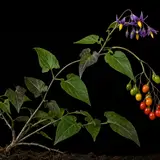
Not a planting conflict - an identification one. This is the plant most people mean when they say they have found deadly nightshade: a climbing vine with drooping clusters of bright RED berries and purple star flowers with a yellow beak. Belladonna is a stout bush with SINGLE glossy black berries and single nodding bells. If both grow near you, learn the pair together - it is the single most useful berry distinction in the northern United States.
-
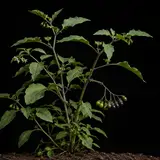
The genuinely tricky look-alike, because its berries are black too. Black nightshade is a low annual weed carrying pea-sized DULL black berries in small clusters of three to ten under little WHITE star flowers. Belladonna carries ONE glossy cherry-sized black berry at a time, in a flat green star, under a solitary purple bell, on a 2-5 ft perennial bush. Clusters versus singletons is the test that settles it.
-
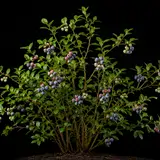
Never let belladonna grow near a berry patch, and never plant it in a garden where children pick fruit. The distinction is easy in daylight with an adult present - a blueberry wears its five-pointed crown on the FAR END of the fruit and hangs in clusters on a woody shrub, while a belladonna berry sits on a flat green star behind it, one at a time. It is not easy for a six-year-old grazing along a row.
-
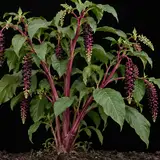
The other plant routinely reported as deadly nightshade. Pokeweed is unmistakable once you look: a thick, smooth MAGENTA stalk carrying a long drooping spike of flattened purple-black berries, on a plant that can reach 8 feet. Nothing about it resembles belladonna's single berry in a green star - but both warrant a poison-control call if a child eats one, so identification changes the diagnosis, not the response.
Grower tips
Notes from growers, tagged with the zone they grow in. A person reads every post before it appears.
Nobody has posted about Deadly Nightshade yet.
Free account. Your post shows your grower name and zone, never your email.