Add it to your home screen and it opens full screen: no browser bars, one tap away, and everything stays signed in. Free, nothing to download from an app store.
- Tap the Share button in your browser
- Scroll down and choose “Add to Home Screen”
- Open GrowSomeFood from your home screen
- Open your browser’s menu
- Choose “Add to Home screen” or “Install app”
- Open GrowSomeFood from your home screen
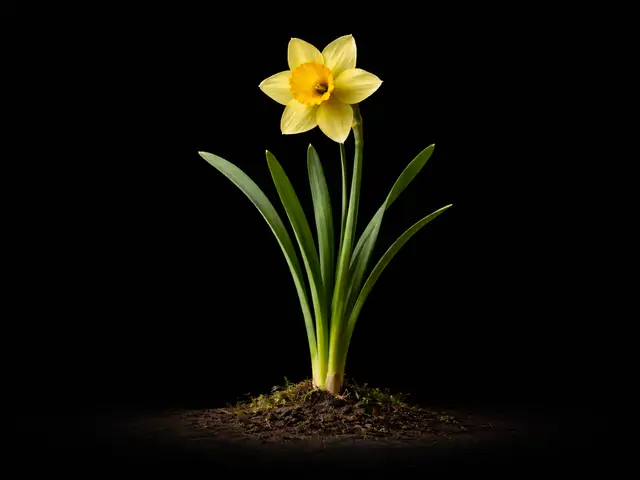
Daffodil
TOXIC - every part contains lycorine and related alkaloids and must never be eaten. Bulbs are the most dangerous and are sometimes mistaken for onions, causing poisoning; keep them away from children, pets, and the kitchen. The sap irritates skin ('daffodil itch') - wear gloves when cutting or handling bulbs. Cut daffodils also leak sap that shortens the vase life of other flowers.
Overview
The plant-once, return-forever herald of spring: cheerful trumpets that naturalize into growing drifts, thrive on neglect, and are ignored by deer and rodents because every part is poisonous.
Daffodils are the easiest and most rewarding of all spring bulbs. Plant them once in fall, and they push up their unmistakable trumpets year after year — often for decades — multiplying underground into ever-larger drifts of gold, white, and cream. They're among the first flowers of the year, shrugging off late frosts, and they ask almost nothing beyond decent drainage and a cold winter.
Their superpower is toxicity: every part of a daffodil contains lycorine and related alkaloids, which makes them one of the few bulbs deer, voles, squirrels, and rabbits won't touch. That same poison is why they're strictly decorative — never a food plant — and why bulbs must be kept out of the kitchen, where they've been fatally mistaken for onions. 'Daffodil' and 'narcissus' are the same plant; 'jonquil' properly refers to one fragrant group.
At a glance
- Sun
- Full sun · Part sun
- Water
- Medium
- Spacing
- 3–8 in (typ. 6)
- Mature height
- 6–24 in (typ. 16)
- Start by
- Bulbs/cloves
- Frost
- Hardy
- Chill hours
- 300–1000 hrs (typ. 700) below 45°F
- Spread
- 4–10 in (typ. 6)
- Soil
- Well-drained
- Temperature
- Damaged below -40°F · struggles above 85°F
When to plant
Zone 7a typical frost: last Apr 10 · first Oct 25 (spring frost runs Mar 27–Apr 24 in a typical spread of years)
Life stages
- Fall rooting-in day 0–45 from sowing
-
Water in well at plantingPlant bulbs pointy-end-up at 2-3 times their height deep (about 6 inches) and water once to trigger rooting before the ground freezes.
-
Mulch after the ground chillsA light mulch conserves moisture and buffers freeze-thaw; don't mulch so early or deep that it keeps the soil warm - the bulbs need cold.
Soggy soil (bulbs rot in wet ground - the #1 killer) -
Water in well at planting
- Winter chilling Jan, Feb, Dec (yearly)
-
Let the cold do its jobDaffodils REQUIRE weeks of winter chill to bloom - roughly 12-15 weeks below ~45°F. In warm zones this is the limiting factor; pre-chilled bulbs or forcing indoors is the workaround.
Standing water or ice over the bed (drainage problem) -
Let the cold do its job
- Spring growth Feb, Mar, Apr (yearly)
-
Feed as shoots emergeA low-nitrogen bulb fertilizer or bone meal as leaves push up supports next year's bloom; never bury it deep - scatter and scratch in.
-
Water through active growthKeep soil moist while leaves and flowers develop; ease off once foliage starts to yellow.
Leaves up but no buds (bulbs too small, too shallow, or missing chill) -
Feed as shoots emerge
- Spring bloom Feb, Mar, Apr, May (yearly)
-
Cut or deadhead spent flowersSnap off faded blooms so the plant doesn't waste energy on seed - but leave the flower STEM and all the leaves to feed the bulb.
-
Do NOT cut the foliage after bloomThe leaves recharge the bulb for next year. Leave them until they yellow and wither naturally (6-8 weeks) - never braid, fold, or mow them early.
Temptation to tidy the fading leaves (resist - it starves next year's bloom) -
Cut or deadhead spent flowers
- Summer dormancy Jun, Jul, Aug, Sep, Oct (yearly)
-
Let the bed dry and restAfter foliage dies back the bulbs sleep underground through summer; keep the bed on the dry side. Lift and divide crowded clumps now if bloom has thinned.
Overwatering a dormant bed in summer (invites rot) -
Let the bed dry and rest
Watch out for
Narcissus Bulb Fly Medium
A bee-like fly whose larva bores into the daffodil bulb and hollows it out, leaving it soft and unable to bloom. Females lay eggs at the base of the dying foliage in late spring.
Watch for: Bulbs that feel soft or spongy, produce only thin grassy leaves and no flowers, or fail to come up; a single fat maggot inside a cut bulb.
Prevent: Firm soil over the necks as foliage dies to block egg-laying; avoid leaving open holes around the bulbs; buy clean bulbs.
Treat: Dig and destroy soft, infested bulbs - don't replant them. Healthy bulbs nearby are usually fine.
Basal Rot (Fusarium) Medium
A soil fungus (Fusarium) that rots the bulb from the base plate outward, worst in warm, wet, poorly drained soil and in stored bulbs.
Watch for: Soft brown rot spreading up from the base of the bulb, chocolate-brown discoloration, mushy bulbs in storage.
Prevent: Plant in well-drained soil, don't overwater dormant beds, cure and store lifted bulbs cool and dry, and discard any soft bulbs before planting.
Treat: None in-ground - remove and destroy affected bulbs and avoid replanting daffodils in that exact spot for a few years.
Slugs & Snails Low
Slugs and snails are nocturnal mollusks that rasp ragged holes in soft leaves, shear off seedlings at ground level, and chew into ripe fruit that touches the soil. They feed at night and in the early morning and spend the day hidden under boards, pots, dense mulch, leaf litter, and low foliage, becoming active in exactly the cool, damp, shaded conditions that suit young plants. Damage is heaviest in wet spells and on tender spring growth: a single wet week can erase a row of seedlings while an established, tough-leaved plant of the same species is barely marked. They lay clusters of small pearly eggs in damp soil and under debris, so a garden with plenty of cover carries a resident population year after year rather than being invaded from outside.
Watch for: Irregular ragged holes chewed out of the middle of leaves and along the edges - not the clean-edged cuts a caterpillar leaves. Seedlings that vanish overnight, or that are cut off at soil level with nothing left behind. Silvery dried slime trails across leaves, soil, pots, and paving in the morning: this is the giveaway that tells you it was mollusks rather than an insect. Chewed pits in ripe fruit, especially where it rests on the ground. Damage that shows up on the lowest, dampest leaves first and gets worse after rain or evening watering. Turn over a board, an upturned pot, or a clump of dense mulch during the day and look for the animals themselves sheltering in the cool underneath.
Prevent: Take away the daytime shelter first: lift boards and upturned pots, clear piles of debris, keep dense mulch pulled back from crowns and stems, and give crowded plantings enough airflow to dry out. Water in the morning rather than the evening so the surface is dry by the time they come out. Copper tape around containers and raised beds gives them a shock they will not cross, and it is the one barrier that reliably works. Get plants past the vulnerable stage quickly - start seedlings in pots and set them out at a decent size rather than direct-sowing into a cold wet bed, since most plants stop being worth defending once the leaves toughen. Leave the ground beetles, frogs, toads, and ground-feeding birds alone, because they eat mollusks all night for free and broad-spectrum slug pellets kill them too. Where thick-leaved or resistant varieties exist for what you are growing, they take far less damage.
Treat: Hand-picking works and costs nothing: go out an hour after dark with a headlamp, drop what you find into soapy water, and repeat nightly for a week or two - persistence is what wins, not any single product. Shallow beer traps sunk to soil level catch them too, but need emptying and refilling daily to be worth anything. Iron-phosphate bait is the standard control and is far lower-risk around pets and wildlife than the old metaldehyde products, but it is not harmless: many formulations include EDTA, and a dog that eats a quantity of pellets can develop iron toxicosis. Scatter it thinly per the label, never in piles, and keep dogs off a baited bed. Clear fallen foliage and debris in autumn, where the eggs are laid. In a wet climate this is a population you manage each season rather than one you eradicate - and on most established plants light grazing is cosmetic and needs nothing at all.
They rasp holes in the emerging leaves and flowers in cool, damp spring weather. Mostly cosmetic - daffodils outgrow light damage.
Narcissus Mosaic Virus Low
Aphid-spread viruses that streak and distort the foliage and can weaken bloom over time; there is no cure.
Watch for: Yellow streaking or mottling on leaves, distorted growth, gradual decline in vigor and flowering.
Prevent: Buy virus-free bulbs, control aphids that spread it, and remove clearly infected clumps.
Treat: None - dig and destroy badly affected plants to protect the rest; virused bulbs won't recover.
Good & bad neighbors
Varieties · 17
White petals with a small flat yellow eye edged in red.
A classic Poeticus ('poet's') daffodil: broad white petals around a small flat yellow cup rimmed in red, very fragrant, and among the last to bloom in spring.
Many small white-and-yellow flowers clustered per stem.
A vigorous Tazetta ('Seventeen Sisters') carrying many fragrant creamy-white flowers with yellow cups on each stem - excellent in mild-winter zones where chill is short.
White petals with a small bright orange-red cup.
An early small-cupped daffodil with crisp white petals and a bright flat orange-red cup - vivid, dependable, and good for cutting and naturalizing.
Soft yellow flowers with a broad frilled cup on 16-18 inch stems.
A soft-yellow large-cupped daffodil famous for its vigor and adaptability - one of the most-planted daffodils ever, excellent for naturalizing, with a light vanilla fragrance.
Large, uniform golden-yellow trumpet flowers on strong 16-18 inch stems.
The quintessential big yellow daffodil: large all-gold trumpet blooms, one flower per sturdy stem, vigorous and reliable. The most widely grown daffodil in the world and a naturalizing standard.
Clusters of double creamy-white flowers resembling small roses.
A double Tazetta with clusters of many creamy-white, rose-like fragrant blooms per stem - unusually sweet-scented and a favorite for mild-winter gardens.
Clusters of small golden flowers with orange-red cups per stem.
A fragrant Tazetta with clusters of small bright-yellow flowers and vivid orange cups - a warm-zone naturalizer that needs little chill.
Golden flowers with reflexed petals and a long trumpet on short stems.
An early-blooming Cyclamineus daffodil with swept-back petals and a long yellow trumpet on 10-12 inch stems - one of the first to flower and a strong naturalizer.
Grow
Plant bulbs in fall, pointy-end-up, about 6 inches deep in well-drained soil and sun; they need winter cold to bloom.
Plant bulbs in fall, a few weeks before the ground freezes, so they root before winter. Set each one pointy-end-up at a depth of two to three times its height — roughly 6 inches for a standard bulb, less for miniatures — and 3-6 inches apart, in full or part sun. The single non-negotiable is drainage: daffodils rot in soggy ground, so avoid low wet spots and heavy clay (or plant in raised beds).
The other requirement is winter chill. Daffodils need roughly 12-15 weeks below about 45°F to trigger bloom, which is why they excel in cold climates and struggle in the warm South. In zones 8-10, plant low-chill Tazetta types (paperwhites, jonquils) or pre-chill standard bulbs in the refrigerator for 12-15 weeks before planting.
Care
The one rule that matters: never cut the foliage after bloom - let it yellow and die back to recharge the bulb.
Daffodil care comes down to a single make-or-break rule: leave the leaves alone after flowering. Those green leaves spend six to eight weeks after bloom photosynthesizing next year's flower into the bulb. Braiding, folding, mowing, or cutting them early — however tidy it looks — starves the bulb and gives you fewer or no flowers next spring. Let them yellow and wither completely before removing.
Beyond that: deadhead spent flowers (so energy goes to the bulb, not seed), but keep the flower stem. Feed a low-nitrogen bulb food as shoots emerge, water through active spring growth, then let the bed rest dry through summer dormancy. When clumps get crowded and bloom thins after several years, dig and divide them in early summer as the foliage dies back.
Harvest
Cut at the 'gooseneck' bud stage for the vase - but condition daffodils alone first; their sap poisons other flowers.
Daffodils are wonderful cut flowers with one important quirk. Cut them at the 'gooseneck' stage — bud fully colored and bent over just before opening — and they'll open in the vase and last five days or more. Snap or pull the stems from the base rather than cutting into the bulb, and wear gloves: the sap can irritate skin.
The catch: freshly cut daffodil stems ooze a sap that clogs and shortens the life of every other flower in the vase. Condition them alone in their own water for several hours (or overnight) first; after that, if you don't recut the stems, they can be arranged with other flowers safely. This is 'harvest' only in the decorative sense — the plant is toxic and nothing here is edible.
Storage
Cut blooms last about a week; lifted bulbs store cool, dry, and airy until fall planting.
Cut daffodils hold about a week in fresh water once conditioned. Bulbs, if you lift them to divide, should be cured briefly and stored somewhere cool, dry, and well-ventilated (a mesh bag or open tray) out of sun until fall replanting — never sealed in plastic or left damp, which invites basal rot. In most gardens there's no need to lift them at all; daffodils are happiest left in the ground to multiply. Keep stored bulbs clearly labeled and well away from any food storage, given the poisoning risk.
Propagation & seed saving
Divide the offset bulbs every few years - a free, guaranteed way to multiply a favorite variety.
Daffodils multiply by making offset bulbs ('daughter' bulbs) around the parent, and dividing these is how you propagate them — free, easy, and true to the variety. Every three to five years, once a clump gets crowded and its bloom thins, dig it as the foliage dies back in early summer, gently pull the offsets apart, discard any soft or rotten ones, and replant at the right depth and spacing. Small offsets may take a year or two to reach blooming size.
Daffodils rarely reproduce from seed in the home garden (seed-grown bulbs take five-plus years to flower and hybrids won't come true), so division is the practical route. This same multiplying habit is what turns a handful of planted bulbs into naturalized drifts over the years.
Troubleshooting
No blooms usually means cut foliage, too little chill, crowding, or shade; rot means wet soil.
Leaves but no flowers ('blindness'): the most common complaint, and usually one of four causes — foliage cut too early last year, not enough winter chill (warm zones), overcrowded clumps that need dividing, or too much shade. Soft, rotting bulbs: waterlogged soil or basal rot — improve drainage, plant in raised beds, discard soft bulbs. Bulbs dug up or eaten: unusual, since they're toxic — but a narcissus bulb fly can tunnel in; destroy soft, infested bulbs. Yellow, streaked, distorted leaves: possibly narcissus mosaic virus (spread by aphids) — remove affected plants, control aphids. Fewer flowers each year: the clump is crowded — lift and divide.
History
Named for the Greek myth of Narcissus, cultivated since antiquity, and a modern symbol of spring, hope, and cancer charities.
The botanical name Narcissus comes from Greek myth — the youth who fell in love with his own reflection and was transformed into the nodding flower — and the plants have been cultivated around the Mediterranean since antiquity. Native across Europe and North Africa, especially Spain and Portugal, daffodils spread through gardens for millennia and were bred into thousands of named cultivars, formalized into thirteen horticultural divisions.
They carry deep cultural weight: the national flower of Wales (worn on St. David's Day), a Chinese New Year symbol of good fortune, and the emblem of numerous cancer charities, for whom the daffodil signals spring, renewal, and hope. Fittingly, the alkaloids that make the plant poisonous have also drawn medical research — galantamine, a compound used to treat Alzheimer's symptoms, is derived from Narcissus bulbs — but galantamine is a manufactured prescription drug, not something a bulb provides; daffodil bulbs remain poisonous and must never be prepared or taken in any form.
Growing across climates
A cold-winter perennial: reliable and long-lived where winters chill, but limited to low-chill Tazettas in the warm South.
Zones 3-5: daffodil heaven — the hard winters deliver all the chill they need, and bulbs naturalize into long-lived drifts; plant early in fall so they root before deep freeze, and mulch. Zones 6-7: excellent and easy across the full range of types. Zones 8-9: chill becomes the limiting factor — standard trumpet types often 'go blind' after a year or two, so lean on low-chill Tazetta types (paperwhites, 'Grand Soleil d'Or', jonquils) or pre-chill bulbs 12-15 weeks in the refrigerator before planting. Zones 10-11: only paperwhite-type Tazettas bloom without real winter cold — most gardeners grow them as a one-season display or force them indoors in gravel and water for winter bloom, then discard.
Grower tips
No grower tips for Daffodil yet. Yours could be the first.
Sign in to share what works in your garden.