Add it to your home screen and it opens full screen: no browser bars, one tap away, and everything stays signed in. Free, nothing to download from an app store.
- Tap the Share button in your browser
- Scroll down and choose “Add to Home Screen”
- Open GrowSomeFood from your home screen
- Open your browser’s menu
- Choose “Add to Home screen” or “Install app”
- Open GrowSomeFood from your home screen
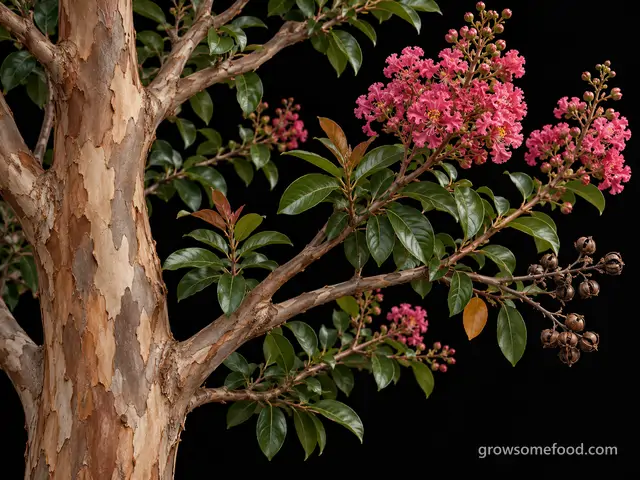
Crape Myrtle
The signature small tree of the American South: two to four months of summer flower, mottled exfoliating bark in winter, and real drought and heat tolerance. It is also the most commonly mutilated plant in the country - 'crape murder', the winter habit of topping trunks back to stubs, which nothing on the plant requires.
Crape myrtle is listed as non-toxic to people, dogs, cats, and horses, and nothing on it is eaten. Two practical cautions. Aphid and scale honeydew drips a sticky, sooty-black film onto whatever sits below, so do not plant one over a patio, a walk, or a parking spot. And crape myrtle is worked heavily by bees for pollen: if you use a soil-applied systemic insecticide for bark scale, apply it after flowering rather than before, and follow the label.
Overview
Crape myrtle is the plant the South grows where the North grows lilac, and the comparison is exact in one respect and backwards in another: it flowers for two to four months rather than two weeks, and it wants precisely the heat that makes lilac fail. Big crepe-textured panicles in white, pink, watermelon red, and purple carry it through the whole of high summer; the leaves colour orange and red in fall; and in winter the trunks peel to a smooth mottled cinnamon-and-grey that is the best bark on any small tree in the region. It is drought-tolerant, heat-proof, tolerant of city conditions, and hardy through zone 7 with a dieback habit that stretches it into zone 6.
It is also, by a wide margin, the most mutilated plant in America. Every winter, thousands of crape myrtles have their trunks sawn back to knuckled stubs - a practice with the well-earned nickname crape murder - in the belief that this is how you make them bloom. Nothing about the plant requires it. Topping delays and reduces flowering, replaces a graceful multi-trunked silhouette with a fist of weak whippy shoots that flop under the weight of wet flowers, and destroys the very bark people plant it for. The real answer is upstream of the saw: buy a cultivar sized to the space. They range from 2-foot dwarfs to 30-foot trees, and choosing correctly means never pruning hard again.
Quick facts
- Life cycle
- Perennial, lives about 50 years
- Height
- 180 in24 to 360
- Spread
- 144 in24 to 240
- Cold
- Takes light frostdamaged below 0°F
- Heat
- Struggles above 110°F
- Self-sows
- Yes, expect volunteers
Full sun · low water · well-drained soil · 10 ft apart (3 to 20) · transplant or cuttings
When to plant
Nothing is open today. Spring transplanting opens 7 months, Apr 10 to Jun 5.
- Transplant Apr 10 – Jun 5 Opens in 201 daysAbout at to 8 weeks after your last frost (Apr 10 here)The main window. Plant into full sun - six hours minimum, and more is better - in soil that drains freely. Check the cultivar's mature height against the space before you dig; that single decision is what prevents topping later.
- Transplant Aug 2 – Sep 13 Opens in 315 daysAbout 12 weeks before to 6 weeks before your first frost (Oct 25 here)Fall planting into still-warm southern soil establishes roots over the cool season with far less heat stress than a summer planting. Water until the ground cools and mulch, keeping mulch off the trunks.
Frost here: last around Apr 10 (Mar 27 to Apr 24 most years), first around Oct 25. Zone averages, your own yard may run a week or two either way.
Life stages
One stage to settle in, then three that repeat each year. Windows are typical; your zone and weather move them.
Year 1 - rooting in
Day 0 to 150- DoBuy the size you actually have room forCrape myrtle cultivars run from 2-foot dwarfs to 30-foot trees, and the label tells you which you are buying. Nearly every mutilated crape myrtle in the South is a 25-foot cultivar planted under a window. Match the mature height to the space and you will never have to prune it hard again - that one decision prevents the entire problem this plant is famous for.
- WaterWater deeply twice a week the first summer, then step backevery 4 daysA new crape myrtle needs regular deep soaks through its first summer to get roots down. After the first year it is genuinely drought-tolerant and needs watering only in extended dry spells. It will not tolerate soggy ground at any age - full sun and soil that drains are the whole site requirement.
- DoDo not panic when it has no leaves in AprilCrape myrtle is one of the last woody plants in the garden to break dormancy - bare stems well into April or even May are completely normal while everything around it is green. Scratch a twig with a thumbnail: green underneath means it is alive and simply waiting for real warmth. Every spring, nurseries field calls about dead crape myrtles that are nothing of the kind.
Watch for- A cultivar whose mature height is larger than the space - the root cause of topping
- Bare stems in April, which is normal for this plant and not a problem
Late winter shaping and spring growth
Feb to May, every year- PrunePrune lightly in late winter - and never top itCrape myrtle flowers on new growth, so late winter is the right season and light is the right amount. Remove dead and crossing wood, thin out the thin twiggy growth inside the canopy, and take suckers off the base. That is all. Do NOT cut the trunks back to stubs: topping produces knuckled scars, a shock of weak whippy shoots that flop under wet flowers, later and fewer blooms, and the loss of the bark and silhouette that are the best things about the plant.
- PruneLimb up a tree-form to show the barktree-form onlyOn a tree-type crape myrtle, the single most valuable cut is upward, not downward. Over a few years, remove the lowest side branches from the three to five trunks you want to keep, working up until the canopy starts at head height. That reveals the smooth, mottled, cinnamon-and-grey exfoliating bark that is the plant's best winter feature - and it is the exact opposite of what topping does.
- InspectCheck the bark for white felt before growth startsLate winter, on bare wood, is when crapemyrtle bark scale is easiest to see and easiest to treat: look for white or grey felt-like bumps encrusting trunks and branch crotches, and for last year's black sooty film. Wash the trunks with a soft brush and mild soapy water, then apply a dormant horticultural oil thoroughly to the bark. Doing this before bud-break avoids treating the plant while bees are on it.
- WeedPull basal suckers while they are softmonthlyCrape myrtles throw a crowd of suckers from the base every spring, and on a tree-form they obscure the trunks and steal the shape. Rub or pull them off while they are green and soft rather than cutting them woody - cutting encourages more. Seedlings also come up under a mature tree, so pull those too unless you want them.
Watch for- White felt-like scale on trunks and branch crotches, easiest to spot on bare winter wood
- The urge to cut it back hard because it got big - buy smaller next time instead
- Late freeze damage on new growth in zones 6-7
Summer bloom
Jun to Sep, every year- PruneDeadhead the first flush for a second oneSnapping off the spent flower trusses as soon as the first flush fades - taking just the seed heads and an inch or two of stem - often brings a lighter second flush four to six weeks later, because the plant flowers on new growth. It is optional and it is a lot of work on a large tree; on a dwarf or a shrub-sized plant it roughly doubles the season.
- InspectWatch for sticky leaves and black filmevery 2 weeksCrapemyrtle aphids and bark scale both excrete honeydew, and the sooty mold that grows on it turns leaves, trunks, and everything parked underneath black. The mold itself is harmless and washes off; treat the insect above it, not the mold. If a tree is over a patio or a car, this is the summer problem you will actually notice.
- WaterWater in real drought, and not much otherwiseevery 2 weeksAn established crape myrtle is one of the more drought-tolerant landscape plants in the South and blooms best when it is not pampered. A deep soak during an extended dry spell keeps the flowers coming; frequent shallow watering and heavy nitrogen feeding both push leafy growth at the expense of bloom.
Watch for- White powder on new shoots and flower buds in humid weather (powdery mildew)
- Sticky leaves and black sooty film (aphids or bark scale above)
- Purple-edged brown leaf spots and early leaf drop in late summer (cercospora)
Fall and winter
Oct to Jan, every year- DoRake up the fallen leavesCercospora leaf spot and powdery mildew both overwinter in fallen leaves, and clearing them away in fall is the cheapest disease control available on this plant. It also lets the bark and the bare branching structure - the reason to grow a tree-form at all - actually be seen.
- ProtectMulch the crown deeply in zones 6 and 7cold-edge onlyAt the cold edge of its range a crape myrtle behaves as a root-hardy dieback shrub: the top freezes and it regrows from the base, still flowering that summer because it blooms on new wood. A deep mulch mound over the crown after the ground cools protects the roots that make that possible. Do not cut frozen top growth away until new shoots appear in late spring - it is impossible to tell what is dead before then.
- DoLeave the seed heads and the bark on showWinter is when a well-grown crape myrtle earns its place: smooth mottled trunks in cinnamon, grey, and pale tan, a clean branching silhouette, and dried seed capsules that birds pick over. There is nothing to do here except not top it - which, being the season when people reach for the saw, is worth saying.
Watch for- Scale and sooty mold on bare trunks - much easier to see now than in summer
- The winter urge to cut it back to stubs, which is the one thing to avoid
Watch out for
5 to know. 2 are high-risk: Crapemyrtle Bark Scale, Topping Damage (Crape Murder). 4 are active in September.
Crapemyrtle Bark ScaleSeverity High PestnowThe defining new pest of this plant, and spreading fast.
The pink smear when crushed is the field test that separates it from ordinary scale, and late winter - bare wood, no bees, easy access - is by far the best time to deal with it.
White or grey felt-like encrustations on trunks and in branch crotches, most obvious on bare winter wood. Crushing one leaves a distinctive pink-to-red smear - the quickest confirmation there is. A black sooty film spreading over trunks, leaves, and anything beneath the tree, including cars and paving. Sticky honeydew on foliage in summer. Reduced flowering and thinner growth on heavily encrusted branches. Ants working up and down the trunks, farming the scale for its honeydew.
In late winter, wash the trunks and branches with a soft brush and mild soapy water - physically removing the felt covers and sooty mold makes everything else work better - then apply a dormant horticultural oil thoroughly to the bark, repeating as the label allows. Oil timed to the crawler stage in spring also helps. For heavy infestations a soil-applied systemic (imidacloprid or dinotefuran) is the standard extension recommendation, but crape myrtle is heavily worked by bees for pollen, so apply it AFTER flowering rather than before, follow the label exactly, and treat it as a last resort rather than a routine. Wash off the sooty mold once the scale is controlled; it lives on honeydew and disappears once the supply stops.
Inspect nursery stock closely before buying, since the scale moves almost entirely on infested plants - check trunks and crotches, not just leaves. Do the same before accepting a transplant from a neighbour. Keep trees unstressed with adequate water in drought, avoid heavy nitrogen, and avoid wounding the bark, since egg-laying concentrates around pruning cuts and injuries. Do not top the tree: knuckled wounds are exactly where colonies establish. Protect the lady beetles that feed heavily on this scale by avoiding broad-spectrum sprays.
An introduced felt scale (Acanthococcus lagerstroemiae) first found in Texas in 2004 and now across most of the Southeast and beyond. Unlike most scales it colonises the bark rather than the leaves, encrusting trunks, branch crotches, and pruning wounds with white-to-grey felt-like bumps. It excretes heavy honeydew, and the black sooty mold that grows on that honeydew is usually what people notice first - a tree, and everything parked beneath it, turning black. It rarely kills an established crape myrtle outright but reduces flowering, disfigures the bark that is the plant's best feature, and is difficult to eradicate once settled.
Topping Damage (Crape Murder)Severity High DisorderThe single most common thing done wrong to this plant in America, and worth checking before hiring anyone to prune one.
Nothing about crape myrtle requires hard pruning to flower - it blooms on new growth whether or not you cut it.
Thick trunks ending abruptly in swollen knuckled stubs at a uniform height, with a shock of thin shoots radiating from each. Branches bending to the ground or snapping after summer rain, because the shoots are too weak for the flowers they carry. Bloom arriving noticeably later than on untopped trees nearby, and in smaller quantity. Cracks, hollows, and soft decayed wood at old cut faces. A canopy that has to be cut again every single year to look intentional, which is the treadmill the first cut starts.
A topped tree can be rehabilitated, slowly. Starting in late winter, select the one or two strongest, best-placed shoots on each knuckle and remove all the others flush; repeat each year, gradually rebuilding a branch structure from those leaders. Expect three to five years to a natural-looking canopy, and accept that the knuckles themselves are permanent. If the tree is genuinely too large for its position, the honest fix is to remove it and replant a cultivar that fits, rather than committing to sawing it down every winter for the rest of its life.
Choose the right size at the nursery - this is the entire prevention. Crape myrtle cultivars run from 18-inch dwarfs to 30-foot trees, and topping is almost always what happens when a tree cultivar was planted in a shrub-sized space. Match mature height to the site and no hard pruning is ever needed. Prune lightly in late winter for structure only: dead and crossing wood, thin interior twigs, basal suckers. On a tree-form, prune upward instead of downward, removing low side branches to expose the trunks. If a landscape crew offers to cut yours back, decline.
Not a pest or a disease but the most damaging thing that happens to this plant, and it is done deliberately. Topping - sawing mature trunks back to the same stubs every winter - is widely believed to make crape myrtles bloom better. It does the opposite. Each cut forces a dense cluster of weak, fast, whip-like shoots from a knuckle of scar tissue; those shoots are poorly attached, they bend to the ground under the weight of wet flower heads, and they carry fewer and coarser panicles several weeks later than an unpruned tree. The large wounds admit decay into the trunk, and the smooth exfoliating bark and vase-shaped silhouette, which are two of the three reasons to grow the plant, are lost permanently.
Powdery MildewSeverity Medium DiseasenowThe historic problem of this plant, and the reason the modern hybrids exist - the US National Arboretum crossed L.
indica with Japanese L. fauriei to breed it out. Here it attacks the newest shoots and the flower buds, so it costs bloom rather than just looking bad, and it is worst in shade and still air in spring and fall. An L. fauriei hybrid in full sun with air movement solves it permanently; spraying an old cultivar in a shady corner never does.
Round white powdery spots on the upper leaf surfaces that spread and merge until whole leaves look dusted. It usually starts on the oldest, lowest, most shaded leaves and works upward, so check there first. Look at the undersides too, and at stems, buds, and flower stalks, which get coated as it advances. Leaves that yellow, brown, curl, or go crisp and drop early under the coating. New growth that opens small, crumpled, or twisted where the fungus has reached the shoot tips. On plants where it gets onto the fruit, a dull gray film, russeted or scarred skin, and cracking. Late in the season, tiny dark specks scattered through the white felt - that is the fungus setting up to overwinter on the debris.
Start early: sprays protect healthy tissue, they do not clean up leaves that are already coated. Pick off and bin the worst leaves as soon as you see them, and open the plant up by thinning or pruning so air moves through. On anything that regrows quickly, shearing the whole plant back forces a clean flush and beats spraying. If it keeps spreading, potassium bicarbonate, horticultural oil, or neem applied weekly will hold it - cover both leaf surfaces. Sulfur also works, but it burns the foliage of some plants, should never go on in heat, and must not be mixed with or applied close behind an oil spray. Whatever you use must be labeled for the plant you are treating: follow that label and observe its pre-harvest interval on anything you eat. Do not compost badly infected material. Late-season mildew on a plant that is finishing anyway is usually cosmetic; on a crop still filling out it is worth acting on.
Give plants room. Crowding and still air are the biggest single driver, so space at the full recommended distance, thin seedlings properly, and divide or prune out congested growth until air moves through the plant. Full sun and an open position help; deep shade and a still corner against a wall are where it always starts. Water at the base rather than overhead, and water early in the day so nothing stays damp overnight. Keep plants evenly watered - drought stress at the roots leaves them far more susceptible, even though the fungus itself likes dry air. Go easy on nitrogen, since soft lush growth is the most vulnerable. Where resistant varieties exist for what you are growing, choosing one is the single most effective thing you can do on a plant that mildews every year. Clear infected leaves and stems away at the end of the season rather than composting them.
Powdery mildew is a fungal disease that coats leaves - and often stems, buds, and fruit - in a white-to-gray powder that looks like spilled talcum. It is not one fungus but a large family of them, each fairly specialised to its own group of plants, which is why mildew on one crop rarely jumps to an unrelated one beside it. Unlike most leaf diseases it does not need wet leaves: it thrives on warm dry days followed by humid nights, and it takes hold fastest where plants stand crowded in still air or in shade. The coating blocks light, so heavily covered leaves yellow, brown, and drop early. On many plants that is mostly disfiguring and arrives late enough not to matter; where it strips away the leaves a crop still needed to finish, it costs you size, sweetness, and quality.
AphidsSeverity Medium PestnowThe crapemyrtle aphid is host-specific and builds up on leaf undersides through summer.
The feeding barely matters; the honeydew does, because the sooty mold that grows on it blackens the leaves, the trunks, and whatever is parked underneath. Lady beetles and lacewings normally end it, which is exactly why broad-spectrum spraying makes a crape myrtle worse. If a tree overhangs a patio or a driveway, this is the reason - and a reason to site the next one elsewhere.
Dense clusters of tiny insects packed onto shoot tips, flower buds, and the undersides of young leaves. Curled, cupped, or distorted new growth that never opens properly. A sticky shine on the leaves - and on whatever sits under the plant - that later goes black with sooty mold. Tiny white cast skins left behind where a colony has been feeding. Ants running steadily up and down the stems, which is often the first thing you notice. Mottled, streaked, or misshapen leaves that do not grow out can mean a virus the aphids brought with them rather than the feeding itself.
Knock the colonies off with a hard jet of water and repeat every few days - on most plants that alone ends it. Pinch out or prune off the worst-infested tips rather than treating the whole plant. If colonies keep rebuilding, spray insecticidal soap or horticultural oil directly onto the insects, covering leaf undersides, and repeat weekly until they are gone; treat early or late in the day, and never spray a wilted or heat-stressed plant. Avoid broad-spectrum insecticides - they kill the ladybugs, lacewings, and parasitic wasps that were about to solve the problem for you, and aphid numbers usually come back worse afterward. Anything you spray must be labeled for the plant you are treating; follow that label and observe its pre-harvest interval. On anything you eat, wash leaves, heads, and buds well before use, since aphids hide down in crowns, folds, and tight growth.
Go easy on nitrogen: the soft, lush growth that heavy feeding produces is exactly what aphids breed on. Check new growth once a week through spring and early summer so you catch colonies while they are still small, and rub the first few out with your fingers. Leave flowering plants nearby and skip broad-spectrum sprays - ladybugs, lacewings, hoverflies, and parasitic wasps do most of this work for free, and they only stay if there is something for them to eat. Keep ants off the plant where you can, since they protect aphids from those predators. Water steadily so plants are not stressed, and check any new plant over before you bring it home or move it indoors, since aphids usually arrive on something else.
Aphids are small soft-bodied sap-suckers - green, black, gray, pink, or waxy white, and mostly wingless - that gather in dense colonies on the tenderest new growth: shoot tips, buds, and the undersides of young leaves. They breed extremely fast in mild weather, so a few can become hundreds inside a week. Their feeding curls and distorts soft growth, and the sticky honeydew they excrete coats everything below and turns black with sooty mold. Ants often farm and defend the colonies for that honeydew. A few aphids are normal on almost any plant and a healthy plant shrugs them off; only dense, persistent colonies do real damage, and some aphids also spread plant viruses as they feed.
Cercospora Leaf SpotSeverity Medium DiseasenowKept on its own slug rather than the shared cercospora record because this is a different pathogen from the one that spots hydrangeas and beets, and its management here is cultivar choice plus fall leaf cleanup.
Dark brown to purple-bordered spots, roughly a quarter inch across, on leaves from midsummer onward, beginning on the lowest and most shaded foliage. Leaves around the spots turning yellow and then vivid orange-red - an early, patchy version of fall colour arriving in August. Progressive defoliation from the bottom of the plant upward through late summer and early fall. Worse years following wet, warm summers, and worse in crowded plantings with poor air movement.
Usually nothing is needed. Defoliation in late summer looks dramatic but arrives after flowering, and an established tree refoliates normally the following spring. Sanitation - clearing fallen leaves - handles most of it. Where a susceptible cultivar defoliates severely every single year, a labelled fungicide programme begun early in the season can protect the foliage, but replanting with a resistant hybrid is the more sensible answer than an annual spray schedule.
Choose resistant cultivars - the L. indica x fauriei hybrids are markedly better than older L. indica types - and plant in full sun with room for air to move through. Rake up and remove fallen leaves in autumn, because the fungus overwinters in leaf litter and that cleanup is the cheapest control available. Water at the base rather than overhead, thin crowded interior growth in late winter, and avoid heavy nitrogen, which produces the soft growth the fungus prefers.
A fungal leaf spot (Cercospora lythracearum) that is the commonest late-season disease of crape myrtle in the humid South. Warm, wet weather from midsummer onward drives it, and it starts on the shaded lower and inner leaves and works upward. Heavily spotted leaves turn yellow, then orange-red, and drop, so a badly affected tree can be largely bare by early autumn - alarming to look at, and largely cosmetic, since it arrives after flowering and this plant blooms on new growth, so next year's flowers are never at stake. Older L. indica cultivars in still, shaded positions suffer most.
Good & bad neighbors
Plant nearby
-
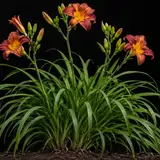
The standard southern underplanting: daylilies take the same full sun and heat, tolerate the dry root-filled ground under an established crape myrtle, and flower in the gap before the tree gets going in summer.
-
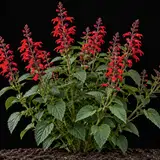
Salvias bloom right through the same hot months in the same sun and lean, well-drained soil, and they bring the nectar that crape myrtle does not - crape myrtle offers pollen only, so a nectar plant beside it genuinely broadens what the bed feeds.
- Traditional pairings, thin evidence
-
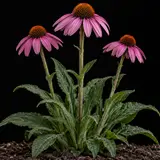
A native summer perennial on exactly the same heat-and-drought schedule, flowering with the crape myrtle and feeding pollinators and then goldfinches after - useful ecological ballast under an introduced ornamental tree.
-
Drought-proof, sun-loving, and content in the dry shade at the foot of a crape myrtle where thirstier perennials struggle - and it carries the planting into fall as the tree's flowers finish.
Varieties · 10
You pick one when you add Crape Myrtle to your garden. Its days to maturity set your harvest window.
Tree Type (20-30 ft) 3 varieties
Natchez
Vase-shaped 25-30 foot tree with white summer panicles and smooth mottled cinnamon bark.
tree-formnew-woodwhiteexfoliating-barkThe benchmark crape myrtle and the most planted tree cultivar in the South: pure white panicles for around 100 days, superb orange-red fall colour, and the finest cinnamon-brown exfoliating bark of any Lagerstroemia. Donald Egolf's L. indica x fauriei hybrid, strongly mildew-resistant. It reaches 25-30 feet, which is exactly why so many are found sawn to stubs under windows - plant it where a tree belongs.
Muskogee
Upright 20-25 foot tree with soft lavender panicles over a long summer and smooth grey-tan bark.
tree-formnew-woodlavenderlong-bloomThe longest bloomer of the National Arboretum hybrids - light lavender panicles for up to 120 days on a fast 20-25 foot tree, with grey-tan exfoliating bark and red fall colour. Vigorous to the point of needing real space, and a common street-tree choice across the South.
Midsize Shrub (6-15 ft) 5 varieties
Sioux
Upright narrow shrub-tree with vivid deep-pink panicles and maroon autumn foliage.
new-woodpinkmildew-resistantfall-colourIntense bright pink panicles over a long season on a narrow, upright 13-15 foot plant, with outstanding deep-red to maroon fall colour and strong mildew resistance. The narrow habit suits a spot where a spreading tree will not fit, and it needs no hard pruning to stay there.
Acoma
Spreading 10-foot semi-weeping shrub hung with pure white panicles.
new-woodwhitesemi-weepingcold-tolerantA semi-weeping white-flowered hybrid of about 10 feet, with gracefully arching branches, good mildew resistance, and better cold tolerance than most - one of the reasonable choices at the zone 6-7 edge where it may behave as a dieback shrub. Its low spreading form suits a corner or a raised bed.
Dwarf (under 5 ft) 1 variety
Pocomoke
Low dense mound under 3 feet, smothered in deep rose-pink panicles.
new-woodrose-pinkcontainermildew-resistantA true dwarf: a dense mound about 18-30 inches tall and wide, covered in deep rose-pink flowers all summer, with bronze-red new growth and good mildew resistance. Made for a low hedge, the front of a bed, or a large container - and the plant to buy when the space is small, instead of a tree type you plan to keep cutting down.
Dark-Leaf Series 1 variety
Black Diamond Crimson Red
Compact upright plant with near-black leaves and bright crimson-red summer panicles.
new-woodcrimsonpatentedmodernThe best-known of the dark-leaf series: near-black foliage from leaf-out to frost under vivid crimson-red flowers, on a compact 10-12 foot plant. The contrast is the whole point and it is genuinely striking. Expect slightly less vigour and about half a zone less cold hardiness than the National Arboretum hybrids, and note that it is patent-protected against propagation.
Grower tips
Notes from growers, tagged with the zone they grow in. A person reads every post before it appears.
Nobody has posted about Crape Myrtle yet. The first one usually saves someone a season.
Free account. Your post shows your grower name and zone, never your email.