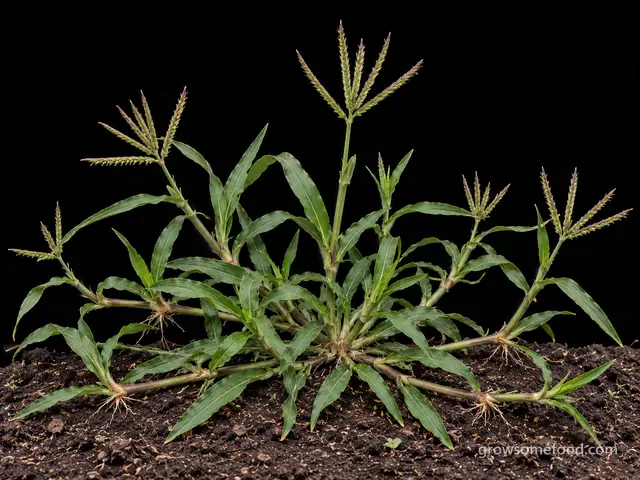
Crabgrass

Digitaria sanguinalis · Poaceae
Other Annual Grass Other
Introduced - native to Europe and warm regions of Asia, now a naturalized weed across North America and worldwide
Not recommended to plant. You almost certainly want to REMOVE this, not grow it - crabgrass is one of the most common and troublesome warm-season lawn and garden weeds. This entry is here to help you identify and control it. (It's not toxic, and its seed was historically eaten, but as a plant it's a weed, not a crop.)

Crabgrass is not toxic - it's a nuisance weed, not a hazard. Its seed is actually edible and was historically harvested as a minor grain (a relative of the cultivated grain fonio), so there's no danger from having it in the yard. The real 'safety' issue is indirect: many people reach for herbicides to control it, so follow all product label directions carefully and consider non-chemical control first. As a plant to handle, it's harmless.

Overview

One of the most common and frustrating lawn weeds in the country - a fast, heat-loving annual grass that colonizes thin turf and bare soil every summer. This entry is about identifying and controlling it, not growing it.

Crabgrass (Digitaria sanguinalis) is the weed most homeowners are actually thinking of when they complain about their lawn. It's a warm-season annual grass that germinates as the soil heats in spring, then sprawls into wide, low, star-shaped ('crab-legged') mats that thrive in the heat of summer - exactly when cool-season lawn grasses thin out and struggle. It moves into bare soil, thin turf, and hot edges along driveways and sidewalks, and a single plant can produce thousands of long-lived seeds, so it comes back year after year.

Unlike the other plants in this catalog, you're almost certainly here to get rid of crabgrass, not to grow it - so this entry is built around identifying and controlling it. (For the record, it's not toxic, and its seed is even edible - a relative of the cultivated grain fonio was historically gathered from crabgrass - but as a yard plant it's simply a weed.) The good news: understanding its warm-season, sun-and-bare-soil biology is the key to beating it, mostly by timing and by growing a thick, healthy lawn.

At a glance

Sun
Full sun
Water
Low
Spacing
4–24 in (typ. 12)
Mature height
4–24 in (typ. 12)
Start by
Direct sow
Frost
Tender
Germination
5–21 days (typ. 10) @ 55–90 °F (typ. 65)

When to plant

No planting window on record for this zone.

Life stages

  1. Spring germination (control window) day 0–14 from sowing
    • The key control moment: prevent germination
      Crabgrass seed germinates as soil warms to about 55-60F in spring (roughly when soil-temperature indicators like forsythia finish blooming or lilacs bloom). This is when pre-emergent control works - applied BEFORE germination, it stops the seedlings; applied after, it's useless. Timing is everything.
    • Recognize the seedlings
      Seedlings look like a small, wider-bladed grass sprouting in thin or bare spots, especially along hot edges (driveways, sidewalks). Catching it young makes control far easier.
    Soil warming to ~55-60F (the germination trigger)Seedlings in thin lawn, bare soil, and hot edges
  2. Young plant (easiest to remove) day 14–45 from sowing
    • Pull or hoe young plants now
      Young crabgrass is shallow-rooted and easy to pull or hoe - remove it now, before it forms its sprawling mat and sets seed. Getting it while small is the simplest non-chemical control.
    • Thicken the lawn to shade it out
      Crabgrass needs sun and bare/thin soil to establish. A dense, tall-mowed, healthy lawn shades the soil and prevents most crabgrass - the single best long-term prevention.
    Young plants easy to pull now (act before they mat and seed)Thin or bare lawn spots inviting more
  3. Sprawling mat
    • Dig out established mats
      By summer, crabgrass sprawls into wide, low, star-shaped ('crab-legged') mats that root at the stem nodes and smother turf. Dig these out whole (they're bigger-rooted now), and reseed the bare spots with lawn grass so crabgrass doesn't just refill them.
    • Why it wins in summer heat
      Crabgrass is a warm-season annual that thrives in the heat and drought of midsummer when cool-season lawns thin and go dormant - which is exactly when it takes over the weak spots.
    Wide sprawling mats rooting at the nodesBare spots after removal (reseed immediately)
  4. Seed heads (stop it here)
    • Remove plants BEFORE the seed heads mature
      The finger-like seed heads (several spikes radiating from one point) can produce thousands of seeds per plant that survive years in the soil, guaranteeing next year's crop. Removing plants before seed set is the most important thing you can do to reduce it over time.
    • First frost ends it - but the seeds remain
      As an annual, crabgrass is killed by the first hard frost. But it has already banked a huge seed load, so control is a multi-year effort of preventing germination and seed set each season.
    Finger-like seed heads forming (remove before they ripen)Massive long-lived seed set feeding future years

Watch out for

Dense Turf & Shade (its main control) Disorder HighApr, May, Jun, Jul

From the weed's perspective, a thick, tall, healthy lawn is its greatest enemy: crabgrass needs full sun and bare or thin soil to germinate and establish, and dense shading turf denies it both - the single most effective, chemical-free control.

Watch for: For the gardener: thin, short-mowed, bare, or compacted turf is where crabgrass wins - those are the spots to thicken.

Prevent: Grow a dense lawn: mow cool-season grass high (3-4 in), overseed thin areas, fix bare and compacted spots, and keep hot edges thick or mulched.

Treat: Thicken and overseed weak turf, mow high, and improve soil - a dense lawn prevents most crabgrass without herbicides.

Seed Set (the multi-year problem) Disorder HighJul, Aug, Sep, Oct

The reason crabgrass persists: each plant can drop thousands of seeds that survive years in the soil, so allowing plants to seed guarantees future infestations - preventing seed set is the key to long-term control.

Watch for: Finger-like seed heads forming from mid-summer on - the point at which each plant is about to reload the soil seed bank.

Prevent: Remove or kill plants before the seed heads mature; combine with dense turf and correct pre-emergent timing to shrink the seed bank over years.

Treat: Pull, dig, or mow off plants before seed ripens; persistent seed-set prevention each year is what finally reduces crabgrass.

Pre-Emergent Control Window Disorder MediumMar, Apr, May

The narrow spring window when crabgrass seed germinates is when pre-emergent control works - and missing it (applying too late, after germination) is the most common reason control fails.

Watch for: Soil warming to ~55-60F, and the natural cue of forsythia finishing / lilacs blooming - the germination trigger.

Prevent: Apply any pre-emergent BEFORE germination (early-to-mid spring by the soil-temperature cue), or use non-chemical prevention (thick lawn, early hand-removal).

Treat: If the window is missed, switch to post-emergent control of young plants and hand-removal, and plan pre-emergent timing better next spring.

Varieties · 2

Large Crabgrass (Digitaria sanguinalis)
speciesannualwarm-seasonlawn-weedhairysprawling

The common large or hairy crabgrass: a warm-season annual grass with wider blades, hairy leaf sheaths, and finger-like seed heads, sprawling into star-shaped mats in thin lawns and bare soil. The main target of lawn crabgrass control.

Smooth Crabgrass (Digitaria ischaemum)
speciesannualwarm-seasonlawn-weedsmallersmooth

A smaller, smoother-leaved crabgrass (fewer hairs) that's also a common lawn weed, often in shorter-mowed turf. Controlled the same way as large crabgrass - by prevention, timing, and a thick lawn.

Grow

How it invades: crabgrass exploits warm soil, sun, and bare or thin turf, germinating in spring and sprawling through summer heat - understanding this is the key to preventing it.

You won't be planting crabgrass, so this is really how it invades - and knowing that is how you stop it. Crabgrass seed lies dormant in the soil and germinates when the soil warms to about 55-60F in spring (a useful natural cue is when forsythia finishes blooming and lilacs start). It demands full sun and bare or thin soil - it can't establish in dense shade or thick turf - so it targets the weak spots: bare patches, thin lawns, and the hot, dry edges along pavement.

Once up, it's a fast, tough warm-season grass that revels in summer heat and drought, sprawling into wide mats that root where the stems touch soil and outcompete stressed cool-season lawns. It races to set an enormous seed crop before the first frost kills it. Every part of that life cycle points to the same prevention: deny it the warm bare sunny soil it needs - keep turf thick and tall, avoid bare spots, and interrupt its germination and seeding - and crabgrass has nowhere to gain a foothold.

Care

Control, not care: prevent germination (pre-emergent timing or a thick lawn), pull young plants, dig out summer mats and reseed bare spots, and above all stop it from setting seed.

For crabgrass, 'care' means control, and the most effective control is a thick, healthy, tall-mowed lawn that shades the soil so crabgrass seed can't get the sun and bare ground it needs - this alone prevents most of it, no chemicals required. Mow cool-season grass high (3-4 inches), overseed thin areas, and fix the bare and compacted spots (especially hot edges) where crabgrass invades.

Timing is the other key. Pull or hoe young plants while they're small and shallow-rooted; dig out established summer mats whole and immediately reseed the bare spot so crabgrass doesn't just refill it. Above all, remove plants before their finger-like seed heads ripen - stopping seed set is what shrinks the problem over years. If you use a chemical pre-emergent herbicide, the whole trick is timing: it must go down before the seed germinates in spring (it does nothing once plants are up), and post-emergent products target young plants - always follow label directions. Because a huge seed bank persists, expect control to be a multi-season effort, not a one-time fix.

Troubleshooting

How to get rid of it: correct the conditions that invite it (thin lawn, bare hot soil), time prevention to spring germination, remove plants before they seed, and persist across seasons.

Crabgrass keeps coming back every year: its seeds survive years in the soil, so a single season won't clear it - persist, and each year you prevent germination and seed set shrinks the seed bank. My pre-emergent didn't work: almost always a timing miss - it must be applied before the seed germinates (soil ~55-60F, forsythia dropping/lilacs blooming); once plants are up, pre-emergents do nothing. It's worst along the driveway and sidewalk: those hot, reflective edges warm first and dry out turf - expect crabgrass there and keep those edges thick or mulched. It took over a thin/bald patch: crabgrass exploits bare and thin soil in sun - the real fix is a dense lawn; remove the crabgrass and reseed/thicken the spot so it can't return. Should I just pull it? Yes for young plants and small infestations (get it before it seeds); combine hand-removal with reseeding and better lawn care. Is it dangerous? No - it's a non-toxic nuisance weed; the only caution is to use any herbicides strictly per label. Will it die on its own? Frost kills the plants each fall, but the seeds it dropped ensure a new crop, so prevention must continue.

History

A ancient Old World weed of cultivation whose seed was actually grown and gathered as a grain (kin to fonio), it spread worldwide with agriculture and became the archetypal modern lawn weed.

Crabgrass has followed farming for thousands of years. Native to Europe and warm Asia, it spread around the world as a weed of cultivated ground, and, remarkably, its close relatives were deliberately grown: Digitaria species include fonio, an ancient and nutritious cultivated grain still important in West Africa, and crabgrass itself (D. sanguinalis) was grown as a minor cereal ('German millet'/'Polish millet') in parts of Europe, its seed gathered and ground into meal. So the plant now cursed in lawns was once, elsewhere, a food crop.

Its rise to lawn-weed infamy is a distinctly modern, suburban story. As the manicured cool-season lawn became a cultural ideal across North America, crabgrass - perfectly adapted to invade any thin, sunny, bare, or drought-stressed turf in summer - became the archetypal enemy of the perfect lawn, and the target of an entire industry of pre-emergent herbicides. Understanding it not as a mysterious scourge but as a warm-season opportunist that simply exploits weak turf is the beginning of managing it sensibly.

Growing across climates

A warm-season weed found across nearly the whole country (zones 3-11); it germinates and thrives with summer heat everywhere, so the control timing simply shifts earlier in warm climates and later in cold ones.

Crabgrass is a warm-season annual that appears across essentially all of North America wherever summers are warm, zones 3-11. What changes by climate is the timing of its life cycle, which is exactly what you need to know to control it. Cold northern zones: it germinates later in spring (as soil finally warms) and is reliably killed by fall frost, giving a shorter season - time pre-emergent control to the later spring soil warm-up. Temperate zones: the classic pattern - germination in mid-spring, mats through summer, seed set, frost kill; time prevention to the forsythia/lilac cue. Warm southern and Sun Belt zones: crabgrass germinates earlier and over a longer window and can be an even more persistent problem in the long hot season, so control timing moves earlier and may need repeating. Everywhere, the core biology is the same - it needs warm soil, sun, and bare/thin turf - so the universal fixes (dense lawn, correct pre-emergent timing, stopping seed set) apply in every climate; only the calendar shifts.

No grower tips for Crabgrass yet — yours could be the first.

Sign in to share what works in your garden.

Connection interrupted

Reconnecting to GrowSomeFood

Keep this page open. We are trying to restore your garden session.

Attempt of . Retrying automatically.

Still offline

Could not reconnect

Your phone may have switched networks or gone to sleep. Try again when the signal is steady.

Session expired

Reload to continue

This garden session is no longer available on the server. Reloading will start a fresh session.