
Add it to your home screen and it opens full screen: no browser bars, one tap away, and everything stays signed in. Free, nothing to download from an app store.
- Tap the Share button in your browser
- Scroll down and choose “Add to Home Screen”
- Open GrowSomeFood from your home screen
- Open your browser’s menu
- Choose “Add to Home screen” or “Install app”
- Open GrowSomeFood from your home screen

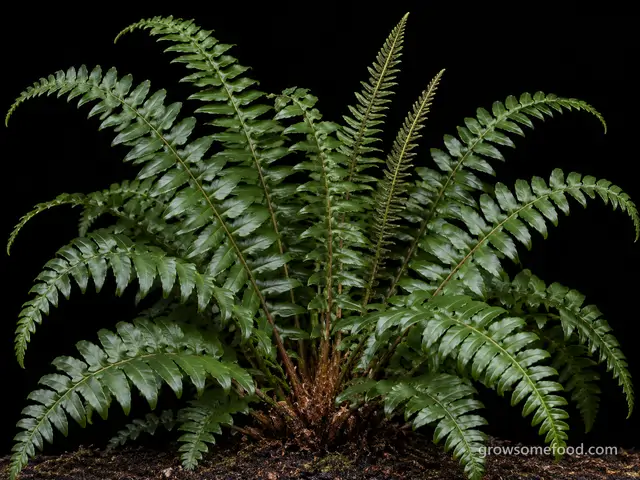
Christmas Fern
The easiest, toughest native shade fern: an evergreen, well-behaved clump of leathery dark-green fronds that carpets dry-to-moist shade, holds a slope, is ignored by deer, and stays green all winter.
Safety notes Grown strictly as an ornamental foliage plant - it is not a food. Ferns are not a foraging crop: while a few fern fiddleheads are eaten, many are toxic or carcinogenic, and Christmas fern is not one to eat - enjoy it for its foliage only. It is not a contact irritant and is safe to handle and grow around children and pets.
Overview
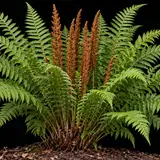
Christmas fern (Polystichum acrostichoides) is the native shade fern to start with. It forms a tidy, arching clump of leathery, dark-green fronds - no aggressive running, no fuss - and, unusually for a fern, it's evergreen, staying green right through winter when the fronds lie down over the crown. Early American settlers cut those still-green fronds for holiday decoration, which is how it earned its name.
The one thing to knowIt forms a tidy, arching clump of leathery, dark-green fronds - no aggressive running, no fuss - and, unusually for a fern, it's evergreen, staying green right through winter when the fronds lie down over the crown.
Quick facts
- Height
- 18 inRange: 12–24 in
- Spread
- 24 inRange: 18–30 in
- Cold
- Takes hard frostdamaged below -35°F
- Heat
- Struggles above 90°F
- Life cycle
- Perennial, lives about 20 years
- Soil
- Consistently moist
- Water
- Medium
- Plant spacing
- 24 inRange: 18–30 in
When to plant
Nothing is open today. Spring transplanting opens 5 months, Mar 27 to May 22.
- Transplant Mar 27 – May 22 Opens in 158 daysAbout 2 weeks before to 6 weeks after your last frost (Apr 10 here)Set out nursery plants or spring divisions into shaded, humusy, moist-but-well-drained soil as the ground warms; they establish quickly and need only steady first-season moisture.
- Transplant Aug 30 – Oct 11 Opens in 314 daysAbout 8 weeks before to 2 weeks before your first frost (Oct 25 here)Fall planting works well in milder zones - cool, moist soil helps roots establish before winter, and this evergreen fern keeps working through the cold.
Frost here: last around Apr 10 (Mar 27 to Apr 24 most years), first around Oct 25. Zone averages, your own yard may run a week or two either way.
Life stages
Establish, grow, repeat
Getting established and returning each season are different parts of the story.
Stage 1 of 4 · Getting established
Year 1 - rooting in
Day 0 to 75 after transplanting
Care at this stage
-
Keep evenly moist the first season
Set a new plant or division into humusy, moist-but-well-drained soil in shade and water it regularly through its first year while it roots in. Christmas fern is drought-tolerant once established, but a new plant needs steady moisture to settle.
-
Mulch with leaf litter
A light woodland mulch of shredded leaves or compost mimics its native forest floor, holds moisture, and feeds the soil - but keep it off the crown so the fiddleheads can push through freely.
Months are typical seasonal windows; climate, variety, and plant age can shift them.
Watch out for
4 to know. None are high-risk for fronds. None are active in October.
Root RotSeverity Low DiseaseSeason: Apr, May, Nov, DecWilting in the middle of the day on a plant whose soil is damp - the classic tell, and the reason people water a rotting plant and finish it off.
Plant in humusy, moist-but-well-drained soil, avoid low waterlogged spots, and do not pile mulch against the crown. Healthy divisions taken from firm outer growth will restart a rotting clump.
Wilting in the middle of the day on a plant whose soil is damp - the classic tell, and the reason people water a rotting plant and finish it off. Leaves yellowing from the bottom up, dull off-color foliage, and growth that stalls for no visible reason. Whole shoots, or one side of the plant, collapsing while the rest still looks fine. Soft, dark, or mushy tissue at the base of the stem or at the crown, sometimes with a sour smell. Lift a failing plant and look at the roots: healthy ones are firm and pale, rotted ones are brown or black and slimy, and the outer layer slips off between your fingers leaving a thread of core behind. Seedlings that topple over at soil level are the same problem, called damping-off.
There is no cure for tissue that has already rotted, so act on the conditions rather than looking for a spray. Stop watering at once and fix the drainage - open up compacted soil, or move the plant to a raised, sharply drained position or a container. Lift a badly affected plant, cut away every soft dark root and rotted section with a clean blade back to firm pale tissue, and replant only the healthy parts into fresh free-draining soil or mix. Often the better move is to give up on the plant and save its offspring instead: cuttings, offsets, or divisions taken from firm healthy growth root readily and give you a clean start. Bin the rotted material rather than composting it, and correct the drainage before you replant, because the rot comes straight back in the same wet spot.
Drainage is the whole defense. Match the plant to the site first - something that wants sharp drainage will not survive heavy clay or a low, water-collecting spot however well you tend it. Where the ground is heavy, plant on a raised bed, berm, or slope, or grow in a container. Set plants at the depth they were already growing, since burying the crown or the root flare is a common cause of rot, and keep mulch pulled back a few inches from the stem base instead of piled against it. Water the soil rather than the calendar: check that the top inch or two is dry before watering again, cut back hard in cool weather and winter dormancy, and never leave a pot standing in a full saucer. Do not plant or dig in soggy ground, and go easy on rich amendments for plants that want it lean. Rotate annual crops, and start with clean healthy plants and fresh mix.
Root rot is not one organism but a group of soil fungi and water molds - Pythium, Phytophthora, Fusarium, Rhizoctonia and others - that sit harmlessly in most soils and only turn destructive when the ground stays saturated. Waterlogged soil drives the air out, the roots suffocate, and the weakened tissue is invaded and goes soft, brown, and stringy. Because the damage is underground you usually see it first as something that looks like drought: wilting, yellowing, stunting, a plant that does not respond to being watered. Overwatering, heavy compacted ground, a low spot that collects runoff, a pot with no drainage or a saucer left standing full, and cold wet soil in winter are the usual causes. Once roots have actually rotted there is no cure - this is a problem you prevent rather than treat.
Slugs & SnailsSeverity Low PestSeason: Apr–JunIrregular ragged holes chewed out of the middle of leaves and along the edges - not the clean-edged cuts a caterpillar leaves.
They rasp the tender new fiddleheads in cool, damp spring shade, but the fronds toughen as they mature and outgrow it. Keep damp mulch off the crown.
Irregular ragged holes chewed out of the middle of leaves and along the edges - not the clean-edged cuts a caterpillar leaves. Seedlings that vanish overnight, or that are cut off at soil level with nothing left behind. Silvery dried slime trails across leaves, soil, pots, and paving in the morning: this is the giveaway that tells you it was mollusks rather than an insect. Chewed pits in ripe fruit, especially where it rests on the ground. Damage that shows up on the lowest, dampest leaves first and gets worse after rain or evening watering. Turn over a board, an upturned pot, or a clump of dense mulch during the day and look for the animals themselves sheltering in the cool underneath.
Hand-picking works and costs nothing: go out an hour after dark with a headlamp, drop what you find into soapy water, and repeat nightly for a week or two - persistence is what wins, not any single product. Shallow beer traps sunk to soil level catch them too, but need emptying and refilling daily to be worth anything. Iron-phosphate bait is the standard control and is far lower-risk around pets and wildlife than the old metaldehyde products, but it is not harmless: many formulations include EDTA, and a dog that eats a quantity of pellets can develop iron toxicosis. Scatter it thinly per the label, never in piles, and keep dogs off a baited bed. Clear fallen foliage and debris in autumn, where the eggs are laid. In a wet climate this is a population you manage each season rather than one you eradicate - and on most established plants light grazing is cosmetic and needs nothing at all.
Take away the daytime shelter first: lift boards and upturned pots, clear piles of debris, keep dense mulch pulled back from crowns and stems, and give crowded plantings enough airflow to dry out. Water in the morning rather than the evening so the surface is dry by the time they come out. Copper tape around containers and raised beds gives them a shock they will not cross, and it is the one barrier that reliably works. Get plants past the vulnerable stage quickly - start seedlings in pots and set them out at a decent size rather than direct-sowing into a cold wet bed, since most plants stop being worth defending once the leaves toughen. Leave the ground beetles, frogs, toads, and ground-feeding birds alone, because they eat mollusks all night for free and broad-spectrum slug pellets kill them too. Where thick-leaved or resistant varieties exist for what you are growing, they take far less damage.
Slugs and snails are nocturnal mollusks that rasp ragged holes in soft leaves, shear off seedlings at ground level, and chew into ripe fruit that touches the soil. They feed at night and in the early morning and spend the day hidden under boards, pots, dense mulch, leaf litter, and low foliage, becoming active in exactly the cool, damp, shaded conditions that suit young plants. Damage is heaviest in wet spells and on tender spring growth: a single wet week can erase a row of seedlings while an established, tough-leaved plant of the same species is barely marked. They lay clusters of small pearly eggs in damp soil and under debris, so a garden with plenty of cover carries a resident population year after year rather than being invaded from outside.
Foliar NematodesSeverity Low PestSeason: Jun–AugBrown or tan streaks and angular blotches bounded by the leaf veins (creating a banded, wedge pattern), worsening as summer goes on; distinct from the chewed holes of slugs.
Brown or tan streaks and angular blotches bounded by the leaf veins (creating a banded, wedge pattern), worsening as summer goes on; distinct from the chewed holes of slugs.
No cure once inside the leaf - remove affected foliage, cut back and dispose of all leaves in fall, and in severe cases discard the plant. Buy from clean sources to avoid introducing it.
Avoid overhead watering (nematodes swim in water films), remove and destroy infected leaves, clean up all foliage in fall, and don't split or share infected plants.
Microscopic worms (Aphelenchoides) that live and feed inside leaf tissue, producing brown streaks and wedges trapped BETWEEN the leaf veins from mid-to-late summer and spreading plant to plant in films of water. Common on hostas, ferns, and other shade perennials, and hard to eradicate once present.
Leaf Scorch (sun & drought)Severity Low DisorderSeason: Jul–SepBrowning that starts at the leaf edges and tips and spreads inward, with a fairly sharp line between the crisp brown tissue and the green that is still healthy.
Site it in part-to-full shade and keep new plants evenly moist through their first year - established Christmas fern is fairly tough. Trim off badly scorched fronds, and move the plant if it happens repeatedly.
Browning that starts at the leaf edges and tips and spreads inward, with a fairly sharp line between the crisp brown tissue and the green that is still healthy. Leaves and fronds going dry, papery, and crisp rather than soft, yellow, or spotted - that is what separates this from a fungal problem. Damage worst on the side of the plant facing the sun or the prevailing wind and on the most exposed upper leaves, while the shaded interior stays fine. Symptoms appearing sharply after a heat wave, a dry spell, or a bright windy week in winter. Whole leaves or fronds shed early as the plant cuts its losses.
Water deeply, mulch, and improve the shade - that is the whole treatment, because there is nothing here to kill. Leaves that are already scorched will not recover, so trim off badly browned foliage or fronds for appearance if you want to; the crown and roots are usually unharmed and push out fresh growth once conditions improve. On a plant that scorches badly every year the answer is to move it rather than to keep watering harder, because the siting is what is wrong. Some plants respond well to being cut back hard, which brings a clean flush of new foliage. And on plants that naturally die back or brown off late in the season, scorching at the end of a dry summer is normal and needs nothing at all.
Site the plant where it actually wants to be. This is a placement problem far more often than a watering problem, and a shade plant in hot afternoon sun will scorch every summer however much you water it. Give shade and woodland plants part-to-full shade and shelter from hot afternoon sun and drying wind. Keep the root zone consistently moist and mulch it well with leaf litter or another organic mulch, which holds water and keeps the roots cool - the single most useful routine step. Water deeply and thoroughly during dry spells rather than little and often, so moisture reaches the whole root zone. Pay particular attention through the first year after planting, when the root system is small and cannot keep up with the leaves. On evergreens in cold regions, make sure the plant goes into winter well watered, and keep it out of bright, windy, exposed positions.
Leaf scorch is not a disease and there is nothing to spray for it. It is what happens when a leaf loses water faster than the roots can replace it: the tissue farthest from the veins - the margins and the tips - dries out first and turns brown and papery, and the browning works inward while the rest of the leaf stays green. Hot sun, dry soil, drying wind, heat reflected off paving or a wall, a small or damaged root system, and a plant sited somewhere sunnier or drier than it wants are the usual causes, singly or together. It also happens in winter on evergreens, when bright sun and wind pull water out of the leaves while the ground is frozen and the roots cannot resupply. Shade and woodland plants, shallow-rooted plants, and anything recently planted scorch most easily.
Good & bad neighbors
Plant nearby
-
Native part-shade woodland plant whose airy spring flowers rise above the fern's foliage; both want humusy, moist-but-well-drained soil and make a classic native shade combination.
-
Christmas fern is an ideal groundcover under a dogwood or other understory tree, carpeting the moist, part-shaded root zone and holding the soil - dogwood entries already list native ferns as underplantings.
-
A staple shade-garden duo: the fern's fine evergreen texture contrasts hosta's broad leaves, and both share the same part-to-full-shade, moisture-retentive conditions.
-
Ferns weave together beautifully - drier-shade Christmas fern at the edges with moisture-loving cinnamon and royal ferns in wetter spots builds a layered, textured native fern tapestry.
-
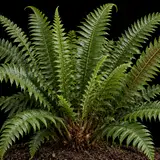
The West Coast counterpart, and a separate species with its own guide - not a Christmas fern variety. The larger evergreen sword fern of the Pacific Northwest is the better choice for West Coast shade gardens, and it has its own zones and timeline; see its entry rather than applying this one to it.
-
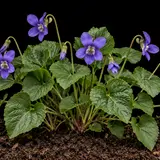
A natural woodland pairing: violets carpet the ground in early spring beneath the fern's arching fronds, both thriving in moist, humusy part-shade, and the violets add edible flowers and fritillary-butterfly habitat.
Varieties · 2
You pick one when you add Christmas Fern to your garden. Its days to maturity set your harvest window.
Species (Polystichum acrostichoides)
The straight native species, and how it is almost always sold and grown: a tidy evergreen clump of leathery dark-green fronds, 1-2 feet tall, tolerant of dry shade and excellent for erosion control.
Variety details for Species (Polystichum acrostichoides)
Arching rosette of leathery, once-divided dark-green fronds with pointed, stocking-shaped leaflets; evergreen.
speciesnativeevergreenclumpingReliable, well-behaved, and the standard choice - named cultivars are rare because the species itself is so good.
Crested / forked forms ('Cristatum'-type)
Occasional wild-found or selected forms with forked or crested frond tips, offered now and then by specialty fern nurseries.
Variety details for Crested / forked forms ('Cristatum'-type)
Like the species but with fronds ending in crested, forked, or tasseled tips.
speciesnativeevergreencrestedSame tough evergreen constitution as the species, with a frilled novelty at the frond ends. Uncommon in trade - most gardeners simply grow the species.
Grower tips
Notes from growers, tagged with the zone they grow in. A person reads every post before it appears.
Nobody has posted about Christmas Fern yet. The first one usually saves someone a season.
Free account. Your post shows your grower name and zone, never your email.