
Add it to your home screen and it opens full screen: no browser bars, one tap away, and everything stays signed in. Free, nothing to download from an app store.
- Tap the Share button in your browser
- Scroll down and choose “Add to Home Screen”
- Open GrowSomeFood from your home screen
- Open your browser’s menu
- Choose “Add to Home screen” or “Install app”
- Open GrowSomeFood from your home screen

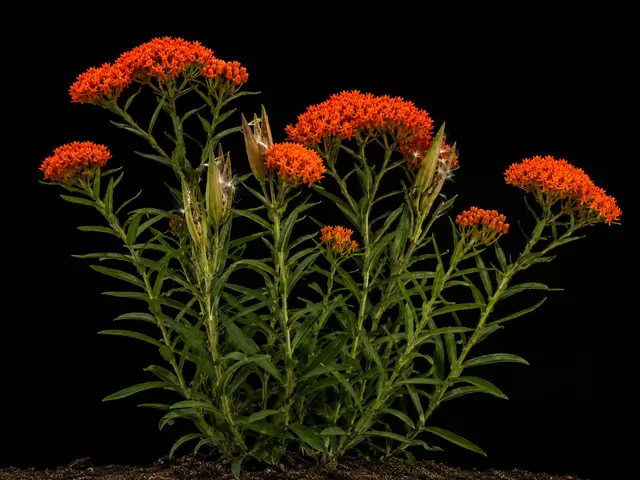
Butterfly Weed
The border-friendly milkweed: brilliant orange flower clusters that swarm with butterflies, a monarch host that stays in a tidy clump instead of running, and a tough, drought-proof native for full sun.
Safety notes Like all milkweeds, butterfly weed contains cardiac glycosides and is toxic if eaten - keep it out of the kitchen; it is not a food plant. Its dried root ('pleurisy root') has a real but potent medicinal history for respiratory complaints and should only be used under qualified guidance, not self-prescribed - large doses cause vomiting. Unlike common milkweed it has clear, not milky, sap and is far less irritating, but still wash up after handling. Toxic to livestock and pets in quantity.
Overview
Butterfly weed (Asclepias tuberosa) is the milkweed for gardeners who love the monarch but not the mess. It gives you everything its cousin common milkweed does - it's a monarch host plant and a superb butterfly nectar source - but in a well-mannered, non-running clump topped by flat clusters of the most vivid orange flowers in the native garden. Monarchs, swallowtails, fritillaries, and native bees mob it all summer, and it makes a first-rate, long-lasting cut flower.
Quick facts
- Sprouts in
- 21 daysRange: 14–30 days
- Soil temperature
- 70 °FRange: 65–75 °F
- Start indoors
- 8 weeks before transplantRange: 6–10 weeks
- Height
- 24 inRange: 18–36 in
- Spread
- 18 inRange: 12–24 in
- Cold
- Takes hard frostdamaged below -30°F
- Heat
- Struggles above 100°F
- Life cycle
- Perennial, lives about 10 years
- Save seeds
- About 130 days after plantingRange: 110–160 days
- Self-sows
- Yes, expect volunteers
- Soil
- Well-drained
- Water
- Low
- Plant spacing
- 18 inRange: 12–24 in
When to plant
Fall sowing is open for 26 more days. Next: winter, Feb 13 to Feb 27.
- Direct sow Oct 11 – Nov 15 Open now · 26 days leftAbout 2 weeks before to 3 weeks after your first frost (Oct 25 here)Fall-sow seed outdoors so winter cold breaks dormancy naturally - the easiest way to start it. Seedlings appear the following spring and usually bloom in their second or third year.
- Start indoors Feb 13 – Feb 27 Opens in 116 daysAbout 8 weeks before to 6 weeks before your last frost (Apr 10 here)Cold-stratify seed in the fridge 4-6 weeks, then sow indoors 6-8 weeks before last frost in deep pots to accommodate the taproot.
- Transplant Apr 10 – May 22 Opens in 172 daysAbout at to 6 weeks after your last frost (Apr 10 here)Set out young transplants after last frost into their permanent, sunny, well-drained spot - butterfly weed's deep taproot resents disturbance, so plant it young and don't move it.
Frost here: last around Apr 10 (Mar 27 to Apr 24 most years), first around Oct 25. Zone averages, your own yard may run a week or two either way.
Life stages
Establish, grow, repeat
Getting established and returning each season are different parts of the story.
Stage 1 of 4 · Getting established
Year 1 - taproot down
Day 0 to 90 after transplanting
Care at this stage
-
Water the first season, then stop
Water a new plant through its first season while its deep taproot develops; after that, butterfly weed is very drought-tolerant and dislikes wet soil. It's slow to emerge in spring - be patient and don't assume it's dead.
-
Plant it once, in its final spot
Butterfly weed grows a deep taproot and strongly resents being moved. Choose a permanent, sunny, well-drained location and plant young - established plants rarely survive transplanting.
Months are typical seasonal windows; climate, variety, and plant age can shift them.
Watch out for
3 to know. 1 is high-risk: Root Rot. None are active in October.
Root RotSeverity High DiseaseSeason: Jan, Apr, May, Nov, DecWilting in the middle of the day on a plant whose soil is damp - the classic tell, and the reason people water a rotting plant and finish it off.
The deep taproot rots in heavy or enriched ground, and this is the usual reason a butterfly weed fails. Full sun, lean gritty soil, no water-holding organic amendments, and a raised bed or slope on clay. Where the soil genuinely stays moist, grow swamp milkweed instead.
Wilting in the middle of the day on a plant whose soil is damp - the classic tell, and the reason people water a rotting plant and finish it off. Leaves yellowing from the bottom up, dull off-color foliage, and growth that stalls for no visible reason. Whole shoots, or one side of the plant, collapsing while the rest still looks fine. Soft, dark, or mushy tissue at the base of the stem or at the crown, sometimes with a sour smell. Lift a failing plant and look at the roots: healthy ones are firm and pale, rotted ones are brown or black and slimy, and the outer layer slips off between your fingers leaving a thread of core behind. Seedlings that topple over at soil level are the same problem, called damping-off.
There is no cure for tissue that has already rotted, so act on the conditions rather than looking for a spray. Stop watering at once and fix the drainage - open up compacted soil, or move the plant to a raised, sharply drained position or a container. Lift a badly affected plant, cut away every soft dark root and rotted section with a clean blade back to firm pale tissue, and replant only the healthy parts into fresh free-draining soil or mix. Often the better move is to give up on the plant and save its offspring instead: cuttings, offsets, or divisions taken from firm healthy growth root readily and give you a clean start. Bin the rotted material rather than composting it, and correct the drainage before you replant, because the rot comes straight back in the same wet spot.
Drainage is the whole defense. Match the plant to the site first - something that wants sharp drainage will not survive heavy clay or a low, water-collecting spot however well you tend it. Where the ground is heavy, plant on a raised bed, berm, or slope, or grow in a container. Set plants at the depth they were already growing, since burying the crown or the root flare is a common cause of rot, and keep mulch pulled back a few inches from the stem base instead of piled against it. Water the soil rather than the calendar: check that the top inch or two is dry before watering again, cut back hard in cool weather and winter dormancy, and never leave a pot standing in a full saucer. Do not plant or dig in soggy ground, and go easy on rich amendments for plants that want it lean. Rotate annual crops, and start with clean healthy plants and fresh mix.
Root rot is not one organism but a group of soil fungi and water molds - Pythium, Phytophthora, Fusarium, Rhizoctonia and others - that sit harmlessly in most soils and only turn destructive when the ground stays saturated. Waterlogged soil drives the air out, the roots suffocate, and the weakened tissue is invaded and goes soft, brown, and stringy. Because the damage is underground you usually see it first as something that looks like drought: wilting, yellowing, stunting, a plant that does not respond to being watered. Overwatering, heavy compacted ground, a low spot that collects runoff, a pot with no drainage or a saucer left standing full, and cold wet soil in winter are the usual causes. Once roots have actually rotted there is no cure - this is a problem you prevent rather than treat.
Heavy Caterpillar GrazingSeverity Low DisorderSeason: Jun–AugLeaves eaten down to the stems by striped monarch or fuzzy tussock caterpillars in mid-summer.
Leaves eaten down to the stems by striped monarch or fuzzy tussock caterpillars in mid-summer.
None - let the caterpillars feed and the plant recover, or move some caterpillars to another milkweed if a single small plant is overwhelmed.
Plant several milkweeds so the grazing is shared; never treat.
Not a true threat - monarch (and tussock moth) caterpillars can strip a small butterfly weed of its leaves. This is the plant doing its job; healthy plants regrow, and the answer is more milkweed, not control.
Oleander AphidSeverity Low PestSeason: Jun–SepDense colonies of vivid yellow aphids packed along the stems and over the flower buds, sticky honeydew, sooty mold, and ants working the plant.
Conspicuous on butterfly weed's stems and orange buds but rarely a real threat. Check for monarch eggs before you touch a stem.
Dense colonies of vivid yellow aphids packed along the stems and over the flower buds, sticky honeydew, sooty mold, and ants working the plant.
Blast them off with a jet of water, or wipe them off by hand - checking first for monarch eggs and small caterpillars on the same stems. Otherwise simply tolerate them, since predators usually catch up. Do NOT spray, including with insecticidal soap or neem, which kill caterpillars too.
Encourage lady beetles and lacewings and let them do the work; a strong plant carries a heavy colony without real harm. Never use insecticide on a monarch host plant. Soft, over-watered, over-fed growth carries far more of them, so growing the plant hard reduces the problem.
Bright yellow, black-legged aphids that cluster densely on milkweed stems, buds and new growth. They are conspicuous and very common but rarely fatal to an established plant - and they cannot be sprayed, because any insecticide that kills them also kills the monarch eggs and caterpillars the plant is there to support.
Good & bad neighbors
Plant nearby
-
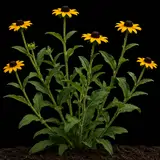
A classic dry-meadow pairing - orange and gold together, identical full-sun, lean-soil, drought-tolerant needs, and overlapping summer bloom loved by pollinators.
-
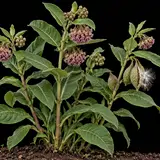
Growing several milkweed species together gives monarch caterpillars more host leaves and extends the season; butterfly weed adds the tidy, drought-tough border presence common milkweed lacks.
-
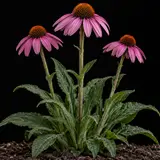
Shares butterfly weed's sun and sharp drainage, blooms alongside it, and together they make one of the most dependable native pollinator combinations.
-
Little BluestemA clumping native prairie grass that sets off butterfly weed's orange, shares its dry lean conditions, and completes a low-water native planting.
Varieties · 3
You pick one when you add Butterfly Weed to your garden. Its days to maturity set your harvest window.
Butterfly Weed (Asclepias tuberosa)
The wild species: brilliant orange flat-topped flower clusters on tidy 18-30 inch clumps, with a deep taproot that makes it tough, drought-proof, and long-lived.
Variety details for Butterfly Weed (Asclepias tuberosa)
Flat clusters of vivid orange flowers atop bushy clumps of narrow deep-green leaves.
speciesnativeorangemonarch-hostThe border-friendly, non-running milkweed and a monarch host - the standard for pollinator gardens.
Hello Yellow
A clear golden-yellow selection of butterfly weed with all the toughness and monarch value of the orange species but sunny yellow umbels - striking in a border and a good cut flower.
Variety details for Hello Yellow
Flat clusters of bright pure-yellow flowers on compact clumps.
yellowclumpingcut-flowerselectionGay Butterflies (mix)
A seed strain producing a mix of orange, red, and yellow flowering plants - a colorful, tough, butterfly-friendly group grown from seed, ideal for a naturalistic pollinator planting.
Variety details for Gay Butterflies (mix)
A blend of orange, scarlet, and yellow flower clusters across a planting.
mixed-colorseed-straincut-flowerclumping
Grower tips
Notes from growers, tagged with the zone they grow in. A person reads every post before it appears.
Nobody has posted about Butterfly Weed yet. The first one usually saves someone a season.
Free account. Your post shows your grower name and zone, never your email.