Add it to your home screen and it opens full screen: no browser bars, one tap away, and everything stays signed in. Free, nothing to download from an app store.
- Tap the Share button in your browser
- Scroll down and choose “Add to Home Screen”
- Open GrowSomeFood from your home screen
- Open your browser’s menu
- Choose “Add to Home screen” or “Install app”
- Open GrowSomeFood from your home screen

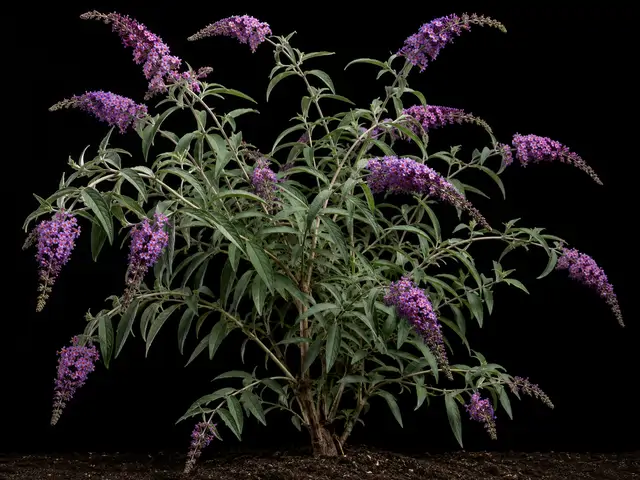
Butterfly Bush
Not a food plant - an ornamental nectar shrub. Not seriously poisonous, but the leaves and seed carry saponins and iridoid glycosides and can upset the stomach if eaten in quantity, so discourage children and pets from chewing it. The bigger caveat is ecological: butterfly bush is widely INVASIVE and prohibited in Oregon and Washington outside state-approved cultivars, and while it feeds adult butterflies nectar it supports essentially no native caterpillars - a nectar bar, not a nursery.
Overview
A fast, fragrant, nearly foolproof nectar shrub that swarms with butterflies all summer - and a genuinely invasive plant prohibited in some states, so the honest way to grow it is state-approved low-fertility cultivars only, diligent deadheading, and paired with the native host plants it can't replace.
Butterfly bush (Buddleja davidii) does exactly what its name promises: from midsummer to frost it throws long, honey-scented flower spikes in purple, blue, white, and pink that swarm with butterflies, bees, and hummingbirds. It's fast, tough, drought-tolerant, and nearly foolproof — a big arching shrub that blooms the first year, shrugs off heat and poor soil, and asks for little but sun and a spring haircut. For sheer pollinator spectacle per dollar, few shrubs compete.
But butterfly bush comes with an asterisk every honest gardener should know. It is invasive across much of the United States, seeding prolifically into stream corridors, roadsides, and disturbed land, and the species is a listed noxious weed in Oregon and a quarantine-listed noxious weed in Washington, where selling, propagating or planting it is prohibited outside a narrow list of state-approved low-fertility cultivars. Just as important, its 'butterfly' branding oversells it: the flowers feed adult butterflies nectar, but it supports essentially no native caterpillars — a handful of species have been recorded on it, against the hundreds a native shrub can raise — so it does little for the next generation. The responsible way to grow it is with eyes open: check your state's current approved-cultivar list before you buy, deadhead diligently to stop seed, keep it out of wild areas, and pair it with true native host plants (milkweed and company) so your garden feeds butterflies through their whole life, not just at the bar.
At a glance
- Sun
- Full sun
- Water
- Low
- Spacing
- 36–120 in (typ. 60)
- Mature height
- 36–144 in (typ. 84)
- Start by
- Transplant · Cuttings
- Frost
- SemiHardy
- Spread
- 36–120 in (typ. 60)
- Soil
- Well-drained
- Temperature
- Damaged below -20°F · struggles above 100°F
- Self-sows
- Yes — expect volunteers
When to plant
Zone 7a typical frost: last Apr 10 · first Oct 25 (spring frost runs Mar 27–Apr 24 in a typical spread of years)
Life stages
- Year 1 - rooting in day 0–75 from transplant
-
Water to establish, then back offevery 6 dWater a new butterfly bush to root in its first season. Once established it's markedly drought-tolerant and actively dislikes wet feet - overwatering and heavy, poorly drained soil are the fastest ways to kill it.
-
Confirm your cultivar is on the current state-approved listBecause butterfly bush self-sows into a serious invasive, plant only a low-fertility cultivar that is approved where you live. Don't rely on a cultivar name you read somewhere: Oregon's Department of Agriculture and the Washington State Noxious Weed Control Board publish the approved lists, and they change - the original 'Blue Chip' was later found to exceed the seed threshold and was replaced on the list by 'Blue Chip Jr.'. Check the current list before you buy.
Root rot in wet, heavy soil (its main killer)Confirming your cultivar appears on your state's current approved list -
Water to establish, then back offevery 6 d
- Spring growth & hard prune Mar, Apr, May (yearly)
-
Cut back HARD in early spring - it blooms on new woodButterfly bush flowers on the current season's growth, so cut it back hard in early spring - to 12-24 inches, or even near the ground - once buds swell. This keeps it compact, sturdy, and floriferous. Skipping this makes a leggy, sparse, floppy shrub. Wait until spring (not fall) so old stems protect the crown over winter.
-
Feed lightly - don't overdo itA light spring feeding is plenty; butterfly bush grows fast and lush on its own and too much nitrogen just makes soft floppy growth at the expense of flowers.
Late-emerging shoots (it leafs out late - don't assume winter killed it)Dieback of top growth in cold zones (normal - it resprouts from the base) -
Cut back HARD in early spring - it blooms on new wood
- Summer-fall bloom Jun, Jul, Aug, Sep, Oct (yearly)
-
Deadhead relentlessly - for rebloom AND to stop seedingevery 7 dSnip off spent flower spikes as they fade. This does double duty: it prompts a long succession of new blooms all summer into fall, AND it prevents the plant from setting the copious seed that makes it invasive. On seed-bearing types, deadheading before seed drop is a responsibility, not just tidiness.
-
Watch the pollinators - but know the limitsThe fragrant nectar spikes draw butterflies, bees, and hummingbirds in numbers, which is the plant's whole appeal. Enjoy it, but remember it feeds adult butterflies only - it supports essentially no native caterpillars - so pair it with native host plants (milkweed, etc.) if you want to actually support butterfly populations.
Seed set on non-sterile types (deadhead before it drops)Spider mites in hot dry spellsSelf-sown seedlings appearing nearby and downstream -
Deadhead relentlessly - for rebloom AND to stop seedingevery 7 d
- Fall & winter Jan, Feb, Nov, Dec (yearly)
-
Leave the old stems ON over winter, prune in springDo NOT cut butterfly bush back in fall in cold zones - the standing stems protect the crown, and the hard prune belongs in spring. In zones 5-6 it often dies to the ground and resprouts; a mulch over the crown helps it through.
-
Clean up dropped seed headsRake up and remove any seed heads that formed and fell, especially near waterways and wild land - this is part of responsibly containing an invasive plant.
Crown killed by hard freeze in zones 4-5 (grow as a die-back shrub or in a warmer spot)Volunteer seedlings from dropped seed -
Leave the old stems ON over winter, prune in spring
Harvest
- Style
- Repeated picking
- First production
- 1–1 yrs (typ. 1)
- Flower spikes fully colored with most florets open, for cutting or peak nectar
- Deadheading readiness: spikes fading and beginning to brown, before seed sets
Watch out for
Invasive Spread & Self-Seeding High
The defining concern with butterfly bush, and the reason this catalog does not recommend planting it: the fertile species produces enormous quantities of tiny wind- and water-dispersed seed that colonizes disturbed ground, roadsides, gravel bars, and especially stream and river corridors, displacing native vegetation. It is restricted or banned in Oregon and Washington and listed as invasive in many other regions.
Watch for: Seedlings appearing beyond the garden, along drives, in gravel, and near waterways; browning seed heads about to shatter; volunteer plants downstream or downwind of a mature shrub.
Prevent: Plant only a cultivar on your state's current approved list, deadhead every spent spike before seed sets, bag and dispose of seed heads (don't compost near wild land), confirm local legality, and choose native nectar shrubs in mild, moist regions where spread is worst.
Treat: Pull or dig volunteer seedlings while young, cut and bag seed heads before they drop, and in sensitive areas remove seed-bearing plants entirely in favor of natives; established wild stands need persistent removal to contain.
Root Rot Medium
Root rot is not one organism but a group of soil fungi and water molds - Pythium, Phytophthora, Fusarium, Rhizoctonia and others - that sit harmlessly in most soils and only turn destructive when the ground stays saturated. Waterlogged soil drives the air out, the roots suffocate, and the weakened tissue is invaded and goes soft, brown, and stringy. Because the damage is underground you usually see it first as something that looks like drought: wilting, yellowing, stunting, a plant that does not respond to being watered. Overwatering, heavy compacted ground, a low spot that collects runoff, a pot with no drainage or a saucer left standing full, and cold wet soil in winter are the usual causes. Once roots have actually rotted there is no cure - this is a problem you prevent rather than treat.
Watch for: Wilting in the middle of the day on a plant whose soil is damp - the classic tell, and the reason people water a rotting plant and finish it off. Leaves yellowing from the bottom up, dull off-color foliage, and growth that stalls for no visible reason. Whole shoots, or one side of the plant, collapsing while the rest still looks fine. Soft, dark, or mushy tissue at the base of the stem or at the crown, sometimes with a sour smell. Lift a failing plant and look at the roots: healthy ones are firm and pale, rotted ones are brown or black and slimy, and the outer layer slips off between your fingers leaving a thread of core behind. Seedlings that topple over at soil level are the same problem, called damping-off.
Prevent: Drainage is the whole defense. Match the plant to the site first - something that wants sharp drainage will not survive heavy clay or a low, water-collecting spot however well you tend it. Where the ground is heavy, plant on a raised bed, berm, or slope, or grow in a container. Set plants at the depth they were already growing, since burying the crown or the root flare is a common cause of rot, and keep mulch pulled back a few inches from the stem base instead of piled against it. Water the soil rather than the calendar: check that the top inch or two is dry before watering again, cut back hard in cool weather and winter dormancy, and never leave a pot standing in a full saucer. Do not plant or dig in soggy ground, and go easy on rich amendments for plants that want it lean. Rotate annual crops, and start with clean healthy plants and fresh mix.
Treat: There is no cure for tissue that has already rotted, so act on the conditions rather than looking for a spray. Stop watering at once and fix the drainage - open up compacted soil, or move the plant to a raised, sharply drained position or a container. Lift a badly affected plant, cut away every soft dark root and rotted section with a clean blade back to firm pale tissue, and replant only the healthy parts into fresh free-draining soil or mix. Often the better move is to give up on the plant and save its offspring instead: cuttings, offsets, or divisions taken from firm healthy growth root readily and give you a clean start. Bin the rotted material rather than composting it, and correct the drainage before you replant, because the rot comes straight back in the same wet spot.
Site it on a slope or in a raised bed in wet climates and never in a low spot that stays wet. If a plant collapses, take cuttings from healthy growth to start over - which matters for a sterile cultivar you cannot simply resow.
Spider Mites Low
Spider mites are not insects but tiny sap-feeding arachnids, smaller than a grain of salt, and you almost always notice the damage before you notice them. They live on the undersides of leaves and drain the cells one at a time, which is why the leaf goes finely stippled with pale dots before it bronzes and dries. They breed explosively in hot, dry, dusty, still air - a generation can pass in a week at high temperature - so a barely visible population becomes a webbed, bronzed plant within a fortnight. Drought-stressed plants and plants wintered indoors in dry heated air are the classic hosts. Broad-spectrum insecticides make matters worse rather than better, because they kill the predatory mites and lady beetles that normally hold mites in check.
Watch for: Fine pale stippling or speckling across the upper leaf surface, as though the color had been sandblasted out of it, and later a dull bronze or rusty cast over the whole leaf. Delicate webbing across leaf joints, shoot tips, and undersides - that comes with a heavy infestation and means you caught it late. Leaves that dry, curl, and drop early while the plant looks thirsty no matter how much you water it. Hold a leaf over a sheet of white paper and tap it: the specks that fall and then start walking are mites. With a hand lens, look on the undersides for the mites themselves, pale or reddish, and their round translucent eggs. Damage that shows up first on the hottest, dustiest, most sheltered side of a plant, or on a pot sitting near a radiator indoors.
Prevent: Do not let plants get drought-stressed - that is the single strongest trigger, and a plant watered steadily through heat is far less likely to have a mite problem at all. Hose the foliage down, undersides included, during hot dry spells: it knocks mites off, washes away the dust they thrive in, and raises the humidity around the plant for a while. Indoors and under cover, keep the air from going hot, dry, and stagnant, wipe or rinse the leaves occasionally, and keep pots away from radiators and heating vents. Inspect any plant carefully before you bring it indoors for winter or set it among others, since mites almost always arrive on something else. Avoid broad-spectrum insecticides: they wipe out the predatory mites, lacewings, and lady beetles that do most of this work for you, and reliably leave you with a worse outbreak than you started with.
Treat: Start with water. A strong jet aimed at the leaf undersides, repeated every few days for a couple of weeks, knocks populations down and breaks the cycle - on many plants that alone ends it. On anything that regrows quickly, shearing back badly infested growth resets the plant to clean foliage. If it keeps building, spray insecticidal soap or horticultural oil directly onto the undersides where the mites actually live, and repeat every five to seven days for three rounds: contact sprays do not kill the eggs, so a single application always fails. Anything you spray must be labeled for the plant you are treating - follow the label and observe its pre-harvest interval on anything you eat. Predatory mites are an effective release in a greenhouse or on an indoor plant. Above all, correct the heat, dust, and drought stress that caused it, or the mites simply come back.
A cosmetic nuisance in heat rather than a serious threat to a vigorous shrub; it usually self-corrects as the weather cools and beneficials catch up.
Good & bad neighbors
Varieties · 5
Tall arching shrub with long, very dark royal-purple flower spikes.
The classic deep purple-black butterfly bush, a longtime favorite for its rich color and vigor - but a tall (6-8 foot), FERTILE, freely-seeding older cultivar. Beautiful, but exactly the kind that seeds itself around: it is illegal to sell, propagate or plant in Oregon and Washington, which admit only tested low-fertility cultivars. Elsewhere, grow it only with diligent deadheading and never near wild land or waterways. Included as the traditional type to grow with care (or replace).
Full-size fragrant spikes in blue, pink, or white on short, sturdy compact plants.
Compact modern series (Pugster, Flutterby Petite) with full-size flower spikes on short, thick-stemmed 2-3 foot plants that are hardier and less floppy than older types, with greatly reduced seed. Big flowers, small footprint, more responsible fertility - a strong choice for small gardens. Reduced seed set is not the same as state approval, though: in Oregon and Washington, check the current approved-cultivar list before buying.
A low rounded 2-3 foot shrub smothered in short lavender-blue flower spikes.
A landmark dwarf butterfly bush: a tidy 2-3 foot mound covered in fragrant lavender-blue spikes from summer to frost, bred to answer the invasiveness problem. Treat the 'sterile' label with care - when Oregon tested it against its viable-seed threshold the original 'Blue Chip' did not pass, and it was superseded on the approved list by 'Blue Chip Jr.'. That is the general lesson: seed set is measured, approvals change, and only the current Oregon Department of Agriculture and Washington State Noxious Weed Control Board lists tell you what is legal to buy and plant there. No hard pruning needed thanks to its compact habit.
Deep magenta-red fragrant spikes on a rounded mid-size shrub.
One of the best-colored butterfly bushes: rich sangria-magenta to red flower spikes on a compact, well-behaved 4-5 foot shrub with much-reduced seed set. Part of the 'Miss' series bred for strong color and lower fertility. Deadhead to extend bloom and further limit seed. Reduced seed set is not the same as state approval - in Oregon and Washington, check the current approved-cultivar list before buying any butterfly bush.
Long white flower spikes with tiny gold centers on a tall arching shrub.
A classic large white butterfly bush: long pure-white spikes with yellow eyes, very fragrant and a strong butterfly draw, on a big 6-8 foot shrub. Like other older cultivars it's fertile and seeds freely: illegal to sell, propagate or plant in Oregon and Washington, and elsewhere it needs conscientious deadheading. A tested low-seed compact cultivar is the lower-risk alternative.
Grow
Full sun, well-drained soil, and almost nothing else - it's fast and forgiving. The real 'growing' decisions are legal and ethical: plant a low-fertility cultivar that appears on your state's current approved list, and deadhead to prevent invasive seeding.
Horticulturally, butterfly bush is one of the easiest shrubs there is. Give it full sun and well-drained soil — it's genuinely drought-tolerant once established and rots in wet, heavy ground — plant in spring, water to establish, and stand back; it grows fast and usually blooms the first summer. It tolerates poor soil, heat, and salt, needs little feeding, and reaches 6-10 feet (less for compact cultivars). In cold zones (5-6) it often dies to the ground in winter and resprouts, functioning like a big perennial.
The consequential decisions with butterfly bush aren't about care — they're about responsibility. First, check the law: the species is prohibited in Oregon and Washington except for cultivars admitted to those states' approved lists, and it's discouraged in many other places. Second, plant a low-fertility cultivar that is currently approved where you live, not one recommended in an article — the thresholds are tested and the lists change, and the original 'Blue Chip' was later found to exceed Oregon's viable-seed limit and was superseded on the list by 'Blue Chip Jr.'. The Oregon Department of Agriculture and the Washington State Noxious Weed Control Board publish the current lists; they, not a nursery tag, are the authority. Third, plan to deadhead all season to stop seed set. And consider the best option of all: where a native nectar shrub will do the job (buttonbush, New Jersey tea, native viburnums, or perennials like Joe Pye weed and echinacea), choosing it gives you the pollinators and supports butterfly reproduction that Buddleja can't.
Care
One real job each year - a hard prune in early spring, since it blooms on new wood - plus relentless summer deadheading that both extends bloom and prevents invasive seeding. Otherwise it thrives on neglect.
Butterfly bush needs two care habits, both easy and both important. The first is a hard spring prune: because it flowers on the current season's growth, cut it back hard in early spring — to 1-2 feet, or nearly to the ground — as the buds swell. This keeps it compact, sturdy, and covered in bloom; skip it and you get a leggy, sparse, floppy shrub with flowers only at the top. Prune in spring, not fall, so the old stems shelter the crown through winter, and don't panic when it leafs out late.
The second habit is deadheading, and here care and ethics merge. Snipping off spent spikes all summer prompts a long succession of fresh bloom into fall — and, crucially, prevents the plant from setting the copious seed that makes it invasive. On any seed-bearing type this is a genuine responsibility, not just tidiness: deadhead before the browning spikes drop seed, and rake up any that fall, especially near waterways or wild land. Beyond pruning and deadheading, butterfly bush wants for almost nothing — a little water in drought, a light spring feed at most, and an occasional watch for spider mites in hot dry spells. It's the rare shrub whose maintenance is less about keeping it alive than about keeping it in bounds.
Harvest
Not edible - the 'harvest' is nectar spectacle and cut flowers. Cut fragrant spikes for the vase, and understand the plant's honest ecology: it feeds adult butterflies but raises essentially no caterpillars, so it complements, never replaces, native host plants.
Butterfly bush isn't a food crop; its 'harvest' is the show and the scent. The long, honey-fragrant flower spikes make a good cut flower — cut when most florets are open, in the cool morning, for a vase that draws admiration (and sometimes a stray butterfly indoors). The greater harvest is the living spectacle in the garden: on a sunny summer day a mature butterfly bush can host dozens of butterflies, plus bees and hummingbirds, working the nectar in a display that's the whole reason people plant it.
Enjoy that, but with an honest understanding of what it is and isn't. Butterfly bush provides nectar for adult butterflies only. It supports essentially no native caterpillars — a couple of species have been recorded feeding on Buddleja, but next to milkweed (for monarchs) or a native oak, willow, or viburnum it contributes almost nothing to the reproduction that sustains butterfly populations. Think of it as a snack bar, not a nursery. The best 'harvest' from a butterfly-gardening standpoint comes from pairing it (or replacing it) with true native host plants, so your garden supports butterflies through their entire life cycle rather than just feeding the adults passing through.
Storage
Cut spikes last several days in water and can be dried; there's no crop to store, but there IS material to responsibly dispose of - spent, seed-bearing flower heads that should be bagged, not composted, near wild areas.
As an ornamental there's nothing to store, but the storage-and-disposal angle for butterfly bush is unusually important. Fresh cut spikes hold several days in water and can be air-dried for craft use, keeping a muted color. The material that actually needs handling is the spent, seed-bearing flower heads: on any non-sterile plant these carry the seed that makes butterfly bush invasive, so deadhead them before they dry and shatter, and bag and dispose of them rather than leaving them to drop — especially anywhere near streams, wetlands, or wild land, where seed travels on water and wind.
Composting seed heads is risky unless your pile gets genuinely hot, since the seed can survive and sprout in the finished compost or wherever it's spread. In regions where the plant is a recognized problem, treating spent flower heads as material to remove and dispose of — not to store or recycle — is simply part of growing it responsibly. Low-seed cultivars sidestep most of this, which is another reason to choose one your state has approved.
Propagation & seed saving
It roots from cuttings almost embarrassingly easily - which is exactly why it spreads so well - and self-sows prolifically from seed; multiply an approved low-seed cultivar by cuttings, and never help the seeding species along.
Butterfly bush propagates with almost comic ease, and that ease is inseparable from its invasiveness. Softwood cuttings taken in early summer root in a few weeks with little effort; hardwood cuttings in fall work too. This is the right way to multiply a favorite low-seed cultivar, which won't come true from seed (and makes little viable seed anyway) — though in Oregon and Washington even propagation of the species is restricted to approved cultivars. Take a 4-6 inch cutting, strip the lower leaves, dip in rooting hormone, keep it moist and shaded, and you'll have a rooted plant fast.
The flip side is seed, and here the responsible advice is don't. The straight species self-sows prolifically — a single mature shrub can produce huge quantities of tiny wind- and water-borne seed that colonizes disturbed ground and stream corridors far from the garden. That self-sowing is the mechanism of its spread, so the goal is to prevent seed (deadhead, and choose a low-seed cultivar that your state currently approves), not propagate it. In short: multiply an approved low-seed cultivar by cuttings if you want more, and give the plant no help whatsoever in setting or spreading seed.
History
Collected in central China and named for the missionary-botanist Armand David, butterfly bush spread through 20th-century gardens as a pollinator favorite - then revealed its invasive streak, colonizing bomb sites, rail lines, and riverbanks and drawing bans in the Pacific Northwest.
Butterfly bush is native to central China, where Buddleja davidii grows on rocky slopes and riverbanks. It reached Western horticulture in the late 1800s, and its species name honors the French missionary and naturalist Armand David (the same Père David of the deer and the giant panda), who documented it. Fast, fragrant, and irresistibly attractive to butterflies, it became a staple of 20th-century gardens across Europe and North America, valued as one of the easiest and showiest nectar shrubs available.
Its tougher reputation came later. Butterfly bush proved a champion colonizer of disturbed ground: it famously sprang up across the rubble of bomb-damaged London after WWII, and it lines railway cuttings, roadsides, gravel bars, and riverbanks throughout its introduced range, crowding out native vegetation and altering stream habitats. That invasiveness led to real consequences — it's classified as a noxious or invasive weed in numerous regions and is restricted or banned in Oregon and Washington. The industry responded by breeding low-fertility cultivars, and Oregon and Washington now test them against a viable-seed threshold and admit the ones that pass to a state approved list — a narrow, revisable permission granted cultivar by cultivar by the states, not a general legality conferred by a nursery's 'sterile' label. Its history is a compact lesson in ornamental horticulture: a beloved, well-behaved-looking garden plant that turned out to have a wild side, and had to be re-engineered to keep a place in the garden.
Troubleshooting
Leggy, sparse, top-only bloom means it wasn't pruned hard in spring; late leaf-out and winter dieback are normal (not death); poor performance usually traces to wet soil; and the big issue - seedlings spreading - is solved by sterile cultivars and deadheading.
Leggy, floppy, sparse, blooming only at the top: it wasn't pruned hard enough — butterfly bush blooms on new wood, so cut it back hard (to 1-2 feet or near the ground) every early spring for a compact, floriferous shrub. It looks dead in spring — bare when everything else has leafed out: usually normal — butterfly bush leafs out late, and in cold zones it dies back to the ground and resprouts from the base; scratch a stem for green and be patient before writing it off. Weak growth, yellowing, sudden collapse: almost always wet, poorly drained soil and root rot — it demands sharp drainage and drought; move it or improve drainage. Stippled, bronzed leaves in hot dry weather: spider mites — hose down and increase airflow; rarely serious.
Seedlings popping up around (and beyond) the garden: the real butterfly bush problem — the seeding species is invasive. Deadhead every spent spike before it sets seed, pull volunteers, and replace seed-bearing plants with an approved low-seed cultivar; near waterways or wild land, reconsider growing it at all in favor of a native nectar shrub. Few butterflies despite the name? Check that it's in full sun (nectar production and butterfly visits both drop in shade), and remember the bloom needs to be fresh — deadheaded, well-pruned plants in sun draw the most. The recurring theme: prune hard, deadhead diligently, keep it dry-footed, and grow it responsibly.
Growing across climates
Root-hardy roughly zones 5-9, it behaves as a full shrub in mild zones and a die-back-and-resprout perennial in cold ones - and it's most aggressively invasive in mild, moist regions like the Pacific Northwest, where it's restricted or banned.
Butterfly bush is broadly adaptable but its behavior shifts with climate. Zones 5-6: it typically dies back to the ground in winter and resprouts vigorously in spring, functioning like a large herbaceous perennial; mulch the crown, prune the dead stems in spring, and it blooms the same summer on new growth. Zones 7-9: it grows as a full woody shrub, larger and faster, with the longest bloom season — and, not coincidentally, the greatest tendency to seed and spread. In hot, dry regions it excels on its drought tolerance, wanting only sun and drainage. It's root-hardy to about zone 5; zone 4 gardeners can try it in a sheltered spot but may lose it in hard winters.
The climate note that matters most is invasiveness by region. Butterfly bush spreads most aggressively in mild, moist climates — above all the Pacific Northwest, where it has colonized river systems and forest edges so thoroughly that Oregon and Washington list it as a noxious weed and prohibit the species outside their approved-cultivar lists. In such regions, the responsible choice is usually to skip it entirely for native alternatives; where you do grow it (anywhere), an approved low-seed cultivar and diligent deadheading are the price of admission. Warm, moist, disturbed landscapes are exactly where a well-meaning butterfly garden can become a source of ecological trouble, so let your local climate — and local law — guide whether and how to plant it.
Grower tips
No grower tips for Butterfly Bush yet. Yours could be the first.
Sign in to share what works in your garden.