Add it to your home screen and it opens full screen: no browser bars, one tap away, and everything stays signed in. Free, nothing to download from an app store.
- Tap the Share button in your browser
- Scroll down and choose “Add to Home Screen”
- Open GrowSomeFood from your home screen
- Open your browser’s menu
- Choose “Add to Home screen” or “Install app”
- Open GrowSomeFood from your home screen
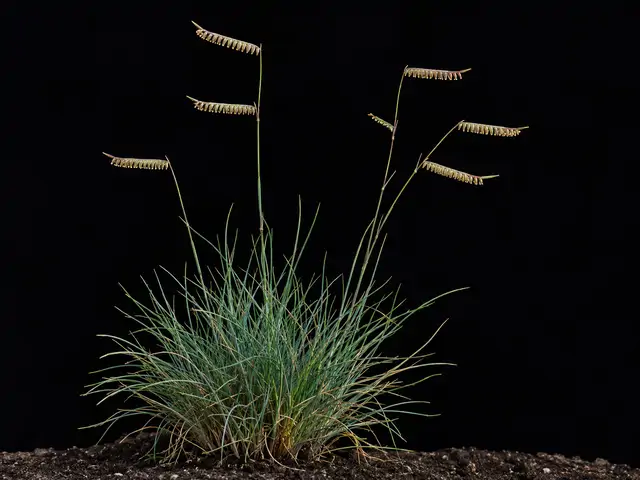
Blue Grama
The signature grass of the shortgrass prairie and the best native lawn grass for the dry West: fine blue-green tufts a foot high, comb-like seedheads held out sideways like eyelashes, and a tolerance for drought, cold and neglect that almost nothing else matches.
Blue grama is a safe, non-toxic native grass and not a food crop. It is one of the most important grazing grasses of the western range, eaten by cattle, bison, pronghorn and rabbits with no ill effect, and there is nothing on it to irritate skin - no awns worth minding, no sap, no spines. Like any grass it sheds pollen when it flowers in late summer, but it is a light producer compared with lawn grasses such as bermudagrass.
Overview
The one thing to knowBlue grama (Bouteloua gracilis) is the grass that covers the shortgrass prairie - the dry, wind-scoured plains from the Canadian border to Mexico and from the Rockies out onto the High Plains.
Blue grama (Bouteloua gracilis) is the grass that covers the shortgrass prairie - the dry, wind-scoured plains from the Canadian border to Mexico and from the Rockies out onto the High Plains. It is the state grass of both Colorado and New Mexico, it fed the bison herds, and it is still one of the most valuable range grasses in the West. It is also, quietly, one of the best garden plants in the arid interior of the country.
It makes fine, dense, blue-green tufts six to twelve inches high, topped in midsummer by its unmistakable seedheads: one to three narrow, comb-like spikes held almost at right angles to a thin stalk, which is why people call it eyelash grass or mosquito grass. Those stalks cure to a pale blond and hold their curious sideways shape right through winter.
What it offers a gardener is toughness with no maintenance attached. Blue grama is hardy from zone 3 to zone 10, survives on twelve inches of rain a year, wants no fertilizer, and needs mowing only if you want a lawn out of it. Left unmown it is a fine ornamental grass and meadow matrix; mown at two or three inches it makes a soft, low-water native lawn. It also earns its place ecologically - a larval host for grass-feeding skipper butterflies, a seed plant for small birds, and a deep-rooted soil-holder on ground that erodes easily.
The one thing to understand before planting is the calendar: it is a warm-season grass, so it greens up late in spring and goes blond early in fall, and it is straw-coloured for a good part of the year. In its own country that reads as normal.
Quick facts
- Sprouts in
- 14 days7 to 28
- Soil to sprout
- 75 °F65 to 90
- Life cycle
- Perennial, lives about 20 years
- Seed to save
- About 110 days after planting90 to 140
- Height
- 12 in6 to 20
- Spread
- 12 in8 to 18
- Cold
- Takes hard frostdamaged below -40°F
- Heat
- Struggles above 110°F
- Self-sows
- Yes, expect volunteers
Full sun · low water · well-drained soil · 12 in apart (6 to 18) · direct sow or transplant or division
When to plant
Nothing is open today. Fall sowing opens 3 weeks, Oct 11 to Nov 24.
- Direct sow Oct 11 – Nov 24 Opens in 20 daysAbout 2 weeks before to 4 weeks after your first frost (Oct 25 here)Dormant-seed in late fall on cold soil so the seed sits until spring and germinates with the first real warmth - a common approach for range and restoration seedings where irrigating a spring sowing is not practical.
- Transplant Apr 10 – Jun 9 Opens in 201 daysAbout at to 9 weeks after your last frost (Apr 10 here)Plugs on 6-to-12-inch centres knit into a stand within a season or two and give you a head start on weeds compared with seed. This is the practical choice for small areas and for ornamental clumps in a border.
- Direct sow Apr 17 – Jun 9 Opens in 208 daysAbout 7 days after to 9 weeks after your last frost (Apr 10 here)The standard method. Sow into warm soil from late spring into early summer, onto a clean, firmed seedbed, and rake in lightly. Keep it damp until it is up, then stretch the watering out. It needs warmth - sowing into cold spring soil just feeds the weeds.
Frost here: last around Apr 10 (Mar 27 to Apr 24 most years), first around Oct 25. Zone averages, your own yard may run a week or two either way.
Life stages
One stage to settle in, then three that repeat each year. Windows are typical; your zone and weather move them.
Year 1 - the weeding year
Day 0 to 90- WaterWater to establish, then wean it offweeklyKeep a new seeding or plug lightly moist until it is up and rooted - three or four weeks - then stretch the interval out steadily through the first season. After the first year, established blue grama survives on rainfall over most of its range and only wants water in genuine drought.
- WeedYear one is almost entirely weed controlThis is where new plantings fail. Blue grama greens up late, grows slowly at first, and puts its effort underground, so fast summer weeds will simply take the ground while it is still small. Keep the stand weeded or mown high through its first season - after that the mature turf holds its own.
- FertilizeFeed it nothingBlue grama evolved on lean, dry shortgrass prairie. Nitrogen does not make it better; it makes weeds and cool-season grasses grow faster than it does and lose you the stand. Skip the fertilizer entirely, and skip the soil amendments too.
Watch for- Slow, thin first-season growth (normal - the roots come first)
- Weeds outpacing a new seeding
- Late spring green-up in year one being mistaken for failure
Late green-up & summer growth
May to Aug, every year- WaterWater rarely, deeply, or not at allevery 3 weeksEstablished blue grama is one of the most drought-proof grasses in North America and goes dormant rather than dying when it dries out. In a native lawn, a deep soak every three or four weeks in the hottest part of summer keeps it green; withhold it and the lawn simply turns straw-coloured and greens up again after rain.
- PruneMow high, or not at allAs a lawn, mow it to two or three inches a handful of times a season - never shorter, since scalping opens the stand to weeds. As an ornamental or meadow grass, leave it entirely unmown; the fine tufts and the seed heads on their thin stalks are the whole point, and it never gets tall enough to need control.
Watch for- Very late spring green-up (normal for a warm-season grass)
- Fine blue-green tufts filling out through the heat
- Cool-season weeds and bermudagrass creeping in where the stand is thin or over-watered
The eyelash seedheads
Jul to Sep, every year- InspectComb-like spikes held out sidewaysThe signature: one to three narrow, one-sided, comb-like spikes held almost at right angles to a thin stalk, which is why the plant is called eyelash grass and mosquito grass. They come up above the foliage in mid to late summer, catch low light beautifully, and cure to a pale blond that holds well into winter.
- HarvestCut a few stems for arrangementsThe seed stalks dry and hold their curious sideways shape indefinitely, so they are excellent in dried arrangements. Cut sparingly and late, and leave most of them standing - the seed feeds small birds and the standing stalks are half the winter interest.
Watch for- Eyelash-shaped seed spikes appearing above the foliage
- Small birds working the seed heads
- Skipper butterflies (blue grama is a larval host for grass-feeding skippers)
Blond dormancy & the late-winter cut
Oct to Apr, every year- PruneCut back in late winter, if at allThe blond tufts and dried seed stalks are worth leaving standing all winter for colour, texture, and bird cover. Shear or mow the whole planting to two or three inches in late winter or very early spring, before the new warm-season growth pushes - or, in a meadow, leave it and let the new growth come up through it.
- WaterNo winter waterDormant blue grama needs nothing. Watering it while it is brown does no good and, in heavy or poorly drained ground, is one of the few ways to actually harm the crowns. Leave it dry and let it come back when the soil warms.
Watch for- Straw-blond colour from first frost until late spring (dormancy, not death)
- Winter annual weeds greening up in the gaps
- Standing seed stalks feeding birds
Watch out for
4 to know. 1 is high-risk: Weeds in a New Stand. 2 are active in September.
Weeds in a New StandSeverity High DisorderSay it plainly to anyone starting a native lawn from seed: the first summer looks like a failure and is not.
Everything about blue grama that makes it tough later makes it slow at the start.
A newly sown area coming up mostly as broadleaf weeds and annual grasses. Blue grama seedlings visible but tiny and widely spaced in midsummer. Bare gaps that never close.
Mow the whole area high through the first season - this beheads annual weeds before they seed without harming the low grass - and hand-pull perennial weeds. Overseed thin gaps the following early summer. Expect the stand to knit together in year two; the correct response to a thin first season is patience and weeding, not water and fertilizer.
Start with a clean seedbed - clear existing weeds and their seed bank before sowing, not after. Sow into genuinely warm soil in late spring or early summer so the grass germinates fast rather than sitting, or use plugs, which skip most of the vulnerable period. Do not fertilize, since nitrogen helps the weeds far more than the grass.
The single biggest reason blue grama plantings fail, and it happens in the first season. Blue grama is a warm-season grass that greens up late and invests in roots before top growth, so for its whole first summer it is small, thin, and slow while fast annual weeds are at full speed. A stand that is left to fend for itself in year one is usually a weed patch by August, and people conclude the grass does not work rather than that it was outrun.
Decline from Water & FertilizerSeverity Medium DisordernowThe core mental shift for a native lawn: it is not a conventional lawn that needs less, it is a different kind of planting that is actively harmed by conventional care.
A native lawn getting patchier the more it is watered. Coarse, fast, brighter-green grass appearing in patches and spreading. Cool-season weeds staying green through the hot months when the blue grama has gone blond.
Cut watering and feeding right back and mow higher, which shifts the balance back toward the native grass. Remove invading grasses by digging or with a grass-selective product whose label lists the site you are treating, used exactly as that label directs - and note that a grass-selective herbicide will damage blue grama too, so spot-treat rather than blanket-spray. Overseed thin areas in early summer.
Water deeply and rarely or not at all, and never fertilize. Mow at two to three inches rather than short. Keep a deep cut edge between a blue grama lawn and any bermudagrass, and let the lawn go dormant and blond in high summer rather than irrigating it green.
Blue grama is not damaged directly by generous treatment; it is outcompeted. Regular irrigation and nitrogen create exactly the conditions that favour bermudagrass, crabgrass, and cool-season lawn weeds, all of which grow faster than blue grama and take the ground. The pattern is familiar: someone treats a native lawn like a conventional one, it thins, they water and feed it more, and within two seasons it is mostly something else.
RustSeverity Low DiseasenowRare on blue grama in its dry native range and essentially cosmetic where it does appear - most often on irrigated or crowded plantings in a wetter climate than the grass really wants.
Orange to rusty-brown flecks, spots or streaks on the leaves, often raised and powdery on the undersides, worst in muggy weather and on crowded, shaded or poorly ventilated plants.
Remove affected foliage and improve airflow. This is almost always cosmetic and outgrown, so fungicide is rarely warranted.
Space plants for airflow, grow them in full sun, and avoid overhead watering. Remove the old foliage at the annual cut-back, since spores carry over on last year's leaves.
A minor fungal leaf disease that raises orange to rusty-brown pustules on the foliage in humid, crowded, poorly ventilated conditions. On a tough, well-sited plant it is cosmetic - it marks the leaves late in the season and the plant grows straight through it - and it is rarely worth treating.
Crown RotSeverity Low DiseaseUncommon in this dry-country grass and almost always confined to low, poorly drained spots or to lawns that were irrigated while dormant over winter.
Fix the drainage and stop the winter watering and it does not recur.
A plant that fails to green up or emerge in spring when everything around it does - the most common way this gets discovered, and by then it is already too late. Stems that wilt, blacken, and collapse in wet weather while the soil is clearly damp rather than dry. A crown that is soft, dark, brown, or mushy when you press or lift it, sometimes with a foul smell, instead of firm and pale. New growth that pulls away from the crown with almost no resistance. Clumps browning and going hollow in the middle while the outer growth stays alive. In stands and cover crops, patches wilting, yellowing, and thinning out after wet spells or over a mild wet winter.
There is usually no cure once the crown itself has rotted: the plant is lost, and the job is to save what you can and fix the site. Lift it, cut away every soft, dark, rotted part with a clean blade back to firm tissue, and replant only healthy divisions or firm outer growth into fresh, sharply drained soil or medium. On potted and specialist plants, repotting into fresh airy medium and keeping them drier with better airflow gives the best chance, though a badly rotted crown is usually beyond saving. Bin the rotted material rather than composting it. Replant somewhere better drained rather than back into the same wet spot - or start again from seed, cuttings, or self-sown seedlings, which is the realistic option for anything that resents being moved at all.
Drainage and airflow at the crown are everything. Match the plant to the site first: a dry-adapted perennial planted in heavy or enriched ground is on borrowed time whatever else you do. In wet or clay soil, plant on a slope, berm, raised bed, or gritty rock-garden site so water drains away from the crown rather than standing over it. Set plants at the right depth - never bury the crown - and keep mulch, dead leaves, and debris pulled back from it rather than piled against it, since damp material resting on the crown is a common trigger. Do not overwater, and ease right off during dormancy, when a resting plant wants to be barely damp rather than wet. Give crowded plantings enough space and airflow to dry out, and do not sow a stand too thickly. In cold, wet climates, divide in spring rather than fall, so plants are not recovering from surgery through the wettest months.
Crown rot is the rotting of a plant at the crown - the growing point where the stems meet the roots, right at or just below soil level. Soil fungi and water molds that live in most ground attack that tissue whenever it sits wet, cold, and airless, and because the crown is the one part a perennial cannot regrow from, losing it usually means losing the plant. It is above all a winter problem: a plant that survives hard frost perfectly well in dry ground rots out in a wet one, and the classic story is a perennial that simply never comes back in spring. Dry-adapted plants growing in heavy or over-improved soil are the most vulnerable, along with anything that has mulch, wet leaves, or piled debris sitting against the crown, and anything planted too deep.
Good & bad neighbors
First rule: keep Bermudagrass apart. Not a planting partner but a warning: bermudagrass will invade and eventually take over a blue grama lawn anywhere warm enough for it, and the extra water and nitrogen that people give a struggling native lawn speed that up.
Plant nearby
-
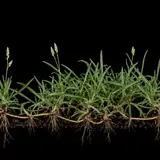
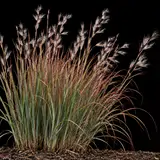
The classic pairing, and the standard low-water native lawn mix across the interior West. They are the two grasses of the shortgrass prairie and they complement each other: buffalograss spreads by runners and closes gaps, blue grama makes tufts and holds density, and the mix is tougher and more even than either alone.
-
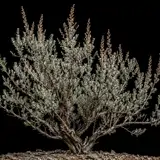
Shrubs standing above a native bunchgrass matrix is what healthy sagebrush steppe looks like. Blue grama takes exactly the same full sun, lean unamended soil, and dry summers, and grass between the shrubs occupies the bare ground that invasive annual grass otherwise colonises.
-
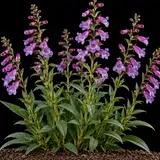
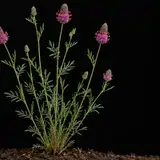
Western penstemons rise out of a blue grama matrix beautifully and share its needs exactly - full sun, lean soil, no summer irrigation. The grass gives the planting its structure and winter texture; the penstemons bring bloom and hummingbirds.
-
Where the shortgrass and mixed-grass prairies meet, these two grow together. Little bluestem adds height and coppery fall colour above low blue grama, and both are skipper host plants on identical lean, sunny, unwatered ground.
-
A natural prairie association: the clover fixes nitrogen and feeds native bees, the grass holds the ground between plants, and both want the same lean, sunny, dry conditions with no fertilizer.
Keep apart
-
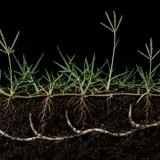
Not a planting partner but a warning: bermudagrass will invade and eventually take over a blue grama lawn anywhere warm enough for it, and the extra water and nitrogen that people give a struggling native lawn speed that up. Keep a deep cut edge between the two, and never seed blue grama into ground that already carries bermudagrass runners.
Varieties · 5
You pick one when you add Blue Grama to your garden. Its days to maturity set your harvest window.
Blue Grama (Bouteloua gracilis)
Low blue-green tufts topped by one to three narrow comb-like spikes held almost at right angles to the stalk, blond when ripe.
speciesnativewarm-seasoneyelash-seedheadThe wild shortgrass-prairie species: fine blue-green tufts six to twelve inches high with comb-like seed spikes held out sideways on thin stalks, curing to blond and standing through winter. Hardy from zone 3 to zone 10, drought-proof, non-aggressive, and equally at home mown as a native lawn or left unmown as an ornamental and meadow grass. The ecological and restoration standard, and the right choice for a seeded stand.
Blonde Ambition
Upright clumps to about 30 inches with large chartreuse eyelash spikes held horizontally, aging to blond.
selectionornamentallarge-seedheadlong-seasonThe selection that made blue grama an ornamental outside its native range. It is larger than the species, to roughly two and a half feet in flower, with unusually big chartreuse seed spikes held horizontally that fade to blond and persist right through winter without shattering. Introduced through the Plant Select program and now widely sold. Grown as a specimen or in drifts rather than mown as lawn, and bought as plants rather than seed.
Hachita
Typical blue grama form - fine low tufts with eyelash seed spikes - selected for vigour on dry southern sites.
cultivarseededsouthwestdroughtA New Mexico release selected for the dry Southwest - drought-hardy, well adapted to low rainfall and warm winters, and a standard component of range and reclamation seed mixes in the southern part of the species range. A sensible seed choice for lawns and restorations in the Southwest and southern High Plains.
Lovington
Standard blue grama, somewhat taller and leafier where moisture allows.
cultivarseededsouthern-plainsforageAnother New Mexico release, longer established, selected for forage production and reliable establishment on the southern Great Plains. Widely available as seed and a good default where a southern-plains ecotype is wanted for pasture, revegetation, or a large native lawn.
Bad River and other northern ecotypes
Typical blue grama, generally shorter and earlier than southern sources.
ecotypenortherncold-hardylocal-provenanceNorthern-sourced material, such as the South Dakota Bad River ecotype, selected for cold hardiness and a short growing season on the northern plains. The general rule matters more than any single name: blue grama spans a huge latitude range, and seed sourced near your own latitude establishes and persists far better than seed shipped from the other end of the range. Ask the supplier where the seed was grown.
Grower tips
Notes from growers, tagged with the zone they grow in. A person reads every post before it appears.
Nobody has posted about Blue Grama yet. The first one usually saves someone a season.
Free account. Your post shows your grower name and zone, never your email.