
Add it to your home screen and it opens full screen: no browser bars, one tap away, and everything stays signed in. Free, nothing to download from an app store.
- Tap the Share button in your browser
- Scroll down and choose “Add to Home Screen”
- Open GrowSomeFood from your home screen
- Open your browser’s menu
- Choose “Add to Home screen” or “Install app”
- Open GrowSomeFood from your home screen

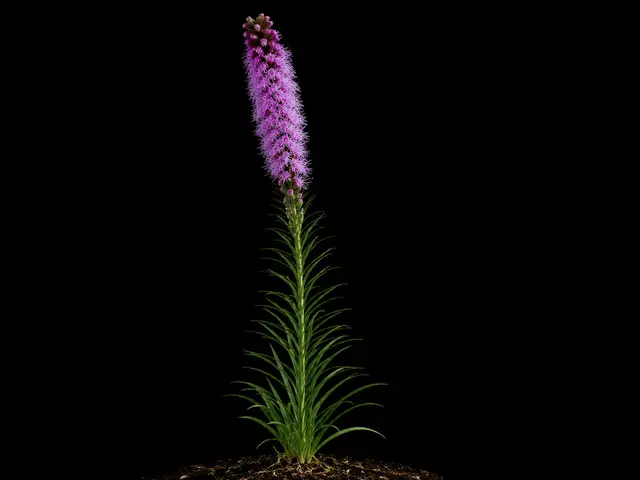
Blazing Star
The vertical exclamation point of the native garden - fuzzy purple spikes that bloom top-down, draw clouds of monarchs and butterflies, and make one of the best cut and dried flowers you can grow.
Safety notes Blazing star is a safe, non-toxic ornamental and pollinator plant, not a food crop. Its corm ('button snakeroot') has a folk-medicine history, but it is grown purely for its flowers and wildlife value. No special handling precautions.
Overview
Blazing star (Liatris), also called gayfeather, brings something few natives offer: bold vertical spikes. From summer tufts of grassy foliage rise 2-to-4-foot wands packed with fuzzy rose-purple (or white) flowers that open, unusually, from the top down. Those nectar-rich spikes are a magnet for monarchs, swallowtails, and native bees, making blazing star one of the premier butterfly plants for mid-to-late summer.
The one thing to knowBlazing star (Liatris), also called gayfeather, brings something few natives offer: bold vertical spikes.
Quick facts
- Sprouts in
- 30 daysRange: 20–45 days
- Soil temperature
- 68 °FRange: 60–72 °F
- Height
- 36 inRange: 24–48 in
- Spread
- 12 inRange: 9–18 in
- Cold
- Takes hard frostdamaged below -40°F
- Heat
- Struggles above 95°F
- Life cycle
- Perennial, lives about 8 years
- Save seeds
- About 110 days after plantingRange: 90–140 days
- Self-sows
- Yes, expect volunteers
- Soil
- Well-drained
- Water
- Medium
- Plant spacing
- 12 inRange: 9–18 in
When to plant
Fall sowing is open for 19 more days. Next: spring, Mar 27 to May 8.
- Direct sow Oct 11 – Nov 8 Open now · 19 days leftAbout 2 weeks before to 2 weeks after your first frost (Oct 25 here)Fall-sow seed so winter cold stratifies it (it needs a cold, moist period); seed-grown plants take 2-3 years to reach blooming size.
- Plant tubers Mar 27 – May 8 Opens in 158 daysAbout 2 weeks before to 4 weeks after your last frost (Apr 10 here)Plant corms 2-4 inches deep in spring into full sun and well-drained soil; they establish quickly and often bloom the first summer.
- Plant tubers Aug 30 – Oct 4 Opens in 314 daysAbout 8 weeks before to 3 weeks before your first frost (Oct 25 here)Fall-plant corms a few weeks before hard freeze in well-drained soil so they root before winter; avoid wet sites where they'd rot.
Frost here: last around Apr 10 (Mar 27 to Apr 24 most years), first around Oct 25. Zone averages, your own yard may run a week or two either way.
Life stages
Establish, grow, repeat
Getting established and returning each season are different parts of the story.
Stage 1 of 4 · Getting established
Year 1 - corm rooting in
Day 0 to 60 from sowing
Care at this stage
-
Water in the corm, then keep it moist not wet
Plant corms 2-4 inches deep, flat side up (or pointed eye up), and water in. Keep moderately moist while rooting - blazing star likes even summer moisture but rots in soggy winter soil, so drainage matters most in the cold months.
-
Don't over-feed
Lean-to-average soil keeps the spikes upright. Rich soil and shade make tall, floppy stems that need staking.
Months are typical seasonal windows; climate, variety, and plant age can shift them.
Harvest
- Top third of the flower spike open, for fresh or dried cutting (it blooms top-down)
- Full bloom for peak monarch and butterfly value - best left standing
- Cut spikes for fresh or dried flowers · every 10 days
- Watch the monarchs and bees
Picking pick as they ripen
Watch out for
3 to know. 1 is high-risk: Corm Rot. 1 is active in October.
Corm RotSeverity High DiseaseSeason: Nov–MarFailure to emerge in spring, soft mushy corms when dug, and losses after a wet winter or in heavy clay.
Failure to emerge in spring, soft mushy corms when dug, and losses after a wet winter or in heavy clay.
None once the corm rots - replant healthy corms into far better-draining conditions or containers.
Sharp winter drainage above all - lean gritty soil, raised beds or slopes in wet regions, no soggy sites; lift and store corms dry where winters are wet.
The primary killer of blazing star: soil-borne rots attack the corm in cold, wet, poorly drained soil over winter, to which this plant is highly susceptible.
Voles & RodentsSeverity Low WildlifenowSeason: Oct–MarA hosta that fails to sprout in spring, a crown that lifts easily because roots are gone, surface runways and holes under the mulch.
A hosta that fails to sprout in spring, a crown that lifts easily because roots are gone, surface runways and holes under the mulch.
Dig tubers before heavy winter rodent activity; the vigorous, tuber-chaining plant usually shrugs off modest losses and regrows from remaining tubers.
Harvest the larger tubers in fall rather than leaving a full crop over winter; a contained bed or hardware-cloth barrier protects tubers where rodent pressure is high.
The nutritious underground tubers are food for voles, mice, and other rodents (as well as some larger wildlife), which dig and gnaw them, especially over winter - a mark of the plant's food value as much as a nuisance.
RustSeverity Low DiseaseSeason: Jul–SepOrange to rusty-brown flecks, spots or streaks on the leaves, often raised and powdery on the undersides, worst in muggy weather and on crowded, shaded or poorly ventilated plants.
Turns up on crowded plants in humid weather. Blazing star wants full sun and open spacing anyway, and giving it those prevents most rust.
Orange to rusty-brown flecks, spots or streaks on the leaves, often raised and powdery on the undersides, worst in muggy weather and on crowded, shaded or poorly ventilated plants.
Remove affected foliage and improve airflow. This is almost always cosmetic and outgrown, so fungicide is rarely warranted.
Space plants for airflow, grow them in full sun, and avoid overhead watering. Remove the old foliage at the annual cut-back, since spores carry over on last year's leaves.
A minor fungal leaf disease that raises orange to rusty-brown pustules on the foliage in humid, crowded, poorly ventilated conditions. On a tough, well-sited plant it is cosmetic - it marks the leaves late in the season and the plant grows straight through it - and it is rarely worth treating.
Good & bad neighbors
Plant nearby
-
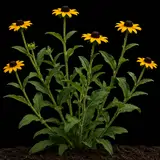
A classic prairie pairing - purple spikes against gold daisies, identical full-sun needs, overlapping summer bloom, and shared monarch and pollinator value.
-
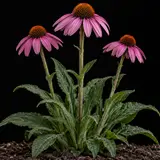
Vertical blazing-star spikes contrast coneflower's horizontal daisies beautifully; both are drought-tolerant prairie natives blooming together for pollinators and finches.
-
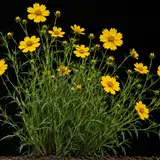
Airy gold coreopsis daisies at the feet of blazing star's purple spikes make a bright, tough, long-blooming native combination on lean sunny soil.
-
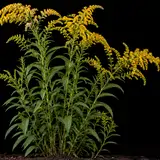
Both are late-season monarch nectar plants; blazing star's mid-summer spikes and goldenrod's fall plumes together bridge the pollinator season.
-
Little BluestemThe quintessential prairie grass partner - its fine texture and fall color set off blazing star's spikes and complete an authentic prairie or meadow planting.
Varieties · 5
You pick one when you add Blazing Star to your garden. Its days to maturity set your harvest window.
Marsh blazing star (Liatris spicata) 1 variety
Marsh Blazing Star (Liatris spicata)
The wild species behind this entry and the most moisture-tolerant blazing star - at home in wet meadows and rain-garden edges as well as average borders, and the one type that genuinely wants summer water.
Variety details for Marsh Blazing Star (Liatris spicata)
Rosy-purple spikes over grassy foliage, thriving in moist to average soil.
speciesnativemoisture-tolerantmonarchRosy-purple spikes and a top monarch nectar plant.
Dry-prairie blazing stars (L. aspera, L. pycnostachya) 1 variety
Rough Blazing Star (Liatris aspera)
A separate dry-prairie species (not a form of L.
Variety details for Rough Blazing Star (Liatris aspera)
Spikes of spaced, rounded rose-purple button flowers on drought-tough plants.
speciesnativedrought-tolerantbutton-likespicata) with more widely spaced, button-like rose-purple flower clusters up the stem, exceptionally drought-tolerant and suited to lean, dry, sunny sites where the marsh type would struggle. Important: do not water it through summer the way this page's marsh species wants - once established, supplemental summer water is the fastest way to rot its corm.
Florist cultivars (Kobold, Floristan) 3 varieties
Kobold
The most popular garden blazing star: a compact, sturdy 24-30 inch selection of L.
Variety details for Kobold
Dense deep purple bottlebrush spikes on tidy, upright 2-foot plants.
compactdeep-purplesturdycut-flowerspicata with deep rosy-purple spikes that rarely need staking. Excellent for borders and cutting and a reliable monarch plant.
Floristan Violet
A tall (3-foot) florist-type blazing star with long, full violet-purple spikes bred for cutting - a classic commercial cut flower that also shines in the back of a border.
Variety details for Floristan Violet
Long, full violet-purple spikes on tall, straight stems.
tallviolet-purplecut-flowerFloristan White
The white counterpart to Floristan Violet: tall creamy-white spikes that glow in the border and make elegant cut and dried flowers.
Variety details for Floristan White
Tall creamy-white bottlebrush spikes on straight stems.
tallwhitecut-flowerA striking contrast among the purples.
Grower tips
Notes from growers, tagged with the zone they grow in. A person reads every post before it appears.
Nobody has posted about Blazing Star yet. The first one usually saves someone a season.
Free account. Your post shows your grower name and zone, never your email.