
Add it to your home screen and it opens full screen: no browser bars, one tap away, and everything stays signed in. Free, nothing to download from an app store.
- Tap the Share button in your browser
- Scroll down and choose “Add to Home Screen”
- Open GrowSomeFood from your home screen
- Open your browser’s menu
- Choose “Add to Home screen” or “Install app”
- Open GrowSomeFood from your home screen

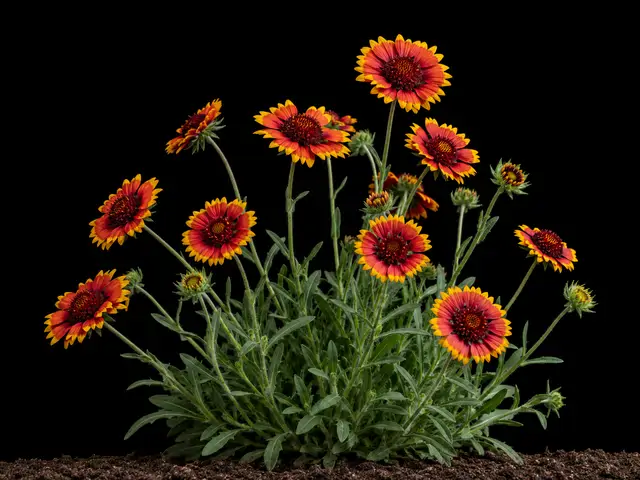
Blanketflower
A ridiculously tough, long-blooming native daisy in flame colors - red-and-gold pinwheels from early summer to frost on almost no water, thriving in poor, hot, sandy soil where little else will.
Safety notes Blanketflower is a safe, non-toxic ornamental and pollinator plant, not a food crop. The one practical note is that its foliage and sap can cause mild skin irritation or an itchy rash in sensitive people (a recognized minor contact dermatitis), so wear gloves if you're prone to it when cutting or deadheading. Otherwise no special precautions; it is not toxic to pets or livestock.
Overview
Blanketflower (Gaillardia) is one of the hardest-working flowers a sunny, dry garden can hold. Its warm daisies - typically red-and-gold pinwheels with a domed central button, plus solid golds, peaches, and burgundies in the cultivars - open from early summer straight through to hard frost, one of the longest bloom seasons of any perennial. The common names 'firewheel' and 'Indian blanket' capture both the flame colors and the way it drifts across prairies and roadsides like a woven blanket.
Quick facts
- Sprouts in
- 14 daysRange: 7–21 days
- Soil temperature
- 70 °FRange: 65–75 °F
- Start indoors
- 6 weeks before transplantRange: 5–8 weeks
- Height
- 20 inRange: 10–30 in
- Spread
- 18 inRange: 12–24 in
- Cold
- Takes hard frostdamaged below -30°F
- Heat
- Struggles above 105°F
- Life cycle
- Perennial, lives about 3 years
- Save seeds
- About 100 days after plantingRange: 80–130 days
- Self-sows
- Yes, expect volunteers
- Soil
- Well-drained
- Water
- Low
- Plant spacing
- 15 inRange: 10–24 in
When to plant
Fall sowing is open for 27 more days. Next: spring, Apr 10 to May 22.
- Direct sow Oct 1 – Nov 15 Open now · 27 days leftIn mild-winter zones, fall-sow to overwinter as young plants for earlier, stronger bloom the next year; blanketflower self-sows this way naturally.
- Transplant Apr 10 – May 22 Opens in 173 daysAbout at to 6 weeks after your last frost (Apr 10 here)Set out transplants or divisions after last frost into full sun and lean, sharply drained soil; they establish fast and bloom the first summer.
- Direct sow Apr 10 – May 8 Opens in 173 daysAbout at to 4 weeks after your last frost (Apr 10 here)Direct-sow seed at or just after last frost, barely covered (light aids germination); the annual firewheel (G. pulchella) blooms the same summer, perennial types the first year.
Frost here: last around Apr 10 (Mar 27 to Apr 24 most years), first around Oct 25. Zone averages, your own yard may run a week or two either way.
Life stages
Establish, grow, repeat
Getting established and returning each season are different parts of the story.
Stage 1 of 4 · Getting established
Year 1 - rooting in
Day 0 to 45 after transplanting
Care at this stage
-
Water to establish, then back off
Water a new plant through its first weeks to root in; after that blanketflower is very drought-tolerant and prefers lean, dry conditions. Overwatering and rich soil are the fastest ways to kill it (crown rot).
-
Don't enrich the soil
Blanketflower blooms best in poor-to-average, gritty soil. Rich, fertile ground gives lush leaves and floppy stems at the expense of flowers - skip the compost and feed.
Months are typical seasonal windows; climate, variety, and plant age can shift them.
Watch out for
3 to know. None are high-risk for Blanketflower. None are active in October.
Crown RotSeverity Medium DiseaseSeason: Apr, May, Nov, DecA plant that fails to green up or emerge in spring when everything around it does - the most common way this gets discovered, and by then it is already too late.
The main way to lose a blanketflower: it is dry-adapted and rots in wet, heavy, or poorly drained soil, especially over a wet winter or from overwatering. Keep wet mulch off the crown, and rely on divisions or self-sown seedlings to renew the planting.
A plant that fails to green up or emerge in spring when everything around it does - the most common way this gets discovered, and by then it is already too late. Stems that wilt, blacken, and collapse in wet weather while the soil is clearly damp rather than dry. A crown that is soft, dark, brown, or mushy when you press or lift it, sometimes with a foul smell, instead of firm and pale. New growth that pulls away from the crown with almost no resistance. Clumps browning and going hollow in the middle while the outer growth stays alive. In stands and cover crops, patches wilting, yellowing, and thinning out after wet spells or over a mild wet winter.
There is usually no cure once the crown itself has rotted: the plant is lost, and the job is to save what you can and fix the site. Lift it, cut away every soft, dark, rotted part with a clean blade back to firm tissue, and replant only healthy divisions or firm outer growth into fresh, sharply drained soil or medium. On potted and specialist plants, repotting into fresh airy medium and keeping them drier with better airflow gives the best chance, though a badly rotted crown is usually beyond saving. Bin the rotted material rather than composting it. Replant somewhere better drained rather than back into the same wet spot - or start again from seed, cuttings, or self-sown seedlings, which is the realistic option for anything that resents being moved at all.
Drainage and airflow at the crown are everything. Match the plant to the site first: a dry-adapted perennial planted in heavy or enriched ground is on borrowed time whatever else you do. In wet or clay soil, plant on a slope, berm, raised bed, or gritty rock-garden site so water drains away from the crown rather than standing over it. Set plants at the right depth - never bury the crown - and keep mulch, dead leaves, and debris pulled back from it rather than piled against it, since damp material resting on the crown is a common trigger. Do not overwater, and ease right off during dormancy, when a resting plant wants to be barely damp rather than wet. Give crowded plantings enough space and airflow to dry out, and do not sow a stand too thickly. In cold, wet climates, divide in spring rather than fall, so plants are not recovering from surgery through the wettest months.
Crown rot is the rotting of a plant at the crown - the growing point where the stems meet the roots, right at or just below soil level. Soil fungi and water molds that live in most ground attack that tissue whenever it sits wet, cold, and airless, and because the crown is the one part a perennial cannot regrow from, losing it usually means losing the plant. It is above all a winter problem: a plant that survives hard frost perfectly well in dry ground rots out in a wet one, and the classic story is a perennial that simply never comes back in spring. Dry-adapted plants growing in heavy or over-improved soil are the most vulnerable, along with anything that has mulch, wet leaves, or piled debris sitting against the crown, and anything planted too deep.
Aster YellowsSeverity Medium DiseaseSeason: Jun–AugFlowers turning green and deformed, tufted leafy growth from the cone, upright bushy witches'-broom shoots, yellowed stunted plants.
Flowers turning green and deformed, tufted leafy growth from the cone, upright bushy witches'-broom shoots, yellowed stunted plants.
None - it cannot be cured. Pull and destroy infected plants immediately (do not compost) to keep leafhoppers from spreading it to healthy asters and other crops.
Control leafhoppers and remove nearby weedy hosts; keep plants vigorous; there are no resistant fixes, so vigilance and prompt removal are key.
An incurable disease caused by a phytoplasma (a bacteria-like organism) spread by aster leafhoppers. It deforms flowers into stunted, greenish, leafy tufts and causes witches'-broom growth. It has a huge host range beyond asters - many flowers and vegetables are susceptible.
AphidsSeverity Low PestSeason: May–JulDense clusters of tiny insects packed onto shoot tips, flower buds, and the undersides of young leaves.
Dense clusters of tiny insects packed onto shoot tips, flower buds, and the undersides of young leaves. Curled, cupped, or distorted new growth that never opens properly. A sticky shine on the leaves - and on whatever sits under the plant - that later goes black with sooty mold. Tiny white cast skins left behind where a colony has been feeding. Ants running steadily up and down the stems, which is often the first thing you notice. Mottled, streaked, or misshapen leaves that do not grow out can mean a virus the aphids brought with them rather than the feeding itself.
Knock the colonies off with a hard jet of water and repeat every few days - on most plants that alone ends it. Pinch out or prune off the worst-infested tips rather than treating the whole plant. If colonies keep rebuilding, spray insecticidal soap or horticultural oil directly onto the insects, covering leaf undersides, and repeat weekly until they are gone; treat early or late in the day, and never spray a wilted or heat-stressed plant. Avoid broad-spectrum insecticides - they kill the ladybugs, lacewings, and parasitic wasps that were about to solve the problem for you, and aphid numbers usually come back worse afterward. Anything you spray must be labeled for the plant you are treating; follow that label and observe its pre-harvest interval. On anything you eat, wash leaves, heads, and buds well before use, since aphids hide down in crowns, folds, and tight growth.
Go easy on nitrogen: the soft, lush growth that heavy feeding produces is exactly what aphids breed on. Check new growth once a week through spring and early summer so you catch colonies while they are still small, and rub the first few out with your fingers. Leave flowering plants nearby and skip broad-spectrum sprays - ladybugs, lacewings, hoverflies, and parasitic wasps do most of this work for free, and they only stay if there is something for them to eat. Keep ants off the plant where you can, since they protect aphids from those predators. Water steadily so plants are not stressed, and check any new plant over before you bring it home or move it indoors, since aphids usually arrive on something else.
Aphids are small soft-bodied sap-suckers - green, black, gray, pink, or waxy white, and mostly wingless - that gather in dense colonies on the tenderest new growth: shoot tips, buds, and the undersides of young leaves. They breed extremely fast in mild weather, so a few can become hundreds inside a week. Their feeding curls and distorts soft growth, and the sticky honeydew they excrete coats everything below and turns black with sooty mold. Ants often farm and defend the colonies for that honeydew. A few aphids are normal on almost any plant and a healthy plant shrugs them off; only dense, persistent colonies do real damage, and some aphids also spread plant viruses as they feed.
Good & bad neighbors
Plant nearby
-
A classic hot-meadow combination - identical full-sun, lean-soil, drought-tolerant needs, gold and red-gold daisies blooming together, and strong shared pollinator value.
-
A natural sunny, drought-tolerant pairing - both are tough native daisies for lean soil with overlapping months-long bloom and shared pollinator and finch appeal; gold coreopsis plays off blanketflower's flame colors.
-
Coneflower's height and cones over blanketflower's low mounds make a dependable dry-border combination; both are drought-tolerant natives that bloom together for pollinators and feed finches from their seed heads.
-
Little BluestemA clumping native prairie grass that sets off blanketflower's flame colors, shares its dry lean conditions, and completes an authentic low-water prairie or roadside-style planting.
-
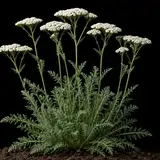
Ideal dry-garden bedmates - both want full sun, lean poor soil, and sharp drainage, both are drought-tolerant and long-blooming, and yarrow's flat flower heads contrast blanketflower's daisies.
Varieties · 6
You pick one when you add Blanketflower to your garden. Its days to maturity set your harvest window.
Annual firewheel (G. pulchella) 1 variety
Firewheel / Indian Blanket (Gaillardia pulchella)
The wild annual species of the southern plains: airy plants covered in red daisies tipped with gold, blooming the same summer from seed and self-sowing freely for a meadow effect.
Variety details for Firewheel / Indian Blanket (Gaillardia pulchella)
Loose plants with red-centered daisies edged in bright gold, drifting like a woven blanket.
speciesnativered-and-goldself-seedingThe classic roadside firewheel and the toughest, most heat- and drought-proof blanketflower.
Perennial blanketflower (G. aristata / G. x grandiflora) 5 varieties
Arizona Sun
A compact (10-12 inch) award-winning blanketflower with the classic mahogany-red daisies tipped in gold, blooming its first year from seed on tidy mounds.
Variety details for Arizona Sun
Neat low mounds smothered in red daisies with bright golden petal tips.
compactred-and-goldfirst-year-bloomaward-winnerExcellent for the front of a border, containers, and hot dry sites - the standard bicolor.
Goblin (Kobold)
A dwarf perennial hybrid about 12 inches tall with large red daisies broadly banded in yellow on sturdy, compact plants.
Variety details for Goblin (Kobold)
Compact plants with large red flowers rimmed in a broad yellow band.
dwarfred-and-yellowcompactsturdyA long-time favorite for its tidy habit and heavy, months-long bloom.
Mesa series (Mesa Yellow, Mesa Peach)
A modern hybrid series bred for uniform, sturdy, well-branched plants in solid colors - award-winning Mesa Yellow is a clear pure gold, with peach, red, and bicolor forms.
Variety details for Mesa series (Mesa Yellow, Mesa Peach)
Even, mounded plants in solid clear yellow, peach, or red daisies.
solid-coloruniformsturdyfirst-year-bloomReliable, floriferous, and a good improvement in vigor over older strains.
Grower tips
Notes from growers, tagged with the zone they grow in. A person reads every post before it appears.
Nobody has posted about Blanketflower yet. The first one usually saves someone a season.
Free account. Your post shows your grower name and zone, never your email.