Add it to your home screen and it opens full screen: no browser bars, one tap away, and everything stays signed in. Free, nothing to download from an app store.
- Tap the Share button in your browser
- Scroll down and choose “Add to Home Screen”
- Open GrowSomeFood from your home screen
- Open your browser’s menu
- Choose “Add to Home screen” or “Install app”
- Open GrowSomeFood from your home screen
Black Gum
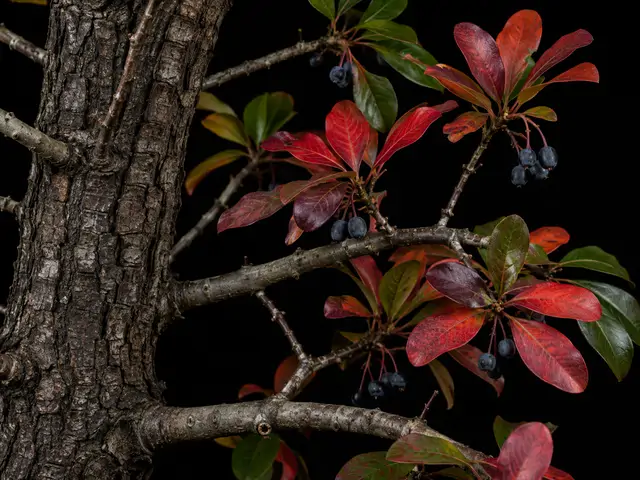
A tough, adaptable native shade tree with the best fall color in the eastern woods - it turns fluorescent scarlet weeks before anything else, feeds fall migrant birds with high-fat fruit, hosts moths that live on nothing else, and can outlive almost every hardwood around it.
Black gum is safe to grow and handle - an ornamental and wildlife tree, not a food crop. The small blue-black fruits are not poisonous, but they are almost all stone and intensely sour, so this catalog lists no edible part on black gum; treat them as bird food. A fruiting female tree drops heavily in fall, and the fruit stains paving and makes it slippery, so site one back from patios and walks. Bees work the late-spring flowers hard, worth knowing if anyone in the house reacts badly to stings.
Overview
Black gum (Nyssa sylvatica) is the tree that turns scarlet in late August while everything around it is still green. It is the earliest and one of the most brilliant fall trees of the eastern woods - fluorescent red, crimson, orange, and purple, often all on one tree at once - carried on a neat pyramidal frame of glossy, untoothed leaves and branches that leave the trunk at sharp right angles. Old trunks develop blocky alligator-hide bark that is worth planting the tree for on its own.
What it does for wildlife is less obvious and more important. Its fruit is a small blue-black drupe with an unusually high fat content, and it ripens exactly as fall migration moves through - thrushes, robins, catbirds, thrashers, and woodpeckers can strip a tree in days, fueling birds that still have a thousand miles to fly. Its late-spring flowers are among the best bee trees in the East. And its leaves host native moths, including the Hebrew moth, which feeds on Nyssa and nothing else.
It is also remarkably tough: it grows in standing water at a pond edge and on a dry upland ridge, takes clay, and is one of the longest-lived hardwoods in North America - individuals over 650 years old have been documented, older than any other flowering tree in the eastern forest. The one thing it asks is to be planted small, and planted in spring.
Quick facts
- Sprouts in
- 60 days30 to 120
- Soil to sprout
- 70 °F60 to 80
- Life cycle
- Perennial, lives about 250 years
- Seed to save
- About 150 days after planting120 to 180
- Height
- 50 ft30 to 75
- Spread
- 30 ft20 to 40
- Cold
- Takes hard frostdamaged below -30°F
- Heat
- Struggles above 100°F
- Self-sows
- Yes, expect volunteers
Full sun or part sun or part shade · medium water · tolerates wet soil soil · 30 ft apart (20 to 50) · direct sow or transplant
When to plant
Nothing is open today. Fall sowing opens in 4 days, Sep 25 to Nov 15.
- Direct sow Sep 25 – Nov 15 Opens in 4 daysAbout 4 weeks before to 3 weeks after your first frost (Oct 25 here)Clean the pulp off ripe fruit and sow the stones an inch deep in fall where the tree will stand, so winter provides the cold stratification they need. Cage against rodents. Slow, but a direct-sown tree keeps the taproot it grows.
- Transplant Mar 20 – May 22 Opens in 180 daysAbout 3 weeks before to 6 weeks after your last frost (Apr 10 here)Spring is the only window worth using. Plant a small container-grown tree as the soil warms, into acidic to neutral, evenly moist ground, and water it deeply through its first three summers. Fall planting is a common way to lose a black gum.
Frost here: last around Apr 10 (Mar 27 to Apr 24 most years), first around Oct 25. Zone averages, your own yard may run a week or two either way.
Life stages
One stage to settle in, then four that repeat each year. Windows are typical; your zone and weather move them.
Years 1-3 - getting it to take
The first year after planting- WaterWater deeply for the first three summersweeklyBlack gum grows a deep taproot and rebuilds it slowly after planting, so the first two or three summers are the whole game. Water deeply and thoroughly in dry spells rather than lightly and often, and keep at it into the third year. An establishing black gum can put on almost no visible top growth for two seasons while it works underground - that is normal, not failure.
- ProtectPlant it small, and plant it in springThis is the tree's one real difficulty. Buy container-grown, or the smallest field-dug tree that will do the job, and plant in SPRING - black gum is the classic spring-transplant-only tree, and large fall-moved specimens frequently sulk and die. A small tree establishes faster and overtakes a large one within a few years.
- MulchMulch wide, keep it off the trunkA broad ring of shredded leaves or bark keeps the roots cool and moist, holds down competing grass, and keeps mowers away from the bark. Pull it back a few inches from the trunk. Do not amend the backfill - let the roots move out into the native soil.
Watch for- Almost no top growth for the first year or two (normal - it is building roots)
- Leaf scorch and early leaf drop in the first hot summer
- Deer browsing and buck rub on young stems
- Pale leaves with green veins on limy soil - black gum wants acidic to neutral ground
Late-spring bloom (bee season)
May to Jun, every year- InspectSmall green flowers, enormous bee trafficThe flowers are tiny, greenish, and easy to miss from the ground - but stand under a blooming black gum and you will hear it. It is one of the best nectar trees of the eastern woods, and beekeepers value the honey. Do not spray anything on a tree in bloom.
- InspectMost trees are male or female, not bothBlack gum is largely dioecious - individual trees are functionally male or female - so only a female tree with a male somewhere in the neighborhood sets fruit. Nurseries rarely label the sex, and some named cultivars are propagated as fruitless males. If feeding fall migrant birds is the point of planting it, buy seedling-grown stock or ask the nursery directly.
Watch for- Heavy honey-bee and native-bee traffic in the canopy
- No fruit ever setting (the tree is male, or there is no pollen source nearby)
Summer canopy
Apr to Aug, every year- InspectLeave the caterpillars aloneThe glossy, untoothed leaves feed a modest but real roster of native moths, including the Hebrew moth, which feeds on nothing but Nyssa. Some chewed foliage on a native tree is the point, not a problem - and those caterpillars are what nesting birds feed their young. Never spray a wildlife tree.
- PrunePrune lightly in winter, and leave the low branchesBlack gum builds a strong central leader and neat horizontal branches on its own and needs very little pruning. Remove dead or crossing wood in the dormant season only. Resist limbing it up - the tiered, low-branched silhouette is most of why the tree looks the way it does.
Watch for- Purple-rimmed leaf spots and some August leaf drop in a humid summer (cosmetic)
- Sticky honeydew and black sooty mold beneath the tree (scale insects)
- Brown, crisp leaf margins in drought, worst on young trees
Scarlet fall & the bird feast
Sep to Oct, every year- InspectThe first tree in the woods to turnBlack gum colors early - often in late August or early September, well before anything around it - and it colors hard: fluorescent scarlet, crimson, and purple, frequently all on the same tree at once, against blue-black fruit. It is the equal of any maple and holds the color for weeks.
- InspectWatch who eats the fruit, and whenThe blue-black fruits are high in fat and ripen exactly as fall migration passes through. Thrushes, robins, catbirds, brown thrashers, bluebirds, flickers, and pileated woodpeckers strip a tree fast, and black bear, foxes, and raccoons take what falls. On a good female tree the crop can be gone in days.
Watch for- Brilliant scarlet color arriving weeks before the rest of the neighborhood
- Flocks of migrating thrushes and robins working the canopy
- Fruit drop staining paving below a female tree
Winter structure
Nov to Mar, every year- PruneDo any pruning nowThe dormant season is the time for the little pruning this tree needs - dead, damaged, or crossing wood, taken back to a branch collar. Keep it minimal; a black gum shaped by a person almost always looks worse than one left alone.
- InspectLook at the bark on an older treeMature black gum develops deeply blocked, ridged bark like alligator hide - one of the most distinctive winter barks in the eastern woods - carried on branches that leave the trunk at sharp right angles. Old hollow trunks are prime wildlife dens, and were once cut and used as beehives.
Watch for- Blocky alligator-hide bark developing on older trunks (a feature)
- Right-angled horizontal branching visible without leaves
- Storm damage to brittle old wood
Watch out for
4 to know. 1 is high-risk: Transplant Failure. 3 are active in September.
Transplant FailureSeverity High DisordernowA newly planted tree that leafs out late, sparsely, or not at all in its first or second spring.
A newly planted tree that leafs out late, sparsely, or not at all in its first or second spring. Leaves that emerge normally and then wilt and brown in the first hot dry spell. Scorched leaf margins and early leaf drop through the first two summers. No measurable new shoot growth in the second year - a tree that survives but never actually starts, which is the commonest outcome of a bad move.
Water deeply, mulch wide, and wait - an establishing black gum can spend two full years doing nothing visible above ground while it rebuilds roots, and impatience kills more of them than drought does. Do not fertilize a struggling newly planted tree; it cannot use it, and the salts make water stress worse. If it is still bare or barely growing in its third spring, replace it with a small container-grown tree in spring rather than trying to rescue it.
Buy container-grown, or the smallest field-dug tree that will do the job; a small black gum establishes faster and overtakes a large one within a few years. Plant in SPRING, not fall and not summer - black gum is the classic spring-transplant-only tree. Set it at the depth it grew, skip amending the backfill so roots move into native soil, mulch wide but off the trunk, and water deeply through the first three summers. Do not stake rigidly. Choose an acidic to neutral site; alkaline soil compounds every other stress.
Black gum grows a deep taproot early and keeps much of its root system directly beneath it rather than spread out, which makes it one of the harder native trees to move successfully. A field-dug, balled-and-burlapped tree has had that taproot severed, and a large one planted in fall or in summer heat routinely sits, sulks, and dies over the next two years. This is not a disease and there is nothing to spray - it is a buying and timing decision made before the tree goes in the ground, and it is by far the most common way a black gum is lost.
Leaf Scorch (sun & drought)Severity Medium DisordernowOn black gum this is almost always a young-tree problem: the taproot is still rebuilding after planting and cannot keep up with the canopy on a hot day.
It also shows on trees set in reflected heat beside paving or a south wall. An established tree in reasonable soil rarely scorches, wet site or dry. Water deeply and mulch wide rather than often and shallowly.
Browning that starts at the leaf edges and tips and spreads inward, with a fairly sharp line between the crisp brown tissue and the green that is still healthy. Leaves and fronds going dry, papery, and crisp rather than soft, yellow, or spotted - that is what separates this from a fungal problem. Damage worst on the side of the plant facing the sun or the prevailing wind and on the most exposed upper leaves, while the shaded interior stays fine. Symptoms appearing sharply after a heat wave, a dry spell, or a bright windy week in winter. Whole leaves or fronds shed early as the plant cuts its losses.
Water deeply, mulch, and improve the shade - that is the whole treatment, because there is nothing here to kill. Leaves that are already scorched will not recover, so trim off badly browned foliage or fronds for appearance if you want to; the crown and roots are usually unharmed and push out fresh growth once conditions improve. On a plant that scorches badly every year the answer is to move it rather than to keep watering harder, because the siting is what is wrong. Some plants respond well to being cut back hard, which brings a clean flush of new foliage. And on plants that naturally die back or brown off late in the season, scorching at the end of a dry summer is normal and needs nothing at all.
Site the plant where it actually wants to be. This is a placement problem far more often than a watering problem, and a shade plant in hot afternoon sun will scorch every summer however much you water it. Give shade and woodland plants part-to-full shade and shelter from hot afternoon sun and drying wind. Keep the root zone consistently moist and mulch it well with leaf litter or another organic mulch, which holds water and keeps the roots cool - the single most useful routine step. Water deeply and thoroughly during dry spells rather than little and often, so moisture reaches the whole root zone. Pay particular attention through the first year after planting, when the root system is small and cannot keep up with the leaves. On evergreens in cold regions, make sure the plant goes into winter well watered, and keep it out of bright, windy, exposed positions.
Leaf scorch is not a disease and there is nothing to spray for it. It is what happens when a leaf loses water faster than the roots can replace it: the tissue farthest from the veins - the margins and the tips - dries out first and turns brown and papery, and the browning works inward while the rest of the leaf stays green. Hot sun, dry soil, drying wind, heat reflected off paving or a wall, a small or damaged root system, and a plant sited somewhere sunnier or drier than it wants are the usual causes, singly or together. It also happens in winter on evergreens, when bright sun and wind pull water out of the leaves while the ground is frozen and the roots cannot resupply. Shade and woodland plants, shallow-rooted plants, and anything recently planted scorch most easily.
Black Gum Leaf SpotSeverity Low DiseasenowSmall purple-rimmed spots with tan or grey centers appearing on the leaves from midsummer, merging into larger blotches.
Small purple-rimmed spots with tan or grey centers appearing on the leaves from midsummer, merging into larger blotches. Yellowing and early leaf drop in August and September, heaviest on the lower and inner canopy where air moves least. Consistently worse after a wet spring and on trees crowded by other plantings.
None is needed on an established tree. The damage is cosmetic and comes so late in the season that the tree colors and drops its leaves shortly afterwards regardless. Rake and dispose of infected leaves to lower next year's spore load. Fungicide is not warranted on a landscape tree, and repeated spraying of a wildlife tree costs far more than the disease does.
Give the tree room and airflow, never water the foliage overhead, and rake up and remove fallen leaves in autumn, which is where the fungus overwinters. Where leaf spot is an annual nuisance - which it often is in the Southeast - plant a selection chosen partly for clean foliage, such as 'Red Rage' or 'Green Gable', rather than a seedling tree.
Several leaf-spot fungi, chiefly Mycosphaerella nyssaecola, spot black gum foliage in humid summers. The spots are purple-rimmed and run together across the leaf, and in a wet year a tree can shed a good part of its canopy in late summer. It looks alarming and is almost never harmful to an established tree, which has already set next year's buds and is weeks from dropping its leaves anyway. Worst in still, humid, crowded sites and throughout the Southeast.
Scale & Sooty MoldSeverity Low PestTuliptree scale, a large soft scale, is the one that turns up on black gum, with gloomy scale occasionally on stressed street trees.
You will usually notice the sticky honeydew and black sooty film under the tree before you notice the insects. A dormant-season horticultural oil is the usual answer on a tree small enough to spray thoroughly.
Rows of small brown, tan, black, white, or waxy bumps along stems, twigs, leaf midribs, and leaf undersides that do not brush off but can be scraped loose with a fingernail. A sticky shine on the leaves - and on the floor, table, or path beneath the plant - that later turns black with sooty mold. Ants running steadily up and down the stems, since they farm and defend scale for that honeydew; often the first sign anything is wrong. Yellowing leaves, weak thin growth, and dieback of individual branches or canes that are heavily encrusted. On fruit crops, scale covers and sooty mold directly on the fruit. Check the leaf undersides and the shaded inner wood, which is where colonies build up unseen.
Horticultural oil is the main control: it works by smothering, so it has to coat the insects thoroughly - stems, twigs, and leaf undersides - and it usually needs repeating, because the waxy covering shields them and no single pass reaches everything. On deciduous woody plants a dormant-season oil smothers the overwintering stage while the leaves are out of the way, and timing a growing-season spray to the crawler stage, when the young are mobile and uncovered, is far more effective than spraying settled adults. On a small plant or a light infestation, scrub or wipe the scales off by hand, or dab them with a cotton swab of rubbing alcohol. Prune out and destroy badly encrusted wood rather than trying to save it. Wash off the sooty mold once the scale is gone - it lives on the honeydew, not on the plant, and stops once the supply does. Anything you spray must be labeled for the plant, and oils can burn delicate foliage, so test first.
Inspect. Look over leaf undersides and stems regularly - on a crop you pick, every harvest is a scouting chance - and check every new plant thoroughly before you buy it, plant it, or set it beside anything else, because scale almost always arrives on a plant rather than flying in. Quarantine new houseplants for a few weeks. Keep plants unstressed and not over-fertilized, since soft, forced growth is what populations build on. Prune for airflow and light to open up the shaded inner growth where scale hides, and prune out heavily infested wood as routine maintenance - on anything that gets a hard annual pruning, that alone removes most of any buildup. Leave the lady beetles, lacewings, and parasitic wasps alone, since they normally keep scale down to nothing, and keep ants off the plant where you can, because ants protect the colonies from those predators. Indoors, avoid hot, dry, still winter air.
Scale insects are sap-suckers that spend most of their lives immobile, fixed to a stem, twig, or leaf underside beneath a waxy or shell-like cover. They look far more like bumps, blisters, or crusty encrustations than like insects, which is why an infestation is usually well established before anyone notices it. Soft scales excrete large amounts of sticky honeydew that drips onto everything below and grows a black sooty mold - and those blackened leaves are often the first thing a gardener actually sees. Armored scales produce no honeydew but sit under a hard shield that protects them from most sprays. They spread as tiny mobile crawlers in the weeks after hatching, which is the only stage that moves and the only stage that is easy to kill. Populations build on stressed plants, on crowded shaded growth, and above all on plants kept indoors in dry, still air over winter.
Good & bad neighbors
Plant nearby
-
For the wet end of a black gum's range: a native shrub for pond margins and rain gardens that thrives in the same standing water, adding a heavy midsummer nectar source beneath the tree's canopy.
-
A natural partner on wet and variable ground - the two share the swamp edges and upland slopes of the East and both tolerate soil that swings between soggy and dry. Red maple opens the spring, black gum closes the fall.
-
The other great Appalachian honey-and-fall-color tree, and the one black gum is most often confused with - black gum is sometimes called sour gum, but sourwood is Oxydendrum arboreum and a different tree entirely. They want the same acidic ground and between them cover bee season from late spring into midsummer.
-
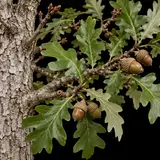
Two long-lived native canopy trees that grow together across the eastern forest. The oak carries the caterpillar load that feeds nesting birds in spring; the black gum carries the high-fat fruit that fuels the same birds heading south in fall.
- Traditional pairings, thin evidence
-
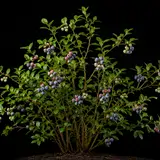
Shares black gum's need for acidic soil and its tolerance of damp ground, and grows naturally in its understory. Anything you do to keep blueberries happy - acidic mulch, no lime - suits the tree above them.
Varieties · 5
You pick one when you add Black Gum to your garden. Its days to maturity set your harvest window.
Black Gum (Nyssa sylvatica)
Pyramidal tree with glossy dark leaves turning fluorescent scarlet and purple in early fall, with blue-black fruit.
speciesnativewet-tolerantbrilliant-fall-colorThe wild species: a 30-50 foot pyramidal shade tree with glossy untoothed leaves, right-angled horizontal branching, blocky alligator-hide bark on old trunks, and the earliest and most brilliant scarlet fall color in the eastern woods. Grows in wet ground or dry, feeds migrating birds, and can live for centuries. Seedling-grown trees may be male or female.
Wildfire
Red-flushed new shoots all summer above glossy dark green mature leaves; scarlet in fall.
cultivarred-new-growthfall-coloruniformSelected for new growth that emerges deep red through the whole growing season rather than only in fall, giving the tree a second season of color on top of its scarlet autumn. Uniform pyramidal habit.
Green Gable
Neat, evenly pyramidal crown of very glossy dark leaves turning scarlet.
cultivaruniformpyramidalleaf-spot-tolerantA strongly uniform, broadly pyramidal selection with glossy dark foliage and good tolerance of the leaf spot that troubles black gum in humid summers - the usual choice where a matched row or a predictable shape is wanted.
Red Rage
Very glossy dark green summer leaves igniting to brilliant red.
cultivarleaf-spot-resistantglossyvivid-fall-colorChosen for unusually glossy, clean foliage with strong resistance to leaf spot, and for exceptionally vivid red fall color. A good pick for the humid Southeast, where leaf spot is a yearly nuisance on seedling trees.
Tupelo Tower
Tall, narrow column of glossy leaves turning red-orange in fall.
cultivarnarrowcolumnarsmall-spaceA narrow, upright, distinctly columnar selection for tight spaces, driveways, and screening where the wide-spreading species will not fit, keeping the glossy foliage and fall color on a much smaller footprint.
Grower tips
Notes from growers, tagged with the zone they grow in. A person reads every post before it appears.
Nobody has posted about Black Gum yet. The first one usually saves someone a season.
Free account. Your post shows your grower name and zone, never your email.