Add it to your home screen and it opens full screen: no browser bars, one tap away, and everything stays signed in. Free, nothing to download from an app store.
- Tap the Share button in your browser
- Scroll down and choose “Add to Home Screen”
- Open GrowSomeFood from your home screen
- Open your browser’s menu
- Choose “Add to Home screen” or “Install app”
- Open GrowSomeFood from your home screen
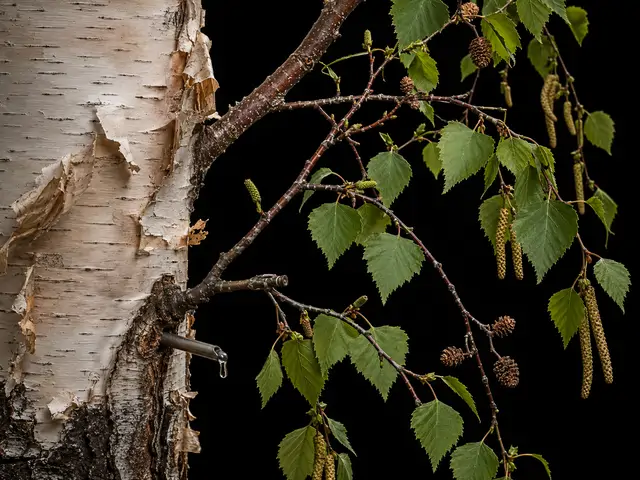
Birch
A top-tier host tree - several hundred caterpillar species, luna moths included - whose catkins carry finches through winter and whose sapsucker wells feed the first hummingbirds of spring. Also the tree most often planted wrong: choose the right species and site it cool.
Birch sap and birch syrup are safe and good. The cautions attach to sweet birch (Betula lenta), whose bark and twigs are rich in methyl salicylate, the wintergreen compound. Bark or twig tea acts like aspirin: skip it if you are aspirin-allergic, taking blood thinners, or pregnant, and do not give it to children. And the distilled essential oil - sold as oil of wintergreen or sweet birch oil - is concentrated enough that a teaspoon can kill a small child. Never swallow it; keep it locked up.
Overview
Birch (Betula) is one of the four great host genera of North America. Alongside oak, willow, and cherry it feeds several hundred species of native caterpillars - including the luna moth, the mourning cloak, and the dreamy duskywing - and those caterpillars are what nesting songbirds feed their young. Its work does not stop in summer. The tiny seeds packed into its dangling catkins are a winter staple for redpolls, pine siskins, goldfinches, and chickadees, and yellow-bellied sapsuckers drill birches more than almost any other tree - the neat rows of wells they leave are the first sugar source available to ruby-throated hummingbirds arriving north in spring, weeks before anything is in flower.
People plant birches for the bark: chalk-white and papery, salmon-pink and shredding, or dark and cherry-like depending on the species. And in early spring a mature birch can be tapped, like a maple but later, for a sap that boils down into a dark, savory syrup.
Birch is also the tree most often planted wrong. It is shallow-rooted, short-lived by tree standards, and needs a cool, moist, mulched root zone; the ones that die young are almost always marooned in hot mown lawn where drought stress opens the door to the bronze birch borer. Two decisions fix most of that: pick the species suited to your region - usually river birch - and give the roots shade and mulch. Do not buy European white birch, whatever the label says.
Quick facts
- Sprouts in
- 28 days14 to 60
- Soil to sprout
- 68 °F55 to 78
- Life cycle
- Perennial, lives about 60 years
- Seed to save
- About 140 days after planting110 to 170
- Height
- 50 ft25 to 70
- Spread
- 30 ft20 to 45
- Cold
- Takes hard frostdamaged below -50°F
- Heat
- Struggles above 95°F
- Self-sows
- Yes, expect volunteers
Full sun or part sun · medium water · consistently moist soil · 30 ft apart (20 to 40) · direct sow or transplant
When to plant
Fall transplanting is open for 6 more days. Next: fall, Oct 11 to Nov 22.
- Transplant Aug 16 – Sep 27 Closes in 6 daysAbout 10 weeks before to 4 weeks before your first frost (Oct 25 here)Early fall planting is workable in milder zones where the ground stays open long enough for roots to grow. In cold regions stick to spring - birches transplant poorly into freezing ground.
- Direct sow Oct 11 – Nov 22 Opens in 20 daysAbout 2 weeks before to 4 weeks after your first frost (Oct 25 here)Scatter the tiny seed on the surface of bare, damp soil in late fall and press it in without burying it - birch seed needs light to germinate and a cold winter to break dormancy. Expect a low strike rate and slow seedlings; nursery stock reaches usable size far sooner.
- Transplant Mar 20 – May 15 Opens in 180 daysAbout 3 weeks before to 5 weeks after your last frost (Apr 10 here)Plant container or balled-and-burlapped birch in early spring so the shallow roots establish before summer heat. Choose a cool, moist site with room to mulch widely, and water through the whole first season.
Frost here: last around Apr 10 (Mar 27 to Apr 24 most years), first around Oct 25. Zone averages, your own yard may run a week or two either way.
Life stages
One stage to settle in, then three that repeat each year. Windows are typical; your zone and weather move them.
Years 1-3 - young tree
The first year after planting- WaterKeep it evenly moist - never let it dry outweeklyBirches are shallow-rooted and the least drought-tolerant of the common shade trees. Water a young one deeply every week through its first three summers and again in any dry spell after that. Drought stress is not just a cosmetic problem here: it is the specific thing that invites the bronze birch borer, which kills more landscape birches than everything else combined.
- MulchMulch wide - this is the single most important thingBirch roots sit in the top foot of soil and want cool, damp, woodsy ground. Spread wood-chip mulch three or four inches deep out to the branch tips and keep widening the ring as the tree grows, leaving bare ground at the trunk. A birch in a mulched bed lives; the same tree marooned in hot mown lawn is the one that dies at fifteen.
- ProtectSite it cool - roots shaded, canopy in sunThe classic birch planting is sun on the crown and shade on the roots. Put it on the north or east side of the house, at a woodland edge, or near a downspout or low damp spot - anywhere the root zone stays cool. Avoid a lawn island, a south-facing wall, or anywhere close to paving, which is where landscape birches cook and then decline.
- ProtectCage the trunk against deer and rodentsYoung birch bark is thin and sweet. A wire cage keeps deer from browsing and from rubbing antlers in fall, and a hardware-cloth sleeve at the base stops voles and rabbits girdling the stem under winter snow. Leave both on for the first several years, checking that the guard is not tight against the growing trunk.
Watch for- Wilting or scorched leaf edges in dry weather - water immediately
- Thinning at the very top of the crown, the first sign of bronze birch borer
- Vole and rabbit gnawing at the base under winter snow
Sap season (early spring)
Mar to Apr, every year- HarvestTap for sap - after the maples, not with themdailyBirch runs two to three weeks after maple season ends, right as the buds swell: freezing nights, days well above 40°F. Drill one shallow tap hole in a trunk at least 8-10 inches across, hang a spile and a covered bucket, and collect daily. The season is short - two to three weeks - and stops abruptly when the leaves break.
- ProtectOne tap, small hole, pull it promptlyBirch wood decays more readily than maple, so tap conservatively: one tap per tree, the smallest spile you can get, a shallow hole, a fresh spot each year, and the spile out the day the run ends. Never tap a tree under about 8 inches across. Done this way a healthy birch is unharmed; done carelessly you open a decay column in a tree that was never long-lived to begin with.
- DoBoil it down the same day, gentlyBirch sap is only about one percent sugar and it sours within a day or two, so process or freeze it immediately. It takes roughly 100 gallons of sap to make one gallon of syrup. The sugars are fructose and glucose rather than sucrose, so they scorch easily - finish over low heat and watch it. The result is dark, savory, and molasses-like, more a condiment than a pancake syrup.
Watch for- Sap turning cloudy or sour - it spoils far faster than maple sap
- Buds breaking, which ends the run abruptly
- Sap dripping from the pulled tap hole for a few days (normal)
Spring & summer canopy
May to Aug, every year- InspectA caterpillar nursery - leave the leavesBirch feeds several hundred species of native caterpillars, putting it among the top host genera in North America alongside oak, willow, and cherry. Luna moths, mourning cloaks, and dreamy duskywings all use it. Expect chewed leaves and welcome them; never spray a birch, and never treat it preventively with a systemic insecticide.
- WaterWater deeply through every dry spellEven a mature birch suffers quickly in drought. A long soak once a week in dry weather, out over the whole root zone rather than at the trunk, is the best borer prevention there is - a well-watered, mulched birch resists attack, and a stressed one does not.
- InspectCheck the top of the crown, not the bottomBronze birch borer always starts at the top. Look up: thinning, sparse, or dead twigs in the uppermost branches while the lower canopy still looks fine is the warning sign, months before anything else shows. Raised, winding ridges under the bark and D-shaped exit holes confirm it. Call an arborist while there is still a tree to save.
Watch for- Thin, sparse, or dying twigs at the very top of the crown - bronze birch borer
- White or brown blotches and squiggles mined inside the leaves
- Japanese beetles skeletonizing the upper foliage in July
- Neat horizontal rows of small holes in the bark - sapsuckers, and harmless
Fall color & winter dormancy
Sep to Feb, every year- PrunePrune in late summer or fall - NEVER in springBirches bleed sap heavily from any cut made from late winter through leaf-out, sometimes for weeks. It rarely kills a tree but it is messy, it wastes the sap, and the wet wound attracts borers. Prune in late summer or early autumn instead, and keep it light: remove dead, damaged, and crossing wood and nothing more.
- InspectEnjoy the bark, and never peel itWinter is when birch bark earns its keep - white and papery, salmon and shredding, or dark and cherry-like depending on the species. Do not strip bark off a living tree for crafts. It does not grow back, the black scar is permanent, and a cut right around the trunk will girdle and kill it. Take bark only from trees already down.
Watch for- Catkins and tiny seeds feeding redpolls, siskins, and chickadees
- Peeling, curling bark on river birch and paper birch (normal and desirable)
- Snow and ice bending multi-stem clumps - brush heavy snow off gently
Harvest
- Trunk at least 8-10 inches across - too small a tree should not be tapped at all
- Freezing nights and days above 40°F, two to three weeks AFTER the maple season ends
- Buds visibly swelling - birch sap runs at bud swell and stops the moment the leaves break
- Sap running clear and faintly sweet; cloudy or sour sap means it has already spoiled
- Tap for sap - after the maples, not with them · daily
- One tap, small hole, pull it promptly
- Boil it down the same day, gently
Picking pick as they ripen
Watch out for
5 to know. 1 is high-risk: Bronze Birch Borer. 1 is active in September.
Bronze Birch BorerSeverity High PestThe defining problem of birch in American landscapes.
Species choice and a mulched, watered root zone prevent it; nothing cures it. Any birch declining from the top down should be assumed to have it.
Thin, sparse, or bare twigs at the very TOP of the crown while the lower canopy still looks healthy - the earliest and most reliable sign, and often the only one for a year or more. Progressive dieback moving downward season by season. Raised, winding, snake-like ridges under the bark where larvae have tunneled. Small D-shaped exit holes, about an eighth of an inch across with one flat side, in the bark of affected limbs. Rusty staining or weeping from the bark over old galleries. Clusters of small shoots erupting below a dying section as the tree tries to compensate.
There is no home remedy and no spray that reaches larvae under the bark. A tree with only the top few feet affected can sometimes be saved by an arborist using a systemic insecticide alongside aggressive watering and mulching, but that is a real trade-off on a tree that feeds hundreds of caterpillar species, and it is worth it only on a valuable specimen. Prune out dying limbs well below the damage. Once dieback has reached the main scaffold branches the tree is lost - take it down before it becomes a hazard and replant with a resistant species in a properly mulched, watered site. Prevention is genuinely the whole story here.
This is entirely a matter of keeping the tree unstressed, and it works. Plant a resistant species - river birch throughout most of the country, paper or yellow birch only where summers are genuinely cool - and never plant European white birch. Site it with the canopy in sun but the root zone cool and shaded, and mulch three to four inches deep out to the branch tips instead of growing lawn under it. Water deeply through every dry spell for the life of the tree, not just while it is young. Avoid wounding the trunk, and prune in late summer or fall rather than spring, since fresh bleeding wounds attract the adults. Remove and destroy infested wood rather than stacking it near healthy birches.
A native beetle whose larvae tunnel in the layer just under the bark, cutting the tissue that carries food down the trunk. It is the single reason most landscape birches die. The crucial fact is that it cannot succeed on a vigorous tree: a well-watered, mulched birch fights off the larvae, while a drought-stressed one in hot mown lawn is colonized and killed. Adults fly from late spring into summer and are drawn to stressed trees. Attack always begins in the sunlit top of the crown and works downward, so by the time whole limbs die the tree is usually beyond saving. European white birch is the most susceptible species by far and river birch the most resistant.
Leaf Scorch (sun & drought)Severity Medium DisordernowTake this more seriously on birch than on most trees.
Browning margins and August leaf drop mean the shallow roots are running dry, and that same drought stress is precisely what lets the bronze birch borer in. Widen the mulch ring, take the lawn out from under the canopy, and soak the root zone deeply through every dry spell.
Browning that starts at the leaf edges and tips and spreads inward, with a fairly sharp line between the crisp brown tissue and the green that is still healthy. Leaves and fronds going dry, papery, and crisp rather than soft, yellow, or spotted - that is what separates this from a fungal problem. Damage worst on the side of the plant facing the sun or the prevailing wind and on the most exposed upper leaves, while the shaded interior stays fine. Symptoms appearing sharply after a heat wave, a dry spell, or a bright windy week in winter. Whole leaves or fronds shed early as the plant cuts its losses.
Water deeply, mulch, and improve the shade - that is the whole treatment, because there is nothing here to kill. Leaves that are already scorched will not recover, so trim off badly browned foliage or fronds for appearance if you want to; the crown and roots are usually unharmed and push out fresh growth once conditions improve. On a plant that scorches badly every year the answer is to move it rather than to keep watering harder, because the siting is what is wrong. Some plants respond well to being cut back hard, which brings a clean flush of new foliage. And on plants that naturally die back or brown off late in the season, scorching at the end of a dry summer is normal and needs nothing at all.
Site the plant where it actually wants to be. This is a placement problem far more often than a watering problem, and a shade plant in hot afternoon sun will scorch every summer however much you water it. Give shade and woodland plants part-to-full shade and shelter from hot afternoon sun and drying wind. Keep the root zone consistently moist and mulch it well with leaf litter or another organic mulch, which holds water and keeps the roots cool - the single most useful routine step. Water deeply and thoroughly during dry spells rather than little and often, so moisture reaches the whole root zone. Pay particular attention through the first year after planting, when the root system is small and cannot keep up with the leaves. On evergreens in cold regions, make sure the plant goes into winter well watered, and keep it out of bright, windy, exposed positions.
Leaf scorch is not a disease and there is nothing to spray for it. It is what happens when a leaf loses water faster than the roots can replace it: the tissue farthest from the veins - the margins and the tips - dries out first and turns brown and papery, and the browning works inward while the rest of the leaf stays green. Hot sun, dry soil, drying wind, heat reflected off paving or a wall, a small or damaged root system, and a plant sited somewhere sunnier or drier than it wants are the usual causes, singly or together. It also happens in winter on evergreens, when bright sun and wind pull water out of the leaves while the ground is frozen and the roots cannot resupply. Shade and woodland plants, shallow-rooted plants, and anything recently planted scorch most easily.
Japanese BeetlesSeverity Medium PestBirch is a preferred host and the top of the crown can be laced within days in July.
On a mature tree ride it out - it is cosmetic, and a systemic treatment would kill the caterpillars this tree exists to feed. Hand-pick reachable branches on a young tree, and treat heavy defoliation as a reason to water deeply, since the drought stress that follows is what bronze birch borer waits for.
Clusters of shiny metallic beetles massed together on the upper, sunniest foliage and down inside open blooms, heaviest on warm sunny afternoons from around late June. Leaves reduced to lace, with the veins left intact and the tissue between them gone - unmistakable, and quite different from the ragged chewing of a caterpillar. Ragged, chewed petals and blooms that never open properly. Beetles that let go and drop straight to the ground when you disturb the plant. Feeding damage on ripening fruit, on the plants they also take fruit from. Whole branches going brown and lacy at the top of a plant while the shaded lower growth stays untouched.
Persistent morning hand-picking into soapy water is the most effective home control there is, and on a vigorous established plant the damage is usually cosmetic and needs nothing else. Neem deters feeding rather than killing, and has to be reapplied. For heavy pressure, spinosad or a targeted insecticide labeled for the plant will work - but time any spray away from bloom and apply it at dusk to protect bees, and observe the pre-harvest interval on anything you eat. On flowering plants, some gardeners simply shear the blooms off for a couple of weeks and let the plant rebloom once the wave has passed, which removes the lure as well as the damage. Young plants and young trees are the ones worth defending: a mature tree or an established vine tolerates several weeks of leaf loss without lasting harm.
Hand-picking is genuinely the main defense in a home garden. Go out in the cool of the morning while the beetles are sluggish, hold a tub of soapy water underneath, and knock them in - they drop when disturbed, so most fall straight into it. Do it daily through the flight: because the beetles call each other in, taking them off early stops a plant becoming a beacon. Do not put pheromone or lure traps anywhere near the garden - they demonstrably pull in far more beetles than they catch. And do not count on lawn grub control: milky spore has performed poorly and inconsistently in field trials across most of the US, and treating your own turf does not reduce the adults feeding on your plants, because they fly in from surrounding properties. Where it is practical, row cover or netting through the peak flight excludes them outright. Otherwise riding out the six-to-eight-week wave is a legitimate strategy, since most established plants absorb the damage.
Japanese beetles are metallic green-and-copper beetles about half an inch long that emerge in early summer and feed for six to eight weeks. They feed in aggregating masses - one beetle's feeding releases a scent that draws in more - so a plant goes from untouched to covered in a couple of days. They chew the soft tissue between the leaf veins and leave the veins standing, so the leaf ends up as a brown lace skeleton, and they shred open flowers and sometimes ripening fruit as well. They work the sunniest upper parts of a plant on warm afternoons. The white C-shaped grubs spend the rest of the year in turf and pasture soil eating grass roots, and the adults then fly in from wherever they hatched, which can be some distance away.
AphidsSeverity Low PestBirch aphids are usually only noticed by whatever is parked beneath the tree, which ends up sticky with honeydew and then sooty black.
They do the tree no real harm and predators clear them by midsummer - so treat this as a siting question rather than a spraying one.
Dense clusters of tiny insects packed onto shoot tips, flower buds, and the undersides of young leaves. Curled, cupped, or distorted new growth that never opens properly. A sticky shine on the leaves - and on whatever sits under the plant - that later goes black with sooty mold. Tiny white cast skins left behind where a colony has been feeding. Ants running steadily up and down the stems, which is often the first thing you notice. Mottled, streaked, or misshapen leaves that do not grow out can mean a virus the aphids brought with them rather than the feeding itself.
Knock the colonies off with a hard jet of water and repeat every few days - on most plants that alone ends it. Pinch out or prune off the worst-infested tips rather than treating the whole plant. If colonies keep rebuilding, spray insecticidal soap or horticultural oil directly onto the insects, covering leaf undersides, and repeat weekly until they are gone; treat early or late in the day, and never spray a wilted or heat-stressed plant. Avoid broad-spectrum insecticides - they kill the ladybugs, lacewings, and parasitic wasps that were about to solve the problem for you, and aphid numbers usually come back worse afterward. Anything you spray must be labeled for the plant you are treating; follow that label and observe its pre-harvest interval. On anything you eat, wash leaves, heads, and buds well before use, since aphids hide down in crowns, folds, and tight growth.
Go easy on nitrogen: the soft, lush growth that heavy feeding produces is exactly what aphids breed on. Check new growth once a week through spring and early summer so you catch colonies while they are still small, and rub the first few out with your fingers. Leave flowering plants nearby and skip broad-spectrum sprays - ladybugs, lacewings, hoverflies, and parasitic wasps do most of this work for free, and they only stay if there is something for them to eat. Keep ants off the plant where you can, since they protect aphids from those predators. Water steadily so plants are not stressed, and check any new plant over before you bring it home or move it indoors, since aphids usually arrive on something else.
Aphids are small soft-bodied sap-suckers - green, black, gray, pink, or waxy white, and mostly wingless - that gather in dense colonies on the tenderest new growth: shoot tips, buds, and the undersides of young leaves. They breed extremely fast in mild weather, so a few can become hundreds inside a week. Their feeding curls and distorts soft growth, and the sticky honeydew they excrete coats everything below and turns black with sooty mold. Ants often farm and defend the colonies for that honeydew. A few aphids are normal on almost any plant and a healthy plant shrugs them off; only dense, persistent colonies do real damage, and some aphids also spread plant viruses as they feed.
Birch LeafminerSeverity Low PestCosmetic on a healthy tree and now much reduced by introduced parasitic wasps.
Treat it as a signal to check your watering and mulching rather than as something to spray.
Pale translucent blotches inside new leaves in May, spreading and turning papery brown, with the leaf surface intact above and below the damage. Whole leaves going brown and crisp on the outer, sunniest growth while the inner canopy stays green. Tiny dark larvae visible if you hold a mined leaf up to the light. Damage concentrated on the first flush of spring leaves, with later growth much cleaner. Gray birch and paper birch mined much more heavily than river birch.
None is warranted on an established tree. The damage is inside the leaf, so contact sprays do not reach it, and the leaves are already mined by the time you notice. Rake and remove heavily mined leaves if you like, water deeply through the summer, and let the tree push its second flush. On a small, newly planted, or already struggling birch, an arborist can time a treatment to the first generation - but on a healthy tree the honest answer is that this looks much worse than it is.
Choose river birch, which is far less affected than paper, gray, or European white birch. Beyond that, keep the tree vigorous with mulch and deep watering, which is what actually determines whether mining matters. Leave the parasitic wasps that now control this pest alone by not spraying, and skip preventive systemic treatments, which kill the caterpillars a birch exists to feed for the sake of a cosmetic problem.
The larvae of small sawflies feed inside the leaf between its upper and lower surfaces, hollowing out blotches that start as pale green blisters and dry to papery brown. The first generation in May is the heaviest and the most conspicuous, and a badly mined tree can look scorched by early summer. Despite the appearance it is a minor pest: healthy birches tolerate it year after year, and introduced parasitic wasps have brought populations down sharply across much of the Northeast and Canada since the 1990s. It matters mainly because repeated heavy mining adds to the stress that lets the bronze birch borer in.
Good & bad neighbors
First rule: keep Lawn grown right up to the trunk apart. The commonest way a birch is killed.
Plant nearby
-
Ferns and woodland groundcoversThe most useful underplanting a birch can have. Ferns, sedges, and native woodland perennials in a wide mulched bed keep the shallow roots cool and damp - the exact condition that prevents bronze birch borer - and give canopy caterpillars a soft place to pupate.
-
A native understory small tree for the light shade at a birch's edge, adding spring bloom and June fruit beneath a canopy whose own wildlife value is in caterpillars and winter seed.
-
Pairing the top host genus with birch spreads the caterpillar season and the habitat structure - oak for the dry upland side of a yard, birch for the cool damp side.
-
The two great moisture-loving host genera. Both want damp ground and both feed hundreds of caterpillar species, so a low, wet corner planted with birch and willow does more for nesting birds than almost any other combination.
Keep apart
-
Lawn grown right up to the trunkThe commonest way a birch is killed. Turf competes for water at exactly the depth birch roots occupy, mowing bakes and compacts the root zone, and the resulting drought stress is what bronze birch borer needs. Replace the grass under the canopy with mulch and a woodland underplanting.
Varieties · 7
You pick one when you add Birch to your garden. Its days to maturity set your harvest window.
River Birch (Betula nigra)
Clumping trunks sheathed in curling, papery salmon-to-cinnamon bark; small glossy diamond-shaped leaves.
speciesnativeborer-resistantheat-tolerantThe right birch for most of the United States and the only common one with real resistance to bronze birch borer. Fast, adaptable, and happy in heat, humidity, clay, and wet ground from zone 4 to zone 9. Grown as a multi-stem clump for its extraordinary curling, papery bark in cinnamon, salmon, and cream. 'Heritage' and 'Dura-Heat' are the standard selections, chosen for paler bark and better heat tolerance.
Paper Birch (Betula papyrifera)
Brilliant chalk-white peeling bark with dark horizontal lenticels; clear yellow fall color.
speciesnativewhite-barkcold-hardyThe iconic chalk-white canoe birch of the north woods, and a superb tree where summers are genuinely cool - northern New England, the upper Midwest, the northern Rockies, and Canada. South of about zone 5 it is short-lived and prone to bronze birch borer, and it is declining across the warmer edge of its range. Plant it for the north, not for nostalgia.
Sweet Birch (Betula lenta)
Dark reddish-brown cherry-like bark; broken twigs smell intensely of wintergreen; gold fall color.
speciesnativewintergreendark-barkAlso called black or cherry birch, with dark, tight, cherry-like bark rather than white. Its twigs and inner bark smell strongly of wintergreen - this is the birch beer and oil-of-wintergreen tree - and it yields the sweetest sap of any birch. Longer-lived and more borer-resistant than the white birches, with brilliant golden fall color. Read the safety note before using the bark or twigs.
Yellow Birch (Betula alleghaniensis)
Shaggy, curling golden-bronze bark on a large forest tree; twigs faintly wintergreen-scented.
speciesnativelong-livedshade-tolerantThe largest and longest-lived eastern birch, a keystone of the northern hardwood forest that can reach 200 years and 80 feet. Shredding golden-bronze bark, faintly wintergreen twigs, and real shade tolerance make it a woodland tree rather than a lawn specimen. Wants cool, moist, rich soil and does not take heat or drought.
Gray Birch (Betula populifolia)
Slim clustered trunks with chalky gray-white bark and black triangles below each branch.
speciesnativepioneerpoor-soilA slender, short-lived pioneer that colonizes poor, dry, disturbed ground where nothing else will start - old fields, gravel, burn scars. Grayish-white non-peeling bark with dark triangular patches under the branches, and a naturally clumping habit. Useful for reclaiming a difficult site and for quick wildlife value, not for a lifetime specimen.
Water Birch (Betula occidentalis)
Shrubby clump of slim stems with shiny dark bronze non-peeling bark; small toothed leaves.
speciesnativewesternstreamsideThe birch of the interior West, growing as a shrubby multi-stem tree along streams and springs from the Rockies to the Great Basin and eastern Cascades. Dark bronze-brown bark that does not peel, and an absolute requirement for reliable water at the roots. The native choice for a wet swale or streambank in the arid West.
Grower tips
Notes from growers, tagged with the zone they grow in. A person reads every post before it appears.
Nobody has posted about Birch yet. The first one usually saves someone a season.
Free account. Your post shows your grower name and zone, never your email.