Add it to your home screen and it opens full screen: no browser bars, one tap away, and everything stays signed in. Free, nothing to download from an app store.
- Tap the Share button in your browser
- Scroll down and choose “Add to Home Screen”
- Open GrowSomeFood from your home screen
- Open your browser’s menu
- Choose “Add to Home screen” or “Install app”
- Open GrowSomeFood from your home screen
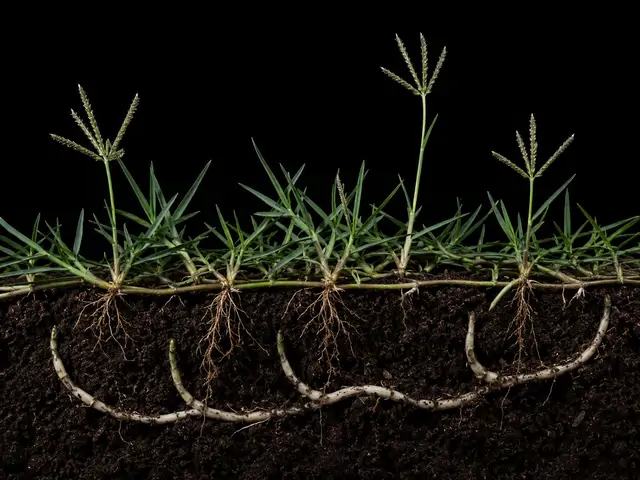
Bermudagrass
Bermudagrass is not toxic to people, pets, or livestock - it is one of the main pasture and hay grasses of the South. Two cautions. Its pollen is a significant hay-fever allergen through the warm months in the South and Southwest, so mowing before it heads out helps if anyone reacts to grass pollen. And since most people meet it as a weed they want gone, the real risk is the control: any herbicide must be one whose label lists the site you are treating, used exactly as that label directs.
Overview
The South's main lawn grass and the South's worst garden weed, and it is the same plant. It creeps by runners above and below ground, roots at every node, and cannot be weeded out of a bed the way ordinary weeds can.
Bermudagrass (Cynodon dactylon) is two things at once, and which one it is depends entirely on where it is standing. In a sunny southern lawn, on a sports field, or in a hay meadow it is a superb grass — tough, drought-hardy, heat-proof, and it repairs itself faster than anything else in the warm season. Six feet away, in a vegetable bed or a perennial border, it is the weed that finally makes people give up on the border.
The reason is its double runner system. Above ground it sends out wiry stolons that race flat across soil, mulch, paths, and paving, rooting and throwing up a new shoot at every joint. Below ground it sends out white rhizomes that do exactly the same thing four to six inches down, and deeper in loose soil. Pull a shoot and you get a shoot; the plant is still there. Chop the runners with a tiller and you have not killed it, you have planted it, hundreds of times over.
Most people arriving here want it out of a bed or out of a fescue lawn, so that is what this entry is about: how to be sure it is bermudagrass, what actually works, how long it honestly takes, and the one weakness worth exploiting — it will not tolerate shade.
At a glance
- Sun
- Full sun
- Water
- Low
- Spacing
- 6–120 in (typ. 24)
- Mature height
- 2–18 in (typ. 8)
- Frost
- SemiHardy
- Germination
- 7–30 days (typ. 14) @ 65–95 °F (typ. 75)
- Spread
- 24–600 in (typ. 120)
- Soil
- Well-drained
- Temperature
- Damaged below 0°F · struggles above 115°F
- Self-sows
- Yes — expect volunteers
When to plant
No planting window on record for this zone.
Life stages
- Green-up & runner spread (the control season) Apr, May, Jun, Jul, Aug, Sep, Oct (yearly)
-
Recognize it: runners above ground and runners belowFine-textured grey-green grass that creeps rather than clumps, with wiry STOLONS running flat across the surface, rooting and sending up new shoots at every node, and white RHIZOMES doing the same underground, 4-6 in down and deeper in loose soil. Leaf blades are narrow with a fringe of white hairs at the collar where blade meets sheath. Pull a piece up: if it comes with a rope of runner and roots at every joint, it is bermudagrass.
-
Dig, do not till - and take the whole runnerFollow each runner back and lift it whole. Every node left in the ground is a new plant, and a rotary tiller is the worst thing you can do to a bermudagrass patch: it chops the rhizomes into hundreds of pieces and plants them all. Dig with a fork, shake the soil out, and bag the runners - do not compost them unless your pile genuinely cooks.
-
Shade is its one real weaknessBermudagrass needs full sun and thins badly in shade. That is the only free lever you have: mow cool-season turf tall (3-4 in) so it shades the soil, let shrubs and perennials close over bare ground, and accept that a sunny hot strip along a driveway will always be the front line.
Wiry runners crossing beds, paths, and lawn edgesNew shoots at every runner nodeBermudagrass advancing into beds from a lawn edgePatches thriving in the hot dry spots where everything else struggles -
Recognize it: runners above ground and runners below
- Seed heads (the finger spikes) Jun, Jul, Aug, Sep (yearly)
-
Three to seven finger-like spikes from a single pointThe seed head is distinctive: a short stalk topped by three to seven narrow spikes radiating from one point like fingers or a bird's foot. Crabgrass has a similar finger arrangement but it is an annual with wider, hairier blades and no rhizomes - bermudagrass is finer, greyer, and comes with runners.
-
Mow before it heads outSeed is not the main way this grass spreads, but it adds to a seed bank that lasts for years, and the pollen is a significant hay-fever allergen through summer. Mowing before the spikes mature deals with both. It will not slow the runners.
Finger-like seed spikes radiating from one pointSeed heads appearing within days of mowingSummer grass-pollen symptoms in the household -
Three to seven finger-like spikes from a single point
- Winter dormancy (brown, not dead) Jan, Feb, Mar, Nov, Dec (yearly)
-
Straw-brown patches are the mapBermudagrass goes fully dormant and straw-brown below about 50F while cool-season grasses stay green - which makes winter the easiest time of year to see exactly how far it has spread through a fescue or bluegrass lawn. Photograph the brown patches; that is your treatment map for spring.
-
Winter digging is easier, but do not tempt tillageDormant soil is workable and the runners are easy to trace, so winter is a reasonable time to fork out patches in beds - with the same rule as always, lift the runners whole and never rototill. Herbicide applied to dormant brown grass does nothing; wait for green, actively growing foliage.
-
Cut a real edge before springA shallow plastic edging will not stop rhizomes. Cut a spade-deep trench edge, or install a solid edging set 6-8 in deep, between lawn and beds during the dormant season - and plan to re-cut it every year. This is the single most useful piece of infrastructure against bermudagrass in a garden.
Straw-brown patches in an otherwise green cool-season lawnRunners still alive under brown top growthBed edges that need re-cutting before spring green-up -
Straw-brown patches are the map
Watch out for
Stolon & Rhizome Spread (why pulling fails) High
The core of the problem: bermudagrass creeps by wiry stolons across the surface and white rhizomes four to six inches underground, rooting and shooting at every node. Pulling removes a shoot and leaves the plant. Worse, both runners are brittle and every fragment carrying a node grows into a new plant, so chopping or tilling a patch multiplies it instead of destroying it.
Watch for: Runners crossing soil, mulch, and paving with a new shoot at each joint; regrowth days after pulling; a flush of new plants across a bed that was recently tilled.
Prevent: Never rototill an infested area. Keep a deep cut edge between lawn and beds, inspect nursery rootballs and bulk topsoil, and clean mower decks between an infested lawn and a clean one.
Treat: Fork under the patch and lift runners whole, shaking soil free and bagging the material. Follow with repeated grass-selective herbicide (fluazifop, sethoxydim, clethodim) in ornamental beds, or heavy summer smothering in empty beds. Use only a product whose label lists the site you are treating, follow that label, and treat green actively growing foliage - never dormant brown grass.
The single most useful thing to internalise about this plant: any node is a whole plant. It explains why tilling backfires, why fabric fails, and why the runner has to be followed and lifted rather than snapped.
Bed & Border Invasion High
Where it costs gardeners the most: bermudagrass advances out of a lawn into adjoining vegetable beds and perennial borders, threading its runners through the crowns of clumping plants where they cannot be dug out without lifting and washing the whole plant. Landscape fabric does not stop it - stolons run over the top and rhizomes travel beneath - and shallow decorative edging is no barrier at all.
Watch for: Grass emerging from the middle of a perennial clump or a strawberry crown, runners under mulch and fabric, and a bed edge that has quietly moved a foot into the border.
Prevent: Cut a spade-deep trench edge and maintain it annually, or install solid edging set 6-8 in deep. Plant densely so the soil is shaded, and keep the hottest sunniest margin under close watch - that is where it always comes in.
Treat: Lift infested perennials in the dormant season, wash the soil off the roots, pick out every runner, and replant into clean ground. In the bed itself, use repeated grass-selective herbicide labelled for ornamentals, or clear an empty bed by smothering under heavy opaque cover through a full hot summer.
Grass-selective herbicides are the practical tool here because they spare most broadleaf ornamentals - but check the label for your specific plants, and note that far fewer products are labelled for vegetable beds, where digging and smothering do the work instead.
Invasion of a Cool-Season Lawn High
In the transition zone, bermudagrass creeps into fescue and bluegrass lawns and takes ground every hot summer, when the cool-season grass slows and it does not. It shows itself in winter, when it goes straw-brown while the rest of the lawn stays green. There is no herbicide that removes it cleanly from a cool-season lawn - the selective options suppress rather than eliminate it - so a badly infested lawn usually has to be killed off and re-established.
Watch for: Straw-brown patches in an otherwise green lawn from late fall through early spring; patches expanding outward each summer; fine grey-green grass outcompeting fescue in the hottest strips.
Prevent: Mow cool-season grass tall (3-4 in) to shade the soil, keep the turf dense and well fed, avoid summer drought stress that opens gaps, and keep bermudagrass sod, soil, and mower clippings off the lawn.
Treat: Map the brown patches in winter, then treat green actively growing foliage in summer with a product labelled for your turf species and follow that label exactly. For heavy infestations, plan a full renovation - kill off, wait out the regrowth flushes, then re-seed or re-sod.
The winter map is genuinely useful: dormant bermudagrass is the only time the infestation outlines itself, so photograph it and treat those areas the following summer.
Grass Pollen Allergy Medium
A genuine human health note rather than a plant problem: bermudagrass is one of the most significant grass-pollen allergens in the southern and southwestern United States, and because it flowers over a long warm season rather than a short spring peak, it can extend hay-fever symptoms for months.
Watch for: Finger-like seed heads appearing days after mowing; hay-fever symptoms in the household that run through summer rather than peaking in spring.
Prevent: Mow regularly enough that seed heads do not mature, keep windows closed and mow late in the day if someone in the house reacts, and have the allergic person avoid mowing.
Treat: Remove seed heads by mowing; where bermudagrass is a lawn and a household member reacts badly, discuss testing with a clinician and consider a different warm-season grass or a reduced-lawn design.
This is the one health-relevant fact about a plant that is otherwise entirely non-toxic - it is safe to touch, safe for pets and livestock, and grazed and cut for hay across the South.
Varieties · 3
Varies - buffalograss is fine, soft, blue-green and low, greening up later in spring and going dormant earlier in fall.
If you want warm-season lawn without a grass that eats the borders, buffalograss (a North American native) spreads far less aggressively and needs less water and mowing, though it takes traffic poorly and greens up late. In dry western climates, a native short-grass mix or a reduced-lawn design does the same job. Ask a regional extension turf program which warm-season grass suits your rainfall - the honest answer in the Deep South is often still bermudagrass, in which case the fix is a deep edge rather than a different grass.
Low creeping grey-green grass with visible runners across soil and mulch, rooting at each joint; finger-like seed spikes in summer; straw-brown when dormant.
The wild and pasture type, and the one that turns up as a weed: fine grey-green blades, a fringe of white hairs at the leaf collar, wiry surface stolons and underground rhizomes both rooting at every node, and three to seven finger-like seed spikes radiating from one point. Sets viable seed, so it spreads by runner, fragment, and seed alike. This is what is coming into your beds.
Dense, fine-textured, darker green turf that knits tightly and repairs quickly; runners spread outward from any cut edge.
The sterile hybrids of common bermudagrass and African bermudagrass bred for lawns, golf greens, and sports fields - finer, denser, and darker than the common type. They set no viable seed, which is why they are sold as sod or sprigs rather than seed, and it makes no practical difference in a garden: they spread by stolon and rhizome exactly like the common kind, and they invade beds exactly like it too. If you want a hot-climate lawn, this is the right grass for it; just build a deep edge between it and everything else.
Grow
How it invades: a full-sun warm-season perennial that spreads by stolons above ground and rhizomes below, roots at every node, regrows from fragments, and creeps steadily outward from lawn edges into everything adjoining.
You will not be sowing this deliberately in a garden, so what matters is how it gets in and gets around.
It arrives three ways: as a lawn on the other side of a bed edge, in contaminated topsoil, mulch, or nursery pots, and on a mower deck. Seed matters least — most spread is vegetative.
It advances by creeping. Stolons run flat over the surface, through mulch, under weed fabric, across pavers, sometimes several feet in a season, rooting at every node. Rhizomes travel underground at four to six inches, deeper in loose or sandy soil, and come up on the far side of any barrier that does not go deep enough. Both are brittle, and every fragment with a node on it is a whole new plant. That single fact governs everything about control.
It is warm-season. It greens up when soil temperatures reach the 60s, grows hardest in the heat of midsummer when cool-season lawns are struggling, and goes fully dormant and straw-brown below about 50°F. Winter dormancy is not death; the runners are alive under the brown.
It demands full sun. This is its one real weakness. Bermudagrass thins in shade and disappears under dense shade, which is why it takes the hot strip along the driveway first and why it never quite conquers the bed under the maple.
Otherwise it is nearly unstoppable: it tolerates drought, heat, salt, traffic, poor soil, and close mowing, and it recovers from damage faster than any weed you will meet. Those are the exact traits that make it a great turf grass and an appalling neighbour.
Propagation & seed saving
Stolons, rhizomes, fragments, and seed - in that order of importance. Any node makes a new plant, which is why tilling multiplies it and why contaminated soil, mulch, and mower decks move it between properties.
Stolons do most of the visible work. They creep over the surface, root at each node, and colonise anything they can reach — through gravel, over mulch, along the join between paving slabs, up into a pot standing on the ground.
Rhizomes do the work you cannot see, moving through the soil at four to six inches and popping up beyond edgings, fabric, and plastic. This is why edging has to be deep to do anything and why bermudagrass reappears in the middle of a bed you thought you had cleared from the edge.
Fragments are the multiplier. A piece of stolon or rhizome with one node will root and grow. So a rotary tiller run through a bermudagrass patch is a propagation machine, and contaminated topsoil, mulch, and nursery stock are how it crosses town. Check the rootballs of anything you bring home from a southern nursery, and be sceptical of cheap bulk topsoil.
Seed matters least but is not nothing: common bermudagrass sets viable seed in those finger-like heads, and it can persist in soil for several years. Most hybrid turf bermudagrasses are sterile and spread only by runner — which is why they are sold as sod or sprigs rather than seed, and why a hybrid escaping into your beds behaves the same way as the common kind.
Care
Control, not care: shade it out where you can, dig runners whole and never till, cut a deep edge, smother beds for a full hot summer, and use grass-selective herbicides in ornamental beds - repeatedly, over a season or two.
Set expectations first: an established patch takes a season or two to clear, and clearing a bed adjoining an infested lawn is permanent maintenance, not a one-time job. Nothing about this is quick, and anyone promising otherwise is selling something.
Cut a real edge. The highest-value structural fix. A spade-cut trench edge maintained annually, or solid edging set 6–8 inches deep, stops rhizomes from walking out of the lawn into the bed. Shallow decorative edging does nothing at all.
Dig, never till. Fork under the patch, lift the runners whole, shake the soil off, and bag them. Take your time following each stolon — leaving nodes behind is the reason people dig the same patch three years running. Never rototill bermudagrass; it turns one plant into hundreds.
Smother it, in summer. An empty bed can be cleared by covering it with heavy black plastic or a thick tarp through a full hot summer — six to ten weeks minimum, longer is better, and the heat is what does the work, so this is a June-to-September job in a sunny spot, not an April one. Clear plastic sealed at the edges (solarization) is more effective still in hot-summer climates. Cardboard and mulch alone will not do it; bermudagrass grows through both.
Shade it out. Mow cool-season lawns tall (3–4 in), plant beds densely so the soil is covered, and put the shade-tolerant plantings on the hot sunny margins where you are losing ground.
Herbicide, honestly. In an ornamental bed, grass-selective herbicides — the active ingredients fluazifop, sethoxydim, and clethodim — kill grasses without harming most broadleaf ornamentals, which makes them the practical tool for bermudagrass among shrubs and perennials. They need repeat applications, because rhizomes push new growth after each one. Non-selective glyphosate works on actively growing green foliage and also needs repeating. In a cool-season lawn there is no clean answer: the selective options only suppress it, and badly infested fescue or bluegrass usually has to be killed off and re-established. Whatever you use, three rules: the product’s label must list the site you are treating — vegetable garden, ornamental bed, lawn are all different sites and the label is legally binding — follow that label for rate, timing, protective equipment, and any interval before planting or harvest, and treat green, actively growing foliage, never dormant brown grass.
In a vegetable garden, far fewer products are labelled at all, so lean on the physical methods: deep edging, summer smothering, and patient digging.
Troubleshooting
Is it bermudagrass or crabgrass, why pulling fails, why tilling made it worse, what to do about a fescue lawn full of it, and how long clearing a bed really takes.
Is this bermudagrass or crabgrass? The commonest mix-up, because both make finger-like seed heads. Bermudagrass is a perennial with fine grey-green blades, a fringe of white hairs at the leaf collar, and both surface stolons and underground rhizomes; it comes back from runners every year. Crabgrass is an annual with wider, hairier, brighter green blades, sprawls in a star-shaped mat from a single crown, has no rhizomes, and dies at the first hard frost. If you pull it and a rope of runner comes up rooting at every joint, it is bermudagrass.
I pull it and it comes straight back. Pulling gets the shoot; the stolon and rhizome stay. You have to lift the runner whole, or exhaust the plant with repeated treatment.
I tilled the bed and now it is everywhere. Unfortunately that is exactly what tilling does — each chopped node becomes a plant. Do not till again; switch to summer smothering or repeated grass-selective treatment and dig out what you can whole.
It comes under my edging. Rhizomes travel four to six inches down and deeper in loose soil, so shallow edging is decorative only. Cut a spade-deep trench and maintain it, or set solid edging 6–8 inches deep.
It grows straight through my landscape fabric. It does. Fabric slows stolons a little and stops nothing below ground.
My fescue lawn is full of straw-brown patches in winter. That is bermudagrass, dormant while the cool-season grass stays green — and winter is the best time to map how far it has gone. There is no fully selective control in a cool-season lawn; suppression plus tall mowing helps, and a heavily infested lawn is usually killed off and re-established.
Can I just smother it with cardboard and mulch? No. It grows through both. Smothering has to be a heavy opaque cover for a full hot summer.
How long will clearing a bed take? A season or two of consistent work for an established patch, and ongoing edge maintenance forever if there is bermudagrass lawn next to it.
It is my lawn and I like it — is that a problem? Not at all; it is the right grass for a hot sunny southern lawn. Just treat the boundary between lawn and beds as a permanent job, and never plant a scrap of it near a vegetable garden.
Growing across climates
Thrives roughly zones 7-11 and dominates the South and Southwest; in the transition zone it invades cool-season lawns; hard northern winters kill it, so it is barely a problem above about zone 6.
The South and Southwest (zones 8–11) are bermudagrass country. It is the default lawn, pasture, and sports-field grass, it grows nine months of the year, and in a garden it is a permanent management issue rather than a problem to be solved once. Deep edging and dense planting are not optional here.
The transition zone (roughly zone 7) is where it is most maddening, because cool-season and warm-season grasses both grow there. Bermudagrass creeps into fescue and bluegrass lawns and shows up as straw-brown patches all winter, and there is no herbicide that removes it cleanly from a cool-season lawn.
Zone 6 and colder is where winter does the work for you. Hard freezes without snow cover kill the rhizomes, so bermudagrass is patchy and short-lived in the north — it can arrive in contaminated soil or sod and persist for a season or two in a warm sheltered spot, but it does not establish the way it does south of the Ohio River.
Drought and heat make it stronger, not weaker. In a hot dry summer it takes ground from everything else in the garden, because the plants it is competing with slow down and it does not. That means late summer is when you lose the most territory — and, conveniently, also when a summer smothering treatment does its best work.
History
Brought from Africa to the American South by the mid-1700s and promoted as a pasture grass, it became the region's dominant turf and its most stubborn garden weed - and modern hybrids, which set no seed, spread the same way by runner.
Bermudagrass is not from Bermuda. It is native to eastern Africa and the warm Old World, and it reached the American colonies by way of the Caribbean — the name stuck from ships and cargo that came through Bermuda. It was recorded in the southern colonies by the mid-1700s and was being deliberately spread as a pasture grass soon after, because it does what southern farmers needed: it survives heat, drought, and hard grazing, and it repairs itself.
By the twentieth century it had become the defining turf of the American South — lawns, golf courses, athletic fields, roadsides — and the source of a good deal of southern hay. Plant breeders at Tifton, Georgia produced the famous hybrid turf types (the Tif- series and their descendants) by crossing it with African bermudagrass; those hybrids are sterile, which is why they are sold as sod and sprigs rather than seed, and why they spread by runner alone. In the garden that distinction changes nothing at all.
Its other name tells the rest of the story. Across the South it has been called ‘wiregrass’ and ‘devil’s grass’ for as long as people have tried to keep it out of vegetable rows — the same plant, praised and cursed, sometimes in the same afternoon by the same gardener.
No grower tips for Bermudagrass yet — yours could be the first.
Sign in to share what works in your garden.