Add it to your home screen and it opens full screen — no browser bars, one tap away, and everything stays signed in. Free, nothing to download from an app store.
- Tap the Share button in your browser
- Scroll down and choose “Add to Home Screen”
- Open GrowSomeFood from your home screen
- Open your browser’s menu
- Choose “Add to Home screen” or “Install app”
- Open GrowSomeFood from your home screen
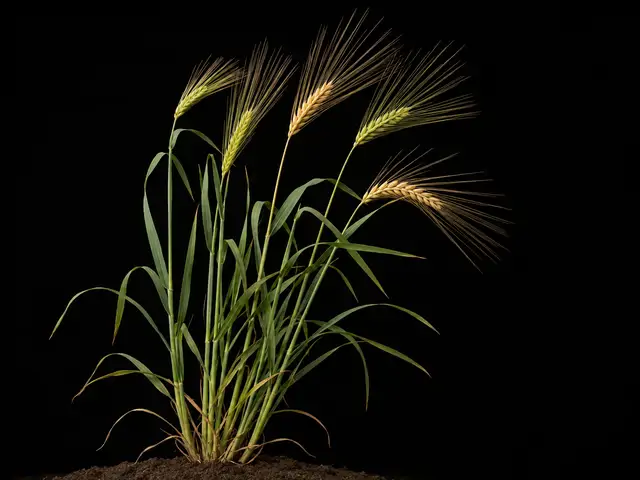
Barley
The grain is a wholesome, ancient food. Barley contains gluten (a form called hordein) and is not suitable for those with celiac disease or a barley/gluten allergy. Barley used for malting is sprouted, which is safe, but home malting for brewing is a separate craft. The green plant and hulls are not eaten. Barley grass is sometimes juiced as a health-food green, a separate use from the grain.
Overview
The most ancient of grains and one of the toughest: a quick, drought- and cold-hardy cool-season grass with bristly bearded heads, grown for hearty soup grain, for malting, and as a fast cover crop.
Barley is humanity's oldest cultivated grain and still one of the most rewarding to grow: a quick, hardy, undemanding cool-season grass topped by dense, bristly bearded heads (the long stiff awns give barley its unmistakable bearded look). It's the toughest of the common small grains — the most drought- and salt-tolerant, cold-hardy, and quick to ripen — which is exactly why it fed the earliest civilizations and thrives from cool highlands to dry margins where other grains fail.
Barley is grown for several purposes. As food, its chewy grain is the soul of hearty soups and stews (think beef-and-barley), and it cooks like a risotto, grinds to flour, and makes a nourishing porridge. As malt, sprouted and dried barley is the foundation of beer and whiskey — barley is the brewing grain. And it makes a fast, hardy cover crop and livestock forage. Two things shape a home crop: whether you grow spring or winter barley (spring-sown, ripening the same summer, is simplest for most gardeners), and whether you grow hulled or hulless barley — and for eating, hulless (naked) barley is far easier, since standard hulled barley clings to its hull and needs pearling to reach the grain.
At a glance
- Sun
- Full sun
- Water
- Low
- Spacing
- 1–4 in (typ. 2)
- Mature height
- 24–48 in (typ. 36)
- Start by
- Direct sow
- Frost
- SemiHardy
- Germination
- 4–12 days (typ. 7) @ 38–85 °F (typ. 60)
When to plant
Zone 7a typical frost: last Apr 10 · first Oct 25
Life stages
- Germination day 0–8 from sowing
-
Sow into cool, moist soil for even emergenceevery 3 dBarley germinates fast in cool soil. Broadcast or drill about an inch deep into a firm, moist bed; spring barley goes in as early as the soil can be worked, winter barley in fall.
-
Rake in broadcast seed against birdsCover or rake in broadcast seed for good soil contact and to keep birds from eating it before it sprouts.
Birds eating broadcast seedPatchy stands in loose or dry soil -
Sow into cool, moist soil for even emergenceevery 3 d
- Tillering day 10–40 from sowing
-
Sow thick and let it smother weedsBarley is quick and competitive; a dense stand tillers, closes the canopy, and shades out most weeds. Sow thickly - there's no thinning.
-
Let winter barley tiller before hard coldWinter barley sown in fall should establish and tiller into a low clump before winter, then vernalize and head the next spring/summer. Spring barley skips winter entirely.
Thin, weedy stands (sow densely)Winter barley sown too late to establishAphids on young growth -
Sow thick and let it smother weeds
- Stem elongation day 55–220 from sowing
-
Feed light-to-moderate nitrogenBarley is a modest feeder; a light nitrogen boost supports growth. Note that malting barley in particular wants LOW protein, so go easy on nitrogen if you plan to malt it - too much raises grain protein and makes it lodge.
-
Water occasionally - barley is drought-toughevery 10 dBarley is the most drought- and salt-tolerant of the common small grains and ripens quickly. Water in real dry spells, but it needs less than wheat or oats.
Lodging from too much nitrogen or windPowdery mildew or net blotch on the leavesBarley yellow dwarf (yellow-red stunting) from aphids -
Feed light-to-moderate nitrogen
- Heading & grain fill day 75–245 from sowing
-
Watch the bearded heads emerge and fillBarley forms a dense spike with long, stiff awns (the 'beard'), giving fields their bristly look. It's self-pollinating, so no block planting is needed; the grain fills from milk to dough over a couple of weeks.
-
Keep moisture adequate during grain fillevery 8 dSteady moisture as the grain fills makes plump, even kernels - important for both food and malting quality.
Net blotch or scald on leaves in wet weatherGrain plumping and heads noddingAwns beginning to bend down as the crop ripens -
Watch the bearded heads emerge and fill
- Dough to hard grain day 95–260 from sowing
-
Watch the crop turn pale gold and the awns bend overBarley ripens fast, turning pale gold; the heads nod and the awns bend downward. It's ready when the grain is hard and the plant is drying down - often the first small grain to ripen.
-
Watch for birds and shatteringNet small plots against birds, and don't leave dead-ripe barley standing long - some types shatter (drop grain) or the heads break off (head loss) if over-ripe.
Birds on ripening headsShattering or head-drop if left too longGrain hardening fully (harvest nears) -
Watch the crop turn pale gold and the awns bend over
- Harvest day 110–120 from sowing
-
Cut when pale gold and the grain is hardevery 3 dHarvest when the plant is pale gold, the awns bend over, and the grain is hard. Cut the stalks and bundle into sheaves to finish drying. The stiff awns are sharp - wear sleeves and gloves.
-
Thresh, winnow, and (for hulled barley) de-hullDry the sheaves, then thresh and winnow. Most barley is HULLED (the hull clings tightly), needing de-hulling or 'pearling' to reach the edible grain - a chore at home. HULLESS (naked) barley threshes free of the hull, far easier for the home food grower.
Sharp awns (wear protection when handling)Hulls clinging (grow hulless barley for food)Damp grain molding (dry it fully) -
Cut when pale gold and the grain is hardevery 3 d
Harvest
- Style
- One-time harvest
- By weight
- 0.5–3 oz (typ. 1.5)
- The plant has turned pale gold and the straw is drying
- The awns (beard) bend downward and the heads nod over
- The grain is hard and can't be dented with a thumbnail
Watch out for
Aphids Pest MediumApr, May, Oct, Nov
Small soft-bodied sap-suckers clustering on tender tips and buds, excreting sticky honeydew.
Watch for: Colonies on new growth and flower buds, sticky residue, curling shoots, attending ants.
Prevent: Avoid excess nitrogen; encourage ladybugs and lacewings (zinnia flowers help feed them).
Treat: Hose off or use insecticidal soap. Rarely serious on vigorous zinnias.
Barley yellow dwarf is named for barley for good reason - controlling aphids and timing sowing are the practical home defenses.
Birds & Wildlife Wildlife MediumJun, Jul
The berries are prized by birds, chipmunks, mice, turtles, and other wildlife, which often strip a patch of ripe fruit before a forager can gather much - a sign of the plant's ecological value as much as a nuisance.
Watch for: Ripe berries disappearing overnight, and birds and small mammals working the patch at dawn and dusk.
Prevent: Check the patch daily at peak ripeness and pick promptly; net a cultivated patch if you want the berries for yourself, though wildlife value is part of the plant's point.
Treat: Pick ripe berries as soon as they color and soften; accept that a foraged patch is shared with the wildlife that depends on it.
Barley's sharp awns make its heads a bit less bird-friendly than smooth grains, but small plots still need protection at sowing and ripening.
Powdery Mildew Disease MediumApr, May, Jun
The defining zinnia disease: a fungal white powdery coating that spreads over leaves in humid or crowded conditions, worst in late summer. Rarely kills but disfigures foliage and weakens the plant.
Watch for: White dusty film starting on lower leaves and climbing, leaves yellowing and dropping beneath the blooms.
Prevent: Wide spacing, base (never overhead) watering, full sun and airflow; grow resistant series (Profusion, Zahara) where it recurs every year.
Treat: Remove the worst leaves, improve airflow; potassium bicarbonate, neem, or sulfur sprays slow it. Cutting flowers off healthy upper growth keeps the display going regardless.
Common on dense, over-fed, or shaded barley - airflow, lean feeding, and resistant varieties prevent it.
Net Blotch Disease MediumApr, May, Jun
A common fungal leaf disease of barley producing distinctive dark brown net-like or blotchy lesions on the leaves, sapping the plant and cutting grain fill in cool, wet, crowded conditions.
Watch for: Brown lesions with a fine net-like pattern (or solid dark blotches) on the leaves, spreading upward in wet weather on dense stands.
Prevent: Grow resistant varieties, rotate away from barley (it survives on old barley residue), give airflow with proper spacing, and use clean seed.
Treat: Remove badly infected debris; resistant varieties and rotation are the real controls, and late infection on a nearly ripe crop causes limited loss.
A signature barley disease - rotation and resistant varieties keep it in check in home gardens; it carries over on barley stubble.
Fusarium Head Blight (Scab) Disease MediumMay, Jun
A serious fungal disease infecting the flowering heads in warm, wet weather, bleaching part or all of the head, shriveling the grain, and contaminating it with the mycotoxin DON (vomitoxin), making it unsafe to eat.
Watch for: Prematurely bleached, straw-colored spikelets or whole heads while the rest is green, often with pink-orange fungal growth at the base of the florets, and shriveled, chalky-white 'tombstone' kernels.
Prevent: Grow resistant varieties, do NOT plant wheat right after corn (corn residue harbors the fungus), rotate with non-grasses, and avoid dense over-fertilized stands that stay wet.
Treat: No home cure once infected - discard badly scabbed grain rather than eating it (mycotoxin risk); prevention through rotation and resistant varieties is essential.
The mycotoxin makes scab a safety issue, not just a yield one, and it's especially unwelcome in malting barley - discard heavily scabbed, shriveled, pink grain.
Good & bad neighbors
Varieties · 5
The gardener's food barley: the grain threshes free of its hull, giving edible whole-grain barley straight from threshing without the pearling that hulled barley needs. The best choice for growing barley to eat. Usually spring-sown for a summer harvest.
A striking heirloom hulless barley with deep purple-to-black grain rich in antioxidant pigments, threshing free of the hull for easy food use. Beautiful, nutritious, and a fun conversation grain for soups and grain bowls.
A high-yielding, adaptable barley with grain in six rows around the head, traditionally grown for feed and food and used in some American malting. Productive and forgiving - a good general-purpose barley, though smaller-grained than two-row malting types.
The classic brewing barley: two-row types have larger, plumper, more uniform, lower-protein grain prized for malting and beer. Grow it lean (low nitrogen) for good malt. The variety to choose if you want to try home malting and brewing.
A fall-sown winter barley for milder zones that overwinters and heads early the following spring - useful as a grain, an over-winter cover crop, and forage. Less cold-hardy than winter wheat, so best in zones 6 and warmer.
Grow
Sow thickly and shallowly into cool, moist soil - spring barley as early as the ground works, winter barley in fall - in full sun; no thinning, light feeding, and it ripens fast.
Barley is easy and quick. Prepare a firm bed in full sun and sow densely, broadcast and raked in or drilled in close rows about an inch deep — like all small grains, barley is grown thick to tiller, fill in, and smother weeds, so there's no thinning. It's a cool-season crop that ripens fast (often the first small grain of the season) and must finish before summer heat.
The timing choice is spring vs. winter barley. Spring barley — simplest for most gardeners — goes in as early as the ground can be worked and ripens that same summer. Winter barley goes in fall, vernalizes over winter, and heads early the next spring, but it's less cold-hardy than winter wheat, so it suits milder zones (6 and warmer). Barley is a modest feeder and notably drought-tough, so feed lightly — and note that if you intend to malt your barley, you specifically want low grain protein, so keep nitrogen low. Barley is self-pollinating, so a small bed sets grain fine with no block planting. Do pick hulless barley if you're growing it to eat.
Care
Barley is drought-tough and quick, needing only light feeding and steady cool-season moisture; watch for leaf diseases in wet weather, and mind that the sharp awns make handling prickly.
Barley asks little. Being drought- and heat-escape tolerant and fast to mature, it needs only occasional water in real dry spells and a light nitrogen feeding — overfeeding pushes lush growth that lodges (flops) and, for malting barley, raises protein and hurts malt quality. Keep moisture reasonably steady through heading and grain fill for plump, even kernels.
In cool, wet weather watch the leaf diseases barley is prone to: powdery mildew, net blotch, and scald, which speckle and blotch the leaves and can thin a crowded, humid stand — grow resistant varieties and give airflow. Aphids can spread barley yellow dwarf virus (yellow-red stunting), especially in early-sown crops. One practical note for the gardener: barley's awns are stiff and sharp, and getting into skin and clothing at harvest is genuinely irritating, so wear long sleeves and gloves when cutting and threshing. Otherwise, barley is a fast, forgiving crop that largely grows itself.
Harvest
Cut when pale gold, the awns bend over, and the grain is hard; dry the sheaves, thresh, and winnow - then de-hull hulled barley, or grow hulless barley to skip that step.
Barley ripens quickly and signals clearly: the plant turns pale gold, the heads nod, the stiff awns bend downward, and the grain goes hard. Cut the stalks with a sickle or shears (long sleeves and gloves — those awns are sharp) and bundle them into sheaves to finish drying somewhere airy for a week or two. Then thresh (beat or tread the heads to knock the grain loose) and winnow the chaff away in a breeze.
Then the barley-specific step: the hull. Most barley is hulled — the grain clings tightly to a fibrous hull that won't thresh off, and removing it (pearling, or abrasive de-hulling) is difficult at home, which is why store 'pearl barley' is machine-polished. The gardener's answer is hulless (naked) barley, whose grain threshes cleanly free of the hull, giving you edible whole-grain barley straight from threshing and winnowing. If you're growing barley to eat, grow hulless and save yourself the pearling; if you're malting, growing for forage, or cover-cropping, the hull doesn't matter (indeed malting traditionally uses hulled barley).
Storage
Store dried whole or hulless barley cool and airtight for a year or more; grind flour or pearl as needed, and keep some grain back as seed - malting barley must stay dry and viable to sprout.
Dry barley thoroughly and it stores well — whole or hulless grain kept cool, dry, and airtight lasts a year or more, like other whole grains. Store it in sealed containers against pantry moths and weevils, and freeze new grain briefly to kill any hitchhiking eggs before long storage. Whole grain keeps better than flour, so grind or pearl it as you need it.
If you're growing malting barley, storage matters extra: the grain must stay dry, sound, and alive (viable), because malting works by sprouting the grain — store malting barley carefully and don't let it heat or get damp. For everyone, keep back some of your best clean grain as next year's seed, since barley comes true from saved seed. Cooked barley (soaked or pre-cooked whole grain) also freezes well for quick soups, and pearled or whole barley can be toasted for a nutty flavor before storing for barley tea.
Growing across climates
The most adaptable of small grains: cold- and drought-hardy, quick to ripen, grown as spring barley in cold zones, winter barley in mild ones, and a cool-season crop in the hot South.
Barley's toughness gives it one of the widest ranges of any grain. Zones 3-5: grow spring barley, sown as soon as the ground can be worked and ripened the same summer; barley's cold tolerance and quick maturity suit short, cool seasons well. Zones 6-7: spring barley, and winter barley in the milder years (it's hardy but less so than winter wheat, so it can winterkill in harsh, snowless cold). Zones 8-9 (mild winters, hot summers): grow barley as a cool-season fall-through-spring crop, sown in fall for a spring harvest before the heat; barley's drought tolerance and fast ripening let it 'escape' summer. Zones 10+: a cool-season winter crop only. Everywhere, barley's virtues are speed, cold tolerance, drought tolerance, and even salt tolerance — it's the grain that grows where others struggle, from cool highlands to dry, marginal ground, making it a smart choice for tough or unpredictable conditions.
Troubleshooting
Flattened barley is lodging from nitrogen or wind; leaf blotches are net blotch or scald; clinging hulls mean you grew hulled, not hulless; sharp awns and shattering call for timely, protected harvest.
The crop flops flat ('lodging'): too much nitrogen or wind and rain on a full stand — feed lightly (especially for malting barley) and choose shorter, stiff-strawed varieties. Net-like brown blotches, spots, or bleached patches on leaves: net blotch, scald, or powdery mildew in cool wet weather — grow resistant varieties and give airflow; late leaf disease on a nearly ripe crop matters little. Grain won't release from its hull: you grew standard hulled barley — switch to hulless (naked) barley for food, or accept that hulled barley needs machine pearling. Yellow-red stunted patches: barley yellow dwarf virus from aphids — control aphids and avoid very early sowing. Grain dropping or heads breaking off: shattering/head-loss from over-ripe barley — harvest promptly once hard. Sharp bristles getting into skin and clothes: the awns — wear sleeves and gloves at harvest. Poor malt (won't sprout evenly or is high-protein): nitrogen too high, or the grain got damp or dead in storage — grow malting barley lean and store it dry and viable.
Nutrition
A hearty whole grain especially rich in beta-glucan soluble fiber that lowers cholesterol and steadies blood sugar, plus minerals and B vitamins; contains gluten, so not for celiac diets.
Barley is a genuinely healthful whole grain, and like oats it's notably rich in beta-glucan, the soluble fiber that lowers LDL cholesterol and slows the rise in blood sugar — barley carries an approved heart-health claim on that basis, and it has one of the highest total fiber contents of any grain. Whole (or hulless) barley also delivers good plant protein, selenium, manganese, magnesium, phosphorus, and B vitamins, with a low glycemic response that makes it a steadying, filling food.
A nutritional note: whole/hulless barley keeps its bran and therefore its full fiber and minerals, while pearl barley is polished to remove the bran and outer layers, which cooks faster and softer but loses much of the fiber and nutrients — so hulless or lightly pearled barley is the more nutritious choice. The honest caveat: barley contains gluten (hordein), so it's off-limits for people with celiac disease or gluten intolerance, who should choose the gluten-free grains instead. For everyone else, barley is one of the most fiber-rich, heart-friendly, satisfying grains you can grow and eat.
In the kitchen
The great soup grain - chewy and comforting in stews and soups - plus barley risotto, porridge, flour, toasted barley tea, and, sprouted into malt, the foundation of beer and whiskey.
Barley's kitchen signature is soup: its chewy, nutty grain thickens and enriches hearty soups and stews — beef-and-barley, mushroom-barley, Scotch broth — releasing starch that makes the broth silky. Cooked like a risotto ('orzotto') it turns creamy; simmered on its own it makes a satisfying whole-grain side or grain-bowl base; ground to flour it lends a sweet, mild, slightly cakey quality to breads and flatbreads (barley bread is ancient); and it cooks into a comforting porridge. Toasted whole barley steeped in hot water makes the nutty barley tea beloved across East Asia.
Barley's other great culinary life is malt. Sprouting barley, then drying and kilning it, converts its starches to sugars and develops flavor — this malted barley is the essential grain of beer and whiskey, and malt extract and malted-barley syrup sweeten and flavor everything from bagels and malted milk to baked goods. Home malting for brewing is a craft in its own right, but even a food gardener can appreciate that the same grain making tonight's soup is the one that has brewed the world's beer for millennia. Choose hulless barley for easy eating; malting traditionally uses hulled types.
Propagation & seed saving
Self-pollinating and true from saved seed: keep back clean, plump grain from your best plants, store it dry (and viable, if for malt), and re-sow each season.
Barley is easy to keep going because it is self-pollinating — each floret fertilizes itself, so varieties stay true and rarely cross with neighbors. Saving seed is simply saving your cleanest, plumpest grain from vigorous, healthy, well-ripened plants — the same grain you'd cook. Store it dry, cool, and airtight, where it stays viable for several years.
Sow that saved seed next season as you would purchased seed — spring barley in early spring, winter barley in fall. Because there's no crossing to manage, a good hulless or heritage barley can be carried on indefinitely, and by always selecting from the plants that ripened first, stood up without lodging, and resisted disease, you slowly adapt it to your own ground — the same process that produced barley's thousands of landraces across the world's cool and dry regions. One extra note for would-be maltsters: save malting barley from healthy, plump, low-protein grain and keep it alive and dry, since malt depends on the grain sprouting evenly.
History
One of the first plants ever domesticated, barley fed the earliest Near Eastern and Egyptian civilizations, served as bread, porridge, and the original beer grain, and remains a staple of cool and dry lands.
Barley is a founder crop of civilization — one of the very first plants domesticated in the Fertile Crescent around 10,000 years ago, alongside the earliest wheats. Its hardiness, quick ripening, and tolerance of drought, cold, and salty soils made it the dependable staple of the ancient Near East, and it fed the great early civilizations: barley bread and barley porridge nourished Mesopotamia and ancient Egypt, where barley even served as a unit of measure and a form of wages, and where its sprouted grain brewed the world's first beer.
For millennia barley was a primary bread grain for ordinary people across Europe, the Near East, and Asia, only gradually ceding the bread table to wheat (whose gluten makes lighter loaves) while holding its place in soups, porridges, animal feed, and, above all, brewing and distilling. It spread worldwide with migration and trade, thriving from Tibetan highlands to Scandinavian farms to dry Mediterranean margins. Today barley remains a major world grain — the essential grain of beer and whiskey, a hardy feed and cover crop, and, increasingly, a rediscovered health food. To grow a bed of it is to grow the oldest grain of all.
Cook it
All 1 recipe →No grower tips for Barley yet — yours could be the first.
Sign in to share what works in your garden.