
Add it to your home screen and it opens full screen: no browser bars, one tap away, and everything stays signed in. Free, nothing to download from an app store.
- Tap the Share button in your browser
- Scroll down and choose “Add to Home Screen”
- Open GrowSomeFood from your home screen
- Open your browser’s menu
- Choose “Add to Home screen” or “Install app”
- Open GrowSomeFood from your home screen
Bald Cypress
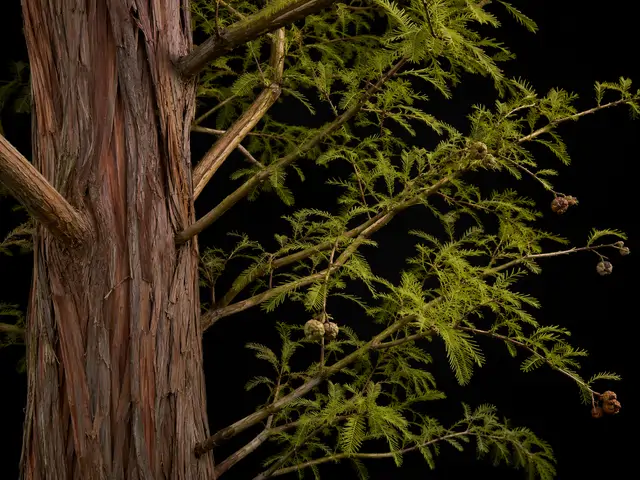
The stately deciduous conifer of Southern swamps - feathery green needles, glowing russet fall color, a buttressed trunk and mysterious 'knees,' and an almost unmatched ability to grow in standing water or ordinary soil alike.
Safety notes Bald cypress is safe to grow and handle - it's an ornamental shade tree, not a food plant. The main practical caution is its 'knees': woody root projections that rise from the ground around trees on wet sites and can be a mowing and tripping hazard near lawns and paths. It's also a very large, long-lived tree, so site it with room for the long term.
Overview
Bald cypress (Taxodium distichum) is one of the most distinctive and adaptable native trees in North America - a deciduous conifer that breaks all the rules. It's a cone-bearing relative of the redwoods, yet it drops its needles each fall like a broadleaf, first turning a soft, glowing russet-orange. In summer its feathery, flat sprays of bright-green needles cast a light, airy shade; in winter its bare, sculptural silhouette shows off a buttressed, fluted trunk and shreddy reddish bark.
The one thing to knowBald cypress (Taxodium distichum) is one of the most distinctive and adaptable native trees in North America - a deciduous conifer that breaks all the rules.
Quick facts
- Sprouts in
- 60 daysRange: 30–120 days
- Soil temperature
- 70 °FRange: 60–80 °F
- Height
- 70 ftRange: 50–120 ft
- Spread
- 30 ftRange: 20–50 ft
- Cold
- Takes hard frostdamaged below -30°F
- Heat
- Struggles above 105°F
- Life cycle
- Perennial, lives about 600 years
- Save seeds
- About 180 days after plantingRange: 150–210 days
- Self-sows
- Yes, expect volunteers
- Soil
- Tolerates wet soil
- Water
- Medium
- Plant spacing
- 35 ftRange: 20–50 ft
When to plant
Fall sowing is open for 27 more days. Next: spring, Mar 27 to Jun 9.
- Direct sow Oct 11 – Nov 15 Open now · 27 days leftAbout 2 weeks before to 3 weeks after your first frost (Oct 25 here)Sow fresh seed on wet, muddy ground in fall; seed needs saturated soil and a cold-moist period to germinate in spring. Transplants are far faster to a usable tree.
- Transplant Mar 27 – Jun 9 Opens in 159 daysAbout 2 weeks before to 9 weeks after your last frost (Apr 10 here)Plant container or B&B trees in spring into moist to wet soil, or even at a pond edge; spring planting lets roots establish before winter. Bald cypress tolerates standing water but also ordinary garden soil once established.
- Transplant Aug 16 – Sep 27 Opens in 301 daysAbout 10 weeks before to 4 weeks before your first frost (Oct 25 here)Fall planting works in milder zones; keep the roots moist through establishment.
Frost here: last around Apr 10 (Mar 27 to Apr 24 most years), first around Oct 25. Zone averages, your own yard may run a week or two either way.
Life stages
Establish, grow, repeat
Getting established and returning each season are different parts of the story.
Stage 1 of 3 · Getting established
Years 1-3 - young tree
About the first 3 years after planting
Care at this stage
-
Keep it wet while establishing
Bald cypress is famously wet-tolerant, so never let a young one dry out - water deeply and often through the first 2-3 years, especially away from water. It's one of the few large trees that thrives in standing water, but a new transplant still needs steady moisture to root in.
-
Mulch the root zone
A wide mulch ring conserves moisture and protects the trunk from mowers; keep it back from the bark. On wet sites the tree may begin forming 'knees' - decide early whether that spot suits them.
-
Site it with room and think about the knees
Bald cypress becomes a large, long-lived pyramidal tree (50-70+ feet, occasionally over 100). On wet ground it sends up woody 'knees' around the base that interfere with mowing - so on a lawn, plant it where knees won't be a problem, or expect fewer knees on drier, well-drained sites.
Months are typical seasonal windows; climate, variety, and plant age can shift them.
Watch out for
3 to know. None are high-risk for Bald Cypress. None are active in October.
Iron Chlorosis (Alkaline Soil)Severity Medium DisorderSeason: May–AugYellow leaves with a distinct network of green veins, worst on the NEWEST growth at the shoot tips - that vein pattern is what separates it from a nitrogen shortage, which yellows the oldest leaves uniformly.
Bald cypress prefers neutral-to-acidic ground and goes chlorotic on limey soils, the needles paling with green veins. On an alkaline site, choose a more pH-tolerant tree rather than committing to a lifetime of chelated iron.
Yellow leaves with a distinct network of green veins, worst on the NEWEST growth at the shoot tips - that vein pattern is what separates it from a nitrogen shortage, which yellows the oldest leaves uniformly. Whole plants going progressively paler over a season rather than suddenly. Brown scorched leaf margins and shoot-tip dieback in advanced cases. Symptoms concentrated on the side of a plant nearest a foundation, wall, path, driveway, or a stretch of limed lawn. One plant affected while a neighbor that does not need acid soil looks perfect.
Correct the soil, and use iron only to buy time. Chelated iron sprayed on the leaves or drenched into the root zone greens a plant up within a week or two, but it wears off in a season and has to be repeated indefinitely - it fixes nothing. The real fix is lowering pH with elemental sulfur applied to the surface and watered in, retesting each season until you are in range, then holding it there with acidic mulch and acid fertilizer. Expect one to two years; there is no fast route. Note that other shortages look identical - manganese deficiency produces the same yellow-with-green-veins pattern on some plants - so a plant that does not green up from iron should be tested rather than dosed again. Where the pH is high because of nearby concrete or genuinely calcareous subsoil, the plant is in the wrong place, and moving it into a properly built acidic bed or container will succeed where years of amendment will not.
Test the soil pH before you plant, not after, and match the plant to the ground - an acid-loving plant in limy soil will never be truly healthy however it is fed. Where the pH is too high, acidify with elemental sulfur worked in the season BEFORE planting, since sulfur takes months of soil biology to work and cannot be rushed, and retest before you commit plants. On genuinely alkaline ground the honest answer is often a raised bed of acidic mix, or a container, rather than fighting the native soil forever. Keep an acidic organic mulch topped up - pine bark, pine straw, sawdust - and site acid-lovers away from concrete foundations and mortared walls, which leach lime for decades. Never apply lime, wood ash or mushroom compost where the roots reach, use acid-forming fertilizers such as ammonium sulfate, and improve drainage, because cold waterlogged soil hurts uptake even at the right pH.
Not an infection but a nutrient lockout caused by soil chemistry. Iron is abundant in almost every soil, but as pH rises it converts to forms roots cannot take up, so a plant that needs acid ground slowly starves for iron while standing in soil full of it. The symptom is unmistakable: new leaves go pale yellow or cream while the veins stay green, giving a fine green net over a yellow leaf. It shows first and worst on the newest growth, because iron does not move around inside a plant to be recycled. It does not spread between plants, does not respond to fungicides, and does not resolve on its own - left uncorrected the plant grows less each year, leaves get smaller and paler, shoot tips die back, crops fall away, and it eventually dies. Worst near concrete, mortar, paths and limed ground, and in cold, wet, compacted soil.
Cypress Knees (Mowing Hazard)Severity Low DisorderSeason: Apr–SepRounded or pointed woody knobs emerging from the ground in a ring around the trunk, more numerous on wet or frequently watered sites.
Rounded or pointed woody knobs emerging from the ground in a ring around the trunk, more numerous on wet or frequently watered sites.
Knees resprout if cut and cutting can wound the roots, so the realistic answer is siting; mulching over a naturalized area lets them coexist without a mowing conflict.
Plant bald cypress on drier, well-drained ground (where few or no knees form) or where knees are welcome in a naturalized bed - not in open mown lawn.
Not a pest but a growth habit: on wet sites and near lawns, bald cypress sends up woody root projections ('knees') around its base. Their exact function is debated, but they interfere with mowing and can be a tripping hazard.
BagwormsSeverity Low PestSeason: Jun–AugSmall spindle- or cone-shaped bags, one to two inches long, hanging from the twigs and covered in fragments of the host plant's own foliage - which is exactly why they get mistaken for cones, dead tips, or debris and go unnoticed for a season or two.
Small spindle- or cone-shaped bags, one to two inches long, hanging from the twigs and covered in fragments of the host plant's own foliage - which is exactly why they get mistaken for cones, dead tips, or debris and go unnoticed for a season or two. Bags that move, or that have a caterpillar head poking out of the open end, in early summer. Brown, thinning, stripped patches on an evergreen, usually starting near the top. Old bags sealed shut and hanging through winter: those are the ones full of eggs, and finding them in December is the best possible timing.
Hand-picking is the whole treatment on anything you can reach, and it works completely: pull off every bag between fall and mid-spring, before the eggs hatch, and destroy them rather than dropping them at the base of the plant. Bagworms are only vulnerable to spray while the caterpillars are small and outside their bags, so if you must treat, do it in early summer shortly after hatch - Bt (Bacillus thuringiensis) or spinosad is effective then and spares most other insects. Once the bags are large and sealed, no spray reaches the insect inside and you are back to hand-picking. On a large tree beyond reach an arborist can treat; on broadleaf plants, tolerate light infestations, which regrow.
Look for the bags in fall and winter, when the plant is otherwise quiet and they are the only thing hanging on it, and pick them off. Inspect new nursery evergreens carefully before you buy - bagworms travel on plants, and a nursery-grown juniper or arborvitae is the classic way they arrive in a garden. Keep plants healthy and watered, since a stressed evergreen has far less capacity to recover from defoliation. Leave the parasitic wasps and predatory insects that attack bagworms alone; broad-spectrum insecticide is what lets populations get away from you in the first place.
Bagworm caterpillars build a spindle-shaped case out of silk and fragments of whatever they are eating, carry it with them as they feed, and never leave it - the adult female never even develops wings, so an infestation stays put and builds on the same plant year after year. Each bag is a nursery: a female can leave several hundred eggs inside hers to overwinter, and they hatch in late spring into tiny caterpillars that balloon on silk threads to nearby plants. They feed on a wide range of trees and shrubs, but they do their worst on evergreens, because a conifer stripped of its foliage cannot releaf the way a broadleaf tree can. The same numbers that are cosmetic on an oak are genuinely capable of killing a juniper, arborvitae, or spruce.
Good & bad neighbors
Plant nearby
-
A native of wet, part-shaded ground that thrives at a bald cypress's moist edge, adding brilliant red hummingbird flowers to a rain garden or pond-side planting.
-
A quintessential Deep South wetland-edge pairing: bald cypress in the wet low ground and live oak on the drier rise beside it, both draped in Spanish moss, evoke the coastal Southern landscape.
-
Native ferns and wetland wildflowersThe moist ground around a bald cypress suits native ferns, sedges, and wetland-edge wildflowers, building a naturalistic damp-woodland or rain-garden planting with rich wildlife value.
-
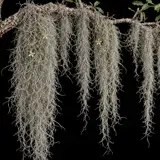
The classic epiphyte of the cypress swamp, draping bald cypress limbs harmlessly and completing the iconic moss-hung silhouette over dark water.
Varieties · 4
You pick one when you add Bald Cypress to your garden. Its days to maturity set your harvest window.
Bald Cypress (Taxodium distichum)
The wild species: a large pyramidal deciduous conifer of Southern swamps and floodplains, with feathery green summer needles, russet-orange fall color, a buttressed trunk, and (on wet sites) woody knees.
Variety details for Bald Cypress (Taxodium distichum)
Tall pyramidal tree with soft feathery needles, shreddy reddish bark, buttressed base, and knees on wet ground.
speciesnativedeciduous-coniferwet-tolerantGrows equally well in standing water or ordinary soil, and lives for centuries.
Shawnee Brave
A narrow, uniform, columnar-pyramidal bald cypress selection with a strong central leader - a tidy, predictable form for streets, avenues, and smaller landscapes where the wild spreading base won't fit.
Variety details for Shawnee Brave
Narrow, upright pyramidal tree with a dominant leader and dense feathery foliage.
cultivarnarrowuniformstrong-leaderPeve Minaret
A dwarf, dense, slow-growing bald cypress reaching only 8-20 feet, with the same feathery foliage and russet fall color in miniature - a choice for small gardens, containers, and wet spots where a full-size tree is too big.
Variety details for Peve Minaret
Compact, dense, cone-shaped small tree with fine bright-green needles.
cultivardwarfcompactcontainerPond Cypress (Taxodium ascendens)
A closely related Southeastern native (sometimes treated as a variety) of ponds, wet flatwoods, and cypress domes, with more upright, awl-like foliage and a narrower, finer-textured form - smaller and often used where a more delicate wet-site cypress is wanted.
Variety details for Pond Cypress (Taxodium ascendens)
Narrow tree with distinctive upright, thread-like foliage and a slender crown.
speciesnativewet-tolerantnarrow
Grower tips
Notes from growers, tagged with the zone they grow in. A person reads every post before it appears.
Nobody has posted about Bald Cypress yet. The first one usually saves someone a season.
Free account. Your post shows your grower name and zone, never your email.