Add it to your home screen and it opens full screen: no browser bars, one tap away, and everything stays signed in. Free, nothing to download from an app store.
- Tap the Share button in your browser
- Scroll down and choose “Add to Home Screen”
- Open GrowSomeFood from your home screen
- Open your browser’s menu
- Choose “Add to Home screen” or “Install app”
- Open GrowSomeFood from your home screen
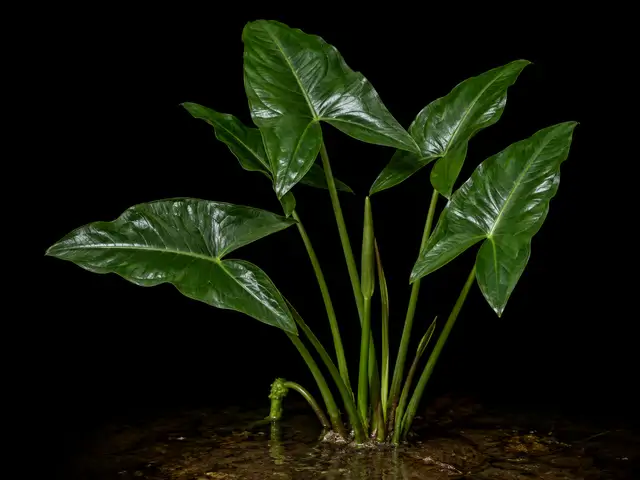
Arrow Arum
The toxic twin of two edible pond plants. It stands in the same shallow water as arrowhead and pickerelweed, its leaves look almost identical before bloom, and every part burns the mouth severely.
TOXIC RAW, AND A QUICK COOKING DOES NOT FIX IT. Every part carries needle-sharp calcium-oxalate raphides that cause immediate, intense burning, blistering and swelling of the lips, mouth and throat; swelling can obstruct the airway. Boiling a few minutes does NOT destroy them - the only recorded preparations took days of roasting or months of drying. This is the plant mistaken for edible arrowhead and pickerelweed in the same shallow water. Any ingestion: call poison control immediately.
Overview
Arrow arum (Peltandra virginica) is a native emergent plant of eastern marshes, swamps and pond edges - a clump of long-stalked, glossy, arrow-shaped blades standing in a few inches of water. It belongs to the arum family, alongside jack-in-the-pulpit and calla, and like them it defends itself with calcium-oxalate raphides: microscopic needles of crystal, bundled under pressure, that fire into soft tissue the moment the plant is chewed.
It earns a page here for one reason. Two genuinely edible plants in this catalog - arrowhead, whose tubers are a real starch crop, and pickerelweed, whose young leaves are eaten as a cooked green - grow in exactly the same mud, and before any of the three flowers their leaves are hard to tell apart. Arrow arum is the plant a wetland forager actually gets wrong.
The mistake is not subtle in its consequences. A mouthful causes immediate, intense burning and blistering of the lips, mouth and throat, with swelling that in bad cases threatens the airway. And the folk reassurance that cooking fixes it is wrong at the timescale people mean: the raphides survive a few minutes in a pan or a pot. This entry is here so you can rule it out - by its veins, by its flower, and by never gathering from a stand you did not watch bloom.
Quick facts
For identification. Not a growing guide.
- Life cycle
- Perennial, lives about 15 years
- Where it grows
- Full sun · Part sun · Part shade, tolerates wet soil soil
- Height
- 26 in12 to 42
- Spread
- 20 in12 to 30
- Cold
- Takes hard frostdamaged below -30°F
- Heat
- Struggles above 100°F
- Self-sows
- Yes. Never let it set seed.
Through the year
How to recognize it in each season.
Spring leaf blades (the look-alike stage)
Apr to Jun, every year- The vein test - midrib and feather veins, not parallel linesArrow arum holds glossy, thick, arrow-shaped blades on long stalks from a clump in the mud. Turn a leaf over: it has ONE stout central midrib with feather-like side veins branching off it and running out to a fine vein that loops along just inside the leaf edge. Pickerelweed, which grows in the same water and looks almost identical before bloom, has NO midrib - its veins all run parallel from base to tip. That single check separates them at every size.
- Against arrowhead - count the points and feel the stalkArrowhead has a true arrowhead blade with three sharp points and veins that radiate out of the base into each lobe, on a spongy stalk that is triangular in cross-section. Arrow arum's blade is blunter and thicker, its basal lobes rounded, its veins pinnate off a midrib, and its stalk round and firm. Arrowhead tubers are a real food; arrow arum's rhizome is a mouthful of glass needles. Never let the two share a foraging basket.
- Never taste-test to identify itThere is no safe nibble. A raphide burn is immediate - the crystals inject themselves into the lining of the lips and mouth on first chew, and swelling follows within minutes. Identify the plant standing in the water, with your eyes, or wait for it to flower. Wear gloves if you handle it and keep the sap away from your eyes.
Key signs- Glossy arrow-shaped blades in shallow water with a stout midrib and feather veins
- Young blades emerging alongside pickerelweed and arrowhead in the same mud
- Any plan to gather wetland greens before the stand has flowered
Green finger-like spathe (late spring)
May to Jul, every year- A green spathe wrapped round a spadix - not a spike, not white petalsIn bloom the question is settled. Arrow arum makes a narrow green finger-like spathe, 4 to 8 inches long, wrapped tightly round a slim spadix - the same architecture as its cousin jack-in-the-pulpit, and easy to miss because it is green on green. Pickerelweed carries an unmistakable violet-blue spike; arrowhead carries whorls of three round white petals. If a stand you intend to forage has not flowered, do not gather from it.
Key signs- Narrow green spathes hiding among the leaves
- Stands that never produce a blue spike or white flowers - those are arrow arum
Berry head that bends into the water
Aug to Oct, every year- Keep children away from the green berry clusterThe spathe closes into a leathery green bladder packed with pea-sized green-to-brown berries, and the whole head bends over and lowers itself into the water, where it splits and the berries float away. Fallen heads sit at the water edge within easy reach of a child. The berries carry the same raphides as the rest of the plant - collect and bin them if they wash up where children play.
Key signs- Leathery berry heads bending down into the water
- Split heads and loose berries stranded on the mud
Winter - the rhizome persists
Nov to Mar, every year- The buried rhizome is the most raphide-loaded partThe tops die back but the thick vertical rhizome - the historical tuckahoe - lives on in the mud and is the part most heavily armed with raphides. It is also the part a forager digging for arrowhead tubers is most likely to turn up by accident. Dig wetland roots only where you watched the stand flower, and discard the whole gathering if anything you did not identify comes up with it.
Key signs- Thick vertical rhizomes turned up while digging for arrowhead tubers
- Bare mud in winter, when nothing above ground identifies the stand
Hazards
Raphide Burn from IngestionSeverity High HazardnowImmediate intense burning after a bite, heavy drooling, a hoarse or changed voice, difficulty swallowing, visible swelling of the lips or tongue, and any trouble breathing.
Immediate intense burning after a bite, heavy drooling, a hoarse or changed voice, difficulty swallowing, visible swelling of the lips or tongue, and any trouble breathing.
Call poison control or emergency services immediately and do not wait for symptoms to peak. Rinse the mouth with cool water; cold milk, ice or ice cream soothes the tissue. Do not induce vomiting. Any airway symptom - drooling, voice change, trouble swallowing or breathing - is an emergency call, not a wait-and-see.
Identify wetland stands in bloom before gathering anything from them - green spathe means arrow arum, blue spike means pickerelweed, white three-petaled flowers mean arrowhead. Use the vein test on every leaf: midrib with feather veins is arrow arum, parallel veins are pickerelweed. Never taste-test to identify. Discard a whole gathering if anything unidentified is in it.
Every part of arrow arum - leaves, stalks, spathe, berries, seeds and rhizome - carries bundled needles of calcium oxalate that fire into soft tissue on chewing, causing immediate burning, blistering and swelling of the lips, mouth, tongue and throat. Severe swelling can compromise the airway. The route to a serious dose is misidentification: gathering it as arrowhead or pickerelweed from the same shallow water, and believing that brief cooking makes wetland greens safe.
Pet & Livestock Mouth InjurySeverity Medium HazardnowSudden pawing at the mouth, heavy drooling, refusing food or water, and swelling of the muzzle or tongue in an animal that has been at the water's edge.
Sudden pawing at the mouth, heavy drooling, refusing food or water, and swelling of the muzzle or tongue in an animal that has been at the water's edge.
Rinse the mouth if the animal will allow it and call a veterinarian or an animal poison line straight away; swelling that affects breathing or swallowing is an emergency.
Keep dogs out of pond-edge planting where arrow arum grows, fence livestock away from marshy margins, and remove clumps from ponds that children and pets use.
Dogs that chew pond-edge foliage, and grazing animals with access to marshy ground, get the same raphide burn. Most stop after one mouthful, but swelling of the mouth and throat can be severe enough to stop an animal eating or drinking.
Skin & Eye Irritation from SapSeverity Medium HazardnowStinging, redness and itching on hands and forearms after handling cut stems or rhizomes; severe eye pain and watering after rubbing your face while working.
Stinging, redness and itching on hands and forearms after handling cut stems or rhizomes; severe eye pain and watering after rubbing your face while working.
Wash skin with soap and plenty of running water. For an eye exposure, irrigate with clean water for at least 15 minutes and seek medical care - do not simply wait it out.
Wear waterproof gloves and eye protection, lift rhizomes whole rather than chopping through them, and keep your hands away from your face until you have washed.
Cut or crushed tissue releases sap carrying the same raphides. On skin it raises a stinging, itchy rash; in an eye it causes intense pain and can injure the cornea. Pulling or chopping a clump barehanded is the usual way people meet it.
Grower tips
Notes from growers, tagged with the zone they grow in. A person reads every post before it appears.
Nobody has posted about Arrow Arum yet.
Free account. Your post shows your grower name and zone, never your email.