Add it to your home screen and it opens full screen: no browser bars, one tap away, and everything stays signed in. Free, nothing to download from an app store.
- Tap the Share button in your browser
- Scroll down and choose “Add to Home Screen”
- Open GrowSomeFood from your home screen
- Open your browser’s menu
- Choose “Add to Home screen” or “Install app”
- Open GrowSomeFood from your home screen
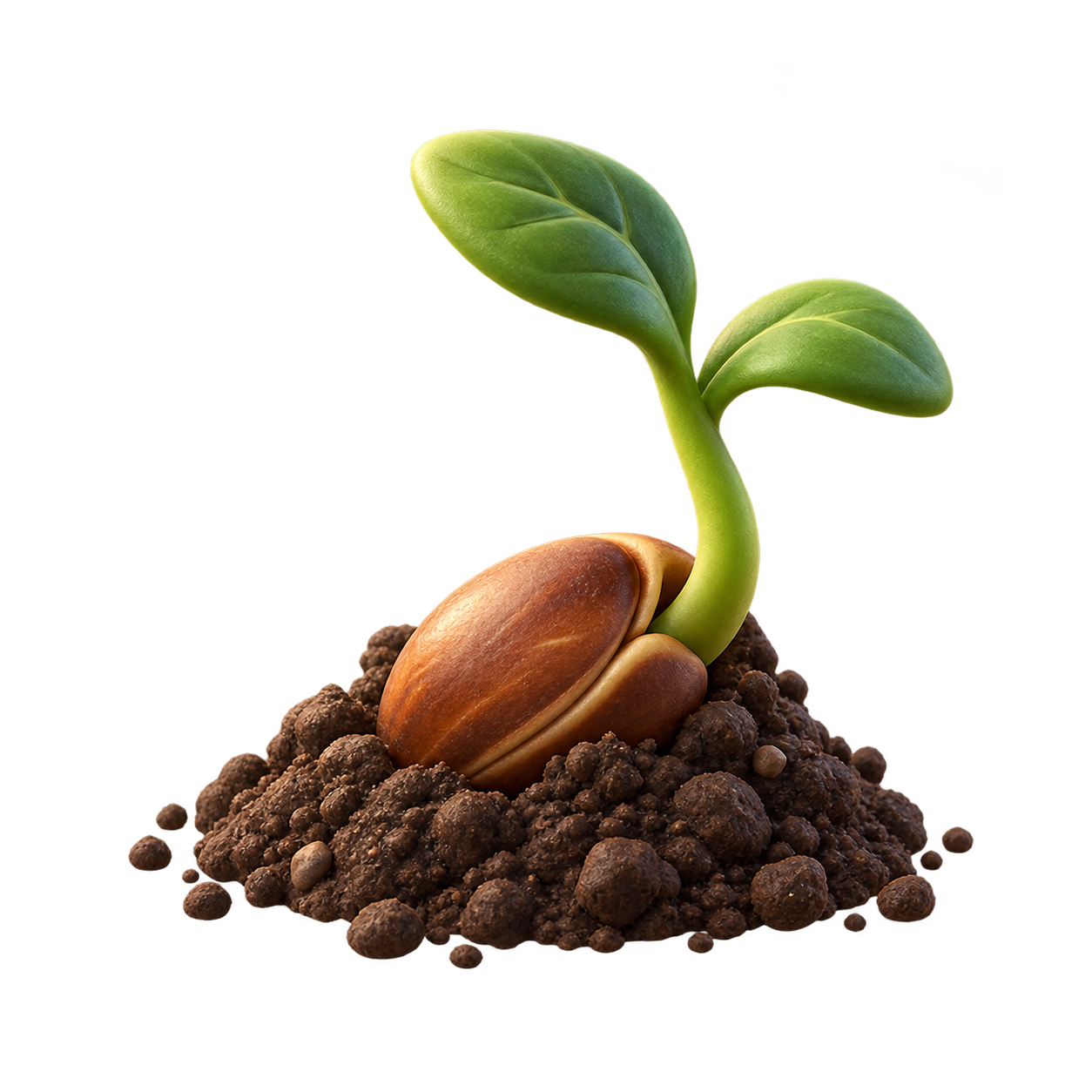
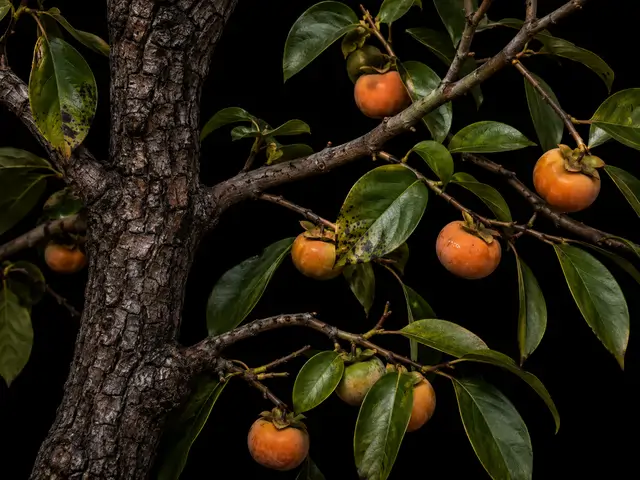
American Persimmon
Ripe American persimmons are delicious and safe - among the sweetest of native fruits. The one hard rule is ripeness: UNRIPE persimmons are intensely astringent (mouth-puckering) from tannins and are unpleasant, not truly toxic, but eating many unripe fruits has rarely been linked to hard indigestible masses (bezoars) in the stomach, so eat them only fully soft and ripe. This native persimmon is distinct from the larger Asian 'kaki' persimmon sold in stores.
Overview
A tough, drought-hardy native fruit tree bearing small, intensely sweet orange persimmons in fall - a beloved wild delicacy for puddings and fresh eating, and a wildlife magnet - with the famous catch that unripe fruit is mouth-puckeringly astringent.
The American persimmon (Diospyros virginiana) is one of the great native fruits of the eastern and southern United States - a tough, adaptable medium tree - typically 30-40 feet in the open, taller (to 60 feet) drawn up in woods - that bears small, round, deep-orange fruits of extraordinary sweetness. A fully ripe wild persimmon tastes like a soft, rich date or brown-sugar custard, and it's the star of traditional Southern and Midwestern persimmon pudding, breads, jams, and country wines. It's a different (and to many, better-flavored) fruit than the larger, firmer Asian 'kaki' persimmon sold in stores - a separate, less cold-hardy species (Diospyros kaki) with both astringent and eat-firm 'Fuyu' types, which has its own entry in this catalog under persimmon. If you want the store fruit, grow that one; if you want the native, you're in the right place.
Two things define growing it. First, the famous astringency: an unripe persimmon is intensely mouth-puckering from tannins, so you must wait until the fruit is dead-ripe and soft (often after it drops or a frost) - a fact behind countless tales of tricked first-timers. Second, pollination: most trees are male or female (dioecious), and only females fruit, usually needing a male nearby. In return you get a nearly bulletproof native tree - drought-hardy, pest-resistant, poor-soil-tolerant, with handsome blocky 'alligator' bark - that feeds you and a parade of wildlife each fall.
At a glance
- Sun
- Full sun · Part sun
- Water
- Medium
- Spacing
- 240–480 in (typ. 360)
- Mature height
- 240–720 in (typ. 400)
- Start by
- Direct sow · Transplant
- Frost
- Hardy
- Germination
- 30–120 days (typ. 60) @ 60–80 °F (typ. 70)
- Spread
- 240–420 in (typ. 300)
- Soil
- Well-drained
- Temperature
- Damaged below -25°F · struggles above 105°F
- Seed ready
- 150–210 days (typ. 180) (for saving)
- Self-sows
- Yes — expect volunteers
When to plant
Zone 7a typical frost: last Apr 10 · first Oct 25 (spring frost runs Mar 27–Apr 24 in a typical spread of years)
Life stages
- Years 1-3 - young tree day 0–1095 from transplant
-
Water while establishing, then leave it toughevery 7 dWater a young American persimmon deeply and regularly through its first 2-3 years. It grows a deep taproot and resents transplanting once established, so plant it SMALL (or from seed in place) and disturb it as little as possible - once rooted in, it's remarkably drought- and poor-soil-tolerant.
-
Mulch the root zoneA wide mulch ring conserves moisture and keeps mowers away; keep it back from the trunk. Persimmon tolerates poor, dry, clay, and rocky soils that defeat many fruit trees.
-
Plan for pollination - you usually need a maleAmerican persimmon is typically dioecious: most trees are either male or female, and only females bear fruit, usually needing a male tree within a few hundred feet to pollinate them (though some cultivars set fruit without one). Plan to plant a male and a female, or a self-fruitful named cultivar, if you want a crop.
Transplant shock (plant small; the taproot resents moving)Suckers forming a thicket from the roots (thin for a single tree)No fruit if you have only a male tree, or a female with no pollinatorDeer browsing young saplings -
Water while establishing, then leave it toughevery 7 d
- Late-spring bloom May, Jun (yearly)
-
Small bell-shaped flowersIn late spring, persimmon opens small, fragrant, greenish-yellow bell-shaped flowers - inconspicuous but attractive to bees. Male and female flowers are usually on separate trees, so a female needs a nearby male's pollen (carried by bees) to set fruit.
-
Make sure a male is nearby (or grow a self-fruitful cultivar)For fruit on a female tree, a male American persimmon should be within a few hundred feet, or grow a self-fruitful named cultivar. Bees do the pollinating - support them and avoid spraying during bloom.
Bees working the small flowersA female tree flowering but setting no fruit (no pollinator nearby)Late frost damaging blooms in cold springs -
Small bell-shaped flowers
- Summer fruit development Jun, Jul, Aug, Sep (yearly)
-
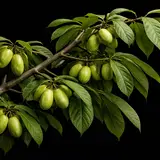
Green fruits swell through summer - and stay astringentThrough summer the round, orange-when-ripe fruits swell on the female tree. They stay hard, green, and intensely ASTRINGENT until they ripen in fall - do not be tempted to pick them early; unripe persimmons are mouth-puckeringly inedible.
-
Water in drought to size the fruitPersimmon is drought-tolerant, but watering during a dry late summer helps the fruit size up and sweeten. Little other care is needed - it's a low-maintenance native fruit tree.
Fruit staying hard and astringent (normal until fall ripening)Some natural fruit drop (thinning itself)Wildlife (possums, deer, raccoons) beginning to watch the tree -
Green fruits swell through summer - and stay astringent
- Fall harvest (fully ripe) Sep, Oct, Nov, Dec (yearly)
-
Harvest only fully soft, ripe fruitevery 2 dThe golden rule: pick American persimmons ONLY when dead-ripe - deep orange, soft, almost jelly-like, and often after they drop or a frost. A perfectly ripe one is sweet as a date; a fraction underripe is unpleasantly astringent. Many people simply gather the soft fruit as it falls onto a sheet or clean ground.
-
Race the wildlife for the cropRipe persimmons are beloved by possums (hence 'possumwood'), deer, raccoons, foxes, and birds, which can clear a tree fast. Gather the ripe fruit promptly, or lay a sheet to catch the drops - and expect to share generously with wildlife.
Astringency if picked even slightly underripe (wait for fully soft)Wildlife stripping the ripe fruitSoft ripe fruit dropping and needing prompt collection off the ground -
Harvest only fully soft, ripe fruitevery 2 d
- Fall color & winter dormancy Jan, Feb, Oct, Nov, Dec (yearly)
-
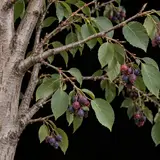
Distinctive blocky bark and fall colorThe leaves turn yellow, orange, and reddish in fall, and the tree reveals its unmistakable dark, deeply blocky, 'alligator-hide' bark - one of the easiest trees to identify in winter. Fruit sometimes clings after the leaves drop, glowing orange on bare branches.
-
Prune lightly in late winterPrune in the dormant season to remove dead, crossing, or weak wood and shape the tree; persimmon needs little pruning. Remove root suckers if you want a single-trunk tree rather than a thicket.
Root suckers forming a colony (thin for a single tree, or let it thicket for wildlife)Blocky 'alligator' bark and clinging orange fruit (winter identification features) -
Distinctive blocky bark and fall color
Harvest
- Style
- Repeated picking
- Typical yield
- 100–2000 persimmons (typ. 600)
- By weight
- 80–1600 oz (typ. 480)
- First production
- 4–10 yrs (typ. 6)
- Fruit fully deep orange, soft, and almost jelly-like - often after dropping or a frost
- The fruit yields completely to gentle pressure and tastes sweet, not astringent
- Hard, firm, or slightly underripe fruit is intensely astringent - wait longer
- Female trees only, and only with a male pollinator nearby (or a self-fruitful cultivar)
Watch out for
Astringency (Underripe Fruit) Medium
Not a pest but the defining issue with the fruit: American persimmons are intensely astringent (mouth-drying, puckering) from tannins until they are fully soft-ripe. Underripe fruit is essentially inedible, and eating quantities of unripe persimmons has rarely been linked to hard indigestible stomach masses (bezoars).
Watch for: Firm or slightly soft fruit that dries and puckers the mouth; hard, orange-but-not-jelly-soft fruit picked too early.
Prevent: Harvest only fully soft, dead-ripe fruit - deep orange and almost jelly-like, often after it drops or a frost; never eat firm persimmons.
Treat: There's no good way to remove astringency from underripe native persimmons at home (unlike some Asian types) - simply wait for full ripeness. Fully ripe fruit is sweet and free of astringency.
No Berries (Dioecious / No Pollinator) Medium
American persimmon is usually dioecious - trees are male or female, and only females bear fruit, generally needing a male within a few hundred feet to pollinate them. A lone male, or a female with no pollinator, produces no crop, a common surprise for new growers.
Watch for: A healthy, flowering tree that never sets fruit year after year - either a male tree, or a female with no male nearby.
Prevent: Plant both a male and a female (or a self-fruitful cultivar like 'Meader'); when buying seedlings, expect roughly half to be non-fruiting males, and site a known male within pollination range of females.
Treat: Add a male pollinator (or graft a male branch onto a female tree, or plant a self-fruitful cultivar); nothing else will make a lone female or a male tree fruit.
Persimmon Leaf Spot Low
Several fungi cause leaf spots and blotches on persimmon foliage in warm, humid, wet weather, sometimes with early leaf drop - unsightly but essentially harmless to this tough tree's health and fruiting.
Watch for: Brown, black, or angular spots and blotches on the leaves, worse in humid summers, sometimes causing some early leaf drop.
Prevent: Ensure good air circulation, avoid overhead watering, and rake up and remove fallen infected leaves to reduce overwintering spores.
Treat: None usually needed - it's cosmetic on a healthy tree; leaf sanitation reduces it. Fungicides are not warranted for a landscape fruit tree.
Good & bad neighbors
Varieties · 5
Medium tree with blocky 'alligator' bark and small round orange fall fruit.
The wild native: a tough tree of 30-40 feet in the open (up to 60 drawn up in woods), bearing small, intensely sweet orange fruit in fall. Wild seedlings are dioecious and genuinely need a male within a few hundred feet to pollinate a female - and you won't know a seedling's sex for years. Fruit quality and ripening vary tree to tree, but the best wild persimmons are unmatched in sweetness. Extremely drought- and poor-soil-tolerant.
Medium tree with abundant sweet, early, golden-orange fruit.
A classic old cultivar prized for richly flavored, sweet, early-ripening golden-orange fruit and reliable production; often needs a male pollinator, and is a parent of many other named selections.
Productive tree bearing sweet, early, often seedless orange fruit without a pollinator.
A popular self-fruitful cultivar that sets fruit without a male pollinator, cold-hardy and early-ripening for northern gardens, with sweet, often nearly seedless fruit - the go-to choice where you want a single reliable fruiting tree.
Productive tree with large, sweet, deep-orange fruit, usually seedless when grown without a male.
A vigorous, productive cultivar bearing unusually large, sweet native persimmons and generally reliable, well-flavored crops - a favorite among native-fruit growers for size and dependability. Like 'Meader', it is parthenocarpic: it commonly sets seedless fruit on its own, with no male tree needed, which makes it one of the few American persimmons you can plant as a single tree and still pick from. A male nearby is not required, though on some sites one improves fruit size and consistency (and gives seeded fruit). Grafted trees typically start bearing in about 3-6 years.
Upright, productive tree with medium, deep-orange, richly flavored fruit ripening mid-season.
An old Indiana heirloom, sold under both names - 'Yates' and 'Juhl' are the same tree. It bears heavy crops of medium, richly flavored orange fruit that ripens mid-season, and it is well regarded for hardiness and consistency in the Midwest and upper South. Unlike 'Meader' and 'Prok' it is not reliably self-fruitful: plan on a male seedling or a pollinating cultivar within a few hundred feet if you want a full crop, and expect seeded fruit when you have one.
Grow
Full sun and well-drained soil in zones 4-9; extremely tough and drought-tolerant once established, but plant it small (the taproot resents moving) and provide a male pollinator for fruit on female trees.
American persimmon is remarkably easy and tough. It wants full sun for best fruiting and grows in almost any well-drained soil - it thrives on poor, dry, clay, sandy, and rocky ground that defeats many fruit trees - and it's hardy across a wide range, roughly zones 4-9. Once established it's notably drought-, heat-, and pest-tolerant, needing little care. The main planting rule is to plant it small (or start it from seed in place), because it forms a deep taproot and resents transplanting once established.
The one thing you must plan for is pollination. Most American persimmons are dioecious - individual trees are either male or female - and only female trees bear fruit, usually needing a male tree within a few hundred feet to pollinate them (some named cultivars are self-fruitful and set fruit without a male). So for a crop, plant a male and a female, or a self-fruitful cultivar. Also note that persimmon suckers from the roots and can form a thicket; thin the suckers for a single-trunk tree, or let it colonize for wildlife. One more thing worth knowing before you site it: a wild seedling drawn up in woods can reach 60 feet, but an open-grown tree usually settles at 30-40 feet, and grafted cultivars stay smaller still and fruit lower down - a real advantage in a yard, where a shorter tree means fruit you can actually reach. Water it while young, then enjoy one of the lowest-maintenance fruit trees you can grow.
Care
Very low-care - water young trees, thin suckers for a single trunk, prune lightly in late winter, and otherwise let this tough, pest-resistant native fruit tree take care of itself.
American persimmon is one of the lowest-maintenance fruit trees around. Water it through its first few years and in serious drought after that (mature trees are very drought-tolerant), mulch the root zone, and it largely looks after itself - it's notably free of the pests and diseases that plague apples, peaches, and other orchard fruits, so it usually needs no spraying at all.
The main ongoing tasks are managing suckers and light pruning. The tree suckers from its roots and can form a thicket; remove the suckers if you want a single-trunk tree (or leave them for a wildlife colony). Prune lightly in late winter to remove dead, crossing, or weak wood and shape the tree - persimmon fruits on new growth and needs little pruning. Don't overfeed it; rich conditions aren't necessary for this poor-soil native. And remember the harvest discipline that is really its defining 'care': never pick the fruit until it's fully soft and ripe. Beyond that, it's a tough, forgiving, self-reliant native that quietly produces sweet fruit and feeds wildlife with almost no help from you.
Harvest
Pick ONLY fully soft, dead-ripe fruit in fall (often after it drops or a frost) - deep orange, jelly-soft, and sweet as a date; a fraction underripe is intensely astringent, so patience is everything.
Harvesting American persimmon is all about ripeness. The fruit ripens through fall, and the golden rule is to pick it only when dead-ripe: deep orange, wrinkled, and so soft it's almost jelly, often only after it drops from the tree or is touched by frost. A perfectly ripe persimmon is one of the sweetest fruits you can eat - like a soft date or brown-sugar pudding - but a fruit even a little underripe is intensely astringent, drying and puckering the whole mouth from its tannins. When in doubt, wait; firm fruit is not ready.
Because the fruit is best dead-ripe, many people simply gather it as it falls, laying a clean sheet or tarp under the tree and collecting the soft drops daily, or picking fruit that yields completely to a gentle touch. (Contrary to old lore, frost isn't strictly required - fully ripe fruit sweetens with or without it - but a ripe fruit after frost is reliably sweet.) You'll be racing wildlife - possums, deer, raccoons, and birds love them - so gather promptly and expect to share. Handle the soft ripe fruit gently, and process or eat it quickly, as it's perishable once ripe.
Storage
Ripe fruit is soft and perishable - eat within days, or freeze the pulp (it keeps beautifully) for puddings and baking; also dried, made into jam, leather, or wine.
Fully ripe American persimmons are soft and perishable, so eat them within a few days of gathering, refrigerated. For longer keeping, the classic approach is to freeze the pulp: scoop the jelly-soft flesh, push it through a sieve or food mill to remove the seeds and skin, and freeze the smooth pulp in measured batches - it keeps beautifully for a year and is exactly what you want for persimmon pudding, bread, and cookies through the winter.
The fruit also dries well into sweet, chewy pieces or fruit leather, makes excellent jam, butter, and preserves, and is fermented into country persimmon wine and beer. Underripe fruit can't be salvaged for eating - astringency doesn't cook out well - so only ripe fruit is worth storing. Because a good female tree can bear heavily, and because the ripe window is short and shared with hungry wildlife, freezing the pulp is the standard way growers bank a persimmon harvest for the year's baking.
Propagation & seed saving
Grow from seed (cold-stratified, in place because of the taproot) or a grafted named cultivar for known fruit and sex; seedlings are tough but you won't know their sex or quality for years.
American persimmon grows readily from seed: clean the seeds from fully ripe fruit, cold-stratify them over winter (or fall-sow outdoors), and they germinate in spring, growing a strong deep taproot. Because of that taproot, it's best to sow seed where the tree will stay or grow it in a deep pot and move it young. The catch is that a seedling is a genetic gamble - you won't know its sex (only females fruit) or fruit quality for several years, and you'll likely need a male nearby anyway.
For known results, plant a grafted named cultivar (like 'Meader' or 'Prok,' both of which set fruit without a male, or the flavorful 'Early Golden' and 'Yates/Juhl,' which want one), propagated by nurseries by grafting a female (or self-fruitful) scion onto seedling rootstock - this guarantees a fruiting female with good fruit, often sooner than a seedling. Persimmon is fussy to transplant and slow to graft, which is why grafted trees are worth their cost. However you start it, protect the young tree, be patient (4-10 years to fruit), and - unless you have a self-fruitful cultivar - make sure a male tree is in range for pollination.
Nutrition
A genuinely nutritious native fruit - rich in vitamins A and C, fiber, and antioxidants - and a superb wildlife food; the tough, pest-free tree also supports pollinators and native insects.
American persimmons are a genuinely nutritious fruit. Deeply colored with carotenoids, they're rich in vitamin A and vitamin C, provide good fiber and potassium, and carry a strong dose of antioxidants (the same tannins that make them astringent when unripe are potent antioxidants). Sweeter and more nutrient-dense than many common fruits, ripe persimmons are a wholesome, energy-rich late-season food.
The tree is equally valuable to wildlife. Its fall fruit is a preferred food for an astonishing range of animals - opossums (which gave it the name 'possumwood'), deer, raccoons, foxes, coyotes, wild turkeys, songbirds, and more - arriving when other food is scarce and helping fatten wildlife for winter. Its late-spring flowers feed bees, and the foliage hosts native insects including the caterpillars of the luna moth and the regal moth. So the American persimmon feeds people and the food web alike: a tough, pest-free native that gives sweet fruit for your table and a crucial fall harvest for the animals.
History
A staple wild fruit of Indigenous peoples and early settlers - dried into cakes and brewed into drinks, celebrated in Southern and Midwestern persimmon-pudding tradition, and named 'food of the gods.'
The American persimmon has fed people in eastern North America for a very long time. Indigenous peoples ate the ripe fruit fresh, dried it into cakes and loaves for winter, and used it in breads and drinks; the name 'persimmon' comes from a Powhatan (Algonquian) word (often given as putchamin). Early colonists quickly adopted it - Captain John Smith and other early writers described the fruit, warning (as generations have since) that unripe ones 'will drawe a mans mouth awrie.' The genus name Diospyros even means 'food of the gods.'
Through the following centuries the persimmon became a cherished country fruit, especially in the South and lower Midwest, where persimmon pudding - a dense, spiced, baked dessert made from the pulp - became a beloved regional tradition (Indiana's Mitchell holds an annual Persimmon Festival to this day). The fruit was brewed into beer and wine, and the tree's hard, dense wood (a relative of ebony) was prized for golf-club heads and tool handles. Long overshadowed by the imported Asian persimmon, the native fruit is now being rediscovered by foragers and native-fruit growers who prize its unmatched sweetness.
Troubleshooting
The two big issues are no fruit (wrong sex or no pollinator) and astringency (picked underripe); the tree itself is famously tough and pest-free, with only suckering and occasional cosmetic leaf issues.
The tree flowers but never fruits: it's probably a male tree (males never fruit), or a female with no male pollinator nearby - plant a male within a few hundred feet, or grow a parthenocarpic cultivar like 'Meader' or 'Prok', which set fruit (usually seedless) on their own. The fruit is horribly astringent and puckers my mouth: you picked it underripe - American persimmon is edible only when dead-ripe and soft; wait until it's jelly-soft (and ideally has dropped or been frosted). Suckers and seedlings everywhere: normal - persimmon suckers from the roots and self-sows; thin the suckers for a single tree or let it thicket for wildlife. Fruit disappearing before I can pick it: wildlife (possums, deer, raccoons, birds) love ripe persimmons - gather promptly or lay a sheet to catch drops. Black spots or leaf drop in humid summers: cosmetic leaf-spot or a fungal leaf disease - usually harmless; rake fallen leaves. Slow to bear: persimmon takes 4-10 years to first fruit (grafted cultivars sooner) - patience is required, but the tree needs little else.
Growing across climates
Exceptionally tough and widely adaptable (zones 4-9), thriving from the humid South to the Midwest on poor, dry, and difficult soils; heat- and drought-hardy, with cold-hardy northern strains for the upper range.
American persimmon is one of the toughest and most widely adaptable native fruit trees, hardy across zones 4-9 and native from the Gulf Coast to the lower Midwest and Mid-Atlantic. Zones 6-9 (the South and lower Midwest): its heartland - it thrives in heat and humidity, fruits reliably, and shrugs off poor, dry, and clay soils; the classic country persimmon of Southern and Midwestern tradition. Zones 5-6: excellent with locally adapted, earlier-ripening trees; choose cold-hardy northern strains and cultivars ('Meader,' 'Early Golden') whose fruit ripens before hard frost. Zone 4 (the cold edge): possible with the hardiest northern selections, though the season may be short for ripening. Its strengths are exactly where many fruit trees fail: it's outstandingly drought-, heat-, and poor-soil-tolerant, pest-resistant, and adaptable. The main climate consideration is ripening time - in short-season areas, plant early-ripening strains so the fruit sweetens before a killing freeze. For a low-care, resilient native fruit across most of the eastern two-thirds of the country, few trees are so forgiving.
Cook it
All 1 recipe →Grower tips
No grower tips for American Persimmon yet. Yours could be the first.
Sign in to share what works in your garden.