Add it to your home screen and it opens full screen — no browser bars, one tap away, and everything stays signed in. Free, nothing to download from an app store.
- Tap the Share button in your browser
- Scroll down and choose “Add to Home Screen”
- Open GrowSomeFood from your home screen
- Open your browser’s menu
- Choose “Add to Home screen” or “Install app”
- Open GrowSomeFood from your home screen
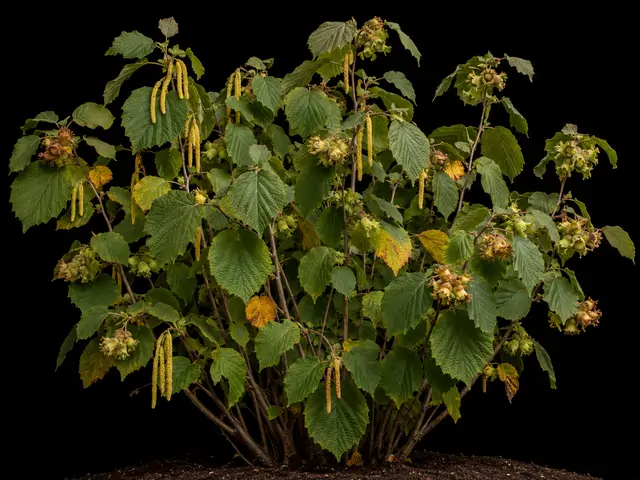
American Hazelnut
American hazelnuts are a delicious, wholesome native nut - safe and excellent eaten raw or roasted, just like the European hazelnuts (filberts) sold in stores. The only real caution is competition: squirrels, jays, and other wildlife harvest the nuts avidly and will strip a bush before they fully ripen if you are not attentive. As with any tree nut, be mindful of nut allergies.
Overview
A tough, thicket-forming native shrub that grows a genuine edible hazelnut - the wild American cousin of the store-bought filbert - while providing catkins in late winter, good fall color, and abundant food and cover for wildlife.
American hazelnut (Corylus americana) is one of the easiest and most rewarding native nut plants for a home landscape - a hardy, adaptable, multi-stemmed shrub that produces real, edible hazelnuts (filberts), the wild American relative of the European nut sold in stores. The nuts are a little smaller but every bit as tasty, eaten raw or roasted, and a mature clump can yield pounds of them.
It is also a fine four-season shrub and a wildlife magnet. In late winter it dangles long yellow catkins (a cheering early sign of spring) alongside tiny crimson female flowers; through summer it carries clusters of nuts in ragged, leafy husks; in fall the foliage turns warm yellow and copper; and year-round its dense, suckering, thicket-forming habit provides superb cover and food for birds and mammals. Grown as a hedgerow, a wildlife thicket, or a productive edible shrub, American hazelnut asks little - just remember two things: plant more than one for pollination, and be ready to beat the squirrels to the crop.
At a glance
- Sun
- Full sun · Part sun · Part shade
- Water
- Medium
- Spacing
- 60–180 in (typ. 96)
- Mature height
- 96–216 in (typ. 144)
- Start by
- Direct sow · Transplant · Cuttings · Division
- Frost
- Hardy
- Germination
- 30–180 days (typ. 90) @ 55–75 °F (typ. 68)
When to plant
Zone 7a typical frost: last Apr 10 · first Oct 25
Life stages
- Years 1-2 - rooting in day 0–365 from transplant
-
Water regularly while establishingevery 6 dKeep a new hazelnut evenly watered through its first two years. It likes moist, well-drained soil and roots in fairly quickly. Plant at least two genetically different plants for cross-pollination - a single hazelnut sets few or no nuts.
-
Mulch and plan for a thicketMulch the root zone. American hazelnut naturally suckers into a multi-stemmed clump or thicket - decide early whether to let it form a hedgerow (great for nuts and wildlife) or to remove suckers for a tidier, more open shrub.
Dry soil while young (keep evenly moist)Only one plant present (you need two or more for nuts) -
Water regularly while establishingevery 6 d
- Late-winter catkins Feb, Mar, Apr (yearly)
-
Dangling catkins and tiny red flowersVery early, before the leaves, hazelnut hangs long yellow-brown male catkins and opens tiny crimson-tufted female flowers on the same plant. It is wind-pollinated, so pollen must travel from a different plant - which is why you need two or more for a nut crop. The catkins are a welcome sign of late winter.
Male catkins shedding pollen to nearby plantsA hard late freeze damaging the early female flowers -
Dangling catkins and tiny red flowers
- Nuts forming (late spring/summer) May, Jun, Jul (yearly)
-
Clusters of frilly-husked nuts developPollinated female flowers develop into clusters of nuts, each wrapped in a distinctive ragged, leafy green husk (involucre). They swell through late spring and summer. Watch that squirrels and jays do not start raiding them early.
-
Water in summer drought while fillingevery 8 dSteady moisture through summer helps the nuts fill well. Water deeply in dry spells, especially on younger plants, for a better, plumper crop.
Squirrels and jays taking nuts before they ripenDrought stress reducing nut fill -
Clusters of frilly-husked nuts develop
- Nut harvest (late summer/fall) Aug, Sep, Oct (yearly)
-
Gather nuts as the husks brown - before the squirrels doevery 3 dNuts ripen from late summer into fall as the husks turn from green to brown and the nuts inside harden. The great challenge is beating the wildlife - squirrels and jays often strip a bush just before full ripeness. Pick clusters when the husks begin to brown, even slightly early, and let them finish curing off the plant.
-
Beat the wildlife to the cropSquirrels, chipmunks, blue jays, and deer all covet hazelnuts and can clear a bush in days. Harvest promptly and often as husks color, gather fallen nuts daily, or drape netting on small plants - or simply plant a generous patch and share with the wildlife show.
Squirrels and jays stripping nuts at the last moment (harvest early)Nuts dropping from browned husks (gather fallen ones daily) -
Gather nuts as the husks brown - before the squirrels doevery 3 d
- Fall color & winter dormancy Jan, Feb, Oct, Nov, Dec (yearly)
-
Prune and renew in late winterPrune while dormant: thin the oldest, least productive stems to renew a multi-stem clump, remove dead or crowded wood, and manage suckers to your chosen size. Hazelnut fruits on younger wood, so periodic renewal keeps a bush productive. Prune before the catkins do their work if you can.
-
Enjoy the yellow fall colorBefore dormancy the leaves turn warm yellow, orange, and coppery, giving good fall color, and the bare winter form soon carries next year's catkins - hazelnut is quietly attractive year-round.
Overcrowded old stems reducing yield (renew by thinning)Suckers expanding the thicket (thin or transplant them) -
Prune and renew in late winter
Harvest
- Style
- Repeated picking
- By weight
- 16–240 oz (typ. 80)
- First production
- 3–6 yrs (typ. 4)
- Husks turning from green to brown in late summer to fall and the shells inside hardening
- Nuts loosening in the husks and beginning to drop; wildlife activity increasing sharply
Watch out for
Squirrels & Jays (Nut Loss) Wildlife HighAug, Sep, Oct
Squirrels, chipmunks, and blue jays covet hazelnuts and routinely strip a bush of nuts within days, often just before full ripeness - the single biggest obstacle to a human harvest.
Watch for: Nuts disappearing rapidly as they approach ripeness, chewed husks and shells, heavy squirrel and jay activity in the plant.
Prevent: Harvest promptly and even slightly early as husks brown, gather fallen nuts daily, net small plants, or plant a generous patch to share.
Treat: Pick early and cure the nuts off the plant; accept a wildlife share, or protect a portion with netting on smaller shrubs.
Eastern Filbert Blight Disease MediumMar, Apr, May
The defining hazelnut disease of North America: a native fungus (Anisogramma anomala) harmless to wild American hazelnuts but lethal to susceptible European varieties, forming distinctive rows of raised black, football-shaped bumps (stromata) along the stems, girdling and killing branches over a few years until the whole plant dies.
Watch for: Rows of raised, black, football-shaped bumps running along the branches (often on last year's wood), dieback of the stems above them, and gradual decline of susceptible varieties.
Prevent: The overwhelming best defense is planting RESISTANT varieties (OSU releases Yamhill, Jefferson, Theta; native American and hybrid hazelnuts). Prune out cankers well below the visible bumps and destroy the wood; improve airflow.
Treat: On susceptible plants, cut out infected wood a foot or more below each canker and destroy it; fungicide programs slow it in orchards but home control relies on resistance and sanitation. Badly infected susceptible plants are best replaced with resistant ones.
Poor Fruit Set (No Cross-Pollination) Disorder MediumAug, Sep
Possumhaw viburnum sets its spectacular color-shifting fruit far more heavily with cross-pollination, so a single plant (or clones of one) flowers well but fruits sparsely - the usual reason for a disappointing berry display.
Watch for: Abundant spring flowers but few fruits developing on a lone plant or a group of identical clones.
Prevent: Plant two or more genetically different plants (for example 'Winterthur' and 'Brandywine') within pollinating distance.
Treat: Add a second, different plant nearby; there is no other remedy for a lone plant's light fruit set.
Good & bad neighbors
Varieties · 4
The wild species: a tough, suckering, thicket-forming native shrub 8-15 feet tall bearing small but flavorful edible hazelnuts, late-winter catkins, and good yellow fall color. Very cold-hardy and blight-tolerant; the standard for wildlife hedgerows and easy native nuts. Plant two or more for pollination.
A closely related native species with nuts encased in a distinctive long, tubular, bristly 'beaked' husk, found in cooler and more northern/upland woods. Edible and wildlife-valued like American hazelnut, and a good companion pollinator where ranges overlap.
Improved hybrids crossing the large-nutted European hazelnut with the hardy, blight-tolerant American species, bred for bigger nuts, disease resistance, and cold hardiness for northern and eastern nut farming and agroforestry. The best choice when maximum nut yield and size are the goal; still plant more than one for pollination.
Ornamental hazelnut selections (often of European or hybrid parentage) grown for deep purple foliage as well as edible nuts, blending an edible crop with striking landscape color. A dual-purpose choice for gardeners wanting looks and nuts; pair with another hazelnut for pollination.
Grow
Easy and adaptable in full sun to part shade and most well-drained soils. The two essentials: plant at least two different plants for cross-pollination, and expect it to sucker into a clump or thicket.
American hazelnut is an undemanding shrub. It grows in full sun to part shade (more sun means more nuts) in most moist, well-drained soils, tolerating clay, a range of pH, and the humidity and cold of much of eastern North America (zones 4-9). Water it while establishing, mulch the roots, and it largely thrives on its own.
Two things are essential to understand. First, hazelnut is wind-pollinated and largely self-incompatible, so you must plant two or more genetically different plants near each other to get nuts - a lone bush will flower but set little or nothing. Second, it naturally suckers into a multi-stemmed clump or thicket 8-15 feet across; embrace that for a productive hedgerow and wildlife planting, or remove suckers to keep a tidier, more open shrub. Plant it in spring or fall, give it a few years (nuts usually begin in years 3-6), and it becomes a long-lived, generous, low-input source of homegrown nuts.
Care
Low-maintenance: water in drought while young, manage suckers for your chosen form, and thin the oldest stems in late winter to renew the clump and keep it bearing well.
Hazelnut needs little care once established. Water through the first couple of years and in serious summer drought (steady moisture improves nut fill), mulch the root zone, and it mostly looks after itself, with few serious pests in most areas. It seldom needs feeding in decent soil.
The main ongoing jobs are renewal pruning and sucker management. Like other multi-stemmed nut and cane shrubs, hazelnut bears best on younger wood, so in late winter thin out the oldest, thickest stems to the ground to spur vigorous new growth, and remove dead or crowded wood; try to prune before the catkins release pollen. Decide how large a clump you want and manage the suckers - let them fill in for a hedgerow, or dig them out (they make free new plants). Beyond that, the real 'care' each year is simply being ready at harvest to beat the wildlife to the nuts.
Harvest
The main challenge is timing against wildlife: gather nuts as the husks turn brown in late summer to fall - even slightly early - and cure them off the plant, because squirrels and jays will strip a bush at the last moment.
Hazelnuts ripen from late summer into fall, the ragged husks turning from green to brown as the shells inside harden. The nuts come in clusters, and a mature clump can yield several pounds. The defining challenge is not growing them but getting to them before the wildlife does: squirrels, chipmunks, and blue jays covet hazelnuts and routinely strip a bush in a matter of days, often just before peak ripeness.
The practical answer is to harvest promptly and even a little early - pick clusters as the husks begin to brown, before they are fully mature, and let the nuts finish curing off the plant in a dry, airy spot. Check daily as the season peaks, gather any fallen nuts, and consider netting small plants. Once gathered, peel or rub off the husks, dry the nuts in the shell for a couple of weeks to cure, and they are ready to crack. It takes attentiveness, but a homegrown hazelnut harvest - beating the squirrels to a native nut - is a genuine satisfaction.
Storage
Cure the nuts in the shell for a couple of weeks, then store them in-shell in a cool dry place for months; shelled or roasted nuts keep longer refrigerated or frozen, as their oils can go rancid at room temperature.
Hazelnuts store well with a little curing. After harvest, remove the husks and dry the nuts in the shell in a single layer in a dry, airy place for one to two weeks to cure - this improves flavor and prevents mold. Cured in-shell nuts keep for several months in a cool, dry, airy spot, which is the simplest storage.
Once shelled, hazelnuts are rich in oils that can eventually go rancid at room temperature, so store shelled or roasted nuts in an airtight container in the refrigerator (a few months) or freezer (up to a year or more) to keep them fresh. Roasting brings out their flavor but shortens shelf life, so roast in small batches as needed. Handled this way - cured in-shell, then shelled and chilled - a fall hazelnut harvest supplies you well into the following year.
Propagation & seed saving
Easiest from suckers, layering, or a nursery transplant; nuts grow readily from fresh stratified seed but are slow to bear - and remember you always need two or more plants for a crop.
American hazelnut is easy to propagate. The simplest routes are its abundant suckers - dig rooted suckers from the base in early spring and replant them - or layering (pinning a low stem to the ground until it roots), both giving plants identical to the parent. A nursery transplant (including improved hybrid hazelnuts bred for larger nuts and disease resistance) is the fastest route to bearing plants.
From seed, plant fresh whole nuts in fall (protected from squirrels) so winter provides the needed cold stratification; they germinate in spring but seedlings are variable and slow to bear. Whatever the method, the golden rule stands: plant two or more genetically different plants, since hazelnut needs cross-pollination and a clone or a lone bush will not crop. Between generous suckering, easy layering, and available transplants and hybrids, building a productive hazelnut hedgerow is straightforward and inexpensive.
Nutrition
A genuinely nutritious tree nut - rich in healthy fats, protein, fiber, vitamin E, and minerals - and, ecologically, a keystone wildlife food and cover plant of enormous value to birds and mammals.
Hazelnuts are a nutrient-dense food. Like the European filbert, American hazelnuts are rich in healthy monounsaturated fats, protein, and fiber, along with vitamin E, folate, magnesium, manganese, and copper - a satisfying, storable, calorie-rich native nut that is a real contribution to a home food supply, eaten raw, roasted, or ground into nut butter and flour.
Ecologically, hazelnut is a keystone wildlife plant. Its nutritious nuts feed squirrels, chipmunks, deer, turkeys, blue jays, woodpeckers, and grouse (which is exactly why they are so hard to harvest for yourself), the early catkins provide late-winter pollen, the foliage hosts native caterpillars and other insects, and the dense thicket offers prime cover and nesting. Planting a hazelnut hedgerow feeds you and builds a rich pocket of habitat at the same time - a native shrub that is both a nut crop and a wildlife cornerstone.
In the kitchen
Use them like any hazelnut: eat raw, roast to deepen the flavor, and use in baking, nut butters, and savory dishes. Roasting and rubbing off the skins is the classic way to enjoy them.
American hazelnuts are used exactly like the familiar filbert, just in a slightly smaller package. Eaten raw they are sweet and buttery; roasted (in a low oven until fragrant and lightly browned, then rubbed in a towel to remove the papery skins) their flavor deepens into the rich, toasty hazelnut taste prized in confections. From there they go anywhere hazelnuts go - baked goods, cookies, cakes, and breads, ground into hazelnut butter or meal, chopped over salads and roasted vegetables, or made into homemade chocolate-hazelnut spread.
Because the wild nuts are smaller than commercial filberts, they take a bit more shelling for the same volume, but the flavor is fully equal and the satisfaction of homegrown nuts is unmatched. Roast them in small batches for the best flavor and freshness, and store the rest in the shell. Whether you nibble them from the shell in fall or bake them into holiday treats, a hazelnut harvest turns a tough native hedgerow into a genuine culinary reward.
History
A staple wild food of Indigenous peoples across eastern North America for millennia, and today the native parent stock behind a growing effort to breed hardy, blight-resistant hybrid hazelnuts for northern nut farming.
American hazelnut has fed people in eastern North America for a very long time. Its nuts were an important Indigenous food across its wide range - gathered in quantity, eaten fresh and dried, ground into meal, and stored as a durable, nutritious staple - and early settlers gathered wild hazelnuts too. As a common shrub of woodland edges, fencerows, and prairies, it was a familiar and reliable source of wild nuts.
In the modern era it has taken on a new role in plant breeding. The European hazelnut, though larger-nutted, is vulnerable to eastern filbert blight and to cold, so breeders have crossed it with the tough, blight-tolerant, cold-hardy American species to develop improved hybrid hazelnuts for northern and eastern nut farming and agroforestry. American hazelnut is thus both an ancient wild food and a cornerstone of a promising new perennial nut crop - a native shrub increasingly valued for food security and sustainable agriculture alike.
Troubleshooting
The classic problems are 'no nuts' (you have only one plant - you need two for pollination) and losing the crop to squirrels and jays (harvest early); eastern filbert blight is the main disease to watch.
No nuts, or very few: by far the most common issue - hazelnut needs cross-pollination, so a single plant (or clones of one) will flower but set almost nothing; plant two or more genetically different plants. Too much shade, or a hard freeze on the very early female flowers, can also cut the crop. Squirrels and jays took everything: the perennial harvest battle - gather nuts early as husks brown, pick daily, net small plants, or plant enough to share. Dead branches, cankers, black warty growths on stems: possible eastern filbert blight, a fungal disease especially damaging to European hazelnuts but which can affect American plants - prune out and destroy infected wood, and choose resistant hybrid varieties in blight-prone areas. Sparse or leggy growth: too much shade - give it more sun for better form and nuts. Suckers spreading: normal - keep them for a hedgerow or dig them out. Most trouble comes down to pollination, wildlife, and, in some regions, blight.
Growing across climates
Very cold-hardy and broadly adaptable across eastern and central North America (zones 4-9), tolerant of cold, heat, humidity, and varied soils; its limits are deep shade, extreme heat, and, regionally, eastern filbert blight.
American hazelnut is hardy and adaptable across zones 4-9 and much of eastern and central North America. Zones 4-6: exceptionally cold-hardy - it thrives where European hazelnuts struggle with winter cold, which is a key reason it is used to breed hardy hybrids for northern nut growing. Zones 6-8: its broad heartland, handling the heat and humidity of the East and Southeast better than the European species, and cropping well with enough sun. Warm South (zones 8-9): it grows in the cooler, moister parts and at elevation, though intense heat and humidity are less ideal and can favor disease.
Its key regional limit is eastern filbert blight, a fungal disease that is severe on European hazelnuts and can affect Americans in some areas - where blight is a concern, choose resistant hybrid varieties. Otherwise, its main cultural limits are deep shade (thin growth and poor nut set) rather than climate. Tough, hardy, and widely adaptable, American hazelnut is one of the most dependable native nut plants across a very wide swath of the continent.
Cook it
All 3 recipes →No grower tips for American Hazelnut yet — yours could be the first.
Sign in to share what works in your garden.