Add it to your home screen and it opens full screen: no browser bars, one tap away, and everything stays signed in. Free, nothing to download from an app store.
- Tap the Share button in your browser
- Scroll down and choose “Add to Home Screen”
- Open GrowSomeFood from your home screen
- Open your browser’s menu
- Choose “Add to Home screen” or “Install app”
- Open GrowSomeFood from your home screen
American Beautyberry
Grown as an ornamental and wildlife shrub. The berries are not toxic - edible in small amounts and traditionally cooked into jelly - but astringent and seedy raw, so take a small share and leave the rest for the birds. The crushed leaves are a traditional mosquito repellent and researchers have isolated repellent compounds from them, but they are not a tested or registered repellent: do not rely on them where mosquito- or tick-borne disease is a concern, and patch-test first.
Overview
A tough, easy native shrub grown for one showstopping trick - clusters of electric, almost unreal magenta berries ringing the branches in fall - that is also a premier bird plant and carries a genuine mosquito-repellent tradition.
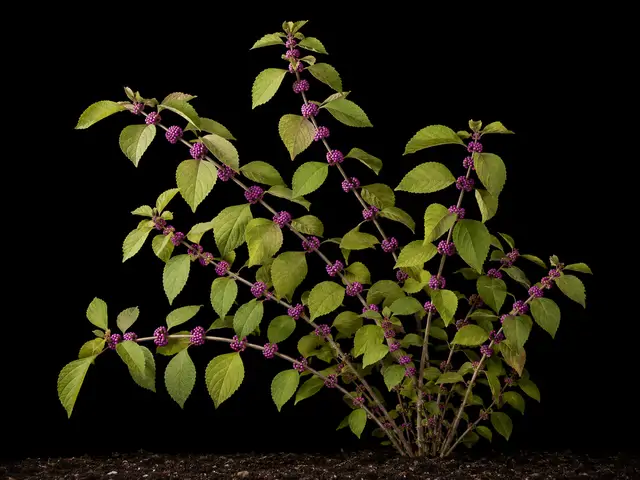
American beautyberry (Callicarpa americana) is grown for a single, unforgettable feature: in fall its arching branches are ringed with dense clusters of small berries in a startling, almost electric metallic magenta-purple - a color so vivid it stops people in their tracks and looks almost artificial. Few native plants offer anything like it, and the berries persist on the bare stems after the leaves fall, glowing through early winter.
Behind the spectacle, beautyberry is a wonderfully easy, tough, adaptable Southern native. It thrives in sun or part shade, tolerates heat, drought, and a range of soils, and blooms and fruits on new wood so it can be cut back hard each year to stay dense and heavy-fruiting. It is also a premier wildlife shrub - dozens of bird species and mammals eat the berries - and its crushed leaves are an old Southern folk mosquito repellent whose active compounds researchers have since isolated — though a crushed leaf is not a substitute for a registered repellent. The berries are even edible, traditionally cooked into a lovely magenta jelly. Showy, useful, wildlife-friendly, and nearly foolproof, beautyberry is one of the most rewarding native shrubs for the Southeast.
At a glance
- Sun
- Full sun · Part sun · Part shade
- Water
- Medium
- Spacing
- 48–84 in (typ. 60)
- Mature height
- 36–96 in (typ. 60)
- Start by
- Direct sow · Transplant · Cuttings
- Frost
- Hardy
- Germination
- 30–90 days (typ. 60) @ 65–80 °F (typ. 72)
- Spread
- 36–84 in (typ. 60)
- Soil
- Well-drained
- Temperature
- Damaged below -10°F · struggles above 100°F
- Seed ready
- 120–180 days (typ. 150) (for saving)
- Self-sows
- Yes — expect volunteers
When to plant
Zone 7a typical frost: last Apr 10 · first Oct 25 (spring frost runs Mar 27–Apr 24 in a typical spread of years)
Life stages
- Year 1 - rooting in day 0–120 from transplant
-
Water to establish, then ease offevery 6 dWater a new beautyberry to keep the soil evenly moist through its first season. It is drought-tolerant once established but produces the best foliage and berry display with reasonable moisture, especially in the heat.
-
Mulch and site it where the berries will showMulch the root zone to conserve moisture. Beautyberry blooms and fruits on new wood, so a spot with at least part sun gives the heaviest berry set - and place it where the electric fall berries will be seen.
Dry soil in the first season (water while young)Deep shade reducing flowering and fruit set -
Water to establish, then ease offevery 6 d
- Summer flowers Jun, Jul, Aug (yearly)
-
Small pink flowers ring the stemsClusters of tiny pale pink to lavender flowers wrap the stems where the leaves meet through summer, feeding bees and other pollinators. Modest in themselves, they are the promise of the spectacular berries to come, which form in the same tight clusters along the branches.
Bees and pollinators working the small flowersFlowers forming clusters that will become berries -
Small pink flowers ring the stems
- Berries coloring (late summer/fall) Sep, Oct, Nov (yearly)
-
Electric-magenta berry clusters appearThe signature show: dense clusters of small berries in a startling, almost unreal metallic magenta-purple ring the branches in fall - one of the most eye-catching sights in the native landscape. They persist after the leaves drop, glowing on bare stems, and feed a long list of birds.
-
Leave berries for the birdsBeautyberry is a premier bird plant - mockingbirds, cardinals, robins, catbirds, and many others strip the berries through fall and winter. Enjoy the display, harvest a few clusters for jelly if you like, and leave the rest as important wildlife food.
Birds feeding heavily on the berries (this is the point)Berries persisting on bare stems into winter -
Electric-magenta berry clusters appear
- Winter dormancy & spring cutback Jan, Feb, Mar, Dec (yearly)
-
Cut back hard in late winter for the best showBecause beautyberry flowers and fruits on NEW wood, it responds to a hard late-winter pruning - you can cut it back by a third to a half (or even harder) to keep it dense, shapely, and heavily fruiting. Left unpruned it grows loose and arching; a hard cutback renews it each year.
Loose, leggy growth if never pruned (cut back hard for density and fruit)Modest self-sown seedlings from dropped berries -
Cut back hard in late winter for the best show
Watch out for
Poor Fruiting in Shade Low
Beautyberry fruits far more heavily in sun; in deep shade it grows leggy and sets few of its signature berries - the most common reason for a disappointing display.
Watch for: Thin, sparse growth and few berry clusters on a plant in heavy shade.
Prevent: Site in full sun to part shade for the best berry set; cut back hard in late winter to force dense, fruitful new wood.
Treat: Move or limb up surrounding plants to give more light, and prune hard to renew; fruiting improves markedly with more sun.
Winter Dieback Low
At the cold edge of its range, beautyberry stems can be killed back by a hard winter - but because it fruits on new wood, it resprouts and fruits the same year, so this is a minor cosmetic setback.
Watch for: Browned, killed foliage and dead stems after a severe freeze at the northern edge of its range.
Prevent: Site in a protected microclimate near the cold edge of its range, or choose the hardier northern bayberry (M. pensylvanica) instead.
Treat: Cut dead wood back to live growth or the ground in spring; the plant regrows and fruits on the new wood the same fall.
Leaf Spot Low
A catch-all for the various fungal leaf-spot diseases that blotch foliage in warm, humid, wet weather. They spot and yellow the leaves and sometimes bring on early leaf drop, and they are worst on crowded, shaded or overhead-watered plants and on anything already stressed. On a healthy, well-sited plant they are a cosmetic nuisance that comes and goes with the weather rather than a real threat.
Watch for: Small brown, dark, reddish or purple-bordered spots and blotches on the leaves during prolonged humid, rainy spells, sometimes enlarging and merging, with premature yellowing or leaf drop on the worst-affected growth.
Prevent: Give the plant airflow - space, thin or prune it rather than letting the growth mat together - avoid overhead watering, and water early in the day so the foliage dries. Rake up and remove fallen leaves, which is where these fungi overwinter, and keep the plant unstressed and properly watered.
Treat: Remove badly affected leaves and improve airflow; that is normally the whole of it. The plant flushes clean new growth once the weather turns. Fungicide is seldom warranted for a cosmetic leaf spot on an established plant.
Beautyberry is notably disease-resistant, and leaf spot on it is cosmetic - almost never worth spraying.
Good & bad neighbors
Varieties · 4
Loose arching shrub with green leaves and dense clusters of vivid metallic magenta-purple berries along the stems in fall.
The wild species: a tough, easy Southern native 3-8 feet tall with arching branches ringed by clusters of startling electric-magenta berries in fall, small summer flowers, and crushed leaves used as a mosquito repellent. The standard for wildlife value and dramatic fall color; fruits on new wood, so it can be cut back hard.
Beautyberry with clusters of pure white berries along the branches in fall.
A striking white-berried form of the native species, with clusters of pure porcelain-white berries instead of magenta, glowing in a shady spot. Just as easy and wildlife-friendly as the type, and a beautiful contrast planted alongside the magenta form; comes fairly true from cuttings.
Compact beautyberry with purple-flushed foliage and heavy clusters of magenta berries.
Modern beautyberry selections chosen for darker purple-tinged new foliage, heavier fruit set, and a more compact, refined habit for smaller gardens. Worth knowing before you buy: 'Purple Pearls' is NOT American beautyberry - it is a hybrid of the Asian species Callicarpa dichotoma and C. kwangtungensis, so the native status, bird-food value, and pollinator credentials of C. americana are not established for it. Non-native Callicarpa (C. dichotoma in particular) has also been reported escaping cultivation in the Southeast. A fine ornamental if that is what you want; if you are planting for natives and wildlife, choose the straight species or a true C. americana selection such as 'Lactea' or 'Welch's Pink'.
Beautyberry with clusters of soft pink-lavender berries along arching stems in fall.
A selection bearing soft pink to pale lilac berries, a gentler pastel alternative to the intense magenta species, on the same easy, tough, wildlife-friendly plant. A pretty choice for a softer color scheme in the native or mixed border.
Grow
About as easy as shrubs get: full sun to part shade and most well-drained soils, heat- and drought-tolerant. It flowers and fruits on new wood, so more sun means more berries, and hard pruning keeps it best.
Beautyberry is a forgiving, fast-growing native. Give it full sun to part shade and most well-drained soils and it thrives, tolerating heat, humidity, drought once established, and a range of soil types across the warm Southeast and beyond (roughly zones 6-10). It naturally grows into a loose, arching, fountain-shaped shrub 3-8 feet tall and wide.
The key growing fact is that it blooms and fruits on new (current-season) wood. This means two things: more sun yields more flowers and a heavier berry display (it fruits in part shade too, just less), and you can prune it hard without sacrificing the show. Water it while establishing and in the worst droughts for the best foliage and fruit, mulch the roots, and otherwise it asks very little. It often begins fruiting its first or second fall, establishes quickly, and self-sows modestly - an ideal low-effort native for fast, dramatic seasonal impact.
Care
Nearly carefree: water in extreme drought, and cut it back hard in late winter. Because it fruits on new wood, an annual hard pruning keeps it dense, shapely, and heavily berried; unpruned it grows loose and arching.
Beautyberry is close to carefree. Once established it needs watering only in serious drought (though steady moisture improves the foliage and berry set in heat), rarely needs feeding, and has very few pest or disease problems - it is one of the most trouble-free native shrubs you can grow.
Its one meaningful care task is pruning, and it is optional but rewarding. Because beautyberry flowers and fruits on new wood, a hard late-winter cutback - taking it down by a third to a half, or even harder - forces vigorous fresh growth that is denser, tidier, and more heavily fruiting than an unpruned plant, which tends to sprawl loosely. Prune to the shape and size you want each late winter or early spring before growth begins. Beyond that annual haircut, simply enjoy the summer flowers, the fall berry spectacle, and the birds it draws - there is very little else to do.
Propagation & seed saving
Very easy from softwood cuttings, from its readily germinating fresh seed, or from self-sown seedlings; a fast, generous plant to multiply.
Beautyberry is one of the easier native shrubs to propagate. Softwood cuttings taken in early summer root readily, giving plants identical to the parent (useful for the white-berried form). It also grows easily from seed: clean the fresh berries and sow the seed, which germinates readily in spring without elaborate treatment, and beautyberry self-sows modestly around a planting, so volunteer seedlings are common and easy to move.
A nursery transplant gives an instant sizable plant, and because beautyberry blooms and fruits on new wood, even a young plant or a seedling fruits quickly - often within a year or two. Between easy cuttings, easy seed, self-sowing, and fast establishment, beautyberry is a plant you rarely need to buy more than once; a single shrub soon supplies cuttings and seedlings to spread the magenta show around the garden or share with friends.
Nutrition
Not grown as food, though the berries make an edible jelly; its real value is ecological - a heavily used fall and winter bird food, a pollinator plant, and browse and cover for wildlife.
Beautyberry is grown for beauty and wildlife rather than as a food crop, though the berries are edible and are traditionally made into jelly (see Culinary). Its importance is overwhelmingly ecological. The magenta berries are a major fall and winter food source for birds - mockingbirds, cardinals, catbirds, robins, thrashers, finches, and many more strip the clusters over the season - as well as for raccoons, opossums, foxes, and deer, which also browse the foliage.
The summer flowers feed bees and other pollinators, and the dense shrub offers cover and nesting habitat. Because it fruits so heavily and holds its berries into winter, beautyberry helps fill a lean season when other food is scarce, making it one of the more valuable wildlife shrubs of the Southeast. Plant it for the electric fall display and you also plant a well-stocked bird feeder and pollinator stop - a native that gives back to the whole food web while dazzling the eye.
In the kitchen
The berries are edible and traditionally cooked into a lovely magenta jelly - astringent and seedy raw, but transformed with sugar and pectin into a mild, floral Southern preserve. A modest, fun harvest, not a fresh-eating fruit.
Although beautyberry is grown as an ornamental, its berries have a genuine (if modest) culinary use: cooked into a beautiful magenta jelly, an old Southern tradition. Raw, the berries are astringent, mealy, and seedy - not a fresh-eating fruit, and easy to dismiss - but simmered and strained with sugar and pectin they yield a clear, jewel-toned jelly with a mild, subtly floral, slightly medicinal flavor that surprises people who only knew the plant for its looks.
The jelly is made much as any wild-fruit jelly is: the fully colored berries are simmered to draw out their juice, strained, and set with sugar and pectin. It is as much a curiosity and a beautiful gift as an everyday preserve, and beyond it the berries are barely used. Beautyberry belongs in the garden as an ornamental and a wildlife shrub rather than a food crop — this app tracks it that way, with no harvest to log — and the fall berries are a staple for mockingbirds, robins, catbirds, and finches, so the birds have the first claim on them. If you do take a share for jelly, keep it small.
Traditional & historical uses
Beautyberry's best-known folk use is as a mosquito repellent. USDA researchers isolated genuinely repellent compounds from the leaves in the laboratory - but crushed leaves on skin are not a tested or registered repellent, and should not stand in for one where mosquito- or tick-borne disease is a concern.
This section records how people have traditionally used this plant, and what is known about the risks. It is history and general information — not medical advice, and not a recommendation to treat anything. Plants are not dosed like medicines, some interact with prescriptions, and some are harmful in ways that are not obvious. Talk to a clinician before using any plant medicinally.
Beautyberry carries a folk use that modern research has taken seriously: its crushed leaves as a mosquito repellent. Southern farmers traditionally crushed the fresh leaves and rubbed them on their skin, or tucked them under harnesses and hats, to keep biting insects off themselves and their livestock - a widely known backwoods remedy across the Southeast.
What the science actually shows is narrower than the story. Researchers at the USDA isolated repellent compounds from beautyberry leaves - notably callicarpenal and related terpenoids - and showed in laboratory testing that those isolated compounds repel mosquitoes and some ticks. What has not been shown is that crushed leaves rubbed on skin give useful protection: there is no EPA-registered beautyberry repellent, no established dose, and no evidence it lasts the way a registered product does. So treat it as a curiosity, not as protection — do not rely on it where mosquito- or tick-borne disease is a concern (West Nile, EEE, and tick-borne illness are all live risks across this plant's range); use a registered repellent such as DEET or picaridin instead. If you do try a crushed leaf, patch-test a small area first, since raw plant sap can irritate skin. Beautyberry's other folk-medicinal uses (root and leaf preparations) have less evidence still and are best treated as tradition - grow the plant chiefly for its beauty and its wildlife value.
History
A familiar Southern native long used by Indigenous peoples and rural Southerners for medicine and mosquito repellent, and named for its beauty; folk names like 'French mulberry' reflect its berries, and it is now a native-garden favorite.
American beautyberry has been part of Southern life for a long time. Indigenous peoples of the Southeast used various parts of the plant medicinally - decoctions of roots and leaves for a range of ailments - and rural Southerners later adopted the crushed leaves as a well-known mosquito repellent for people and livestock, a use that persisted for generations and eventually drew scientific study.
Its very name celebrates its looks: Callicarpa means 'beautiful fruit' in Greek, and folk names like 'French mulberry' and 'sourbush' reflect the berries. Long a common wild shrub of Southern woodland edges and fencerows, it has in recent decades become a native-garden favorite as gardeners embrace regionally adapted, wildlife-supporting plants - prized for its unmatched berry color, its ease, its value to birds and pollinators, and its real repellent tradition. Few native shrubs combine such a striking ornamental payoff with such deep regional roots.
Troubleshooting
Very few problems: sparse berries or loose growth usually mean too much shade or no pruning (cut it back hard on new wood); it has almost no serious pests and is easy across its warm range.
Few berries: almost always too much shade - beautyberry fruits far more heavily with more sun; move it to a sunnier spot for the full display. Since it fruits on new wood, failure to prune can also mean an old, loose plant with lighter fruiting. Loose, leggy, sprawling shape: normal if unpruned - cut it back hard (by a third to a half or more) in late winter to force dense, shapely, heavily fruiting new growth. Winter dieback of stems: in the colder end of its range beautyberry may die back in a hard winter, but because it fruits on new wood it resprouts and fruits the same year - just cut back the dead wood in spring. Wilting or scorch: drought stress in extreme heat - water deeply and mulch. Seedlings popping up: modest self-sowing - easy to pull or transplant. Pests and diseases are rare, so beautyberry is one of the most trouble-free shrubs in the Southern garden; nearly every 'problem' is solved by more sun or a hard prune.
Growing across climates
A heat- and humidity-loving Southern native, easy across zones 6-10, tolerant of drought and varied soils; in the colder end it may die back in winter but resprouts and fruits on new wood the same year.
Beautyberry is a plant of the warm Southeast and thrives across roughly zones 6-10. Zones 7-10 (its heartland): it excels in heat and humidity, drought once established, and a wide range of soils, fruiting heavily in sun and reliably even in part shade - a premier native shrub for Southern gardens. Zone 6 (its cooler edge): it grows well but may die back in a hard winter; happily, because it flowers and fruits on new wood, it resprouts from the base in spring and still delivers berries the same fall, so winter dieback is not a real setback - just cut it down and let it regrow.
Its heat and drought tolerance make it well suited to hot, humid climates where fussier shrubs struggle, and it adapts to sandy, clay, and average soils alike. The main limits are hard cold beyond its northern edge and deep shade (which cuts the berry display). Given warmth and some sun, beautyberry is one of the most dependable and adaptable natives for the Southern and lower-Midwestern landscape.
Grower tips
No grower tips for American Beautyberry yet. Yours could be the first.
Sign in to share what works in your garden.