Add it to your home screen and it opens full screen: no browser bars, one tap away, and everything stays signed in. Free, nothing to download from an app store.
- Tap the Share button in your browser
- Scroll down and choose “Add to Home Screen”
- Open GrowSomeFood from your home screen
- Open your browser’s menu
- Choose “Add to Home screen” or “Install app”
- Open GrowSomeFood from your home screen
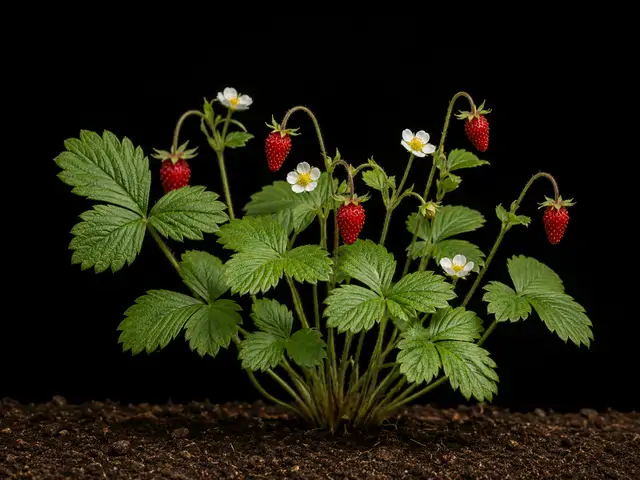
Alpine Strawberry
The fraises des bois of French cooking: a tidy, runnerless little perennial that fruits from June to frost, grows true from seed, tolerates part shade, and produces berries with more perfume than any strawberry you can buy.
Alpine strawberries are safe - berries and leaves (as tea) are both edible, and there are no toxic look-alikes. The only confusion is with mock or Indian strawberry (Potentilla indica), which is harmless but tasteless: true strawberries have WHITE flowers and fragrant, nodding berries, mock strawberry has YELLOW flowers and upright watery ones. White- and yellow-fruited alpine varieties are ripe when soft and fragrant, not when they change color - judge them by scent and squeeze.
Overview
The one thing to knowAlpine strawberry is Fragaria vesca, the woodland strawberry, selected in Europe into the small everbearing strains sold as alpine or semperflorens types.
Alpine strawberry is Fragaria vesca, the woodland strawberry, selected in Europe into the small everbearing strains sold as alpine or semperflorens types. It is not a small garden strawberry - it is a different species with a different way of behaving, and the differences are all in the gardener's favor. It does not run: no stolons scrambling across the bed, no annual battle to keep the rows clear, just a neat 8-inch clump that stays exactly where you put it, which makes it one of the best edible edgings there is. It is day-neutral, so instead of one glut in June it carries flowers and fruit together from late spring until frost. And it comes true from seed, which almost no strawberry does - a packet costs a few dollars and gives you a bed.
The berries are the point. They are small - slender, thimble-sized, and you will never fill a bowl in one pass - but the aroma is extraordinary, a concentrated, floral, almost sweet-wine strawberry perfume that large modern berries simply do not have. This is the fruit French restaurants buy at a startling price by the half-pint, and the reason is that it is too soft and too perishable to ship, so the only realistic way to eat good ones is to grow them. Add a genuine tolerance of part shade and it becomes the strawberry for the shady side, the path edge, the window box, and the strip under the fruit trees where a garden strawberry would sulk.
Quick facts
- Sprouts in
- 21 days14 to 42
- Soil to sprout
- 68 °F60 to 75
- Start indoors
- 10 weeks before transplant8 to 12
- Life cycle
- Perennial, lives about 4 years
- Seed to save
- About 40 days after planting30 to 60
- Height
- 8 in4 to 10
- Spread
- 12 in8 to 15
- Cold
- Takes hard frostdamaged below -30°F
- Heat
- Struggles above 90°F
- Self-sows
- Yes, expect volunteers
Full sun or part sun or part shade · medium water · consistently moist soil · 12 in apart (8 to 15) · direct sow or transplant or division
When to plant
Nothing is open today. Fall transplanting opens in 10 days, Oct 1 to Nov 30.
- Transplant Oct 1 – Nov 30 Opens in 10 daysIn mild-winter areas, fall planting lets the crowns root through the cool season and crop from early spring. Give afternoon shade in zones 9-10, where summer heat, not winter, is the limit.
- Start indoors Jan 2 – Feb 13 Opens in 103 daysAbout 14 weeks before to 8 weeks before your last frost (Apr 10 here)Start early. Germination is slow and the seedlings are slower, so sowing 10-12 weeks before last frost is what gets you fruit in the first summer rather than the second. Surface-sow, do not cover.
- Transplant Apr 3 – May 22 Opens in 194 daysAbout 7 days before to 6 weeks after your last frost (Apr 10 here)Plant out hardened-off seedlings or bought plants once frosts are easing, setting the crown exactly level with the soil surface, 10-12 inches apart.
- Direct sow Apr 10 – May 15 Opens in 201 daysAbout at to 5 weeks after your last frost (Apr 10 here)Direct sowing works but is unreliable - the seed must stay on the surface, which means it must stay damp without washing away. Expect a thin, staggered stand and no fruit until the following year.
Frost here: last around Apr 10 (Mar 27 to Apr 24 most years), first around Oct 25. Zone averages, your own yard may run a week or two either way.
Life stages
Three stages to settle in, then three that repeat each year. Windows are typical; your zone and weather move them.
Germination (slow and fussy)
Day 0 to 25- DoSurface-sow - the seed needs light and must NOT be coveredPress the dust-fine seed onto the surface of moist, fine seed compost and leave it uncovered, or cover with the barest dusting of vermiculite. Burying it is the single most common reason a packet fails. Cover the tray with a clear lid or bag to hold humidity, and keep it at about 65-70°F in bright indirect light.
- ProtectChill the seed for two to four weeks firstAlpine strawberry seed germinates far more evenly after a cold-moist period. Seal the packet or a damp paper towel in a bag in the fridge for two to four weeks before sowing. This is optional but it turns a scattered, month-long trickle of seedlings into something much closer to a proper flush.
- WaterNever let the surface dry, never soak itdailyBecause the seed sits on top of the compost it dies the moment the surface dries out. Mist or bottom-water so the surface stays evenly damp without becoming waterlogged, which brings on damping-off. Expect germination anywhere from 14 to 45 days - do not throw the tray away early.
Watch for- Seed sown too deep and never appearing
- The surface drying out for even half a day
- Germination arriving in waves over several weeks - normal
Seedlings (tiny at first)
Day 25 to 80- ThinPrick out into cells once there are two true leavesThe seedlings are startlingly small and stay that way for weeks. Once each has two proper leaves, lift them with a toothpick or the tip of a knife and move them individually into small cells. Handle them by a leaf, never the stem, and keep them out of direct sun for a couple of days afterward.
- FertilizeFeed at quarter strength once they are growingevery 2 weeksAlpine seedlings are slow, and a very dilute liquid feed every couple of weeks once they have several true leaves keeps them moving without forcing soft growth. They will look unimpressive for a long time and then suddenly bulk up.
Watch for- Damping-off in a tray kept too wet and too closed
- Seedlings stalling from being too cold
- Leggy growth from insufficient light
Settling in after planting out
Day 0 to 50- DoSet the crown level with the soil surfaceAs with any strawberry, planting depth decides whether the plant thrives or rots. The crown - the stubby point where leaves emerge - sits exactly at soil level. Buried crowns rot; crowns planted proud dry out and the roots never take.
- WaterKeep evenly moist for the first six weeksevery 3 daysAlpine strawberries are shallow-rooted and want steady moisture rather than a soak-and-dry cycle. Water them in well and keep the top few inches damp while they root out; they are much more drought-sensitive than their tough appearance suggests.
- MulchMulch, and keep it off the crownA thin mulch of leaf mould, compost, or fine bark holds moisture, keeps the low-hanging berries off wet soil, and suits a plant that in the wild grows in woodland leaf litter. Pull it back an inch from each crown so the crown stays dry.
Watch for- Crowns planted too deep and rotting
- Drying out in the first hot spell
- Slugs finding the new soft leaves
Flowering (continuous, spring to frost)
Apr to Sep, every year- InspectExpect flowers and fruit on the plant at the same timeAlpine strawberries are day-neutral, so unlike a June-bearing garden strawberry they flower and fruit continuously from late spring until frost. A healthy plant carries buds, open white flowers, green fruit, and ripe berries all at once, all season.
- FertilizeFeed lightly through the season, not heavily in springevery 18 daysBecause it crops continuously it feeds continuously. A dilute balanced or high-potash liquid feed every two to three weeks from late spring keeps it producing far better than one big spring dressing, which mostly makes leaves.
Watch for- Flowers but no fruit set in a very hot spell (it resumes when it cools)
- Leaves crowding out the flower stems - thin congested crowns
Picking (a handful at a time, all summer)
Jun to Oct, every year- HarvestPick dead ripe, every day or two, and eat them the same dayA ripe alpine strawberry is soft, deeply fragrant, and comes away at the lightest touch - if you have to pull, wait. The perfume is the real test, especially on white and yellow varieties which never change color. They keep for hours rather than days, so this is a fruit you pick on the way past and eat on the spot.
- HarvestTake leaves for tea whenever you likeThe three-part leaves make a mild, pleasant caffeine-free tea. Use them fresh or fully dried, never half-wilted, and pick lightly from around the outside of a crown so you do not check the plant's cropping.
Watch for- Slugs reaching the berries before you do
- Fruit resting on wet soil and rotting
- Overripe berries collapsing on the plant - pick daily at peak
Winter rest
Nov to Mar, every year- PruneTidy dead leaves and lift the crowns clear of wetCut away dead and blackened foliage in late autumn so the crowns are not sitting in a soggy mat, and pull mulch back from them. The plant is hardy well into zone 4 but it dislikes a wet, airless winter far more than a cold one.
- ProtectMulch containers, or move them somewhere shelteredPlants in pots have far less root insulation than plants in the ground. In cold zones, sink the pot, group pots against a wall, or move them into an unheated shed or cold frame - roots frozen solid for weeks in a small volume of compost are what kills container alpines, not the air temperature.
Watch for- Crowns rotting under a wet mat of dead leaves
- Containers freezing solid through the root ball
- Plants over three years old declining - time to divide
Harvest
- Intensely fragrant - you can smell a ripe one before you see it, and this is the only reliable test on white and yellow varieties
- Soft to a light squeeze and detaching at a touch, with no tug
- Red varieties fully and evenly colored with no white shoulder; white and cream varieties turning faintly blush-pink at the tip and softening
- Pick dead ripe, every day or two, and eat them the same day
- Take leaves for tea whenever you like
Per plant 2 to 16 ozPicking pick all season
Cook with Alpine Strawberry
Watch out for
5 to know. 1 is high-risk: Slugs & Snails. 3 are active in September.
Slugs & SnailsSeverity High PestnowThe number-one alpine strawberry problem, and worse than on garden strawberries because the fruit is small, held low, and ripening continuously from June to October rather than in one guarded fortnight.
Mulch with fine bark or straw to keep berries off wet soil, copper-tape any containers, and pick at dusk in wet spells.
Irregular ragged holes chewed out of the middle of leaves and along the edges - not the clean-edged cuts a caterpillar leaves. Seedlings that vanish overnight, or that are cut off at soil level with nothing left behind. Silvery dried slime trails across leaves, soil, pots, and paving in the morning: this is the giveaway that tells you it was mollusks rather than an insect. Chewed pits in ripe fruit, especially where it rests on the ground. Damage that shows up on the lowest, dampest leaves first and gets worse after rain or evening watering. Turn over a board, an upturned pot, or a clump of dense mulch during the day and look for the animals themselves sheltering in the cool underneath.
Hand-picking works and costs nothing: go out an hour after dark with a headlamp, drop what you find into soapy water, and repeat nightly for a week or two - persistence is what wins, not any single product. Shallow beer traps sunk to soil level catch them too, but need emptying and refilling daily to be worth anything. Iron-phosphate bait is the standard control and is far lower-risk around pets and wildlife than the old metaldehyde products, but it is not harmless: many formulations include EDTA, and a dog that eats a quantity of pellets can develop iron toxicosis. Scatter it thinly per the label, never in piles, and keep dogs off a baited bed. Clear fallen foliage and debris in autumn, where the eggs are laid. In a wet climate this is a population you manage each season rather than one you eradicate - and on most established plants light grazing is cosmetic and needs nothing at all.
Take away the daytime shelter first: lift boards and upturned pots, clear piles of debris, keep dense mulch pulled back from crowns and stems, and give crowded plantings enough airflow to dry out. Water in the morning rather than the evening so the surface is dry by the time they come out. Copper tape around containers and raised beds gives them a shock they will not cross, and it is the one barrier that reliably works. Get plants past the vulnerable stage quickly - start seedlings in pots and set them out at a decent size rather than direct-sowing into a cold wet bed, since most plants stop being worth defending once the leaves toughen. Leave the ground beetles, frogs, toads, and ground-feeding birds alone, because they eat mollusks all night for free and broad-spectrum slug pellets kill them too. Where thick-leaved or resistant varieties exist for what you are growing, they take far less damage.
Slugs and snails are nocturnal mollusks that rasp ragged holes in soft leaves, shear off seedlings at ground level, and chew into ripe fruit that touches the soil. They feed at night and in the early morning and spend the day hidden under boards, pots, dense mulch, leaf litter, and low foliage, becoming active in exactly the cool, damp, shaded conditions that suit young plants. Damage is heaviest in wet spells and on tender spring growth: a single wet week can erase a row of seedlings while an established, tough-leaved plant of the same species is barely marked. They lay clusters of small pearly eggs in damp soil and under debris, so a garden with plenty of cover carries a resident population year after year rather than being invaded from outside.
Birds & WildlifeSeverity Medium WildlifenowNetting a continuously fruiting plant for four months is impractical, so the standard alpine-strawberry answer is a variety change instead: grow White Soul, Yellow Wonder, or Pineapple Crush, which birds and squirrels largely ignore because the fruit never looks ripe to them.
That single choice solves the problem without any netting at all.
Fruit disappearing from the outermost, most exposed parts of the plant first, and from the top of a tree where you cannot reach anyway. Single neat pecks and gouges in ripening fruit, with several fruits sampled rather than one eaten through - the classic sign that it was birds rather than an animal. Heads of grain or seed going visibly lighter and emptier as they ripen, with hulls and chaff scattered underneath. Freshly sown seed vanishing off the surface of a bed before it germinates. Bird traffic in and out of the plant picking up as the crop colors, and birds waiting on nearby wires and branches. Wasps arriving at the pecked and split fruit shortly afterward.
There is no treatment once a crop is being taken - only protection and timing, so the answer is to get netting on and to pick what is ready. Reflective tape, flash ribbon, spinners, and decoy predators do work, but only for a few days at a time: birds habituate fast, so move and rotate them and never rely on them as the main defense for a crop you care about. Cut and gather grain or seed heads a little early, at firm dough, and finish drying them under cover instead of leaving them standing for the flocks. Plant a little extra, or a decoy crop the birds prefer, and accept sharing anything that crops heavily. On a wild or foraged patch, fruit going to birds and small mammals is the point of the plant rather than a problem to solve.
Net, and net early. Bird netting draped over a frame or hoops so it stands off the fruit, with the edges closed at ground level, is the only thing that reliably works at harvest scale - and it has to go on before the crop starts to color, because once birds have found the food they are far harder to displace. Keep fruit trees small enough that netting them is actually feasible; that decision gets made years earlier, at planting. Bags of mesh, organza, or paper slipped over individual heads, clusters, or prize fruit protect a small crop without netting the whole plant. Then shorten the exposure: pick promptly and completely rather than leaving ripe fruit hanging as a lure, clear split and dropped fruit that draws birds and wasps alike, and where a crop can finish off the plant, harvest a little early and ripen or dry it under cover. Rake in or cover broadcast seed so it is not lying in plain view.
Birds find ripening fruit and seed before you do. Robins, waxwings, starlings, catbirds, jays, sparrows, finches, blackbirds, and doves all work a garden, and the pressure arrives in a narrow window - the last days before harvest, when sugar rises, color changes, and the crop softens or the grain hardens. A flock can strip a small planting in a day or two, and birds that only peck rather than take whole fruit still leave wounds that rot or draw wasps. Squirrels, chipmunks, and other wildlife usually turn up on the same crop at the same time. This is competition rather than disease: the birds are not harming the plant, and a big tree or a heavy-cropping bush often has enough for everyone - but on a small planting it can be the difference between a harvest and none.
Gray Mold (Botrytis)Severity Medium DiseaseAlpine strawberries are not renovated the way June-bearers are - they crop continuously, so the equivalent job is thinning congested crowns, pulling dead leaves out, and dividing every three or four years.
Because fruit ripens constantly there is always something for the fungus to work on, which makes clearing soft berries at every single pick the real control.
Browned, collapsed flowers and buds; soft, water-soaked brown patches on leaves, stems or fruit; and a dusty gray-brown fuzz over the dead tissue. Rot jumping between two pieces of fruit or two petals that touch is the signature, and it often shows up again in the fridge or the storage box days later.
Cut out and destroy infected tissue as soon as it appears, and bag it rather than composting it. Harvest ahead of a prolonged wet spell and store the crop dry and cold. Protective fungicides help through long damp weather, but airflow and sanitation do most of the work.
Space and prune for airflow, water at the base rather than over the top, and go easy on nitrogen, which produces the soft growth it prefers. Clear dead leaves, spent flowers and rotting fruit at every pass, since that debris is where it overwinters. Handle fruit, buds and bulbs gently, because it enters through bruises, and cure and store anything you keep dry and well ventilated.
Botrytis cinerea and its relatives - the fuzzy gray-brown mold of cool, wet, humid weather. It blights flowers and buds, rots ripening fruit, and moves into soft, aging, bruised or frost-damaged tissue through the smallest wound, coating whatever it kills in dusty gray spores. It overwinters on dead plant debris, spreads on air currents and by direct contact between touching tissue, and keeps working after harvest, which is why it also ruins fruit and bulbs in storage.
Powdery MildewSeverity Low DiseasenowUsually minor on alpine strawberries and mostly a symptom of crowded, shaded, unrenewed crowns.
Pull dead leaves out of the clumps, keep spacing at a full 10-12 inches, and divide every three or four years - which fixes the airflow and the plant's vigor at the same time.
Round white powdery spots on the upper leaf surfaces that spread and merge until whole leaves look dusted. It usually starts on the oldest, lowest, most shaded leaves and works upward, so check there first. Look at the undersides too, and at stems, buds, and flower stalks, which get coated as it advances. Leaves that yellow, brown, curl, or go crisp and drop early under the coating. New growth that opens small, crumpled, or twisted where the fungus has reached the shoot tips. On plants where it gets onto the fruit, a dull gray film, russeted or scarred skin, and cracking. Late in the season, tiny dark specks scattered through the white felt - that is the fungus setting up to overwinter on the debris.
Start early: sprays protect healthy tissue, they do not clean up leaves that are already coated. Pick off and bin the worst leaves as soon as you see them, and open the plant up by thinning or pruning so air moves through. On anything that regrows quickly, shearing the whole plant back forces a clean flush and beats spraying. If it keeps spreading, potassium bicarbonate, horticultural oil, or neem applied weekly will hold it - cover both leaf surfaces. Sulfur also works, but it burns the foliage of some plants, should never go on in heat, and must not be mixed with or applied close behind an oil spray. Whatever you use must be labeled for the plant you are treating: follow that label and observe its pre-harvest interval on anything you eat. Do not compost badly infected material. Late-season mildew on a plant that is finishing anyway is usually cosmetic; on a crop still filling out it is worth acting on.
Give plants room. Crowding and still air are the biggest single driver, so space at the full recommended distance, thin seedlings properly, and divide or prune out congested growth until air moves through the plant. Full sun and an open position help; deep shade and a still corner against a wall are where it always starts. Water at the base rather than overhead, and water early in the day so nothing stays damp overnight. Keep plants evenly watered - drought stress at the roots leaves them far more susceptible, even though the fungus itself likes dry air. Go easy on nitrogen, since soft lush growth is the most vulnerable. Where resistant varieties exist for what you are growing, choosing one is the single most effective thing you can do on a plant that mildews every year. Clear infected leaves and stems away at the end of the season rather than composting them.
Powdery mildew is a fungal disease that coats leaves - and often stems, buds, and fruit - in a white-to-gray powder that looks like spilled talcum. It is not one fungus but a large family of them, each fairly specialised to its own group of plants, which is why mildew on one crop rarely jumps to an unrelated one beside it. Unlike most leaf diseases it does not need wet leaves: it thrives on warm dry days followed by humid nights, and it takes hold fastest where plants stand crowded in still air or in shade. The coating blocks light, so heavily covered leaves yellow, brown, and drop early. On many plants that is mostly disfiguring and arrives late enough not to matter; where it strips away the leaves a crop still needed to finish, it costs you size, sweetness, and quality.
Confusion with Mock (Indian) StrawberrySeverity Low DisorderRelevant here mostly for the volunteers: alpine strawberries self-seed freely, and mock strawberry colonizes the same damp shady edges, so a seedling you did not plant is worth checking.
White flowers and a fragrant berry mean you keep it; yellow flowers and an upright, scentless berry mean it arrived on its own.
YELLOW flowers and UPRIGHT, watery, tasteless berries mark mock strawberry; true wild strawberry has WHITE flowers and nodding, fragrant, flavorful berries.
No harm either way (both are non-toxic); for actual flavor, gather from the white-flowered, fragrant-berried true wild strawberry.
Check flower color (white = true wild strawberry; yellow = mock) and look for fragrant, nodding, flavorful berries before investing patience in a patch.
Not a hazard (mock strawberry is harmless) but a common disappointment: wild strawberry is confused with the look-alike mock or Indian strawberry (Potentilla indica / Duchesnea indica), whose berries are edible but watery and completely flavorless.
Good & bad neighbors
Plant nearby
-
The big garden hybrid and the little wild European species side by side - same family, same pests, opposite habits. Alpines fill the shady edges and the pots where June-bearers do not perform, and they keep fruiting long after the main crop has finished.
-
The North American counterpart, and a genuinely different species: Fragaria virginiana runs hard by stolons and gives one short berry season, while cultivated alpine F. vesca stays in a clump and crops until frost. Growing both makes the distinction obvious, and their cultures overlap almost completely.
- Traditional pairings, thin evidence
-
The traditional strawberry companion, and the one piece of the lore with a plausible mechanism: borage flowers heavily and pulls in bees and hoverflies through the whole season, which is useful next to a plant that is flowering continuously. Keep it back a little - borage is large and floppy next to an 8-inch alpine.
-
A tidy edging partner at a similar scale, flowering early for pollinators and often credited with deterring some pests around strawberries. The evidence is thin, but the pairing works spatially and neither crowds the other.
-
Low, unaggressive, and flowering for pollinators, thyme edges a path beside alpine strawberries without competing for the same rooting depth. Mostly a good-neighbors pairing rather than a functional one.
Keep apart
-
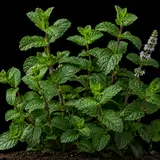
Mint runs underground and will simply take the bed. An 8-inch shallow-rooted alpine strawberry has no way to compete with it, and unpicking mint rhizomes out of a strawberry crown is miserable work. Keep mint in a pot, always.
Varieties · 9
You pick one when you add Alpine Strawberry to your garden. Its days to maturity set your harvest window.
Red alpine (semperflorens) 5 varieties
Alexandria
Tidy 8-inch clump with conical glossy scarlet berries held clear of the leaves.
red-fruitrunnerlesseverbearingseed-trueThe standard red alpine and the one most seed packets contain, for good reason: vigorous, entirely runnerless, and reliably productive from early summer until frost, with slender scarlet berries carrying full alpine perfume. It comes true from seed and is the sensible first choice if you are starting a bed from a packet. Days to maturity here are from sowing, not from planting out.
Mignonette
Compact plant with small, intensely fragrant scarlet berries.
red-fruitrunnerlesseverbearingcompactA classic French runnerless alpine grown for aroma above all - small, deeply perfumed red berries on a compact plant. Slightly lighter cropping than Alexandria but often preferred on flavor, and its neat habit suits pots, windowboxes, and formal edging.
Rügen (Improved Rügen)
Upright runnerless clump with medium red conical berries.
red-fruitrunnerlesseverbearingcold-hardyA German heirloom alpine from the Baltic island of Rügen, long grown for reliability in cool climates and for good crops of well-flavored red berries. Runnerless, hardy, and a dependable choice in northern gardens and short seasons.
White & yellow alpine 3 varieties
Yellow Wonder
Runnerless clump carrying pale butter-yellow berries with red seeds.
yellow-fruitrunnerlesseverbearingbird-resistantA pale yellow-fruited alpine that birds and squirrels largely leave alone, because to them it never looks ripe - which often means you harvest the whole crop without netting anything. Flavor is sweet with a distinctly tropical, almost pineapple note. Judge ripeness by scent and softness, since the color barely changes.
White Soul
Ivory-cream berries with scarlet seeds on a tidy runnerless plant.
white-fruitrunnerlesseverbearingbird-resistantA cream-white alpine with an exceptional perfume and the same practical advantage as Yellow Wonder - birds ignore it. Berries flush faintly pink at the tip when fully ripe, and the aroma is the reliable signal. A favorite in children's gardens because the fruit actually survives long enough to be picked.
Pineapple Crush
Pale cream berries with a pronounced pineapple aroma when ripe.
white-fruitrunnerlesseverbearingbird-resistantA cream-fruited alpine named for its markedly tropical flavor - the pineapple note that runs through the white-fruited types is strongest here. Runnerless, continuous cropping, and ignored by birds. Grow it beside a red variety and taste them side by side; the difference surprises people.
Wild woodland strawberry (runnering type) 1 variety
Wild woodland strawberry (Fragaria vesca)
Sprawling low plant with red runners and small red berries.
speciesrunneringgroundcoverwoodlandThe unselected wild species rather than an alpine strain, and it behaves differently: it RUNS by stolons into a spreading woodland groundcover, and it tends to give one main early-summer flush rather than cropping continuously. Excellent for naturalizing under trees and along shady edges where you want it to spread. If you want a tidy runnerless clump that fruits until frost, choose a named alpine instead. Note that North America has its own native wild strawberries, F. virginiana and F. chiloensis, which are separate species with their own entries.
Grower tips
Notes from growers, tagged with the zone they grow in. A person reads every post before it appears.
Nobody has posted about Alpine Strawberry yet. The first one usually saves someone a season.
Free account. Your post shows your grower name and zone, never your email.