Add it to your home screen and it opens full screen — no browser bars, one tap away, and everything stays signed in. Free, nothing to download from an app store.
- Tap the Share button in your browser
- Scroll down and choose “Add to Home Screen”
- Open GrowSomeFood from your home screen
- Open your browser’s menu
- Choose “Add to Home screen” or “Install app”
- Open GrowSomeFood from your home screen
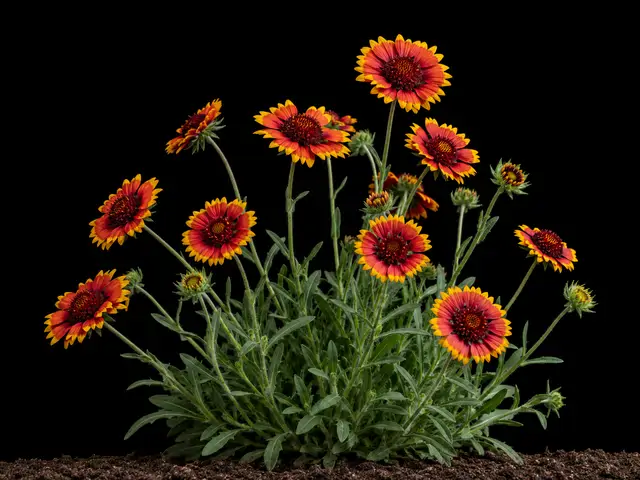
Blanketflower
Blanketflower is a safe, non-toxic ornamental and pollinator plant, not a food crop. The one practical note is that its foliage and sap can cause mild skin irritation or an itchy rash in sensitive people (a recognized minor contact dermatitis), so wear gloves if you're prone to it when cutting or deadheading. Otherwise no special precautions; it is not toxic to pets or livestock.
Overview
A ridiculously tough, long-blooming native daisy in flame colors - red-and-gold pinwheels from early summer to frost on almost no water, thriving in poor, hot, sandy soil where little else will.
Blanketflower (Gaillardia) is one of the hardest-working flowers a sunny, dry garden can hold. Its warm daisies - typically red-and-gold pinwheels with a domed central button, plus solid golds, peaches, and burgundies in the cultivars - open from early summer straight through to hard frost, one of the longest bloom seasons of any perennial. The common names 'firewheel' and 'Indian blanket' capture both the flame colors and the way it drifts across prairies and roadsides like a woven blanket.
Its real gift is toughness. Blanketflower is a champion of heat, drought, poor sandy soil, wind, and salt - it thrives in coastal and Southwestern conditions that defeat fussier plants, needs no feeding, and draws bees and butterflies all season. The one catch is that it's short-lived (often just 2-3 years) and rots in wet, rich soil, so the way to keep it forever is to grow it lean, deadhead for bloom, and let it self-sow or divide it. Give it sun and sharp drainage and it's nearly indestructible.
At a glance
- Sun
- Full sun
- Water
- Low
- Spacing
- 10–24 in (typ. 15)
- Mature height
- 10–30 in (typ. 20)
- Start by
- Direct sow · Transplant · Division
- Frost
- Hardy
- Germination
- 7–21 days (typ. 14) @ 65–75 °F (typ. 70)
- Start indoors
- 5–8 wks (typ. 6) before transplant
When to plant
Zone 7a typical frost: last Apr 10 · first Oct 25
Life stages
- Year 1 - rooting in day 0–45 from transplant
-
Water to establish, then back offevery 6 dWater a new plant through its first weeks to root in; after that blanketflower is very drought-tolerant and prefers lean, dry conditions. Overwatering and rich soil are the fastest ways to kill it (crown rot).
-
Don't enrich the soilBlanketflower blooms best in poor-to-average, gritty soil. Rich, fertile ground gives lush leaves and floppy stems at the expense of flowers - skip the compost and feed.
Crown rot in wet, heavy soil (the main killer)Floppy growth in rich soil -
Water to establish, then back offevery 6 d
- Spring growth Mar, Apr, May (yearly)
-
Weed around the low rosetteBlanketflower forms a low basal rosette in spring; keep weeds down while it builds toward bloom. It resents crowding and wet mulch against the crown.
-
Water only in real droughtEstablished blanketflower needs little water and dislikes soggy soil - water only in extended dry spells.
Aphids on new growthDistorted, yellow-green flowers (aster yellows disease) -
Weed around the low rosette
- Summer to fall bloom Jun, Jul, Aug, Sep, Oct (yearly)
-
Deadhead often for months of bloomevery 7 dBlanketflower blooms nonstop for months if you deadhead - shear off spent flowers regularly to keep fresh flushes coming and prevent it exhausting itself on seed. The daisies make cheerful, long-lasting cut flowers, and the spent seed heads are pretty little globes too.
-
Enjoy the pollinatorsThe open red-and-gold daisies are easy landing pads for bees, butterflies, and beneficial insects all summer. Leaving some late flowers to set seed feeds goldfinches and lets it self-sow.
Bloom slowing without deadheadingAster yellows (distorted, green, tufted flowers - remove infected plants) -
Deadhead often for months of bloomevery 7 d
- Seed & winter Jan, Feb, Nov, Dec (yearly)
-
Let the last flowers seed for finches and self-sowingStop deadheading in early fall and leave the last globe-shaped seed heads to feed finches and self-sow - important, because blanketflower is short-lived and a little self-sowing keeps a planting going.
-
Cut back lightly, divide every 2-3 yearsTidy spent growth (a light cut-back, not to the ground, over winter), and divide clumps every 2-3 years in spring to renew this short-lived perennial before it dies out.
Short-lived clumps dying out (divide or let it self-sow to renew)Crown rot in wet winter soil -
Let the last flowers seed for finches and self-sowing
Watch out for
Aster Yellows Disease MediumJun, Jul, Aug
An incurable disease caused by a phytoplasma (a bacteria-like organism) spread by aster leafhoppers, with a huge host range. Coneflowers are a classic, conspicuous host - it deforms flowers into green, stunted, leafy tufts and causes witches'-broom growth.
Watch for: Flowers turning green and deformed, tufted leafy growth from the cone, upright bushy witches'-broom shoots, yellowed stunted plants.
Prevent: Control aster leafhoppers, remove weedy hosts, and rogue out infected plants promptly; there are no resistant varieties.
Treat: None - it cannot be cured. Pull and destroy infected plants immediately (do not compost) to stop leafhoppers spreading it to other coneflowers and crops.
Crown Rot Disease MediumApr, May, Nov, Dec
Fungal rot of the central crown and rhizome, most common in cold, stagnant, waterlogged conditions during winter dormancy or when dead leaves are left to decay against the crown.
Watch for: A soft, mushy, browning center; collapsing new growth pulling away easily from the rhizome; a foul smell - typically over a cold, wet winter.
Prevent: Ease off water during dormancy (just damp, not flooded), provide good airflow, remove blackened dead leaves, and avoid burying the crown; do not let a dormant plant sit cold and sodden.
Treat: Cut away rotted tissue, treat with a fungicide, repot into fresh airy peat-sand, and keep drier with better airflow; heavily rotted plants are often lost.
Aphids Pest LowMay, Jun, Jul
Small soft-bodied sap-suckers clustering on tender tips and buds, excreting sticky honeydew.
Watch for: Colonies on new growth and flower buds, sticky residue, curling shoots, attending ants.
Prevent: Avoid excess nitrogen; encourage ladybugs and lacewings (zinnia flowers help feed them).
Treat: Hose off or use insecticidal soap. Rarely serious on vigorous zinnias.
Good & bad neighbors
Varieties · 6
A compact (10-12 inch) award-winning blanketflower with the classic mahogany-red daisies tipped in gold, blooming its first year from seed on tidy mounds. Excellent for the front of a border, containers, and hot dry sites - the standard bicolor.
A rich solid wine-red perennial blanketflower (G. x grandiflora) with large deep-burgundy daisies on taller stems - a deeper, more sophisticated color than the bicolors and a good cut flower and pollinator plant.
A novelty blanketflower whose ray petals are rolled into little red trumpets tipped with yellow, giving a fluted, fireworks-like flower quite unlike the flat daisy forms. Long-blooming and eye-catching, though sometimes shorter-lived.
The wild annual species of the southern plains: airy plants covered in red daisies tipped with gold, blooming the same summer from seed and self-sowing freely for a meadow effect. The classic roadside firewheel and the toughest, most heat- and drought-proof blanketflower.
A dwarf perennial hybrid about 12 inches tall with large red daisies broadly banded in yellow on sturdy, compact plants. A long-time favorite for its tidy habit and heavy, months-long bloom.
A modern hybrid series bred for uniform, sturdy, well-branched plants in solid colors - award-winning Mesa Yellow is a clear pure gold, with peach, red, and bicolor forms. Reliable, floriferous, and a good improvement in vigor over older strains.
Grow
Full sun and lean, sharply drained soil are essential; don't enrich or overwater it (wet, rich soil rots it), and deadhead to keep the flowers coming until frost.
Blanketflower has one firm requirement - full sun - and one firm dislike - wet, rich soil. Give it a hot, sunny spot with lean, gritty, sharply drained soil and it thrives; it genuinely prefers poor ground and is outstanding for sandy, rocky, coastal, and low-water gardens. Rich, fertile, or soggy soil is the fast way to lose it, causing floppy growth and fatal crown and root rot, especially over a wet winter.
Start it from seed (direct-sown at last frost, barely covered since light aids germination) or from transplants and divisions; the annual firewheel (G. pulchella) blooms the same summer, and perennial types (G. aristata and the G. x grandiflora hybrids) bloom their first year. Once established it needs almost no water. The single ongoing task is deadheading - shearing off spent flowers keeps it blooming hard for months rather than stopping to set seed. Space plants for airflow to limit disease in humid regions.
Care
Deadhead for continuous bloom, water only in drought, and plan to divide every 2-3 years or let it self-sow - it's a short-lived perennial that renews itself if you let it seed.
Blanketflower care is mostly deadheading. Shearing off the spent daisies through summer keeps it flowering nonstop from early summer to frost and stops it wearing itself out on seed. Beyond that it wants little - only occasional water in real drought, and no feeding in decent soil (fertilizer just makes it flop).
The key thing to understand is that blanketflower is short-lived, often persisting only 2-3 years, especially the big-flowered hybrids. To keep a planting going, divide the clumps every couple of years in spring, and let a few late flowers set seed to self-sow replacements - a stand kept this way persists indefinitely. Watch for aphids (minor) and, more importantly, aster yellows, a disease that distorts the flowers into green, tufted shapes; there's no cure, so remove and destroy infected plants. In wet-winter regions, sharp drainage is the difference between survival and crown rot.
Harvest
A long-lasting, cheerful cut flower - but blanketflower mostly earns its keep feeding pollinators all season and, in its round seed heads, finches. There's no food harvest.
Blanketflower is a fine, cheerful cut flower: cut stems with fully open blooms in the cool morning for a vase life of several days, and the constant deadhead-and-rebloom cycle means there's always more to cut. The distinctive domed, globe-shaped seed heads are decorative too, useful fresh or dried in arrangements.
Mostly, though, blanketflower 'harvests' as a pollinator plant: its months of open daisies feed bees, butterflies, and beneficial insects across the whole growing season, filling the hot mid-to-late-summer stretch when many gardens flag. If you stop deadheading in early fall, the ripening seed heads feed goldfinches and other seed-eaters. There's no edible harvest here - blanketflower is grown for its flowers and wildlife value. Cut what you like for the vase, but leaving the late flowers to seed pays the garden back in birds and self-sown replacements.
Storage
Nothing to store as food; save the seed from the round seed heads for sowing (it self-sows readily), and cut flowers and dried seed heads hold well in arrangements.
There's nothing to store as food. Cut blanketflower holds several days in fresh water, and the round, domed seed heads dry well for craft and arrangement use. To save seed, let the last flowers of the season mature into fluffy seed heads, then rub out the small dark seeds and store them cool and dry - they germinate easily, needing only light and warmth, and the plant often self-sows on its own where happy.
Because blanketflower is short-lived, seed is how you keep it going: sow saved or self-sown seed each year and you'll never be without it. Perennial types overwinter in the ground where drainage is sharp (they rot in wet winter soil), while the annual firewheel perpetuates itself entirely by self-sown seed. In wet-winter climates, treat even the perennials as reliably self-renewing from seed rather than counting on the original plants to persist.
Propagation & seed saving
Easy from seed (direct-sown, self-sows freely) and by spring division of perennial clumps - division being the way to renew short-lived plants and keep named colors true.
Blanketflower is easy to propagate, which matters because it's short-lived. From seed it's simple: sow at or after last frost, barely covered (light helps germination), and it comes up fast; the annual firewheel blooms the same year and perennial types usually the first year, and both self-sow where happy. Saved and self-sown seed is the main way gardeners keep blanketflower going year after year.
To renew a fading clump or keep a specific cultivar's color true, use division - dig and split perennial clumps in spring every couple of years, which also multiplies your plants. Basal cuttings of named selections root in early summer as well. Because named hybrids won't come reliably true from seed (seedlings revert toward the red-and-gold species colors), propagate favorites by division or cuttings. Between easy seed, self-sowing, and division, blanketflower is a definitively renewable plant despite its short individual lifespan.
Nutrition
Not a food plant - blanketflower is grown for flowers and pollinators; its value is ornamental and ecological, offering a long, dependable nectar season on the toughest, driest sites.
Blanketflower isn't eaten. It's grown purely for its flowers and wildlife value, not for food or nutrition.
Its worth is ecological and ornamental. Blanketflower's exceptionally long season of open, accessible daisy flowers makes it a dependable, all-summer-into-fall nectar and pollen source for native bees, honeybees, butterflies, and beneficial insects - and it delivers that pollinator support precisely on the hot, dry, poor, and coastal sites where few other flowers thrive. Its round seed heads feed goldfinches and other seed-eating birds into fall. As a tough, drought-tolerant native, it provides months of pollinator and bird value for almost no input and no irrigation, making it a high-impact choice for water-wise, prairie, and seaside plantings. It feeds the garden's wildlife rather than the gardener.
History
A quintessential prairie and Great Plains wildflower named for a French patron of botany, long woven through Native American blanket imagery, and now one of the most popular tough, drought-tolerant garden daisies.
Blanketflower is a wildflower of the American prairies, plains, and Southwest, its fiery daisies once blanketing open grasslands and roadsides across the central and southern states - the origin of both 'blanketflower' and 'Indian blanket,' names evoking the warm woven patterns of Native American blankets. The genus name Gaillardia honors Gaillard de Charentonneau, an 18th-century French magistrate and patron of botany. G. pulchella (firewheel) is the annual Texas and plains species; G. aristata is the hardy northern-plains perennial.
Crossing the two gave the garden Gaillardia x grandiflora, the source of most modern cultivars, and blanketflower became a fixture of sunny borders, wildflower meadows, and roadside seed mixes for its unmatched combination of flame color, months of bloom, and sheer toughness. Today it's a staple of low-water and native plantings and a plant-breeder's favorite, with a steady flow of new colors, forms (including tubular-petaled and double types), and more compact, longer-lived selections - all descended from a hardy prairie daisy that asks almost nothing to give so much.
Troubleshooting
Most losses are wet, rich soil (crown rot) or simply its short lifespan; floppiness comes from fertility or shade; distorted green flowers are aster yellows (remove the plant); fewer flowers means deadhead more.
Plant rotted or died, especially over winter: the number-one problem - wet, rich, or heavy soil. Blanketflower needs full sun and sharp drainage; grow it lean and gritty, on a slope or raised bed in wet regions, and never overwater. Plant just fizzled out after 2-3 years: normal - blanketflower is short-lived; divide clumps every couple of years and let some flowers self-sow to keep the planting going. Floppy, sprawling growth: too-rich soil or too much shade - grow it lean and in full sun, and choose compact cultivars. Bloom slowing in midsummer: it's setting seed - deadhead regularly to trigger fresh flushes. Weird green, distorted, tufted flowers: aster yellows, a phytoplasma disease spread by leafhoppers - there's no cure; pull and destroy infected plants and control leafhoppers. Sticky new growth with small insects: aphids - hose off or use insecticidal soap; usually minor.
Growing across climates
Broadly hardy (zones 3-10) and a standout for hot, dry, sandy, windy, and coastal sites; its limits are wet, rich, humid conditions rather than heat or cold, and it's short-lived everywhere.
Blanketflower is remarkably climate-flexible on the dry end of the spectrum. Zones 3-5: the hardy perennial types (G. aristata and grandiflora hybrids) overwinter where drainage is sharp; grow the annual firewheel for summer color. Zones 6-8: its easy heartland - long summer-to-frost bloom, wide cultivar choice, and dependable heat and drought tolerance in lean, sunny soil. Hot, dry South, Plains, and Southwest: outstanding, since blanketflower genuinely thrives on heat, drought, wind, and poor sandy soil - a star of low-water and native plantings. Coastal gardens: a top choice, tolerating salt spray and sandy soil where many perennials fail. Hot, humid regions: the main watch-outs are aster yellows, crown rot in wet soil, and a shorter life - prioritize full sun, sharp drainage, and airflow, and lean on self-sowing to renew it. Across its range, blanketflower is limited by wet and rich conditions, not by climate.
No grower tips for Blanketflower yet — yours could be the first.
Sign in to share what works in your garden.