Add it to your home screen and it opens full screen — no browser bars, one tap away, and everything stays signed in. Free, nothing to download from an app store.
- Tap the Share button in your browser
- Scroll down and choose “Add to Home Screen”
- Open GrowSomeFood from your home screen
- Open your browser’s menu
- Choose “Add to Home screen” or “Install app”
- Open GrowSomeFood from your home screen
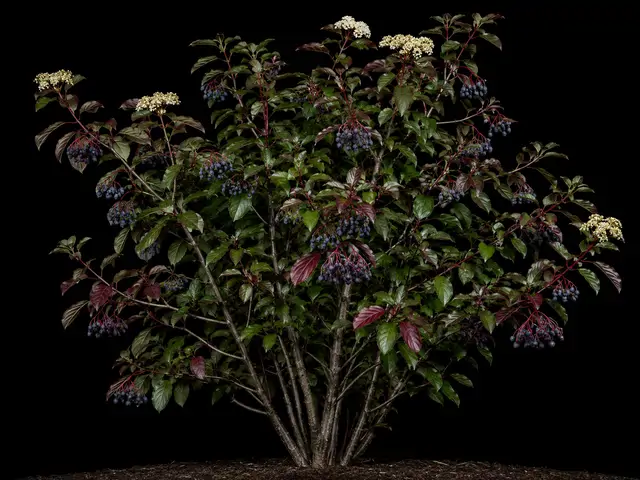
Blackhaw Viburnum
The ripe blue-black fruits are edible and pleasant - sweet and raisin-like when fully soft, eaten fresh or cooked into preserves, around a single flat seed. Eat them only fully ripe (dark and soft); underripe fruit is astringent. The bark has a genuine historical medicinal use ('blackhaw' was an official uterine tonic), but such preparations should be left to qualified practitioners and are not for use in pregnancy without medical guidance.
Overview
A handsome, tough native large shrub or small tree with flat white spring flowers, edible raisin-like blue-black fall fruit, brilliant burgundy fall color, and a real place in traditional medicine as 'blackhaw' bark.
Blackhaw viburnum (Viburnum prunifolium) is one of the most useful and adaptable native viburnums - a rugged large shrub or small tree (often 12-20 feet) that earns its place several ways. In spring it is covered in flat-topped clusters of creamy-white flowers that feed pollinators; through summer its clusters of fruit ripen slowly; and in fall it delivers edible fruit and rich burgundy-red foliage at once, aging into handsome blocky 'alligator' bark on old trunks.
Its blue-black fall fruit is genuinely good to eat when fully ripe - sweet and raisin-like around a single flat seed - and beloved by birds. Blackhaw is also historically important in traditional medicine: its bark was an official uterine tonic ('cramp bark's' close relative) in old pharmacopeias. Tough, shade-tolerant, drought-tolerant once established, and adaptable to a wide range of soils and climates (zones 3-9), it works as a specimen small tree, a hedgerow, a wildlife plant, and an edible native all in one - a quietly excellent, four-season shrub.
At a glance
- Sun
- Full sun · Part sun · Part shade
- Water
- Medium
- Spacing
- 72–180 in (typ. 120)
- Mature height
- 144–360 in (typ. 216)
- Start by
- Direct sow · Transplant · Cuttings
- Frost
- Hardy
- Germination
- 60–540 days (typ. 180) @ 60–75 °F (typ. 68)
When to plant
Zone 7a typical frost: last Apr 10 · first Oct 25
Life stages
- Years 1-2 - young plant day 0–365 from transplant
-
Water regularly while establishingevery 6 dKeep a new blackhaw evenly watered through its first two years. It is adaptable and drought-tolerant once established but roots in better with steady moisture. Decide early whether to grow it as a multi-stem shrub or prune to a single-trunk small tree.
-
Mulch and plant for cross-pollinationMulch the root zone. Fruit set is much heavier with a second, genetically different blackhaw (or compatible viburnum) nearby for cross-pollination - a lone plant often sets little fruit even though it flowers well.
Dry soil while young (keep evenly moist)Light fruit set with only one plant (add a pollinator partner) -
Water regularly while establishingevery 6 d
- Spring white flower clusters Apr, May (yearly)
-
Flat white flower clusters feed pollinatorsShowy flat-topped clusters (cymes) of small creamy-white flowers cover the plant in mid-spring, a strong pollinator draw for bees and other insects. Good pollination (helped by a second plant) sets the summer fruit.
Bees and pollinators working the flower clustersLate frost on the blooms in cold springs -
Flat white flower clusters feed pollinators
- Green fruit ripening through summer Jun, Jul, Aug (yearly)
-
Fruit shifts from green to pink to blue-blackThe flat clusters of fruit develop through summer, ripening slowly from green through pink and rose to a dusty blue-black. They are only good to eat when fully dark and soft; underripe fruit is astringent. Glossy clean foliage carries few pests.
-
Water in summer droughtevery 10 dWater deeply in dry summer spells, especially on younger plants, to help the fruit fill and ripen well; established plants are fairly drought-tolerant.
Underripe (green/pink) fruit still astringentDrought stress on young plants -
Fruit shifts from green to pink to blue-black
- Fruit harvest (late summer/fall) Sep, Oct (yearly)
-
Pick fruit fully blue-black and softevery 5 dHarvest the fruit only when it is fully dark blue-black, soft, and sweet - at that point it tastes like a raisin or date around a single flat seed, good fresh or cooked. Pick clusters as they finish ripening; a light frost can sweeten them further. Leave plenty for the birds.
-
Rich red-purple fall colorAs the fruit ripens the foliage turns rich burgundy, red, and purple - excellent fall color - and migrating and wintering birds compete for the fruit, so gather your share as it darkens.
Birds taking the ripe fruit (share the crop)Fruit picked underripe (astringent - wait for dark and soft) -
Pick fruit fully blue-black and softevery 5 d
- Winter dormancy Jan, Feb, Mar, Nov, Dec (yearly)
-
Prune in late winter for formPrune while dormant: remove dead, crossing, or crowded wood, and shape the plant. For a single-trunk small tree, remove basal suckers and lower branches; for a shrub or thicket, leave them. Blackhaw needs little pruning and flowers on older wood, so keep it light.
Basal suckers (remove for a tree form, keep for a shrub)Distinctive blocky 'alligator' bark developing with age -
Prune in late winter for form
Harvest
- Style
- Repeated picking
- By weight
- 16–320 oz (typ. 96)
- First production
- 3–6 yrs (typ. 4)
- Fruit fully dusty blue-black, soft, and sweet in late summer to fall (not the astringent green or pink stage)
- Fruit yields easily and tastes raisin-like; foliage turning rich burgundy-red
Watch out for
Poor Fruit Set (No Cross-Pollination) Disorder MediumSep, Oct
Possumhaw viburnum sets its spectacular color-shifting fruit far more heavily with cross-pollination, so a single plant (or clones of one) flowers well but fruits sparsely - the usual reason for a disappointing berry display.
Watch for: Abundant spring flowers but few fruits developing on a lone plant or a group of identical clones.
Prevent: Plant two or more genetically different plants (for example 'Winterthur' and 'Brandywine') within pollinating distance.
Treat: Add a second, different plant nearby; there is no other remedy for a lone plant's light fruit set.
Bird Fruit Loss Wildlife LowSep, Oct, Nov
Not a disease but the main obstacle to a human harvest: dozens of bird species love serviceberries and can strip a small tree of ripe fruit within a day or two.
Watch for: Ripening berries disappearing fast, birds swarming the tree as fruit colors, half-eaten berries and droppings.
Prevent: Drape bird netting over the tree as the berries begin to color, or plant enough to share; a single small unnetted tree rarely leaves fruit for people.
Treat: Net promptly; otherwise accept it as feeding wildlife - which is itself a valid and valuable use of the plant.
Viburnum Leaf Beetle Pest LowMay, Jun, Jul
An invasive beetle whose larvae and adults skeletonize viburnum leaves and can defoliate susceptible species; possumhaw viburnum is moderately susceptible in infested regions.
Watch for: Lacy, skeletonized leaves in late spring and summer, and rows of egg-laying scars on twig undersides in winter.
Prevent: Encourage predators, monitor in infested areas, and prune out and destroy egg-laden twigs in late winter before eggs hatch.
Treat: Remove egg-infested twigs in winter and treat larvae early if severe; keeping plants vigorous helps them tolerate some feeding.
Good & bad neighbors
Varieties · 4
The wild species: a tough, adaptable native large shrub or small tree 12-20 feet tall with flat white spring flowers, edible raisin-like blue-black fall fruit, brilliant burgundy fall color, and blocky 'alligator' bark. Shade- and drought-tolerant, and historically the medicinal 'blackhaw' bark plant. Plant two for fruit.
A larger, more northern relative (V. lentago) with similar edible blue-black fruit, white spring flowers, and good fall color, very cold-hardy and vigorous. A fine choice in cooler zones and a compatible cross-pollinator for a viburnum fruit planting.
A closely related Southern native (V. rufidulum) with glossy dark leaves, rusty-hairy buds, showy white flowers, edible blue-black fruit, and outstanding red-purple fall color. More heat-adapted and a superb small specimen tree for the Southeast; a good companion pollinator.
Blackhaw trained as a single-trunk small tree by removing suckers and lower limbs, showcasing its handsome blocky 'alligator' bark and layered branching as an elegant specimen. A landscape approach rather than a distinct variety, ideal for a focal-point native small tree.
Grow
Adaptable and easy in full sun to part shade and most well-drained soils; drought- and shade-tolerant once established. Plant two or more for good fruit set, and choose a shrub or single-trunk tree form early.
Blackhaw is an easygoing, adaptable native. It grows in full sun to part shade - one of the more shade-tolerant fruiting shrubs, though it flowers, fruits, and colors best with more sun - in most well-drained soils, tolerating clay, a range of pH, drought once established, and the cold and heat of much of the East and Southeast (zones 3-9). Water it while establishing, and it becomes notably low-maintenance.
Two choices shape the plant. First, for a good fruit crop, plant two or more genetically different plants - blackhaw sets fruit far more heavily with cross-pollination and a lone plant often fruits sparsely. Second, decide on form: left alone it is a dense multi-stemmed large shrub that can sucker; remove the suckers and lower limbs and you can train it to a graceful single-trunk small tree that shows off its attractive bark. Plant in spring or fall, water it in, and give it a few years to begin bearing (usually years 3-6). It is trouble-free and long-lived thereafter.
Care
Low-maintenance: water in drought while young, prune lightly in late winter for your chosen form, manage suckers, and enjoy a shrub with few serious pests or diseases.
Blackhaw needs little routine care. Water it through its first couple of years and in serious drought after that, mulch the root zone, and it largely looks after itself. It seldom needs feeding in decent soil and is more resistant to the pests and diseases that trouble some viburnums than many of its relatives.
Prune lightly in late winter while dormant: remove dead, crossing, or crowded wood and shape the plant. For a single-trunk small tree, remove basal suckers and lower branches to reveal the trunk and bark; for a shrub or thicket, leave the suckers to fill in. Because it flowers on older wood, keep pruning minimal to preserve bloom and fruit. Manage suckers to control size, transplanting or removing them as needed. That is essentially the whole care routine for this durable native - a little shaping, some water while young, and otherwise let it be.
Harvest
Pick the fruit only fully blue-black and soft in fall, when it turns sweet and raisin-like around a single flat seed - underripe fruit is astringent. Birds compete for it, so gather your share as it darkens.
Blackhaw fruit ripens slowly through late summer into fall, shifting from green through pink and rose to a dusty blue-black. The key to enjoying it is patience: pick only fully dark, soft fruit, which is sweet, rich, and raisin- or date-like around a single large flat seed. Underripe (green or pink) fruit is unpleasantly astringent, which fools people into thinking it is not edible - so wait for dead-ripe. A light frost can sweeten the crop further.
Eat the ripe fruit fresh, spitting out the flat seed, or cook it down into preserves and sauce (the pulp-to-seed ratio is modest, so it is more a foraged nibble and preserve than a bulk fruit). As with other native fruit, birds compete for the crop and relish it, so gather your share promptly as the clusters darken and leave the rest for wildlife. A ripe blackhaw in fall - sweet fruit and burning burgundy leaves together - is one of the quiet pleasures of the native edible landscape.
Storage
Best eaten fresh when ripe or cooked promptly into preserves and sauce; the ripe fruit also dries well like small raisins, and freezes for later cooking.
Ripe blackhaw fruit is soft and best used soon after picking. Eat it fresh at its peak, or process it promptly: cook the pulp (straining out the flat seeds) into jam, preserves, sauce, or fruit butter, which keep like any preserve. The naturally raisin-like ripe fruit also dries well into small sweet dried fruit for longer keeping, and it freezes for later cooking.
Because each fruit carries a single large seed and modest pulp, blackhaw is usually enjoyed as a fresh foraged treat or turned into a small batch of preserves rather than stored in bulk. Handle ripe fruit gently, as it bruises easily, and refrigerate what you pick until you use it within a few days. For the traditional medicinal bark, that is harvested and dried separately by knowledgeable practitioners - the culinary harvest is all about the ripe fruit, used fresh, dried, or cooked.
Propagation & seed saving
Easiest from cuttings, suckers, or a nursery transplant; seed works but has a notoriously slow double dormancy and can take up to two years to germinate.
Blackhaw is propagated most practically from softwood cuttings taken in early summer, from its rooted suckers dug in spring, or from a nursery transplant - all faster and more reliable than seed, and cuttings and suckers give plants identical to the parent (useful for a known good-fruiting clone).
From seed, be patient: like many viburnums, blackhaw seed has a double dormancy, needing a warm period followed by a cold period, and can take up to two years to germinate even when fall-sown outdoors. Seed is therefore mainly for growing many plants for naturalizing. For the garden, cuttings, suckers, or transplants are the way to go - and remember to establish two or more genetically different plants for cross-pollination and a good fruit crop.
Nutrition
A modest but wholesome foraged fruit rich in the sugars and antioxidants of its dark pigment; ecologically far more significant as a top pollinator and bird plant and larval host.
Blackhaw fruit is a wholesome foraged food rather than a major nutritional crop - each ripe drupe offers sweet pulp with the sugars and antioxidant pigments (anthocyanins) typical of dark fruit, plus some fiber and vitamins, around a single large seed. It is a pleasant, nutritious nibble and preserve fruit, but the modest pulp means it contributes flavor and variety more than bulk calories.
Ecologically, blackhaw is a significant wildlife plant. Its flat spring flower clusters are an excellent pollinator resource for bees and other insects; its fall fruit feeds many birds (thrushes, robins, cedar waxwings, and more) and small mammals into winter; and viburnums serve as larval host plants for several native moths and butterflies, including the spring azure. So while blackhaw feeds people a modest treat, its greater value is as a four-season food source and host plant knitting pollinators, birds, and insects into the garden's web.
Medicine
Blackhaw bark has a genuine, well-documented traditional use as a uterine antispasmodic and tonic - an official drug in old US pharmacopeias - taught honestly as historical herbal medicine best left to qualified practitioners, not a home remedy.
Blackhaw carries one of the more credible medicinal histories of any American shrub. The bark (of the root and stem) was a recognized botanical drug - Viburnum prunifolium was listed in the United States Pharmacopeia - used as a uterine antispasmodic and tonic to relax uterine muscle, ease menstrual cramps, and, historically, to help prevent miscarriage, closely paralleling its relative crampbark (V. opulus). The bark does contain antispasmodic compounds (including scopoletin and related constituents), giving the tradition a real pharmacological basis.
The honest framing: this is a documented historical herbal medicine with a plausible active basis, but it is not a casual home remedy. Preparing and dosing bark tinctures and decoctions is the province of trained herbalists and clinicians, rigorous modern clinical evidence is limited, and its use in pregnancy in particular should only ever be under qualified medical supervision. In the garden, grow blackhaw for its flowers, fruit, and fall color, and treat its medicinal reputation as interesting, well-founded tradition - not a reason to self-medicate.
History
A long-used Indigenous and settler food and medicine - its bark an official uterine tonic in the US Pharmacopeia - and one of the classic native viburnums of eastern woods and fencerows.
Blackhaw has a long dual history as food and medicine. Indigenous peoples and later settlers ate its ripe fruit fresh and dried and used the plant medicinally, and it became well known across the eastern woods, fencerows, and woodland edges where it grows wild. Its tough wood and blocky bark earned it regional names like 'stagbush.'
Its most notable historical role was medicinal: blackhaw bark was adopted into official nineteenth- and early-twentieth-century medicine as a uterine tonic and antispasmodic, listed in the United States Pharmacopeia and widely used (and, at times, over-harvested from the wild) for menstrual and pregnancy-related complaints. In the modern era, as native-plant and edible-landscape gardening have grown, blackhaw has been rediscovered as a superb, adaptable ornamental and wildlife shrub - a handsome native that happens to carry both an edible fruit and one of the better-documented herbal traditions in American botany.
Troubleshooting
The usual issues are underripe astringent fruit (wait for dark and soft), light fruit set from having only one plant (plant two for cross-pollination), and too much shade reducing fruit and fall color; it has few serious pests.
Fruit is astringent / unpleasant: almost always picked underripe - blackhaw fruit is only good fully blue-black and soft; the green and pink stages are astringent, so wait for dead-ripe. Few fruits despite good flowering: usually a pollination issue - plant two or more genetically different plants for a good crop, since a lone plant fruits sparsely. Poor fruiting and dull fall color: too much shade - blackhaw tolerates shade but flowers, fruits, and colors best with more sun. Powdery or spotted leaves: minor fungal leaf issues can appear in humid, crowded conditions but blackhaw is fairly disease-resistant among viburnums - improve airflow and rake fallen leaves. Viburnum leaf beetle: a serious pest of some viburnums; blackhaw is less preferred but watch for chewed, skeletonized leaves and prune out egg-laden twigs in winter if it appears. Suckers spreading: normal - remove for a tree form or keep for a shrubby thicket. Most trouble comes down to ripeness, pollination, and light.
Growing across climates
Very adaptable and hardy across eastern and central North America (zones 3-9), tolerant of cold, heat, humidity, drought, clay, and shade; its main limits are deep shade and, for fruit, too few plants or too little sun.
Blackhaw is among the most climate-adaptable native viburnums, thriving across zones 3-9 and a huge span of eastern and central North America. Zones 3-5: fully cold-hardy in northern woods and fencerows. Zones 6-8: its broad heartland, easy and dependable in sun to part shade, fruiting and coloring well and handling the East and Southeast's heat and humidity better than many fruiting shrubs. Warm South (zones 8-9): it grows well in the region, tolerating heat, humidity, clay, and drought once established, especially with some afternoon shade in the hottest sites.
Its tolerance of drought, clay, shade, and a wide pH range makes it a standout for difficult spots - dry woodland edges, hedgerows, and part-shade borders alike. The real limits are cultural rather than climatic: in deep shade it flowers, fruits, and colors poorly, and a lone plant fruits sparsely without a pollinator partner. Given some sun and a companion plant, blackhaw is one of the toughest, most widely adaptable edible and ornamental natives you can grow.
Cook it
All 1 recipe →No grower tips for Blackhaw Viburnum yet — yours could be the first.
Sign in to share what works in your garden.