Add it to your home screen and it opens full screen — no browser bars, one tap away, and everything stays signed in. Free, nothing to download from an app store.
- Tap the Share button in your browser
- Scroll down and choose “Add to Home Screen”
- Open GrowSomeFood from your home screen
- Open your browser’s menu
- Choose “Add to Home screen” or “Install app”
- Open GrowSomeFood from your home screen
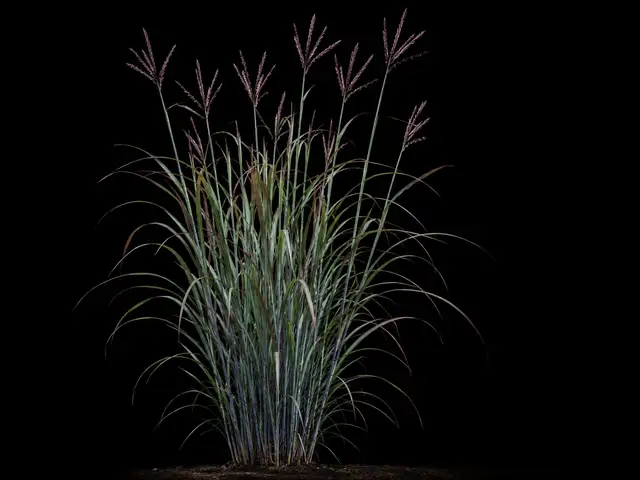
Big Bluestem
Big bluestem is a safe, non-toxic native grass, not a food crop. It's grown as a tall vertical ornamental and prairie plant, and it's also excellent livestock forage and hay. No handling precautions - the foliage has no irritants.
Overview
The monarch of the tallgrass prairie: a towering 6-to-8-foot native grass named 'turkeyfoot' for its distinctive three-branched seedheads, with blue-green summer color, brilliant bronze-copper fall, and enormous ecological and historical weight.
Big bluestem (Andropogon gerardii) is the signature grass of the North American tallgrass prairie and one of the most majestic native grasses you can grow. It towers to 6-8 feet (occasionally more), forming stately vertical clumps of blue-green to gray-green foliage that flush purplish in summer, then turn rich bronze, copper, and reddish-purple in fall and hold that warm color into winter. Its seedheads are unmistakable and give it its folk name 'turkeyfoot' — typically three finger-like branches splayed from each stalk like a bird's foot.
It was the dominant grass of the deep, black-soil tallgrass prairie that once covered the mid-continent, its roots reaching many feet down to build the richest soils in the country. It's tough, deeply drought-tolerant, cold-hardy across most of the nation, and long-lived, and it carries real ecological value: a larval host for skipper butterflies, a seed and cover plant for birds, and prime livestock forage. In the garden it's a commanding vertical accent, screen, or the towering backbone of a prairie planting — a living piece of the American grassland.
At a glance
- Sun
- Full sun
- Water
- Low
- Spacing
- 24–48 in (typ. 36)
- Mature height
- 48–96 in (typ. 72)
- Start by
- Direct sow · Transplant · Division
- Frost
- Hardy
- Germination
- 14–30 days (typ. 21) @ 65–85 °F (typ. 75)
When to plant
Zone 7a typical frost: last Apr 10 · first Oct 25
Life stages
- Year 1 - rooting in day 0–100 from transplant
-
Water to establish, then let it run dryevery 7 dWater a new plug or division through its first season to build its famously deep roots, then stop. Big bluestem is deeply drought-tolerant once established and only wants water while rooting in.
-
Never fertilize this prairie grassBig bluestem is adapted to lean prairie soil. Rich soil and fertilizer make an even taller, softer plant that flops - grow it in average-to-poor, well-drained ground and feed it nothing.
Slow first-year top growth (it invests in very deep roots first)Floppy growth later if grown too rich or shaded -
Water to establish, then let it run dryevery 7 d
- Summer growth to towering height May, Jun, Jul, Aug (yearly)
-
Weed early - it greens up lateA warm-season grass, big bluestem stays dormant into spring and only pushes growth as the soil warms. Keep the emerging clump weeded; through summer it grows fast into a towering 6-to-8-foot column of blue-green to gray-green foliage.
-
Water only in extreme droughtevery 21 dEstablished big bluestem is exceptionally drought-tolerant thanks to roots reaching many feet down; water only in prolonged severe drought.
Late spring green-up (normal - not dead)Rapid growth to great height; blue-green to purplish summer color -
Weed early - it greens up late
- Turkeyfoot seedheads & fall color Aug, Sep, Oct (yearly)
-
The 'turkeyfoot' seedheads and bronze fall colorIn late summer it raises its signature seedheads - usually three finger-like branches per stalk, resembling a turkey's foot (its folk name). The whole plant then turns rich bronze, copper, and reddish-purple for fall, holding warm color into winter.
-
Cut a few stems for arrangements if you likeThe turkeyfoot seedheads and bronze foliage are striking in fresh and dried fall arrangements and hold well. Cut sparingly; the standing plant is the display and the wildlife value.
Three-part 'turkeyfoot' seedheads formingSkipper butterflies (big bluestem is a larval HOST for several skippers) -
The 'turkeyfoot' seedheads and bronze fall color
- Winter color & cut-back Jan, Feb, Mar, Nov, Dec (yearly)
-
Leave it for winter, then cut back in late winterThe tall bronze-to-copper clump holds warm color and strong architecture through winter and shelters wildlife - leave it standing. Cut the whole clump to a few inches in late winter or very early spring, before new growth pushes; a big clump is a substantial cut.
-
Divide crowded or hollow clumps in springBig bluestem is long-lived and clumping (it forms tight bunches, occasionally with short rhizomes). If a clump dies out in the center or gets too large, dig and divide it in spring and replant the vigorous outer growth.
Warm bronze-copper color and stiff form persisting through winter (a feature)Dead center in an old clump (divide in spring) -
Leave it for winter, then cut back in late winter
Watch out for
Flopping in Rich Soil Disorder MediumAug, Sep, Oct
Because switchgrass grows tall, rich soil, over-fertilizing, too much water, or shade produce soft, top-heavy stems that flop or splay open, especially after storms - the main ornamental complaint.
Watch for: Tall stems leaning or splaying from the center, worst in fertile, moist, or shaded sites and after heavy rain or wind.
Prevent: Grow it lean and in full sun - no fertilizer, average-to-poor soil - and choose a reliably upright cultivar (Northwind, Heavy Metal) where vertical form matters.
Treat: Stop feeding, move to more sun, divide and replant into leaner soil, or replace floppy seedlings with a sturdy upright cultivar; the fix is cultural.
Rust Disease LowJul, Aug, Sep
A minor fungal leaf disease that can spot the foliage with orange-brown pustules in humid, crowded conditions - cosmetic and rarely significant on this tough grass.
Watch for: Orange to rusty-brown flecks or streaks on the leaves, worst in muggy weather on crowded, poorly ventilated plants.
Prevent: Space for airflow, grow in full sun, avoid overhead watering, and remove old foliage at the annual cut-back.
Treat: Remove affected foliage and improve airflow; almost always cosmetic and outgrown - fungicide rarely warranted.
Crown Rot Disease LowJan, Feb, Mar, Nov, Dec
Fungal rot of the central crown and rhizome, most common in cold, stagnant, waterlogged conditions during winter dormancy or when dead leaves are left to decay against the crown.
Watch for: A soft, mushy, browning center; collapsing new growth pulling away easily from the rhizome; a foul smell - typically over a cold, wet winter.
Prevent: Ease off water during dormancy (just damp, not flooded), provide good airflow, remove blackened dead leaves, and avoid burying the crown; do not let a dormant plant sit cold and sodden.
Treat: Cut away rotted tissue, treat with a fungicide, repot into fresh airy peat-sand, and keep drier with better airflow; heavily rotted plants are often lost.
Good & bad neighbors
Varieties · 4
The wild tallgrass-prairie species: towering 6-8 foot clumps of blue-green foliage with the signature three-branched 'turkeyfoot' seedheads, turning bronze-copper in fall. Deeply drought-tolerant, long-lived, and native across most of the country - the ecological and restoration standard.
A dramatic selection with foliage that deepens from green to dark purple-black through summer and into near-black burgundy in fall - one of the darkest ornamental grasses, on a strong upright plant. A striking modern garden form.
A selection with strong burgundy-red summer coloring and an upright, sturdy habit that resists flopping better than the species - a good choice where the wild plant's height and looseness are a concern.
A sturdy selection with blue-green summer foliage tipped burgundy that ignites to brilliant scarlet-red in fall - grown for its exceptional, fiery autumn color and a more upright, garden-friendly habit than the wild species.
Grow
Full sun, lean well-drained soil, and room for its height. Water to establish, then leave it dry; keep it lean so the tall stems stay upright, and don't fertilize.
Big bluestem is easy given the prairie conditions it evolved for: full sun and lean, well-drained soil. It's adaptable to clay, loam, and sandy soils and is deeply drought-tolerant, though it also grows lush with moisture (staying more upright when grown lean). Set plugs or divisions out in spring, spacing them 24-48 inches apart and giving them room — this is a big plant, 6-8 feet tall, and it needs the space and a spot where its height is an asset, not a surprise.
The key growing tip is to keep it lean and sunny: rich soil, fertilizer, or shade make the tall stems even softer and prone to flopping, so grow it in average-to-poor soil and feed it nothing. As a warm-season grass it greens up late in spring, then grows fast to its towering height by late summer. Use it as a bold specimen, a seasonal screen, or the tall matrix of a prairie or meadow planting, where it anchors the vertical structure that shorter grasses and wildflowers grow beneath.
Care
Very low care: no feeding, almost no watering once established, essentially no pests, and one substantial late-winter cut-back - with division every several years for large or hollow clumps.
Big bluestem needs very little. Established plants want no fertilizer, little to no supplemental water, and have no serious pests or diseases. The one annual chore is the cut-back: leave the tall bronze winter clump standing for its color, architecture, and wildlife cover, then cut it to a few inches in late winter or very early spring before new growth begins. A mature big bluestem is a large, dense clump, so hedge shears or a power trimmer make the job easier.
It's long-lived and clumping, so it rarely needs intervention; if a very old clump dies out in the center or simply gets too large, dig and divide it in spring (mature clumps are dense and woody — a sharp spade or saw helps) and replant the vigorous outer growth. Grown lean and sunny it stays reasonably upright for its height; the main issue, flopping, is cultural and eased by leaner soil, full sun, or siting it among other plants that give mutual support.
Cutting & seasonal display
No food harvest - big bluestem is grown for its towering form, turkeyfoot seedheads, fall color, and winter structure. Cut a few stems for autumn arrangements, but leave the plant standing for interest and wildlife.
As an ornamental and wildlife grass, 'harvest' means cutting for display. The distinctive turkeyfoot seedheads and bronze fall foliage are dramatic in fresh and dried arrangements and hold their form well, so cut a few tall stems at peak color if you want them indoors. Most of the plant, though, is best left standing.
Its real value stays in the garden and landscape: the towering fall color and winter architecture, and its role as habitat. Big bluestem is a butterfly host and a bird seed-and-cover plant, so leaving the tall clumps standing through winter feeds and shelters wildlife, and you cut and remove the growth only once, at the late-winter trim. (On rangeland it's also a top forage and hay grass, but that's an agricultural harvest, not a garden one.) There's no edible harvest — it's grown for grandeur and for the wildlife it supports.
Winter interest & drying
A superb grass for winter structure - the tall bronze clumps hold warm color and stand through winter until the late-winter cut-back. Turkeyfoot seedheads and stems dry well for arrangements.
Big bluestem is one of the best grasses for bold winter interest. Its fall bronze, copper, and reddish tones persist through winter, and the tall, stiff clumps stand as strong architectural silhouettes against snow and sky, providing structure, movement, and bird cover all season — a good reason to leave them standing until the late-winter cut-back rather than clearing them in fall.
The cut turkeyfoot seedheads and stems also dry well, holding their shape and color for durable dried arrangements. As an exceptionally long-lived perennial, big bluestem overwinters as a dormant crown with its famously deep root system (the source of the tallgrass prairie's deep, fertile soils) and regrows reliably each spring; spring-lifted divisions should be replanted promptly into lean, well-drained soil.
Propagation & seed saving
Grown easily from seed (the standard for prairies, restorations, and pastures) or by dividing clumps in spring, which keeps named selections true. It also self-sows modestly where happy.
Big bluestem propagates readily by seed and division. From seed it's the workhorse of prairie plantings, restorations, and forage seedings: sow the seed onto a clean, firmed seedbed on warm spring soil (it needs warmth to germinate) or dormant-sow in late fall so winter cold conditions it. Seed is the economical route for covering ground, though seedlings take a season or two to reach full height and color.
By division, dig an established clump in spring as growth resumes and split it into rooted sections (mature clumps are dense and woody, so use a sharp spade or saw), then replant — the quick way to make sizable plants and to keep a named selection (like the blue-leaved 'Blackhawks' or sturdy 'Red October') true, since seedlings vary. It also self-sows modestly where conditions suit it, so expect occasional volunteers to move or leave. Between easy seed, division, and self-sowing, it multiplies with little effort.
Ecology & wildlife value
Not a human food, but an ecological cornerstone: a skipper butterfly host, a seed and cover plant for grassland birds, prime livestock forage, and the deep-rooted grass that built the tallgrass prairie's legendary soils.
Big bluestem isn't a plant for the table — its value is ecological and agricultural, and historically immense. It's a larval host plant for several skipper butterflies, whose caterpillars feed on its foliage, so growing it directly supports butterfly reproduction. Its seed feeds grassland birds, and its tall dense clumps provide nesting cover and overwintering habitat for birds and insects. As the dominant grass of the tallgrass prairie, it also forms the towering structural matrix that prairie wildflowers and pollinators grow among.
Its deepest legacy is literally underground: big bluestem's roots reach many feet down, and over millennia they built the deep, black, organic-rich prairie soils that are now some of the most productive farmland on Earth — and that store enormous amounts of carbon and resist erosion. It remains one of the best native forage and hay grasses for livestock. Few plants have done more ecological and agricultural work; in the garden it delivers that heritage of toughness, habitat value, and grandeur with almost no care.
History
The dominant grass and defining symbol of the vast North American tallgrass prairie - it built the continent's richest soils, sustained the bison herds and prairie cultures, and now anchors prairie restoration and native landscaping.
Big bluestem is the emblematic grass of the North American tallgrass prairie, the sea of grass that once covered much of the mid-continent from the eastern Great Plains through the Midwest. Growing head-high and taller, it dominated the richest, moistest prairies, and its deep roots built the deep, black, fertile soils that later made the region the nation's breadbasket. It sustained the enormous herds of bison and the Indigenous cultures of the plains, and its 'turkeyfoot' seedheads were a familiar sight across the grassland horizon.
The tallgrass prairie was almost entirely plowed under for agriculture — today only a tiny fraction remains — making big bluestem both a symbol of what was lost and a cornerstone of efforts to bring it back. It's central to prairie restoration and conservation, planted to rebuild grassland and to hold and heal soil, and it's long valued as a productive rangeland forage and hay grass. In recent decades breeders selected garden-worthy forms with strong color and sturdier habit ('Blackhawks,' 'Red October,' 'Indian Warrior'), bringing this towering prairie giant into the ornamental garden as a bold native accent.
Troubleshooting
Flopping tall stems mean rich soil, shade, or too much water - grow it lean and sunny, or support it among other plants. Brown in spring is normal dormancy; a bare center means it's time to divide; and it simply needs a lot of room.
Tall stems flopping or leaning: the most common issue for such a tall grass, and usually cultural — too rich a soil, too much fertility or water, or too much shade. Grow big bluestem lean and in full sun for the sturdiest stems, stop fertilizing, choose a selection bred for upright habit ('Red October,' 'Indian Warrior'), or site it among other prairie plants that give it mutual support. It's too big / crowding other plants: at 6-8 feet it needs room and a back-of-border or prairie setting — give it space and taller companions. Brown and lifeless in spring: not dead — it's a warm-season grass that stays dormant late and greens up only as the soil warms; cut back the old growth and wait. Dead, bare center in an old clump: a normal sign of age — divide it in spring and replant the vigorous outer pieces. Seedlings appearing nearby: modest self-sowing — welcome in a prairie, easily pulled in a formal bed. Pests and disease are essentially non-issues on this famously tough grass; occasional rust in humid weather is cosmetic.
Growing across climates
Hardy and native across most of the country (zones 3-9), thriving on cold, heat, drought, and a wide range of soils; performance and height vary with moisture, and regional ecotypes matter for restoration.
Big bluestem is hardy and adaptable across most of the continental United States. Zones 3-5: fully cold-hardy prairie grass; it takes brutal winters and short seasons in stride and colors up richly in fall (northern types are somewhat shorter). Zones 6-8: its broad heartland — where the tallgrass prairie reached its fullest expression; expect towering growth, strong bronze fall color, and the widest ornamental and restoration use. Hot South and Southwest (zones 8-9): excellent, with strong heat and drought tolerance; it grows across a wide range from the humid East to the drier plains and Southwest. Because it's native across such a huge range, local ecotypes differ in height, cold-hardiness, and timing, so regionally sourced seed performs best in restorations. Its height and lushness scale with moisture — taller and greener in richer, moister ground, shorter and sturdier in lean, dry sites — but it's tough across the board. Give it sun and it thrives from the cold northern plains to the hot South.
No grower tips for Big Bluestem yet — yours could be the first.
Sign in to share what works in your garden.